Category Archives: Electric Cars

News and reviews of the latest electric cars (full electrics and plug-in hybrids).

Better Place Battery Swapping

Tesla Navigation Update Echoes Better Place System Of 3 Years Ago

It was another typically hyperbolic statement from Tesla Motors CEO Elon Musk.

A simple tweet on a Sunday afternoon claimed that Tesla was “About to end range anxiety … via [over-the-air] software update. Affects entire Model S fleet.”

As usual, the media erupted with wild speculation about what Musk could do to “end range anxiety” in cars the company had sold more than two years ago.

But when the actual announcement came, it seemed to disappoint a number of people: route planning and an alerting system didn’t sound so exciting.

So why do I think there is much more to this announcement than do other commentators?

A truth universally acknowledged by electric-car owners is that people who’ve never lived with a plug-in vehicle don’t really understand how they work in real life.

Range anxiety is largely a mythical bogeyman. I view it as something that petrolheads tell other petrolheads to keep the cult of liquid fuel alive.

Electric-car owners know the range capabilities of their cars. They drive on regular routes, day in and day out, using similar amounts of electricity, and they know what their cars can and can’t do.

Planning an out-of-the-ordinary trip, however, requires some help. Especially one that hasn’t been made before and when the overall trip, including return, is close to or beyond the car’s range.

What Musk actually announced on Thursday sounds quite similar to what failed battery-switching startup Better Place delivered several years ago in Israel (and Denmark).

In fact, I predicted as much last week.

Musk spoke about two integrated systems, “Range Assurance” and “Trip Planner,” that would work together.

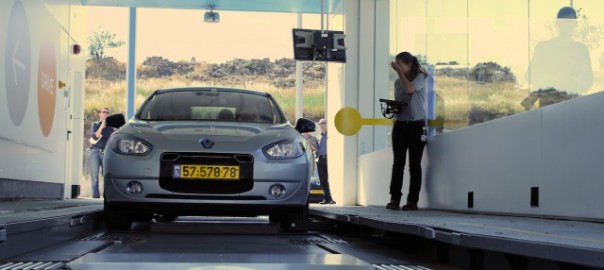
Back in 2012 when I picked up my Better Place Renault Fluence ZE, I had capabilities remarkably similar to those Tesla announced.

Whenever my battery dropped below 12 percent, I would get a phone call from an actual person. He or she would ask if I knew where I was going – and would, if necessary, remotely re-route me to a charge spot or battery-switching station.

I filmed a video of the trip planning feature, including the system working out a 220-mile route from Tel Aviv to Eilat involving multiple battery switches along the way. Effortlessly.

Both of these features also took into account the real-time status of the infrastructure.

Better Place was aware of the status of everything in their network–switch stations, Level 2 charging stations, and cars–and if a switch station wasn’t working, drivers would be alerted and re-routed.

Read more: Green Car Reports
Kia Soul EV

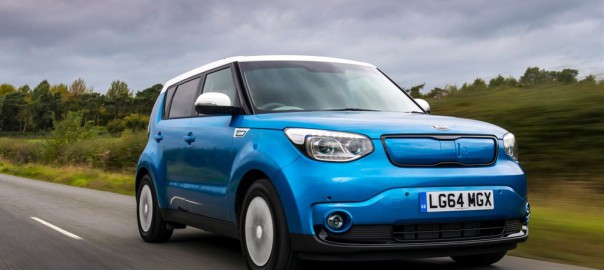
Kia Soul EV Claims Top Honours as the First CANADIAN GREEN CAR OF THE YEAR

What is a Green Vehicle?
It is a vehicle which, for its size and purpose, provides the Canadian consumer with environmentally-friendly returns that compare favourably with other vehicles in its class.

VANCOUVER, March 24, 2015 /CNW/ – In an early afternoon press conference at the opening ceremonies of the Vancouver International Auto Show, the Kia Soul EV claimed top honours when the car was declared the 2015 Canadian Green Car of the Year by the Automobile Journalists Association of Canada (AJAC).

The Canadian Green Car of the Year award, in its preliminary season, was presented by Kevin Corrigan, Chair of the Canadian Green Car Committee at the Vancouver International Auto Show from a finalist list of four (4) vehicles. The top four (4) finalists, the Honda Fit, the Kia Soul EV, the Subaru Legacy and the Toyota Camry Hybrid, were announced at the opening ceremonies of the Canadian International Auto Show in Toronto back in February. The 4 finalists were “crowned’ with green car toppers for the duration of the Toronto show – and will subsequently wear these same crowns in Vancouver – which showcase their place in the running for the Canadian Green Car of the Year Award.

“Kia Canada is thrilled that the all-new 2015 Kia Soul EV has been recognized by AJAC as the Canadian Green Car of the Year “,

said Maria Soklis, Vice President and Chief Operating Officer, Kia Canada Inc.

“This acknowledgement is testimony to Kia’s ongoing commitment to deliver environmentally friendly automotive solutions and diverse powertrains to consumers without compromising on design or comfort.”

7 vehicles became eligible for this top honour after being tested in the annual “TestFest” event that AJAC’s Canadian Car of the Year Awards program hosts annually in October. These four (4) finalists represent the back to back, same day testing and vote results compiled by the largest group of Canada’s best-known automotive journalists, who gather every year for a 5 day testing program, in late fall. KPMG, the accounting firm, tabulates all vote results and presents AJAC with the top 3 – or in this case, the top 4 due to a tie – in 15 different categories. Acura, Cadillac and Mercedes-Benz (smart), were also in the running.

Mr. Corrigan explains,

“While an electrically-propelled sub-compact, thought of as green, may well suit those living within the city limits, is it not also true to view a fuel-efficient 6 cyl luxury hybrid product likewise, when compared to a V8 gas-powered vehicle in its relative segment of the market? Yes, the Canadian consumer requires environmentally-friendly transportation which meets their needs, whether it be a small city runaround, or a fuel-efficient luxury product for their airport limousine business. So when it comes to vehicle transportation, any & every vehicle which offers both fuel-efficiency and addresses environmental concerns is worthy of our attention, and praise, where due”.

Source: Automobile Journalists Association of Canada

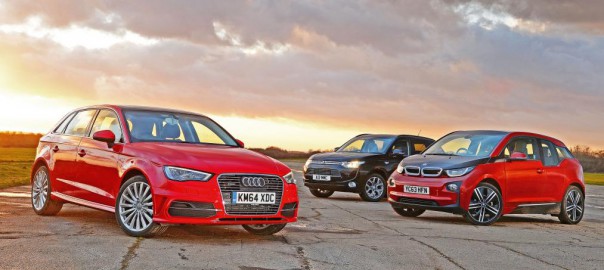
Audi A3 e-tron, Mitsubishi Outlander and BMW i3 plug-ins

Electric vehicles sneaking up in the race for global car dominance

The age of electric vehicles, those quirky cars that have been perennially stigmatized as lacking range, reliability and affordability, is finally here. If you don’t believe that statement, you probably haven’t driven one recently. Or attended a Formula E auto race. Or taken a look at some of the sales numbers.

Or all of the above.

For the first time in a century, the electric vehicle (EV) is on the road to becoming a serious competitive challenge to its petroleum nemesis. That’s not to say that the world’s billion-plus “conventional” cars are ready to be dragged en masse to scrap yards with big cranes and magnets. Nor do a smattering of all-electric Teslas and BMWs suggest that the petroleum industry will easily surrender its headlock on the global transportation market. But at a minimum, today’s EV renaissance does strengthen the case that long-term forecasts for world oil consumption are overstated. And depending on the speed of technological advances in batteries and electric power trains, there are scenarios where EV adoption rates could surprise.

The most exciting place to witness EV advances is at an FIA Formula E racing event. All-electric Formula E (fiaformulae.com) is a newbie on the world racing circuit, but has attracted some of the same legendary names that have made its raucous Formula 1 cousin famous. For example, Williams Advanced Engineering is championing batteries; McLaren is involved with the motors; and founding partner Renault is integrating all the systems into sleek vehicles that look like mechanical doppelgangers for F1 race cars.

A couple of weekends ago, I attended the first North American Formula E race, the Miami ePrix, held just north of Biscayne Bay. Lineups and shoulder-to-shoulder crowds amplified the sense that this fresh event was more than just about seeing who would spray champagne at the finish line. Teal-coloured banners everywhere reminded the crowds that they were there to “Drive the Future.”

Race time arrived. Four o’clock. The announcer called the drivers to their starting positions. No one else seemed to notice, but I smiled at the absence of the obviously antiquated, “Start your engines!” command. Suddenly, off the mark, 10 cars lurched down the caged, 2.2-kilometre circuit with tires squealing. And for the rest of the one-hour race, that was it for loud noise. At every lap, the Formula E cars swished by with a satisfying, almost calming, smooth whine. Unlike a deafening Formula 1 race, a large part of the thrill was not having to silicone my ears shut.

Technological advances from the extreme engineering of the Formula E sphere will trickle down to mainstream cars, just as petroleum-powered cars have benefited from seven decades of F1 racing. To be sure, electric powertrains still need more work before mainstream EVs can be a compelling substitute for gas, gears and grease. But the race is on. EV sales figures from early laps of commercialization show that market penetration is worth a glance over the shoulder – especially if you’re driving for the oil team.

Our feature chart (Figure 1) this week gives an updated monthly sales snapshot of pure battery electric vehicles (BEVs) and plug-in hybrids (PHEVs). The latter still use a small gasoline-powered engine as a blanky for range, but primarily rely on a battery. Gasoline prices are overlain on the chart as a reference for the incumbent competition.

Adoption of EVs in the U.S. market began a steady rise in 2011. Conditions were favourable when average gasoline prices were in the range of $3.75 to $4.00 a gallon. Sales numbers of almost 10,000 a month still pale compared to overall U.S. auto sales of over a million a month; however it’s the uptrend of early adoption that’s noteworthy. Over the past six months, U.S. sales momentum appears to have fallen in tandem with gasoline prices; this is not surprising as there is less incentive for consumers to plug in when the price spread between the pump and the wall socket narrows. But like a race, it’s too early to call a downtrend.

For one thing, don’t confuse adoption with seasonality: EV sales have traditionally had a dip during the winter months; 2014 and 2015 were especially harsh in the eastern US. Globally, sales of EVs – four-wheeled and two-wheeled varieties – are on an upswing in Europe and Asia. The International Energy Agency reports that there are now 230 million electric bikes in China. Global car sales (battery electric vehicles and plug-in hybrid electric vehicles) are tracking 25,000 a month, and growing 50 per cent per year if the trend line is extrapolated.

Diesel- and gasoline-powered cars will still have the pole position for many years to come. Nevertheless, the EVs are off to the races, quietly sneaking up on their competition.

Source: Globe and Mail

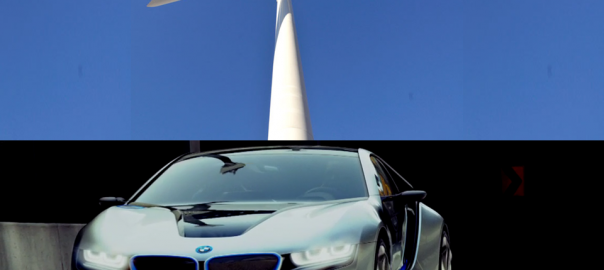
BMW Group: More Than 50% Of Electricity Use Worldwide From Renewables

BMW Group is now, for the first time in its history, receiving more than half of its electricity worldwide from renewable energy infrastructure, based on comments made by company representatives at the recent 2015 Annual Account Press Conference.

Bmw“More than half” in this case means 51%. 🙂 So, just above half. Still, considering where the company was only a few years ago, and compared to most other companies that is commendable. The company is reportedly aiming to receive around 100% of its electricity via renewable energy infrastructure over just the next few years, which could put it in competition with IKEA.

8-2411p_i8_wind_NewEnergyNews

That goal will be achieved via a step-by-step plan that will see the company first greatly improve energy efficiency at its various facilities around the world. After this step is completed, the company will then oversee a renewables generation buildout, and then, finally, a third step involves purchasing the remainder of its needed electricity from various energy companies.

The Head of Sustainability & Environmental Protection at the BMW Group, Ursula Mathar:

“We have a clear objective and a concrete plan for the transition to renewable energy. However, economic viability is essential for implementation. Only under the right framework conditions can we put our plans into action step by step in individual markets worldwide.”

A recent press release provides further details:

Some 51% of the electricity supplied to the BMW Group worldwide is already being drawn from renewable energy sources. In Leipzig, Germany, the BMW Group is using wind power. In mid-2013, four wind turbines started operation on the premises of the plant, with 100% of the power produced going into the production of the BMW i3 and BMW i8. At the Spartanburg plant in South Carolina, USA, a methane gas system provides around 50% of the energy required for production. At the Rosslyn plant in South Africa, the foundation stone for a combined heat and power unit fired by biogas was laid at the end of 2014. The gas used is sourced from the waste products created on cattle and chicken farms. Commissioning of this system will already enable the company to cover over 25% of the energy required by the production plant this year.

Good steps, for sure. It’ll be interesting to see how long it’ll take BMW Group to achieve its goal.

Source: Clean Technica

TTAC Video Review Of BMW i3 REx

The Truth About Cars (or TTAC if you will) are not known for holding their tongue when it comes to anything automotive that doesn’t ring true to themselves, so it was with heightened interest we saw the online magazine had done a review on BMW’s most “love it or hate it” plug-in offering – the i3 REx.

Which way would review Alex Dykes take us, and the i3? Will the plug-in BMW be the worst offering the Bavarian company has unleashed on humanity this decade, or one of the better ones?

Surely in TTAC-style there could be no in between right? Wrong. Overall the review is quite comprehensive and balanced – even when testing the infamous “battery exhaustion going up a hill” chestnut we have all been subjected to quite often.

Source: Inside EVs

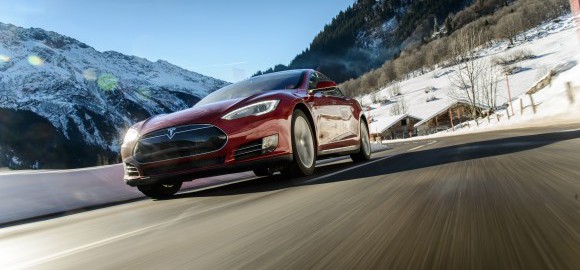
Tesla Motors Adds Range Assurance and Trip Planner

[From 19 March 2015]

As promised by Tesla Motors CEO Elon Musk on Sunday, the Californian automaker has just revealed a new over-the-air software update for owners of its Model S luxury electric car which it hopes to push to all customers in around ten day’s time. What’s more, it includes two brand new features which Tesla hopes will not only tackle the real spectre of range anxiety among first-time owners but also make it ‘impossible’ for a Tesla Model S owner to run out of charge in their car without intentionally setting out to do so.

These two features, called Range Assurance and Trip Planner, make use of the wireless Internet connection built into every Tesla Model S, along with Tesla’s integrated network of super-fast Supercharger stations.

Other features included in the 6.2 updates include mainly improvements to accelerator and brake mappings, but also mark the inclusion of a Valet Mode and improved top speed for owners of Tesla’s latest car, the Tesla Model S P85D, as well as the switching on of active safety features such as automatic safety braking, side collision warning system and blind spot warning system.

Read more: Transport Evolved

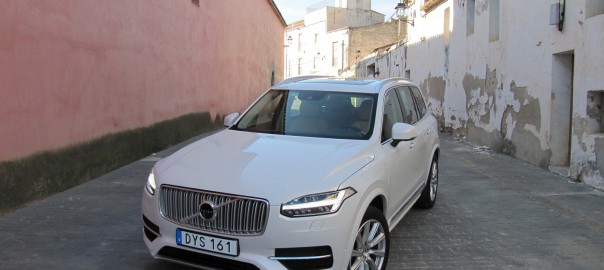
Volvo XC90 PHEV (Image: GCR)

Hidden benefits of electric vehicles revealed

Electric vehicles are cool, research shows. Literally. A study in this week’s Scientific Reports by researchers at Michigan State University (MSU) and in China add more fuel to the already hot debate about whether electric vehicles are more environmentally friendly than conventional vehicles by uncovering two hidden benefits.

They show that the cool factor is real – in that electric vehicles emit significantly less heat. That difference could mitigate the urban heat island effect, the phenomenon that helps turn big cities like Beijing into pressure cookers in warm months.

Moreover, the cooling resulting from replacing all gas-powered vehicles with electric vehicles could mean city dwellers needing less air conditioning, another environmental win.

“It’s easy not to see the big picture on issues like electric cars and global warming, but when we look with a holistic approach, we find these unexpected connections,”

said co-author Jianguo “Jack” Liu, who holds the Rachel Carson Chair in Sustainability at MSU and is director of the Center for Systems Integration and Sustainability (CSIS).

“Heat waves kill, and in terms of climate change, even one degree can make a difference.”

The research was led by Professor Canbing Li of Hunan University in Changsha, China, who was a visiting scholar at CSIS. The electric vehicles’ benefits of reduced greenhouse gas emissions are countered by the expense and pollution from producing the vehicles, leading to debate on whether they are the best replacement for conventional vehicles.

In the paper, Li and his colleagues take a wider view to find new positives for plug-ins. Conventional vehicles and air conditioners are the two biggest contributors to the heat island intensity – the difference between urban temperatures and the cooler temperatures of rural areas. In that arena, electric vehicles are cooler – giving off only about 20 percent of the heat a gas vehicle emits.

The researchers used Beijing in summer of 2012 to calculate that switching vehicles from gas to electricity could reduce the heat island intensity by nearly 1 degree Celsius. That would have saved Beijing 14.4 million kilowatt hours and slashed carbon dioxide emissions by 11,779 tons per day, according to the paper “Hidden Benefits of Electric Vehicles for Addressing Climate Change.”

The authors caution that several factors can influence the urban heat island effect, not all of which were addressed in the study. For example, there are conflicting reports regarding the impact of reduced aerosol pollution on heat island intensity. These factors may need to be considered when weighing the benefits and disadvantages of replacing conventional vehicles with electric vehicles.

Read more: Phys.org

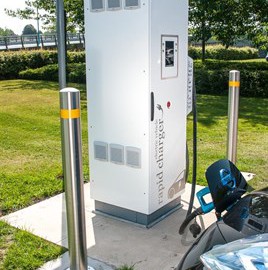
Siemens EV Charging (Image: Siemens)

Siemens delivers EV infrastructure packages in South Tyneside and Dorset

[From December 2014]

Siemens is supplying and installing two electric vehicle (EV) rapid charging networks in South Tyneside and Dorset in early 2015.

The charging points will be connected to the Charge Your Car network and back office system as part of two complete EV packages with three years maintenance support provided by Siemens.

Funded by the Office for Low Emission Vehicles (OLEV), the network in South Tyneside will consist of 20 QC45 triple-outlet, rapid chargers.

In Poole and throughout Dorset, Siemens’ local field services team will be responsible for project management, installation and commissioning of 19 QC45 rapid chargers.

The project will be the first rapid charging network installed and operating with fully integrated bay sensors providing real-time detection of both the availability of bays and information for parking enforcement teams of any non-charging vehicles.

Siemens EV Charging (Image: Siemens)

Siemens will also install two rapid charging points in Cirencester and Moreton-in-Marsh for Cotswold District Council (CDC) in 2015.

New rapid charging projects in Scotland include five new multi-standard chargers installed and commissioned for Scottish Borders Council and a further two new chargers in Stirling as part of the Scottish Government’s commitment to delivering a network of public charging points for electric vehicles across Scotland.

The scheme, which includes Transport Scotland grants through the Energy Saving Trust, will deliver charging points within every 50 miles on trunk roads and an integrated network will join electric vehicles with public transport.

The company’s largest EV project to date is also well underway in Bristol, South Gloucestershire and Gloucestershire.

Source: Fleet News

Plug yourself in and enjoy the ride

The Outlander PHEV is a plug-in hybrid SUV that gives Mitsubishi a real edge in this corner of the market.

We liked the Outlander diesel when we tried it recently but the PHEV uses very different mechanicals. This one features a 2.0-litre petrol engine and a pair of electric motors on each axle, giving all wheel drive and a combined power output in the region of 220bhp. So as you might imagine, it’s pretty sprightly when you bury the throttle, although Mitsubishi’s quoted sprint to 62mph of 11 seconds sounds strangely slow. Driven in full electric mode, you’ll feel the huge torque of the motors and be able to cruise at motorway speeds on electric power alone, although not for too far. Refinement is very good, even without the sound of an engine to drown out wind and tyre noise.

There’s a very handy feature included where you can request the battery holds a particular level of charge and you can also use the petrol engine as a generator, to drive battery power back up to 70% of its capacity. There is also a sophisticated five-level regenerative braking system that the driver can select using the wheel-mounted paddles or what you would otherwise take to be the gear lever.

You might well need to be the judge when it comes to the Outlander’s styling. We’re not fans of the beaky front end and slab sides but there will be some who doubtless feel that the sharp suit makes a welcome change to the usual cuddly Nissan Qashqais and Mazda CX-5s. The front and rear overhangs are quite long as well, so don’t be to tempted to go charging off road just because you’ve got drive going to each axle.

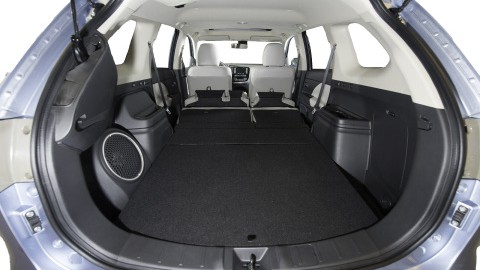
The cabin is very nicely executed. Mitsubishi is usually a company you can rely on for old-school hard grey plastics and mismatched fonts but this Outlander has clearly had some thought put into look and feel. Although you won’t think you’re in an Audi Q5, the Outlander offers plenty of soft-touch finishes and a clean, architectural fascia design. There’s a small increase in the vehicle’s weight due to the floor-mounted battery pack, a paltry reduction of 14-litres in boot space and rear legroom is a touch more pinched due to the raised floor height. The 577-litre boot is still more than adequate for most requirements and the luggage bay is well shaped.

0514Int2_Mitsubishi_OutlanderPHEV_unk

Prices look very competitive, starting at just over £28,000 after subtraction of the government grant – so the same money as a conventional Outlander GX3 diesel auto. That’s for the entry-level GX3h version: there are also two other PHEV models, the GX4h costing about £33,000 and the top GX4hs costing about £35,000. Expect a decently high spec to come as standard across the range, with a tally that’ll run to dual-zone air-conditioning, power-folding mirrors, privacy glass, alloy wheels, cruise control, four powered windows, remote locking, seven airbags and stability control. Niceties include things like leather and dual-zone climate control, satellite navigation, a parking camera and a high-end audio system, along with advanced safety systems including lane departure warning, radar cruise control and a collision mitigation system (which applies the brakes automatically if it senses an impending crash).

The official fuel consumption figure of 148mpg merely serves to remind us that we have an urgent need for a new European fuel consumption test which more closely mirrors everyday driving conditions.

Likewise, the 44g/km emissions figure the Outlander PHEV records won’t be something you’ll be managing day in, day out. As an exercise in taking advantage of a flawed testing procedure, it’s remarkable.

This plug-in hybrid can drive for over 32 miles on a full electric charge and can be fast charged to 80% in 30 minutes. This means that for some drivers, they’ll be able to pop the car on charge in the evening, do the commute and bring it home without using any petrol at all. Mitsubishi reckons that if you cover more than 100 miles between charges, the diesel is going to work out more cost-effective. Charge the Outlander PHEV more frequently and the numbers swing in its favour. Residual values ought to be strong, as the trade has quite taken to the Outlander and this plug-in hybrid is the first example of its type in the sector.

As long as you get on with the styling and don’t have a pressing need to seat seven people, we’ve got nothing but good things to say about the Mitsubishi Outlander PHEV. It’s one of those rare vehicles that is massively better than you expect it to be. The calibration of the hybrid powertrain, the options it gives its driver and the sheer depth of engineering that’s apparent in the way it’s been built all point to a car that deserves all the acclaim it’s now getting.

Being first to market improves the chances of success. Being first with a product so strong that it will have many rivals going back to the drawing board ought to guarantee success. This one deserves a big stage.

Source: Aberdeen Press and Journal

Business Car Reviews Volkswagen e-Golf – Video

Here the Volkswagen e-Golf review is prepared by BusinessCar, who describes the German EV as being without unnecessary show.

According to the article, the electric version exudes all the usual Golf qualities in terms of cabin quality and classy understated looks.

85 kW of motor power is called reasonable, although the vehicle’s weight makes it less nimble than its petrol and diesel siblings.

Read more: Inside EVs