Category Archives: Electric Cars

News and reviews of the latest electric cars (full electrics and plug-in hybrids).

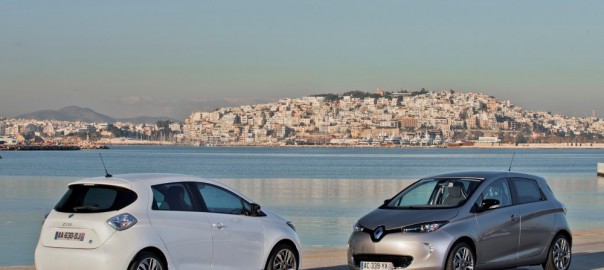
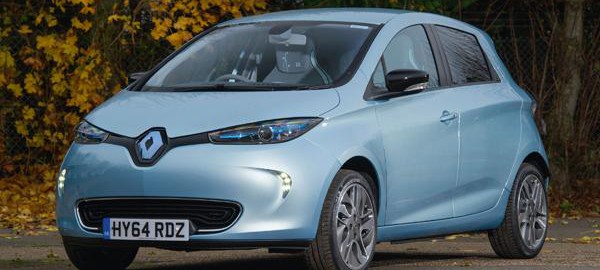
Renault ZOE EV

A fresh and futuristic electric car


Then comes along the Renault Zoe (Zero Emissions).

I’d be lying if I said my heart doesn’t sink whenever an electric car turns up at Motors HQ for a test. It just seems like hard work – working out how far you need to travel, checking the battery level available and then faffing around with charging cables.

But then I open the Zoe’s door and it looks … stunning.

Renault-ZOE_2013_wallpaper_3f_cs

There’s no drab, grey interior here – lots of white plastic and some nice digital displays.

The Star Wars geek in my thought it screamed Stormtrooper…

It’s comfortable and there’s an air of quality and technology all around.

Foot on the brake, press the Start button and the car comes alive. Not that you’d know it though because, being electric, it’s as quiet when fired up as it is turned off.

And this is where it gets good again.

There’s something magical about the way an electric car moves – it glides away, silently.

Except the Zoe has ZE Voice – an artificial noise that sounds like some kind of SFX you’d hear on Star Trek’s Enterprise. It’s all a bit spacey-sounding, and designed to work at low speeds to warn pedestrians that you’re there. It’s noticeable from inside, but not annoyingly loud, and can be turned off on each trip if you choose.

While driving the Zoe, there’s a flurry of excitement at the low-speed power available underfoot that’s mixed with concern over the damage that acceleration does to your battery life.

I never even got close to worrying about running low on juice, but that’s because I’ve learned from my past experiences and didn’t get too ambitious with my destinations.

After each full charge the Zoe told me I had roughly 70 miles of range.

So I stuck to routes that were no further than about 20 miles away, meaning I’d always have a bit extra for diversions, getting lost or just being able to put my foot down.

But the range meter stayed rather true to its estimates on all my trips, and on some regular commutes between Truro and Falmouth I ended up using even less “miles” than those I’d actually travelled.

Despite feeling like it’s carrying a bit of extra weight with all those batteries, the Zoe was totally comfortable and fun to drive.

If you’re brave enough to keep your foot down (on a closed track, obviously) then the Zoe will get to a top speed of 84mph.

Nought to sixty might be 13.5 seconds but bear in mind that nought to thirty is only four seconds. It’s wonderfully nippy for around town and while not intended for long journeys over dual carriageways or motorways, it’ll certainly hold its own, but you’d be a tad foolish to hammer down the right-hand lane, overtaking like glory-days Michael Schumacher.

An installed wall charger will allow you to keep it topped up at home, but you can also get a three-pin plug that can connect to the household mains – with the front Renault logo flipping open to take the connector.

There’s plenty of tech, too – from touchscreens to TFT displays and sat nav to air con, Bluetooth and downloadable apps.

The car we tested is currently £7,995 plus battery hire (which starts from, £43 per month – which is less than the cost of a tank of petrol).

The Renault Zoe feels fresh and futuristic, but shouldn’t be too alien for most drivers.

Much like politics, don’t let yourself be put off by the boring bits you don’t understand or worry might be too complicated.

My love/hate relationship with electrics continues – but this time the Zoe has put me back on a positive.

Source: Cornish Guardian
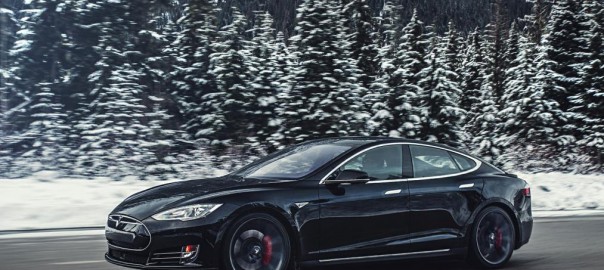
Tesla Model S P85D (Image: AutoExpress)

Electric vehicles shine

Watch out petrol, it’s time for electric vehicles to shine

Stephen Hill is an enthusiast for electric vehicles, noble and economical successor to the internal combustion engine

Since the beginning of time, mankind has needed a form of transport to move faster and further than his legs could carry him. For millennia, this need – as basic as food, clothing and housing – was met by the horse in the West, whether harnessed to a carriage or for riding, carrying, hunting, charging, ploughing or pulling, and by the camel in Arabia.

1_1_tesla_model-s_unk

Then the Industrial Revolution in nineteenth-century Britain changed everything, especially with the invention of the steam engine, the first form of mechanised power for transport. By 1883, steam engines, which were actually external combustion engines, could generate the power of 10,000 horses.

Then the beginning of the twentieth century saw the advent of the ubiquitous motorcar, powered by two completely different sources: petrol and electricity. The first petrol-driven vehicle was produced in 1902 by Daimler-Mercedes. Meanwhile, the first electric car, produced and sold in Chicago in 1906, is still running to this day. The power of these cars, however, was still rated by the number of horses that they replaced.

The twentieth century belonged exclusively, however, to the petrol-driven internal combustion engine, or ICE, for several reasons: first, fuel was available and relatively inexpensive, at least until 1974’s oil crisis; secondly, it offered superior performance, especially acceleration and top speed; and thirdly, mass-production made it widely affordable.

These advantages turned the ICE-driven automotive industry into by far the world’s biggest industry, employing millions. The electric vehicle, or EV, could not compete back then with ICE, as batteries were unable to store the electricity required and could not offer anything like the same performance and endurance, especially acceleration, top speed and distance, and were expensive.

The twenty-first century is changing all that, as EV will increasingly overtake ICE, because fossil fuel costs have risen significantly during the last half-century; the issue of toxic emissions is now widely understood and condemned for their harmful effects on the wider environment; the development of battery power now gives the same performance, including acceleration, top speed and distance, for EVs as ICE; EV is cheaper to manufacture and repair than ICE; and EV has much lower depreciation, and therefore lower annual running and finance costs. Above all, EV has no toxic emissions.

In the 2014/15 motor-racing season, for the first time, there will be Formula E running alongside Formula 1. Formula E will offer the same performance, including acceleration and top speed, as Formula 1, but with no noise or toxic emissions.

Ten EV teams will compete, not on out-of-town noisy, smelly race-tracks, but in ten city centres, given that they are green, including Los Angeles, New York, London, Beijing and six others. Various forms of EVs are now in mass-production in California, France, Germany, and Japan, with India, China and the UK soon to follow.

The leading EV manufacturer, Tesla in California, has opened a showroom at Westfield in London; can now provide power for 700 miles; and has just announced an unlimited eight-year warranty on batteries and motor parts. It’s a bit of a shame that the first design of the Tesla S model is so bland… but watch out, old ICE manufacturers: EV is now real.

Source: Spears WMS

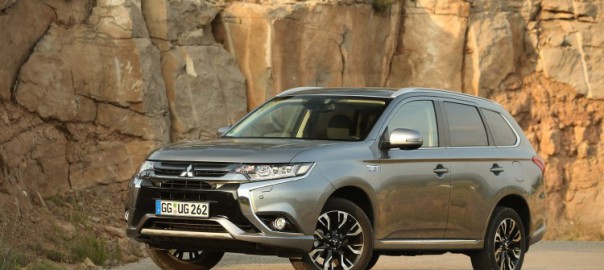
2016 Mitsubishi Outlander PHEV

Frankfurt shows off new Mitsubishi Outlander PHEV

I’m looking forward to this reaching the UK – especially the V2H option.

Mitsubishi confirmed that the new 2016 Mitsubishi Outlander PHEV, which in July went on sale in Japan, will be unveiled in Frankfurt at the 66th International Motor Show (IAA).

Sales of revamped Outlander PHEV in Europe will begin in September.

2016 Mitsubishi Outlander PHEV

On the stage Mitsubishi will also present its rally version of the Outlander PHEV, which will compete in the Baja Portalegre 500 cross-country rally (after its rally in Asia).

The Japanese manufacturer for the very first time seems to willing to sell Outlander PHEV in Europe with optional V2H system (previously available only in Japan).

With ICE backup, and external V2H bi-directional CHAdeMO charger, the Outlander PHEV could supply power in emergency situations.

“MMC will also have a display outlining Vehicle-to-Home (V2H) electricity supply system that will be available for the new Outlander PHEV.”

Total sales of Mitsubishi Outlander PHEV already stand at some 70,000.

Read more: Inside EVs

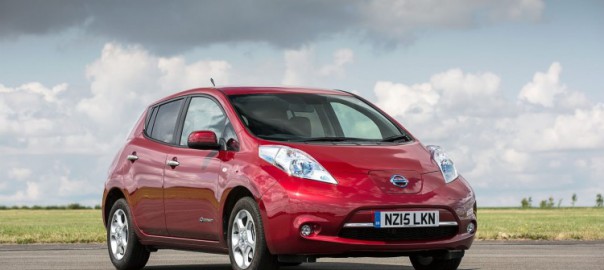
Nissan Leaf

Electric car boost for Scots

Why not in England too?

Scottish motorists are set to benefit from a £2.5 million electric car fund where they can apply for an interest-free loan of up to £50,000 for electric of plug-in hybrid vehicles.

The Electric Vehicle Loan is open to anyone buying a new electric or plug-in hybrid car or van, and is offered on top of the UK Government’s Plug-in Vehicle Grant.

Open for applications now, the loan will come from Energy Saving Trust coffers and funded by Transport Scotland, the Scottish Government’s transport agency. Intended to cover 100 per cent of the purchase price of a new electric vehicle, the loan can be repaid over a period of up to six years. Business are eligible for the scheme too, with grants of up to £100,000 available for electric vehicles.

Scottish Transport Minister Derek Mackay says:

“Encouraging mass changeover to electric vehicles, from more polluting ones running on petrol or diesel, is a key to cleaner road transport in Scotland and a fundamental factor in achieving our ambitious climate change targets while also improving local air quality.

“Electric vehicles already offer large savings to drivers through reduced fuel and taxation costs and this fund will further encourage new buyers by addressing the current cost premium often cited as a barrier to making the switch. I am pleased we are adding this incentive to the growing package of support measures for EVs outlined in the ‘Switched on Scotland’ policy roadmap.”

Read more: Next Green Car

Nissan Leaf

Most reliable cars of 2015 include Nissan Leaf

Not a great surprise to Leaf owners!

Carbuyer released its list of the top 10 most reliable cars from superminis to SUVs. The list was compiled according to information and statistics from the the 2015 Auto Express Driver Power Survey.

Nissan Leaf
Nissan Leaf

The annual questionnaire, filled out by around 61,000 car owners, shows that in reliability category, there are no competitors for Japanese and Korean brands (9 out of 10).

“This year’s car reliability ratings reflect well on Japanese manufacturers, with a special mention going to Lexus. The brand has three cars in this year’s Top 10 and the IS saloon took the coveted number one overall slot on the customer satisfaction survey.

Insights from the survey also showed that drivers are more satisfied with their car in general than ever before. More hybrid and electric cars are on the list than in previous surveys too. Motorists in London are the hardest to please on average.”

Top 10:

  1. Toyota iQ city car
  2. Lexus NX SUV
  3. Lexus IS saloon
  4. Hyundai i10 hatchback
  5. Honda Jazz hatchback
  6. Lexus GS saloon (2005-2011)
  7. Toyota RAV4 SUV
  8. Nissan Leaf hatchback
  9. Kia Picanto hatchback
  10. SEAT Leon hatchback

Among 200 models, there is one electric in the top 10 – Nissan LEAF at eight.

Read more: Inside EVs

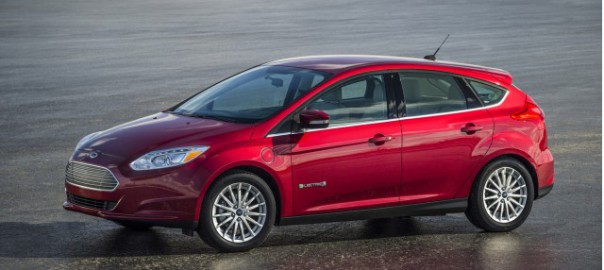
2015 Ford Focus Electric

Electric Car Drivers Will Never Go Back to Petrol

News from Ford in the US (but note that unfortunately the Ford Focus Electric is still not available in the UK)

Fully nine out of 10 electric-car drivers say they won’t go back to cars with internal-combustion engines, according to a new Ford survey.

2015 Ford Focus Electric

The results included responses from 10,000 drivers of both battery-electric cars and plug-in hybrids.

It found that 92 percent of battery-electric drivers, and 94 percent of plug-in hybrid drivers, plan to purchase another plug-in car as their next vehicle.

More often than not, that specifically means a battery electric car, Stephanie Janczak–Ford’s Manager of Electric Vehicle Infrastructure and Technology–said in a recent interview with CleanTechnica.

Janczak noted that most current all-electric drivers said they would stay with that type of car, while plug-in hybrid owners were more inclined to consider switching to an all-electric vehicle.

The driving experience, and an appreciation of clean technology, were cited as the main reasons for staying electric, she said.

Read more: Inside EVs

Just a week left on low ZOE prices

For most of this summer Renault has had an astonishing offer on the sale of the all-electric ZOE. However on 1st September Renault announced that the low prices would only last until the end of the month:

£5000 deposit contribution on ZOE Dynamique Nav

That means that this offer has just one week left to run. This applies to all ZOE Dynamique Navs – the main model – for sale in the UK.

Renault-ZOE_2013_wallpaper_3f_cs

In particular it means that the current amazing Fuel Included offer will also run out next week:

New Renault ZOE from £145 per month fuel included

– a new car with 10000 miles of free fuel for less than many people spend just on fuel.

For more details on this offer before it runs out contact Trevor at Fuel Included on 07920-790600, or email trevor.larkum@fuelincluded.com.

New membership scheme announced by Chargemaster

Chargemaster, the largest operator of electric vehicle charging points in the UK, has confirmed a new subscription scheme called POLAR Plus, which will also offer members the chance to borrow the latest luxury electric cars.

The expanding POLAR London and POLAR national network of over 4,000 charging points will be available to any electric motorist for a monthly subscription of just £7.85 – similar to popular streaming services Netflix or Amazon Instant – and the first six months’ subscription is free.

Over 80% of the POLAR Plus charging points are free to use, with remaining points charged at the equivalent of 9p per unit of electricity* – typically less than the cost of charging at home. A pay-as-you-go instant access rate will also be available for non-members. These new tariffs make a significant difference for EV drivers especially on rapid chargers where members can charge an electric car to 80% capacity in around 20 minutes in all POLAR rapid locations at a cost of about £2 when previously it would cost around £6. A key feature of the membership scheme is the opportunity to borrow, for one week, a selection of the latest electric cars, with members accruing usage points.

The POLAR Experience fleet includes the BMW i8 and Tesla Model S, as well as Nissan Leaf, Renault Zoe and the fun Renault Twizy. Users receive 10 POLAR points each time they charge in a particular town or city across the country each month. 10 points enable you to use a Renault Twizy and 100 points results in driving a BMW i8. As new models are launched, including the Tesla Model X SUV and vehicles from Audi and Mercedes, they will be available for members to sample shortly after their introduction in the UK.

David Martell, Chief Executive of Chargemaster, commented:

“POLAR Plus is a hugely attractive position to the growing population of electric motorists across the country and in particular the heavy user. Electric vehicle usage has more than trebled over the last year and now is the time for there to be an expanding robust nationwide charging network. Not only will EV motorists gain access to a national network of serviceable, state of the art charging points but they will be able to sample all the latest in electric car technology.

“We find that once converted to ultra-low emission motoring, people tend not to return to high-emission pure internal combustion engine cars.”

Membership scheme follows recent expansion announcement The announcement follows a multi-million pound investment commitment from the firm to install an additional 2000 plus new charging points across the country alongside its existing 4000 POLAR points, including 1000 new charging points in London. Charging points will be located at convenient destinations for EV drivers such as hotels, supermarkets, restaurants and sports facilities. In addition, Chargemaster has offered to replace any faulty public charging points from other manufacturers at no cost to local authority hosts. This aims to resolve significant issues across the UK where old third-party charging points installed under the government-funded Plugged in Places scheme have been unserviceable for some time.

Chargemaster has also recently completed an agreement to take over the Plugged in Midlands (PiM) network of 870 charging points. All publicly available PiM points will be added to the POLAR Plus network over the next few weeks. The firm has also committed to adding over 100 new charging points in the Midlands. POLAR Plus membership will be available from August 17th and EV drivers can join on line at www.polar-network.com.

Source: Chargemaster