Category Archives: Electric Cars

News and reviews of the latest electric cars (full electrics and plug-in hybrids).

The EV Battery: Everything You Need To Know and What’s Coming Next

Although electric cars are almost as old as the automobile itself, they didn’t become a worthy alternative to ICE vehicles until Li-ion batteries changed everything. These energy storage devices help power everything around us, from watches to electric cars and even cities. Let’s see how EV battery evolved and where it’s leading us.

Electric vehicles are now promoted as humankind’s best tool to curb global warming and reduce pollution inside cities. Not everyone is convinced they are the best solution, but electric vehicles have advantages over their ICE counterparts. These start with lower operating costs and are boosted by the fact that EVs can turn about 90% of the energy consumed to charge them into mechanical work. If this sounds unrealistic, remember that EVs can recoup during braking an important part (more than 20%) of the used energy and feed it back into the battery.
Electric vehicles are disadvantaged in certain areas, with the most talked about being limited range, long recharging times, and high prices. If you group them like that, you’ll notice that the advantages stem from using electricity, while the disadvantages are all generated by their Li-ion batteries. Once you realize that, it’s a no-brainer that the auto industry should channel its efforts into improving the batteries that power electric vehicles to make everyone happy.

Read more: autoevolution

It’s Time to Go Green!

If you would like to know more about Solar Panels and the PowerBanx range of home battery systems, and get a free instant quote, please complete our online form:

Captur E-TECH Plug-in (Image: Renault)

Electric Vehicles Dominate the Used Car Market, Selling Faster Than Petrol and Diesel

Electric vehicles (EVs) have emerged as the fastest-selling fuel type in the used car market, surpassing petrol and diesel cars. According to Auto Trader, EVs took an average of just 27 and 25 days to sell in the previous month and the current month, respectively. In comparison, petrol and diesel cars are selling every 31 days on average in October.

The rise in the popularity of EVs is evident in the list of fastest-selling used cars, with seven out of the top 10 being electric or alternatively fuelled vehicles. This includes models such as the Kia Niro, Vauxhall Corsa-e, Renault Megane E-Tech, Audi e-tron, and Renault Zoe. These cars have been highly sought after, taking between 9 and 15 days to sell.


Vauxhall Grandland X Hybrid4 (Image: Vauxhall.co.uk)

One of the contributing factors to the growing demand for used electric cars is the improved affordability and availability. Auto Trader reported that nearly a quarter (22%) of used electric stock on their platform in September was priced between £10,000 and £20,000, providing greater choice in the more affordable end of the market. This increase in options has attracted more consumers to consider purchasing used EVs.

However, the second-hand electric car market is still in its early stages, and as a result, some volatility can be expected as it continues to mature in the coming years. Despite this, retailers have a significant opportunity to future-proof their businesses and gain profits by embracing the data and trends surrounding used electric cars.

Read more: MotorMouth

It’s Time to Go Green!

If you would like to know more about Solar Panels and the PowerBanx range of home battery systems, and get a free instant quote, please complete our online form:

EV chargepoint prices and availability made public under new law

New laws approved by MPs on Tuesday evening (24 October) will require providers to publicly share data on electric vehicle (EV) chargepoint availability and charging prices.

The new regulations will mean that prices across chargepoints are both transparent and easy to compare, and drivers looking to charge will be able to find a chargepoint suiting their needs with little hassle. Drivers will also be able to check charging speeds and charger locations, as well as availability.

Once the regulations are passed, EV drivers will also have access to contact-free 24/7 helplines for any issues in accessing charging on public roads.

Technology and decarbonisation minister, Jesse Norman, said that the measures will improve EV charging for millions of drivers, providing price transparency which will allow drivers to get the best value, increasing the economic viability of driving electric.

These measures come as the UK reaches record numbers of public chargers, with numbers growing by 42% year-on-year. EV mapping service provider Zapmap revealed earlier this month that the UK has surpassed the 50,000 chargepoint milestone.

The beginning of October also saw the government announce a range of measures to accelerate the installation of chargepoints through its ‘Plan for Drivers‘ including extending chargepoint grants for schools and reviewing the grid connection process for chargepoints.

Read more: Current+

It’s Time to Go Green!

If you would like to know more about Solar Panels and the PowerBanx range of home battery systems, and get a free instant quote, please complete our online form:
Electrifying 641bhp Hyundai Ioniq 5 N is yours from £65,000

The Ioniq 5 N is the most powerful Hyundai ever, and based on the same platform tech as the Kia EV6 GT

We like the Hyundai Ioniq 5 here at Auto Express – so much so we awarded it our overall Car of the Year back when it launched in 2021. Now there’s a hotter Ioniq 5 N version, and it’s priced from £65,000.

To this point, Hyundai’s range of sporty N models consisted only of petrol models; the i20 Ni30 N and Kona N. The Ioniq 5 N is a different proposition altogether, however, with its all-electric drivetrain serving up 641bhp and 740Nm of torque.

We’ve driven the Ioniq 5 N in prototype form already and came away pleased with the car’s performance, as well as its engagement – something not many sporty EVs have managed to combine to date. Order books for the Ioniq 5 N are open now; priced from £65,000 it’s around £3,000 more expensive than its slightly less powerful Kia EV6 GT sibling.

Powered by an 84kWh battery, the Ioniq 5 N utilises a dual-motor set up to go from 0-62mph in 3.4 seconds with the car’s N Launch Control and boost mode engaged. The Ioniq 5 N tops out at 161mph.

To help optimise stability in the corners, Hyundai has given the Ioniq 5 N a clever e-LSD (limited-slip differential) in the rear motor, with a torque vectoring system that features 11 different settings.

Read more: AutoExpress

It’s Time to Go Green!

If you would like to know more about Solar Panels and the PowerBanx range of home battery systems, and get a free instant quote, please complete our online form:

Researchers make surprising discovery about lifespan of EV batteries: ‘That was a shock’

A dead, irreplaceable battery is often the demise of an otherwise perfectly good piece of equipment, and it can be incredibly frustrating. New research shows, however, that the opposite may be true when it comes to the batteries running electric vehicles.

The Globe and Mail reports that a study done in March by Recurrent Motors Inc. — a Seattle-based battery analysis company — showed that overall, EV batteries are actually very reliable and long-lasting. In fact, they may last longer than the vehicles themselves.

The study took real-world data from 15,000 EVs of various makes and models in the U.S. By linking to the vehicles’ connectivity systems, the company took several battery readings daily, including charging activity, EV battery level, and estimated range.

The data showed that most EVs driven close to 100,000 miles still have at least 90 percent of their original range left.

“I was surprised how well batteries are holding up, and how relatively infrequently batteries are being replaced,” Liz Najman, researcher and marketing manager at Recurrent and the study’s author, told The Globe and Mail. “That was a shock.”

The publication did report, however, that Najman made sure to point out that individual vehicles vary and that Recurrent’s data is constantly evolving. This is mainly because most EVs aren’t that old, with nearly 30 percent currently on the road in the U.S. being sold just last year.

Read more: yahoofinance

It’s Time to Go Green!

If you would like to know more about Solar Panels and the PowerBanx range of home battery systems, and get a free instant quote, please complete our online form:
Used Car of the Year Awards: Electric cars

With living costs on the rise, getting a good deal on your next car is more important than ever. That’s where our Used Car Awards come in. These are our favourite electric cars…

Credit where credit is due: Elon Musk has led Tesla to become one of today’s most popular car brands. He’s no stranger to controversy in other matters, but Tesla’s Model 3 has proved to be an electric vehicle (EV) milestone.

This executive car has sold immensely well since its launch, and it continues to do so today, meaning the used market is flooded with them. Examples start with the Standard Range Plus, which can be found for a very tempting £23,000.

Skoda CITIGOe-iV (Image: Skoda.co.uk)

While this entry-level model can’t come close to matching the Performance’s 0-60mph time of 3.3sec (in our hands), it’ll still manage the sprint in a hot-hatch-like 6.1sec. You won’t see such acceleration behind the wheel of a Kia e-Niro.

The range is impressive, too: the Standard Range Plus officially travels 254 miles on a single charge, or 267 miles if you go for a post-2020 example. If you need 300-plus miles of range (more than any Jaguar I-Pace can offer), you can pick up a Model 3 Long Range or Performance for a few thousand pounds more; these versions have larger batteries.

The Model 3 is more reliable than the I-Pace, too. In the latest What Car? Reliability Survey, the Model 3 ranked eighth out of 20 cars in the EV class, with an impressive 93.9% score.

Read more: WhatCar

It’s Time to Go Green!

If you would like to know more about Solar Panels and the PowerBanx range of home battery systems, and get a free instant quote, please complete our online form:

Top Gear’s greatest cars of the last 30 years: BMW i8 and Porsche Taycan

In our increasingly electrified world, two pioneers have stood taller than others

We were surprised as well. Only one Porsche has ever been crowned TG’s Car of the Year, and it’s the one without a combustion engine. Meanwhile, no BMW M car has ever taken the top prize. The only Beemers to walk away with the laurels are an executive saloon still held in high regard today, and a petrol-electric sports car that bravely looked to a future that hasn’t materialised. Raises the question really: which of this pair is a surefire future classic?

We know a winner when we see one. BMW’s £900m investment in its i range is now a cautionary tale of how to go too far, too fast with cars of the future, with the i3 and i8 now relegated to history and the current range taking the far more conventional shape of stuff like the iX1, i4 and i7. The only ‘bespoke’ EV BMW makes these days is the iX. A fine luxury pod dressed up like a robo-hippo, but a far cry from the days when bespoke aluminium chassis bore recycled carbon-fibre superstructures.

Porsche Taycan Turbo S (Image: Porsche)

When aerodynamics, not marketing, styled the cars. When BMW would sell you a butterfly door streamliner powered by a 3cyl Mini engine tuned to deliver over 230bhp, boosted by an electric motor for 0–62mph in 4.4secs, plus claimed economy of 134mpg. Not the i8’s fault the test cycle was laughably flawed.

Read more: TopGear

It’s Time to Go Green!

If you would like to know more about Solar Panels and the PowerBanx range of home battery systems, and get a free instant quote, please complete our online form:

Shock of the old: the amazing, infuriating history of the electric car – in pictures

Believe it or not, battery-powered vehicles have been around since Victorian times – everything from private automobiles to taxis, ambulances and tricycles. We’ve got the photos to prove it

The history of the electric car is surprisingly enraging. If you imagine early electric vehicles at all (full disclosure: I didn’t until recently), it will probably be as the quixotic and possibly dangerous dream of a few eccentrics, maybe in the 1920s or 1930s, when domestic electrification became widespread. It’s easy to imagine some stiff-collared proto-Musk getting bored of hunting and affairs, eyeing his newly installed electric lights speculatively, then wreaking untold havoc and mass electrocutions.

The reality is entirely different. By 1900, a third of all cars on the road in the US were electric; we’re looking at the history of a cruelly missed opportunity, and it started astonishingly early. The Scottish engineer Robert Anderson had a go at an electric car of sorts way back in the 1830s, though his invention was somewhat stymied by the fact rechargeable batteries were not invented until 1859, making his crude carriage something of a one-trick pony (and far less useful than an actual pony).

Vintage cars converted to electric power shown at Fully Charged Live (Image: T. Larkum)

It’s debatable whether Scotland was ready for this brave new world anyway: in 1842, Robert Davidson (another Scot, who had, a few years earlier, also tried his hand at an electric vehicle) saw his electric locomotive Galvani broken by some malicious hands almost beyond repair” in Perth.

Read more: TheGuardian

It’s Time to Go Green!

If you would like to know more about Solar Panels and the PowerBanx range of home battery systems, and get a free instant quote, please complete our online form:

Salary sacrifice drivers choose an electric vehicle to ‘save money’

Almost eight out of 10 drivers said that they chose an electric vehicle (EV) in order to save money, according to new research from Tusker.

Furthermore, 89% of EV drivers said that they were satisfied with their car, while two-thirds (66%) of petrol drivers want to order an EV in the next four years with costs a key motivator for drivers to make the switch.

Tusker says that oil prices have risen in the UK in 2023, driving the cost of petrol up to its current average of £1.56/ litre across the UK.

The current uncertainty in the Middle-East could drive prices even higher in the coming months.

Conversely, the cost of EV charging has dropped by up to 19% at peak times, and 15% for off-peak charging, says Tusker.

BMW iX3
BMW iX3

In a like-for-like comparison a driver of a VW Golf 1.5 TSI driving 10,000 miles per year would pay £1,491.39 in fuel. A VW ID3 driving the same distance would cost just £741.35 in charging, says Tusker, equating to a saving of £750.04.

Even if the ID3 driver charged exclusively at more expensive public rapid charging stations, the ID3 driver would still enjoy £255.39 in savings at the end of the same period, it added.

Paul Gilshan, CEO of Tusker, said: “Our survey has shown that our drivers value the cheaper running costs of EVs, and that value for money is a priority for many.

Read more: FleetNews

It’s Time to Go Green!

If you would like to know more about Solar Panels and the PowerBanx range of home battery systems, and get a free instant quote, please complete our online form:

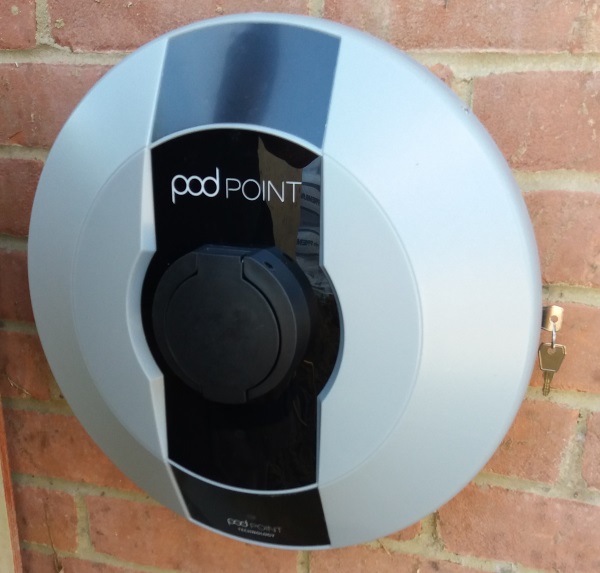
UK’s ‘cheapest’ electric vehicle home-charging tariff launched

EDF has joined forces with charge point operator Pod Point to offer what it claims to be the UK’s cheapest electric vehicle (EV) home-charging tariff.

The Pod Point EV Exclusive Tariff will be made available to existing users and new customers buying a Solo 3 home charger when they sign up to use EDF for their energy.

It will see customers charged 7.4 pence per kilowatt hour for energy used between the hours of midnight and 5am – during which drivers can schedule their EV to charge.

Pod Point’s overnight rate, it says, is combined with a competitive daytime rate, to provide customers with the best overall EV tariff based on typical usage.

Job Done

It explained that its EV tariff is the cheapest available based on an annual Ofgem typical peak usage of 2,700kWh peak usage and 2,000 kWh off-peak EV charging usage (8,000 miles) when comparing the average peak and off-peak rate of the Pod Point EV Exclusive tariff for customers paying by direct debit and have a smart meter, with the average peak and off-peak rate rates of EV specific tariffs from other suppliers that do not require control of vehicle or charger

Read more: FleetNews

It’s Time to Go Green!

If you would like to know more about Solar Panels and the PowerBanx range of home battery systems, and get a free instant quote, please complete our online form: