Category Archives: Electric Cars

News and reviews of the latest electric cars (full electrics and plug-in hybrids).

Ford to unleash more than a dozen electrified vehicles by 2021

More details have emerged regarding Ford’s €4.2 billion plans to release 13 new electrified vehicles globally by 2021.

One of the first of these models set to launch will be a plug-in version of the Escape SUV crossover planned for 2019, sources told Automotive News. The North America-only Escape is near-identical to the Ford Kuga, suggesting a hybrid version of this is in the works for Europe.

The source also revealed American market models including the Escape platform partner Lincoln Navigator, as well as the Ford Expedition large SUV and platform partner Lincoln Navigator will all also come in hybrid drive from 2019. These four new hybrids follow the first of the 13-strong new wave of electric vehicles (EVs), the Police Responder hybrid sedan, coming in 2018.

The first model Ford has officially announced for Europe will be a plug-in hybrid version of the best-selling Ford Transit. Launching in 2019, the Ford Transit Custom plug-in hybrid, which is taking part in emission trials in London this autumn, will be followed by Ford’s flagship new all-electric small SUV, which is targeted at models such as the Opel Ampera-e, Volkswagen I.D. Crozz, 2018 Nissan Leaf, Jaguar i-Pace and Tesla Model S, all targeting 300-mile (482km) ranges.

Although Ford has only officially announced seven of the 13 models, most have now been revealed through sources, as outlined in the list below:

  • 2018 – Police Responder hybrid sedan (officially announced)
  • 2019 – Ford Escape plug-in hybrid, Lincoln MKC plug-in hybrid, Ford Expedition hybrid, Lincoln Navigator hybrid, Transit Custom plug-in hybrid (latter officially announced for Europe)
  • 2020 – Small all-electric SUV with 300-mile range, Ford Mustang hybrid, Ford F-150 pick-up hybrid (all officially announced)
  • 2021 – autonomous hybrid vehicle, for commercial mobility services (officially announced)
  • A second hybrid police vehicle (officially announced)
  • Two more currently unknown.

Following new CEO Jim Hackett taking the helm in May, analysts believe Ford will be taking a much more aggressive approach to EVs going forwards, while being cautious to launch models before there is enough of a market to realise significant returns on investment.

Read more: Autovista Group

BMW i3 All-Electric (Image: BMW)

BMW i3 facelift launched with 181bhp i3s range-topper

BMW has unveiled the i3s – an updated version of its three- year-old electric-powered hatchback featuring a more sporting appearance, added reserves and an upgraded wheel and tyre package.

It heads a new four-model strong facelifted i3 line-up that’s on display at the Frankfurt motor show. Sales have kicked off now, with prices for the range starting at £34,070. The i3s starts at £36,975.

Central among the changes brought to the new i3s is a more powerful synchronous electric motor. With 181bhp and 199lb ft of torque, the rear mounted unit is tuned to deliver a subtle 13bhp and 15lb ft more than the in-housed produced motor used by the standard version of the facelifted i3, which continues to produce 168bhp and 184lb ft.

Both new i3 models deliver drive to the rear-wheels via the same a fixed ratio gearbox. But while the standard i3 runs restyled 19-inch wheels shod with the same 155/70 profile low rolling resistance as the original model launched in 2014, the new i3s comes with larger 20-inch alloys and wider 195/50 profile rubber.

With the larger wheels and greater levels of standard equipment, the i3s tips the scales 20kg above its standard sibling at 1265kg. However, its added power and torque sees it post a faster 0-62mph time at 6.9sec versus the claimed 7.2sec for the standard i3. The new range topping i3 model also reaches a higher limited top speed of 100mph against the 93mph of its less powerful sibling.

In a bid to improve its agility, BMW has provided the i3s with a 40mm wider rear track. It is combined with a sport suspension featuring a 10mm lower ride height than the standard i3, together with uniquely tuned springs, dampers and anti-roll bars.  Further changes are concentrated at the dynamic stability control system, which receives new software that is claimed to provide it with faster and improved response to a loss in traction.

Read more: Autocar

Growing Fuel Included

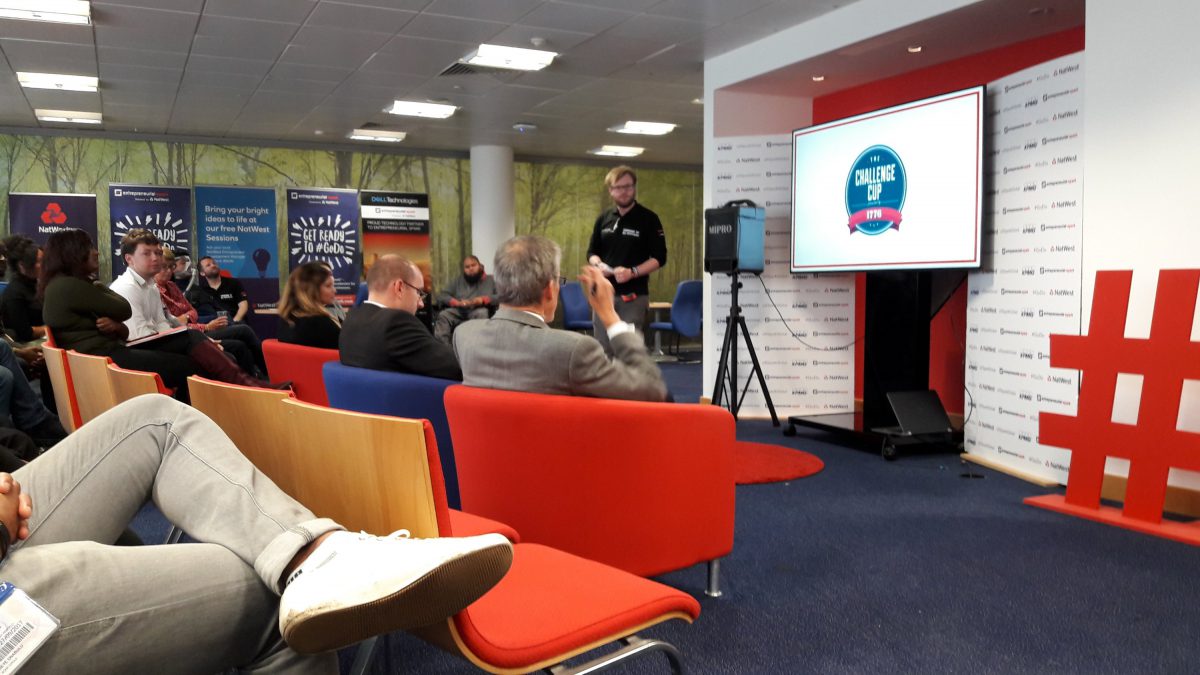
We have started the process of growing Fuel Included Limited by looking for investment opportunities. Today we are in Birmingham having got through the preliminary rounds of the Challenge Cup organised by 1776.

Jason pitched our business plan to four investment judges and I’m pleased to announce we got through to the shortlist.

I’ll follow up with more news, and hopefully a video of our pitch, soon.

The eco guide to Electric Vehicle hype

Don’t get spooked by the pro-fossil fuel lobby: when we abandon petrol and diesel, our whole world is going to change.

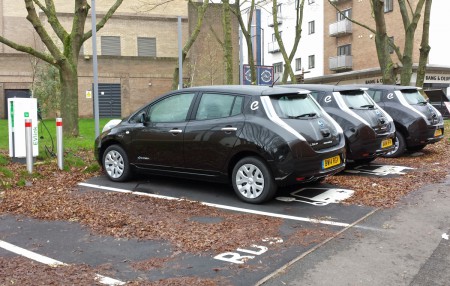
e-Car Club Nissan Leafs in Northampton (Image: T. Larkum)

When it comes to cars, I had a bit of luck this summer. No, I wasn’t loaned the new Tesla Model 3. My street underwent a pavement improvement scheme. All the parking bays were suspended and minicabs no longer idled their engines during the night. I found myself living in an accidental Low Emissions Zone. It was wonderful.

Yet despite research telling us that even very low levels of air pollution can shorten our lives, there are plans for just six Clean Air Zones across the UK by 2019. Instead, our dreams of breathable air lie with the Electric Vehicle (EV) revolution. It’s coming to save us in, um, 23 years (new petrol and diesel cars will be banned in 2040).

Can EVs really save the day? When it comes to decarbonising, yes. Growth in electric vehicles alone could save 2m barrels of oil per day by 2025. Impressive. But there are concerns over limitations of battery technology and the rare earth minerals needed to produce them.

Those who tried to save the planet last time around by buying a diesel car and have been left with a particulate-spewing monster are obviously feeling tender. At the extreme end of EV bashing is Dirty Secrets of Electric Cars, a video from a pro-fossil fuel advocacy group connected to the global-warming-denying Koch brothers. The best I can say is that it lacks imagination.

And you need imagination when buying into the promise of electric power. This is not just swapping cars, it’s about a whole new decarbonised power structure, one that takes periodic giant leaps forwards, in battery technology, in grid and storage innovation.

Read more: The Guardian

It’s The Business!

We’re in Skegness for the aquarium, our youngest is diving with the sharks! While she waits to go in I’m off to get the car charged.

The i3 has plenty enough range to get back to the Peterborough services. In fact it’s suggesting we could get 160 miles out of this charge which theoretically could get us all the way back to Northampton.

However Zap-map.com says there’s a free POD Point charger in Skegness so I’m going to investigate.

It’s in the Aura Business Park and it turns out to be easy to find. I plug in and it’s charging immediately, nothing else required.

While in the Aquarium the car gets fully charged. The dive has just finished and we’ll be heading back to the car in a minute. There’s a Pizza Hut next to it so I suspect that’s what we’ll be having for dinner tonight!

Update: We did eat in Pizza Hut. We also got home all the way from Skegness to Northampton without needing to charge (in fact, with about 40 miles left on the clock) – and for free!

Cheap Motoring

Ton up for Go Ultra Low Company scheme

The number of Go Ultra Low Companies has reached the century mark, as the number of the UK’s leading organisations and companies that have committed to ultra low emission (ULEV) fleets reaches 100.

Cheap Motoring

One of the main criteria of GUL Company status is a declaration that at least 5% of an organisation’s fleet must be made up of electric vehicles by 2020.

New companies to sign up include OVO Energy, Santander, and Gatwick Airport, whilst organisations are also able to get involved in a project that is proving popular in the public and higher education sectors.

Swansea University and Oxford City Council have both been granted GUL Company status, all joining the likes of the London Fire Brigade, Britvic, Microsoft, Cambridge University, POD Point, and Chargemaster.

A number of those organisations listed have committed to making more than 5% of their fleet electric by 2020, with Santander wanting EVs to make up 10% of its fleet by that date – it currently runs 57 electric vehicles out of a 1,400-strong fleet. Oxford City Council has said that 7% of its fleet will be electric by the end of the decade.

Claire Perry MP, Minister of State for Climate Change and Industry, said:

“The UK is the third best country in the world at tackling climate change and we’re investing in innovative clean technologies to support the move to a low-carbon economy through our ambitious Industrial Strategy.

“This Government backs companies that make the switch to low emission vehicles through grants and incentives – it’s good for business, good for the air we all breathe and good for reducing the amount of greenhouse gas we produce.”

Read more: Next Green Car

My Renault ZOE charging at an Ecotricity 22kW medium-fast charger (Image: T. Larkum)

Electric vehicle batteries may get much more valuable soon

A new study shows they can help the grid without being degraded.

My Renault ZOE charging at an Ecotricity 22kW medium-fast charger (Image: T. Larkum)

One of the hottest questions among energy nerds these days has to do with the interaction of electric vehicles and the electricity grid. Will EVs remain passive consumers of electricity, like toasters or refrigerators, the way they are now? Or will they be able to communicate with the grid and send power back to it when needed?

The answer depends on both technology and economics. A new study contains reason for great optimism.

First, some quick background.

Grid nerds hope EV batteries will talk to the grid

If recent forecasts are accurate, the electric vehicle market is about to take off. The latest research on EVs from Bloomberg New Energy Finance (BNEF) — which gets more optimistic every year — now estimates

“that EVs will account for 54% of new car sales by 2040, not 35% as previously forecast,” which means that “a third of the global light-duty vehicle fleet will be electrified by 2040.”

That means tens of millions of batteries floating around, storing electricity while the cars aren’t in use and releasing it when they are.

Theoretically, all that energy storage could be very useful to the grid, which needs all the storage it can get in order to integrate more variable renewable energy. It needs big, steady, long-term storage, for monthly or yearly variations in sun and wind, but it also needs fast, responsive, short-term storage, to smooth out smaller variations of seconds, minutes, or hours — to provide “voltage regulation,” “frequency response,” and other grid services (many of which are now typically provided by natural gas plants, which will have to go soon).

Read more: Vox

Electric cars charging in Milton Keynes (Image: T. Larkum)

Parked electric cars are earning money balancing the grid in Denmark

Vehicle-to-grid system could offer frequency response, incentivize electric ownership.

Electric cars charging in Milton Keynes (Image: T. Larkum)

A year-long trial in Denmark is showing that utilities can use parked electric vehicles (EVs) as spare batteries, and those EVs can earn quite a bit of money for their owners from the utilities.

In an interview with Bloomberg New Energy Finance, Nissan Europe’s director of energy services, Francisco Carranza, said that a fleet of 10 Nissan e-NV200 vans has earned €1,300 ($1,530) over the year.

Electricity grids around the world are facing an era of rapid change as more electric vehicles hit the road and as grid supply changes. For grid managers, sometimes small amounts of power are necessary to regulate current frequency and keep the grid working. At the same time, if a lot of electric vehicles draw power from the grid concurrently (for example, when they’re parked at home at night, or when they’re parked at work during the day), that threatens to change how grid operators plan to meet demand, as well.

Researchers and grid managers have theorized that vehicle-to-grid connections could help solve some of these problems. By installing two-way connections where an EV could charge its battery and send power back to the grid when it’s needed, an electric car battery increases its value and makes electricity infrastructure more stable.

Research has been done on vehicle-to-grid connections for years. In 2010, East Coast grid manager PJM worked with the University of Delaware to test communication control and logic between an electric vehicle and a grid.

More recently, Ford and GM have tried similar tests, working especially to synchronize charge and discharge cycles so that the owner of the EV always has enough juice to get in the car and go when necessary.

Read more: ars Techinca

Electric cars charging in Milton Keynes (Image: T. Larkum)

UK government must raise the bar for electric vehicle adoption

British roads could stand on the verge of a revolution in personal transport, according to a new study.

Electric cars charging in Milton Keynes (Image: T. Larkum)

With the UK government becoming the latest to name 2040 as the cut-off point for petrol and diesel fuelled transport, manufacturers are finally beginning to prioritise the next generation of electronic vehicles (EVs), presenting new challenges for companies, governments, and drivers themselves.

With the EU collectively in danger of failing to meet various climate targets at present, a number of the community’s largest member states have announced measures aimed at weaning citizens off the direct consumption of petrol and diesel. Following a ban on petrol and diesel fuelled cars in France recently being scheduled for 2040, the United Kingdom has followed suit.

The governmental pushes away from petrol and diesel mean that large car producers like Volvo have an ultimatum to work toward – create electronic vehicles worth consumers’ whiles, or face becoming by-standers in the future automotive market. Change in public perception had previously pushed large manufacturers, most notably Toyota with their infamous Prius hybrid line, putting their money and brand influence behind partially electronic vehicles, however, with greater public awareness around the environmental impact of petrol and diesel, a growing variety of electric vehicles have come to the fore, enabling governments to put their trust in the industry to continue to profit in spite of their intervention.

However, while the market is moving steadily toward electrified transport, the uptake of electric vehicles could be double government estimates as early as 2020, according to new research by Baringa Partners. Researchers at the consulting firm, who called on policy makers to address issues around the integration of potentially soaring levels of EVs into the energy system, found that 18% of people said they would consider buying an electric vehicle for their next car, well above the governmental projection of a mere 9% of the UK’s road fleet by 2020.

Read more: Consultancy UK