Category Archives: Electric Cars

News and reviews of the latest electric cars (full electrics and plug-in hybrids).

eVolt Rapid Chargers installed in Aimer Square, Dundee (Image: eVolt)

eVolt installs rapid charging units for Dundee City Council

eVolt UK, the nationwide supplier of electrical vehicle (EV) charging units, has installed the latest versions of its rapid charging units for a new hub to help Dundee City Council promote electric taxi use.

eVolt has installed four Raption 50kW Rapid Chargers and three 22kW eVolve chargers at the new hub at Aimer Square. The Rapid Chargers are capable of charging two vehicles simultaneously at full power in approximately 30 minutes.

eVolt Rapid Chargers installed in Aimer Square, Dundee (Image: eVolt)

This is the first of three rapid charging hubs to be introduced in Dundee in 2018 through the Office for Low Emission Vehicles (OLEV) Go Ultra Low programme. Dundee City Council selected the locations based on commuter routes and also following a questionnaire sent to the city’s taxi drivers considering their opinions on where the hubs should be sited.

Fraser Crichton, Transport Officer at Dundee City Council, has been encouraged by the early usage of the units: “The Rapid Chargers have been in use at Aimer Square since the beginning of April and have already been used over 700 times in the 10 days since opening, including over 100 different users. There are currently 94 pure electric taxis in use in Dundee and we hope to see more drivers make the transition.

“We have worked together with eVolt for a number of years now and have found the products to be high-quality and extremely reliable. They have always provided us with excellent customer service and support.”

A further two Rapid Chargers will be installed at Aimer Square later this year. The other two hubs will also be completed this year, with four Rapid Chargers and two eVolve chargers being installed at Queen Street car park, and six Rapid Chargers and three eVolve chargers being installed on Prince’s Street in the city centre.

Justin Meyer, General Manager of eVolt UK, says the company is pleased to be involved in the project in Dundee:

“With over 100 charge points, including the busiest Rapid Chargers in Scotland, Dundee is leading the way for EV. We are proud to be supporting the council’s project to lower emissions and increase the number of EV taxis by providing highly reliable and efficient charging units for these hubs.”

Source: Gravity London PR

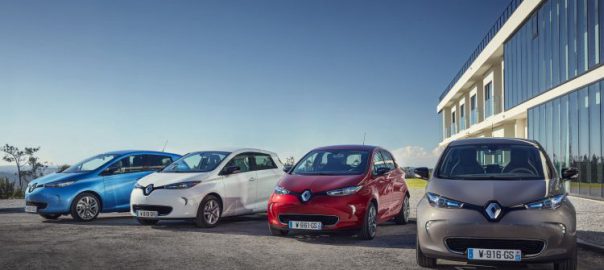
Electric Car Line-up (Image: Go Ultra Low)

What’s put the spark in Norway’s electric car revolution?

The Nordic country leads the world due to environmental concerns, but also big subsidies

There is a low hum that Norwegians have grown used to as they walk down their streets. The sound of Teslas, Nissan Leafs, BMW i3s, VW e-Golfs and Kia Souls gliding past each other.

While electric cars are increasingly noticeable in most capital cities, the sheer number in Oslo and throughout the rest of the country can surprise visitors. Norway has been described as a world leader and last year more than half of new car sales were electric or hybrid.

Electric Car Line-up (Image: Go Ultra Low)

The Norwegian parliament has set 2025 as the goal for all new cars to have zero emissions, compared with the UK’s 2040. However, such enthusiastic embracing of electric vehicles by ordinary Norwegians is not all down to ecological benefits but something more simple – money.

While motorists are typically subject to punitive levels of taxation, those who buy a purely electric vehicle are rewarded with a string of incentives worth thousands of pounds. Buyers escape heavy import or purchase taxes and are also exempt from 25% VAT. They also avoid road tax, road tolls, pay half price on ferries, get free municipal parking in cities and can usually use bus lanes.

Which is why the country is the third-largest market for electric vehicles in the world, after the US and China. And with a population of just 5.35 million. So what can the UK learn from the Norwegians?

Read more: The Guardian

Oil industry is ‘peddling misinformation’ about electric vehicles

  • Electric vehicles are cleaner and more efficient than conventional vehicles.
  • Reports against EVs are coming from oil-backed studies, leading to skewed public perceptions of battery-run autos.
  • Electricity powered transportation will cause less pollution and less asthma, cancer and other illnesses associated with pollution from the burning of fossil fuels.

When technological innovation threatens to upend the status quo, the status quo fights back. Every time. I try to keep that in mind when observing oil industry-backed efforts to discredit electric vehicles (EVs) and dismantle progress on transportation electrification by peddling misinformation through industry-funded studies.

To give you a sense of the absurdity of these efforts, imagine Bell Communication publishing a report suggesting cell phones are less convenient than landlines. Or Blockbusters paying for an analysis showing Netflix makes watching movies more difficult.

The vast majority of research institutions and environmental public interest groups support accelerated EV adoption because the science is clear that EVs are much cleaner than conventional vehicles.

Consider this: electric vehicles don’t have tailpipes. They run on electricity, and across the country, our electricity sources are getting cleaner. Even factoring in emissions from electricity used to power EVs today and pollution from battery manufacturing, electric vehicles are already significantly to vastly lower in emissions than conventional vehicles, depending on how the electricity is produced in different regions of the country.

Read more: CNBC

Classic cars experiencing royal rebirths as electric vehicles

Prince Harry and Meghan, Duchess of Sussex, are a trend-setting couple on many levels — but there is one movement they’ve championed that has gone relatively unnoticed.

With the world’s cameras set upon them last month, the royal couple rode in style from their wedding ceremony to the evening reception in a 1968 baby blue Jaguar E-type.

What global viewers may not have realized, however, is that the roadster had been refitted with a full battery-powered engine — an apt ride for the environment-conscious couple.

The prototype Jaguar E-type Concept Zero is so far a one-off, but E-type owners with a spare $400,000 can also get the electric conversion. Jaguar hopes it will “future-proof” classic car ownership and lead to a high-end electric fleet of what Enzo Ferrari called “the most beautiful car in the world.”

The E-type is one of several classics experiencing rebirths as zero-emission vehicles for a new generation of drivers.

Read more: WFMZ

Rapid Charging Step 11: Car is Charging (Image: T. Larkum)

Smart charging could deliver EVs a decade earlier at lower cost to consumers

Smart charging of electric vehicles (EVs) could cut the cost of integration into the UK power system by over £1 billion compared to standard charging, according to a new report that also found running an EV could be ten times cheaper than a conventional car.

WWF commissioned Vivid Economics to deliver a two-part report on the effect of bringing the UK’s proposed 2040 ban on the sale of new petrol and diesel vehicles ahead by ten years.

Rapid Charging Step 11: Car is Charging (Image: T. Larkum)
Rapid Charging (Image: T. Larkum)

It found that the ‘2030 scenario’, which forecasts 20 million electric cars and vans on UK roads, could be delivered at lower cost than the 13 million under the ‘2040 scenario’. The report argues that this is due to the charging profile rather than the number of EVs, which it said is a more important factor.

“The smartness of the transition to electric vehicles will be the main factor determining how cost effective the transition is, not the speed of the transition,” it states.

Read more: Current News

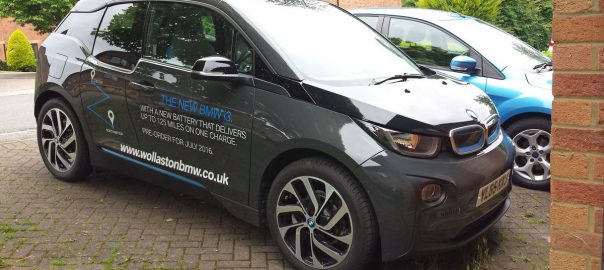
The i3 on our drive (Image: T. Larkum)

The taxi service that’s free… as long as you keep singing

Do you enjoy singing in front of strangers in a confined space? Like the interior of a BMW i3?

Are you going to be in Finland next month and want a free ride to a music festival?

The i3 on our drive (Image: T. Larkum)
BMW i3 (Image: T. Larkum)

Well, if you can say ‘yes’ to all of those increasingly obscure questions, then you are in luck – a Finnish clean energy company is providing a taxi service to the Ruisrock festival that is free, as long as you keep singing.

The Fortum Singalong Shuttle is a taxi service that only accepts singing as payment – as the company says, combining ride sharing with Carpool Karaoke – and only uses pure electric BMW i3 BEVs.

Read more: Stuff

Cheapest electric car uk

Final testing before the rouen normandy autonomous lab on-demand mobility service opens to the public

Métropole Rouen Normandie, Transdev Group, Groupe Renault, Matmut – partners in the Rouen Normandy Autonomous Lab initiative – are testing, with the support of the Normandy Region and Banque des Territoires, the first on-demand shared mobility service to use autonomous vehicles on open roads in Europe. The service will be made available to the public in the final quarter of 2018 with four autonomous Renault ZOE all-electric vehicles and an i-Cristal autonomous urban shuttle jointly developed by Transdev and Lohr.

The Rouen Normandy Autonomous Lab service will provide extensive coverage in Rouen’s “Technopôle du Madrillet” business park in Saint-Etienne du Rouvray through connections to the “Technopôle” tram stop. The goal is to provide mobility solutions in an area to which conventional public transportation services are poorly suited, in a first-mile and last-mile approach. Users can call a vehicle in real-time from the smartphone app.

Renault ZOE Z.E. 40 Example Colours (Image: Renault)
Renault ZOE Z.E. 40 (Image: Renault)

The vehicles will run on three routes covering a distance of 10 kilometres, with 17 stops across the district and a link to the Rouen public transportation system.

The four Renault ZOE all-electric cars used in the project are already being tested on open roads and are equipped with autonomous systems developed by Transdev and Renault. The tests cover all considerations related to typical traffic conditions, such as other vehicles, intersections, rotaries and building exits. The fleet will also feature an i-Cristal autonomous urban shuttle jointly developed by Transdev and Lohr.

After a period of tests, this on-demand experimental service is due to be made available to the public in September 2018, subject to obtaining the necessary approvals, and will the run until December 2019. This trial will provide an opportunity to fine-tune the technology and gain insight into usage and take-up among local residents to enable necessary adjustments.

Read more: Automotive World

The Transition Trinity: Electric Car, Solar and Home Battery

Fuel Included was founded in 2014 in response to the threat of global warming. Our aim is to promote sustainable technologies at affordable prices, a mission that becomes ever more important as global climate changes accelerate.

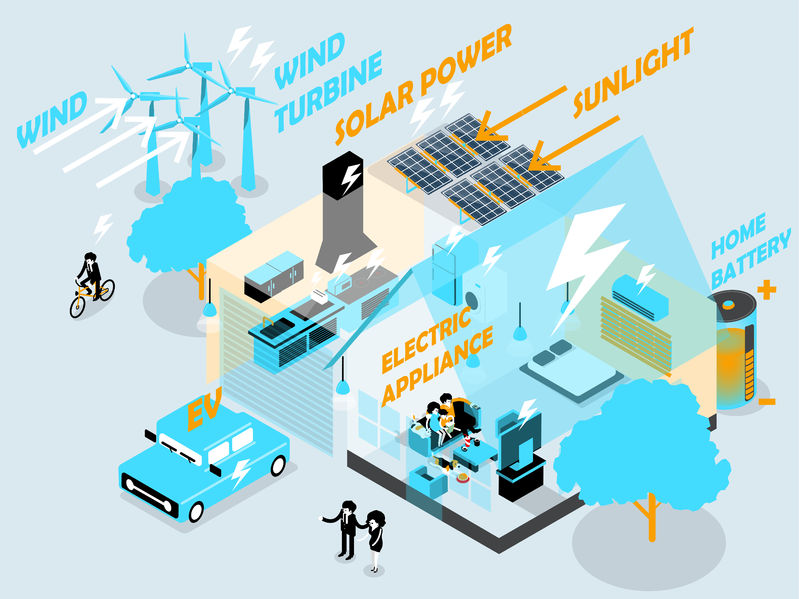
59210374_EnergyHome_IsometricGraphic_123RF
Initially we concentrated on electric cars but as they become increasingly mainstream we are able to focus on other green technologies. We now offer our own home battery system, the PowerBanx, to go along with solar panel installs.

While the Global Energy Transition often seems to be about big infrastructure projects, like offshore windfarms and grid battery storage, what’s happening at the home level is arguably more important, in terms of the impact on the individual and on the future requirements for national grids.

For years we have seen the rise of solar power as it becomes cheaper and undercuts other forms of power generation. More recently, we have seen the spread of electric vehicles (EV), as the replacement of fossil fuel vehicles accelerates.

Finally we are seeing the widespread introduction of battery systems (such as our PowerBanx) into homes; all already have solar and many already have an EV.

Read more: LinkedIn


Red Tesla Model S (Image: T. Larkum)

5 Reasons EVs Will Displace ICEs

My grandfather was quite intrigued with those horseless carriages. Here he is, with a big grin on his face, testing out a Model T back in 1913.

A few years earlier, Henry Ford had debuted his Detroit assembly line and began cranking out Model Ts – the world’s first mass-produced automobile. The rest is history.

Then, a hundred years later in 2010, Nissan (OTCPK:NSANY) became the first company to mass-produce EVs (cars powered only by electricity), the Nissan Leaf. Motortrend at the time noted that the Leaf “could be the most significant vehicle of the century.”

Red Tesla Model S (Image: T. Larkum)

Did the 2010 Leaf and does today’s Tesla (NASDAQ:TSLA) Model 3 indeed herald a transportation revolution into EVs, much as Henry Ford’s Model T did into “horseless carriages” a century earlier?

Well, EV sales have soared from practically nothing in 2010 to an estimated 1.6 million in 2018 and are up 68% over 2017.

The surge in EV sales (growing 50-100% each year now) is primarily due to better and more affordable batteries and today virtually every major automaker plans on introducing electric cars, if they haven’t already, both hybrids and EVs.

Read more: Seeking Alpha

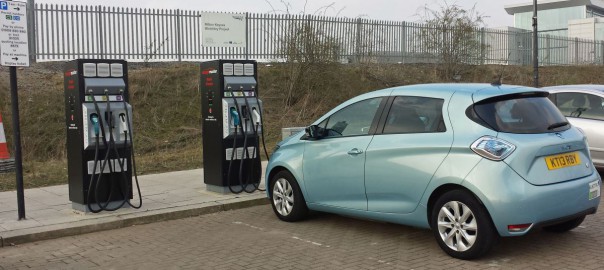
Rapid Chargers next to Milton Keynes Central railway station parking (Image: T. Larkum)

BP to buy Chargemaster electric car charging network

BP to add EV fast chargers at its 1,200 filling stations with its new BP Chargemaster venture

Oil giant BP has announced that it intends to buy the UK’s biggest electric vehicle charger suppliers Chargemaster. The Luton-based company operates the Polar charging network with over 6,000 charging points across the UK, covering home, workplace and public installations.

Rapid Chargers next to Milton Keynes Central railway station parking (Image: T. Larkum)
Chargemaster Rapid Chargers next to Milton Keynes Central railway station parking (Image: T. Larkum)

BP currently has 1,200 filling stations in the UK and says that it will roll out ultra-fast chargers, including 150kW rapid chargers capable of delivering 100 miles of range in just 10 minutes, across its forecourts within the next 12 months. The oil company estimates that there will be 12 million EVs on UK roads by 2040, up from around 135,000 in 2017.

David Martell, Chief Executive of Chargemaster, said

“The acquisition of Chargemaster by BP marks a true milestone in the move towards low carbon motoring in the UK. I am truly excited to lead the Chargemaster team into a new era backed by the strength and scale of BP, which will help us maintain our market-leading position and grow the national POLAR charging network to support the large range of exciting new electric vehicles that are coming to market in the next couple of years.”

The deal will see Chargemaster, which has 40,000 customers, rebranded as BP Chargemaster.

Read more: AutoExpress