Category Archives: Electric Cars

News and reviews of the latest electric cars (full electrics and plug-in hybrids).

Ubitricity charging post demonstrator at CENEX show (Image: T. Larkum)

Siemens to deploy London’s street light electric vehicle chargers with ubitricity

Siemens has partnered with electric vehicle charging solutions provider ubitricity to transform hundreds of London’s street lamps into new on street chargers.

The company was one of eight to win a place on a city-wide framework contract hosted by Transport for London (TfL), the Greater London Authority and London Councils.

It will work with the Berlin-based company to deliver ‘Smart City’ EV charging points, which use mobile electricity metering technology to allow existing street lights to share electricity supply with an EV charge point.

Ubitricity charging post demonstrator at CENEX show (Image: T. Larkum)

Drivers connect to it using a cable fitted with a meter that identifies the charging point and turns on the power. The data is sent digitally to a mobile power supplier who would bill for the electricity consumed, while those using a standard cable would be authorised through a mobile site.

Both the boroughs of Wandsworth and Kensington and Chelsea have committed used lamp post charging in their EV infrastructure schemes to overcome the lack of on street parking facilities in the capital.

Chris Beadsworth, director at Siemens Energy Management, said: “By using existing infrastructure, it will provide a quality, convenient and simple charging point to help accelerate the increase in privately owned electric vehicles. Our aim is that charging your car should be as simple as charging your phone.

“Working together with our partners we make a cleaner more modern energy network a reality whilst delivering benefits for UK consumers without compromise.”

Read more: Current News
Union Of Concerned Scientists’ President: Electric Cars Rock

But he also identifies why electric vehicle ownership remains out of reach for many.

Earlier this year Ken Kimmell, President of the Union of Concerned Scientists, purchased a Chevrolet Bolt EV. After about 6 months, he has found electric vehicle ownership to be everything he had hoped. The car is fun to drive, has a low cost of ownership, and far more efficient than a gasoline car.

Mr. Kimmell has uncovered what many EV owners have already come to realize. For a home owner with a garage, an EV is more convenient (not less) than a gasoline-powered vehicle.

“I charge the car once or twice a week overnight. Plugging it in takes about five seconds, and the charging takes between 4-8 hours. When I wake up, the battery is full. No more trips to the gas station. (…) Because of the long range, I rarely need to use public charging stations while on the road. I’ve used them five times since I leased the car, typically to add about fifty miles of range.”

Owning an EV like a Chevy Bolt, Tesla Model 3 or Nissan Leaf is also much more affordable than it appears at first blush. In addition to taking advantage of the $7,500 federal tax credit, $2,500 of his down payment was paid back by the MA rebate program. Similar programs are available in many other states. That is just the upfront savings:

“At the same time, I am saving about $60/month in fueling costs, as electricity cost per mile is less than half of gasoline, even in a state like Massachusetts that has relatively high electricity costs and relatively low gas prices. And not paying for oil changes, air filters, belts, brake pads and many other maintenance expenses for a gas-fired car also saves money.”

Read more: Inside EVs

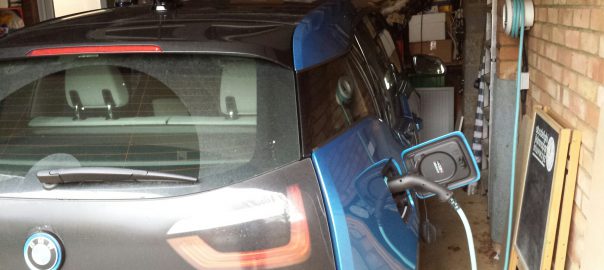
Figure 4: Charging on Christmas Day (Image: T. Larkum)

E.On revs up new tariff designed for electric vehicle drivers

E.On has launched a 100% renewable electricity tariff designed specifically for electric vehicle drivers, offering a fixed reward equivalent to driving 850 miles for free.

E.On ‘Fix and Drive’ is a two-year fixed price tariff is available to drivers who own or lease a plug-in electric or hybrid vehicle who receive a £30 credit on their electricity account six months after they sign up to the tariff and is earned annually.

Figure 4: Charging on Christmas Day (Image: T. Larkum)
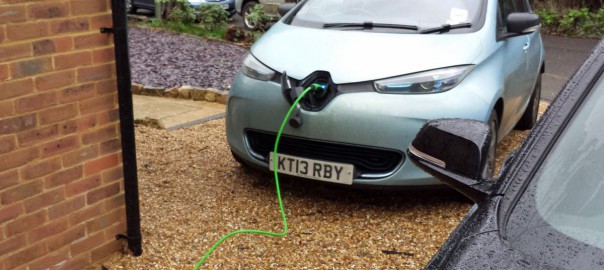
Charging at home (Image: T. Larkum)

Michael Lewis, Chief Executive of E.ON UK, said:

“Sales of electric vehicles are increasing year on year and the UK is now one of Europe’s largest markets for them. Drivers need to be able to charge their cars quickly and conveniently, and for many, that means plugging in at home.

“Our new Fix and Drive tariff has been specifically designed with these customers in mind, who likely have higher electricity bills, to provide competitive pricing, a rebate and clean energy to supply their homes and power their vehicles.”

The tariff comes with 100% matched renewable electricity certified through Renewable Energy Guarantees of Origin (REGO), while E.On will aim to offset the carbon associated with customers’ gas use by funding projects that reduce CO2 emissions.

Read more: Current News

Why Diesel Cars Are Spoiling Your Summer

  • Many antipollution systems deactivate at high temperatures
  • Paris bans older cars after pollution soars in heat wave

Europeans aren’t just sweating through the long, hot summer. City dwellers may be coughing and wheezing more, too.

Diesel vehicles, which still command nearly half the market for new cars, are left with barely any pollution controls when temperatures soar above 35 degrees Celsius (95 Fahrenheit), according to France’s Petroleum and New Energies Research Institute. That means smog-inducing nitrogen oxide emissions that were at the center of the Volkswagen AG scandal spew into the environment unchecked.

“There are higher emissions of nitrogen oxides because the setups don’t work as well when it’s very hot,” said Gaetan Monnier, who heads the unit that led random government probes of cars after the VW scandal. “The atmosphere is also more reactive during a heatwave, making the level of cars’ emissions even more of an issue.”

Carmakers have been under scrutiny since the 2015 scandal that revealed VW had rigged the emissions setup in some 11 million diesel cars globally, the main emitters of nitrogen oxides. While sales have dropped as consumers fret over driving bans, diesels still made up 45 percent of new vehicle sales in Western Europe last year. Excessive emissions of the pollutant linked to premature deaths and respiratory problems have prompted the European Union to sue France, Germany, U.K., Romania and Hungary in May after failing for years to comply.

On-road tests have shown emissions clean-up systems start to reduce their effectiveness in cold temperatures as well as above 30 degrees.

Read more: Bloomberg

Electric cars charging in Milton Keynes (Image: T. Larkum)

Northern Powergrid to trial vehicle-to-grid charging under range of new initiatives

Northern Powergrid will install electric vehicle (EV) and vehicle-to-grid (V2G) chargers at a number of its own sites as part of a series of new initiatives aimed at growing its understanding of the impact of fleet electrification.

The distribution network operator will begin installation of 16 V2G charging points this month, which will be used to contribute to a trial of the technology when used in fleet operations.

The DNO will also invest in the installation of new EV charging points at 11 of its sites. In addition to the V2G chargers, these will support Northern Powergrid’s efforts to electrify its fleet beginning with its pool cars.

Electric cars charging in Milton Keynes (Image: T. Larkum)

“We have to get hands on and lead by example. We are starting small to begin with, bringing on five Nissan Leaf EVs that will be available for our people to use,” said Jim Cardwell, head of policy development at Northern Powergrid.

“Although colleagues frequently have to take our vehicles to places where there is no electricity, there is huge internal appetite to decarbonise as much of our fleet as possible, as soon as is practical.”

Read more: Current News

Electric cars: What’s happened to the ads?

Something has gone missing in the UK’s drive towards zero-carbon motoring: advertising.

The DNA of the UK’s car fleet is changing. Whereas every car once had a tailpipe, that is no longer the case. Total UK car sales have declined recently, and a more detailed look at the figures reveals some interesting trends.

On the graph electric vehicles (which includes all hybrids) are represented by the yellow curve, while petrol and diesel sales are represented by the red and blue curves respectively. You can clearly see just how dramatic the recent plunge in new diesel sales has been. And it’s equally clear that electrified vehicle (EV) sales are beginning to increase quite dramatically, albeit from a low base.

This rise in EV sales is impressive on a number of levels. Clearly there is a pre-existing level of demand for electrified vehicles; it turns out that some people want environmentally friendly cars that have dirt-cheap running costs and are often quite cool to boot.

However, demand can be induced – in particular, by companies’ marketing efforts. Spend more on advertising a particular product or set of products, and more will be demanded; this is after all what advertising is for.

This leads to interesting questions: are car manufacturers themselves trying to increase demand – and if they’re not, why not?

Read more: ECIU

Ultra-low emission registrations up 386% on first quarter of 2014 (Image: OLEV)

185,000 Plug-In Cars Were Sold In Europe In First Half Of 2018

June was the second-best month all time for plug-in electric car sales in Europe with more than 38,000 units put on the road.

With year-over-year growth of 37% in June, market share jumped to 2.4% (2.2% for the first half of the year).

The total sales in the first six months nearly hit 185,000 (43% more than a year ago) and it’s expected that more than 400,000 is possible in all of 2018.

Ultra-low emission registrations up 386% on first quarter of 2014 (Image: OLEV)
Ultra-low emission registrations up (Image: OLEV)

The top five best selling models in Europe – for the year are:

  • Nissan LEAF – 3,377 and 17,944 YTD
  • Renault ZOE – 3,425 and 17,016 YTD
  • BMW i3 – 2,002 and 11,301 YTD
  • Volkswagen e-Golf – 1,447 and 9,796 YTD
  • Mitsubishi Outlander PHEV – 2,174 and 9,662 YTD

Renault ZOE this time managed to beat Nissan LEAF and close the gap a little bit in the race for the best selling model.

As usual, the last month of the quarter brings some decent numbers from Tesla – 2,105 Model S and 1,829 Model X in June and 7,699 and 5,600, respectively for the year-to-date.

Read more: Inside EVs

HMRC to publish advisory fuel rate for 100% electric cars

HMRC will introduce an advisory fuel rate (AFR) for pure electric cars from September 1 at 4 pence per mile (ppl).

It is a partial victory for fleet representative body ACFO, which has been campaigning for AFRs for both pure electric cars and plug-in hybrids.

The new rate, called the Advisory Electricity Rate (AER), has been set at 4p per mile and will be published alongside AFRs for petrol, diesel and LPG (liquefied petroleum gas) cars based on engine size.

Plug-in hybrid and hybrid cars will continue to be treated as either petrol or diesel models for mileage reimbursement purposes.

AFRs apply where employers reimburse employees for business travel in their company cars, or require employees to repay the cost of fuel used for private travel. They are deemed to be tax and National Insurance-free. AFRs are reviewed quarterly and similarly, the new AER will be kept under review.

In notifying ACFO of the introduction of the new rate, HMRC said:

“HMRC will accept that if employers pay up to the Advisory Electricity Rate of 4p per mile when reimbursing their employees for business travel in a fully electric company car there is no profit – there will be no taxable profit and no Class 1 National Insurance to pay.

“On a similar basis to Advisory Fuel Rates, employers can use their own rate which better reflects their circumstances if, for example, their cars are more efficient, or if the cost of business travel is higher than the guideline rate.

“However, if they pay a rate that is higher than the Advisory Fuel Rate and can’t demonstrate the electricity cost per mile is higher, they will have to treat any excess as taxable profit and as earnings for Class 1 National Insurance purposes.”

For many years, ACFO has been calling on HMRC to publish official tax-free company car AFRs for plug-in vehicles. It has been ACFO’s belief that the absence of defined mileage reimbursement rates was a handicap to some organisations including plug-in vehicles on their choice lists.

Read more: Fleet News

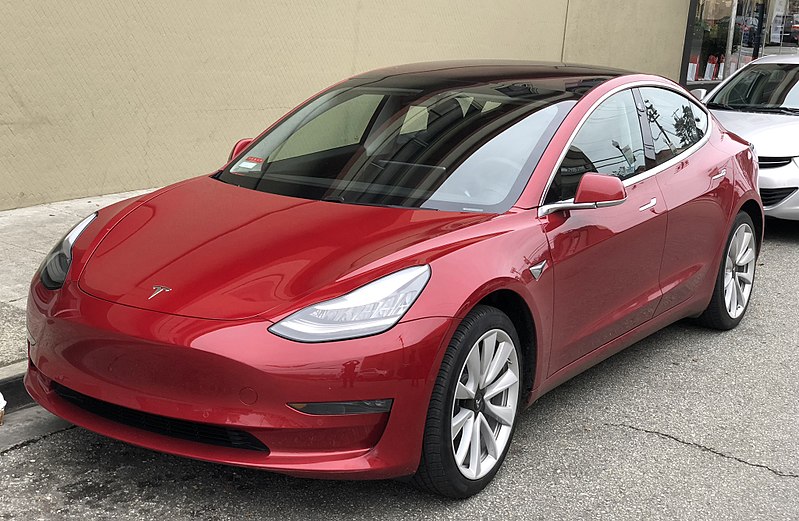
Tesla Model3 (Image: Wikimedia/Carlquinn)

I just drove the high-performance Model 3 — here’s why it’s my new favorite Tesla

  • The Model 3 Performance has two motors and can go from 0-60 mph in 3.5 seconds, with a top speed of 155 mph.
  • A “base” Performance version can be ordered for $64,000; the car I sampled was fully loaded, at $78,000.
  • I drove the Model 3 Performance for only about an hour, in less-than-ideal Manhattan conditions, but my overall impression was that the car is completely brilliant.

Here’s the bottom line: I really, really, really liked the Tesla Model 3 when I drove it earlier this year — but I like the high-performance version much, much better.

Earlier this year, I took my first proper spin behind the wheel of the Tesla Model 3, perhaps the most anticipated car in the history of the automobile industry. I had driven the Model 3 for about 15 minutes when it was launched in July of 2017, and I was impressed. The few hours that Business Insider had with the well-equipped $57,500 rear-wheel-drive version of the vehicle reinforced all my initial enthusiasms.

Tesla Model3 (Image: Wikimedia/Carlquinn)

That was just the appetizer, however. The entrée arrived this week: the $78,000 high-performance, dual-motor, all-wheel-drive Model 3. Tesla has labeled its previous cars in this category with a “P” (for performance) and a “D” (for dual-motor), along with the kilowatt-hour designation of the battery. Thus, the high-performance AWD Model S with the biggest battery available in the P100D.

Not so with the Model 3. The trim I sampled doesn’t have Model 3 badging at all and get just a “Dual Motor” label on the rear. Tesla refers to it as the Model 3 Performance.

I had a few complaints about the Model 3, but they’ve faded with time. And my main beef with what I’ve been calling the P3D was with the elevated pricing. But Tesla has adjusted it, so that a “base” P3D can be had for $64,000. If you take a pass on some of the upgrades, you get a considerably better driving experience than what the tricked-out RWD Model 3 offers — for less than $10,000 extra.

The P3D is an important evolution of the Model 3 for Tesla, which isn’t currently manufacturing the no-frills $35,000 version of the car (that vehicle will have a smaller battery than the Model 3’s now on sale, as well as a more bare-bones interior). Tesla needs revenue, and the pricey P3D will bring it in. Besides, the company’s history is that buyers tend to flock to its more expensive cars, at least initially.

Read more: Business Insider

Car emissions scandal: loopholes in the lab tests

Three years after Dieselgate, automakers are still exploiting ‘the lawful but awful ways’ to achieve the best possible scores for CO2 testing in the EU

When Volkswagen was caught cheating diesel emissions tests in 2015, one of the first actions its engineers took was to launch a secret project: to obtain cars from rival manufacturers and conduct tests on their emissions. Its aim was to find evidence of widespread cheating across the industry, so guilt could be spread around and penalties diluted, say two people inside the company.

The Volkswagen Scandal, in other words, might helpfully become the Car Scandal.

Vehicles from Fiat, Hyundai and others were tested for harmful nitrogen oxide emissions by VW engineers at the group’s Wolfsburg headquarters from late 2015 to early 2016. The engineers had a simple conundrum: VW had just admitted to equipping 11m cars with software to detect laboratory tests and enable them to enter a low-emissions mode. If VW’s best engineers found regulations so onerous that they resorted to deliberate fraud, what had its rivals done?

A third person in the company insists there was a more innocent explanation for the tests. Engineers uninvolved in the original cheating had to use rival cars as control variables to better understand their own sophisticated software — some of it supplied by third parties and used by rival brands. “We were not dirtying others’ hands to make our own look clean,” says this employee.

Volkswagen declined to comment on this previously unreported episode.

What the engineers found shocked them. Rival brands’ NOx emissions were considered “a complete disaster”. Performance on the road was “completely different to the technical data”, says a VW worker briefed on the results. The overall summary of whether rivals were also skewing emissions results was clear: “It’s not only VW who is cheating.”

What is unclear is whether rivals were deploying the same strategy as VW — using a “defeat device” to illegally trick regulators into believing its cars were green — or if they had simply become better at bending the rules on tests, a problem that still exists with petrol cars today, as the European Commission revealed last month when it disclosed the latest “tricks” carmakers were using to exploit loopholes for incoming 2020 emissions procedures.

The distinction is blurred but important. VW paid the consequences of crossing the line and cheating NOx emissions tests in the US. But the efforts of other carmakers to legally undermine testing for both NOx and CO2 in Europe have never resulted in real penalties.

“Legal optimisation was done on an industrial scale,” says Nick Molden, chief executive of Emissions Analytics, which conducts real-world driving emissions tests. “It became so ingrained in how cars were certified that the carmakers didn’t understand they had done something wrong . . . That’s the scandal in Europe: that these actions were not illegal.”

Read more: FT