Category Archives: Electric Cars

News and reviews of the latest electric cars (full electrics and plug-in hybrids).

Motorsport history as Renault ZOE makes debut

SCOTTISH motorsport history was made at Kames Motorsport Complex, Muirkirk on Sunday, September 23 during the Albar Trophy Rally.

Welshman Cameron Davies took to the track in his Renault ZOE, the first electric car to compete in a motorsport competition in Scotland.

A respectable finish followed for Davies who spent most of the day explaining the characteristics of the car to competitors and spectators alike.

2018 – Renault ZOE

The rally season at Kames ended in a convincing win for Trabboch’s Colin Gemmell and co-driver Derek Keir from Ayr in their 2.5 litre Mk2 Ford Escort.

Graham Bruce, from Sundrum and Paul Toner were runners-up in a similar car with another East Ayrshire Car Club crew David McLeod and Eamonn Boyle third in a hard-worked Talbot Sunbeam.

Their was a photo finish in the junior section as Oliver Hunter and Tom Hynd (Peugeot 107) beat Lewis Haining and George Myatt (Skoda Citigo) by one second.

Read more: Cumnock Chronicle

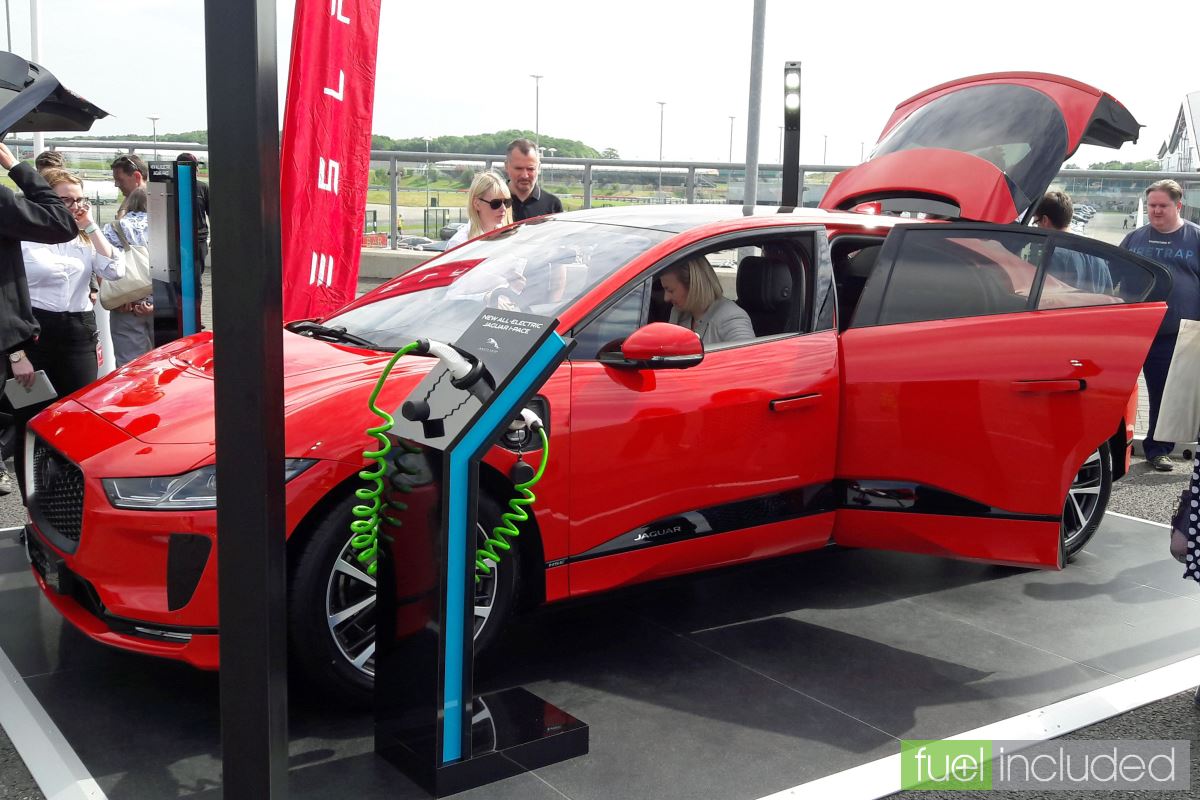
Jaguar I-PACE at Fully Charged Live show (Image: T. Larkum)

Jaguar considers transformation to EV-only brand

JLR top brass are considering making all Jaguars electric-powered within the next decade

Jaguar Land Rover bosses are considering a plan to turn Jaguar into an EV-only brand within the next decade, Autocar has learned.

It is understood that company product planners have produced an outline strategy under which Jaguar’s conventional vehicle range would be phased out over the next five to seven years, to be replaced by fully electric vehicles.

Jaguar I-PACE at Fully Charged Live show (Image: T. Larkum)

Under the plans being considered, a full-on luxury electric saloon, replacing the unloved XJ, is expected within two years. It will be a direct competitor for Porsche’s upcoming Taycan, alongside strong-selling cars such as the Tesla Model S.

Rethought as an electric vehicle, the new XJ will both play to the strengths of the 1967 original by offering segment-leading refinement and ride and look to the future by completely reinventing the classic Jaguar interior.

It is understood that the new XJ will be a no-holds-barred luxury car in every sense, offering customers a zero-pollution alternative to a Mercedes-Benz S-Class or even a Bentley Flying Spur.

The thinking is that Jaguar will steal a march on rivals by building a true luxury EV in a segment that is probably the most environmentally minded and offers greater profitability per car than lower segments. EVs also fit in perfectly with the brief of a modern-day chauffeur of private hire driver, with excellent mechanical refinement and the ability to enter low-emission zones in cities without financial penalties.

Read more: Autocar

In reverse gear? Government confirms cuts to electric vehicle grants

As the CCC calls on the government to strengthen efforts to tackle vehicle emissions, the government announces it is to slash electric vehicle grants by £1,000

The government yesterday announced it is to cut grants for electric vehicles (EVs) by £1,000 from next month and will disqualify a host of plug-in hybrid models from the popular Plug-in Car Grant scheme altogether.

In a controversial move the Department for Transport (DfT) confirmed reforms to the grant scheme will take effect from Friday November 9. It also stressed that further cuts could be imposed if the grants prove more popular than expected.

Under the changes Category 1 electric vehicles (EVs) that boast CO2 emissions of less than 50g/km and a zero emission range of at least 70 miles will see grants cut from £4,500 to £3,500.

Category 2 and 3 cars that have a plug-in range of less than 69 miles will no longer qualify for grants.

The cuts are currently limited to the Plug-in Car Grant (PICG) scheme and do not extend to the government’s separate Plug-in Van and Motorcycle schemes.

In a statement the DfT said the cuts were in response to the falling price of some EVs and were designed to ensure the available budget was focused more effectively on the cleanest new cars.

“The PICG has helped the plug-in hybrid market become more established, and the government will now focus its support on zero emission models like pure electric and hydrogen fuel cell cars,” it said. “The PICG was first introduced in 2011, designed to help stimulate the early market for ultra-low emission vehicles. So far it has supported the purchase of over 160,000 new cars. With plug-in hybrid models like the Mitsubishi Outlander becoming popular among consumers the government is focussing its attention to zero emission models such as the Nissan Leaf and BMW i3.”

It added that tax incentives would continue to remain available for plug-in hybrids.

The move came on the same day as the Committee on Climate Change (CCC) revealed it has written to the DfT and the Department for Business, Energy, and Industrial Strategy (BEIS) to warn the government’s current Road to Zero strategy for decarbonising road transport is not in line with the UK’s carbon targets. The Committee called on the government to introduce a host of new policies to encourage the switch to greener vehicles as a matter of urgency. Specifically, it said Ministers should confirm the future of the Plug-in Car Grant scheme beyond 2020.

Motoring groups attacked the decision to cut the grants, arguing it would undermine one of the few parts of the auto market that is currently growing healthily.

Read more: Business Green

Plug-in car grant axed for PHEVs and cut for electric cars

New rules for plug-in car grant means current crop of plug-in hybrids will be ineligible from November 9; grant for EVs drops by £1,000

Plug-in hybrid cars will no longer be eligible for the Government’s Plug-In Car Grant from November 9 2018, while grants for fully electric cars will be reduced from £4,500 to £3,500 at the same time.

The news comes as the Department for Transport (DfT) and the Office for Low Emission Vehicles (OLEV) confirmed Category 2 and 3 grants will end in November. That means PHEVs such as the Audi A3 e-tron and Mitsubishi Outlander PHEV, which were hitherto eligible for the grant, will no longer be so from 9 November.

In fact, none of the PHEVs currently on sale in the UK is capable of meeting the criteria necessary to qualify for the grant, making it effectively for fully electric cars only.

Category 2 cars emit 50g/km of CO2 or less and can officially travel for 10 to 69 miles on battery power alone; Category 3 cars emit between 50 and 75g/km of CO2 and can travel up to 20 miles on battery power alone. Such cars previously received a grant of £2,500, but this will cease next month.

Category 1 grants will still exist from November 9, but the amount contributed towards their cost by the Government will reduce from £4,500 to £3,500. Cars must be able to travel for 70 miles on battery power alone and emit under 50g/km in order to qualify as a Category 1 car, something no current PHEV can manage.

Read more: AutoExpress

Air pollution linked to higher risk of dementia

Air pollution may be linked with an increased risk of developing dementia, research suggests.

A London-based study, published in BMJ Open, found an association between the neurodegenerative condition and exposure to nitrogen dioxide and microscopic particles known as PM2.5.

Alzheimer’s Research UK described it is a “growing area of research”, but said the results should be treated with caution.

The researchers, from the University of London, Imperial College and King’s College London, used anonymous patient health records from the Clinical Practice Research Datalink, which collects data from GP practices.

They focused on 131,000 patients aged between 50 and 79 in 2004, who had not been diagnosed with dementia, registered at 75 general practices within the M25.

The health of the patients was tracked for an average of seven years, until they were diagnosed with dementia, died or left their GP practice.

Between 2005 and 2013, a total of 2181 patients (1.7 per cent) were diagnosed with dementia, 39 per cent of whom had Alzheimer’s disease and 29 per cent of whom had vascular dementia.

These diagnoses were found to be linked to ambient levels of nitrogen dioxide and PM2.5, based on estimates taken near the homes of patients in 2004.
Those living in areas with the top fifth of nitrogen dioxide levels had a 40 per cent increased risk of being diagnosed with dementia compared with those living in areas with the lowest, the researchers said.

A similar increase was seen with levels of PM2.5, they added.

The associations could not be explained by factors known to influence the development of the condition, but the links were more consistent for Alzheimer’s disease than vascular dementia.

The authors said:

“With the future global burden of dementia likely to be substantial, further epidemiological work is urgently needed to confirm and understand better recent findings linking air pollution to dementia.

“Our results suggest both regional and urban background pollutants may be as important as near-traffic pollutants.

“The cause of these neurodegenerative diseases is still largely unknown and may be multifactorial.

“While toxicants from air pollution have several plausible pathways to reach the brain, how and when they may influence neurodegeneration remains speculative.”

Read more: Future Build

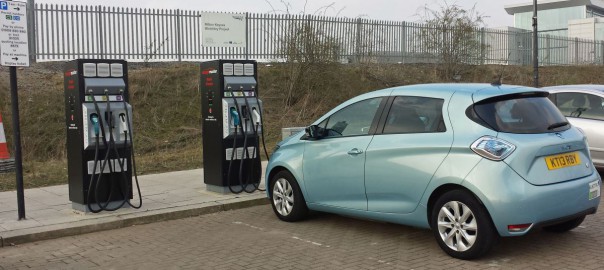
Rapid Chargers next to Milton Keynes Central railway station parking (Image: T. Larkum)

BP to roll-out electric chargers widely over next 12 months

BP customers in the UK can expect to access BP Chargemaster chargers rolling out at scale on forecourts over the next 12 months, on both company owned and dealer channels.

David Newton, chief operating officer at BP Chargemaster, told delegates at this week’s Forecourt Trader Electric Track Day that the company’s aim was to manage the energy transition and changing customer demand by supporting opportunities for customers to reduce their emissions.

“BP Chargemaster and BP believe that to accelerate the adoption of EVs, customers will require convenient access to fast and ultra-fast charging,” he said. “And we believe our retail network is well positioned to provide this access.”

Rapid Chargers next to Milton Keynes Central railway station parking (Image: T. Larkum)
Chargemaster Rapid Chargers next to Milton Keynes Central railway station parking (Image: T. Larkum)

He warned the move to electric mobility was a significant challenge and potentially a threat to the existing forecourt business, and needed careful thought by the industry as to how it would be achieved.

“Collaboration is key,” he said. “We will work pro-actively with the independent dealer community to develop mutually beneficial offers and propositions which will meet consumer demand – for now, and for the future.”

Read more: Forecourt Trader

BMW i3 120Ah (Image: BMW)

BMW i3 updated with more range and new trim options

BMW i3’s new 42.2kWh battery pack unlocks up to 193 miles under new WLTP rules

BMW has once again updated the i3. The electric hatchback is now equipped with a denser battery pack, unlocking greater claimed ranges for both the base i3 and the more powerful i3s. BMW has also tweaked the model’s trim and finish options.

Cell capacity in the base i3 increases from 94Ah to 120Ah, meaning the battery pack capacity now stands at 42.2kWh. That’s almost double the size of the original model launched in 2014, which had a battery pack rated at 22.6kWh.

BMW i3 120Ah (Image: BMW)

The new battery has been developed in partnership with Samsung and sits in the same housing as the previous pack.

Tested under new WLTP rules the 168bhp car now covers a maximum claimed range of 193 miles on a single charge – an increase of 34 miles over the previous iteration of the i3.

More tweaks include a new metallic beige and grey body colour, new interior upholstery options, the availability of adaptive LED headlights, and an updated iDrive infotainment system with a new menu layout.

Read more: AutoExpress

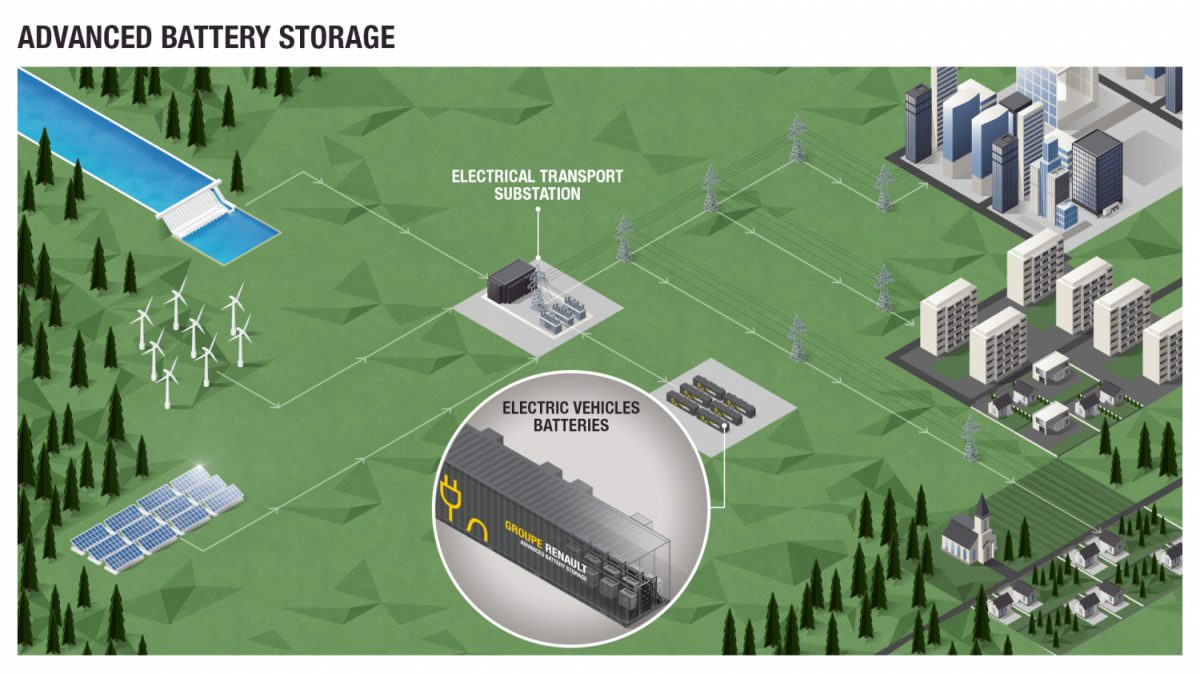
Groupe Renault is launching “Advanced Battery Storage” (Image: Renault)

Groupe Renault is launching “Advanced Battery Storage”

Groupe Renault is launching “Advanced Battery Storage”, the biggest energy stationary storage system from electric vehicle (EV) batteries in Europe

  • Groupe Renault is announcing the launch of its “Advanced Battery Storage” program, which aims to build the biggest energy stationary storage system using EV batteries ever designed in Europe by 2020 (power: 70 MW / energy: 60MWh).
  • This system, installed on several sites in France and Germany, will facilitate the integration of renewable energies into electric grids.
  • “Advanced Battery Storage” is part of Groupe Renault’s strategy to develop a smart electric ecosystem in favor of the energy transition.

Groupe Renault, the European leader in electric mobility, announced today the launch of Advanced Battery Storage, a stationary storage system for energy developed exclusively from EV batteries.

Groupe Renault is launching “Advanced Battery Storage” (Image: Renault)

It will have a storage capacity of at least 60 MWh, making it the biggest system of its kind ever built in Europe. The first facilities will be developed in early 2019 on three sites in France and Germany: at the Renault plants in Douai and Cléon and at a former coal-fired plant in North Rhine-Westphalia. The storage capacity will then be gradually expanded over time to contain the energy of 2,000 EV batteries. At this phase, the system will have reached – or more likely, exceed – the 60 MWh, equivalent to the daily consumption of a city of 5,000 households.

The purpose of this system is to manage the difference between electricity consumption and production at a given time, in order to increase the proportion of renewable sources in the energy mix. This means maintaining the balance between offer and demand on the electricity grid by integrating different energy sources with fluctuating production capacities. The slightest gap between consumption and production sets off disturbances that can compromise the stability of the local frequency (50 Hz). “Our stationary storage solution aims to offset these differences: it delivers its reserves to a point of imbalance in the grid at a given time to reduce the effects,” said Nicolas Schottey, Director of the Groupe Renault New Business Energy program. By helping to maintain the balance of the grid, the stationary storage system will boost the economic attractiveness of low-carbon energies.

This stationary storage system is built using EV batteries compiled in containers. The system uses second-life batteries, as well as new batteries stored for future use in standard replacement during after-sales operations.

“This unique assembly will give Advanced Battery Storage the capacity to generate or absorb, instantaneously the 70MW power. This high power combined with high capacity of our solution will allow to react efficiently to all major grid solicitations”, explains Nicolas Schottey.

Read more: Renault Press

Demand for used electric vehicles continues to rise

Strong demand for electric vehicles (EVs) saw values rise 0.9% in September, while average used values remained static, says Cap HPI.

Particular strength has been seen for pure battery electric cars with values increasing for as diverse models like the Renault Zoe, BMW i3 and Tesla Models S and X.

At three years and 60,000 miles, average used values didn’t move in September, while newer cars have increased by a negligible 0.1% at the six month and one-year points. Older cars have dropped slightly, but the 0.3% decrease at five-years-old is again negligible.

Read more: Fleet News

Porsche stops making diesel cars after VW emissions scandal

The German carmaker Porsche says it will stop making diesel cars, and concentrate on petrol, electric and hybrid engines instead.

It follows a 2015 scandal in which its parent company, Volkswagen, admitted it had cheated emissions tests for diesel engines.

Diesel cars over a certain age have been banned in parts of some German cities in a bid to cut pollution.

The Porsche chief executive said the company was “not demonising diesel”.

“It is and will remain an important propulsion technology,” Oliver Blume said.

“We as a sports car manufacturer, however, for whom diesel has always played a secondary role, have come to the conclusion that we would like our future to be diesel-free.

“Petrol engines are well suited for sporty driving.”

Existing diesel car customers would continue to be served, he said.

Porsche did not build its own diesel engines, preferring to use Audi ones.

“Nevertheless, Porsche’s image has suffered, Mr Blume said.

“The diesel crisis caused us a lot of trouble.”

Read more: BBC