Category Archives: Electric Cars

News and reviews of the latest electric cars (full electrics and plug-in hybrids).

Nissan Leaf 3.Zero e+ (Image: Nissan)

Nissan Leaf supply increases as price drops by £1,650

Nissan has reduced the price of the Leaf by £1,650 across all grades and secured additional supply for 2020.

The announcement follows a previous price hike of £1,800 earlier in the year.

With improved supply of the fully-electric model, Nissan expects to cut lead times for retail buyers.

Nissan Leaf 3.Zero e+ (Image: Nissan)

The starting price of a Leaf 40kWh is now £26,345 for an Acenta version (including the £3,500 Plug-in Car Grant), whilst range-topping Tekna models are available from £29,345.

Nic Verneuil, marketing director of Nissan GB, said: “Nissan is always improving the competitiveness of its vehicles, ensuring customers enjoy a better buying and ownership experience.

“We’ve not only secured additional factory production to make Leaf more accessible, but as a result we’ve also been able to significantly lower the price tag of the car in market, making it more affordable. If customers are ready to make the switch, they shouldn’t have to wait to get behind the wheel of an electric vehicle.”

All new Leaf models now feature two rear USB connections fitted to the reverse panel of the centre console. On Tekna versions (and optional on N-Connecta versions) the LED fog lights have also been upgraded to include a cornering function.

Read more: AM Online

It’s Time to Go Green!

If you would like to know more about Solar Panels and the PowerBanx range of home battery systems, and get a free instant quote, please complete our online form:

Arguments Against Electric Vehicles Are Running On Empty

When a few months ago ExxonMobil’s chief executive questioned the value of electric vehicles that are powered mostly by coal, he came up empty.

His argument: if such automobiles are juiced by electricity generated by coal, then the net value to the environment is zero and the whole movement is thus a way to make environmentalists feel good. Exxon, of course, is not a disinterested party. But folks who buy into Woods’ outdated line are missing key points. Coal-fired electricity is waning, and now provides just a quarter of the power mix, down from 50% a decade ago. Meanwhile, improvements in battery technology are making EVs ever more efficient and clean.

Ryan Cornell of Harvard University says that a traditional car using the internal combustion engine (ICE) will emit about 69 metric tons of CO2 over a lifetime, or 150,000 miles. But an electric vehicle (EV) powered 100% by coal will emit 66 metric tons of CO2 over the same time period, he figures. Given that nearly every grid in America hosts a number of fuel sources, that’s a conservative figure.

“The lifecycle EV carbon emissions for a vehicle powered by the 2016 US grid is 30.82 metric tons, while the emissions for an EV powered by 100 percent renewable energy is 6.3 metric tons,” writes Cornell. “An average internal combustion engine vehicle (25.4 miles per gallon) is responsible for 68.38 metric tons of carbon dioxide over its lifetime, while an ICE vehicle with a utopian efficiency of 80 miles per gallon accounts for 25.5 metric tons of carbon dioxide.”

Read more: Forbes

It’s Time to Go Green!

If you would like to know more about Solar Panels and the PowerBanx range of home battery systems, and get a free instant quote, please complete our online form:

OVO Vehicle-to-Grid (V2G) charging (Image: T. Larkum/Fuel Included)

Electric vehicle drivers paid to charge their cars using wind power

Drivers of electric vehicles will increasingly be able, not only to charge their cars for free, but will be paid for doing so because of the UK’s increasing reliance on wind power, according to Ohme, a pioneering electric vehicle charging manufacturer.

Windy weather conditions meant that the UK’s windfarms generated a record 16GW or 45% of the UK’s electricity on Sunday 8th December, at times this was more renewable electricity than the electricity grid needed.

OVO Vehicle-to-Grid (V2G) charging (Image: T. Larkum/Fuel Included)
Nissan Leaf charging (Image: T. Larkum/Fuel Included)

This meant that for the first time, drivers who have an Ohme charger and are signed up to supplier Octopus Energy’s Agile time-of-use tariff were actually paid to charge their vehicles. Ohme’s app alerted their customers to the opportunity in advance to encourage them to plug in. This also helped to balance the load on the electricity system.

This news comes on top of Ohme’s proven ability, when combined with a time-of-use energy tariff, to deliver savings of up to 75% of fuel costs to EV drivers versus a petrol or diesel vehicle. In comparison to charging with a standard variable tariff, Ohme can save drivers £250 – £400 per annum.

Consumers who benefitted from the surge in wind power were informed that they would receive up to 5.6p for every kilowatt-hour of electricity used which equates to 1.8p per mile. A Nissan Leaf driver charging the battery from empty to achieve its maximum range of 168 miles would have been paid up to £3.02. The owner of a Jaguar i-Pace would have received £5.25 to charge their battery to max.

Read more: Fleet Point

It’s Time to Go Green!

If you would like to know more about Solar Panels and the PowerBanx range of home battery systems, and get a free instant quote, please complete our online form:
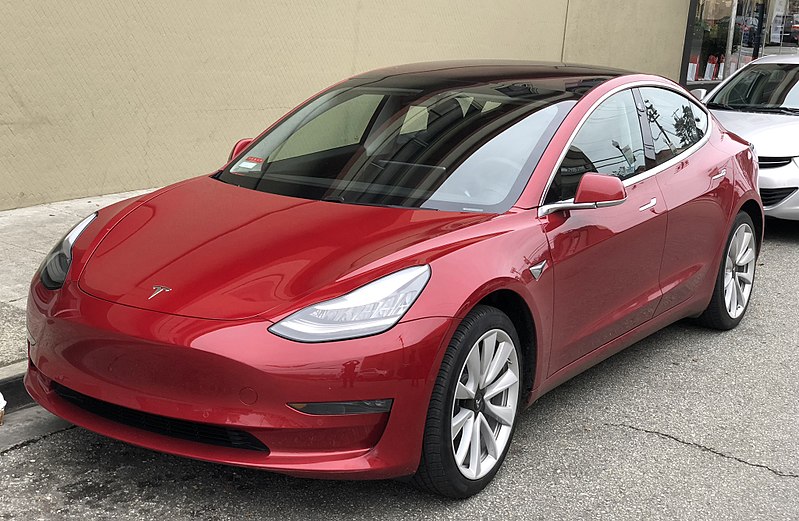
Tesla Model3 (Image: Wikimedia/Carlquinn)

Tesla’s Musk says solar, energy storage will grow faster than electric cars, and there’s some truth to it

  • Tesla CEO Elon Musk recently said the company’s solar and energy storage business will grow faster than its electric vehicle business.
  • With Tesla making progress on Model 3 production efficiency, Musk said on the most recent earnings call there will be more focus on solar and the broader Tesla Energy business, which includes aligning intermittent solar power with battery storage.
  • Tesla and Musk have faced criticism, and a shareholder lawsuit, over the solar business, the controversial acquisition of SolarCity, and issues at the company’s solar panel plant in Buffalo, New York.

A Model 3 ramp-up that resulted in a quarterly profit was a sign that Tesla’s automobile business finally may be financially stable. If so, it is a good time for Tesla to turn its attention to the energy business — encompassing solar and energy storage — that has for long taken a backseat to getting the electric vehicle assembly line in order.

Tesla Model3 (Image: Wikimedia/Carlquinn)

Elon Musk has been broadcasting this message since Tesla reported a surprise profit in the third quarter. On the call with Wall Street analysts after the earnings in November, the Tesla CEO said, “For almost two years we had to divert a tremendous amount of resources.”

Now Musk claims Tesla is poised for “the really crazy growth for as far into the future as I can imagine. … It would be difficult to overstate the degree to which Tesla Energy is going to be a major part of Tesla’s activity in the future,” he said.

Never one to shy away from bold claims or ambitions, Musk said Tesla Energy could grow to roughly the same size as Tesla’s automotive business, and solar would grow, on a percentage basis, the fastest of any, with storage second.

“I think both over time will grow faster than automotive,” Musk said. “They’re starting from a smaller base.” He added, “I think, especially, if you look at sort of — if you look at, like, year-over-year growth, it will be absolutely incredible … over the course of, say, a year, gigantic increase.”

In a recent internal email to Tesla employees, Musk outlined two critical year-end priorities: delivering all cars to their customers and boosting the rate of solar deployments by a significant degree.

Read more: CNBC

It’s Time to Go Green!

If you would like to know more about Solar Panels and the PowerBanx range of home battery systems, and get a free instant quote, please complete our online form:
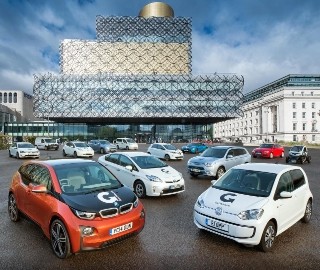
8 lessons about EV battery health from 6,300 electric cars

A persistent concern among some EV drivers is the long-term health of the battery.

All batteries lose some storage capacity over time. But how might that degradation affect your driving range a few years down the line? To help answer that question, we can now look to Geotab, a leading telematics-fleet-management company with access to a lot of EVs. Lo and behold, the losses are minor.

Here’s a quick rundown of what the data revealed:

  1. If current degradation rates are maintained, the vast majority of batteries will outlast the usable life of the vehicle.
  2. The average decline in energy storage is 2.3% per year. For a 150-mile EV, you’re likely to lose 17 miles of accessible range after five years.
  3. EV batteries decline in a non-linear fashion. There’s an early drop, but the rate of decline slows down in subsequent years.
  4. Liquid-cooled batteries decline slower than air-cooled packs. Geotab saw that a 2015 Tesla Model S with liquid cooling had an average annual degradation rate of 2.3%, compared to an air-cooled 2015 Nissan Leaf’s rate of 4.2%.

Read more: Electrek

It’s Time to Go Green!

If you would like to know more about Solar Panels and the PowerBanx range of home battery systems, and get a free instant quote, please complete our online form:

Red Tesla Model S (Image: T. Larkum)

3 Reasons Why Even Skeptics are Turning Bullish on Tesla (TSLA)

  • Skeptics of Tesla have turned bullish on the electric car manufacturer.
  • Tesla has matured in 2019, operating more like a traditional automotive company.
  • It’s already too far ahead of the pack in the electric car market, no other company comes close.

The market cap of Tesla (NASDAQ:TSLA) has surpassed the $60 billion mark, supported by the rising popularity of the newly released Cybertruck. The firm’s turnaround has even led skeptics to turn bullish.

Red Tesla Model S (Image: T. Larkum)

Up until October, Tesla was criticized for being a little bit too different from traditional automakers in the way the company handles conferences, earnings and other crucial aspects of the business.

As the company evolved, and so did its market cap, high profile investors like Jim Cramer and Pierre Feragu started to believe that Tesla is now far ahead of the automotive industry. Three reasons support that claim.

1. Highly innovative

Tesla has stood out from its competitors since its inception. The public’s reception of its newest products like the Cybertruck have changed the mind of investors who previously thought such products would only appeal to a niche market.

Jim Cramer, host of CNBC’s Mad Money, said that he was blown away by the demand for the Cybertruck. With an improving balance sheet, beloved CEO in Elon Musk, and an active following, Cramer said that Tesla has all signs of a great company:

Even better, on that last conference call, he revealed his true rigor without the sardonic quips. Musk, it turns out, is a great CEO when he can get out of his own way, and that seems to be what he’s doing. Cult product? Check. Sound balance sheet? Check. Charismatic Leader? Check. If you’re going to invest in a battleground stock, Tesla’s got all the ingredients of a winner.

So far, 250,000 orders for the Cybertruck have been made. That’s equivalent to $25 million in revenue once the cars ship.

Read more: CCN

It’s Time to Go Green!

If you would like to know more about Solar Panels and the PowerBanx range of home battery systems, and get a free instant quote, please complete our online form:

Are Electric Vehicles Actually Worse for the Environment than Combustion Engines?

With so many people claiming that electric vehicles are in fact bad for the environment, we take a look at the data.

We’ve all seen it in the comments sections of social media posts. There are always a few people adamant that electric vehicles pollute more than internal combustion engine vehicles.

At best, they claim the electric vehicle (EV) industry is scoring an own goal by creating a technology that, throughout a vehicle’s lifetime, pollutes more than internal combustion engine (ICE) vehicles. At worst, they say it’s all part of a conspiracy aimed at filling the pockets of clean energy providers.

So, are electric vehicles really worse for the environment than internal combustion engine vehicles? The short answer is no. Here’s why.

The battery production conundrum

Whether you are a proponent of electric vehicles or not, one issue is widely accepted: EVs release a lot of CO2 during the manufacturing process. This is due largely to the production of lithium-ion batteries.

A new IVL report, released this month, says, “according to new calculations, the production of lithium-ion batteries on average emits somewhere between 61-106 kilos of carbon dioxide equivalents per kilowatt-hour battery capacity produced.”

However, this figure keeps improving. The figure above, for example, is an improvement on the same organization’s study in 2017 that said, “an electric car with a 100kWh battery [emits] 15-20 tons of carbon dioxide even before the vehicle ignition is turned on,” with emissions of 150 to 200 kilograms of carbon dioxide for each kilowatt-hour storage capacity in a car battery.

Read more: Interesting Engineering

It’s Time to Go Green!

If you would like to know more about Solar Panels and the PowerBanx range of home battery systems, and get a free instant quote, please complete our online form:

2020 Renault Zoe (Image: Renault)

New Renault Zoe picks up double win at Driving Electric Awards

The new Renault Zoe has won Car of the Year and Best Small Electric Car at the annual Driving Electric Awards, with the judges citing its long range, improved quality and its performance.

Renault has completely restyled the Zoe’s exterior, featuring standard LED headlamps. Wireless smartphone charging is also available, and a free home wallbox charger allows owners to recharge their Zoe overnight with minimal effort. The vehicle is capable of running up to 245 miles (WLTP) on a single charge and features a new 52kWh battery. It is also available with optional 50kW DC fast charging, enabling 90 miles of range to be restored in just 30 minutes.

2020 Renault Zoe (Image: Renault)

There is a choice of R135 100 kW or R110 80 kW motors, which both feature a smooth, single-speed automatic transmission with new B-mode function that intensifies the regenerative braking effect to deliver true one pedal driving characteristics.

“The Zoe has always been affordable, but the real joy of the New Zoe is that it has all the comforts – particularly the range and equipment – of a big electric car, in an affordable and compact package. Even with the influx of new rivals, it deserves to remain one of the most popular electric cars in the UK” said Vicky Parrott, Associate Editor at Driving Electric.

Read more: Renewable Energy Magazine

It’s Time to Go Green!

If you would like to know more about Solar Panels and the PowerBanx range of home battery systems, and get a free instant quote, please complete our online form:

White Tesla Model S (Image: T. Larkum)

The best electric cars you can buy – and the one to avoid

Electric cars are growing in popularity, and no wonder: the best are quiet, cheap to run and smooth to drive. But which are the bright sparks to consider – and which are the loose connections?…..

Electric cars are now entering the mainstream, and their rise is only going to accelerate as rules are introduced to limit the kind of vehicles allowed into major cities.

White Tesla Model S (Image: T. Larkum)

The main thing that has traditionally held them back is range anxiety – the fear that you won’t have enough juice to get to where you’re going. However, with plenty of models now capable of covering more than 200 miles between charges, this is becoming less of an issue.

So, which electric cars should you consider? Here, we count down our favourites and tell you the one to avoid. And, remember, if any of them take your fancy, check out our What Car? New Car Buying to see how much we could save you.

Read more: What Car

It’s Time to Go Green!

If you would like to know more about Solar Panels and the PowerBanx range of home battery systems, and get a free instant quote, please complete our online form:

Nissan Leaf (Image: Qurren/Wikipedia)

Amsterdam stadium integrates bi-directional charging

As of today, visitors to the Johan Cruijff Arena (JCA) in Amsterdam can actively contribute to the power supply of the arena with their electric cars by integrating them into the stadium’s power grid.

The first of 15 bidirectional charging stations in the JCA is now officially in operation.

The project combines the 15 new charging stations with the existing 3 MW battery storage – consisting of 148 Nissan Leaf batteries – and the 1 MW photovoltaic system on the roof of the arena. An innovative charging and energy management system is working in the background.

Nissan Leaf (Image: Qurren/Wikipedia)

In the future, all of JCA’s nearly 2,000 parking spaces will be successively equipped with intelligent charging infrastructure. “Enabling visitors to give back clean energy to the stadium ensures they have a smart way of doing their bit towards the ecosystem,” Gers Baron, CTO for the Amsterdam City Council.

The intelligent software control was supplied by The Mobility House, based in Munich, Germany. It coordinates the energy supply in both directions – car-to-stadium and stadium-to-car. This enables electric cars to transfer energy from stadium visitors – with their consent – to boost the maximum current capacity of the stadium, “thus reducing the stadium’s electricity bill and contributing to a more stable national grid.” At the same time, the system ensures that the car battery is recharged in time when visitors want to drive home.

Read more: Electrive

It’s Time to Go Green!

If you would like to know more about Solar Panels and the PowerBanx range of home battery systems, and get a free instant quote, please complete our online form: