Category Archives: Charging

Ecotricity app display after ending session (Image: T. Larkum)

InstaVolt sets sights on 1,000 rapid charger milestone by summer

InstaVolt is planning to reach a 1,000 rapid charger milestone in the UK this summer, with its 700th set to be in operation later this month.


Rapid Charging Step 3: Choose to Charge (Image: T. Larkum)

Of the remaining 300 needed to reach their milestone, InstaVolt said they had 200 already in construction with new sites in development in partnership with McDonald’sKFCCosta Coffee and EH Booths.

“Improving public charging infrastructure across the whole of the UK is vital for people to feel confident enough to make the switch to electric vehicles. I’m proud to be spearheading the delivery of more rapid chargers to all four corners of the UK”, Adrian Keen, chief executive officer of InstaVolt, said.

Keen added that the company grew its network by over 50% over the past year, and it will keep on increasing the installation of chargers as sales of electric vehicles continue to reach record highs.

Another way for InstaVolt to increase their rapid chargers will be through Northern Ireland and the Republic of Ireland, which they aim to install their first rapid chargers later this year.

“Not only does the UK need more chargers, but those chargers need to be reliable, in great locations and easy to use. The InstaVolt network delivers these requirements to drivers, as well as corporate fleets making the transition to electric,” added Keen.

The installation of new chargers will not only be done in new sites the company said, as they will soon start their first expansion project at their hub on the M40 in Banbury, with the addition of eight chargers.

Read more: Current+


It’s Time to Go Green!

If you would like to know more about Solar Panels and the PowerBanx range of home battery systems, and get a free instant quote, please complete our online form:

SWARCO eVolt is supplying 45 charging units, including 11 of its Rapid Chargers capable of charging two vehicles simultaneously in 30 minutes, across 28 sites in East Lothian (Image: eVolt)

How much does it cost to charge an electric car? Running costs of EVs and how to find a charging point

One of the major draws of switching to an EV is the chance to avoid the petrol pump – here’s how much you could save

Growing numbers of us are switching to electric cars – in fact the latest UK sales data suggests sales of electric cars doubled last year.

One of the major draws of switching to an EV is the chance to avoid the petrol pump; this week the cost of fuel across the country jumped to a record high in a further squeeze to the cost of living.

But just how much could you save by switching to an electric car? And when you’re on the road away from home, how easy is it to find a plug point to recharge?

Ecotricity app display after ending session (Image: T. Larkum)

Charging at home is cheap

For EV drivers lucky enough to have a driveway and a home charger, charging at home is easy and much cheaper than the cost of refuelling a petrol or diesel car.

For a typical electric car with a 60kWh battery and a 200 mile range, a full charge at home would cost about £9.20, according to PodPoint, although cars with larger batteries can cost up to £20 to recharge at home.

That is still cheaper per mile than a petrol pump.

Charge for free on the go 

Growing numbers of employer are installing EV chargers at workplaces, and many offer charging to employees for free.

Likewise, supermarkets including Sainsbury’s, Lidl, and Aldi offer free charging to customers, and some councils also provide free-to-use chargers in their car parks.

Scotland has the highest number of free EV chargers, according to Zap Map.

Read more: inews

It’s Time to Go Green!

If you would like to know more about Solar Panels and the PowerBanx range of home battery systems, and get a free instant quote, please complete our online form:

The promise and peril of the electric car revolution

We can do better than electrified sprawl, if we try

The electric vehicle revolution is nigh. As recently as 2017, electric cars comprised just 1.4 percent of global sales. By 2021, they made up 8.6 percent, roughly a sixfold increase in just four years, with that last figure coming in a year when auto manufacturing was hamstrung by the shortage of computer chips.

Soon electric vehicles (EVs) will displace gas-powered ones, and that will be an improvement over the status quo — but only a modest one if American cities can’t take advantage of the broader benefits of electrification. We can do better than e-sprawl, if we try.

The reason EVs will win sooner or later is brute market dynamics. As anyone who’s ever felt the instant jolt of torque from an electric drive train can attest, they are simply better than gas-powered cars in almost every way, and they’ll only continue to improve.


EVs are more powerful, cleaner, and much cheaper to maintain and drive. As uptake increases, so will the network of charging stations. And since the vast majority of car trips are quite short, and almost every house and business in the country is already wired for electric power, it will be relatively straightforward to keep most EVs charged up most of the time. Couple all that to ever-tightening emissions rules and regulations in Europe and China (where the communist government basically bullied Toyota into shifting towards electric cars), and it’s simply a matter of time before the internal combustion engine is a quaint anachronism.

Read more: The Week

It’s Time to Go Green!

If you would like to know more about Solar Panels and the PowerBanx range of home battery systems, and get a free instant quote, please complete our online form:

Dacia Spring 2021 (Image: Dacia.co.uk)

Record year as EVs rise to one-sixth of all new UK car sales

More than a quarter of the UK’s car market is now electrified in some form, with the sale of new petrol and diesel cars scheduled to end by 2030.

The UK’s electric vehicle (EV) market hit new heights in 2021, with more battery electric vehicles (BEVs) sold than over the previous five years combined.

According to the Society of Motor Manufacturers and Traders (SMMT), 191,000 new BEVs joined Britain’s roads, along with 115,000 plug-in hybrids – meaning 18.5% of all new cars registered in 2021 can be plugged in. This is in addition to the 147,246 hybrid electric vehicles sold, which took a further 8.9% market share. In total, 27.5% of the country’s car market is now electrified in some form.

Dacia Spring 2021 (Image: Dacia.co.uk)

Customer preference for EVs continues to rise, with December seeing BEVs take a record market share in a non-lockdown trading month, accounting for 25.5% of all new registrations. More than 40% of models are now available as plug-ins.

The UK was the third-largest European market for new car registrations in 2021, but the second largest by volume for both plug-in hybrids and BEVs. It is, however, only the ninth largest in Europe for BEVs by market share, despite the country having among the most ambitious climate targets for cars, with the sale of new petrol and diesel cars scheduled to end by 2030.

Norway is streets ahead of the rest of Europe when it comes to EV sales. Over the course of 2021, 65% of new car registrations in the country were all-electric BEVs and 28% were hybrids (22% plug in, 6% non-plug-in).

Read more: Energy Monitor

It’s Time to Go Green!

If you would like to know more about Solar Panels and the PowerBanx range of home battery systems, and get a free instant quote, please complete our online form:

Nissan Leaf (Image: Qurren/Wikipedia)

Long distance driving in an electric car

Planning for a long-distance drive in your electric car doesn’t have to be a headache. Here’s everything you should consider before you set off.

While petrol and diesel drivers have recently faced fuel anxiety, the range anxiety that comes with driving an electric car has been around much longer and is still a real concern for many, whether they own an electric car or are simply contemplating one.
Range anxiety can be conquered though, so let’s break down what needs to be considered to keep your mind at ease if you’re planning a long-distance drive in a plug-in car.

How far can you travel on a full charge?

Nissan Leaf (Image: Qurren/Wikipedia)
The first thing to consider when planning a long-distance journey in an electric car is how long the battery will last on a full charge.
Of course, the ideal scenario would be to make the journey on a single full charge and recharge overnight while you catch some Zs but, if your range doesn’t quite cut it, you’ll be able to plan out where to make that tactical first stop to recharge and how many times you’ll need to stop along the way to your destination. Depending on the make and model, weather conditions, and your driving style, you can expect to have a range of anywhere between 100 and 300 miles from a fully charged electric car. The UK’s best-selling electric car this year is none other than the Tesla Model 3, having sold over 22,000 units by 1st December and topping the best-selling car list back in September. This sought-after beauty comes with a range of 360 miles, which could get you from Cambridge to Edinburgh on a full charge, so depending on where you’re heading, you wouldn’t have to make many stops, if any at all!
Read more: AutoTrader

It’s Time to Go Green!

If you would like to know more about Solar Panels and the PowerBanx range of home battery systems, and get a free instant quote, please complete our online form:

Charging Station in Sunderland (Image: Fastned)

Shell replaces petrol pumps to open first UK EV charging hub

Shell has replaced existing petrol and diesel pumps at its Fulham fuel station with ultra-fast chargers to open its first electric vehicle (EV) charging hub in the UK.

The hub features nine 175kW chargepoints, as well as a timber canopy with built-in solar panels. These chargers run on 100% certified renewable electricity, with this certified through the Renewable Energy Guarantee of Origin (REGO) scheme.

Charging Station in Sunderland (Image: Fastned)


István Kapitány, Shell’s global executive vice president for mobility, said: “EV drivers are looking for a charging experience that is as fast, convenient and comfortable as possible. This is exactly what Shell Fulham aims to offer.”

The site also features a seating area, free Wi-Fi, a Costa Coffee café and a Little Waitrose & partners.

In 2021, Shell announced that up to 800 Shell EV chargepoints would be installed in as many as 100 Waitrose sites across the UK by 2025.

Additionally, Shell is aiming to install 50,000 on-street chargers in the UK by 2025 through ubitricity, having acquired the company in early 2021.

Read more: Current+


It’s Time to Go Green!

If you would like to know more about Solar Panels and the PowerBanx range of home battery systems, and get a free instant quote, please complete our online form:
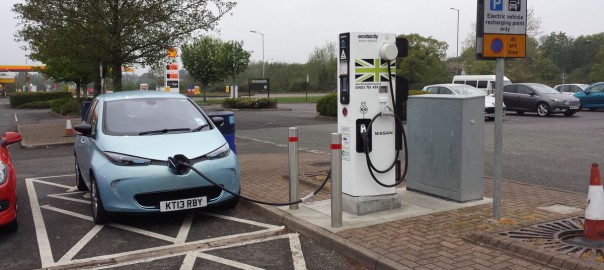
Topping up at Tiverton (Image: T. Larkum)

Barnet Council to embark on £4.65m EV chargepoint rollout

Of the funding, £3.5 million has been secured from the On-Street Residential Charge Point Scheme

Over 500 electric vehicle (EV) chargepoints are to be installed in Barnet, North London, due to new funding from the On-Street Residential Charge Point Scheme (ORCS).

Barnet Council secured £3.5 million from the Office for Zero Emission’s ORCS, which funds 75% of the costs of local authorities providing public chargepoints for residents who don’t have off-street parking.

Topping up at Tiverton (Image: T. Larkum)


The remaining 25% of the costs for Barnet Council’s rollout will either be funded by the council, a commercial partner or a part-funding agreement, reaching a total project value of £4.65 million.

The 34 streets to receive chargepoints as part of the rollout have been selected based on resident requests, suitability for installing on-street chargepoints and where off-street parking is not possible.

“As electric cars continue to grow in popularity, I’m glad to see the council taking action at the scale that is needed, driving down emissions and cleaning up the air,” transport minister Trudy Harrison said.

Previous research has showed that uptake of ORCS funding has been slow, with it revealed that as of 2018, only five local authorities had taken advantage of the ORCS.

Additionally, research released in January by Centrica which was sourced from Freedom of Information requests found that over the next four years, only 9,317 on-street chargepoints are planned for installation by local authorities.

Read more: Current+

It’s Time to Go Green!

If you would like to know more about Solar Panels and the PowerBanx range of home battery systems, and get a free instant quote, please complete our online form:

Electric cars: deadline nears to claim home charging grant

Funds are designed to give up to £350 towards cost of buying and installing a home charging point

There are only a few weeks left to apply for a UK government grant to help with the cost of getting an electric vehicle home charging point installed if you own your house.

The Electric Vehicle Homecharge Scheme is an official grant that provides a 75% contribution – up to a maximum of £350 – towards the cost of a charging point and its installation. The main requirements are that the applicant owns, leases or has ordered a qualifying vehicle and has appropriate off-street parking.


From April 2022, the scheme will no longer be open to homeowners living in “single-unit properties” – in other words, detached, semi-detached and terrace houses and bungalows, so the charging point will need to be installed by 31 March and probably booked by February.

However, the scheme will remain open to homeowners who live in flats, and people in rented accommodation.

The cost of installing a home charging point varies, depending on the type you go for, although quotes typically come in at between £500 and £1,000.

Read more: Guardian

It’s Time to Go Green!

If you would like to know more about Solar Panels and the PowerBanx range of home battery systems, and get a free instant quote, please complete our online form:
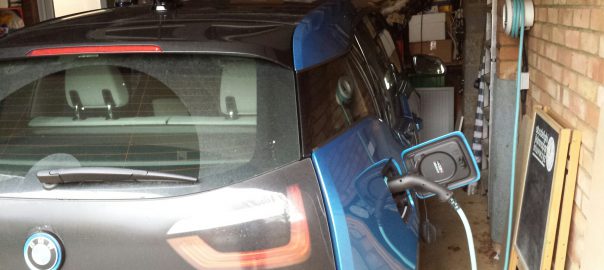
Pluggin in at IKEA Southampton (Image: T. Larkum)

Char.gy lauds ‘first successful trial’ of public inductive charging

Electric vehicle (EV) charging firm char.gy said it has today (15 December) confirmed the world’s first trial of public EV inductive charging, having launched in Marlow, Buckinghamshire in October.


Pluggin in at IKEA Southampton (Image: T. Larkum)

A further 7 locations to be added in the London Borough of Redbridge and Milton Keynes, with this first trial using a low-power inductive charging installation provided by technology partner IPT Technology and adapted vehicle available for public hire through the hiyacar.co.uk app and website.

Inductive charging – which involves integrating charging infrastructure into the road surface and installing an induction charging pad in the EV – can help simplify the charging experience, de-clutter busy urban pavements and improve accessibility.

This is because the charging cable is removed, therefore removing trip hazards for pedestrians and allowing less mobile, elderly or disabled drivers to avoid navigating kerb drops between road and pavement to plug in the cables.

Read more: Current+


It’s Time to Go Green!

If you would like to know more about Solar Panels and the PowerBanx range of home battery systems, and get a free instant quote, please complete our online form:

Zappi 2018 EV Charge Point (Image: myEnergi)

Plug-in Car Grant for electric cars cut AGAIN

The government has cut the Plug-in Car Grant for electric cars by another £1,000, meaning motorists will save even less on affordable EVs

The Plug-in Car Grant to help make electric cars more affordable has been cut by further £1,000 in a surprise announcement that will infuriate electric car buyers and manufacturers alike.

Previously £2,500, the Plug-in Car Grant is now just £1,500 as of 7am today (15 December 2021).


Zappi 2018 EV Charge Point (Image: myEnergi)

What’s more, the qualifying maximum price of an electric car has been reduced, from under £35,000 down to less than £32,000.

Both cuts are effective immediately.

The government argues that its approach to Plug-in Car Grant cuts “is clearly working – whilst the grant has slowly reduced over time, the sales of electric vehicles has soared”.

Transport minister Trudy Harrison said the government is “refocusing our vehicle grants on the most affordable vehicles and reducing grant rates to allow more people to benefit, and enable taxpayers’ money to go further”.

Read more: Motoring Research


It’s Time to Go Green!

If you would like to know more about Solar Panels and the PowerBanx range of home battery systems, and get a free instant quote, please complete our online form: