Category Archives: Charging

Jolt offers first 7kWh free to charge an electric vehicle

Jolt has launched its free fast-charging service for electric vehicles (EVs) in the UK after striking a deal with the London Borough of Barnet.

The charge point operator offers UK EV drivers 7 kWh, or around 30 miles, of free, fast charging, with cost of charging offset though its integrated advertising network.

After users have consumed 7 kWh for the calendar day, drivers will be charged a per kWh rate.

Born in Australia, Jolt recently announced its partnership with Telus to develop 5,000 EV chargers across Canada and currently operates in New Zealand, Canada and the USA.

Electric Vehicle Charge Points

The company plans to roll-out thousands of charging stations across the UK in the next few years.

John Rainford, UK country manager at Jolt, said: “Accelerating e-mobility, in a way that’s equitable and sustainable to all involved, is at the heart of what we do at Jolt.

“We are proud to express our commitment to making EV charging accessible through seamless customer experience, especially for those without home charging, and empowering EV ownership in the UK, while helping minimise emissions created by transport.

“Thanks to our partners who are working towards the same ambitious net zero goals, we anticipate accelerated growth and expansion of Jolt’s EV charging infrastructure across the country.”

The partnership with the London Borough of Barnet follows a £2.1 million funding grant, as part of the Local Electric Vehicle Infrastructure (LEVI) Pilot Project, a government scheme supporting the rollout of EV charging infrastructure.

Read more: FleetNews

It’s Time to Go Green!

If you would like to know more about Solar Panels and the PowerBanx range of home battery systems, and get a free instant quote, please complete our online form:

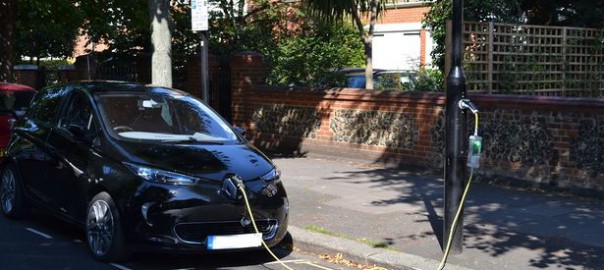
Hundreds of electric car charging points like this one are set to be installed at lampposts across Hounslow

Here’s How Many Solar Panels You’ll Need to Charge Your EV

In order to make your EV green-energy approved, you’ll need to charge it using a renewable energy source. Solar panels are one way to accomplish that.

For the eco-conscious EV driver, an electric vehicle is only as clean and green as the source of electricity charging its battery.

That’s because EVs plugged into the grid can either be powered by “dirty” sources such as fossil fuels such as coal, or from “clean” renewable energy that comes from sources such as solar, hydro or wind power. With many utilities, it’s likely to be a mix of renewables and fossil fuels. The best way to ensure your EV is actually powered by renewable energy is to connect your home’s EV charger to a solar energy system or use a public charger also sourced by solar panels.


An impediment to electric vehicle adoption is car dealerships.

With spiking gas and electric prices and an intensifying climate crisis, it’s no wonder the solar and electric vehicle industries are gaining in popularity each year.  Rooftop solar panel installations are breaking records, and US EV adoption is expected to accelerate — predicted to reach 40% of passenger car sales by 2030, according to the US Bureau of Labor and Statistics.

Read more: cnet

It’s Time to Go Green!

If you would like to know more about Solar Panels and the PowerBanx range of home battery systems, and get a free instant quote, please complete our online form:

EV chargepoint prices and availability made public under new law

New laws approved by MPs on Tuesday evening (24 October) will require providers to publicly share data on electric vehicle (EV) chargepoint availability and charging prices.

The new regulations will mean that prices across chargepoints are both transparent and easy to compare, and drivers looking to charge will be able to find a chargepoint suiting their needs with little hassle. Drivers will also be able to check charging speeds and charger locations, as well as availability.

Once the regulations are passed, EV drivers will also have access to contact-free 24/7 helplines for any issues in accessing charging on public roads.

Technology and decarbonisation minister, Jesse Norman, said that the measures will improve EV charging for millions of drivers, providing price transparency which will allow drivers to get the best value, increasing the economic viability of driving electric.

These measures come as the UK reaches record numbers of public chargers, with numbers growing by 42% year-on-year. EV mapping service provider Zapmap revealed earlier this month that the UK has surpassed the 50,000 chargepoint milestone.

The beginning of October also saw the government announce a range of measures to accelerate the installation of chargepoints through its ‘Plan for Drivers‘ including extending chargepoint grants for schools and reviewing the grid connection process for chargepoints.

Read more: Current+

It’s Time to Go Green!

If you would like to know more about Solar Panels and the PowerBanx range of home battery systems, and get a free instant quote, please complete our online form:
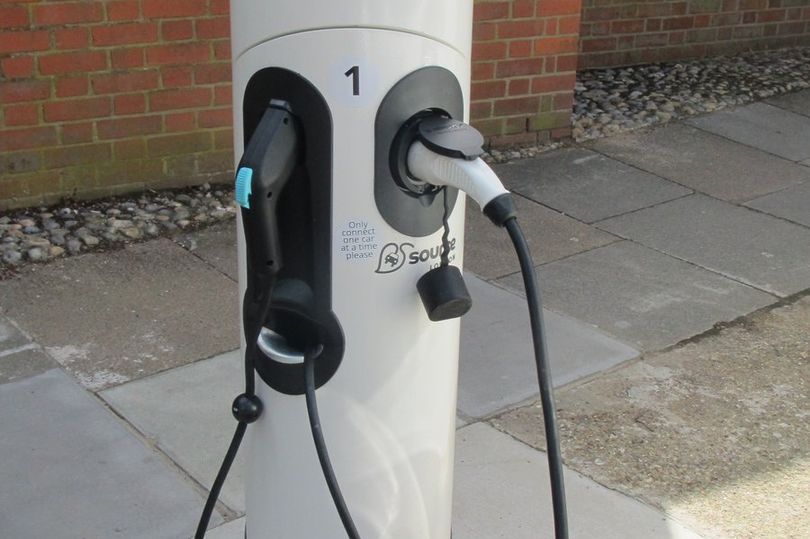
Researchers make surprising discovery about lifespan of EV batteries: ‘That was a shock’

A dead, irreplaceable battery is often the demise of an otherwise perfectly good piece of equipment, and it can be incredibly frustrating. New research shows, however, that the opposite may be true when it comes to the batteries running electric vehicles.

The Globe and Mail reports that a study done in March by Recurrent Motors Inc. — a Seattle-based battery analysis company — showed that overall, EV batteries are actually very reliable and long-lasting. In fact, they may last longer than the vehicles themselves.

The study took real-world data from 15,000 EVs of various makes and models in the U.S. By linking to the vehicles’ connectivity systems, the company took several battery readings daily, including charging activity, EV battery level, and estimated range.

The data showed that most EVs driven close to 100,000 miles still have at least 90 percent of their original range left.

“I was surprised how well batteries are holding up, and how relatively infrequently batteries are being replaced,” Liz Najman, researcher and marketing manager at Recurrent and the study’s author, told The Globe and Mail. “That was a shock.”

The publication did report, however, that Najman made sure to point out that individual vehicles vary and that Recurrent’s data is constantly evolving. This is mainly because most EVs aren’t that old, with nearly 30 percent currently on the road in the U.S. being sold just last year.

Read more: yahoofinance

It’s Time to Go Green!

If you would like to know more about Solar Panels and the PowerBanx range of home battery systems, and get a free instant quote, please complete our online form:

Number of ultra-rapid charge points increase by almost 70% over a year

New data from Zapmap suggests the number of ultra-rapid charge points in the UK has increased by 68% over the past year.

The number of slow chargers has risen by almost 68% as well, with the latest Zapmap figures showing there were almost 50,000 public charging devices installed as of the end of September.

Charging Hub with eVolt Rapid Chargers (Image: SWARCO eVolt)

This represents overall year-on-year growth of more than 43%, with higher-powered charging points having grown by over 40% since September 2022, while lower-powered devices display year-on-year growth of 44%.

Over the past year, 5,749 slow devices have been installed across the country, alongside 1,568 ultra-rapid devices.

The new figures also show that the number of high-power charging hubs in the UK has more than doubled since September last year.

The number of ultra-rapid charging hubs with six or more devices (excluding non-public Tesla devices) has also shown impressive year-on-year growth of 123%.
At the end of September, there were 196 locations across the UK with six or more ultra-rapid devices – up from 88 in September 2022.

“This is great news for electric car drivers,” said Melanie Shufflebotham, co-founder and chief operating officer at Zapmap.

“With almost 200 high-power charging hubs up and down the country, these latest figures should give electric car drivers the confidence to drive any length of journey in their EV.

“As we approach the October half term, having an additional 108 new charging hubs across the UK speaks volumes – and is a huge step up from last year.

Read more: SmartTransport

It’s Time to Go Green!

If you would like to know more about Solar Panels and the PowerBanx range of home battery systems, and get a free instant quote, please complete our online form:

New AutoMotive: Why we’re refusing to throw in the towel and get the UK back on track to 2030

Last week, Rishi Sunak confirmed that he will reverse certain green targets. Amongst several policies that Sunak was willing to cut or delay, the phase out of petrol and diesel cars was put on the chopping block, with a confirmed five-year delay despite the [Conservative] government’s original target.

This move is not only unpopular with motorists, industry, and the wider public – it also raises economic concerns and threatens vital aspects of Britain’s industrial strategy moving forward.


From January 2018, no more new diesel taxis will be licensed in London

Electric vehicles are undeniably cheaper to run, contribute to improved air quality due to their lack of tailpipe emissions, and are increasingly preferred by drivers over their combustion counterparts. Our data at New AutoMotive shows that the UK could achieve an 85% electric vehicle (EV) market share by 2028 and is making consistent progress toward the goal of 300,000 public charge points. The UK is also the fifth best prepared nation for the EV transition, thanks to sensible and fact-driven policies implemented by Sunak’s predecessors.

Reacting to the news, the UK motor industry has criticised plans to water down policies. Kate Brankin, the chair of Ford UK, noted that the industry has already made considerable investments to meet the 2030 deadline, with a $50 billion commitment from Ford alone.

We were clear in our response that delaying the 2030 deadline would pull the rug out from under motorists and industry, and would deal a hammer blow to the UK’s leadership on climate change.

Read more: Current+

It’s Time to Go Green!

If you would like to know more about Solar Panels and the PowerBanx range of home battery systems, and get a free instant quote, please complete our online form:

Octopus Energy to double the export rate of its EV tariff

Octopus Energy has confirmed that it will almost double the export rate of its electric vehicle (EV) tariff ‘Octopus Go’ to 8p/kWh.

The export rate for Octopus Go, which provides cost-effective overnight charging for EVs, was previously priced at 4.1p/kWh for exported electricity via the company’s Smart Export Guarantee (SEG) tariff.

Copyright: maridav / 123RF Stock Photo

But through the introduction of the new export tariff ‘Outgoing Fixed Lite’, those customers with solar panels and an EV will now receive 8p for each kWh exported back to the grid via vehicle-to-grid (V2G) technology. Octopus stated that the use of this tariff could see an average household make an additional £66 a year.

“Octopus Energy is the number one EV tariff provider for a reason. Thanks to our customers and their EVs helping balance the grid at night, we’ve continued to unlock savings to pass on to our greenest customers. Octopus Go customers with solar panels will now earn twice as much money for the energy they export back to the grid – it certainly pays to be green,” said Rebecca Dibb-Simkin, chief product officer at Octopus Energy.

Last week, Octopus Energy announced a number of initiatives to support EV drivers, including a new 15p per kWh export tariff, and a community energy EV charging partnership with Co Charger.

Read more: Current+

It’s Time to Go Green!

If you would like to know more about Solar Panels and the PowerBanx range of home battery systems, and get a free instant quote, please complete our online form:

ScottishPower launches new overnight charging tariff for EV drivers

Energy company ScottishPower has launched a new tariff for electric vehicle (EV) drivers with “one of the lowest overnight charging rates available”, it claims.

The EV Saver tariff allows drivers to charge their cars for 7.45p/kWh between midnight and 5am.

The company, a subsidiary of Spanish utilities giant Iberdrola, said that they want to help encourage more drivers to make the switch to electric vehicles. The new tariff adds on to an existing home charging package which comes with free AA support for 12 months.

Andy Mouat, head of smart mobility at ScottishPower, said: “Latest figures show that more than 20% of new cars sold in the UK are now all-electric and we’re here to help lead the electrification of transport by making the transition to EVs easier and more affordable.

“Our new, competitive charging tariff offers clean affordable energy for our EV-driving customers while supporting the UK’s decarbonisation journey.”

The company says it is currently investing £8 million “every single working day” in the UK to support the energy transition.

The new EV Saver Tariff is available to existing ScottishPower domestic customers who have a smart meter and opt to pay by Direct Debit, and new domestic customers joining ScottishPower on its Standard Variable Tariff (SVT) who meet the same criteria.

In August, SocttishPower’s parent company Iberdrola secured a €500 million (£432 million) loan with Citi for the construction and development of the East Anglia III offshore wind farm.

Read more: Current+

It’s Time to Go Green!

If you would like to know more about Solar Panels and the PowerBanx range of home battery systems, and get a free instant quote, please complete our online form:

Can an EV be your everyday car? The questions to consider first

In the early 2000s, it would have been difficult to consider an EV as your everyday car. They were too expensive to buy, offered a limited driving range, and the charging network was too small to make them a realistic prospect.

Matters began to improve when the Nissan Leaf arrived in 2010, and EV uptake has only accelerated since. In August 2023, more than 20 percent of new cars sold in the UK were fully electric – and Tesla had two vehicles (the Model Y and Model 3) inside the top 10 best-sellers.

The availability of better and more affordable EVs, along with the rapid growth of the charging network, means the answer to our original question is ‘yes’ – an electric car can indeed be your everyday car.

Nonetheless, there are several important questions you need to ask yourself first…

How long is your daily commute?

The average round-trip commute in the UK is around 21 miles. Even an electric car with the most miserly range estimate will be able to cover that. You don’t even need a longer-range EV, such as a Porsche Taycan, to tackle a longer daily commute.


Kia Niro Plug-in Hybrid_Geneva 2017 (image: Next Green Car)

For example, the Kia Niro EV offers 285 miles of electric range, which might be enough for an entire week of commuting. At the time of writing, it costs £37,295 in entry-level ‘2’ specification.

Read more: MotoringElectric

It’s Time to Go Green!

If you would like to know more about Solar Panels and the PowerBanx range of home battery systems, and get a free instant quote, please complete our online form:
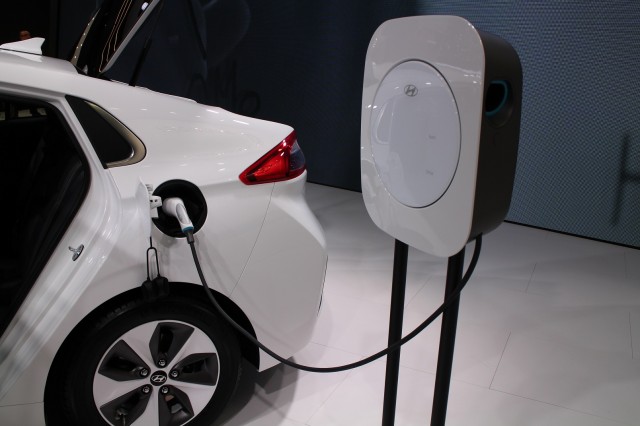
How long does it take to charge an electric car?

The time taken to charge an electric car can vary from as little as 20 minutes to as much as 24 hours. Here’s why…

With almost one-in-five new cars being fully electric, more drivers will be learning about charging electric cars for the first time. And alongside how much charging an electric car cost and how to use a charging point, they’ll likely be considering the time it takes to charge.

The two biggest factors in how long it’ll take to charge your electric car are the size of the battery, and the speed at which your car can charge. For example, an electric car with a small battery and a fast charging speed will charge a lot faster than one with a large battery and a slow charging speed. We’ll go into both of those factors in more depth in this story, as well as looking at the different types of electric car chargers and answering your electric car charger questions.

Types of electric car chargers

The speed at which you can charge your electric car can be governed by the type of charger you’re using. Charging at home using a three-pin plug is the slowest method, typically taking around 24hrs to replenish the battery on your car. Doing so is therefore impractical for many electric car owners, although it can be doable if you own a plug-in hybrid car.

Read more: WhatCar

It’s Time to Go Green!

If you would like to know more about Solar Panels and the PowerBanx range of home battery systems, and get a free instant quote, please complete our online form: