This year, the Formula E championships will see battery-powered cars tear their way around some of the world’s biggest cities. With the series well under way, Focus Magazine’s Future Car Show decided to find out what the current crop of electric cars can do for day-to-day motorists. Next up: the BMW i3.
Category Archives: i3
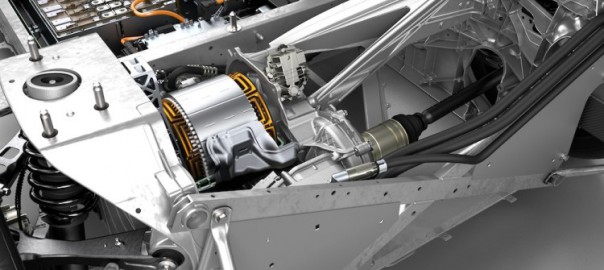
BMW i3 Electric Motor Among Ward’s “10 Best Engines Of 2015″
The 127-kW (170 HP) electric motor that propels the rear-wheel-drive BMW i3 has received a coveted “Best Engines” award from Ward’s Auto.
Here’s the eligibility criteria for selection by Ward’s Auto:
To be eligible for the Ward’s 10 Best Engines competition, an engine or propulsion system must be all-new or significantly re-engineered and available in the U.S. market with a base price not exceeding $60,000. This year’s pool of 37 nominees includes last year’s 10 winners and 27 new entries. Eight WardsAuto editors drove the vehicles in October and November in their routine daily commutes around metro Detroit. Editors scored each engine based on power, torque, technology, observed fuel economy, relative competitiveness and noise, vibration and harshness characteristics.
The i3′s electric motor was the only electric winner this year, though the 100-kW fuel cell in the Hyundai Tucson FCV did receive an award too.
Source: Inside EVs
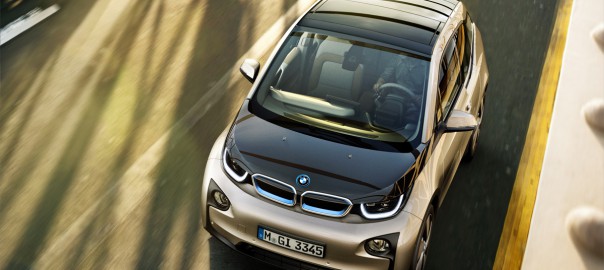
Numerous accolades highlight the success of the BMW i3
Munich. With the Green Car of the Year Award 2015, the BMW i3 has added a further trophy to an impressive raft of honours in its first year on the market. It was chosen for this award, presented by Green Car Journal at the Los Angeles Auto Show 2014, as the first dedicated all-electric vehicle in the premium segment. This latest honour, which adds to a long tally of awards the BMW i3 has picked up over the past months, is a further endorsement of this model’s unique sustainable mobility concept. More than 12,000 BMW i3s have already been sold since November 2013. The presence of more and more of these vehicles on the roads of cities all over the world is clear proof that it is now possible to successfully mate zero tailpipe emissions with premium-class driving pleasure, and that this groundbreaking combination is here to stay. One year after its launch, the BMW i3 is already the third best-selling all-electric automobile on the market.
Early adopters of the BMW i3 in Germany praise its sporty performance in particular. This is based on a 125 kW/170 hp electric motor, which offers highly responsive acceleration, and advanced chassis engineering. These drivers mainly use their BMW i3 for everyday urban driving and for commuting to work. For the most part they charge the lithium-ion battery overnight, at home. These first customers’ main reasons for buying the first electric vehicle from the BMW Group are its integrated sustainable mobility concept and BMW’s acknowledged technological expertise. Stand-out features of the BMW i3 in the eyes of its first German customers are its carbon-fibre (CFRP) passenger cell, renewable interior materials, mature powertrain engineering, state-of-the-art connectivity, and styling which these customers perceive as “futuristic”.
Demand for this electric vehicle, which can optionally be supplied with a range extender, is outstripping expectations. Both in number and diversity, the string of awards the BMW i3 has picked up – starting before the market launch and continuing on an upward trend ever since – is quite exceptional. In Germany, no sooner had pre-launch sales begun than the BMW i3 won the Green Steering Wheel 2013 award – one of the categories in the Golden Steering Wheel competition hosted by Auto Bild and Bild am Sonntag – and was voted best car in its class in auto, motor und sport’s Best Cars 2014 awards.
It also won two readers’ awards from Auto Zeitung magazine, plus the Auto Trophy 2013 and the Green Mobility Trophy 2014.
On the international stage, too, the successful market launch of the BMW i3 was accompanied by very positive ratings in opinion polls and independent expert reviews. Highlights to date include the UK Car of the Year Award, the Next Green Car Award, the Green Car of the Year Award, the Fleet Hero Award and a class win in the Sunday Times Top 100 Cars list (all of these in the UK), the Special Jury Award in the Swiss Car of the Year Award and a win in the French Trophées de l’Argus awards. In April 2014, a jury of motoring journalists from across the world named the BMW i3 World Green Car of the Year and World Car Design of the Year.
The BMW i3’s groundbreaking and individualistic exterior and interior design also earned it many other accolades, including the German Design Award, the iF gold product design award and the Automotive Interiors Expo Award, while the French edition of GQ magazine named BMW i Head of Design Benoit Jacob “Designer of the Year”. In further tributes, Auto Bild voted the BMW i3 Design Innovation of the Year, and readers of Auto Bild Klassik named it Classic of the Future.
The latest honour, the Green Car of the Year Award 2015, presented at the LA Auto Show, is a further tribute to the BMW i3’s all-round sustainable mobility concept. The evaluation by Green Car Journal was based on the BMW i3’s zero emissions at the point of use, its innovative lightweight design and the high percentage of sustainably produced materials used in its manufacture. Green Car Journal specialises in reporting on sustainable, efficiency-enhancing technologies and pioneering trends in the automotive industry and has been hosting the Green Car of the Year Award annually at the LA Auto Show since 2005. This year’s show is open to the public from 21 to 30 November.
Source: BMW Group
BMW i3 Overview
A brief description of the highlight features of the all-electric BMW i3.
https://www.youtube.com/watch?v=bxiSwitQ7ZM
Is now the time to buy an electric or hybrid car?
Best cars and options explored
The future of driving appears to be electric, with Formula E in full effect, supercars adopting hybrid drive systems and range getting further all the time. Fuel powered engines may have their days numbered. But is it time to make the change to electric?
Now that the big car manufacturers are creating hybrid and electric cars we can be assured that it’s the future. And thanks to infrastructure improving all the time for charging stations range isn’t becoming such a big issue. But last year’s Tesla owners won’t get updated with the latest self-driving tech of this year’s Tesla, not a very nice reward for early adopting.
So is it still too early to adopt? Are batteries in cars suddenly going to improve to make current models a joke? We’ve looked at what going on to help give you a clearer idea of what to do.
Pure electric cars right now
The selection of pure electric cars right now isn’t huge, but it’s more than ever before and range is now good enough for day-to-day use. Prices, in the UK at least, are kept reasonable thanks to government assistance taking £5,000 off the price and offering free tax. If you offset petrol costs too you’re saving even more.
At the top end there’s Tesla with its Model S boasting all wheel drive and self-driving smarts starting at around the £50,000 mark. But this is in a league of its own with sports car performance, plus the latest model is not actually going to be in the UK until July 2015, even if you can buy yours now.
Then there are established brands like BMW, Ford, VW, Nissan and Renault all making fully electric cars at affordable prices right now.
Range, charging times, price and power
When going electric most people will be juggling these few key numbers: range, charging time, price and power.
PRICE: Firstly there’s price, at which the Renault Zoe wins by a fair margin starting at £14,000. Nissan’s Leaf can be bought from £16,500, Kia’s Soul EV is £25,000, the VW e-Golf is from £26,000, and BMW with its i3 is from £31,000.
RANGE: The range winner, from the reasonably priced cars, is the Kia Soul EV with 135 miles. In close second is the Nissan Leaf with 124 miles. Coming in behind them is the BMW i3 with a 118 mile range along with the VW e-Golf also sporting a 118 mile range, followed by the Renault Zoe with 93 miles.
Of course if you include the Tesla Model S that wins with its base model eeking out an impressive 240 miles on a charge and its top end offering 312 miles a go. But you get what you pay for.
CHARGE: This is a fairly even playing field with the cars all offering a rapid charge to 80 per cent in half an hour. Across the board it’ll cost you to upgrade your home charger for faster charging but this can result in as fast as a 3-hour charge to full.
POWER: Electric cars deliver all their torque instantly and the engine directly powers the wheels, this means they feel really nippy pulling away. The Nissan Leaf utilises 107hp to do 0-60mph in just 7 seconds making it the quickest of the lot off the mark.
The BMW i3 has 170hp for a 0-60mph time of 7.2 seconds, the Renault Zoe has 83hp for a 0-60mph time of 8 seconds, and the VW e-Golf manages 0-62mph in 10.4 seconds thanks to its 114hp motor. In last place is the Kia Soul EV with its 108bhp delivering a 0-60mph time of 10.8 seconds.
So for price the Renault Zoe wins it, but for range and power the Kia Soul EV comes out on top.
Plug-in hybrid electric cars right now
Hybrids have been around for years with the Toyota Prius leading the way with its dual-drive system. These are now more common than ever with Uber drivers using Prius as the car of choice.
But the market has grown, especially recently, with plug-in hybrids that allow drivers to charge at home so they may never need to use the fuel engine, instead reserving that for long distance journeys only.
From the Volvo V60 Plug-in and Ford Mondeo Titanium Hybrid to the Golf GTE or the BMW i3 with range extender, hybrids are fast becoming viable alternatives to single engine cars. The extra you may spend on the new technology can soon be made back in the petrol and tax savings they offer.
Range, charging times, price and power
Plug-in hybrid cars mean less of a worry about range than pure electric while also offering power and a reasonable price.
As with the Tesla we’re not going to include the likes of the McLaren P1, BMW i8, Porsche 918 and Ferrari LaFerrari as they’re all reserved for the super rich. And we’re only using plug-in hybrids as straight hybrids are fast becoming outdated in favour of the electric only options and extended range of plug-in hybrids.
PRICE: The plug-in hybrid range have all arrived at a similar time with manufacturers savvy to the government’s £5,000 contribution. For this reason they’re all very similarly priced.
The winner, by a narrow margin is the Ford Mondeo Titanium Hybrid from £25,000, with Mitsubishi PHEV GX3h from £28,250 in second and closely followed by the Toyota Prius Plug-In Hybrid from £28,395.
Then we have the Vauxhall’s Ampera from £29,000, Audi A3 Sportback e-tron from £35,000, BMW i3 Range Extender from £34,000 and Volvo V60 Plug-in hybrid from £45,000.
RANGE: Winning with an impressive 967 mile range is the Ford Mondeo Titanium Hybrid but it only manages around 20 miles on electric alone. Closely behind that is the BMW i3 with range extender that offers a 930-mile top end with pure electric for 105 miles, making it overall cheaper to run than the Ford. The Toyota Prius Plug-In Hybrid can manage up to 700 miles in one journey but loses on electric alone with just 15 miles on a charge.
Audi’s A3 Sportback e-tron can last for 585 miles with 31 of those miles on electric alone. Despite its size the Mitsubishi PHEV GX3h manages 500 miles with 32 on electric alone. Vauxhall’s Ampera eeks out 310 miles with between 20 and 50 of those miles on battery.
CHARGE: As in pure electric cars this is a fairly even playing field with the cars all offering a rapid charge to 80 per cent in half an hour. Across the board it’ll cost you to upgrade your home charger for faster charging but this can result in as fast as a 3-hour charge to full.
POWER: The Audi A3 Sportback e-tron, as the name suggests, wins this with a 0-62mph time of 7.9 seconds thanks to 204hp. The BMW i3 Range Extender model is second offering 170hp for 0-60mph in 7.9 seconds.
The Vauxhall Ampera does 0-60mph in 8.7 seconds with 148hp, despite having 178hp the Ford takes 9.2 seconds to get from 0-62mph, the Toyota Prius Plug-In Hybrid gets from 0-60mph in 11 seconds from 134hp, the Mitsubishi PHEV GX3h does 0-60mph in 11 seconds and has 186hp.
The winner for price is the Ford Mondeo Titanium Hybrid but the BMW i3 takes it for range with the Audi offering the most power.
Future electric and hybrid cars
The future of electric cars and hybrid machines is looking positive. Charging infrastructure is cropping up all over the country with Tesla’s Elon Musk promising to install his Supercharger network UK wide by the end of next year.
Crucially, right now, it’s possible to drive pure electric all the way from the top of Scotland to the bottom of England thanks to fast chargers along the way. It might take a little longer than petrol cars since you have to stop for half an hour to recharge, but it won’t cost as much by a long shot. So adopting right now, especially if you’re going for a hybrid, isn’t as risky as it once was.
Another issue is batteries. Developments are being made more and more regularly as car manufacturers pour money into research. But worrying about having an older battery shouldn’t be an issue as, hopefully, manufacturers will be able to swap out old for new future-proofing any car you buy now.
Next year Tesla hopes to offer a car which is nearly completely self-driving. But since that’s out of the price range of most people current electric car offerings are plenty futuristic.
If you’re already driving a car and the cost of petrol and tax are proving too much then electric or hybrid could be your way out.
Source: Pocket Lint
She says, he says: BMW i3 REX
The German brand has used some radical new ideas for its new electric car.
He
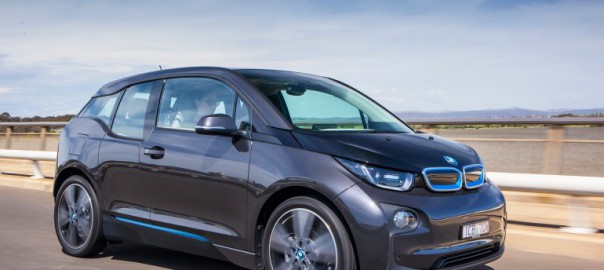
The future is here! BMW has launched its long-awaited i3 electric city car in Australia. It’s certainly unlike any previous BMW, with its electric motors, carbon fibre reinforced plastic structure and cutting edge looks. What was your first impression, Daisy?
She
Looks, looks, looks. Yes, it may look a little like a grumpy porpoise – it wasn’t love at first sight – but the plastic i3 is unmistakably BMW thanks to its faux grill, solid backside and, in the car we tested, the alloy wheels, which elevate it from electric car to a truly original, exciting design. Inside it only gets better – I loved the wooden dash board panel, the recycled materials and exposed carbon fibre body peeking out from below the very slick “suicide” doors.
He
I’ve got to admit I’m underwhelmed by BMW’s usual interiors – they are conservative in terms of design and materials – but not the i3. I love the fact it uses the different materials like the wood and recycled fabric. I also liked the ‘floating’ infotainment screen in the centre of the console and the smaller tablet-style dashboard. The whole interior just looks fresh and original – it’s unlike anything else on the market. The carbon fibre body – or “Life module” in BMW-speak – you mentioned is a big part of what makes this car so special under the surface. Basically the i3 is built in two parts – the floor has the battery, motor and engine and the body sits on top. It’s all very clever but the proof is in the driving – how did you find the i3 on the road?
She
Onto my second impressions. Wow, this car can move. Granted, I’m new to the electric car game, but the feel of the motor is so unlike anything I have ever driven or even encountered on the road, that, well, it doesn’t really feel like driving. Incredibly nippy, accelerating from 0 to 100km/h in only 7.9 seconds, and with only a hushed, pulsing hum, it’s stealth, in family-friendly, city-minded disguise. The novelty of driving a car that sounds faintly like a nuclear submarine aside, it handles very neatly, is really responsive and is a breeze to control. Traditionalists – ie anyone who loves a manual gearbox and the mechanical rhythm and sound that comes with it – beware: the i3 is a drivable computer.
He
Yeah, it’s a strange sensation driving an electric car. The biggest difference for me, compared to a ‘traditional’ car, were the brakes. BMW harvests the energy when you slow down to charge the batteries, so as soon as you step off the accelerator you start slowing as if you have pushed the brake pedal. It took me a little while to get accustomed to it, but once I did it became normal. Did you get the range extender engine to kick in during your time behind the wheel? I got it to start at the end of a long trip, but even then I barely noticed because it was so quiet.
She
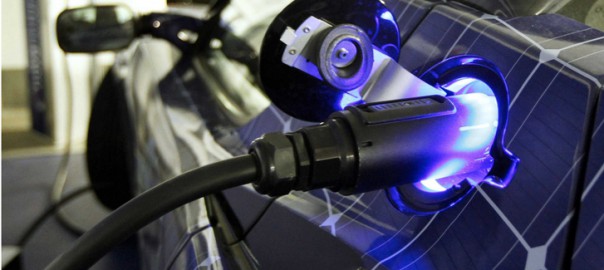
I didn’t get to see the “REX” in action, but did charge the car using the blue-lit power socket, which is a weird sensation. I don’t have a garage, let alone a parking space with ready electricity supply, so needed to plug it in in an underground carpark – I’m not sure how electric car-ready Sydney is. How many hours did you get out of one charge of the battery, Steve?
He
I live about 35km from the office, so I’m not exactly the target market, but it was more than capable of doing the round trip on a single charge. BMW claims 160km of range but even on a full charge the dashboard only claimed 100km was possible. And it did take several hours to recharge the battery so it does require patience and planning to get the most out of the i3. I agree, Daisy, I don’t think Australia is geared-up for electric cars just yet, but with the i3 and its supercar big brother the i8 – plus the Tesla Model S and Mitsubishi Outlander PHEV already here and others on the way – the tide is turning. Of course, if you’re spending $70,000 on an electric city car you’ve probably got a garage to charge it. Which leads to the obvious question – would you buy an i3, Daisy?
She
I’m not sure it could fit a surfboard and handle long road trips, but for city use, yes, in a heartbeat. I’ve always wanted a car that treads lightly and the i3 does a cracking – and very fun – job of that. I love this car and what it represents. It’s the way ahead.
Read more and see video: Drive.com.au
Test drive: Behind the wheel of the BMW i3
After a long incubation period, the first cars released under BMW’s sustainability-focused “i” sub-brand – the i3 city car and i8 sportscar – have been hitting roads around the globe throughout 2014. We climbed aboard the i3 to find out how it performs.

We’ve previously looked at the make-up of the i3 in detail, but here’s a quick refresher. It’s a compact four seat, five door that’s a touch under 4 m (13 ft) long with short overhangs at both ends and an exceptionally tight turning circle of 9.8 m (32 ft – that’s 10 percent less than a Mini) and 2.5 turns lock to lock.
The BMW-developed electric motor is located at the back, providing 125 kW and 250 Nm (184 lb-ft ) of torque to the rear wheels through a single speed automatic transmission. In addition to the battery electric vehicle (BEV) model there’s a range extender version in which a 34-hp, 650 cc two-cylinder petrol engine from BMW Motorrad sits alongside the electric motor and acts as a generator (i.e. it charges the battery but, unlike hybrid cars, it doesn’t drive the wheels).
The modular 360 V, 21.8 kWh (18.8 kWh useable), 96 cell, liquid-cooled lithium-ion battery pack is spread across the underbody and can be charged in 11 hours using a domestic wall plug or six hours using BMW’s i Wallbox. BMW says DC fast charging can deliver 80 percent charge in just 30 minutes.
On a single charge the i3 has an “everyday range” of 160 km (100 mi). Using ECO mode can bump that closer to 200 km (124 mi), while the range extender version can travel around 300 km (186 mi). Acceleration is put at 0-100 km/h (0-62 mph) in 7.2 seconds and importantly it still has plenty of zip for overtaking at higher speeds, with a 80-120 km/h (50-75 mph) time of 4.9 seconds, putting it on par with a BMW 435i. Top speed is electronically limited to 150 km/h (93 mph).
The i-series cars are based on an architecture that’s been created “from the ground up” for electric vehicles. The passenger cell is the first mass-produced using carbon fiber-reinforced plastic (CFRP) and the chassis is made of aluminum and other lightweight materials. This adds up to a car that weighs just 1,195 kg (2,634 lb) – the range extender adds around 120 kg (265 lb) to that figure.
Read more: Giz Mag
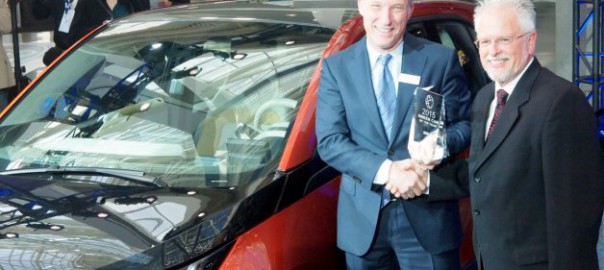
BMW i3 wins 2015 Green Car of the Year award
Milestone Carbon Fiber Electric Car Wins the Auto Industry’s Most Important Environmental Award at Los Angeles Auto Show
LOS ANGELES, CA (November 20, 2014) – BMW’s i3, an innovative electric car built with a lightweight carbon fiber passenger cell and an aluminum drive module, has been named Green Car Journal’s 2015 Green Car of the Year®, which was announced at the LA Auto Show. Green Car of the Year® finalists also included the Audi A3 TDI, Chevrolet Impala Bi-Fuel, Honda Fit, and VW Golf.

The Green Car of the Year® award is an honor widely recognized as the auto industry’s most important environmental accolade. Green Car Journal, the leading voice in the intersection of automobiles, energy, and the environment since the publication’s launch in 1992, celebrates the high-profile award’s 10th anniversary at the L.A. Auto Show this year.
“BMW’s i3 is a milestone vehicle in many respects and illustrates the automaker’s expansive vision of future motoring,”
said Ron Cogan, editor and publisher of Green Car Journal and CarsOfChange.com.
“It is purposefully designed with a small environmental footprint and zero emissions, offering the best features of an electric vehicle with the functionality of an available on board engine-generator that nearly doubles its battery electric range.”
The first all-electric vehicle to win Green Car Journal’s Green Car of the Year®, the i3 benefits from BMW’s years-long ‘project i’ initiative that focuses on future mobility and strategies for sustainable transportation. The result is a unique approach that finds the i3 embracing technologies, materials, and construction methods breaking new ground for a mainstream model. While the i3 is designed as a battery electric car, its optional REx gasoline engine-generator enables extended driving range with electricity created on board easing potential range anxiety.
“Unlike other manufacturers that build vehicles and then create advanced powertrains to go in them, BMW rethought the whole process of building a car from the ground-up, using new materials and techniques”
said noted TV personality and avid car collector Jay Leno, pointing out one of many strengths the i3 had going into the competition. Leno has been one of Green Car Journal’s Green Car of the Year® jurors since the award program launched in 2005.
Along with Leno, the Green Car of the Year® jury includes leaders of noted environmental and efficiency organizations including Jean-Michel Cousteau, president of Ocean Futures Society; Matt Petersen, board member of Global Green USA; Mindy Lubber, President of CERES; Kateri Callahan, President of the Alliance to Save Energy, and Dr. Alan Lloyd, President Emeritus of the International Council on Clean Transportation and former CalEPA Secretary and Chairman of the California Air Resources Board. The jury is rounded out by a smaller number of Green Car Journal editors.
The magazine’s extensive vetting process considers all vehicles, fuels, and technologies as the field of nominees is narrowed down to five finalists that significantly raise the bar in environmental performance. Vehicles that are all-new, or in the early stages of their model lifecycle, are considered and finalists must be on sale by January 1 of the award year. Availability and market significance are factors to ensure that models have the potential to make a real impact on improving air quality, reducing greenhouse gases, and promoting transportation efficiency.
As finalists for 2015 Green Car of the Year®, the Audi A3 TDI, BMW i3, Chevrolet Impala Bi-Fuel, Honda Fit, and Volkswagen Golf are additionally honored with Green Car Journal’s 2015 Green Car Product of Excellence™.
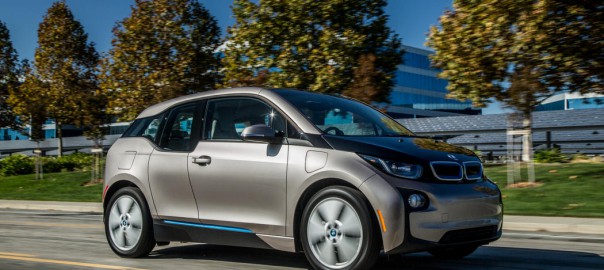
The 2015 Yahoo Autos Green Vehicle of the Year: BMW i3
The most radical vehicle to emerge from any automaker in the past year — and likely the past decade — the BMW i3 looks and drives like nothing else on the road. You may call it a hatchback hit with an ugly stick or an an expensive way to travel 80 miles on a charge, but you’ll still miss the point of why we named it our 2015 Green Vehicle of the Year.
We’ve written before about the lengths BMW went to build a lightweight electric vehicle that would have unimpeachable green credentials. The carbon-fiber frame, narrow tires and drive system so wired to recover energy in coasting you really need only one pedal in everyday driving combine into a vehicle that’s more efficient at traveling a mile than any other available, including the Tesla Model S.
Driving the i3 — ours came with the 650-cc, two-cylinder range-extender engine that adds an addtional 80 miles of reach — is to revel in parsimony and goodness, and like the houses that hand out toothbrushes on Halloween, a bit of a buzzkill. The torque does arrive instantly, and the low center of gravity adds some fun in the chassis, but the tiny contact patch and suspension keeps such joy bottled up. The interior of open-pore eucalyptus and recycled plastic-fiber cloth looks inviting and jarring at first — as open and sporty as a fair-trade coffeehouse.
“No matter how funky and modern BMW makes its lights and window graphics,” said contributing editor Steve Siler, “it’s hard to get excited about a box with ultra-skinny wheels.”
Yet the panel of editors came to see the strategy behind the i3. The world has lived with automobiles for over 100 years, more than long enough for them to evolve into signifiers of our personalities. We expect form to follow function in even our wildest cars, from the spoilers and hood scoops on the Dodge Challenger Hellcat to the engine vents on the Alfa Romeo 4C’s rear decklid. But few automakers has ever been so enthralled by electric cars, so ready to embrace a low-carbon future, that they were willing to engineer a car that acts as a rolling billboard for saving energy. The BMW i3 was the first of this century, but it won’t be the last.
Source: Yahoo
BMW i3 Introduction
A brief introduction to the all-electric BMW i3.