The Telegraph: Cars
The Audi A3 e-tron promises to combine strong performance with incredibly low running costs.Rebecca Jackson puts it to the test.
The Telegraph: Cars
The Audi A3 e-tron promises to combine strong performance with incredibly low running costs.Rebecca Jackson puts it to the test.
Last year marked a big breakthrough for electric cars; the majority of major manufacturers invested heavily in developing electric drive-trains and subsequently added an array of appealing battery-electric (BEV) and plug-in hybrid (PHEV) models to their rosters.
By the end of 2014 there were over 17,000 plug-in cars and vans on UK roads with that number expected to more than double by the end of this year.
As noted by Dr Ben Lane, Managing Editor of Next Green Car: “2015 will see a continuing roll out of battery electric and plug-in hybrid models as UK motorists become more accustomed to electric drive-trains. This year will be the year when EVs start to considered as ‘normal’.”
The future is only looking bright for electric mobility and there a number of exciting EV prospects expected to feature prominently this year. Below is Zap-Map’s list of top 10 electric vehicles coming soon in 2015:

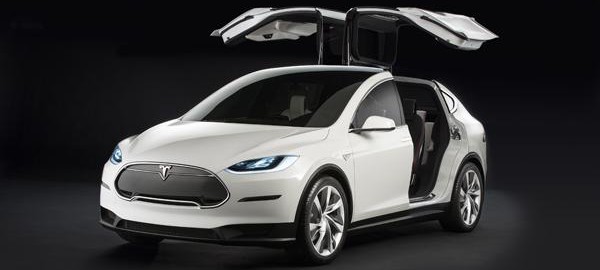
Originally scheduled for 2013, Tesla recently announced that the eagerly anticipated Model X crossover will be launched in the third quarter of 2015. Despite being larger than the Model S, the all-wheel electric drive will give the Model X a similar level of performance (that’s 0 to 60 mph in around 5.9 seconds!). With 10% additional weight, the expected driving range will be slightly less; around 170 miles for the 60 kWh battery pack or 230 miles for 85 kWh battery. One the striking features of the next Tesla will be its rear ‘Falcon’ doors which open upwards instead of swinging outward. Final pricing has yet to be announced. Although it’s been a while coming, with the new Model X, Tesla is unlikely to disappoint.

The twin-up!’s 55kW powertrain consists of a 0.8 litre TDI diesel engine working in conjunction with a 35kW electric motor. The energy storage system includes a lithium-ion battery (energy capacity: 8.6 kWh), a conventional 12V battery for on-board electrics, and a 33 litre capacity fuel tank. On the official test cycle, the twin-up! delivers a combined fuel economy of over 250 MPG with a CO2 emissions of just 27 g/km. In zero-emission operation the PHEV can cover a range of 31 miles and is anything but a slouch: the twin-up! accelerates up to 62 mph in 15.7 seconds and has an all-electric top speed of 80 mph. Pricing to be announced.

The Mercedes-Tesla relationship is evident (and welcome) in the B-Class ED with the drive-train and battery pack coming from the California-based company. Capable of 125 miles per full charge, the B-Class ED provides electric motoring in a quality package with more reserved styling than some other brands such as the BMWi range. While the motors can deliver up to 179 bhp (Sport mode), two other driving modes are available: ‘Economy’, where power is limited to 131 bhp; and ‘Economy Plus’ with just 87 bhp and a maximum speed of 70 mph. Expected to be priced from around £27,000.
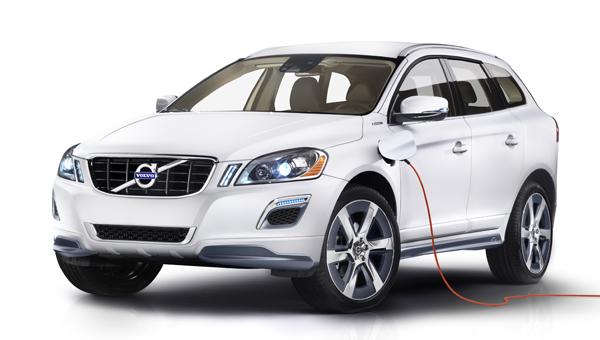
No doubt encouraged by the huge success of the Mitsubishi Outlander PHEV, Volvo will bring its own plug-in SUV to market in 2015, in addition to the usual range of petrol and diesel engines. While all will offer four-wheel drive, for the first time there will also be a front-wheel drive option. The XC90 PHEV will also feature a collection of entertainment and safety technology including a 9.3 inch screen compatible with Apple’s new CarPlay interface and Volvo’s new collision avoidance system. The XC90 range is priced from £45,750.

Now in its eighth incarnation, the new Passat range includes the GTE, the first Passat with a plug-in hybrid drive. Powered by a turbocharged direct injection petrol engine (TSI) and an 85kW electric motor, the GTE is capable (on the official test) of over 141 MPG (petrol) and 13.0 kWh/100km (electric) with CO2 emission of under 45 g/km. On a full tank and fully recharged 9.9 kWh lithium-ion battery, the new PHEV has a total driving range of over 620 miles. In ‘E-Mode’, the Passat GTE can also cover a distance of up to 31 miles with zero emissions. AC charging options include standard (or ‘slow’) charging at 2.3 kW from a domestic socket in 4.25 hours or an optional a home 3.6 kW charger which provides a full charge in 2.5 hours. Anticipated pricing from around £20,000.

The BMW X5 e-drive concept was first unveiled at the 2013 Frankfurt International Motor Show and is seen as the logical next step for the successful X5 series. Combining a four-cylinder combustion engine with BMW TwinPower Turbo technology and lithium-ion battery, the plug-in hybrid can driver approximately 19 miles solely on electric power. There is a choice of three driving modes, depending on requirements and situation – the intelligent hybrid drive option for a balance between sportiness and efficiency; pure electric and therefore emission-free driving; or Safe Battery mode to maintain the current battery charge. According to BMW, the X5 e-drive is capable of 74.3 mpg and on average emits 90g of CO2 per kilometre. Estimated to be priced at £55,000 – £60,000, the X5 e-drive is on course to directly compete with the Volvo XC90 PHEV.

Renault’s battery-electric Zoe, the second best-selling EV after the Nissan LEAF, will be revitalised by a smaller and more efficient electric motor in 2015. By reducing the motors size, Renault expects a 10% increase in the Renault Zoe’s official 130 mile range. Renault also claims the improvements will reduce charging time by 20-30 minutes when using low-level power supply such as a 3kW 3-pin slow charging unit. The upgrades to the Zoe will be added to all new models from Spring 2015 Renault say.

Following on from the successful Outlander PHEV launch in 2014, Mitsubishi plans to release the Outlander PHEV-S. Power for the Outlander PHEV-S is expected to come from the same four-cylinder 2.0-litre petrol and twin electric motor system that drives the original car. This will see up to 204bhp sent to all four wheels, resulting in a 0-62mph time of 11 seconds and a 106mph top speed, whilst offering 148mpg and emissions as low as 44g/km CO2. The main difference will be in appearance, offering a refined interior and exterior design that will magnify the Outlander PHEV’s unique driving experience. Pricing to be announced.

The Audi Q7 e-tron quattro, which will be launched soon after its conventionally powered counterparts in the spring, is the first plug in hybrid from Audi with a diesel engine. It is also the world’s first diesel PHEV with quattro all-wheel drive in the premium SUV segment. It returns the equivalent of up to 166.1mpg, which corresponds to less than 50 grams of CO2 per kilometre and can travel just under 35 miles on battery-electric power alone. Pricing to be announced.

The Quartz plug-in hybrid concept mixes elements of a crossover vehicle and a saloon, to bring a new take on the SUV segment. It uses a plug-in hybrid drive train comprising of a 1.6-litre petrol engine supplemented by two 85kW electric motors, driving each axle. When the vehicle is in ZEV mode, it utilises the electric motor only and can cover up to 31 miles on a single battery charge. Peugeot have estimated the vehicle will not reach production until 2016; it will be interesting to see if the striking design mellows between now and then.
Source: Zap-Map
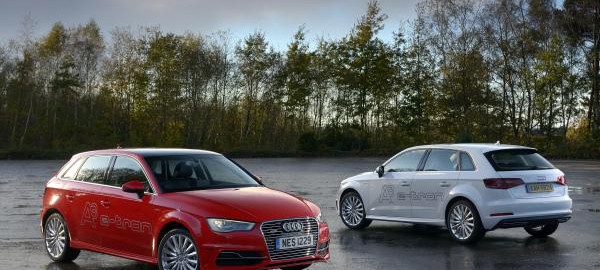
THE 2014 World Car of the Year is adding zero emissions motoring to its repertoire with the arrival of the new A3 Sportback e-tron, the first plug-in hybrid to join the Audi range.
Priced from £29,950 (including government grant incentive), the spacious five-door compact hatchback combines a conventional 1.4-litre TFSI petrol engine with an electric motor to deliver impressive performance, exceptional efficiency and, equally crucially, complete freedom from range limitation. The first e-trons will arrive with customers early this year.
At a glance, nothing about the A3 e-tron is new at all. But delve beneath that ubiquitous surface and you will find a very clever petrol-electric hybrid drivetrain that combines the cheap energy of plug-in tech and the ability to recharge on the move. The modified 1.4-litre TFSI unit, in this application featuring a peak power output of 150PS, is linked by a clutch to a 75kw electric motor, which is integrated into a specially developed six-speed S tronic transmission sending power to the front wheels. Combined, the two power units generate 204PS of system power, good for a 0-62mph sprint of 7.6 seconds and a top speed of 137mph. So, it’s no slouch.
Equally importantly, according to the ECE standard for plug-in hybrid cars, the A3 Sportback-based e-tron is capable of covering up to 176.6mpg with CO2 emissions of only 37g/km. With the combination of electric motor and combustion engine, an overall operating range of up to 584 miles is possible.
The Audi A3 e-tron can run exclusively on electric power for up to 31 miles at speeds of up to 81mph, or can be powered by petrol alone. Alternatively, the hybrid mode brings both units into play, and the driver can choose to run these simultaneously – a function known as ‘boosting’ – by initiating kickdown by the S tronic transmission. In this mode the full 350Nm torque output is deployed for the strongest possible acceleration, but when the driver stops accelerating both motors temporarily deactivate, eliminating motor braking torque and allowing the car to glide to conserve fuel and recuperate energy.
Up to medium loads the motor can also function as an alternator, making a significant contribution to retardation and recovering energy which is fed into the traction battery. In this mode the wheel brakes only become active if the driver applies moderate force to the pedal.
The driver has several ways of actively managing the vehicle’s response. Four key settings are available – the EV mode gives priority to electric drive, the hybrid auto mode is useful for long journeys as it engages the electric motor wherever possible, the hybrid hold mode preserves the electrical energy stored in the battery for later use and the hybrid charge mode uses the combustion engine as a generator to charge the battery.
Inside the four passenger doors interior space is good for five, and luggage capacity is the same as a Quattro four-wheel driven A3, which is to say 100 litres down on the basic A3 Sportback and technically only 29 litres more than a Volkswagen Up. It’s broad rather than deep, though, and turns out to be plenty practical enough.
Standard trimmings include LED headlights and daytime running lights, special ‘turbine design’ 17-inch alloy wheels, rear parking sensors, light and rain sensors, MMI navigation plus with hard drive-based mapping and Audi connect online services bringing in-car internet access.
The A3 Sportback e-tron is supplied with two charging leads as standard. One is specifically designed for use at public charging points and the other for domestic use.
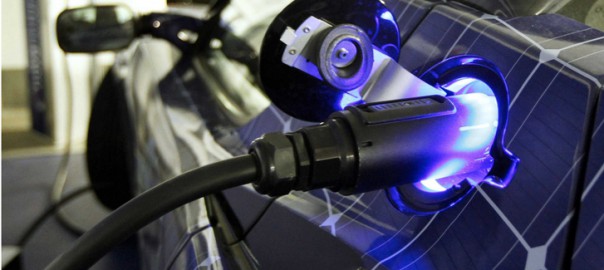
The charging lead supplies the car with alternating current from the grid via the charging connection, which is located in the single frame grille behind the fold-out four rings. As well as a status LED, the unit includes two pushbuttons allowing the user to choose between timer-controlled charging and immediate charging.
Using a domestic socket it takes four hours to fully charge the battery. When a wallbox is connected or a public charge point is used this reduces to two hours and fifteen minutes.
The e-tron excels in electric-only mode in city environments, where its is quiet and smooth, but loses something of the dynamics of the regular A3 because of the battery weight beneath the floor. Crucially, the standard everyday hybrid mode does brilliantly well at using the electric motor as much as possible, saving the 1.4-litre turbocharged petrol back-up for more pressing needs and topping up battery charge.
Source: The Northern Echo
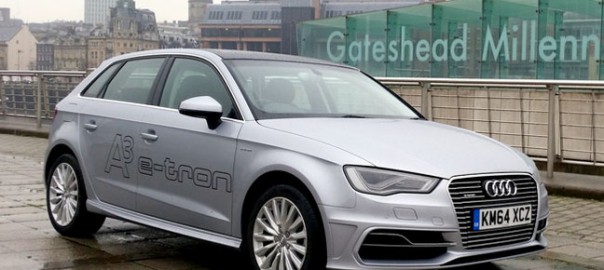
You wouldn’t know it was an EV … except it might use NO petrol
Vulture at the Wheel It would have been difficult for Audi to launch an electric car differentiated more from BMW’s. Whilst the BMW i3 has been styled and engineered to look and perform like something from another planet, the new A3 e-tron most definitely has not.
This is Audi’s first production ‘leccy car since it announced it would not be mass producing the all-electric concept e-tron coupe or the design-study Wankel rotary-engined A1 e-tron range extender.
What we have here is something that – if you removed the e-tron badges, taped over the interior decals and didn’t rummage around too deeply in the display menus – you could get in and drive from John O’Groats and Land’s End and not notice it was an EV at all.
Of course, this is entirely deliberate. Audi thinks the path to electric motoring is not to scare the horses but still to bundle some cutting edge drivetrain technology under the bonnet. That’s why the A3 e-tron looks just like any other A3, right down to hiding the charge socket under the four-circles badge at the front – a place you’d never notice it unless you were looking for it and had been told its whereabouts to begin with.
The only clue to what’s in play here is under the bonnet. Pop the hood, as the Americans say, and you’ll see the high power electric cabling and associated 75kW electric motor which is coupled to a slightly modified 150ps 4-cylinder 1.4L turbocharged TFSI petrol engine.
The electric motor draws its power from a 96-cell 8.8kWh Li-Ion battery pack that’s buried beneath the rear seats. The 12V battery and its associated electrics, evicted from under the bonnet by the electric drive motor, now snuggle up alongside the fuel tank at the back. This means the new drive train set-up doesn’t have any noticeable impact on the A3’s front-to-back weight distribution
Read More: The Register
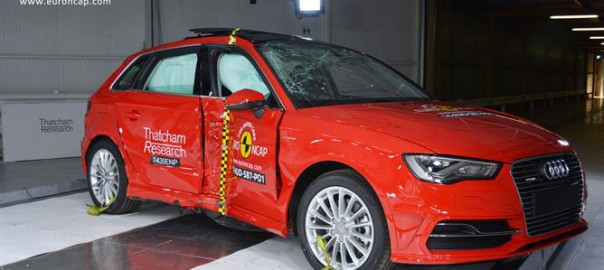
Euro NCAP has awarded the Audi A3 Sportback e-tron five stars in the latest round of crash tests.
The Kia Soul and electric Soul EV both scored four stars, while Jeep’s new Renegade compact SUV scored five stars.
Euro NCAP’s testers gave the Audi A3 Sportback e-tron an adult safety rating of 82%, noting good body protection for both driver and passenger during front impact tests. The electric Audi scored a 66% rating for pedestrian protection, and a 78% rating for child safety.
Kia’s Soul EV scored an adult safety rating of 84%, plus 82% for child safety. Testers noted that the Soul EV scored particularly well during side impact tests, with good body protection throughout.
The standard Soul fared slightly less well, gaining an adult safety rating of 75% and a child rating of 82%.
Jeep’s baby Renegade impressed Euro NCAP’s testers, offering good protection during both front- and side impact tests. The model was given an 87% rating for adult protection, and 85% for children.
BMW also earned a Euro NCAP award for its advanced pedestrian warning and city braking systems.
Source: What Car
Best cars and options explored
The future of driving appears to be electric, with Formula E in full effect, supercars adopting hybrid drive systems and range getting further all the time. Fuel powered engines may have their days numbered. But is it time to make the change to electric?
Now that the big car manufacturers are creating hybrid and electric cars we can be assured that it’s the future. And thanks to infrastructure improving all the time for charging stations range isn’t becoming such a big issue. But last year’s Tesla owners won’t get updated with the latest self-driving tech of this year’s Tesla, not a very nice reward for early adopting.
So is it still too early to adopt? Are batteries in cars suddenly going to improve to make current models a joke? We’ve looked at what going on to help give you a clearer idea of what to do.
The selection of pure electric cars right now isn’t huge, but it’s more than ever before and range is now good enough for day-to-day use. Prices, in the UK at least, are kept reasonable thanks to government assistance taking £5,000 off the price and offering free tax. If you offset petrol costs too you’re saving even more.
At the top end there’s Tesla with its Model S boasting all wheel drive and self-driving smarts starting at around the £50,000 mark. But this is in a league of its own with sports car performance, plus the latest model is not actually going to be in the UK until July 2015, even if you can buy yours now.
Then there are established brands like BMW, Ford, VW, Nissan and Renault all making fully electric cars at affordable prices right now.
Range, charging times, price and power
When going electric most people will be juggling these few key numbers: range, charging time, price and power.
PRICE: Firstly there’s price, at which the Renault Zoe wins by a fair margin starting at £14,000. Nissan’s Leaf can be bought from £16,500, Kia’s Soul EV is £25,000, the VW e-Golf is from £26,000, and BMW with its i3 is from £31,000.
RANGE: The range winner, from the reasonably priced cars, is the Kia Soul EV with 135 miles. In close second is the Nissan Leaf with 124 miles. Coming in behind them is the BMW i3 with a 118 mile range along with the VW e-Golf also sporting a 118 mile range, followed by the Renault Zoe with 93 miles.
Of course if you include the Tesla Model S that wins with its base model eeking out an impressive 240 miles on a charge and its top end offering 312 miles a go. But you get what you pay for.
CHARGE: This is a fairly even playing field with the cars all offering a rapid charge to 80 per cent in half an hour. Across the board it’ll cost you to upgrade your home charger for faster charging but this can result in as fast as a 3-hour charge to full.
POWER: Electric cars deliver all their torque instantly and the engine directly powers the wheels, this means they feel really nippy pulling away. The Nissan Leaf utilises 107hp to do 0-60mph in just 7 seconds making it the quickest of the lot off the mark.
The BMW i3 has 170hp for a 0-60mph time of 7.2 seconds, the Renault Zoe has 83hp for a 0-60mph time of 8 seconds, and the VW e-Golf manages 0-62mph in 10.4 seconds thanks to its 114hp motor. In last place is the Kia Soul EV with its 108bhp delivering a 0-60mph time of 10.8 seconds.
So for price the Renault Zoe wins it, but for range and power the Kia Soul EV comes out on top.
Hybrids have been around for years with the Toyota Prius leading the way with its dual-drive system. These are now more common than ever with Uber drivers using Prius as the car of choice.
But the market has grown, especially recently, with plug-in hybrids that allow drivers to charge at home so they may never need to use the fuel engine, instead reserving that for long distance journeys only.
From the Volvo V60 Plug-in and Ford Mondeo Titanium Hybrid to the Golf GTE or the BMW i3 with range extender, hybrids are fast becoming viable alternatives to single engine cars. The extra you may spend on the new technology can soon be made back in the petrol and tax savings they offer.
Plug-in hybrid cars mean less of a worry about range than pure electric while also offering power and a reasonable price.
As with the Tesla we’re not going to include the likes of the McLaren P1, BMW i8, Porsche 918 and Ferrari LaFerrari as they’re all reserved for the super rich. And we’re only using plug-in hybrids as straight hybrids are fast becoming outdated in favour of the electric only options and extended range of plug-in hybrids.
PRICE: The plug-in hybrid range have all arrived at a similar time with manufacturers savvy to the government’s £5,000 contribution. For this reason they’re all very similarly priced.
The winner, by a narrow margin is the Ford Mondeo Titanium Hybrid from £25,000, with Mitsubishi PHEV GX3h from £28,250 in second and closely followed by the Toyota Prius Plug-In Hybrid from £28,395.
Then we have the Vauxhall’s Ampera from £29,000, Audi A3 Sportback e-tron from £35,000, BMW i3 Range Extender from £34,000 and Volvo V60 Plug-in hybrid from £45,000.
RANGE: Winning with an impressive 967 mile range is the Ford Mondeo Titanium Hybrid but it only manages around 20 miles on electric alone. Closely behind that is the BMW i3 with range extender that offers a 930-mile top end with pure electric for 105 miles, making it overall cheaper to run than the Ford. The Toyota Prius Plug-In Hybrid can manage up to 700 miles in one journey but loses on electric alone with just 15 miles on a charge.
Audi’s A3 Sportback e-tron can last for 585 miles with 31 of those miles on electric alone. Despite its size the Mitsubishi PHEV GX3h manages 500 miles with 32 on electric alone. Vauxhall’s Ampera eeks out 310 miles with between 20 and 50 of those miles on battery.
CHARGE: As in pure electric cars this is a fairly even playing field with the cars all offering a rapid charge to 80 per cent in half an hour. Across the board it’ll cost you to upgrade your home charger for faster charging but this can result in as fast as a 3-hour charge to full.
POWER: The Audi A3 Sportback e-tron, as the name suggests, wins this with a 0-62mph time of 7.9 seconds thanks to 204hp. The BMW i3 Range Extender model is second offering 170hp for 0-60mph in 7.9 seconds.
The Vauxhall Ampera does 0-60mph in 8.7 seconds with 148hp, despite having 178hp the Ford takes 9.2 seconds to get from 0-62mph, the Toyota Prius Plug-In Hybrid gets from 0-60mph in 11 seconds from 134hp, the Mitsubishi PHEV GX3h does 0-60mph in 11 seconds and has 186hp.
The winner for price is the Ford Mondeo Titanium Hybrid but the BMW i3 takes it for range with the Audi offering the most power.
The future of electric cars and hybrid machines is looking positive. Charging infrastructure is cropping up all over the country with Tesla’s Elon Musk promising to install his Supercharger network UK wide by the end of next year.
Crucially, right now, it’s possible to drive pure electric all the way from the top of Scotland to the bottom of England thanks to fast chargers along the way. It might take a little longer than petrol cars since you have to stop for half an hour to recharge, but it won’t cost as much by a long shot. So adopting right now, especially if you’re going for a hybrid, isn’t as risky as it once was.
Another issue is batteries. Developments are being made more and more regularly as car manufacturers pour money into research. But worrying about having an older battery shouldn’t be an issue as, hopefully, manufacturers will be able to swap out old for new future-proofing any car you buy now.
Next year Tesla hopes to offer a car which is nearly completely self-driving. But since that’s out of the price range of most people current electric car offerings are plenty futuristic.
If you’re already driving a car and the cost of petrol and tax are proving too much then electric or hybrid could be your way out.
Source: Pocket Lint
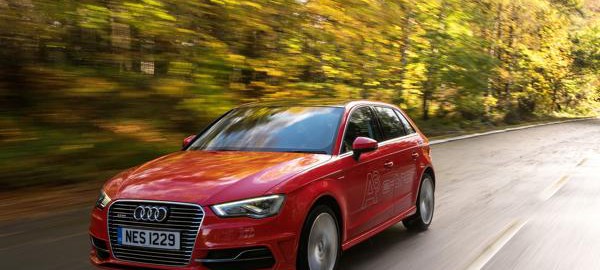
Tony Dron drives the new e-tron hybrid version of the Audi A3 Sportback.
Prepare to be seriously impressed. When I put the obvious question about their latest model to Audi, I was astonished by what happened next, but we’ll get to that later. First, things are moving fast in automotive technology and the changes in the next ten years are going to be much greater and more amazing than anything we have seen in the last three decades.
Audi’s first hybrid car, the A3 Sportback e-tron, is one step on the way. Wisely, they have applied the new engineering to an existing, top-seller and made it seem, most of the time, like a perfectly normal petrol-powered family wagon – complete with five seats and a decent boot. The difference is that you can switch it between four driving modes, one of which gives you purely electric drive for up to 31 miles.
There is no range anxiety because the A3 e-tron can always fall back on its petrol engine and the range from its combined power sources is over 580 miles. It looks sensible and it is sensible but it’s also fun to drive and, no doubt to the dismay of heads-in-the-sand anti-car bores who welcomed electric vehicles because they thought they’d be slow, this electric Audi is quick.
The combined 1.4TFSI petrol engine and 75kw electric motor give a top speed of 138mph and 0-62mph in 7.6 seconds, which is significantly quicker than a non-electric A3 Sportback 2.0 TDI Sport S tronic, a highly respected performer which looks almost exactly the same.
Audi, famed as a leading innovator in automotive engineering, is quick to remind us of the A3’s lightweight aluminium body construction and, equally, the pioneering race-proven hybrid technology that has delivered two outright wins in the Le Mans 24Hrs.
So what was the obvious question? Simple: given that all the above is true, and a large fortune has been spent developing that race-winning hybrid technology, why haven’t they used the same system in this road car? The Audi R18 e-tron Quattro race car that won at Le Mans in 2014 captures energy via a flywheel but the A3 Sportback e-tron has a permanent magnet synchronous electric motor/generator mated to the gearbox and a battery, with no flywheel to spin up under braking.
We were in the North East of England for the A3 Sportback e-tron launch when I put this question. Immediately, they sent a man with a mic down to the pit-road in Sao Paulo, Brazil, where the final round of the 2014 World Endurance Championship was taking place. My question was put directly to Chris Reinke, the Audi R18 Project Leader, and within minutes I received an email with an audio attachment of Mr Reinke, in person, in South America, answering the question – exclusively for NEW CAR NET readers. Wow.
Here’s the essence of what he said: the race car requires a very intense recuperation and boost cycle – about three seconds each way. The demand in road cars now is different: you recoup for quite a while and then you run on electric power, also for quite a while. For the moment, then, the road car with its battery and the race car with its flywheel have ideal systems for their different requirements.
There are, however, links between the race and road cars, particularly in electronics. The race team is at the forefront of the extreme end of development. Mr Reinke concluded, ‘But believe me, that kind of technology will reach relevance in years to come . . . the spin-off will be seen in road cars.’
In other words, when it come to road cars, you ain’t seen nothing yet. Meanwhile, this first Audi plug-in hybrid can be ordered now for deliveries starting in January 2015. As it qualifies for the Government’s OLEV grant of £5,000, the OTR pricing is from £29,950. That includes all-weather LED front and rear lights, special 17in wheels, light and rain sensors, a handy charging point concealed behind the four-rings badge on the front grille, a public charging cable kit, MMI Navigation with Audi Connect, and more.
Even so, it’s not difficult to add several thousand to that price with a few extras such as leather sports seats, a panoramic glass roof, a special paint job, optional 18in wheels and so on.
To drive, it does feel like a perfectly normal premium quality car, with a six-speed S tronic gearbox and surprisingly good torque and throttle response from its hybrid power sources. The main driving mode uses both petrol and electric, with the battery recouping and delivering power as required. The other three are ‘Hold’, retaining battery power for later EV use; ‘Charge’, generating maximum electric range as quickly as possible while using the petrol engine; and ‘EV’, which gives purely electric drive up to 81mph.
It’s pretty lively around town in EV mode but if you floor the throttle a kickdown switch starts the petrol engine for maximum performance. The transition between the two is so impressively smooth that you can’t feel it.
The lithium-ion battery is quite compact, adds only 125kg and is very securely bolted to the floor between the rear wheels. If it has to be recharged by cable, it takes 2 hours, 15 minutes (public point) or 4 hours (domestic point).
The A3 Sportback e-tron officially emits a mere 37g/km of CO2 and has an official combined mpg figure 176.6. That sounds incredible – in the real world, a very wide range of mpg figures can be achieved and it all depends on road conditions and, most important of all, how you choose to drive it. There is no VED charge in the first or subsequent years and it’s free of the London Congestion Charge.
Audi feels that it has timed the launch of this very interesting new car just right. Just a few thousand are likely to be sold in the first year but demand for electric vehicles, including hybrids such as this, is expected to double every year after that.
What is sure is that cars are going to change beyond all recognition in the next decade, with an enormous variety available. Small engine and big battery? Big engine and small battery? Four-wheel-drive, rear drive or front drive? Stuff we haven’t even heard about yet? The choice will be yours.
Source: New Car Net
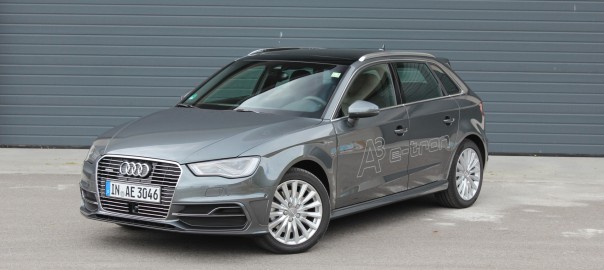
Plug-in hybrids like the 2016 Audi A3 e-tron — especially those with well-tuned responses and zippy performance — are the evangelists that have the best chance of converting the masses to the joys of all-electric motoring.
Yes, electric-car fans, please set aside your all-the-way-or-nothing thinking for the moment. On one side, the A3 e-tron preaches to that inherent goodness, and serves as a stopgap solution, with limited EV range, until battery cost and packaging hurdles are overcome. On the other hand, even after you’ve used up your electric range and the gasoline engine starts up, the e-tron remains a cheerleader for how hybrids can be made more efficient—and even more fun to drive—with bigger batteries and stronger electric ‘boost.’
The production A3 e-tron, slated to reach the U.S. market next summer, is more of the latter. After several stints of driving with the e-tron—in final Euro-spec, and close to what we’ll see in the U.S.—earlier this month, in portions of three days and a drive from Vienna to Munich, over narrow, undulating Austrian and German back roads, larger two-lane highways, and some motorway time—we can say that it feels as if Audi has put forth tremendous effort into making the e-tron drive like a normal gasoline (or diesel) car.
And it might just be the best-handling (or best-balanced) model in the A3 lineup—certainly so if you only consider Audi’s front-wheel-drive cars.
To take it a step further, up against every other plug-in hybrid and range-extended EV on the market—or at least, those with a price tag lower than EV enthusiasts’ Holy Grail, the Tesla Model S—the e-tron is simply more fun to drive.
How can this be? In part, it’s a matter of weight. Because the battery pack and additional hybrid hardware add about 300 pounds of additional curb weight (the battery weighs just 276 pounds)—and by giving it aluminum fenders and hood and some other weight-saving measures, Audi’s kept this complex plug-in hybrid’s total curb weight at just under 3,400 pounds. That’s less than 400 pounds heavier than the base 1.8-liter A3, and roughly the same weight as a 2.0T quattro A3—an incredible feat, really. Furthermore, it’s that battery pack that makes the weight distribution more balanced (at 55/45 biased to the front, instead of up to 60/40 for some A3 models).
Read more: Green Car Reports
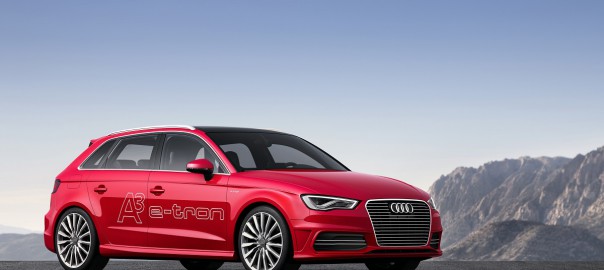
Ingolstadt, November 21, 2014 –Approximately 50 cars every day, with the same timing and on the same assembly line as the other models: Audi is now ramping up production of the Audi A3 Sportback e-tron*. The premium manufacturer is producing its first plug-in hybrid model at the brand’s main plant in Ingolstadt.
Dr. Hubert Waltl, Board of Management Member for Production at AUDI AG. said:
“We started series production of the Audi A3 Sportback e-tron in the summer. Most of the assembly work is integrated into the A3 line; no separate manufacturing is necessary. That demonstrates the flexibility and efficiency of our production planners and employees.”
With the Audi A3 Sportback e-tron, Audi is launching the mobility of the future. The compact five-door combines a 1.4 TFSI combustion engine with a 75 kW electric motor, resulting in a total system output of 150 kW (204 horsepower). Despite the sporty driving performance, fuel consumption in the NEDC is just 1.5 liters per 100 kilometers (35 grams of CO2 per kilometer). The A3 Sportback e-tron can travel up to 50 kilometers in purely electric mode and up to 890 kilometers more with the gasoline engine.
“We first of all ramped up production of the A3 Sportback e-tron to about 30 cars a day in September,”
explained Board of Management member for Production Waltl.
“Our peak is approximately 50 units each day now. In any case, we are keeping additional capacity available.”
Peter Kössler, head of the Ingolstadt plant, stated:
“Working with high-voltage systems in series production was a new challenge for us, but we mastered it well. At all stages of assembly, we achieve maximum levels of safety for our employees and quality for our customers.”
Safety is given top priority during the entire assembly process. All the employees who come into contact with the A3 Sportback e-tron have received technical safety instructions for the new technology; some employee who are directly involved are qualified as specialist electricians for automotive technology.
*Fuel consumption of the models named above:
Audi A3 Sportback e-tron:
Combined fuel consumption in l/100 km: 1.7 – 1.5;
Combined electricity consumption in kWh/100 km: 12.4 – 11.4;
Combined CO2 emissions in g/km: 39 – 35
Audi A3 Sportback e-tron 16″:
Combined fuel consumption in l/100 km: 1.5;
Combined electricity consumption in kWh/100 km: 11.4;
Combined CO2 emissions in g/km: 35
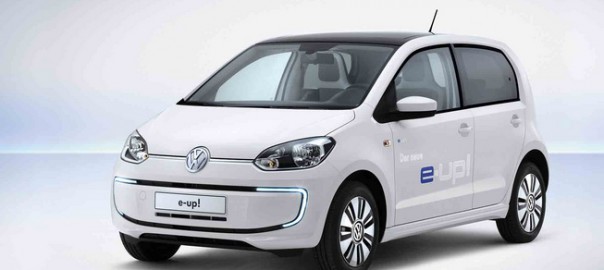
The California-made Tesla Model S was one of about a dozen models given props by the Next Green Car Awards. And the prizes ran the gamut between conventional, diesel, plug-in and battery-electric powertrains because who doesn’t like variety?
Leading off in the Next Green Car awards was the Volkswagen e-Up!, which took home the City Car award:
“With the e-up!, Volkswagen has produced a high quality, practical and affordable electric city car which is perfect for zero-emission urban driving where space is a premium.”
Americans may associate “Family Estate” cars with huge, fake-wood-paneled station wagons of the ’70s and ’80s (and with Clark Griswold), but NGC gave the Family Estate award to the far-more-fun Audi A3 Sportback e-tron plug-in hybrid.
“As the first plug-in hybrid estate car, the A3 Sportback e-tron perfectly combines conventional fuel practicality for long distance driving with zero-emission motoring for urban trips.”
The Mitsubishi Outlander Plug-in Hybrid, Nissan e-NV200 Combi and Mercedes-Benz B-Class Electric were also all given props.
“The Outlander PHEV sets the SUV bar high offering plug-in capability for the price of a diesel. With a 5% BIK rate, you can see why the Outlander is the UK’s most popular plug-in hybrid.”
“With the e-NV200, Nissan has broken new ground offering an affordable and practical zero-emission alternative to the ubiquitous diesel van.”
“Powered by Tesla know-how, the Mercedes electric B-Class brings electric mobility to the compact MPV class for the first time. High on quality, long on range, and zero on emissions.”
Finally, the Tesla took home the top-of-the-line “Executive” prize.
“Simply the most beautiful and technologically advanced electric car on the market, the Model S combines a gadget-packed interior with an exhilarating electric driving experience.”
Read more: Autoblog, Next Green Car