Category Archives: Pollution

Live Or Work On A Busy Road? The Truth About Noise Pollution

Studies conclude there are very real health risks from noise pollution – but EVs are bringing the quiet.

While we’re all aware of the term noise pollution, most of us regard it as just an irritant we have to put up with. The construction site near the office, the busy road near the children’s school, the flight path roaring overhead – such noise, we tell ourselves, is the price we pay for living in densely populated environments like cities.

Yet we might not be quite so complacent if we were more aware how bad noise pollution is for our health. For example, did you know that people living with an average of 55-80 decibels a day are more likely to suffer from high-blood pressure and cardiovascular ailments due to stress? Or that noise over 45 decibels at night can interfere with our sleep patterns, meaning we function less effectively during the day?

Such effects were confirmed in a recent study by Imperial College London, which analysed data from 144,000 adults, reinforcing evidence from the World Health Organisation, which rates noise pollution as the second largest environmental cause of health problems after air quality.

Road Traffic is the main culprit

The vast majority of noise pollution in Europe is caused by vehicular traffic on our roads – about 70 percent of it, according to European Environment Agency (EEA) statistics. Around 100 million people on the continent are subject to road traffic noise in excessive of 55 decibels, with more than 32 million exposed to over 65 decibels, while a good night’s sleep is not possible for around 50 million Europeans because of noise levels.

Concerning though these statistics are, a major solution is already with us – electric vehicles (EVs). As well as being hugely beneficial when it comes to air pollution, EVs produce nowhere near the same level of noise as gas-guzzling vehicles.

Read more: Huffington Post

Van and taxi drivers offered pathway to electric vehicle transition

Drivers of old and polluting vans and taxis have been offered fast-track options and incentives to purchase electric vehicles (EVs), with revamps to licensing and a new £42m taxi fund set to increase compliance with the diesel vehicle phase-out.

From January 2018, no more new diesel taxis will be licensed in London

Following on from Environment Secretary Michael Gove’s launch of the Air Quality Plan last week, which included a ban on all new petrol and diesel cars and vans from 2040, both Transport for London (TfL) and the Department of Transport (DfT) have launched new EV initiatives.

Mayor of London Sadiq Khan announced on Friday (28 July) that TfL would host a £42m fund to encourage owners of older and polluting diesel black cabs to retire them from the Capital’s fleet.
Owners of black cabs between 10 and 15 years old can check whether they are eligible of a “delicensing” scheme and to apply for a grant worth up to £5,000 to retire a taxi. The three-year scheme will attempt to speed up the process of tackling the illegal pollution levels in London’s air as part of a long-term goal of making the Capital a zero-carbon city by 2050.

“London’s filthy air is a health crisis that needs urgent action,”

Khan said.

“The plans announced by the Government this week go nowhere near the action needed. Cleaning up London’s taxi fleet will play a significant part in our toxic air battle and there will be no new diesel taxis licensed in London by the end of this year.

“However, it is important we financially support drivers to help them retire their oldest vehicles and upgrade to greener models. I hope this fund helps deliver a new generation of zero-emission taxis on our roads and paves the way for the Government to offer a diesel scrappage scheme so all London motorists can ditch their dirty diesels.”

From January 2018, no more new diesel taxis will be licensed in London, and the London Taxi Company officially rebranded after unveiling its new electric model. Taxis are thought to be responsible for 16% of NOx and 26% of particulate matter (PM) road transport emissions in central London.

The Government already offers a Plug-in Taxi Grant, part-funded by the Mayor, which offers up to £7,500 for new EV taxi purchases. When combined with the new delicensing payment, drivers can save up to £12,500 on new purchases.

Read more: edie.net

Petrol-diesel car ban: Government plan dismissed as ‘smokescreen’ after key air pollution policies dumped

The Government’s plan to ban new petrol and diesel vehicles from 2040 has been dismissed as a “smokescreen”, with ministers accused of condemning people to living with killer air for years to come.

Green groups and opposition politicians united in criticism after it emerged that key policies to cut the estimated 40,000 premature deaths from toxic air every year had been dumped.

A plan for a Government-led “scrappage scheme” – to get diesel cars off Britain’s roads quickly – has been rejected as poor value for money, it emerged.

Michael Gove, the Environment Secretary, also shelved proposals to charge drivers to enter the most-polluted towns and cities, shifting the responsibility on to local councils and imposing tests.

The missing elements of the long-awaited air quality plan became clear after Mr Gove grabbed the headlines with a repeated announcement that new petrol and diesel cars and vans will be outlawed in 23 years’ time.

Areeba Hamid, a clean air campaigner at Greenpeace UK, said:

“We cannot wait nearly a quarter of a century for real action to tackle the public health emergency caused by air pollution.

“It means that children across the UK will continue to be exposed to harmful air pollution for years to come, with potentially irreversible impacts.”

Anna Heslop, a lawyer for ClientEarth, said:

“They need to be doing things in the coming weeks and months that are going to fix the problem of polluted air in towns and cities around the UK.”

Hinting at future court action, she added:

“We will be holding the Government to account on this. They have been in breach of these limits for seven years – and we will continue to do that.”

Ed Miliband, the former Labour leader, tweeted:

“Fear that new car petrol/diesel ban in 23 years time is smokescreen for weak measures to tackle 40,000 deaths a year from air pollution now.”

And Jenny Randerson, the Liberal Democrat transport spokeswoman, accused ministers of “betrayal”, calling for all new diesel sales to end much faster, by 2025.

Read more: The Independent

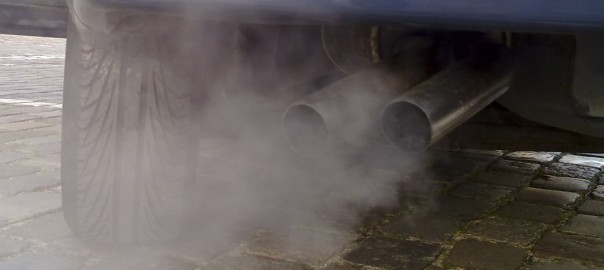
Car exhaust pollution (Image: Wikipedia)

Britain to ban sale of all diesel and petrol cars and vans from 2040

Plans follow French commitment to take polluting vehicles off the road owing to effect of poor air quality on people’s health

Britain is to ban all new petrol and diesel cars and vans from 2040 amid fears that rising levels of nitrogen oxide pose a major risk to public health.

Car exhaust pollution (Image: Wikipedia)

The commitment, which follows a similar pledge in France, is part of the government’s much-anticipated clean air plan, which has been at the heart of a protracted high court legal battle.

The government warned that the move, which will also take in hybrid vehicles, was needed because of the unnecessary and avoidable impact that poor air quality was having on people’s health. Ministers believe it poses the largest environmental risk to public health in the UK, costing up to £2.7bn in lost productivity in one recent year.

Ministers have been urged to introduce charges for vehicles to enter a series of “clean air zones” (CAZ). However, the government only wants taxes to be considered as a last resort, fearing a backlash against any move that punishes motorists.

“Poor air quality is the biggest environmental risk to public health in the UK and this government is determined to take strong action in the shortest time possible,”

a government spokesman said.

“That is why we are providing councils with new funding to accelerate development of local plans, as part of an ambitious £3bn programme to clean up dirty air around our roads.”

The final plan, which was due by the end of July, comes after a draft report that environmental lawyers described as “much weaker than hoped for”.

The environment secretary, Michael Gove, will be hoping for a better reception when he publishes the final document on Wednesday following months of legal wrangling.
A briefing on parts of the plan, seen by the Guardian, repeats the heavy focus on the steps that can be taken to help councils improve air quality in specific areas where emissions have breached EU thresholds.

Measures to be urgently brought in by local authorities that have repeatedly breached EU rules include retrofitting buses and other public transport, changing road layouts and altering features such as roundabouts and speed humps.

Reprogramming traffic lights will also be included in local plans, with councils being given £255m to accelerate their efforts. Local emissions hotspots will be required to layout their plans by March 2018 and finalise them by the end of the year. A targeted scrappage scheme is also expected to be included.

Some want the countrywide initiative to follow in the footsteps of London, which is introducing a £10 toxic “T-charge” that will be levied on up to 10,000 of the oldest, most polluting vehicles every weekday.

Read more: The Guardian

Combustion engines: high emissions from short commutes a huge challenge

Drivers in the U.S. have longer commutes than those in Europe and Asia, on average.

In the U.K., short commutes in vehicles with combustion engines—whether gasoline or diesel—pose particularly tough emission problems.

That’s because the exhaust aftertreatment systems have to warm up fully before they cut emissions to the levels required under EU regulations.

The problem has been highlighted by the British consultancy Emission Analytics, which routinely analyzes the data from its various EQUA Index sectors to highlight different emission statistics and challenges.

The company’s trenchant analyses of real-world emission and fuel-consumption data has gotten considerable attention, and it has now expanded into the U.S. as well.

This week, it noted that according to British government data, the average distance of a car journey in inner London was just 1.5 miles.

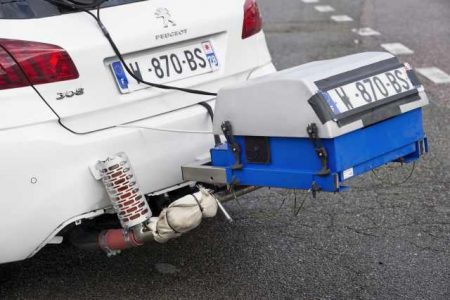
Portable Emissions Measurement Systems (PEMS) on a Peugeot 308

The implications of that figure, as well as the fact that more than half of all vehicle trips in the U.K. are under 5 miles, are dire for limiting emissions of nitrogen oxides (NOx). As the company wrote:

The average daily distance driven in [U.K.] passenger cars is not sufficient for a vehicle’s pollution control system to warm up and become fully functional.

The resultant high levels of cold start NOx emissions, from both gasoline and diesel engines, could provide an additional challenge for urban air quality initiatives such as the proposed Clean Air Zones in the UK.

Read more: Green Car Reports

More than two thirds of UK interested in EVs

New research shows 69% of people in the UK would consider switching to an electric vehicle (EV).

Charge point provider NewMotion surveyed more than 3,000 consumers to gain insight into their understanding of EVs and the issues surrounding them.

When asked why they would buy an EV, 59% of respondents said they wanted to reduce pollution.

Around 57% of people also suggested they wanted to reduce the money they’re spending – existing owners claim they are saving 15% of the cost associated with fuelling a traditional car.

However, the survey also illustrated a lack of understanding from the general public.

More than three quarters of respondents did not know what ‘EV’ stood for and roughly a quarter didn’t know how an electric car would be charged.

They were also unclear on how far an EV can travel, with the majority of people guessing an average of 63 miles range on a fully charged battery, far less than a car such as the Nissan Leaf, which can travel 107 miles on a full battery.

Sander van der Veen, UK Country Manager of NewMotion, said:

“There’s definitely an appetite from consumers to move away from the traditional petrol/diesel model of transport.

“Not only are costs increasingly prohibitive, consumers are concerned about the environmental impact of driving with petrol and diesel.”

This opposes suggestions higher insurance premiums are putting drivers off from switching to hybrids and EVs.

Source: Energy Live News

Gasoline Engines Emit More Particulates Than Diesels

For years, the conventional wisdom has been that pollution from diesel engines was far worse than from gasoline engines for two reasons: First, diesel exhaust fumes are known to contain nitrous oxide emissions. Second, they also contain particulates, small molecules that are too small to see. Both are believed to cause serious damage to human lungs.

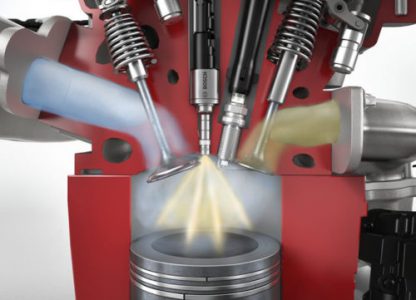
Particulate Emissions From Gasoline Engines

Now it turns out that conventional wisdom is wrong. A study by researchers at the Materials, Science, and Technology Laboratory in Switzerland claims that particulate emissions from gasoline engines can be far greater than those from diesel engines.

The laboratory studied the emissions of 7 gas engine vehicles equipped with direct-fuel-injection systems. The research found that they emit from 10 to 100 times more particulates than modern diesel engines. In fact, they have higher particulate emissions than older diesel without particulate filters.

Wait, did you read that right? Gasoline engines spew out up to one hundred times more particulates that a modern diesel engine equipped with a particulate filter? Yes, you read that right. Yikes. And people wonder why the incidence of asthma and other lung related diseases is on the rise!

Researchers Find Carcinogens In Gas Engine Exhaust

The researchers, led by Norbert Heeb, who has 25 years of experience analyzing emissions from diesel engines and designing filter systems, showed that the particles are the same size as those from older diesel engines. They measure between 10 and 20 nanometers and clump together into particles between 80 and 100 nanometers before they leave the exhaust system.

The gas engines were also found to discharge unburned hydrocarbons in the form of polycyclic aromatic hydrocarbons (PAHs), along with other liquid and solid toxins which accumulate on the surface of the emitted particles.

Particulates Penetrate The Lungs

Heeb says the particles are so small they penetrate lung tissue and pass into the bloodstream, bringing those toxins with them. Is this beginning to sound like the days when researchers first told the world about all the nasty stuff contained in cigarette smoke? It should, because it turns out there is a connection to smoking. The researchers also found that the exhaust gasses coming out ot the tailpipes of the cars with gas engines also contain benzo-α-pyrene, a carcinogenic produced when tobacco is burned.

Read more: GAS2

France will ‘ban all petrol and diesel vehicles by 2040’

Environment minister unveils five-year-plan to fulfil country’s commitments under Paris Agreemen.

France plans to ban all petrol and diesel vehicles by 2040, the country’s new environment minister has announced.

Nicolas Hulot made the announcement as he unveiled a series of measures as part of newly elected President Emmanuel Macron’s plan to make the country carbon neutral by 2050.

Mr Hulot said he recognised the target would put pressure on France’s car manufacturers, but he said they currently had projects which

“can fulfil that promise”.

As part of the plan, poorer households will receive a premium so they can swap their polluting vehicles for clean alternatives.

The announcement comes after Volvo said on Wednesday it planned to build only electric and hybrid vehicles from 2019.

Speaking at a press conference, Mr Hulot told reporters France would stop using coal to produce electricity by 2022 and that up to €4bn of investments will help to boost energy efficiency.

The announcements are part of a five-year-plan to encourage clean energy and fulfil the country’s commitments under the Paris Agreement.

Mr Hulot said the government wanted to maintain the country’s “leadership” in climate policy.

“We want to demonstrate that fighting against climate change can lead to an improvement of French people’s daily lives,”

he said.

France is not the only country which aims to ban combustion-powered cars. The Netherlands and Norway previously said they wanted to get rid of petrol and diesel vehicles by 2025 and Germany and India announced similar plans ahead of 2030.

Reacting to the news, ClientEarth CEO James Thornton said: “This is a huge statement of intent from the French government and an example of how we’re likely to see exponential change in the coming years as governments grapple with the necessary changes we have to make for air quality and our climate.

“Coming hot on the heels of Volvo’s announcement yesterday, the outlook for the internal combustion engine is bleak. This is now clearly the direction of travel and industry players who are not on board will find themselves struggling before long.

“These moves should be heeded by other governments and industry, who need to act to protect us from air pollution in our towns and cities and help mitigate climate change.”

Read more: Independent

Carbon in Atmosphere Is Rising, Even as Emissions Stabilize

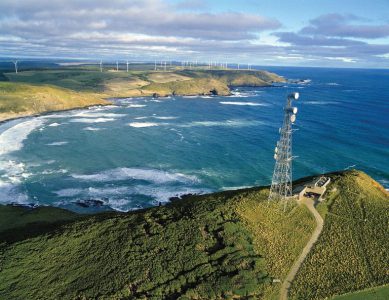
CAPE GRIM, Tasmania — On the best days, the wind howling across this rugged promontory has not touched land for thousands of miles, and the arriving air seems as if it should be the cleanest in the world.

The Cape Grim Baseline Air Pollution Station in Tasmania.
Credit Commonwealth Scientific and Industrial Research Organization

But on a cliff above the sea, inside a low-slung government building, a bank of sophisticated machines sniffs that air day and night, revealing telltale indicators of the way human activity is altering the planet on a major scale.

For more than two years, the monitoring station here, along with its counterparts across the world, has been flashing a warning: The excess carbon dioxide scorching the planet rose at the highest rate on record in 2015 and 2016. A slightly slower but still unusual rate of increase has continued into 2017.

Scientists are concerned about the cause of the rapid rises because, in one of the most hopeful signs since the global climate crisis became widely understood in the 1980s, the amount of carbon dioxide that people are pumping into the air seems to have stabilized in recent years, at least judging from the data that countries compile on their own emissions.

That raises a conundrum: If the amount of the gas that people are putting out has stopped rising, how can the amount that stays in the air be going up faster than ever? Does it mean the natural sponges that have been absorbing carbon dioxide.

“To me, it’s a warning,”

said Josep G. Canadell, an Australian climate scientist who runs the Global Carbon Project, a collaboration among several countries to monitor emissions trends.

Scientists have spent decades measuring what was happening to all of the carbon dioxide that was produced when people burned coal, oil and natural gas. They established that less than half of the gas was remaining in the atmosphere and warming the planet. The rest was being absorbed by the ocean and the land surface, in roughly equal amounts.

In essence, these natural sponges were doing humanity a huge service by disposing of much of its gaseous waste. But as emissions have risen higher and higher, it has been unclear how much longer the natural sponges will be able to keep up.

Read more: The New York Times 

Car exhaust pollution (Image: Wikipedia)

Latest diesel car models remain highly polluting, tests show

Six new vehicles including Land Rover and Suzuki are adding to air pollution crisis, despite stricter rules coming in months.

Car exhaust pollution (Image: Wikipedia)

The latest diesel car models are failing to meet pollution limits when on the road, just three months ahead of stricter new tests, independent tests have found. Results show that none of six new 2017 diesel cars met the EU standard for toxic nitrogen oxides (NOx) pollution in real-world driving.

The updated Equa Index, produced by the testing firm Emissions Analytics, shows that 86% of all diesel models put on to the British market since the 2015 Volkswagen emissions scandal failed to meet the official limit on the road, with 15% producing at least eight times more NOx emissions.

Levels of NOx, emitted mostly by diesel vehicles, have been illegally high in 90% of the UK’s urban areas since 2010. The toxic fumes are estimated to cause 23,500 early deaths a year and the problem has been called a public health emergency by a cross-party committee of MPs.

Ministers have already lost twice in the courts over the adequacy of government air quality plans and are being sued again over their latest proposals, which were published on 5 May but widely condemned as inadequate. The government’s own analysis shows clean air zones in urban centres, where charges deter the most polluting vehicles, are the most effective way to cut pollution quickly. But Nick Molden, CEO of Emissions Analytics, said the wide variation in real-world performance of diesel cars undermines such plans.

Read more: The Guardian