Category Archives: Energy and Climate Change

News and articles on climate change, vehicle pollution, and renewable energy.

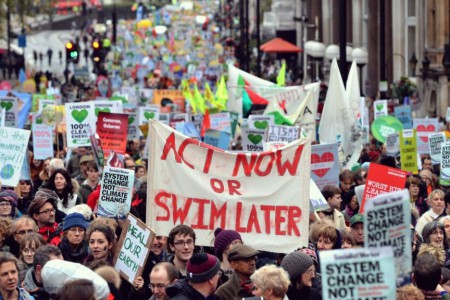
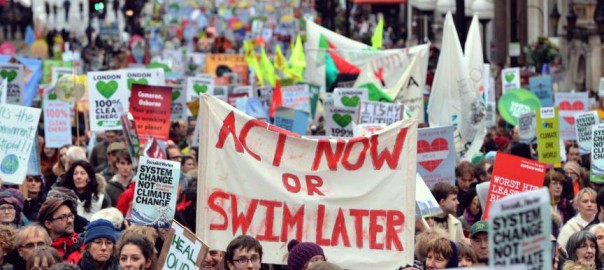
Climate march in London (Image: 350.org)

Hundreds Of Thousands March For Climate

The day before the start of the U.N. climate talks in Paris, some 785,000 people joined climate marches in 175 countries across the globe in what organizers are calling the largest climate marches in history.

Climate march in London (Image: 350.org)

“Across five continents, people have taken to the streets to demand that we change the way we power our world,” Kumi Naidoo, executive director of Greenpeace, said in a statement. “In towns and cities across the globe, people have called for political leadership on climate change.”

More than 2,000 events took place on Sunday in cities like London, Sydney, Mexico City, and Vancouver. According to the BBC, marches also took place across the equator in Kenya, across a glacier in Chile, and throughout the Marshall Islands, a South Pacific island country threatened by rising sea levels. Ten countries broke records for all-time largest individual climate marches, with Australia and India leading the pack with some 140,000 participants each. In terms of individual events, Melbourne and London claimed the largest marches, with 60,000 and 50,000 participants each. By contrast, last year’s People’s Climate March in New York drew some 400,000 participants.

“As someone from Kenya, a country which is feeling the impact of climate change, it means a lot to see people from all walks of life, of every color and creed, speaking with one voice about climate change,” Mohamed Adow, senior climate adviser for Christian Aid, said in a statement. “Today’s act of solidarity is on an unprecedented global scale. The numbers of marchers in places not known for climate change activism shows the scale of the international demand for political action.”

Read more: Think Progress

Our grand narrative is now climate change

There is the story of our personal lives: our family, our friends, our jobs, our hobbies. There is the story of our communities: our civic, religious, business, artistic and recreational lives. There is the story of our nations: their internal political struggles and their struggles with each other.

imageR_climate_change_unk

But now, there is one grand narrative which ties us all together, whether we want to be connected or not, whether we are preoccupied with our personal, community or national narratives or not. That is the narrative of our changing climate and the resulting threat to the continuity of our world civilization. The climate talks in Paris are but one expression of this new reality.

Even people who oppose doing anything about climate change are forced to talk about it. Even people who somehow have convinced themselves that climate change is not happening and oddly, in the same breath, claim that humans have nothing to do with this thing that is not happening–even those people confirm by their very framing of the issue that they are firmly situated inside this narrative.

Climate change is now the grand narrative because what happens to climate and what we do about it will be a worldwide story which no one can ignore. As such there will be few people without an opinion on the issue of climate change. Increasingly, it will reach down into our national, community and personal lives in ways we had hoped would wait until we are gone. The droughts, the heat, the floods, the damage to crops, the lengthening summer, the late fall, and the early spring–none of them can escape our notice.

We are forced to incorporate the changing climate into our everyday conversations. It is already a big topic among anyone who gardens and certainly anyone who farms. Among those in touch with plants the evidence of a changing climate is incontrovertible.

The grand tension will be how to address climate change without giving up the abundant energy, food and technology that have given us such comfort, ease, mobility and opportunity. Neither side in the debate over what to do wants to relinquish the hope that we will have to give up almost nothing.

Read more: Resource Insights

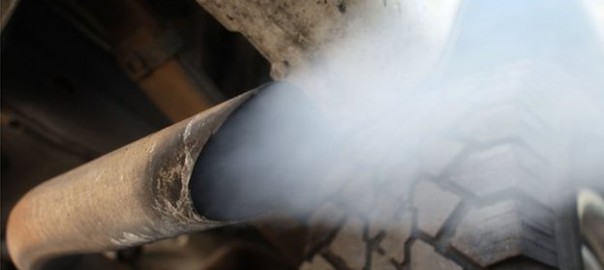
Car exhaust (Image: BBC)

Diesel cars hit by Chancellor’s Spending Review

In a surprise move, Chancellor George Osbourne has announced that the three per cent diesel supplement in company car tax will remain in place until 2021, cancelling plans to drop it next year.

Car exhaust (Image: BBC)

The announcement was made in today’s (Tuesday 25th November) government Spending Review, which also confirmed that the Office for Low Emission Vehicles (OLEV) will not see cuts to its budget which provides subsidies for electric vehicles (EVs) and charging infrastructure.

The current company car tax system sees diesel cars subject to a three per cent supplement over petrol models, and there were plans to remove this in April 2016. This would bring BIK tax levels for petrol and diesel cars, with emissions in the same tax band, to the same level.

However, potentially in response to the recent VW emissions scandal, George Osbourne has decided to scrap the cut and the three per cent supplement will remain until spring 2021 – earning the Treasury an additional £1.36 billion over the course of five years.

The emissions scandal might have had a significant role to play in the change in decision, along with the need by the Chancellor to find extra resources after expected cuts in a number of sectors were not as bad as first thought. One factor that definitely helped change Osbourne’s mind though was the uncertainty as to when the new, more rigorous EU Real Driving Emissions (RDE) test comes into effect, and how strict it will be.

Osbourne said:

“The development and sale of Ultra Low Emission Vehicles will continue to be supported, but in light of the slower-than-expected introduction of more rigorous EU emissions testing, we will delay the removal of the diesel supplement from company cars until 2021.”

Read more: Next Green Car

Prince Charles blames the Syrian war on climate change – he has a point

Prince Charles has blamed climate change in part for the Syrian war and warned that global warming could exacerbate similar conflicts worldwide.

144222931-638x425_global_warming_shutterstock

Charles’s comments — in an interview broadcast Monday — came exactly one week before the start of a United Nations climate change conference in Paris, where he plans to deliver a keynote address. Unless world leaders take action to slow the impact of climate change, “it’s going to get so much worse,” Charles warned in the interview with Sky News, which was recorded before the Nov. 13 terrorist attacks in Paris.

“Some of us were saying 20 something years ago that if we didn’t tackle these issues you would see ever greater conflict over scarce resources and ever greater difficulties over drought, and the accumulating effect of climate change, which means that people have to move,” he said. “And, in fact, there’s very good evidence indeed that one of the major reasons for this horror in Syria, funnily enough, was a drought that lasted for about five or six years, which meant that huge numbers of people in the end had to leave the land.”

Charles, a longtime environmentalist, is the latest person to blame the Syrian conflict on climate change. Various leading politicians, academics and military officials have made similar claims in recent years.

“It’s not a coincidence that immediately prior to the civil war in Syria, the country experienced its worst drought on record,” Secretary of State John F. Kerry said in a speech at Virginia’s Old Dominion University on Nov. 10. “As many as 1.5 million people migrated from Syria’s farms to its cities, intensifying the political unrest that was just beginning to roil and boil in the region.”

Read more: Washington Post

Ignore the haters: electric cars really are greener

We had our carpets cleaned the other day, and when the cleaner guy found out what I did, the very first thing he said was, “I was going to get an electric car.” Then he looked at me almost apologetically. “But I heard they’re actually worse for the environment.”

CHR3696_1_nlm_Renault_c

It’s not the first time I’ve heard it. The media loves these stories. They’re counterintuitive, surprising, and best of all, show that those silly greens, with their idealistic yadda yadda, don’t know how to do math.

They’re also wrong, as a new report from the Union of Concerned Scientists conclusively demonstrates. The two-year study digs into the life-cycle greenhouse gas emissions of battery electric vehicles and gasoline cars, from materials to manufacturing to operation to disposal.

The four cars used in the comparison were a midsize and a full-size gasoline car, a midsize battery electric vehicle (based on the Nissan Leaf), and a full-size BEV (based on the Tesla S).

Long story short: Electric cars really are cleaner.

Read more: Vox

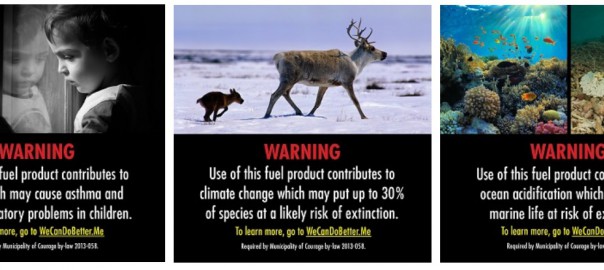
Coming Soon To A Pump Near You? (Image: Our Horizon)

Climate Change Warning Mandated At Gas Stations For First Time

For the first time in the history of North America (and perhaps the world) a city has legislated that local gas pumps now need to affix climate change warning stickers to serve customers.

Coming Soon To A Pump Near You? (Image: Our Horizon)

Passed unanimously by North Vancouver (Canada) city councillors last Monday, the new program will take effect in early 2016.

North Vancouver Mayor, Darrel Mussatto said at the bylaw meeting that enacted the change:

“It is 2015 and we need to talk about how we are going to move forward as a society on a reduced carbon or carbon-free diet and it is going to be a challenge.”

Read more: Inside EVs

Car exhaust (Image: BBC)

When Will We Start To See ‘Tailpipes’ On Cars As Morally Wrong?

For those of us who don’t already…

The economists call them “externalities.”

Car exhaust (Image: BBC)

They’re the costs of people’s actions on other people or communities–but the people taking those actions don’t have to pay for those costs, even though they harm others.

And the emissions from combusting fossil fuels are clearly a prime example.

While complaints about air quality in the Los Angeles Basin date back literally centuries, research more than 50 years ago established that vehicle emissions were the primary cause of photochemical smog.

That led the state of California to begin efforts to regulate tailpipe emissions–well before the U.S. Environmental Protection Agency even existed–which led in turn to the first catalytic converters in U.S. vehicles in 1975.

Catalysts spread throughout most of the automaking world over the next 20 years, hugely reducing emissions of carbon monoxide (CO), hydrocarbons (HC), and nitrogen oxides (NOx), all of them toxic in various ways.

The gradual recognition and scientific acceptance of climate change due to rapid and unparalleled human emissions of carbon dioxide (CO2) since the dawn of the Industrial Revolution around 1750 adds an entirely new problem.

Read more: Green Car Reports

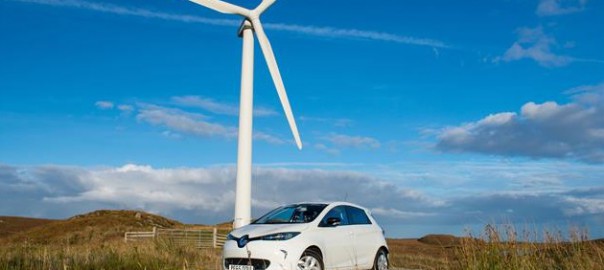
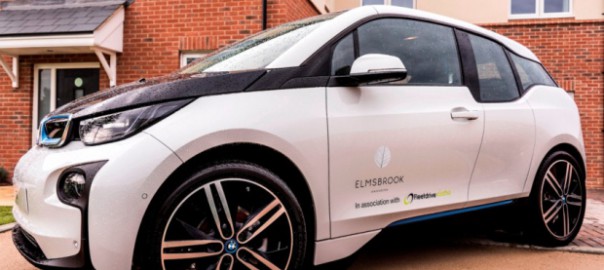
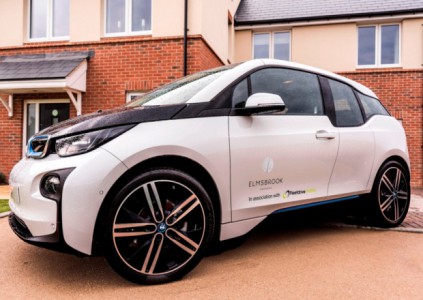
One of the new electric cars in the new e-car fleet for Elmsbrook development in Bicester

Fleet of electric cars to take to the town’s roads

An electric car club which aims to get residents in the new Elmsbrook development in North West Bicester to use environmentally friendly transport has been launched.

One of the new electric cars in the new e-car fleet for Elmsbrook development in Bicester

The car club, which sees Fabrica by A2Dominion working with North Oxford BMW, Fleetdrive Electric and E-Car Club, will be in place for Elmsbrook’s first residents.

The club will consist of two cars, a BMW i3, sponsored by North Oxford BMW and a Renault Zoe, sponsored by A2Dominion, although the number of cars in the fleet will rise as more residents move in.

A2 Dominion is aiming to reduce the number of local journeys made by petrol/diesel cars from 67.5 per cent to 50 per cent by 2026.

Louise Caves, NW Bicester strategic partnership manager said:

“We are delighted to have formed this partnership with Fleetdrive Electric, North Oxford BMW and E-car to help achieve our sustainable travel targets.

“By working together it will give Elmsbrook residents unparalleled choice when it comes to alternative modes of travel and access to test drives and trial periods on a number of different electric vehicles.”

She added they were aiming for 10 per cent of the development’s residents to switch to electric or hybrid cars by 2017. The developer hopes to achieve this through measures including a travel plan co-ordinator, a community bus service and bicycle stores for every home.

E-Car will be managing the club and Elmsbrook residents will receive half-price lifetime membership with A2Dominion subsidising five hours free use for every resident.

Read more: Buckingham Today

RENAULT-NISSAN AND PARTNERS INSTALL 90 NEW EV CHARGE SPOTS AROUND PARIS FOR COP21

  • 90 new charge spots powered by low-carbon electricity will refuel 200 Renault-Nissan EVs during the COP21 climate change conference
  • EV shuttle service is expected to log at least 400,000 kilometers over the two-week summit—without a single drop of oil
  • Many of the most conveniently located quick chargers will remain after COP21 and be available for the public

PARIS (Nov.  19, 2015) — The Renault-Nissan Alliance is installing 90 new charge spots for electric vehicles in and around Paris for the COP21 global summit on climate change.

68937_1_5_Renault

The installation is being done in partnership with French energy provider EDF, Schneider Electric, Aéroports de Paris, Paris City Council and SNCF, France’s national railway company.

The charging stations, several of which will be donated by Schneider Electric, will refuel 200 EVs serving as VIP shuttles for negotiators, delegates and media attending the conference. More than 20,000 U.N. participants from 195 countries are expected to attend the 21st annual Conference of Parties (known as COP21), from Nov. 30 to Dec. 11.

“COP21 is a call to action to reduce the impact of climate change–including global warming resulting from personal transportation,” said Renault-Nissan Chairman and CEO Carlos Ghosn. “Electric vehicles are the only existing, practical and affordable transportation solution to our planet’s environmental challenges – and they are available today. Expanding the EV infrastructure is mandatory for any city or state that’s serious about environmental stewardship.”

The quick and standard EV charging stations will use renewable and extremely low-carbon electricity from EDF, enabling the Renault-Nissan fleet to cover more than 400,000 km in two weeks. The quick charging stations will recharge EVs from 0 to 80% capacity in about 30 minutes.

EVs consume any form of electricity used in the power grid, including hydropower, solar and wind energy. As countries reduce dependence on fossil fuels and increase reliance on renewable resources, EVs become even greener.

Small carbon footprint

The COP21 charging stations in the Paris region will use electricity with a small carbon footprint. The French power grid distributes electricity with a very low average of CO2 emissions per kWh: less than 40 g in 2014, compared to the European average of 325 g of CO2 emissions per kWh. Renewable energy accounted for about 19% of France’s electricity last year.

“EDF supports the development of electric mobility, which is a cornerstone of countries’ efforts to minimize urban pollution. EDF produces extremely low-carbon electricity in France, which enables a significant reduction in greenhouse gas emissions and thus reinforces the favorable ecological footprint of this new generation of transport,” said EDF Chairman and CEO Jean-Bernard Levy.

In addition, EDF is offsetting the remaining CO2 emissions through carbon credits generated by projects certified by the United Nations. That means the Renault-Nissan EV fleet will use electricity considered fully “decarbonized.”

Fourteen of the 27 quick chargers installed will remain after the climate change conference and will be available for the public to use. These include two at Charles de Gaulle Airport, two on the Paris périphérique highway and one at Orly Airport.

France already has about 10,000 quick and standard charging spots. In the Paris region alone, there are more than 4,000 spots, making Paris one of the most “plugged in” cities in Europe.

Source: Renault Nissan Blog
An electric vehicle [Renault ZOE] is charged with photovoltaic power from the roof of the house using a charging station (Image: Fraunhofer ISE)

Solar vehicle charging at home

Owners of home photovoltaic systems will soon be able to make their households even more sustainable, because PV power is also suitable for charging personal electronic vehicles.

An electric vehicle [Renault ZOE] is charged with photovoltaic power from the roof of the house using a charging station (Image: Fraunhofer ISE)
A home energy management system created by Fraunhofer researchers incorporates electric vehicles into the household energy network and creates charging itineraries.

The house of the future is environmentally friendly, energy efficient and smart. Its inhabitants can utilize rooftop-generated PV energy not only for household consumption but also to charge their personal electric vehicle. This scenario has already become reality for a collection of row houses built according to the “Passive House” standard in the German city of Fellbach in Baden-Württemberg. The group of new homes was upgraded as part of the “Fellbach ZeroPlus” project to include electromobility enhancements as well as a comprehensive energy management system. The initiative is sponsored by the German Federal Government’s “Electric Mobility Showcase” program.

Fast charging stations and home energy management

“The large photovoltaic systems on the rooftops of the houses provide more power than the inhabitants consume over the long term. Surplus power can be fed into the public grid as well as be used for charging the household electric vehicle,” explains Dominik Noeren, a scientist at the Fraunhofer Institute for Solar Energy Systems ISE in Freiburg. To efficiently incorporate electromobility enhancements into the daily routines of the households, Noeren and his team designed a 22 kW fast charging station as well as a home energy management system (HEMS) for five of the seven homes. The Java-based HEMS software runs on small computers known as embedded systems. The HEMS collects data from the various electricity meters in the house, including those for the photovoltaic system, the electric vehicle, the heat pump, and general household power. The system displays the various power flows and informs the homeowners about their current power consumption at any time of the day. “They can see how much power is coming from either the public grid or the household solar system, and they can see where it is going — to the heat pump, household appliances, or the electric vehicle,” says Noeren.

Read more: Science Daily