All posts by Trevor Larkum

One More Blog Post About Global Warming

I admit to be being concerned about global warming, its many impacts, present and future, on human welfare, and the insidious fact that those least responsible for global warming and the resultant climate change are likely to suffer the most serious impacts.

I also admit to anger at my fellow humans, both scientific and political, who continue to deny the scientific basis for concern about global warming when the consensus among scientists is overwhelming, an unusual situation in science. It is a failure for which the deniers and minimizers should be held accountable.

In retrospect it is easy to reflect on human history and find examples where numbers of people, some highly educated and well respected, were wrong about important events and changes in society. Certainly many were sincere in their ultimately incorrect beliefs, based on limited available information and their life experiences and inevitable mental filters for processing that information. Others were undoubtedly self-serving opportunists who perhaps knew better but compromised their integrity. In this latter category I include those scientists and other well-informed people who denied the link between smoking and serious health effects, and more recently those who deny global warming or minimize its impacts. In my mind they are people who have sold their souls for filthy lucre.

What is so hard to understand about global warming? It is the same physical process that occurs in a car on a hot day that we all experience. The visible light rays from the sun, distributed in a spectrum determined by the sun’s surface temperature (about 5,500C) easily penetrate the car’s glass windows and are absorbed by the car’s interior which gets warm and often hot to the touch. These warm or hot surfaces then reradiate in a spectrum different from the sun’s radiative spectrum because of their vastly different surface temperatures. The basic physics is the same – Planck’s Law, first proposed in 1900, determines the spectral distribution and intensities of the radiation emitted by a black body at temperature T.

In a car the reradiated heat from the interior surfaces is mostly in the infrared region which the glass is not as transparent to as it is to the visible radiation from the sun. This trapping of the reradiated heat causes the car’s interior temperature to rise until enough reradiated infrared radiation gets through the glass due to the interior’s now higher temperature to provide a balance between the energy of the incoming and outgoing radiation streams. This is exactly what happens in the earth’s atmosphere, with gases in the atmosphere playing the role of the glass windshield and determining the atmosphere’s transmission characteristics. Important global warming gases are CO2, largely from combustion of fossil fuels, and natural gas (methane), and a few others. The earth’s current temperatures, hospitable to life, reflect such an energy balance between the sun and the earth. Venus is an example of where the equilibrium temperature reached by the planet to achieve an energy balance with the sun is much higher.

Read more: Lapsed Physicist
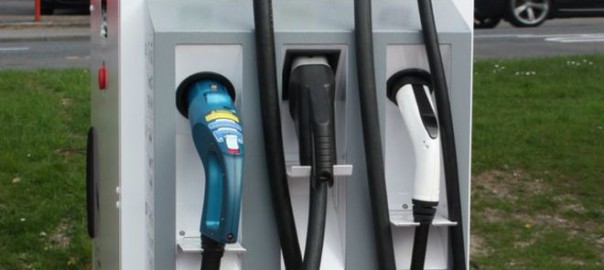
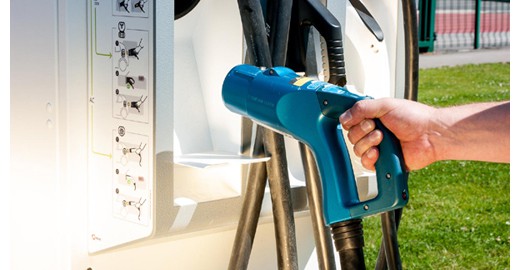
The rapid charger with three standard charging points draws its power from solar panels (Image: Borough of Poole)

Rapid solar vehicle charger installed in Poole

A solar powered rapid charger which can recharge an electric vehicle in 40 minutes has been installed in Dorset

The unit at Poole Civic Centre is the first of its kind in the UK to be installed by a council as part of a government scheme.

It draws its power from solar panels and is faster than standard chargers which take 8-12 hours.

The rapid charger with three standard charging points draws its power from solar panels (Image: Borough of Poole)

Eighteen chargers are to be installed in Dorset following a £900,000 Department for Transport grant.

During daylight hours, the rapid charger with three standard charging points is powered by a 135kWp solar panel installation on the roof of a nearby multi-storey car park.

Ian Potter, the council’s cabinet member for transport, said: “We hope other organisations will follow our lead and install solar panels on their buildings to generate carbon free electricity.”

Six of the rapid chargers are set to be installed in Poole, five in Bournemouth and seven in the rest of Dorset.

Source: BBC

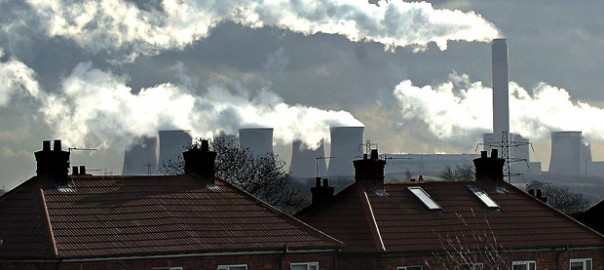
Pollution at Drax Coal Power Station near Selby (Image: J. Giles/PA)

Fossil industry faces a perfect political and technological storm

Fossil industry faces a perfect political and technological storm

The IMF says we can no longer afford the economic wastage of fossil fuels, turning the green energy debate upside down as world leaders plan a binding climate deal in Paris

The political noose is tightening on the global fossil fuel industry. It is a fair bet that world leaders will agree this year to impose a draconian “tax” on carbon emissions that entirely changes the financial calculus for coal, oil, and gas, and may ultimately devalue much of their asset base to zero.

The International Monetary Fund has let off the first thunder-clap. An astonishing report – blandly titled “How Large Are Global Energy Subsidies” – alleges that the fossil nexus enjoys hidden support worth 6.5pc of world GDP.

This will amount to $5.7 trillion in 2015, mostly due to environmental costs and damage to health, and mostly stemming from coal. The World Health Organisation – also on cue – has sharply revised up its estimates of early deaths from fine particulates and sulphur dioxide from coal plants.

The killer point is that this architecture of subsidy is a “drag on economic growth” as well as being a transfer from poor to rich. It pushes up tax rates and crowds out more productive investment. The world would be richer – and more dynamic – if the burning of fossils was priced properly.

This is a deeply-threatening line of attack for those accustomed to arguing that solar or wind are a prohibitive luxury, while coal, oil, and gas remain the only realistic way to power the world economy. The annual subsidy bill for renewables is just $77bn, trivial by comparison.

Read more: Telegraph

‘Electrification’ of UK road network continues

The ‘electrification’ of the UK’s road network is continuing at a rapid rate, with one of the latest projects involving the deployment of rapid charging units in a popular tourist region.

Siemens has supplied and installed two triple-outlet, multi-standard rapid charging points in two towns for Cotswold District Council (CDC), providing fast top-ups for visitors and residents with electric vehicles (EVs) travelling within and through the region. Using grant funding from the Office for Low Emission Vehicles (OLEV), the charging points have been installed in Cirencester and Moreton-in-Marsh, where users will be charged £4 (US$6) via a telephone call or cell phone application, covering the energy used and an hour’s worth of parking.

CDC’s cabinet member for enterprise and partnerships, Chris Hancock, commented,

“The new technology will provide an important strategic link between existing charging points on the M4, M5 and M40, encouraging more drivers to stop off in the Cotswolds. We are always looking for innovative ways to harness technology that reduces our carbon footprint, and the installation of EV chargers in both towns will be seen as a very positive step forward.”

Siemens is a major supplier to the country’s growing EV infrastructure market, with a range of charging equipment that includes both modular DC and AC variants for all charging standards, including CHAdeMO and CSC COMBO 2. The company has won a significant number of new contracts for EV rapid charging technology in recent months.

In Manchester, it has supplied and installed four multi-standard triple-outlet rapid chargers, including one on the approach to Picadilly station for Manchester’s first 100% electric bus. Installation of a network of new rapid charging points for EVs is also well underway in the towns of Poole and Bournemouth, Dorset, as part of a complete EV package with three years’ maintenance support provided by Siemens. The company is responsible for the project management, installation and commissioning of a network of its QC45 rapid chargers. The project will be the first rapid charging network installed and operating with fully integrated bay sensors, providing real-time information on bay availability and detection of non-EVs for onward notification to parking enforcement teams.

New rapid charging projects in Scotland include five new multi-standard chargers installed and commissioned for Scottish Borders Council and a further two new chargers in Stirling. The Scottish Government is delivering a network of public charging points for EVs across the region. The scheme, which includes Transport Scotland grants through the Energy Saving Trust, will deliver charging points within every 50 miles (80km) on trunk roads and an integrated network will join EVs with public transport.One of the company’s largest EV projects to date is in Bristol and Gloucestershire.

The delivery of a complete EV charging system includes 15 multi-standard triple-outlet rapid chargers with connection to the Pay As You Go national network provided by Charge Your Car. Project management, site design, civil and electrical works, installation and commissioning, and three years maintenance managed by the company’s field services team is also included.

Source: Traffic Technology Today

A Petrol Pump is the Filthiest Thing We Touch

Warning: This story might make your skin crawl.

A new study has found that the gas pump is the germiest, filthiest thing we touch in everyday life. That’s according to Dr. Charles Gerba of the University of Arizona — and he should know. A microbiologist, he’s known by the nickname “Dr. Germ.”

The research results released Tuesday found that 71% of gas pump handles and 68% of corner mailbox handles are “highly contaminated” with the kinds of germs most associated with a high risk of illness. The study by Kimberly-Clark Professional, and reported on in USA Today, says that 41% of ATM buttons and 43% of escalator rails are similarly teeming with germs.

Other highly contaminated places that many people probably never considered before, and now might fear using, are parking meters and kiosks, about 40% of which are fouled by germs. Crosswalk buttons and vending machines were tied at 35%.

As part of the study, hygienists swabbed suspected germ hotspots and then analyzed the findings. They used general industry sanitary standards as their benchmark.

Gerba analyzed the results for Kimberly-Clark’s Healthy Work Place Project, a subsidiary of the manufacturer of tissues, hand sanitizer and the like. (The project’s website says sick employees cost the average business about $1,320 per employee.)

So what are we supposed to do? Apparently, it’s all about “hand hygiene” — washing your hands throughout the day — and wiping down your work station with a cleaning product (naturally) because a desktop, keyboard and computer mouse can be a breeding ground for germs, says Gerba and the folks at Kimberly-Clark.

“As your computer boots up, wipe down your desk and mouse,” Brad Reynolds, leader of Kimberly-Clark’s Healthy Workplace Project, said in the USA Today article. He also advised swabbing conference tables between meetings.

Source: LA Times

Renault-Nissan Alliance official COP21 passenger car partner with zero-emission fleet

  • Alliance to provide 200 pure electric vehicles to 2015 Paris climate conference
  • The first fully electric shuttle service for United Nation’s climate conference
  • Fleet to include Renault ZOE and Kangoo Z.E, Nissan LEAF and e-NV200
  • More than 50 charging stations powered by renewable energy to be established in and around Paris.

PARIS (May 27th , 2015) — The Renault-Nissan Alliance, the world leader in zero-emission mobility*, will provide a fleet of 200 all-electric vehicles as the official passenger-car provider for the United Nation’s COP21 climate conference in Paris later this year.

The partnership agreement was signed today between the Renault-Nissan Alliance and the General Secretary in charge of the preparation and organization of the 21st annual Conference of Parties (better known as COP21). The fully electric car fleet will shuttle delegates during the event from Nov. 30 to Dec. 11.

More than 20,000 U.N. participants from 195 countries are expected to attend the annual climate summit. It will be the first time the U.N. will use a zero-emission fleet for its entire passenger car shuttle at a COP event.

The goals of the Paris summit are to have a new global climate-change agreement in place by the end of 2015 and to have the Climate Green Fund, established to help developing countries adapt to climate change and reduce emissions, start allocating funds.

We are delighted to announce that the Renault-Nissan Alliance is an official partner of COP21 in Paris. Thanks to the Alliance’s fleet of 100% electric vehicles, it will contribute to our goal of achieving a carbon neutral event.  The technology of electric vehicles helps reduce greenhouse gases in the transportation sector efficiently,” said Laurent Fabius, Minister of Foreign Affairs and International Development, President of COP21.

Electric vehicle technology is an efficient solution for a practical and affordable mode of transportation. This solution has a positive impact on the climate and air quality in our cities,” said Carlos Ghosn, Chairman and CEO of the Renault-Nissan Alliance. “It’s time to accelerate the shift to zero-emission mobility by working together with all parties concerned.”

The COP21 car fleet will feature the Renault ZOE subcompact car, the Renault Kangoo Z.E. van, the Renault Fluence Z.E. sedan, the Nissan LEAF compact car and the 7-seater Nissan e-NV200 van. The vehicles will be available to shuttle delegates 24 hours, seven days week to key venues around the conference, as a complement to public transportation.

The Renault-Nissan Alliance will work with companies in France to set up a network of more than 50 quick and standard charging stations powered by 100% renewable energy in strategic locations. The quick charging stations will be able to charge the EVs from 0 to 80% capacity in about 30 minutes.

Source: Media.Renault.com

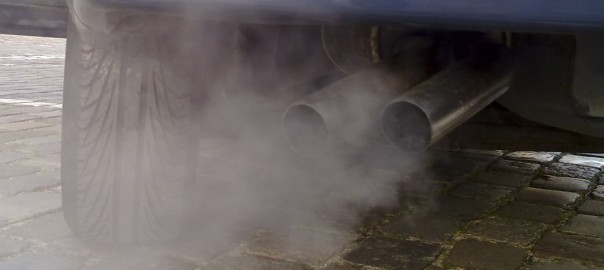
Car exhaust pollution (Image: Wikipedia)

Evening Standard Comment: Time to transform London’s air quality

[From 26 May] Today this paper launches a new initiative to encourage Londoners to adopt, develop and promote the kind of green technology that could help clean our air. It is backed by the chairman of  the Committee on Climate Change, Lord Deben, who urges us to embrace change: there are, he says, “a whole lot of things we can do which mean that we can live exactly the same lifestyle at half the impact on the environment”. Electric cars are one example; remote-controlled heating systems are another.

Meanwhile, the Mayor has announced £8 million support for pioneering schemes to improve air quality, such as pollution-absorbing walls and zero-emission car clubs. This coincides with a World Heath Organisation meeting today in Geneva to combat air pollution.

These are excellent moves and signs of hopeful change. Yet they come less than a month after the Supreme Court ordered ministers to come up with a new plan for tackling air pollution. Britain is in breach of EU-mandated pollution levels for both nitrogen dioxide and PM10 diesel particulate (the tiny particles of soot emitted by diesel exhausts). Our filthy air is estimated to cause around 29,000 premature deaths a year in the UK and is a major contributor to lung diseases such as asthma.

London’s problem is how to clean up its air at the same time as meeting the demands of transport in Europe’s largest and busiest city. Despite increasing numbers of Londoners cycling, and increased passenger numbers on public transport, pollution from road transport remains well above EU limits. The Mayor’s long-term solution is the Ultra Low Emission Zone, which aims to encourage drivers of the most polluting vehicles to change their vehicles by charging a new daily levy for those entering the congestion charge zone from 2020.

Yet this represents a watering-down of the Mayor’s original plans in this respect: critics charge that it is too little, too late. Clearly air pollution is no respecter of land boundaries like those of the congestion charge zone. Air pollution readings from test sites outside the central zone — for instance in Brixton — are worryingly high. Other European cities are pressing ahead with more drastic plans for eliminating the biggest culprits in air pollution, diesel engines. Refitting existing bus engines would help too. Above all, the problem simply needs to be given a much higher political priority than it has to date. Air pollution kills: London needs to tackle it urgently.

Source: London Evening Standard

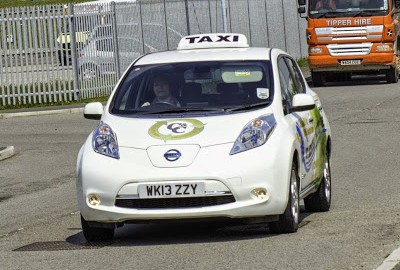
Nissan Leaf Taxi passes 100,000 miles and still on 1st set of brake pads!

A Nissan LEAF taxi in Cornwall has clocked up its 100,000th mile (160,000 km) since entering service with C&C Taxis in 2013.

‘Wizzy’ as it was named by operators at St Austell-based C&C Taxis, hit the milestone in the course of more than 25,000 pure electric paying fares and having been rapid charged over 1,700 times yet retains near full battery health and is still on its first set of brake pads.

Inspired by Wizzy’s performance, C&C Taxis now operates five 100% electric Nissan LEAFs and an all-electric Nissan e-NV200 van.

Mark Richards, fleet manager at C&C Taxis, estimates that each vehicle saves the business around £8,500 per year in fuel bills and maintenance costs.

“When we speak to other taxi operators they often tell us range and battery life are the biggest factors preventing them from considering an electric taxi,” he said. “Then, when we tell them Wizzy’s done 100,000 miles and still has full battery health, they’re left speechless.”

“It’s no exaggeration to say Wizzy has transformed our business. We took a gamble when we bought her but she’ll have paid for herself in just 24 months and the savings we’re now making across the fleet are phenomenal,” he added.

Source: Electric-Vehicle News

Will Cort, 13, who lives in central London, says he frequently finds it difficult to breathe (Image: F. Guidicini)

The great diesel car deception speeding us to a toxic death

Drivers and pedestrians have been misled by EU tests aimed at cutting lethal air pollution

WHEN Victoria Kelly sets off around her home city of Manchester she finds the fastest roads — and then goes out of her way to avoid them.

Instead she plots a route that will take her around the clouds of diesel air pollution found along those busier roads, sticking to the leafiest and smallest streets she can find.

It means simple journeys can double in length, but for Kelly, 23, the detours are vital to avoid the airborne toxins that have twice put her into intensive care with asthma attacks like those that have killed two of her friends.

“An attack is like breathing out through a straw into a bucket of sand with an elephant sitting on your chest,” she said. “Air pollution is one of the most likely things to set it off — so I do all I can to avoid it.”

Kelly is one of 5.4m people in Britain diagnosed with asthma. The condition kills three people a day — and traffic pollution, mainly from diesel vehicles, is a key cause. A fifth of those are children — such as Will Cort, a 13-year-old whose childhood in central London has been blighted by asthma.

“I normally get attacks at night and wake up because I can’t breathe. It can go on for days,” he says.

Will Cort, 13, who lives in central London, says he frequently finds it difficult to breathe (Image: F. Guidicini)

Asthma can be triggered by many factors but it is no coincidence that whenever air pollution levels rise, Britain’s hospitals and GPs see a surge of patients with asthma. Last month Public Health England published research showing that thousands of people suffered attacks when smog laden with tiny “particulate” particles and nitrogen dioxide (NO2) gas typical of diesel emissions hit Britain last spring.

Read more: The Sunday Times

Oil Giants Band Together to Add Voice to Climate Debate

Europe’s largest oil companies are banding together to forge a joint strategy on climate-change policy, alarmed they’ll be ignored as the world works toward a historic deal limiting greenhouse gases.

Royal Dutch Shell Plc, Total SA, BP Plc, Statoil ASA and Eni SpA are among oil companies that plan to start a new industry body, or think tank, to develop common positions on the issues, according to people with knowledge of the matter. So far the largest U.S. companies — Exxon Mobil Corp. and Chevron Corp. — have decided not to participate, the people said, asking not be named before a public announcement expected as early as next month.

Efforts to reduce fossil-fuel investments and spur renewables such as solar and wind power have gathered pace in the past two years with oil companies sitting largely outside the debate. One aim of the European producers will be to push natural gas as more climate friendly in generating power than coal, the people said. Of the most used fossil fuels, gas is the one that pollutes the least while coal tops emissions.

“There are companies that are now going beyond the industry’s traditional defensive position by at least appearing to rethink strategy and practices,” said Carole Mathieu, research fellow at the French Institute for International Relations in Paris.

‘Strong Statement’

The heads of the biggest European oil producers have been pushing the idea of more active engagement with climate policy in recent weeks.

On Thursday, Shell Chief Executive Officer Ben van Beurden said his company would “put a really strong statement out on what we think should happen.” He cited the increased use of gas in power generation as key to tackling emissions.

“Targets will not be enough,” he said. “We will argue for what we think should be done to bring carbon down.”

The industry is slowly waking up to the existential danger to their operations emerging from policies designed to limit climate change. With global temperatures and carbon emissions at a record, governments are looking for a way to clamp down on pollution. The International Energy Agency, a policy adviser to industrial nations, says half of all fossil-fuel reserves may have to remain in the ground to prevent overheating.

Common Language

“We’re trying to put together a group of people to begin to speak the same language” on climate, BP CEO Bob Dudley said at a meeting hosted by IHS Inc.’s CERA consulting unit in Houston in April. “There’s a bit of different language coming out of different companies and therefore our voice is lost in this.”

His counterpart at Total, Patrick Pouyanne, said in Paris on Wednesday that the industry needs to work together. “If each of us is attacked separately, we will be stronger as a group.”

Statoil CEO Eldar Saetre has embraced the United Nations’ goal to limit global warming to 2 degrees Celsius, a level beyond which scientists say disastrous climate change will bring more violent storms and rising sea levels. He set up a renewable-energy unit and described steps the industry should follow, starting with a shift to cleaner fuels such as gas, reducing flaring and support for carbon pricing.

“If we don’t, we risk becoming an industry that neither gets access nor acceptance — and that’s not a good thing,” Saetre said at the CERA gathering.

Investments Scrapped

Shell is urging the industry to get out of its defensive crouch and make its views understood. It wants alternative arguments to counterbalance the divestment campaign, which has persuaded institutions such as the Rockefeller Brothers Fund and Stanford University to scrap fossil-fuel investments.

“In the past we thought it was better to keep a low profile on the issue,” Van Beurden said in February. “It’s not a good tactic. We have to make sure that our voice is heard by members of government, by civil society and the general public.”

The European companies are more sensitive to environmental issues because governments in the region are leading the way on climate and voters are demanding action. The 28-nation European Union plans to cut carbon emissions 40 percent by 2030, double the commitment it made for 2020.

Exxon, Chevron

For their part, Exxon and Chevron say there’s little difference in the approach between them and their European competitors. Exxon CEO Rex Tillerson has said he’ll speak more openly about the issue and has acknowledged that the risks of climate change warrant action. He is urging policy makers to consider a global price on carbon emissions and since 2007 included carbon prices in his company’s business planning.

Chevron said Wednesday in a statement that it shared the concerns of governments and the public about climate change and action was needed to address the risks. Exxon declined to comment.

While Europe’s big oil groups present a friendlier position toward climate change, they are continuing with investments that environmental groups sharply criticize, including drilling in the Arctic.

Emissions data released through the Carbon Disclosure Project show little difference between the U.S. and European oil companies over the past four years. All have reduced pollution “slightly” since 2011, with BP in the lead mainly because of asset sales needed to pay more than $40 billion in costs associated with the Gulf of Mexico disaster in 2010.

“All companies need to be low-carbon or zero-carbon by 2050,” said Paul Simpson, CEO of the Carbon Disclosure Project, which helps 822 institutional investors with $95 trillion in holdings analyze risks from sustainability issues. “The oil and gas sector is one that doesn’t yet show a clear transition. The longer that goes on, the more concern investors will have.”

Source: Bloomberg