All posts by Trevor Larkum

Stop Building New Carbon Infrastructure

A Hard Deadline: We Must Stop Building New Carbon Infrastructure by 2018

In only three years there will be enough fossil fuel-burning stuff—cars, homes, factories, power plants, etc.—built to blow through our carbon budget for a 2 degrees Celsius temperature rise. Never mind staying below a safer, saner 1.5°C of global warming. The relentless laws of physics have given us a hard, non-negotiable deadline, making G7 statements about a fossil fuel-phase out by 2100 or a weak deal at the UN climate talks in Paris irrelevant.

“By 2018, no new cars, homes, schools, factories, or electrical power plants should be built anywhere in the world, ever again unless they’re either replacements for old ones or are carbon neutral? Are you sure I worked that out right?”

I asked Steve Davis of the University of California, co-author of a new climate study.

“We didn’t go that far in our study. But yes, your numbers are broadly correct. That’s what this study means,”

Davis told me over the phone last fall.

Read more: This Changes Everything

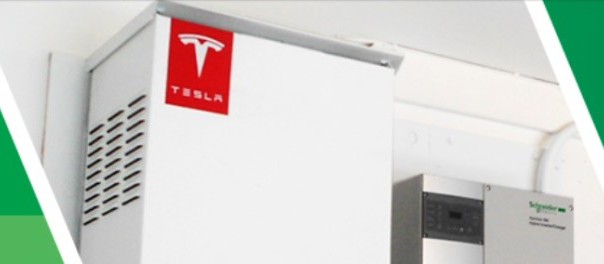
Tesla/Solar City Energy Storage Solution System Is In The “Pilot Program” Stage Today

Residential Energy Storage on the rise

Energy storage is heralded as the critical technology that will make widespread adoption of renewable energy possible. Storage bottles sunlight, addressing a key drawback to solar energy — that it can’t provide electricity when the sun isn’t shining. Energy storage also cures additional utility ailments from grid resiliency to power smoothing.

Due to a rise in incentives and a drop in storage costs, the market for this storage is heating up in the U.S. The market is expected to grow 250 percent just this year.

California is leading the energy storage market thanks to Assembly Bill 2514, which requires state utilities to procure 1.3 GW of storage by 2020. Now California’s three largest investor-owned utilities, Southern California Edison (SCE), Pacific Gas and Electric (PG&E) and San Diego Gas & Electric, are installing cost-effective storage solutions. SCE, for example, invested in a wind farm in the Mojave Desert equipped with giant lithium-ion batteries. The East Coast is following California’s example. New York recently budgeted $25 million to promote storage development.

While the utility-scale market gets most of the attention, a quietly growing storage market segment with a lot of potential is residential solar. After all, residential solar is a fast growing solar market segment — increasing 49 percent in 2014. Unsurprisingly it offers immense opportunity for storage.

Read more: Renewable Energy World

The Interceptor Drama is Electrifying

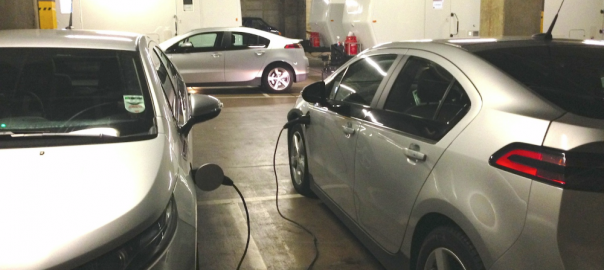
BBC One’s new primetime drama The Interceptor is the first large-scale production to pioneer the use of electric cars.

As well as the production gaining a three star rating by industry sustainability certification scheme albert+, the use of electric cars saved on carbon dioxide emissions, fuel costs and congestion charges.

On-screen, viewers follow an undercover team on the hunt for Britain’s most ruthless criminals, but off-screen the production has become the first large-scale TV drama to use only electric cars behind the scenes.

By using electric vehicles as unit and production cars during the making of the show, eight tonnes of carbon dioxide emissions were saved – enough to drive 50,000 miles or twice around the globe – as well as saving the BBC over £10,000 in fuel and congestion charges.

Nick Leslie, BBC Sustainable Production Project Manager, says:

“The cast and production thought it was important to use electric cars to help lower the overall CO2 emissions for the show. Initially there were some reservations about the electric cars from the unit drivers, as there is pressure for making sure unit cars run smoothly and on time.

“However, once they started driving the cars, all the unit drivers said that they were happy with the performance of the vehicles. In fact a competition developed between the drivers to see who could make the energy in their batteries last longest.

“Some of the drivers said that using these cars had opened their minds to fuel efficiency when driving, as the vehicles had a dashboard display showing how their driving impacted upon the battery charge. One of the drivers even said they were planning on buying an electric car when it was time to change their personal vehicle.”

Source: Green Car Guide

How Formula E can overtake F1 and help save the world

Find out why this electric racing series has a shot at becoming huge — and how its technology could change the cars we drive for the better.

It might seem a bit of a stretch to say that a motor race can help save the world, but with Formula E, that’s not such an outlandish statement.

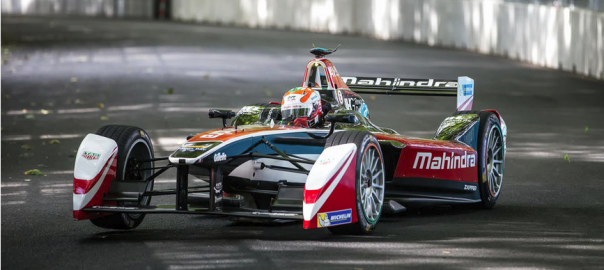
This new race series, held on the streets of cities around the world, uses cars that look almost identical to the vehicles seen in the globally popular Formula 1 series, but are powered entirely by electricity rather than petrol.

Aside from becoming a popular and profitable race series, Formula E has two main goals. The first is to act as a testing ground for new electric motor technologies which can filter down into mass-produced production cars. The second and arguably more important goal is to inspire the general public into seeing electric cars not simply as a novelty driven by an eccentric few, but as an exciting option for everyday people.

Standing behind a small concrete barrier, only a foot away from the cars as they hurtled past on the third corner, I can confidently confirm that this event is every bit as exhilarating as classic motor races like the Le Mans 24 hours.

Read more: CNet

Why don’t we drive more electric vehicles?

A report from the National Academy of Sciences looks at barriers and adoption.

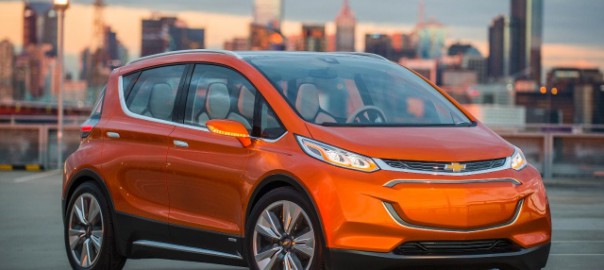
One of the more challenging jobs the auto industry has right now is explaining to consumers that the future isn’t going to be like the past. We desperately need to reduce vehicle carbon emissions in order to avoid turning the planet into a hellscape, and that means turning to cars with some kind of energy storage other than hydrocarbons we’ve dug up from the ground and then distilled. That’s where people get confused and the message stalls, a problem laid out in a recent report from the National Academy of Sciences.

For many decades cars have been simple things with internal combustion engines. They burned gasoline or sometimes diesel and occasionally even liquified natural gas. Sometimes they had turbochargers or superchargers to ram more air into the combustion chamber, and very occasionally that combustion chamber was something odd like a Wankel rotary engine. Now, the need to reduce carbon emissions and improve air quality means many more options when it comes to a vehicle’s powertrain.

One surefire way to get that message across is to give people an EV experience, according to Pam Fletcher, the chief engineer for EVs at General Motors (GM):

“The people that have owned and lived with EVs can understand it, they’ve seen how the vehicles work for them, It’s part of the learning curve and more people will understand it over time,” she said. “It’s hard to explain to people the benefits if they haven’t had that experience.”

Read more: Ars Technica

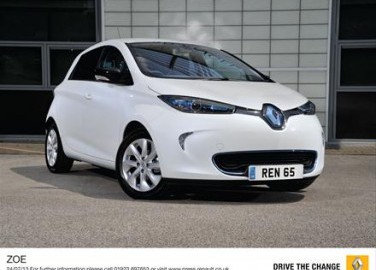
£5000 deposit contribution on ZOE Dynamique Nav

  • Renault’s Summer Season continues the heat with new ‘65’ registration plate
  • £5,060 manufacturer deposit contribution on all-electric ZOE Dynamique Nav
  • 0% APR and nil deposit offers on selected models

With the release of the new 65-registration today, motorists on the lookout for a new car can take advantage of the latest special offers available on selected models across the dynamic and exciting Renault range with the brand’s hot Summer Season. 

The French carmaker has a suite of deals designed to offer car buyers financial flexibility and to make owning a new Renault more affordable.

Those looking to experience the fuel savings and environmental benefits of electric vehicle ownership, will find the 100% electric Renault ZOE – named Best Electric Vehicle in the Auto Express Driver Power 2015 survey and Best Electric Car Less Than £20,000 2015 by What Car? – with an exceptional offer.

Until 30th September, Renault will make a £5,060 deposit contribution on top of the existing Government £5,000 Plug-in Car Grant (PiCG)1 on the ZOE Dynamique Nav.

This means a ZOE – which has an official NEDC range of 149 miles and can cover between 71 and 106 real-world miles – can be driven away for as little as £89 per month (plus monthly battery rental)2 and with a deposit of just £599.  Buyers can enjoy the added convenience of a free fully-installed domestic charging wall box from electric infrastructure market leaders, Chargemaster3.

A selection of alternative finance options are also available across the wider Renault range.

Whichever option a customer chooses, they will benefit from the Renault 4+ warranty and Renault assistance scheme which provides the ultimate peace of mind for four years or 100,000 miles5.

1  Government Plug-in Car Grant (PiCG) subject to availability and eligibility.

2  Monthly battery rental agreement applies. For full pricing and terms and conditions, visit www.renault.co.uk/vehicles/new-vehicles/zoe/battery-and-charging

3  Subject to eligibility. For full terms and conditions, visit www.chargemasterplc.com/index.php/terms_conditions

Read more: Renault Press

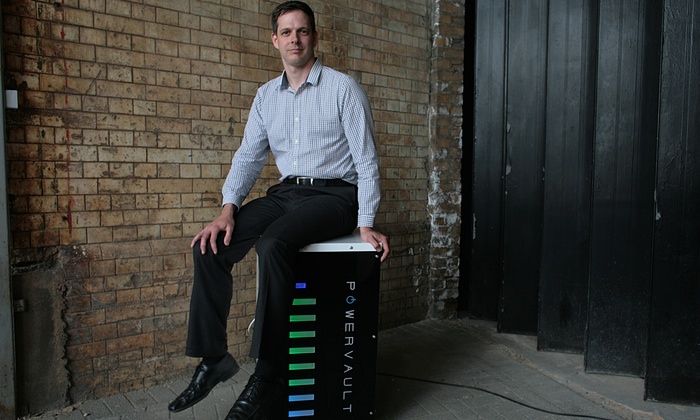
Powervault Energy Storage System (Image: Powervault.co.uk)

Cheaper batteries for UK households

The trend towards cheaper home energy storage shows no sign of slowing down

London startup tailors smaller, cheaper battery for UK households to use more of their own generated solar energy

When Elon Musk, the chief executive of Tesla, took to the stage in California in April to launch a solar battery for the home, the audience hollered and whooped at every detail. On the other side of the Atlantic, a more modest, quieter challenger plans to take on the US electric car giant.

Based within a railway arch, with the sound of trains running overhead from nearby London Bridge station and surrounded by other ecologically minded startups, the offices of Powervault are a far cry from Tesla’s showpiece Californian stage. The similarity lies in the product – the Powervault battery, which stores energy from domestic solar panels.

“Some people, especially if they don’t have solar panels, just assume solar panels come with a battery,”

says Joe Warren, Powervault’s managing director. They don’t.

Joe Warren and his Powervault domestic solar power battery (Image: M. Godwin/Guardian)

Home energy generation has blossomed in the UK over the past four years, with an estimated 650,000 homes fitted with solar panels. In 2010, the government introduced the feed-in tariff scheme to pay householders who produce and supply energy. The scheme aims to push renewable energy in the UK towards 15% of total energy by 2020. In 2009, the figure stood at 2%.

Powervault, Tesla and other players in the emerging solar battery market aim to supply the means for householders to store energy produced during the sunniest part of the day for use at peak times, when more people are at home but the sun is down.

Read more: The Guardian

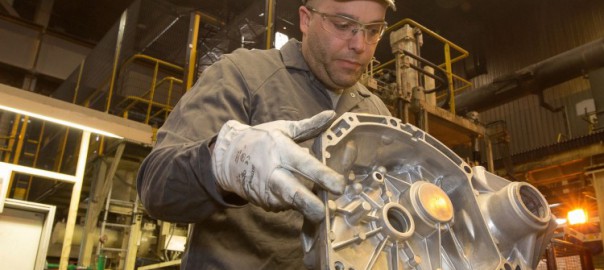
R 240 electric engine manufacturing – Foundry workshop – Engine cases (Image: Renault)

Renault ZOE Motor Manufactured at Cléon

Renault launched earlier this year production of new electric motors R 240 for Renault ZOE.

ZOE’s new electric motor, unveiled at the Geneva Motor Show, is a 100% Renault motor manufactured at the French site of Cléon, already specialized in highly technical powertrain production.

The launch, benefitting from a part of €300 million investment announced by the plant in 2011, is an integral part of Renault’s electric strategy aimed at improving motor and battery technology to optimize the performance and range of electric vehicles, while supporting the development of the corresponding infrastructure.

Mendi Ammad, Director of the Cléon plant says:

“We aim to become the leading powertrain plant for the Alliance”

Read more: Inside EVs

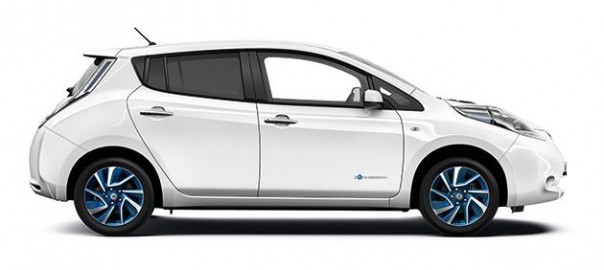
The new Acenta+ will come with a 6.6kW on-board charger as standard (Image: Nissan)

Nissan adds Acenta+ to LEAF range

This should be a popular move as most people are interested in fast home charging

Nissan is celebrating the continued success of its 100% electric LEAF model with the introduction of an Acenta+ grade.

The new Acenta+ sits between the Acenta and range-topping Tekna model and enjoys a significant specification boost over the standard model.

On sale from July 1st, the Acenta+ is equipped with a 6.6kW on-board charger as standard, along with a Mode-3 32amp (EVSE) cable. Previously available only as an option, the 6.6kW charger allows owners to perform a 0-100% charge in just four hours using a fast charger.

Priced at £24,740, including the £5000 Government grant, it offers an official range of 124 miles (NEDC) and running costs from 2p per mile.

Commenting on the addition of the new Acenta+ to the UK LEAF range, James Wright, Managing Director, Nissan Motor GB said:

“We’re delighted to add a new member to the LEAF family in the UK. More than 9,500 LEAFs have already been sold here and Nissan is the undisputed leader in the EV market. This new model delivers exceptional value and showcases the LEAF’s incredible technology and engineering.”

Source: Next Green Car

Plug-in Car Grant Scheme Extended

The Government has announced that its Plug-in Car Grant will continue until at least February 2016.

Revealed this week (Wednesday 26th August), the grant will remain open to motorists looking to buy a new ultra-low emission vehicle (ULEV) until early 2016 at a minimum. A longer term plan will be drawn up and announced after the Government’s November spending review.

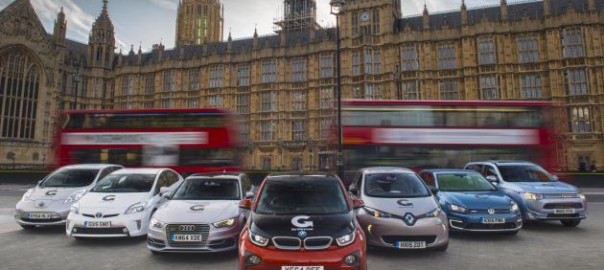
The grant, which offers motorists up to £5,000 of the price of an electric car, has been extended for all categories of vehicle and aims to build on the recent growth of the plug-in car market.

Before this announcement, the plan was to run the scheme until 50,000 grants had been awarded but, with around 40,000 grants already made and sales of ULEVs accelerating, forecasts were coming in for the scheme to have reached its limit around November 2015. As a result of the extension, all plug-in cars with CO2 emissions of 75 g/km of under will remain eligible for the grant until February.

Transport Minister Andrew Jones MP said:

“I’m pleased to announce today that the government is maintaining the current levels of grant, even as we move past the milestone of 50,000 vehicles. The UK is now the fastest growing market for electric vehicles in Europe. We will continue to invest to help make this technology affordable to everyone and to secure the UK’s position as a global leader.”

Hetal Shah, Head of Go Ultra Low, the Government backed campaign to promote ultra low-emission vehicles, said:

“Continuing the Plug-in Car Grant at current levels is positive news for everyone, as it encourages zero-emission motoring and secures more funding for a greater number of ULEV buyers. This announcement demonstrates the government’s commitment to supporting the growth of the ULEV market. If we are to meet ambitious targets for ULEV uptake, continued investment is paramount.”

Mike Hawes, SMMT Chief Executive, said:

“With British buyers taking to ultra-low emission vehicles faster than anyone else in Europe, the extension of the Plug-in Car Grant is good news. The market for these vehicles remains small, however, so it is essential that government continues to provide effective incentives for their uptake – including the Plug-in Car Grant and other measures.”

With more choice of plug-in vehicles than ever, the number of grants awarded is expected to continue increasing rapidly. Ranges from the likes of Audi, BMW, Mitsubishi, Renault, Toyota and Volkswagen all feature zero or low-emission models and sales have increased to the extent that 2014’s ULEV sales figure was passed in 2015 with six months to spare.

Source: Next Green Car