All posts by Trevor Larkum

Peak oil round up

There’s a lot of discussion in the ‘blogosphere’ of whether we’re starting to see the effects of peak oil in our economic woes – here are some highlights (and don’t forget my blog post).


2015 Could Be The Year Of Peak Oil


I am now more convinced than ever that 2015 will see the peak in world crude oil production. I have very closely studied the charts of every producing nation and my prognosis is based on that study. I see many nations in steep decline and most every other nation peaking now, or in the last couple of years, or very near their peak today. These include the world’s three largest producers, Russia, Saudi Arabia and the USA.

Read more: Oil Price

(Image: D. Bacon/Shutterstock/Economist)
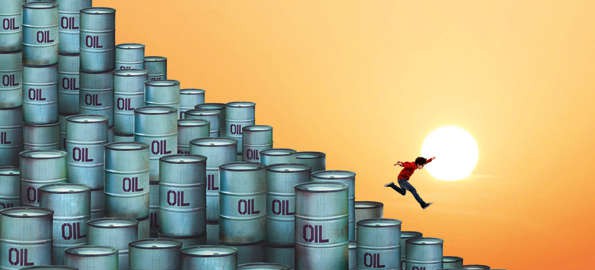
Oil Mountain (Image: D. Bacon/Shutterstock/Economist)

China Peak Oil: 2015 Is the Year

Domestic production looks set to peak, with some profound implications for the world market.

Intense focus on the North American shale boom, Saudi Arabia, and ISIS obscures an important emerging energy trend: China’s oil production is peaking. This has profound implications for the world oil market, because China is not just a massive importer of crude; it is also among the world’s five largest oil producers, trailing only the U.S., Russia, and Saudi Arabia, and virtually neck-in-neck with Canada.

China’s oil industry has delivered impressive oil and gas production growth over the past decade. Yet a range of data and historical analogies increasingly suggest that, at global oil prices between $50-to-$100 per barrel, China’s oil supply capability is plateauing and may peak as soon as this year. Lower or higher prices would accelerate or extend this timing.

Read more: The Diplomat


US Oil Production Nears Previous Peak

The EIA’s Monthly Energy Review came out a couple of days ago. The data is in thousand barrels per day and the last data point is July 2015.

US consumption of total liquids, or as the EIA calls it, petroleum products supplied, reached 20,000,000 barrels per day for the first time since February of 2008.

Something I never noticed before, consumption started to drop in January 2008, seven months before the price, along with world production, started to drop in August 2008. This had to be a price driven decline. Could the current June and July increase in consumption be price driven also?

Read more: Peak Oil Barrel


Crashing Oil Prices Aren’t Due to an Oil Glut But to Demand Destruction

As I began to mention at the end of the first part of this three-parter, I’ve only just recently come to the conclusion that oil prices aren’t going to have a tendency to rise due to the tightening of supply imposed by peak oil, but to depreciate. This of course flies in the face of the common logic of supply and demand, but when factoring in the method by which the majority of our money is created, a deflationary effect can be seen to come into play. This has taken me an absurdly long time to clue into, for although I’d steadfastly amassed a bunch of pieces (various information), I hadn’t realized they were actually all part of the same puzzle.

With peak oil and fractional-reserve banking being the first two pieces of this puzzle, the third piece that I needed to factor in (which oddly enough I’d already written about) is the fact that money is a proxy for energy.

Read more: From Filmers to Farmers


Will declines in U.S. and Canadian oil production lead to a global decline?

At the beginning of this year I noted that all of the growth in world oil production* since 2005 has come from two countries: the United States and Canada. And, I suggested that since the growth in production in those two countries came from high-cost deposits–tight oil in the United States and tar sands in Canada–that the precipitous drop in oil prices would lead to declines in production in both countries.

I concluded that unless another area of the world suddenly started growing its oil production significantly that those declines would probably result in a worldwide decline in oil production.

Well, declines in the both the United States and Canada have arrived. It will be several months before we can know with any certainty whether those declines will translate into a persistent global decline.

Read more: Resilience


Support For OPEC Production Cut Is Increasing


Now the shale producers won’t willingly reduce output, as shale production is made up of many different companies, and not a national company like most global oil producers; but due to the economics of the current oil price environment, many shale oil producers will face bankruptcy next year, and as a result, will go out of business.

The reason being is that in 2016, most oil hedges will expire. These hedges have allowed shale oil companies to stay afloat and achieve cash flow neutrality, despite the decline in oil prices. These hedges have also helped shale oil companies gain access to credit, so they can raise the capital needed to put their wells into production. When these hedges expire, companies will not generate the cash flow needed to meet their covenants, which will in turn bankrupt them, and production from U.S. shale oil wells, will start declining rapidly. This will also dry up the credit markets and prevent any type of quick rebound in shale oil production.

This is why the IEA even estimates that U.S. oil output will start collapsing next year.

Read more: Oil Price


US Shale Oil too Expensive, Peaks 1H 2015

According to EIA data, monthly US crude oil production peaked in April 2015 at 9.6 mb/d.

Read more: Resilience


This is When Bonds Go Kaboom!


In the energy sector, the bond devastation is even worse.

California Resources – Occidental Petroleum’s spinoff of its oil-and-gas assets in California, a masterpiece of Wall Street engineering – has done nothing but burn investors in its 10 months as an independent company. When I last wrote about it ten days ago, its $2.25 billion of 6% notes due 2024, issued at par to QE-drunk investors in September last year, had plunged to 66 cents on the dollar. Now they’re at 59.5 cents on the dollar.

Chesapeake Energy, the second largest natural gas driller in the US, is also facing the music. Two of its brethren, Quicksilver Resources and Samson Resources, have already filed for bankruptcy. When I last wrote about Chesapeake a month ago, its $1.1 billion of 5.75% notes due 2023 – that in June 2014 had been at 112 cents on the dollar – had plummeted to 70. Now they’re at 67.

Read more: Wolf Street


And from last year:

Collapse is Inevitable

There has been considerable discussion lately as to whether or not total collapse of the world’t economies will happen in the relatively near future. I think that is the wrong question. Let me explain.

Ecological collapse of the world’s ecosystem is a lead pipe cinch. It is already well underway and instead of slowing down, it is gaining momentum fast.

Read more: Peak Oil Barrel
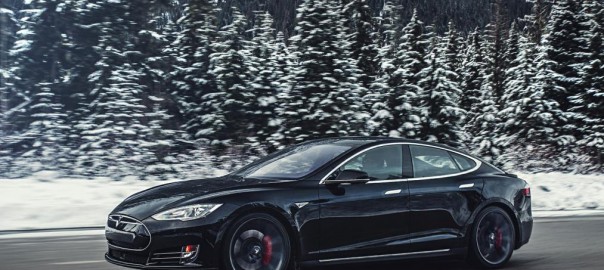
Tesla Model S P85D (Image: AutoExpress)

Electric vehicles shine

Watch out petrol, it’s time for electric vehicles to shine

Stephen Hill is an enthusiast for electric vehicles, noble and economical successor to the internal combustion engine

Since the beginning of time, mankind has needed a form of transport to move faster and further than his legs could carry him. For millennia, this need – as basic as food, clothing and housing – was met by the horse in the West, whether harnessed to a carriage or for riding, carrying, hunting, charging, ploughing or pulling, and by the camel in Arabia.

1_1_tesla_model-s_unk

Then the Industrial Revolution in nineteenth-century Britain changed everything, especially with the invention of the steam engine, the first form of mechanised power for transport. By 1883, steam engines, which were actually external combustion engines, could generate the power of 10,000 horses.

Then the beginning of the twentieth century saw the advent of the ubiquitous motorcar, powered by two completely different sources: petrol and electricity. The first petrol-driven vehicle was produced in 1902 by Daimler-Mercedes. Meanwhile, the first electric car, produced and sold in Chicago in 1906, is still running to this day. The power of these cars, however, was still rated by the number of horses that they replaced.

The twentieth century belonged exclusively, however, to the petrol-driven internal combustion engine, or ICE, for several reasons: first, fuel was available and relatively inexpensive, at least until 1974’s oil crisis; secondly, it offered superior performance, especially acceleration and top speed; and thirdly, mass-production made it widely affordable.

These advantages turned the ICE-driven automotive industry into by far the world’s biggest industry, employing millions. The electric vehicle, or EV, could not compete back then with ICE, as batteries were unable to store the electricity required and could not offer anything like the same performance and endurance, especially acceleration, top speed and distance, and were expensive.

The twenty-first century is changing all that, as EV will increasingly overtake ICE, because fossil fuel costs have risen significantly during the last half-century; the issue of toxic emissions is now widely understood and condemned for their harmful effects on the wider environment; the development of battery power now gives the same performance, including acceleration, top speed and distance, for EVs as ICE; EV is cheaper to manufacture and repair than ICE; and EV has much lower depreciation, and therefore lower annual running and finance costs. Above all, EV has no toxic emissions.

In the 2014/15 motor-racing season, for the first time, there will be Formula E running alongside Formula 1. Formula E will offer the same performance, including acceleration and top speed, as Formula 1, but with no noise or toxic emissions.

Ten EV teams will compete, not on out-of-town noisy, smelly race-tracks, but in ten city centres, given that they are green, including Los Angeles, New York, London, Beijing and six others. Various forms of EVs are now in mass-production in California, France, Germany, and Japan, with India, China and the UK soon to follow.

The leading EV manufacturer, Tesla in California, has opened a showroom at Westfield in London; can now provide power for 700 miles; and has just announced an unlimited eight-year warranty on batteries and motor parts. It’s a bit of a shame that the first design of the Tesla S model is so bland… but watch out, old ICE manufacturers: EV is now real.

Source: Spears WMS

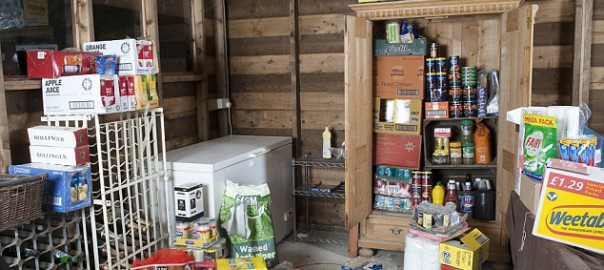
Reserves: The Shaws have enough food and water to last them a year, stored in their garage (Image: M. Large/Daily Mail)

Stocking up for Doomsday

An amusing article from December 2011 – I suspect more families are stocking up now.

Picture the scene: It’s the end of January 2012 and already it is clear the year to come will make that which has just passed seem something of a picnic. The last strains of Auld Lang Syne had barely faded before Greece defaulted on its debts. Over the next few weeks, Italy and Spain will follow.

Reserves: The Shaws have enough food and water to last them a year, stored in their garage (Image: M. Large/Daily Mail)

Across Britain and the Continent, bank after bank goes down, a domino effect exacerbated by panicking customers desperately withdrawing their savings. Where three years ago the giants of High Street banking were seen as too big too fail, now they are too big and too many for any Government to save.

Panic ensues. Within hours, the cashpoints are empty of money and the supermarket shelves stripped bare.

To make matters worse the country is hit by freezing weather. As temperatures plummet and snow falls, the road network stalls to a grinding halt, while large swathes of the country are hit by electricity blackouts.

The warning by economists that Britain is just ‘nine meals from anarchy’ is brutally borne out. Unlike last summer, the rioters on the streets aren’t looking for trainers and flat-screen TVs — just food.

An absurd fantasy? Perhaps so, but in an increasingly uncertain world, such a scenario can no longer be dismissed out of hand. And strange as it may seem, it’s one that many believe is worth preparing for.

Read more: Daily Mail

Peak oil will break economies

[From December 2013] Industry expert warns of grim future of ‘recession’ driven ‘resource wars’ at University College London lecture

A former British Petroleum (BP) geologist has warned that the age of cheap oil is long gone, bringing with it the danger of “continuous recession” and increased risk of conflict and hunger.

BPlogo_Logo_BP_EnergyVoice

At a lecture on ‘Geohazards’ earlier this month as part of the postgraduate Natural Hazards for Insurers course at University College London (UCL), Dr. Richard G. Miller, who worked for BP from 1985 before retiring in 2008, said that official data from the International Energy Agency (IEA), US Energy Information Administration (EIA), International Monetary Fund (IMF), among other sources, showed that conventional oil had most likely peaked around 2008.

Dr. Miller critiqued the official industry line that global reserves will last 53 years at current rates of consumption, pointing out that “peaking is the result of declining production rates, not declining reserves.” Despite new discoveries and increasing reliance on unconventional oil and gas, 37 countries are already post-peak, and global oil production is declining at about 4.1% per year, or 3.5 million barrels a day (b/d) per year:

“We need new production equal to a new Saudi Arabia every 3 to 4 years to maintain and grow supply… New discoveries have not matched consumption since 1986. We are drawing down on our reserves, even though reserves are apparently climbing every year. Reserves are growing due to better technology in old fields, raising the amount we can recover – but production is still falling at 4.1% p.a. [per annum].”

Read more: The Guardian

100 Things You Can Do To Prepare Yourself for Peak Oil

This is the followup 49-100 peak oil tools as written by Sharon Astyk. To read tips #1-49 read here

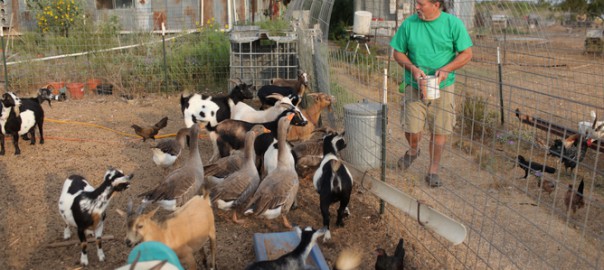
Floresville, Texas: Paul Range feeds his brood of livestock. Each can serve as a food source if things get bad. (Photo Credit: National Geographic Channel/ Sharp Entertainment)

49. Invite someone new to your house once every month. Try and expand your community and circle of friends regularly. Invite people to eat with you regularly – sharing food is an important part of community building.

50. Attend zoning meetings and consider running for zoning board. Work to amend local zoning laws to allow green building, composting toilets, clotheslines, small livestock, cottage businesses, front lawn gardens and other essentials.

51. Have a large house and not a lot of people in it? Consider a roommate, or borders. This will make you more economically stable and also expand your community and local resources. If you currently rent an apartment, consider sharing housing with a roommate.

52. If your community doesn’t have a food coop, start one now. There is a great deal of information on the web here: This can be a powerful tool for creating local food economies.

53. Consider creating a community currency. They keep money local and encourage small businesses and sustainable economies.

54. Sometimes you get more by giving things away than by selling them. Do you have something you don’t need? Extra produce? Spare time? Give extra tomatoes to a neighbor, offer spare items to friends, go over and help out someone who could use it. Good deeds mostly return to us.

55. Build an in-law apartment, or set your home up so that elderly family members can live comfortably with you when the time comes. Sit down and talk to them before the problem becomes acute, and tell them that you want them with you. It is easier to move elderly folks in with you before things become difficult.

56. Take time to get to know children in your neighborhood, especially teenagers. Make friends with them, talk and listen respectfully. Consider inviting them to apprentice with you on some work, or join in a work project (don’t forget to pay them for their help). Older children and teenagers need *meaningful* work – they need to know their contribution matters. Make sure it does.

57. Get to know local farmers and encourage them to fill gaps in your local food system – get together with neighbors and friends and create a market for local wheat, local dried beans, and other foods that are often grown industrially. If farmers know that even small quantities of these foods, locally grown, would be welcome, they will grow them.

58. Create a community festival to showcase local agricultural products, arts or other truly local creations and skills. Instead of focusing on simply drawing tourists, emphasize activities that bring the community together as part of it – dances, demonstrations of skill, children’s activities.

59. Draw attention to your local watershed, and on your vulnerabilities in that regard. Will you be competing with other communities? Are there areas of waste to be dealt with? Wetlands to be preserved? Make assuring a safe, long term water supply a community priority.

60. Create local educational systems – resist regionalizing schools and advocate for the creation or recreation of neighborhood school and library systems. Build homeschooling coops, and set up library branches at walkable sites. Encourage extension programs, community college branches and everything you can to make education more local.

Read more: Organic Consumers

Severe Flooding, Against a Background of Wind Turbines: November 2012, Tyringham, Bucks. (Image: T. Larkum)

The shale bubble is worse than the housing bubble

We are now far advanced into the third central bank generated bubble of the last two decades, but our monetary politburo has taken no notice whatsoever of its self-evident leading wave. Namely, the massive malinvestments and debt mania in the shale patch. Call them monetary bourbons. It is no exaggeration to say that inhabitants of the Eccles Building deserve every single word of Talleyrand’s famous epithet: “They learned nothing and forgot nothing.” To wit, during the last cycle they claimed to be fostering the Great Moderation and permanent full employment prosperity. It didn’t work. When the housing and credit bubble blew-up, it washed out all the phony gains from the Greenspan/Bernanke printing spree. By the time the liquidation was finished in early 2010, there were 2 million fewer payroll jobs than there had been at the turn of the century.

Severe Flooding, Against a Background of Wind Turbines: November 2012, Tyringham, Bucks. (Image: T. Larkum)
Severe Flooding, Against a Background of Wind Turbines (Image: T. Larkum)

Never mind. The Fed simply doubled-down. Instead of expanding its balance sheet by 50%, as happened during the eight years between 2000 and 2008, it went into monetary warp drive, ballooning its made-from-thin-air liabilities by 5X in only six years. Yet even after Friday’s ballyhooed jobs report there were three million fewer full-time breadwinner jobs in November 2014 than there were in the early 2000s.

Source: Lew Rockwell

Next recession expected before 2020

A downturn may be in the cards before the decade is out

Some advice for President Barack Obama’s successor: bring a plan to fight the next recession.

AAEAAQ_Oil_RollerCoaster_LinkedIn

That’s one conclusion drawn from a survey of economists Sept. 4-9, where the median forecast of 31 respondents has the next downturn occurring in 2018.

Assuming the collective wisdom of economists is right—which is a generous assumption given that predicting business cycles isn’t exactly a cakewalk—it puts the current expansion on track to have a lifespan of about nine years. That’s a pretty good run, though the honor of the longest expansion on record would still belong to the decade that ended in March 2001.

The current recovery has already beaten the postwar average of just under five years, mostly because improvement in the economy has been so slow. Payrolls only started to really pick up last year, and growth, while steady, hasn’t been anything to write home about. Economists expect the U.S. to expand at a 2.5 percent annualized rate this year, just a tick above last year and much slower compared with growth in other recoveries.

The survey also suggests that the next U.S. president will have just one calendar year to get settled before a downturn occurs. They may want to solicit some advice from Obama, who took office in January 2009, during the deepest recession in the post-World War II era.

Economists said there’s a 10 percent chance of a U.S. recession within the next 12 months, according to the median of the survey. While the median is usually a good gauge because it’s less influenced by outlier responses, the survey’s average showed an interesting uptick.

Looking at that metric, the odds of a U.S. recession in the next year climbed to an average 13 percent, the highest since economists were surveyed in December 2013.

That may have something to do with the volatility that’s been roiling global markets of late, not to mention the Federal Reserve’s first interest rate increase since 2006 coming as soon as next week. Some economists worry that it’s too early to start tightening policy, which carries the risk of crimping growth.

Meanwhile China, the world’s second-largest economy, is slowing, and other emerging markets such as Brazil, South Africa and Russia are also struggling. Commodity prices, trade and inflation are all sluggish. And growth in developed economies may not be strong enough to help keep the world from slipping into a contraction. All that was enough to prompt Citigroup Inc.’s chief economist, Willem Buiter, to assign a 55 percent chance to some form of global recession in the next couple years.

Source: Bloomberg

(Image: D. Bacon/Shutterstock/Economist)

10 Ways to Identify a Closet Prepper

This article made me smile!

Although an increasing number of people are adapting to the realities of more expensive and declining energy, and a permanently depressed economy, many are still… shall we say, circumspect, about their activities. They may have been driven underground after encountering ridicule or denial from friends and family, or perhaps are just are leery about random people showing up at their door when crunch time arrives.

Prep-dar n. Informal 1. The keen observation skills and attention to detail which allow you to identify other people who are aware of, and covertly preparing for, peak oil. 2. A shortened version of “prepper radar”.

So how do we find these fellow prep enthusiasts, so we can join forces, help each other, and make our communities stronger? You could check out your local Transition initiative, or search online for a peak oil meet-up in your area. However, some of these undercover peak-oil-preparers may be people you already know…. friends, acquaintances, work buddies, even family – you just have to figure out who they are.

(Image: D. Bacon/Shutterstock/Economist)
Oil Mountain (Image: D. Bacon/Shutterstock/Economist)

To help you find them, here are the top ten clues that should set your Prep-dar buzzing. You might know a closet prepper if he or she:

10. Gives you a Bo-Go flashlight, first-aid kit, or copy of Just In Case: How to be self-sufficient when the unexpected happens for Christmas.

9. Knows the difference between the IEA and the EIA; and/or calls the EIA “the most incompetent bungling liars in the government.”

8. Is overheard exclaiming “But Sharon Astyk/Richard Heinberg/James Howard Kunstler/Dmitry Orlov/Matt Simmons/Gail the Actuary says ____________!”

7. Sends you articles published by The Oil Drum, Energy Bulletin, or Life After the Oil Crash , “FYI.”

6. Stores any type of food in a bucket.

5. Is fired after a happy hour at which she tells the boss he’ll be doing hard labor when “TSHTF.”

4. Privately admits to cashing out their entire 401(K) to purchase gold, ammunition, and prime farmland.

3. Complains of marital discord arising from arguments about the number of chickens that might fit on a quarter-acre lot, or the excessive amount of lawn which has been converted to okra production.

2. Tends to use terms like Cantarell, TEOTWAWKI or Hirsch Report after a few glasses of wine.

and finally…..

1. Offers to share seeds, teach you to can tomatoes, help you compost, build a raised garden bed, plant a fruit tree for you, car-pool, chop firewood, give you fresh eggs, set up a rain barrel, or show you how to use a solar cooker.

In that case, who cares if they know about peak oil – you want to be their friend!

Oil’s place in the global energy mix is transforming, including in mobility, which uses three-fifths of world oil (Image: Thinkstock/curraheeshutter)

A snarky guide to peak oil

It pretty much does what it says on the tin…

“Peak oil” is starting to pop up in the media more and more these days. Everybody from Glenn Beck to the Sierra Club says that the world is running out of cheap oil and that this could be, well, inconvenient, for the global economy. But really, What is peak oil and what does it mean for you? And most importantly, is peak oil just another excuse for Beck to hawk Goldline or for Al Gore to seek more subsidies for solar panels?

Oil’s place in the global energy mix is transforming, including in mobility, which uses three-fifths of world oil (Image: Thinkstock/curraheeshutter)

Not to worry. Transition Voice’s Snarky Guide to Peak Oil sorts it all out for you. Or double your money back. That’s a promise.

What is peak oil?

The collapse of society? Mutant zombie bikers in the streets? Fox News commentator Neil Cavuto starring in his own prime-time TV reality show?

Peak oil is not the end of the world, but it will be the end of the Oil Age. That doesn’t mean we’re running out of oil, but it does mean the world is running out of cheap oil. And talk about bad timing — world oil has peaked just when countries like China, India and Brazil have started to use lots of oil for the first time, competing with America, Europe and Japan for the second half of world oil.

“How did OUR gas wind up in THEIR tanks?”
More Customers + Less Oil = Higher Prices.

Peak oil is as much about the economy and politics as it is about geology. And it’s not just about pain at the pump, though it couldn’t hurt to trade your pick-up truck for a Prius soon — or better yet, try to work and shop closer to home. Peak oil is also about paying more for all the stuff that oil makes possible, from bread made with wheat grown on factory farms to polo shirts and DVDs imported from China.

Peak oil, combined with climate change, might just mean the end of shopping as we know it, in the words of Australian author Paul Gilding.

Read more: Transition Voice

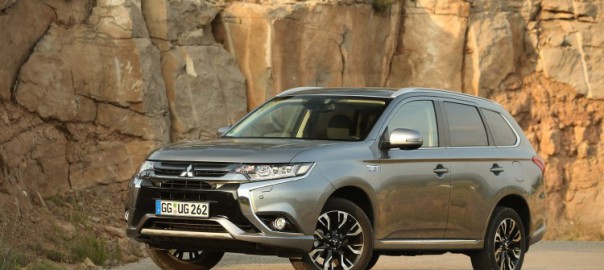
2016 Mitsubishi Outlander PHEV

Frankfurt shows off new Mitsubishi Outlander PHEV

I’m looking forward to this reaching the UK – especially the V2H option.

Mitsubishi confirmed that the new 2016 Mitsubishi Outlander PHEV, which in July went on sale in Japan, will be unveiled in Frankfurt at the 66th International Motor Show (IAA).

Sales of revamped Outlander PHEV in Europe will begin in September.

2016 Mitsubishi Outlander PHEV

On the stage Mitsubishi will also present its rally version of the Outlander PHEV, which will compete in the Baja Portalegre 500 cross-country rally (after its rally in Asia).

The Japanese manufacturer for the very first time seems to willing to sell Outlander PHEV in Europe with optional V2H system (previously available only in Japan).

With ICE backup, and external V2H bi-directional CHAdeMO charger, the Outlander PHEV could supply power in emergency situations.

“MMC will also have a display outlining Vehicle-to-Home (V2H) electricity supply system that will be available for the new Outlander PHEV.”

Total sales of Mitsubishi Outlander PHEV already stand at some 70,000.

Read more: Inside EVs