All posts by Trevor Larkum

Nissan Leaf on charge

ZEV Alliance sets huge zero-emission goal for 2050

The International ZEV Alliance, an international group geared to cut greenhouse-gas emissions by spurring more electric vehicle sales, has used the United Nations’ COP21 climate-change conference in Paris to set a rather lofty goal.
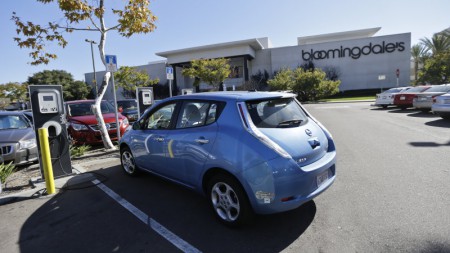
Nissan Leaf on charge

The group wants to have all new cars sold within their jurisdictions to be emissions-free by 2050, according to Green Car Reports. The group includes eight US states, (California, Connecticut, Maryland, Massachusetts, New York, Oregon, Rhode Island, and Vermont) along with Quebec, Germany, the Netherlands, Norway, and the UK.

The Alliance was officially founded in September. At the time, it was determined that the group accounted for seven percent of global vehicle sales but also made up 38 percent of electric-vehicle sales, so these entities already appear to be the world leaders in the zero-emissions vehicle movement. The eight US states have been at it for a while, of course, joining up in May 2014 to state their collective goal to have 3.3 million electric vehicles on their roads by 2025. Those states and their Multi-State ZEV Action Plan account for almost one-fourth of US light-duty vehicle sales.

Of course, Norway always shoots high when it comes to zero-emissions transportation. Long known for its abundance in hydroelectricity and big-time plug-in vehicle incentives, that country is aiming to have all new cars emissions-free within the next decade.

Another group of US and non-US entities, including California, France’s Alsace region and parts of Holland, signed onto the Under 2 MOU agreement at COP21. Those members aim to cut greenhouse-gas emissions by 2050 to less than 20 percent of those in 1990.

Source: Autoblog
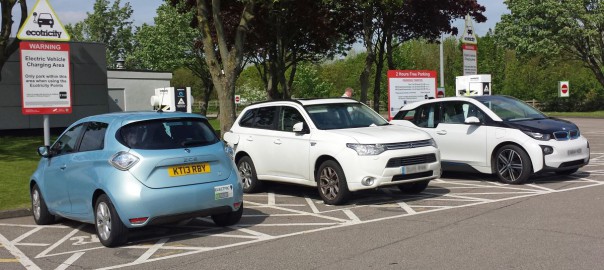
My ZOE plus an Outlander PHEV and i3 charging at London Gateway (Image: T. Larkum)

Electric vehicles are the future – there is no escaping it

Ultra-low emission vehicles (ULEVs) are becoming a more common sight on UK fleets, with this growth set to continue as manufacturers and companies aim to reduce CO2 emissions.

My ZOE plus an Outlander PHEV and i3 charging at London Gateway (Image: T. Larkum)

The latest Department for Transport (DfT) figures show that a total of 35,305 cars with CO2 emissions of 75g/km or below were registered at the end of June, compared with 12,200 on the same date last year.

Research from the latest Fleet200 – the UK’s biggest 200 fleets across 10 industry sectors – backs this up, with those organisations operating more hybrids and battery electric vehicles (EVs) than before.

But what does the future hold for fleets, and what are the implications for the UK’s road and power infrastructure?

We asked two of the country’s leading ULEV experts – Colin Herron, managing director of Zero Carbon Futures, and Denis Naberezhnykh, head of ultra-low emission vehicles for Transport Research Laboratory – for their views.

Read more: Fleet News

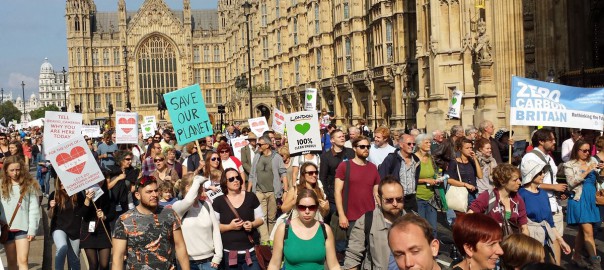
London Climate March - passing the Palace of Westminster (Image: T. Larkum)

Grand promises of Paris climate deal undermined by squalid retrenchments

Until governments undertake to keep fossil fuels in the ground, they will continue to undermine agreement they have just made

London Climate March - passing the Palace of Westminster (Image: T. Larkum)
London Climate March (Image: T. Larkum)

By comparison to what it could have been, it’s a miracle. By comparison to what it should have been, it’s a disaster.

Inside the narrow frame within which the talks have taken place, the draft agreement at the UN climate talks in Paris is a great success. The relief and self-congratulation with which the final text was greeted, acknowledges the failure at Copenhagen six years ago, where the negotiations ran wildly over time before collapsing. The Paris agreement is still awaiting formal adoption, but its aspirational limit of 1.5C of global warming, after the rejection of this demand for so many years, can be seen within this frame as a resounding victory. In this respect and others, the final text is stronger than most people anticipated.

Outside the frame it looks like something else. I doubt any of the negotiators believe that there will be no more than 1.5C of global warming as a result of these talks. As the preamble to the agreement acknowledges, even 2C, in view of the weak promises governments brought to Paris, is wildly ambitious. Though negotiated by some nations in good faith, the real outcomes are likely to commit us to levels of climate breakdown that will be dangerous to all and lethal to some. Our governments talk of not burdening future generations with debt. But they have just agreed to burden our successors with a far more dangerous legacy: the carbon dioxide produced by the continued burning of fossil fuels, and the long-running impacts this will exert on the global climate.

With 2C of warming, large parts of the world’s surface will become less habitable. The people of these regions are likely to face wilder extremes: worse droughts in some places, worse floods in others, greater storms and, potentially, grave impacts on food supply. Islands and coastal districts in many parts of the world are in danger of disappearing beneath the waves.

Read more: The Guardian

Climate March poster on the Underground (Image: T. Larkum)

World leaders hail Paris climate deal as ‘major leap for mankind’

Almost 200 countries sign historic pledge to hold global temperatures to a maximum rise of 1.5C above pre-industrial levels

Climate March poster on the Underground (Image: T. Larkum)

A historic, legally binding climate deal that aims to hold global temperatures to a maximum rise of 1.5C above pre-industrial levels, staving off the worst effects of catastrophic global warming, has been secured.

The culmination of more than 20 years of fraught UN climate talks has seen all countries agree to reduce emissions, promise to raise $100bn a year by 2020 to help poor countries adapt their economies, and accept a new goal of zero net emissions by later this century.

Formally adopted in Paris by 195 countries, the first universal climate deal will see an accelerated phase-out of fossil fuels, the growth of renewable energy streams and powerful new carbon markets to enable countries to trade emissions and protect forests.

As the final text of the agreement was released, the French president, François Hollande, said:

“This is a major leap for mankind. The agreement will not be perfect for everyone, if everyone reads it with only their own interests in mind. We will not be judged on a clause in a sentence, but on the text as a whole. We will not be judged on a word, but on an act.”

Economist Lord Stern added:

“This is a historic moment, not just for us but for our children, our grandchildren and future generations. The Paris agreement is a turning point in the world’s fight against unmanaged climate change which threatens prosperity. It creates enormous opportunities as countries begin to accelerate along the path towards low-carbon economic growth.”

Read more: The Guardian

Vauxhall Ampera Charging (Image: OLEV)

The Coming Electrification of Everything

At Obvious Ventures, we believe stored electricity, increasingly derived from renewable sources, will entirely replace fossil fuels as the preferred method to power everything in our lives.

Vauxhall Ampera Charging (Image: OLEV)

From cars to scooters to boats to locomotives to industrial equipment, we are in the midst of a transition that will electrify everything previously driven by combustion.

There are two simple reasons we’ll make this change sooner than most people think. First, electrically powered things just work better. And people want things that work better. The second reason is really just a piece of the first. “Better” increasingly means “better forever.” That is, not just better in the moment for that use, but also better for our surroundings, our health, and the health of our planet.

But, at least for the short term, our climate will be served not simply by environmental motivations, but by the same relentless human force that created it: the desire for more, faster, better. Ever-better technology will lead consumers, rather than idealists, to drive this electricity evolution.

Why now? Key trends emerging only in recent years have created the foundation for this evolution.

Read more: Greentech Media

Nissan signs up to smart grid scheme

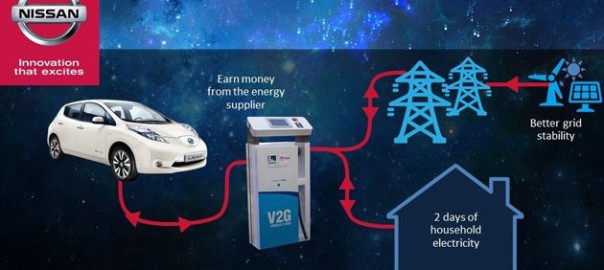
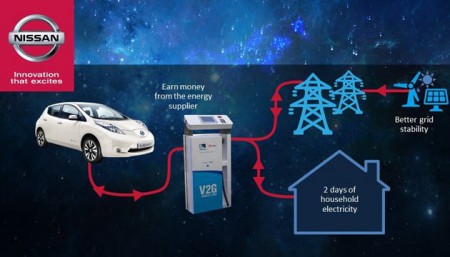
Nissan has joined up with energy supplier ENEL to trial the idea of ‘Smart Grids’ using electric cars. The two companies will work together to set up innovative vehicle-to-grid systems that allow owners to use their car as a movable energy hub – using, storing or returning energy to the grid.

ENEL_home_energy_Nissan
The deal has been announced during the Nissan-Renault Alliance’s support of the COP21 climate change conference in Paris. The leading EV manufacturers have supplied a fleet of 200 EVs to shuttle delegates around the conference.

Based in a large number of European and north and central American countries, ENEL is Italy’s largest energy provider. Nissan’s partnership with the company will see smart grid trials begin in Europe. This dovetails with the recent announcement that Nissan has also teamed up with power management specialists Eaton to reuse old EV batteries.

The smart grid concept sees EV owners avoid peak tariffs for household energy, with the car able to supply either the home or national grid with power during high demand periods such as evenings after normal working hours. This will give the Leaf owners a greater degree of financial freedom, and they can then either recharge their vehicle at off peak times in the early hours of the morning, or maintain enough charge to be able to drive to their workplace and charge there.

Denmark will be the first country to trial the smart grid project, with plans already in place to roll it out to Germany, the Netherlands and other northern European countries.

Read more: Next Green Car

2016 Volkswagen e-Golf

VW scandal pushes diesel cars into the slow lane

Buyers are turning away from all diesel models, and cleaning up the technology will be a long and expensive business

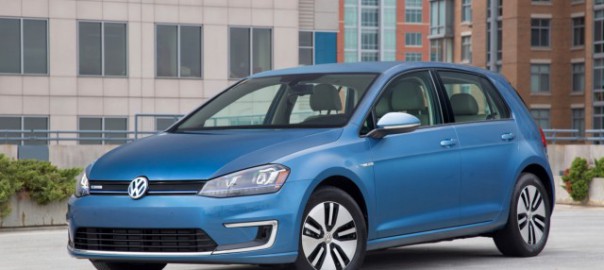
The 2016 VW e-Golf is a spirited runabout that makes almost no compromises in terms of performance, comfort or cargo space (Image: Volkswagen of America Inc.)

Since the Volkswagen emissions test scandal in September, it is not just the German carmaker that has suffered a blow to its image. Diesel automotive technology also faces a battle to regain public trust.

There are already some signs of demand for diesel cars shrinking since VW was forced to apologise for installing “cheat devices” in 11 million vehicles. In Germany, Europe’s largest car market, demand for diesel cars was down 11% by the end of October compared with the average level this year, according to data from car buying website MeinAuto. The decline for VW diesel cars was even steeper, down 14%.

“The slump in demand has surprised us,” said MeinAuto’s managing director, Alexander Brugge. “It’s interesting that it’s not only VW customers who are reluctant to buy diesel vehicles but customers of other brands, too.”

In the UK, official registration numbers of for diesel cars seem to be holding up. Diesel made up 51% of new car sales in both October and November, according to Society of Motor Manufacturers and Traders (SMMT). That is in line with last year and above this year’s average of 48%. However, there could still be a decline, because of the three-month wait between car order and delivery.

VW chief executive Matthias Müller has promised that the company will increase spending on alternative technologies such as electric and hybrid vehicles by €100m next year.

Read more: The Guardian

Renault & Eneco collaborate on smart charging solution for electric vehicles

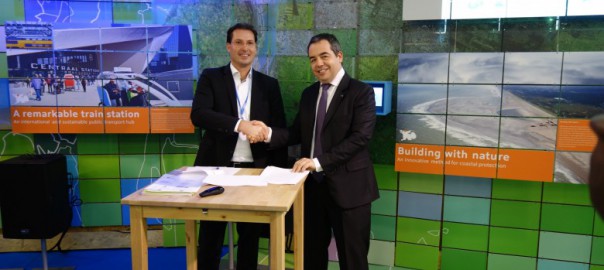
  • Agreement signed between electric vehicle leader Renault and energy supplier Eneco on December 7, 2015 at COP21 Paris conference
  • Eneco will develop smart charging app for ZOE, Renault’s 100% electric compact car
  • Renault ZOE users will be able to charge their car at lower costs using renewable energy
  • Reduced electricity costs for Renault ZOE users in the Netherlands

780x520_electric_vehicles_renault

Eneco subsidiary Jedlix will develop a version of its existing smart charging app, to adapt it to Renault ZOE. This app makes it possible to charge electric cars using renewable energy at times when the market prices are most favourable. Like at night, when the production of sustainable wind energy exceeds demand in most European countries.

Marc van der Linden, member of the Executive Board of Eneco:

“It is expected that there will be three million electric vehicles in the whole of Europe by 2020. To reduce CO2 emissions, it is essential that this vehicle fleet will use green power. It is also important to prevent power grid overloads as a result of peaks in demand if all the cars would be charged at the same time. Our app forms a direct link between the electric vehicle and the supply of sustainably generated energy. Consequently, the energy used for charging is more sustainable, energy supply and demand is balanced and the costs of driving an electric vehicle are reduced because users charge their cars at lower rates.”

Eric Feunteun, Electric Vehicle Program Director at Renault:

“Renault electric cars support the energy transition in the automotive industry as they contribute to the replacement of fossil fuels by renewable energies. With smart charging systems like the one developed by Eneco, Renault electric vehicles make a big contribution to power systems’ stability and reliability: EVs turn into an asset for the grid rather than create overload. They can store and use electricity when it is less carbon-dependent and cheapest for their owners. Our partnership with Eneco is a move towards making driving a Renault ZOE more interesting and affordable and will contribute to an electric vehicles’ scale up”.

A pilot test carried out by Eneco in the Netherlands demonstrates that users can save up to 15% on their electricity costs by using the app. To achieve this, all they have to do is indicate by what time the car must be fully charged and the system will automatically determine the lowest price within this time frame. Van der Linden: “I am very proud that we will be launching this smart service together with a leading party in the field of electric transport.” The app will first be available for ZOE users in the Netherlands and soon be available in other countries where Eneco operates.

The electric vehicle, a solution to counter global warming

The carbon footprint of electric cars is shrinking fast, with the shift already underway toward the use of renewable energies in the overall energy mix in most countries across the world today. Renewable energies feature in 56% of the new electricity power plants built in the world today. In Europe, this figure rises to 72%.

Renault is the pioneer of affordable all-electric vehicles, and the only carmaker to offer a full range. Renault sees the electric vehicle as an eminently viable countermeasure against global warming.

The Renault-Nissan Alliance is an official partner of the COP21 United Nations climate-change summit, providing a fleet of 200 Alliance electric vehicles, including 100 Renault ZOEs, to ferry delegates between Paris and Le Bourget from 30 November to 11 December 2015.

Source: 3D Car Shows

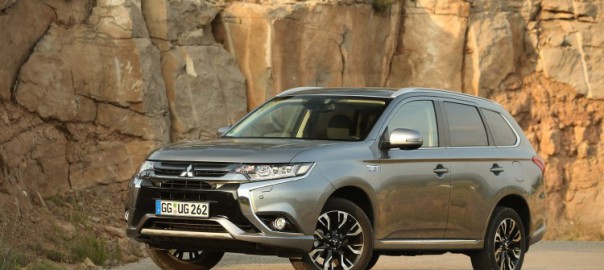
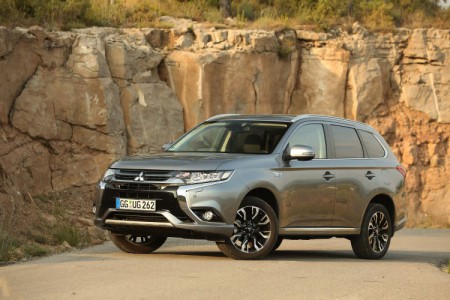
2016 Mitsubishi Outlander PHEV

Continued sales growth for green models

Sales of alternatively fuelled vehicles continue to grow according to November’s sales figures released by the Society of Motor Manufacturers an Traders (SMMT) released today (Friday 4th December).

2016 Mitsubishi Outlander PHEV
Mitsubishi Outlander PHEV

After October’s sales saw the first drop in 44 months of growth, November returned to growth with overall sales up 3.8 per cent against November 2014. Alternatively fuelled vehicles (AFVs) – which include hybrids, plug-in hybrids and electric vehicles – saw an 8.6 per cent growth versus November 2014 – more than diesel (3.6 per cent) and petrol (3.8 per cent) combined.

AFVs accounted for a three per cent market share in November’s figures, and now represent 2.7 per cent of the overall market 2015 year to date. Diesel powered cars are seeing their past dominance tested in 2015 with market share down to 48.4 per cent – down from last year’s 50 per cent. That said, diesels still had the upper hand in November, selling almost 10,000 more units than petrol models.

Overall growth year to date sees diesel at just 2.7 per cent, petrol at 8.3 per cent and AFVs at a huge 41.1 per cent – with the latter category having already sold almost 20,000 more cars than at the same point last year.

Cars eligible for the Plug-in Car Grant (PiGC) saw a 21.4 per cent increase versus November 2014, up to 2,276 models sold in the month. This accounts for 1.3 per cent of the month’s market share, with signs that the plug-in market could be kicking on again and growing at a significant rate. The year to date market share sits at 1.02 per cent for example. Certainly year to date sales are far in advance of last year, with 2015’s 25,096 vehicles more than double 2014’s sales up to November.

Mike Hawes, SMMT Chief Executive, said,

“November’s figures come as a reminder of the strength of the UK car market, as low interest rates and competitive finance deals continue to attract consumers to new car ownership. We have been expecting a levelling-off in demand for some time now – a development that is being realised following an unprecedented three-and-a-half years of non-stop growth.”

Source: Next Green Car

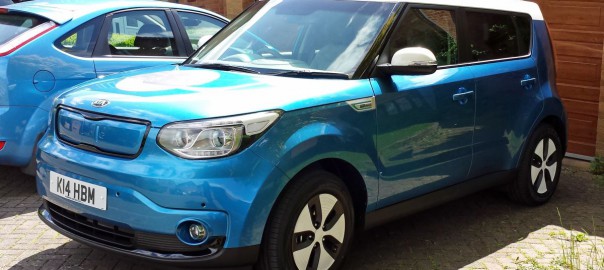
Kia Soul EV Test Drive

Kia Soul EV (Image: T. Larkum)

One of our customers had a test drive in a Nissan Leaf and was very impressed with it. However, they had a daily commute at the comfortable limit of the Leaf’s range on a single charge, about 70 miles. I could see that that could be an issue in the winter months and so arranged a test drive of the Kia Soul EV as a comparison.

Kia Soul EV (Image: T. Larkum)

The Soul EV is an interesting design – clearly it is based on the fossil fuel Soul so does not have its own identity like a Leaf or a Renault ZOE. However, it is more than just an existing design with a new engine (like, arguably, the Volkswagen Golf and e-UP); it has a redesigned and strengthened floorplan (for the battery), new wing panels (since there’s no filler cap) and a modified nose (to house the charge port). So clearly Kia has invested considerable resources in getting the design right.

Charge point and cover (Image: T. Larkum)

What is of particular interest is that Kia went straight for a market-leading big battery pack – a full 30.5 kWh (27 kWh usable) which compares very well with the Leaf’s 24 kWh (21.3 kWh usable). This means it has an official range on the NEDC test of 131 miles compared to the Leaf’s 124.

Soul EV driver's position (Image: T. Larkum)
Soul EV driver’s position (Image: T. Larkum)

While that doesn’t seem to be a huge difference on paper, the feedback from many reviews of the Soul EV is that it consistently provides a longer real-world range than the Leaf (often above 100 miles). Furthermore, its range prediction readout is much more accurate and reliable.

Soul EV driver's position (Image: T. Larkum)
Soul EV driver’s position (Image: T. Larkum)

Certainly that was my experience with it, driving it from London to Northampton and back over a couple of days. It gave a generous 90 or so miles predicted range, and then it seemed very nearly like it reduced the predicted range by about 1 mile for every mile driven. This is a very reassuring characteristic, arguably even better than the ZOE’s range prediction which is pretty good, and significantly better than the Leaf’s notorious ‘guessometer’.

A look under the Soul EV's bonnet (Image: T. Larkum)
A look under the Soul EV’s bonnet (Image: T. Larkum)

The car itself is easy to drive – stable and comfortable, though perhaps not a very exciting or engaging drive. It has plenty of space inside and comfortable seats. It includes a large boot, though its space is compromised by a storage compartment underneath designed to hold the home charge cable and Type 1 charge cable.

Soul EV rear passenger compartment (Image: T. Larkum)

Overall I was impressed with the Kia Soul EV and would recommend any potential EV owner to test drive one, particularly where longer than average range is important.

Soul EV boot with lower compartment closed (Image: T. Larkum)
Soul EV boot with lower compartment open (Image: T. Larkum)