Watch what happened when fruit delivery company Fruit 4 London and Tommy Walsh accepted Nissan’s £2 challenge. How many deliveries could they complete on one charge using the e-NV200?
https://www.youtube.com/watch?v=83GtV9kEny8
Watch what happened when fruit delivery company Fruit 4 London and Tommy Walsh accepted Nissan’s £2 challenge. How many deliveries could they complete on one charge using the e-NV200?
https://www.youtube.com/watch?v=83GtV9kEny8

The potential of electric cars seems to be higher now than ever before.

Traditional automakers including General Motors, Volkswagen, Daimler AG, and others are all investing heavily in electric vehicles. And Tesla, of course, has built its entire business off of battery powered cars.
But electric automobiles are nothing new. They actually have a rich history in the US and, at one point, were even the dominant type of car.
Here’s a look at how battery powered cars evolved over time.
Read more: Business Insider

As oil prices fall further, China slows and Brazil risks collapse, cracks will be papered over and the scene set for a new implosion
Economic forecasting is a mug’s game. One thing that has been learned from the financial crisis and Great Recession is that even those equipped with the most sophisticated models get it wrong, sometimes spectacularly.
So it is with both humility and trepidation that I will try to fulfil a promise made last week and make predictions for what is going to happen in 2016. In all honesty, the future is unknowable and anybody who says otherwise is lying.
So, with that caveat, here’s what I think might happen. At some point, a recovery built on booming asset prices, weak growth in earnings and rising personal debt is going to lead to another huge financial crisis – but not in the next 12 months.
Instead, 2016 will be a year of living dangerously, papering over cracks and buying time before all the old problems resurface.
Read more: The Guardian
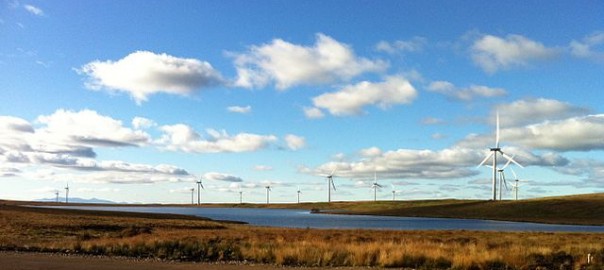
2015 saw the UK destroy its position as a climate and energy leader, and now faces some tough questions in the wake of a successful Paris climate agreement.
Despite a big year in 2014 which saw a number of renewable energy records broken and strong momentum created for the country’s renewable energy industry, following 6 months of baffling policy decisions and a lacklustre attendance in Paris, the UK has a long way to go if it is to accomplish its role in tackling climate change.
Read more: Clean Technica

If we don’t cut greenhouse gases, it’s not just storms and rising seas we’d have to worry about. The heat alone could kill a lot of us.

If greenhouse gas emissions are not reduced, rising temperatures and humidity wrought by global warming could expose hundreds of millions of people worldwide to potentially lethal heat stress by 2060, a new report suggests.
The greatest exposure will occur in populous, tropical regions such as India, Southeast Asia, the Middle East, and Africa. But even in the northeastern United States, as many as 30 million people might be exposed at least once a year to heat that could be lethal to children, the elderly, and the sick, according to the new study.
It’s the first study to look at future heat stress on a global basis, says Ethan Coffel, a PhD candidate in atmospheric sciences at Columbia University, who presented the results on Monday at the American Geophysical Union meeting in San Francisco. Coffel and his colleagues used climate models and population projections to estimate how many people could face dangerous heat in 2060—assuming that greenhouse gas emissions continue to rise sharply on a “business-as-usual” course.
Read more: National Geographic
Hedge fund manager and Kynikos Associates President, Jim Chanos was interviewed on CNBC on Thursday, and had a couple interesting (and uncharacteristic) observations worth noting.

The first being bullish on solar, but still maintaining a short position in Solar City (of whom Chanos says is not a tech company, but a finance company); despite the recent surge in PV stocks thanks to the pending 5 year renew of the 30% federal tax credit.
The second point of interest was a message to all the oil pumpers out there:
“I think if you were to look out five or 10 years, if I was a member of OPEC, I would be pumping as much as I could today while it’s worth something, because it might not be worth a whole lot by 2030.”
The reason? Electric vehicles.
Read more: Inside EVs
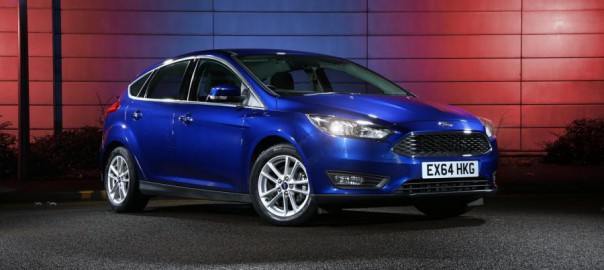
Ford will launch a Focus EV during 2016 – and add another 13 such cars within the next five years
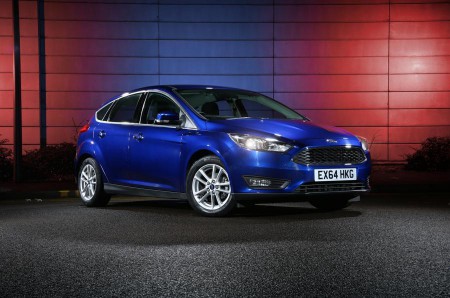
The only place to find an electric focus used to be your camera. But soon, Ford dealers will have them too.
During the next 12 months, the new Ford Focus Electric will go on sale. And it’ll be the first of many such cars, as Ford aims to be offering electric options across 40% of its product range by the end of the decade.
There’s already an electric Focus in the US. Its 143bhp motor is good for 85mph and a range of something like 100 miles on between two and three hours’ charge – but Ford says the new one will do much better.
Read more: Standard
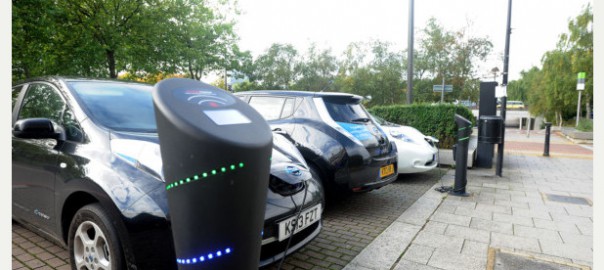
A global electric vehicle outlook report published in 2013 suggested that the goal of 15 countries that are part of the Electric Vehicles Initiative is to have 20 million electric vehicles on the road by 2020.

The report states that, as countries seek to address future energy requirements, achieving sustainable transport has emerged as an important mission. Electric Vehicles have emerged as one of the most promising solutions to increase energy security and reduce emission of pollutants.
Ford Motors‘ announced on December 10th that it will invest an additional $4.5 billion in electrified vehicle solutions by 2020 to answer the increasing global trends calling for cleaner and more efficient vehicles. Although the cars segment in North America along with Lincoln cars and SUVs accounts for less than 10% of Ford?s valuation, as per our estimates, focusing on trends which will drive the industry in future will ensure that Ford maintains its market share in this segment.
Read more: Forbes
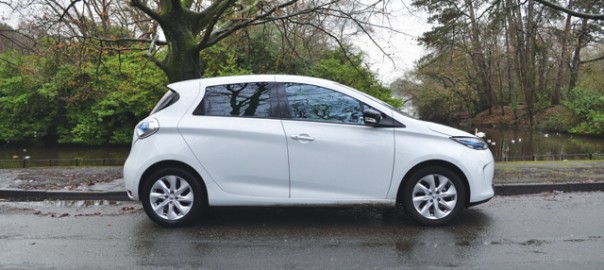
In the 29th Family Car of the Year Awards run by the Belgian automobile association VAB, journalist and family juries voted Renault ZOE R240 top in the electric vehicles category.

For the 2016 edition of its Family Car of the Year Awards, the Belgian automobile association VAB specified a 30-kilometre increase in the minimum “electric power” range required for vehicles in the “electric” category.
As well as running against other all-electric vehicles, Renault ZOE R240 was also competing with plug-in hybrid vehicles and electric vehicles with range extender.
With both juries (25 motoring journalists and 78 families) giving the car top ranking, ZOE R240 finished with 159 points in all, ahead of the Mercedes B250e (with 154 points) and Kia’s Soul (with 147).
The professional jury of motoring journalists praised ZOE’s “roomy interior, bold design and unbeatable price”, noting that “affordable pricing and long range are making Renault electric vehicles an attractive proposition for more and more people”. The family jury expected “a real breakthrough for ZOE R240, a truly affordable vehicle” and saw it as “an eminently practical choice of second vehicle, with its extensive equipment and large boot”.
The unofficial children’s jury appreciated “the neat bodywork, the smooth ride, the comfortable rear seats, and the pretty lights”.
Powered by the R240 unit, Renault ZOE boasts a range unparalleled in the all-electric segment: 240 km (NEDC standard), which is 30 km more than with the Q210 power unit. Renault engineers have improved the motor efficiency by optimizing the electronic control system. Higher efficiency means lower electricity consumption with no performance penalty.
The R240 power unit also brings a 10% reduction in ZOE’s charge time under most usage conditions. As well as extending the ZOE range, Renault engineers also upgraded the Caméléon charger to reduce the low-power charge time. The new Caméléon charger is especially efficient on charging stations from 3 to 22 kW, which account for more than 95% of the vehicle charging infrastructures currently in operation.
Source: Automotive World
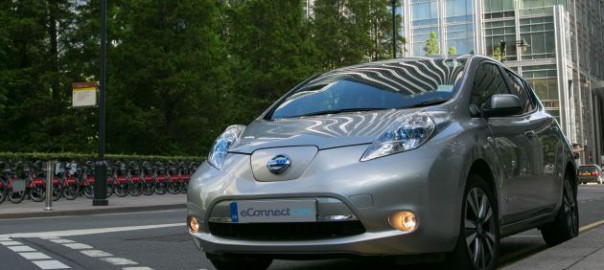
Back in September, I got on Nissan’s mailing list to be the “first to know” when the 2016 LEAF was released. I also asked a local Nissan dealer to contact me when it was available. Neither one contacted me.

One would think that the biggest update to the LEAF in 5 years would warrant a media fanfare. Yet, so far, Nissan has kept the 2016 LEAF release pretty much a secret.
When the new LEAF with 107 miles of range was announced, I was super excited. I’ve wanted an EV for 12 years, and the 2016 LEAF finally had the range for most of our trips at a price I could afford. Over on mynissanleaf.com, an owner in my area said Fontana Nissan had been great with his LEAF purchase back in 2011, so I emailed Fontana asking when the 2016 might be available. Their response? A form letter asking me to come down for a test drive.
I tried again, being as clear as possible that I was only interested in the date the 2016 would be released to market. This time I got a voicemail asking me to come down for a test drive. I had progressed to voicemail! Hurray.
Read more: Clean Technica