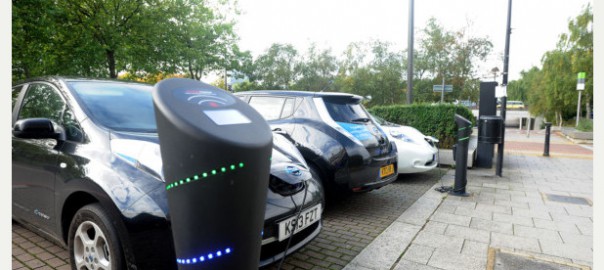
Novotel and Ibis hotels in the UK will this year begin installing electric vehicle charging points which will be available to guests free of charge.
The announcement was made by AccorHotels, a French hotel operator of nearly 3,800 hotels worldwide.
Accor is collaborating with Chargemaster on the installation, and says the power points will incorporate the latest technology enabling drivers to replenish their vehicle batteries – either 7kw or 22kw – in one hour. They can charge both 7-kilowatt and 22-kilowatt batteries.
Accor managing director for the UK and Ireland, Thomas Dubaere, said that AccorHotels recognises that some of its customers are embracing low-emission vehicles and, consequently, charging points would be installed at its affiliated premises across the UK.
London Heathrow Airport in the UK is set to install an additional 135 charging points capable of serving at least 260 electric vehicles in and around the airport.
The £2m (US$2.95m) investment has been announced alongside the release of a series of reports detailing Heathrow’s progress toward its 2015 ‘blueprint’ commitments to reducing airport noise, emissions and traffic. The airport currently has 21 electric vehicle charging stations in its short-stay parking garages that are free of charge for visitors.
John Holland-Kaye, chief executive, London Heathrow Airport, said,
“2015 saw us commit to a series of action plans that will make us a better neighbor, by reducing noise, emissions and traffic. Today we are providing an update on the very significant progress already being made, thanks to the commitment of the airport community. But we know that we need to do more, and in the coming months will set out even more ambitious plans that will make an expanded Heathrow the most environmentally responsible hub airport in the world.”
The reports provided a traffic light rating against each of the commitments published in the blueprints along with supporting commentary. The reports show that 70% of the pledges have been put into action and that the remaining 30% are in progress
Can you really have a big SUV and pay supermini running costs? The Mitsubishi Outlander PHEV is a plug-in hybrid that claims to do just that. Rebecca Jackson puts it to the test.
Mitsubishi happily announced another accolade for the Outlander PHEV, but this time the for 4Work van version captured the award.
Outlander PHEV GX3h 4Work
What Van? awarded the two-seat Outlander PHEV 4Work The Green Award.
What Van? Editor Paul Barker said:
“The Outlander 4Work PHEV is a trail-blazing model that was a natural choice for the What Van? Green Award, combining zero emission motoring and an absence of range anxiety. This technology is currently unique in the sector but gives businesses a flexible and cost-efficient way into more environmentally friendly operation.”
For Mitsubishi, it was an especially successful result as the conventional Mitsubishi L200 Series 5 picked up the accolade for The Light Commercial Vehicle of the Year and The Pick-up of the Year.
BMW is no stranger to electrification. The company put the world on notice with the launch of its innovative i sub-brand. But the lessons learned from the i3 and i8 aren’t limited to these small-volume cars. The more mainstream X5 xDrive40e impresses with lessons learned from i, all without compromising the SUV’s character.
BMW X5 xDrive40e (Image: B. Turkus)
The combination of a 2.0-liter, turbocharged four-cylinder engine with an electric motor is good for 308 overall horsepower and 302 pound-feet of torque. Sure, 240 hp and 260 lb-ft come from the four-cylinder engine alone, but the electric motor – integrated within the ZF eight-speed automatic transmission’s housing – chips in a maximum of 111 hp and 184 lb-ft of torque. The 9.2-kilowatt-hour lithium-ion battery can sock away enough electricity to drive up to 14 miles on a single charge and will recharge at your average 110-volt socket in about seven hours.
Of course, the battery pack and electric motor are a big weight penalty. At 5,220 pounds, the xDrive40e is 430 pounds heavier than the standard xDrive35i. Still, the gas-electric powertrain hustles this husky X5 40e to 60 miles per hour in just 6.5 seconds, less than half a second slower than the 35i. The stopwatch figures are complemented by the best fuel economy of any gas-powered X5, at 56 miles per gallon equivalent and 24 mpg combined. Only the diesel X5 xDrive35d is more efficient, at 27 mpg. But achieving top fuel economy in the 40e isn’t as simple as going easy on the throttle. Perhaps more than any vehicle we’ve tested recently, understanding how all the X5’s systems work together is crucial to eking out the most mpgs.
Vehicle dealership Vic Young (South Shields) has adapted a fully-electric Nissan e-NV200 Combi to offer full wheelchair accessibility.
Electric Vehicle Evolution (EVE) is based on the Nissan e-NV200 Combi, which has been customised by Northern Truck Bodies (NTB), the company’s specialist on-site conversion arm.
The conversion includes a vehicle ramp system, to ensure that the wheelchair user can access the vehicle with ease. EVE’s five standard passenger seats are retained even while a wheelchair user is on board.
Vic Young, managing director at NTB and Vic Young, said:
“EVE is an innovative and forward-thinking concept which meets the demands of service providers as it is a multi-purpose vehicle suitable for all passengers including those with reduced mobility.
“I have witnessed on many occasions how awkward it is for, say a taxi driver, to assist a passenger with mobility requirements to enter and exit a vehicle.
“Our concept eliminates this problem and once the wheelchair user enters the vehicle they will then travel on a low, flat floor, ensuring a high level of comfort for the passenger.
“We are confident that the EVE Nissan e-NV200 Combi will make a major impact in the region.”
The vehicle is aimed in particular at service providers including taxi firms, care homes, local authorities and charities.
We had a Kia Soul EV on our long-term test fleet in 2015, but I gave it a swerve because I assumed it wouldn’t fit well with my travelling needs.
My journey is a 43-mile drive from Teddington down the M3 to Basingstoke. So although Kia claims a potential range of 132 miles for the Soul EV, and we saw a ‘real world’ 110 miles or so during urban driving, I wasn’t so confident I’d experience that during constant 70mph motorway trips.
I admit it – I was anxious about range. This is because I have no way of charging at home. My parking space is inconveniently placed; although the Soul EV can be slowly recharged via a household plug, I would have had to park in a flower bed and crush my cyclamen to get close enough to the socket.
Just before the Soul EV left Autocar, however, I needed to satisfy my curiosity and find out whether it could handle a dreary motorway commute with the same zeal that made it our go-to car for short urban trips.
…
None of that is a slight on the Soul EV, which proved perfectly amenable during my trip. This EV gets my car of the year vote because it put to bed some of my concerns about the viability of electric vehicles on longer motorway journeys.
The oil cartel is living in a time-warp, seemingly unaware that global energy politics have changed forever
OPEC remains defiant. Global reliance on oil and gas will continue unchanged for another quarter century. Fossil fuels will make up 78pc of the world’s energy in 2040, barely less than today.
There will be no meaningful advances in technology. Rivals will sputter and mostly waste money. The old energy order is preserved in aspic.
Emissions of CO2 will carry on rising as if nothing significant had been agreed in a solemn and binding accord by 190 countries at the Paris climate summit.
OPEC’s World Oil Outlook released today is a remarkable document, the apologia of a pre-modern vested interest that refuses to see the writing on the wall.
The underlying message is that the COP21 deal is of no relevance to the oil industry. Pledges by world leaders to drastically alter the trajectory of greenhouse gas emissions before 2040 – let alone to reach total “decarbonisation” by 2070 – are simply ignored.
The Renault ZOE is unusual amongst electric cars in that it doesn’t come with a 13 Amp home charge lead as standard, a so-called ‘granny cable’. There are two likely reasons for this: firstly, the ZOE’s on-board Chameleon charger is less efficient at lower powers, which is the reason Renault insists on only funding higher power home charge points (32A rather than 16A). Secondly, it’s a simple fact that the ZOE’s 13A lead is rather pricey – at about £500 for the official Renault cable.
Unboxing the ZOE Type 2 charge cable (Image: T. Larkum)
I didn’t order one originally with my ZOE and for a long time was rather sceptical of the benefit of it (I guess ‘you can’t miss what you haven’t had’). It takes a long time to charge (8-10 hours), more than twice as long as the home charge point, so I could never see myself getting much use from it. However, bad experiences with using public charge points when away from home, particularly a fateful Christmas Day, changed my mind. I eventually bought one ‘just in case’ and have had some good use out of it when spending long periods with relatives, in particular while visiting parents and in-laws.
I bought mine from nuWorld Energy (trading then as nuCharge, now as ChargedEV). It is a standard Type 2 cable so as well as the ZOE it should fit most non-Japanese (i.e. non-Type 1) electric cars such as the Volkswagen e-Golf, BMW i3, etc. There were two options: 5m long for £372 or 10m for £414. I went with 10m to make it easier to reach a socket when visiting relatives, and also bought a storage bag. They claimed 5 working days for delivery, though I had to wait more than a month for mine due to supplier issues.
The cable turned out to be a Ratio Electric product; it has a Type 2 connector at the car end, a three-pin ‘13A’ plug at the house end, and a waterproofed electronics box a short distance from the house end. It has the flexibility of being able to charge at 6A, 10A or 16A, with the selection made by a button on the side of the electronics box. The cost of this flexibility is that you need to manually set your preferred charge rate (up to the level available from the socket you use). The ZOE appears to start charging at 6A but in fact the battery level never goes up – it needs to be set to at least 10A to work.
The Ratio Electric Type 2 granny cable and storage bag (Image: T. Larkum)
This means that sometimes you have to awkwardly plug in at the house end, plug in to the ZOE, then dash back to the house to select the 10A setting before it times out and tries to charge at the default of 6A. Another awkward thing is that the electronics box is rather heavy, so when using any socket a distance off the floor it hangs down and can exert a significant force on the plug.
However, despite these minor issues, it has never failed to charge when connected to a good supply, and I have no regrets about purchasing it. Further, the 10m length option – something not available from most suppliers – has been a godsend. It doesn’t just allow for reaching sockets that might otherwise be unobtainable, but also provides the simple convenience of charging on a drive while parked behind the homeowner’s car (and so not requiring it to be moved out the way).
I have now used the cable a number of times, and I intend to write further about it (and give more details of the rate of charge).
After the Great Smog of 1952 killed up to 12,000 Londoners, the country cleaned up its act. But today, pollution of another kind may be just as insidious – and almost as lethal.
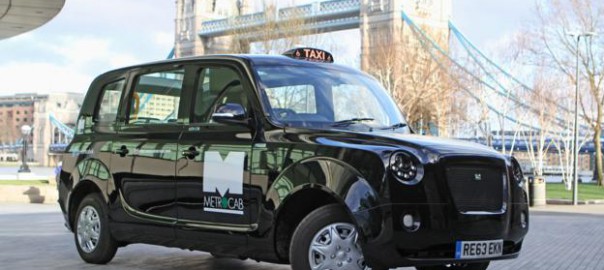
The release of the Metrocab, a battery-powered taxi capable of zero emissions, is one of the efforts to clean up the city’s transport (Image: Metrocab)
Imagine smog so thick that you can’t see your feet as you walk through it; so impenetrable that it blots out the sun; so toxic that it stings your eyes and leaves you gasping for breath.
It may sound like the backdrop to some post-apocalyptic nightmare, but on 5 December 1952, this terrifying scenario became the reality for the people of London. That day’s incident alone killed thousands and prompted a global transformation in the way we deal with air pollution.
On that cold, clear day in 1952, Londoners huddled around their coal fires for warmth. But while the smoke would normally disperse into the atmosphere, an anticyclone hanging over the region created an inversion – trapping the pollution close to the ground and leading to the formation of a sulphurous, toxic shroud that would blanket the capital for the next five days.
Before the weather conditions changed and the smog retreated, thousands had died. Official estimates at the time put the number of fatalities at 4,000 – more civilian casualties than were caused by any single incident during the war – while recent research suggests that it may have caused as many as 12,000 deaths.