All posts by Trevor Larkum

Kia Has Now Sold Over 10,000 Soul EVs Worldwide

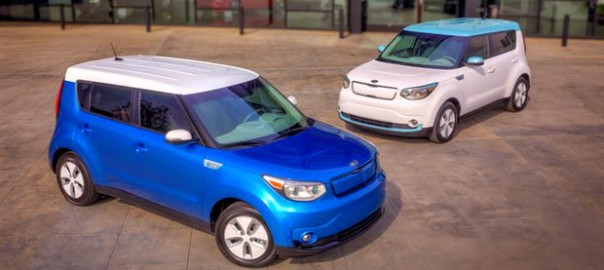
Since starting sales in April of 2014 through late January 2016, Kia has sold 10,210 Soul EV worldwide in less than two years.

8006_2015-Soul-EV_Kia-620_unk
The numbers remains low versus expectations, but have been accelerating of late, as the last 5,000 were sold in over five months.

Demand for electric Soul comes mainly from Europe:

  • 6,770 Europe
  • 1,580 South Korea
  • 1,411 U.S.
  • 449 other markets

Source: Inside EVs

Electric Cars Are The Only Solution For The Future

The Geneva Motor Show is ground zero for all things automotive for Europe, and a major launching pad for new offerings – plug-in or otherwise. So it was no surprise to see Nissan-Renault CEO (and Avtovaz Chairman) Carlos Ghosn making an appearance, and doing a little ‘show and tell’ with his company’s most recent hotness.

The IDS Concept (a 60 kWh, 200+ mile all-electric car that we feel is a thinly disguised look at the next generation Nissan LEAF), is one such European debut that Mr. Ghosn attended this week.

And while on hand, Ghosn made some comments about the future of the plug-in technology – what it means to Nissan, the automotive segment, and the fact that VW’s recent emission scandal has accelerated the urgency to convert to a plug.

Basically, the CEO says that ‘Dieselgate’ demonstrated you can’t trust anyone, and that we need zero emissions to get serious about saving the planet as ‘zero means zero’:

“Without any doubt, because it has attracted the attention on the fact that even though the regulators are trying to do their best to say what is acceptable, and what is not acceptable, in term of emissions, there will always be conditions that the regulators cannot regulate. So if you really worry about emissions, the only solution is the electric car because here you have zero emission, you have nothing to measure.

On top of this, as you know, COP 21 has lead to the conclusion that we cannot afford to have more than 2 degrees of heating of the planet 20 or 30 years down the road, and this means more zero emission cars”

Source: Bloomberg via Inside EVs

Drive like the wind: Electric Highway

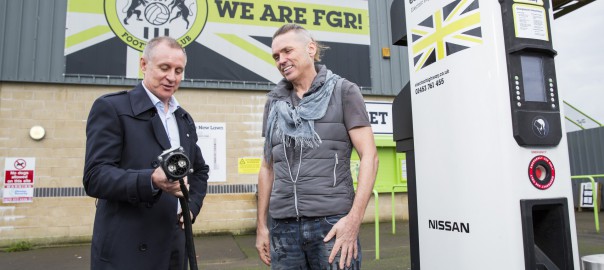
“Five years ago, it was said that one of the main reasons people weren’t buying electric cars was because of a lack places to charge them – and the main reason more places to charge weren’t being built was because not enough people were buying electric cars – classic chicken and egg stuff,” says Dale Vince, former new age traveller and outspoken founder of the world’s first green energy company, Ecotricity. “We decided to break that impasse.”

AG_SOUTHAUSTRALIA_VISIT_Ecotricity

Vince received an OBE from the Queen for services to the environment in 2004. In 2011, Ecotricity created the Electric Highway, the first national network of fast chargers in Britain. Free, compatible with all electric vehicles on the market, and powered by the wind and the sun, it is now the most comprehensive charging network in Europe.

Vince says:

“We built Britain’s first electric supercar, the Nemesis, in 2010 – we wanted to show the true potential of electric cars and demonstrate how we can get around without fossil fuels. We had to shake the old image of the electric car first. The next step was to tackle the infrastructure problem, which led us to conceive of the Electric Highway.”

With Ecotricity pumps covering the entire motorway network in Britain, as well as strategic A-roads, ports and airports, electric cars are now reality in Britain – as owners travel the length and breadth of the country, literally from John O’Groats to Lands’ End.

Vince started by installing essentially three-pin plugs on the British motorway network. These would take eight hours to charge a car. Fast forward five years and there are now multiple charging networks across Britain, but the Electric Highway still leads the way, with nearly 300 Electricity pumps across the British motorway network that can charge in as little as 20 minutes.

Every charge uses Ecotricity’s 100% green energy, from the wind and sun – enabling electric cars to reach their true potential, zero emission free driving. And it’s been completely free to use since 2011, to encourage more people to make the switch.

“Our work fits in perfectly with the target the whole world agreed to in Paris last year,” adds Vince, “to limit global temperature rise to 2 degrees or less. To achieve this, we simply must stop burning fossil fuels by 2050, and that requires nothing short of a revolution in the three biggest areas of impact – energy, transport and food. The revolution is already underway on British roads.”

Transport is currently one of the biggest contributors towards our personal carbon footprints, so the Electric Highway network offers a solution to one of the world’s greatest problems.

Source: Atlas of the Future

Severe Flooding, Against a Background of Wind Turbines: November 2012, Tyringham, Bucks. (Image: T. Larkum)

Do I need a bug out bag in the UK?

In case you were wondering. A bug out bag is typically a backpack containing enough items to sustain you for three days, or 72 hours. Thought by some, particularly Americans, as an essential item to have with you at all times. The reason for having a bug out bag is in case of natural or unnatural disasters. Or as some would call it. The zombie apocalypse.

Those that have bug out bags are often thought of as being ‘doomsday sayers’ or a bit strange. Particurly when you consider what Americans will include in their bug out bags. Which includes weapons for self defence.

Do I need a bug out bag in the UK?

But hang on a minute. Before we go down the ruling it out as a bit ott. Should we not consider our own situation in this country. The UK.

Severe Flooding, Against a Background of Wind Turbines: November 2012, Tyringham, Bucks. (Image: T. Larkum)
Severe Flooding (Image: T. Larkum)

Taking recent events and history in the UK as an example.

In the last couple of years we have been stuck in overnight traffic jams due to snow. Without electricity for three days. Stuck in a traffic jam for 7 hours because of a fatal accident. And more recently been flooded out of our homes. Admittedly, you don’t need to head for the hills and live like Grizzily Adams during these events, but just think how much easier our life’s would have been with a little preparation. The key is to think where you are most likely to be sent during an evacuation. The chances are that it will be a village hall or similar. It will also be more comfortable than trying to live in the woods. So it’s unlikely that you’ll need animal snares, knifes for skinning animals etc.

So do I need a bug out bag?

Perhaps not to the extent that the Americans go to. But I do think that a little common sense and a little forethought will help massively. Self reliance in such situations can make a very unpleasant situation tolerable. Think of a bug out bag not as a survival option for when the apocalypse comes, but more as a ‘comfort’ option, when you need to leave home quickly or get stuck in your car.

Read more: Midlife Crisis Man

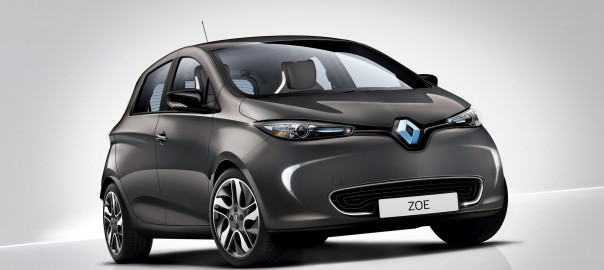
A limited-edition version of the Renault ZOE, with the focus on elegance

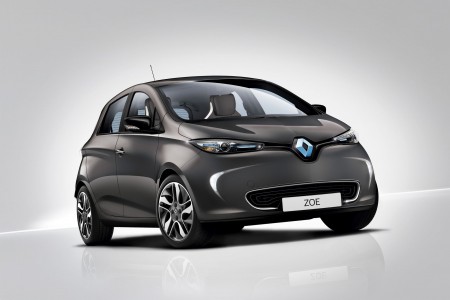
The ZOE Swiss Edition is a limited-edition addition to the catalogue of Europe’s best-selling electric passenger car. It targets customers who wish to benefit from the model’s environmental credentials and rewarding mobility while enjoying an exclusive touch of elegance, including particularly plush leather upholstery and a premium Bose® audio experience.
Renault_76238_global_en

The limited-edition Renault ZOE Swiss Edition will be released this summer in Switzerland and foreshadows the new high-end version of the model that will be available for sale in all the car’s markets from the last quarter of 2016.

A new body colour and new wheels for extra chic

In addition to the original’s sleek, fluid lines which are perfectly befitting of a modern electric city car, the ZOE Swiss Edition’s exterior styling has been enhanced by discreet, sophisticated embellishments.

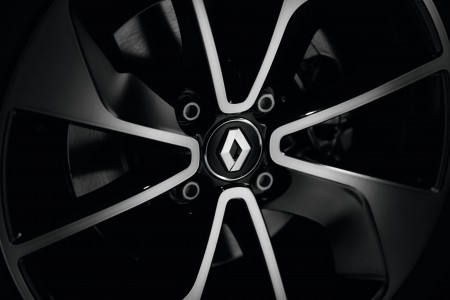
In addition to new 16-inch black Shadow diamond-cut wheels, practically all the existing body colours are available for the ZOE Swiss Edition which can also be specified with the brand new Yttrium Grey finish.
Renault_75972_global_en

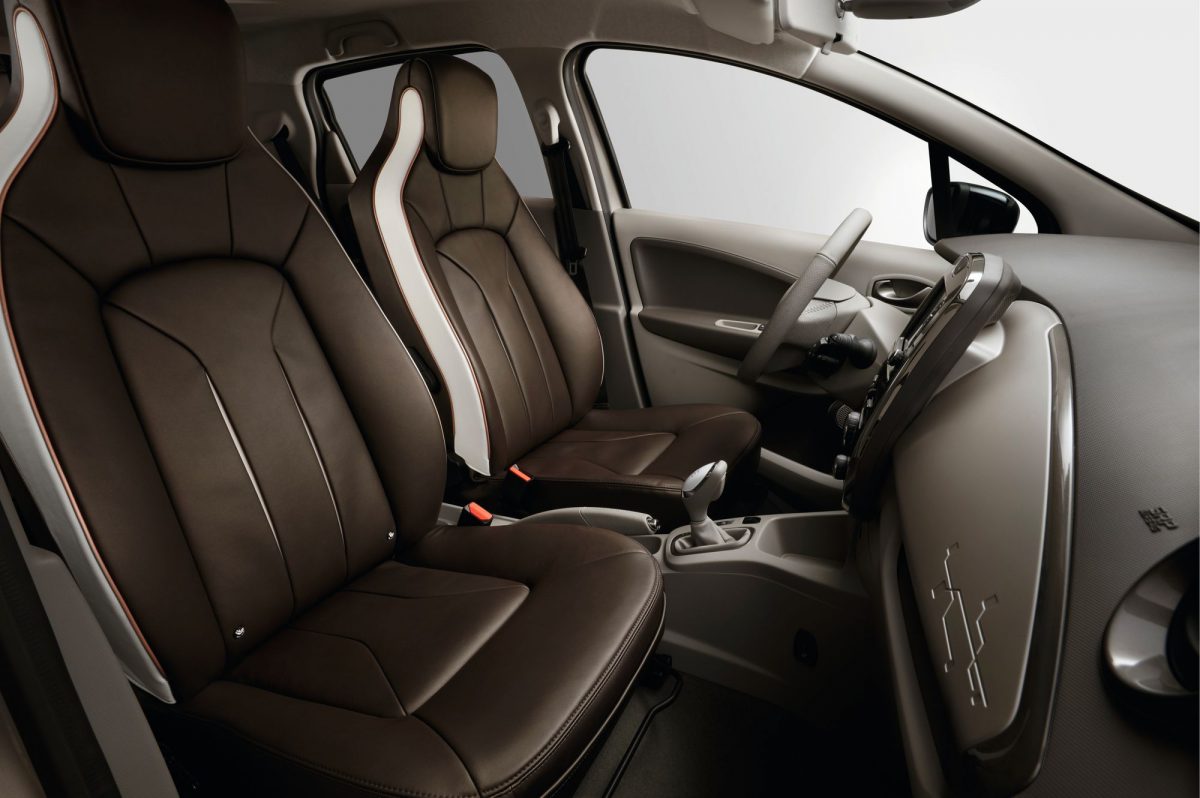
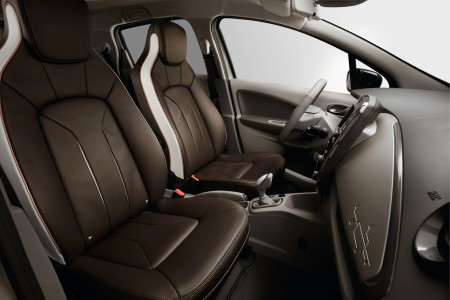
Outstanding leather upholstery, pleasing both to the eye and to the touch

The ZOE Swiss Edition’s upholstery uses only rigorously-selected hides of the finest quality. The seats are exceptionally plush, due notably to longer fulling of the leather compared with more conventional processes. The soft, natural feel of the skins is preserved thanks to the extremely high standard of their finish, while the use of varnish and other chemical agents has been halved in comparison with most leather upholsteries.
Renault_75977_global_en

The seats’ striking appearance stems equally from the leather’s Pailleté Brown finish and refined stitch work, including gussets on the cushions and seat backs, top-stitching, and hot stamped badging on the front head rests.

A cabin that oozes elegance and comfort

The rest of the ZOE Swiss Edition’s interior matches the standard set by its elegant upholstery.

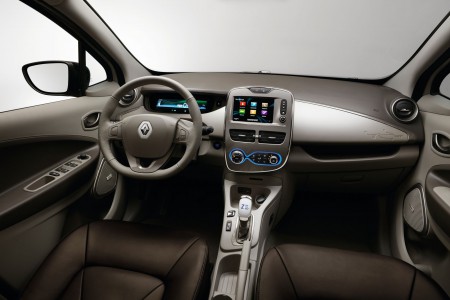
The dashboard features a soft-to-the-touch Metallic Fumé Grey finish and the same colour has been carried over to the air vent surrounds, R-Link console and door panels. The hand brake lever is trimmed in leather and the floor is protected by four thick braided velour carpet mats.
Renault_75979_global_en

The ZOE Swiss Edition takes care of occupant wellbeing too, including heated front seats with a choice of three temperature settings. The driver’s seat is also equipped with manual lumber adjustment to adapt the seat back to the driver’s build. Last but not least, the ZOE Swiss Edition comes with electrically folding door mirrors for additional peace of mind.

A silent ride to enjoy the purity of the premium Bose® audio system

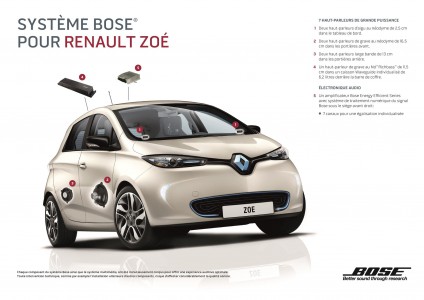
ZOE’s silent ride due to the absence of engine noise and vibrations inherent in electric vehicles means occupants can benefit fully from the Swiss Edition version’s Bose®-quality sound. The car’s premium audio system comprises six high-performance loudspeakers and a compact woofer which deliver every detail of original recordings.
Renault_75983_global_en

The two dashboard-mounted 2.5cm tweeters provide crisp, balanced sound which is backed up by the full, rich volume of the two neodymium bass speakers incorporated in the front doors and the two wide-range speakers fitted in the rear doors. The boot-mounted compact woofer contributes a deep, realistic low-frequency edge thanks to Bose® waveguide technology which reproduces the lowest notes with extreme clarity despite the woofer housing’s compact size.

Source: Renault press release
BNEF report ‘EVs 35% of Global New Car Sales by 2040’ is ridiculously conservative

The Bloomberg New Energy Finance report that came out last week (press release at bottom) says that in 25 years, electric vehicles will make up just 35% of new car sales.

That means that in a generation from now, 65% of people will still be buying petroleum-based cars. It is hard to imagine a world where this few EVs makes any sense, even given BNEF’s own data.

The report and the numbers it presents are much too conservative for any reasonable circumstance. Take its own lede for instance:

“Continuing reductions in battery prices will bring the total cost of ownership of EVs below that for conventional-fuel vehicles by 2025, even with low oil prices.”.

Why would anyone buy a gasoline car when an electric or even a plug-in hybrid costs less than a gas car? Electric cars are cleaner, quieter, faster and safer than equivalent oil cars. Keep in mind that 2040 is 15 years after the cost of an electric car passes parity with oil in their scenario. Furthermore, by Bloomberg’s own estimates, batteries will reach less than one-third of today’s break-even prices.

Read more: Electrek

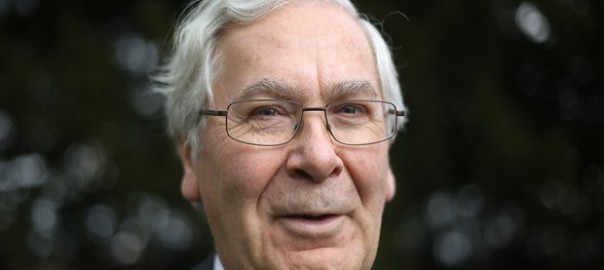
Mervyn King: ‘Failure to tackle the disequilibrium in the world economy makes it likely that a crisis will come sooner rather than later.’ (Image: Philip Toscano/PA)

New financial crisis is ‘certain’ without reform of banks

The former Bank of England governor says in his new book that imbalances in the global economy makes a crash inevitable

Mervyn King: ‘Failure to tackle the disequilibrium in the world economy makes it likely that a crisis will come sooner rather than later.’ (Image: Philip Toscano/PA)
Mervyn King: ‘Failure to tackle the disequilibrium in the world economy makes it likely that a crisis will come sooner rather than later.’ (Image: P. Toscano/PA)

Another financial crisis is “certain” and will come sooner rather than later, the former Bank of England governor has warned.

Mervyn King, who headed the bank between 2003 and 2013, believes the world economy will soon face another crash as regulators have failed to reform banking.

He has also claimed that the 2008 crisis was the fault of the financial system, not individual greedy bankers, in his new book, The End Of Alchemy: Money, Banking And The Future Of The Global Economy, serialised in The Telegraph.

“Without reform of the financial system, another crisis is certain, and the failure … to tackle the disequilibrium in the world economy makes it likely that it will come sooner rather than later,” Lord King wrote.

He added that global central banks were caught in a “prisoner’s dilemma” – unable to raise interest rates for fear of stifling the economic recovery, the newspaper reported.

A remark from a Chinese colleague who said the west had not got the hang of money and banking was the inspiration for his book.

Lord King, 67, said without understanding what caused the crash, politicians and bankers would be unable to prevent another, and lays the blame at the door of a broken financial system.

He said: “The crisis was a failure of a system, and the ideas that underpinned it, not of individual policymakers or bankers, incompetent and greedy though some of them undoubtedly were.”

Spending imbalances both within and between countries led to the crisis in 2008 and he believes a current disequilibrium will lead to the next.

To solve the problem, Lord King suggests raising productivity and boldly reforming the banking system.

He said:

“Only a fundamental rethink of how we, as a society, organise our system of money and banking will prevent a repetition of the crisis that we experienced in 2008.”

Lord King was in charge of the Bank of England when the credit crunch struck in 2007, leading to the collapse of Northern Rock and numerous other British lenders, including RBS, and has been criticised for failing to see the global financial crisis coming.

Source: The Guardian

Electric car drivers can ‘fill up’ at most motorway service stations (Image: RAC)

Charge points at most motorway service stations

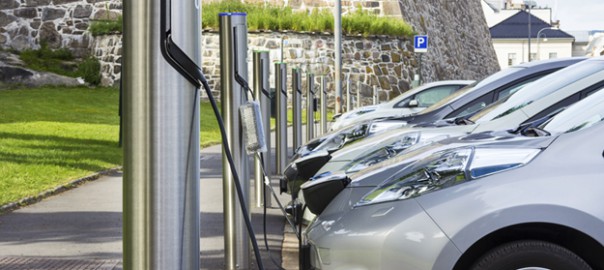
Seventy service stations on England’s motorway network now have electric vehicle charge points.

Electric car drivers can ‘fill up’ at most motorway service stations (Image: RAC)

This equates to 72% of the 97 total.

Of the 165 individual charge points, 92% are rapid, allowing batteries to be almost fully replenished in around 30 minutes.

RAC Foundation analysis of data from the publicly available, government established, National Charge Point Registry shows that an electric vehicle driver will now be no more than 20 miles from a service station charge point on 98% (1,831 miles out of 1,859 miles) of the motorway system in England.

When the analysis is broadened out to the whole of the Strategic Road Network managed by Highways England – not just motorways but also major A roads – then 82% (3,845 miles out of 4,668 miles) of the system is within 20 miles of a charge point.

Read more: RAC Foundation

Naomi Oreskes (Image: Harvard University photographer Claudio Cambon)

Climate Change: We’ve Blown It… But Pessimism Is Not Acceptable

In 2000, Naomi Oreskes, a geologist by training, was working at the Scripps Institute for Oceanography in San Diego, an organization with a long history of climate change research.

Naomi Oreskes (Image: Harvard University photographer Claudio Cambon)

“All the scientists around me spoke about climate change as if it were a settled matter. Proven scientifically. Manmade,” recalls Oreskes, a renowned Harvard professor specializing in the history of science. “Yet I noticed that in the media, the issue was reported as if there were a big debate over whether it was even real. That contrast led me to the work I published in 2004.”

Oreskes, whom The New York Times has called “one of the biggest names in climate science,” did what any interested party could have done then, but didn’t. She counted the scientific papers on climate change — 928 at the time — and determined that not one disagreed: all found that climate change was real, underway and manmade. She exploded the myth that any debate existed. The media took notice; and she, of course, came under attack from climate science deniers.

Read more: Pulitzer Center