All posts by Trevor Larkum

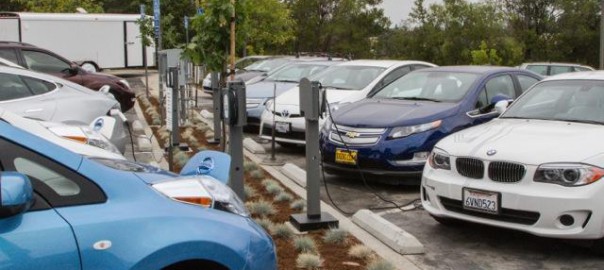
Electric charge point CMK (Image: One MK)

Number of electric vehicles in Milton Keynes triples

The number of electric vehicle (EV) users in Milton Keynes has tripled over the summer.

Electric charge point CMK (Image: One MK)

In January 2016, Milton Keynes Council was awarded Go Ultra Low City status which through funding support from central government for infrastructure is designed to increase the use of EVs in the city. The number has now increased from 220 in July to 661 by the end of September.

Milton Keynes has more than 170 standard and 56 rapid charging points, with more being installed in the near future.

July saw the launch of the new ‘Green Parking Permit’ for ultra-low EVs which allows them to park for free in purple bays, the red/black employee spaces (Mon-Fri) and in the specified EV spaces. To date, the council has issued 157 permits.

The Green Permit is free if your vehicle fits the criteria of producing 75g/km or less of CO².

Chargemaster, who run the vehicle charging points across MK, has recorded a four-fold increase in their usage.

These latest figures indicate that EVs are becoming more popular in MK and less of a niche choice by motorists.

Cllr Liz Gifford, cabinet member for transport said

“These latest stats are very encouraging and show that people are turning more and more to electric vehicles.”

“It’s important to us to reduce our carbon footprint as much as possible and these ultra-low vehicles are the way to do just that.”

David Martell, chief executive of Chargemaster PLC, the operators of the Milton Keynes charging network commented:

“The policies of Milton Keynes Council encouraging electric vehicles are clearly working. By having a high quality network of charging points, low cost electric charging and with free parking in many areas Milton Keynes is a great place to own an EV.

“In addition, the new initiatives under the Milton Keynes Go Ultra Low plans will keep this momentum going helped by many new electric models coming along from key manufacturers like VW, BMW, Jaguar and Audi. This all bodes well for a high proportion of electric vehicles in Milton Keynes over the next decade which will keep emissions low and air quality at a high level.”

Read more: One MK

f

Workplace charging (Image: J. Kalb/Plug In America)

£35 million boost for ultra low emission vehicles

Funding committed to low emission taxis and motorbikes, plus more chargepoints for workplaces and residential streets.

Workplace charging (Image: J. Kalb/Plug In America)

A major £35 million package to boost the uptake of ultra-low emission cars and scooters was unveiled by Transport Minister John Hayes today (13 October 2016).

The fresh funding commitment will see thousands more electric vehicle chargepoints installed on streets and at workplaces across the UK – after the number of new ultra low emission vehicles registered rose by 250% in just 2 years.

The government is also buying 2 brand new Nissan LEAF electric cars for the Government Car Service – on top of 4 that are already in use.

The vehicles are built at the Nissan motor manufacturing plant in Sunderland – a symbol of our world-leading automotive industry which the government is committed to supporting.

The announcement is part of the government’s plans to improve air quality, and it comes as Defra launch a new consultation on introducing clean air zones in Birmingham, Leeds, Nottingham, Derby and Southampton by 2020 – delivering on the government’s commitment to create cleaner air and reduce emissions.

Transport Minister John Hayes said:

No matter what mode of transport you need – a scooter to get to work, a car or a van to run your business – we are here to help you do it with zero emissions.

The number of ultra-low emission vehicles on our roads are at record levels and new registrations have risen by 250% in just over 2 years.
We are committing £35 million to help install new chargepoints and offer new grants as we aim for nearly all cars and vans on our roads to be zero emission by 2050.

The funding announced today includes:

  • next steps of a £20 million competition that will help councils roll out chargepoints for ultra-low emission taxis
  • up to £10 million funding for chargepoints outside workplaces and homes where there is no off-street parking
  • launch of an initial £3.75 million scheme to encourage uptake of zero emission motorcycles and scooters
  • £2 million awarded to public and private sector organisations to deploy hydrogen fuel cell vehicles

Plans for an electric car charging point in every new home in Europe

Car manufacturers welcome plans by the EU to boost the convenience of electric cars by increasing recharging facilities

Every new or refurbished house in Europe will need to be equipped with an electric vehicle recharging point, under a draft EU directive expected to come into effect by 2019.

In a further boost to prospects for the electric car market in Europe, the regulations due to be published before the end of the year state that by 2023, 10% of parking spaces in new buildings in the EU zone will also need recharging facilities.

The EU initiative is intended to lay the infrastructure for the sort of electric car boom envisaged by Norway and the Netherlands, which both plan to completely phase out vehicles with diesel engines by 2025.

As well as extending the driving range and convenience of electric cars, the mushrooming number of recharge stations would allow vehicles to feed their electricity back into the grid.

That in turn would open the door to a futuristic world in which cars supply energy to Europe’s power network at all times of the day and night, balancing shortfalls from intermittent renewable energies when the sun is not shining and the wind not blowing.

“This kind of market stimulus is not just positive, it is mandatory if we want to see a massive rollout of electric vehicles in the near future,”

said Guillaume Berthier, sales and marketing director for electric vehicles at Renault, which recently unveiled an electric vehicle with a 250-mile range.

“The question of how you recharge your car when you live in an apartment within a city is a very important one.”

Read more: The Guardian

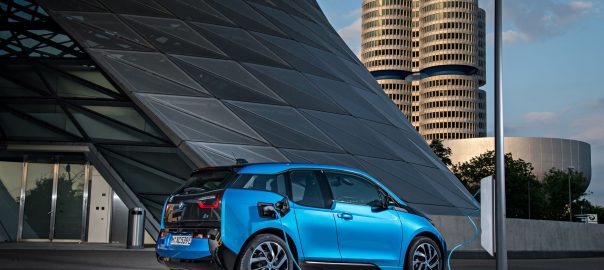
BMW i3 94Ah

German Lawmakers Vote to Ban the Internal Combustion Engine

The modern internal combustion engine first came from Germany and now Germany wants to put a nail in its coffin. The Bundesrat has passed a resolution to ban the ICE beginning in 2030.

BMW i3 94Ah
BMW i3 94Ah

[10/8/16] Germany’s Spiegel Magazin reported this morning that the country’s top legislative body was able to reach a bi-partisan agreement that hopes to allow only zero-emission vehicles on EU roads in 14 years. For the resolution to be instituted across Europe, it will have to be approved by the EU. But according to Forbes, “German regulations traditionally have shaped EU and UNECE regulations.”

Greens party lawmaker Oliver Krischer told Spiegel,

“If the Paris agreement to curb climate-warming emissions is to be taken seriously, no new combustion engine cars should be allowed on roads after 2030.”

The resolution calls on EU automakers to “review the current practices of taxation and dues with regard to a stimulation of emission-free mobility.” Creating a tougher tax burden could encourage manufacturers to push electric vehicles into production sooner, rather than later.

While larger approvals will still need to go through the legislative process, the fact that the country with the fourth-largest auto industry in the world is spearheading such sweeping change is a big sign of where we’re headed. It’s a road paved with slow-moving politicians making incremental changes and hoping the industry will warm up to the idea of not killing us all.

Source: Gizmodo

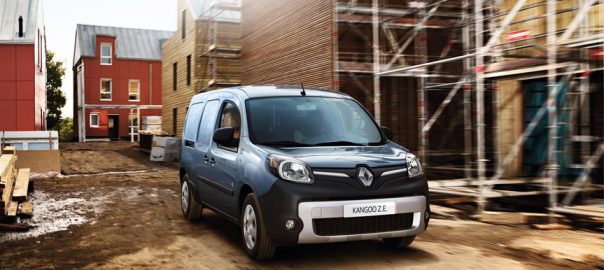
Kangoo Z.E. 2017 electric van (Image: Renault)

New Renault Kangoo Z.E. van to add 50% more range

  • Renault Pro+ is to present the all-electric New Kangoo Z.E. on 13 January at the 2017 European Motor Show in Brussels, Belgium.
  • Renault Pro+ will equip the latest Kangoo Z.E. with a new motor and battery package that will increase the model’s driving range by more than 50 per cent, from 106 miles (170km) to 168 miles (270km) NEDC. That is equivalent to 124 miles (200km) in real world driving conditions.
  • The New Kangoo Z.E. will offer the longest available driving range in the small van market.
Kangoo Z.E. 2017 electric van (Image: Renault)

The Kangoo Van Z.E. is a completely practical solution for environmentally-conscious business customers who have praised the driving enjoyment it delivers, as well as its carrying capacity and competitive operating costs.

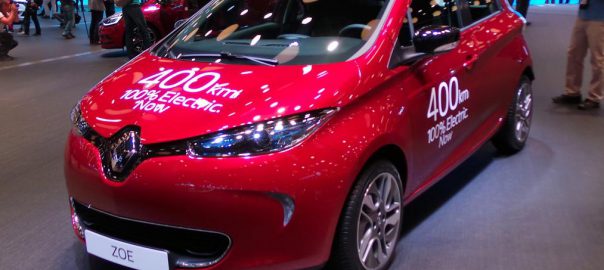
This announcement to increase the range on Kangoo Z.E. follows on from Renault recently launching at the 2016 Paris Motor Show the New Renault ZOE available with a new Z.E.40 battery that increases its NEDC driving range to 250 miles (186 miles in real world driving conditions) – the longest of any mainstream electric car.

Renault is Europe’s leading manufacturer of both all-electric LCVs and passenger cars.

More information about the New Kangoo Z.E. will be provided on 13 January 2017.

Renault ZOE Z.E.40

The End of an Era (Renault ZOE 2015)

I heard the news from Renault in about the middle of December that there were just 11 of the Renault ZOE ‘Dynamique Nav’ still in ‘stock’, i.e. available to sell across the UK dealer network or in Renault’s south coast import yard. That is the 2015 model of the ZOE, the one with the 22kWh battery and the Renault motor (so with 80-100 miles of range). It is effectively the definitive model of the Renault ZOE so far.

Well I learned today that all stock has been sold – there are no more new 2015 ZOE’s available to order from stock anywhere in the UK (there is just one example of the lower ‘Expression’ model remaining in stock, but that model doesn’t get PCP support from Renault so has never been popular or successful – it represents something like just 1 in 20 of ZOE’s sold). What remain at dealers are just the few ZOE’s that have already been ordered (e.g. on ‘spec’ by a dealer, or cancellations) and we are currently tracking down the last ones for keen customers.

So the Renault ZOE as we have known it in the UK is no more. From now on all new orders taken will be for the 2017 model ZOE – the Renault factory in Cléon retooled to manufacture this model during last autumn and deliveries are due to customers from February/March.

Renault ZOE Z.E.40
Renault ZOE Z.E.40

Virtually all new orders will be for the long-range Z.E. 40 (41kWh) ‘Dynamique Nav’ and ‘Signature Nav’ models as, again, the new ‘Expression’ model (which only comes in the old short-range 22kWh form) gets so little PCP support that it is unlikely to sell in meaningful numbers in the UK.

I see this, then, as the end of an era. From now on the Renault ZOE will – in any meaningful sense – only be available in Z.E. 40 form. Renault have ditched sub-100 mile EVs (except, perhaps, on paper) and from now on will only produce 200 mile* EVs. That is a major milestone in the development of European EVs with meaningful ranges.

The king is dead – long live the king!


*well, 180-190 miles so close enough to 200 miles to count!

Renault has handed over the keys to its 100,000th electric car, a ZOE (Image: Renault)

Renault Hands Over the Key to its 100,000th Electric Vehicle

[From 13 September 2016]

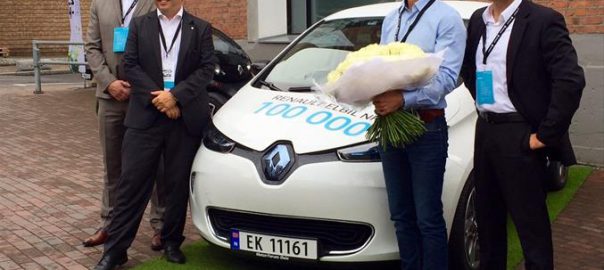
  • Renault has handed over the keys to its 100,000th electric car, a ZOE, in the Norwegian capital of Oslo, today
  • A pioneer of all-electric vehicles, Renault is the European leader with 27% market share for electric cars

Five years since the launch of its first electric vehicle, Renault has handed over the keys to its 100,000th electric car customer.

The Renault ZOE – the brand’s all-electric supermini – was sold to 41 year old Norwegian, Mr. Åsmund Gillebo. To truly complement his purchase of a ZOE, he has been presented with five years of Fortim recharging and 100,000 minutes of recharging time from Grønn kontakt, two local energy suppliers.

Renault: the European leader for electric cars

Renault has handed over the keys to its 100,000th electric car, a ZOE (Image: Renault)

In the first half of 2016, Renault sold more than 15,000 electric vehicles (excluding the Twizy), an increase of 32% on the previous year. This success confirms Renault’s status as the European market leader, especially for LCV. Indeed, on European roads, one in every four electric vehicles is a Renault. In France, half of all electric cars are Renaults. Renault’s main markets for electric cars are France, Norway, the UK and Germany. In the UK, Renault Z.E. sales grew to 1,199 in the first half of 2016 – an increase of 26.1 per cent. Of this, 1,069 of the vehicles were the all-electric ZOE – a 39.4 per cent increase on the first six months of 2015. Since the launch of its Z.E. vehicles in the UK in 2011, Renault has sold 5,977 electric vehicles to date comprising of Fluence, Kangoo Van Z.E, Twizy and ZOE.

Eric Feunteun, Director of Renault’s Electric Vehicle Division, said:

“Every year there are more customers for electric cars and Renault is making a major contribution to this with its constant innovation and dedication to developing infrastructure. Our customer satisfaction, which stands at 98% for the ZOE, encourages us to keep pushing onwards”.

Renault boasts the most comprehensive range of 100% electric cars on the market, enabling it to meet a variety of needs. The range is made up of the compact ZOE city car, the Kangoo Van ZE, the compact urban two-seater Twizy (and its utility version, the Twizy Cargo), and the stately saloon the RSM SM3 ZE (the best-selling electric vehicle in Korea).

The ZOE, the best-selling electric vehicle in Europe, dominates the market for electric private cars with over 23% market share. The Kangoo Van ZE, the leading electric LCV in Europe for the third year running, sets the benchmark for professionals and has won a number of tenders, including the French Post Office, and the French electricity provider ERDF in Norway. Lastly, with 17,000 models sold, the Twizy is the trailblazer for new ways to get around all over the world, and is extremely popular in car-sharing initiatives in both Europe and North America.

Renault, a key player in electric innovation

With cutting edge electrical technology, proven by its performance in Formula E, Renault is naturally winning over an increasing number of users. Since it began its electric adventure Renault has adopted a global strategy for electric mobility, and the development of infrastructure in particular. Renault is involved in a number of projects to install public recharge points, working with public bodies and other players in electric mobility like energy technicians. There are currently over 100,000 public recharge points around the world, 80,000 of which are in Europe, and they are constantly growing in number. As an example, Renault supports European Commission projects for the TEN-T fund (Trans European Transport Network), which has installed over 2,300 quick charge terminals along highways and major roads in over 15 countries.

In the UK, the ZOE has won numerous awards including What Car?’s ‘Best Electric Car Under £20,000’ for three consecutive years and was most recently voted second in the 2016 Auto Express Driver Power vehicle ownership survey out of 183 cars – Renault’s best ever ranking in the survey for one of its vehicles.

Source: Renault

BMW i3 REx range extender 94AH 2016 (Image: AutoExpress)

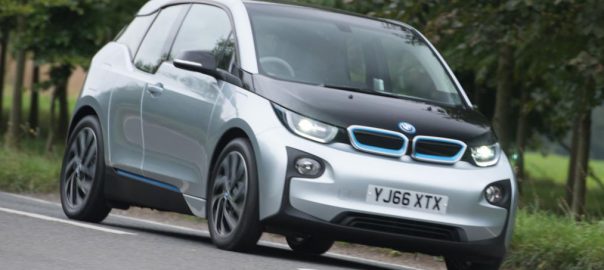
BMW i3 94Ah Range Extender 2016 review

The updated BMW i3 is better than ever and this Range Extender makes range anxiety a thing of the past

BMW i3 REx range extender 94AH 2016 (Image: AutoExpress)

Verdict: 4 stars

The BMW i3 is a more compelling proposition than ever thanks to its bigger battery pack and improved range. The pure EV version will cost pennies to run, but it’s this REx model that steals the show. Unlike conventional plug-in rivals like the VW Golf GTE, the i3 offers a truly usable electric-only range, allowing you to feasibly avoid using the petrol engine at all. Added kit like DC charging should make it even easier to live with, too.

In a world of increasingly stringent emissions regulations, more and more buyers are considering the purchase of an electric vehicle. Range anxiety remains a problem, however, with many worried about simply running out of juice.

BMW thinks it has the answer. By fitting a denser 94Ah battery pack to its funky looking i3, engineers have almost doubled the car’s all-electric range. Now capable of up to 195 miles, the BMW i3 is more than suitable for the average daily commute.

But what if that’s not enough? What if the thought of being stranded at a motorway service station without access to a plug still terrifies you? Handily, bosses have seen fit to add the bigger battery to the Range Extender model, too.

The thing is, it’s not actually any bigger. The 94Ah battery slots into the same space as the old unit – meaning this new model is only marginally heavier than the outgoing car. BMW says it’ll do 288 miles on a single charge and full tank of fuel, charging from empty to 80 per cent full in only 40 minutes.

That super-fast charge time is thanks to the fact that all i3s now get DC Rapid Charge as standard. It’ll still allow you to top up from a standard three-pin wall socket, although that’ll take around 10 hours.

On the road, the i3 drives just as it did before. It has the same playful handling as we’ve grown to expect from a BMW, while the rear-wheel propulsion gives it a sporting edge often missing on competitor cars. The two-cylinder engine feeds the batteries rather than being directly connected to the wheels, meaning you’re never driving solely on petrol power. It’s whisper quiet, too, ticking away in the background without you even noticing.

As a result, the BMW i3 always benefits from the electric motor’s instant torque. It offers pleasing acceleration (0-62mph takes 8.1 seconds) – with the ability to surprise some supercars off the line. It tails off at motorway speeds, but still feels comfortable at 70mph.

Read more: AutoExpress

Hyundai Ioniq Electric Handover (Image: T. Larkum)

Hyundai IONIQ Electric Delivery

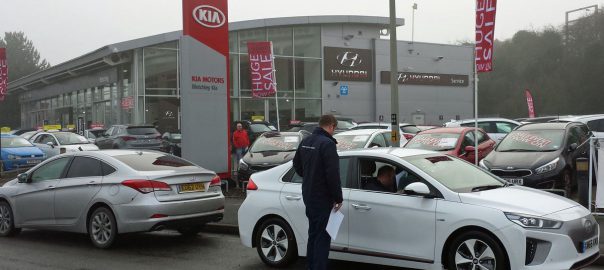
I had the pleasure last Friday to attend the delivery of one of the UK’s first Hyundai Ioniq Electric’s to my friend and colleague Trevor Heale. I have to say I was impressed with the Ioniq Electric in the flesh.

Hyundai Ioniq Electric Handover (Image: T. Larkum)

Not only did it look good, but it had an impressive list of equipment including automatic cruise control, blind spot warning, electrically positioned driver’s seat, and so on.

Hyundai Ioniq Electrc (Image: T. Larkum)

The handover was lengthy but thorough and Patrick at Bletchley Hyundai did a good job of explaining most of the car’s features despite a lack of documentation from Hyundai HQ.

A Happy Trevor and his Hyundai Ioniq (Image: T. Larkum)

I have no doubt that Trevor will enjoy his Ioniq. He has promised to tell us about his experiences with it and we look forward to publishing his blog posts here soon.

[Update: Trevor’s first post is here]

[Update 2: We have uploaded a video here: https://www.youtube.com/watch?v=oZevl6nzimk]

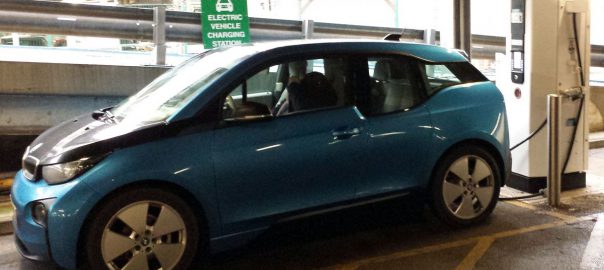
i3 charging at Frimley Hospital (Image: T. Larkum)

Rapid Charging at Frimley Park Hospital

[Part 1 is here]

As expected we got most of the way to our destination in Surrey without having had a chance for a proper rapid charge. The plan was to charge at Frimley Park Hospital, and if that failed to go to Church Street car park in Fleet. Driving an EV long distance is all about having a plan and a backup plan!

i3 charging at Frimley Hospital (Image: T. Larkum)

We needn’t have worried – Frimley turned out fine, eventually. We knew the charge point was in the covered part of the (very large) car park and found it pretty easily. However, things did then get a bit tricky. Zap-map indicated that there were two CCS-capable charge points there, with one of them offline. In fact there was only one (the other charge point could only do AC and Chademo) and it was showing an error on the screen; naturally I was worried that this was actually the offline unit.

I cancelled the apparent charge session and re-initialised it (just following instructions on the screen) and it seemed to clear. I started a new session using my Polar RFID card (it’s a CYC charge point, but CYC is now part of Polar). When I first connected the i3 and began a charge, however, it only lasted about a minute, and then stopped with an error on the dash. Anyway, I persisted and the second time it worked fine.

We were fully charged about 45 minutes later – that was longer than I expected, particularly as we plugged in with 32% charge, so that implies to me that the charge point may not have been giving its full 50kW power (perhaps as a result of the initial failed charge?). Nonetheless, it’s hard to complain when the charge was free, and even £3 for the parking seemed reasonable as we were able to pass the time sitting in the nearby hospital cafe with a cup of tea and a slice of cake.

The charge issues and long charge time notwithstanding, it was a pretty good experience and I’m sure we’ll use Frimley again. We left with 99% charge and had enough not just to get to Surrey but to show off the i3’s acceleration a few times while there, and then return all the way back to Northampton without a further charge. Hats off to the i3 once again!