All posts by Trevor Larkum

Mercedes B Class Electric

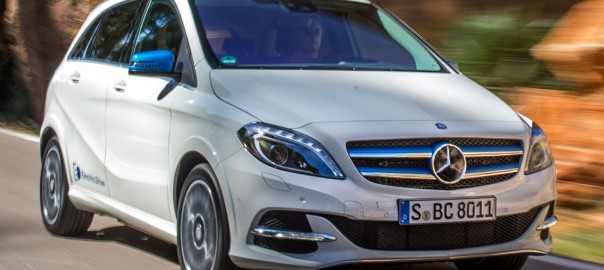
Mercedes-Benz B-class Electric Drive first drive review

Exceptionally refined with punchy overtaking abilities and impressive ride and handling. Premium driving experience at expense of ultimate usability

What is it?

This is the Mercedes-Benz B-class Electric Drive, the manufacturer’s pure electric version of the newly facelifted B-class.

Rather than follow the lead of the BMW i3 and build an electric car around an all-new architecture, this EV is based on the standard production car, which has needed the minimum of amount engineering changes.

Taking inspiration from the original A- and B-class models, the new-generation car has the option of a ‘sandwich’ version of the rear half of the car’s platform.

Called the ‘Energy Space’ by Mercedes, raising the floor in the rear half of the cabin frees up underfloor space, which, in the EV, accommodates the lithium-ion battery pack. This space is also used by the natural gas-powered version of the B-class to accommodate three gas tanks.

The upshot is that the B-class is as effectively as spacious as the mainstream versions, which means a good 500-litre boot, generous head and legroom and the option of a fold-forward front passenger seat, which allows loads well over two metres long to be swallowed.

The electric drive system has been sourced from Tesla (interestingly, the day this production car was launched to the press was same day Daimler disposed of its four per cent stake in Tesla, which it had held since 2009).

The B-class Electric Drive has a three-mode operation. Economy Plus – designed for constant steady-speed journeys – reduces the output of the motor to just 83bhp and top speed to 68mph. Economy reduces output to 132bhp and Sport offers the motor’s full 179bhp. However, the two Economy modes can be overridden and full power and torque accessed by the driver using the kickdown function.

If the ‘Collision Prevent Assist Plus’ system is added as an optional extra, this B-class acquires a very neat radar-assisted recuperative braking system. Using information from the radar about the state of traffic ahead, the car can use battery-charging braking to slow itself or, when the road ahead is clear and/or downhill, switch to ‘sailing mode’ which doesn’t use any battery power.

Fully recharging the B-class via a 16-amp home wall socket will take around nine hours if the battery is empty. Using a 400-volt three-phase electricity supply (rather more common in Asia than Europe), the car can be recharged in just three hours.

What is it like?

Very impressive indeed. In terms of all-round refinement and pace, the electric B-class is far better than its internal combustion engine sister cars. Indeed, the car’s effortless torque and near-silent progress puts it in a category of its own.

This car has the refinement that would shame some luxury models and the kind of effortless overtaking ability that would trouble some hot hatches.

What’s most disorientating is that these two sides of motoring excellence are delivered in a humble-looking baby MPV. It’s hard to work out why, but even the steering response and ride quality of the electric B-class is markedly better than what we experienced with the all-wheel-drive B220 and the gas-powered B200.

On the wider issue of the facelift, there’s no doubt that B-Class looks much better. The somewhat melted appearance of the original version has been fixed thanks to a much more taught front bumper design and wheels that now properly fill the arches.

It’s also a handy size, well-packaged and nicely finished inside. The big, tablet-sized screen on the dashboard might look a little clunky, but is ideally placed and the graphics and presentation of Mercedes-Benz’s sat-nav system is first rate.

Should I buy one?

There’s no doubt this is a delightful car to drive, genuinely enjoyable and satisfying. The downside, of course, is the limited range of the electric B-class and – without a supply of industrial three-phase electricity – the lengthy recharge time.

True, being able to replenish the battery overnight would be fine for anybody whose daily mileage is less than 100 miles.

The price of this car (post government grant) is just about that of a B220 diesel with an automatic transmission. In terms of driving pleasure it is leagues ahead.

As odd as may seem, any lover of driving ability will love the B-class, regardless of its market position as a truly ‘green’ MPV.

Source: Autocar
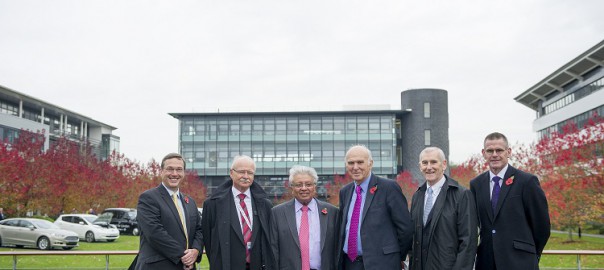
Cable opens Cleaner Vehicles Centre (image: Warwick.ac)

Cable opens Cleaner Vehicles Centre

Business Secretary Vince Cable has announced further funding of £32 million for two new projects to research electric motors manufacturing technology for electric vehicles and develop cleaner internal combustion engines, during a visit to officially open the Advanced Propulsion Centre (APC) headquarters at the University of Warwick.

The two new projects are led by Jaguar Land Rover. They will be part of the projects announced this year that will safeguard 2,500 jobs, in the £1bn industry and government commitment to turn low carbon propulsion technology into products developed in the UK.

The APC projects committed so far will reduce CO2 emissions equivalent to the output of 250,000 cars per year over the next decade.

Business Secretary Vince Cable said:

“Green technology will drive the cars of the future and UK designers and manufacturers must continue to be leading innovators in this field. That’s why we’ve collaborated with industry to provide £1billion joint investment in the Advanced Propulsion Centre – one of the driving forces behind our automotive industrial strategy.”

“The APC will be the hub for projects as diverse as using motorsport braking systems in buses, and streamlining the production of electric motors. It’s these kind of initiatives that will enable our automotive sector to raise the bar in innovation, give businesses the confidence to invest and create high skilled jobs.”

Speaking at the opening of the APC Hub at the University of Warwick, Chief Executive Tony Pixton said:

“The Advanced Propulsion Centre is now active as an enabler for low carbon propulsion development and production in the UK. Today’s news confirms we are on track to support and create more than 30,000 UK jobs over the next decade, cutting CO2 emissions and driving exports.”

“We are delighted to welcome the Business Secretary and Co-Chair of the Automotive Council, Dr Vince Cable MP to the APC Hub to announce the latest investments and launch the next funding competition in our ten year programme of investments. The APC is leading the development of the UK as a Propulsion Nation as we expand from the Hub with the announcement of the new London Spoke, in conjunction with Loughborough University and adjacent to the proposed Centre of Excellence for Digital Engineering and Test.”

The APC helps forge partnerships between those who have good ideas and those who can bring them to market. The services provided by the APC enable projects which provide profitable growth and sustainable opportunities for the partners involved and contribute to the UK’s economic prosperity.

Loughborough University in London welcomed the news that the first APC Spoke will be located at its premises on the Queen Elizabeth Olympic Park campus.

Vice Chancellor and President of Loughborough University, Robert Allison, said:

“We are delighted that Loughborough University in London is to host this first, and highly important, Spoke of the Advanced Propulsion Centre.”

“Loughborough University has been training automotive engineers since 1919 and our research in powertrain engineering, propulsion and manufacture is recognised as world-class. Powertrain and propulsion development is a key strategic area for Loughborough: indeed earlier this year we announced a five-year investment of £1.5 million in research appointments, which will help us to develop the new advanced propulsion technologies required for the move to zero emission vehicles. We are therefore exceptionally well-placed to support this very important and hugely exciting development.”

Announcements about further spoke locations, funding competitions and the development of the APC team will be made in the coming months.

Source: Newspress

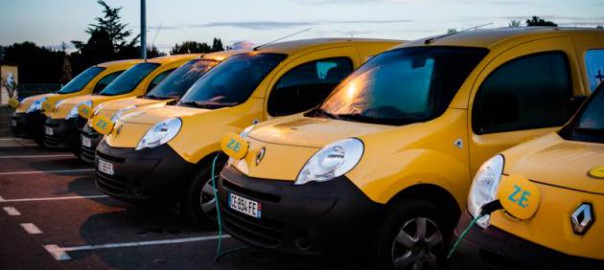
La Poste Renault Kangoo ZE (Image: Renault)

La Poste & Renault enter partnership

Philippe Wahl, Chairman and Chief Executive Officer of La Poste group, and Carlos Ghosn, Chairman and Chief Executive Officer of the Renault group, have signed into a partnership to pursue and strengthen their cooperation on the search for eco-mobility solutions.

Since the launch of France’s low-carbon vehicle project in January 2009, La Poste group, which has the country’s largest industrial fleet with some 69,000 vehicles, has equipped itself with a complete range of electric vehicles, including small light commercial vehicles, quads, three-wheelers and electrically assisted bicycles.

The Renault group and La Poste group are working together in a wide range of fields on forward-looking issues independently of their business relations. By signing the new partnership agreement, the two French companies are pursuing their collaborative efforts on the search for eco-mobility solutions. Through research work and studies, the two groups will develop pilot projects on new mobility solutions and continue to foster the sustainable mobility of the present and future, focusing on four main areas:

1. Improving vehicle range to accelerate rollout

The two companies plan to dialogue and share information on their tests and study programs to improve the range of the clean vehicles produced by Renault that are currently part of the La Poste fleet. R&D projects have already been initiated in this area. The “MobilHyTest” range extension falls within the scope of today’s partnership.

2. Making vehicles used in urban areas cleaner

Current projects concern research into solutions for parcel delivery needs in urban, peri-urban and rural areas for 5 m3 to 17 m3 vehicles. A key player in urban logistics, La Poste every day tackles the same equation of meeting the growing demands arising from e-commerce by delivering parcels in city centers while limiting the harmful impacts stemming from traffic and parking. The aim is to generate solutions for a cleaner and quieter urban logistics better adapted to its environment, and also to improve the working conditions of mail delivery and collection staff.

3. Working on different sizes of electric vehicles

The two groups will conduct a watch, carry out tests, and dialogue on new vehicles measuring up to 17 m3 for mail use and in respect of competition law. Several new ideas have already emerged, including in the 8 m3 segment, the “service” vehicle segment and the small urban vehicle segment.

4. Contributing to future road mobility with the advent of connected vehicles

Through their collaborative work, Renault and La Poste are making an active contribution to the development of connected and communicating light commercial vehicles by 2020, as well as to their management and monitoring in professional contexts.

Source: Renault

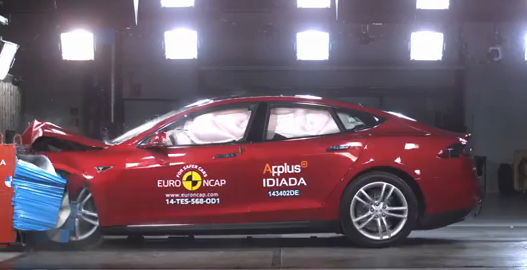
Tesla Model S Euro NCAP Crash Test

Tesla Model S scores Euro NCAP five star safety rating

Despite some much overblown crash controversy in the US, the Tesla Model S has once again proved its safety credentials, adding a five star Euro NCAP score to its five star result from the US road safety authority, NHTSA.

In the latest round of safety tests, the Model S secured a five star result alongside the new Nissan Pulsar, BMW 2 Series Active Tourer and Skoda Fabia. Also tested was the Suzuki Celerio which scored a less impressive three star result.

For the Model S though the latest result reaffirms just how safe electric cars are despite overblown coverage of a number of crashes involving Model S cars last year, which might have suggested the car was a fire risk.

An investigation into fires involving the Model S by NHTSA last year, reaffirmed that the Model S was safe, although Tesla did nonetheless decide to make a few tweaks to improve the car further including adding a new titanium body shield.

Read more: Green Car Website

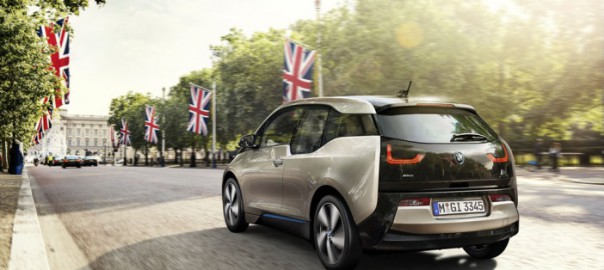
BMW i3 (Image: BMW)

Non-EV vehicles should not be classed as “green cars”

The finalists for the Green Car of the Year 2015 have been announced, and what is most striking about the list is that only one of the cars is a sole electric vehicle.

Fuel efficiency has been improving year-on-year, but it is surprising to see the diesel Audi A3 TDi and Volkswagen Golf 2.0 TDI make the shortlist. Diesel engines are more fuel efficient than their petrol counterparts, but while CO2 emissions have been pushed down over time, the nitrogen dioxide given off by diesel engines has resulted in pollution levels in London that the EU has described as excessive.

The inclusion of the Honda Fit (known as Jazz in the UK) 1.5 litre Earth Dreams was a similar surprise as while it offers an estimated combined EPA MPG of 41 and clever i-VTEC (Intelligent Variable Valve Timing and Lift Electronic Control) technology to improve engine efficiency, it remains a petrol car, with all the non-green credentials that entails.

The Chevrolet Impala Bi-Fuel makes a greater claims to being green with its 3.6-litre hardened engine that can use the cleaner Compressed Natural Gas (CNG) as an alternative to fuel, with drivers able to drive for 150 miles around a city without a single drop of conventional petrol.

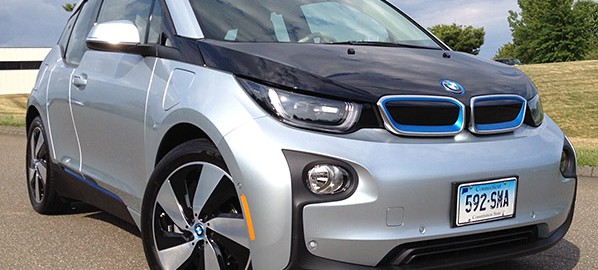
However, the only truly green car in the list is the BMW i3 that has been designed from the ground up to be a purely electric vehicle (EV). Rather than refitting an existing model, BMW used data from millions of miles driven by volunteers in its electric Minis and 1 Series to create an electric car designed for the city. The company built the car using aluminum, magnesium and CFRP to bring its weight down to 1,200kg including batteries, which allows it to cover up to 100 miles from a single charge.

Green Car Journal says that the finalists are selected for their achievements in raising the bar in environmental performance and availability to mass markets, but with the recent improvements in electric car technology the awards should exclude all diesel and petrol engines at this point. Companies such as BMW have a wide range of new cars available, and if organisations want to push other manufacturers to follow suit and build truly green EV cars, then their green credentials need to be celebrated in awards like these.

Source: Descrier.co.uk

quick-and-quirky BMW i3 electric car (Image: Consumer Reports)

BMW likely to phase out IC engines over the next 10 years

During a recent interview with CNBC.com, mutual fund manager Ron Baron of Baron Capital revealed that two of his analysts recently visited BMW in Germany and the BMW financial team believes that a “revolution in the drive train is underway.”

“We believe that BMW will likely phase out internal combustion engines over the next 10 years,”

Baron wrote in his most recent quarterly letter to shareholders of his funds.

Almost exactly 12 months ago, BMW product chief Herbert Diess told Autocar “all BMW models will soon need to be sold with some form of electrification.” BMW’s head of production for large vehicles, Peter Wolf, told motoring.com.au. “We are planning to have a plug-in hybrid in each and every model series.”

Read more: Electric Vehicle News

London ULEZ Banner (Image: TFL)

Have your say on the London Ultra Low Emission Zone

London’s air quality has improved significantly in recent years and is now considered compliant for all but one air pollutant for which the European Union has set legal limits. This pollutant is nitrogen dioxide (NO2), which has impacts on public health. London is currently in breach of legal limits. An equivalent of 4,300 deaths in London is attributed to air quality related illness. The Capital also faces challenging targets to mitigate the effects of climate change.

This means further action is needed to reduce air pollutant and CO2 emissions from transport to improve quality of life and public health. In recognition of this, the Mayor and Transport for London (TfL) have developed a proposal for an Ultra Low Emission Zone (ULEZ) in central London.

The ULEZ would require all vehicles driving in central London to meet new exhaust emission standards (ULEZ standards). The ULEZ would take effect from 7 September 2020, and apply 24 hours a day, 7 days a week. A vehicle that does not meet the ULEZ standards could still be driven in central London but a daily charge would have to have been paid to do so.

The ULEZ would include additional requirements for TfL buses, taxis (black cabs) and private hire vehicles (PHVs):

A requirement that all taxis and new private hire vehicles presented for licensing from 2018 would need to be zero emission capable

A reduction in the age limit for all non zero emission capable taxis from 2020 from 15 to 10 years (irrespective of date of licensing)

Investment in the TfL bus fleet so that all double deck buses operating in central London will be hybrid and all single deck buses will be zero emission (at source) by 2020.

Read more: Transport for London, EV News Report

Tar Sands in Alberta (Image: Wikimedia/Howl Arts Collective)

The way to get off oil? Abstinence

It’s a common environmentalist trope that we’re addicted to oil. The analogy is simple: Our dependence on the stuff and the inability to kick it is similar to a junkie’s addiction to dope. Naysayers to the idea will point out that unlike addicts who put substances into their body, fossil fuel abuse is just a dramatic progressive talking point and not really rooted in true addictive behavior. However, there are other addictions — porn and gambling come to mind — that don’t require the introduction of drugs or alcohol to the body either and the behavior of a drug or alcohol addict and gas-and-oil abuser are strikingly similar.

For instance, most addicts will tell that you that their drug of choice worked in the beginning. The booze or pills or dope helped mask the pain, discomfort, lack of self-esteem or any number of underlying issues with addiction. The problems began when the self-medication stopped working and caused more harm than help. A non-addict quits at that point; whereas the alcoholic or junkie continues on, often to the point of destruction.

Likewise, oil worked in the beginning. It helped build countries. It made life in rural lands and the suburbs more convenient. It kept us warm in the winter. Airplane travel made the world smaller and opened up places to the average person. Petroleum products and plastics offered a vision of a Utopian future for mankind. And then 100 years of unfiltered, barely regulated carbon and other emissions pumped into the atmosphere started to change our climate and yet, like the addict, we aren’t able to quit.

At the first sign of trouble, a lot of addicts, afraid of quitting what has worked until then, will try and control the addiction. Maybe only drink on weekends or cut back on the number of pills. Aware of the issue, the addict first try’s to mitigate the action needed to deal with the addiction, though to no avail. The disease is there and trying to outsmart it is futile.

We oil addicts do the same. We raise gas mileage requirements in cars, though not right away (50 mpg by 2025). We say we will drive less. We recycle what we can. We talk about the need go solar or be wind-powered but we continue to drill for oil and gas and jump for joy when gas prices come down (as they have recently). But, like the drug addict or alcoholic, we still use.

So how does an addict stop and stay stopped? Addiction recovery comes in many sizes and shapes though the ones that work have one basic tenet: abstinence. Whether you go to a 12-step program or try something else, the defining thing for addicts in recovery is that they don’t use anymore. Not one bit. Their addiction is a crisis, like a house on fire. And, first things first, you need to put out the fire. You can figure out how it started (and how you’re going to live clean) later. The first step is stopping.

Likewise, for oil abusers. Cutting back nominally isn’t going to cut our addiction or stop climate change. That action has to be more than gradual, more than cursory. It needs to be radical and treated like the crisis that it is. We need to stop now, completely. Subtle gestures, like recycling my coffee cup lid isn’t going to cure what ails us and waiting too long, as with any addict, spells an unpleasant result.

Source: Poughkeepsie Journal