https://www.youtube.com/watch?v=F_ACz-MTf-8
April 2014: Tiff, Jason, Vicki and Jonny test the Vauxhall Ampera.
https://www.youtube.com/watch?v=F_ACz-MTf-8
April 2014: Tiff, Jason, Vicki and Jonny test the Vauxhall Ampera.
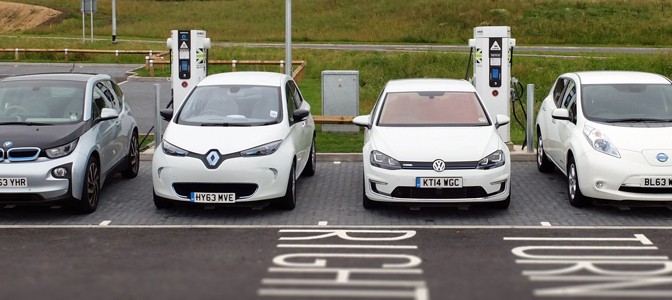
MILLIONS of drivers could be missing out on savings of around £860 per year in fuel and tax because myths still exist about running electric and plug-in hybrid cars.
The findings are the result of new research released today by Go Ultra Low, a joint initiative by government and the UK automotive industry.
According to the research, around 11.5 million motorists could benefit from the lowest cost, tax-free motoring by switching to pure electric vehicles, because in a typical year they don’t drive further than 80 miles in a single trip.
Millions more could benefit from other ULEVs, which can travel between 150 and 700 miles between charges thanks to range-boosting petrol and diesel assistance.
The Go Ultra Low research shows that 70% of car owners are planning to change their car within the next four years, while three in ten say they have considered purchasing a ULEV. Two thirds of motorists under the age of 24 have considered a ULEV compared to just a quarter of drivers over 55.
The survey also reveals that the majority of motorists still don’t fully understand how electrically-powered vehicles work and believe outdated myths across a number of topics, from range and charging to cost and practicality.
Commenting on the findings, motoring journalist Quentin Willson, said:
“Ultra low emission vehicles make so much sense, they are cheap to run, hugely practical and now almost every major manufacturer has something to offer.
“The Go Ultra Low research shows that a host of misconceptions are hampering consumer uptake, and more needs to be done to educate people about the numerous benefits of these vehicles.”
The survey discovered that a quarter of motorists misunderstand the range capabilities of ULEVs, with 16% believing electric vehicles are unable to travel 50 miles without recharging.
Yet the research also shows that more than a third of drivers said the furthest they drove in a single journey during 2014 was 80 miles or less.
With pure-electric vehicles able to travel up to 100 miles on a single charge and other plug-in ULEVs boasting up to 700 miles’ range, the survey’s authors claim electrically-powered cars are a viable, low cost option for millions of motorists.
Go Ultra Low is a campaign to help motorists understand the benefits, cost savings and capabilities of the raft of new ultra-low emission vehicles on the market.
The collaborative campaign is the first of its kind, bringing together the Department for Transport, the Office for Low Emission Vehicles, SMMT and a consortium of leading car manufacturers: Audi, BMW, Mitsubishi, Nissan, Renault, Toyota, and Volkswagen.
Source: Press Association
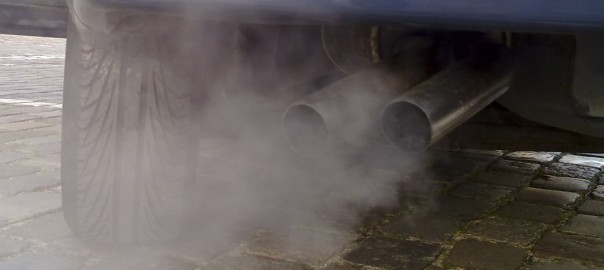
Saudi billionaire businessman Prince Alwaleed bin Talal told me we will not see $100-a-barrel oil again. The plunge in oil prices has been one of the biggest stories of the year. And while cheap gasoline is good for consumers, the negative impact of a 50% decline in oil has been wide and deep, especially for major oil producers such as Saudi Arabia and Russia. Even oil-producing Texas has felt a hit. The astute investor and prince of the Saudi royal family spoke to me exclusively last week as prices spiraled below $50 a barrel. He also predicted the move would dampen what has been one of the big U.S. growth stories: the shale revolution. In fact, in the last two weeks, several major rig operators said they had received early cancellation notices for rig contracts. Companies apparently would rather pay to cancel rig agreements than keep drilling at these prices. His royal highness, who has been critical of Saudi Arabia’s policies that have allowed prices to fall, called the theory of a plan to hurt Russian President Putin with cheap oil “baloney” and said the sharp sell-off has put the Saudis “in bed” with the Russians. The interview has been edited for clarity and length.

Q: Can you explain Saudi Arabia’s strategy in terms of not cutting oil production?
A: Saudi Arabia and all of the countries were caught off guard. No one anticipated it was going to happen. Anyone who says they anticipated this 50% drop (in price) is not saying the truth.
Because the minister of oil in Saudi Arabia just in July publicly said $100 is a good price for consumers and producers. And less than six months later, the price of oil collapses 50%.
Having said that, the decision to not reduce production was prudent, smart and shrewd. Because had Saudi Arabia cut its production by 1 or 2 million barrels, that 1 or 2 million would have been produced by others. Which means Saudi Arabia would have had two negatives, less oil produced, and lower prices. So, at least you got slammed and slapped on the face from one angle, which is the reduction of the price of oil, but not the reduction of production.
Q: So this is about not losing market share?
A: Yes. Although I am in full disagreement with the Saudi government, and the minister of oil, and the minister of finance on most aspects, on this particular incident I agree with the Saudi government of keeping production where it is.
Q: What is moving prices? Is this a supply or a demand story? Some say there’s too much oil in the world, and that is pressuring prices. But others say the global economy is slow, so it’s weak demand.
A: It is both. We have an oversupply. Iraq right now is producing very much. Even in Libya, where they have civil war, they are still producing. The U.S. is now producing shale oil and gas. So, there’s oversupply in the market. But also demand is weak. We all know Japan is hovering around 0% growth. China said that they’ll grow 6% or 7%. India’s growth has been cut in half. Germany acknowledged just two months ago they will cut the growth potential from 2% to 1%. There’s less demand, and there’s oversupply. And both are recipes for a crash in oil. And that’s what happened. It’s a no-brainer.
Q: Will prices continue to fall?
A: If supply stays where it is, and demand remains weak, you better believe it is gonna go down more. But if some supply is taken off the market, and there’s some growth in demand, prices may go up. But I’m sure we’re never going to see $100 anymore. I said a year ago, the price of oil above $100 is artificial. It’s not correct.
Q: Wow. And you said you are in agreement with the Saudi government to not give up market share?
A: This is the only point I’m agreeing with the Saudi Arabian government on oil. That’s the only point, yes.
Q: Should the Saudis cut production if they get an agreement with other oil producing countries to take oil off the market?
A: Frankly speaking, to get all OPEC countries to approve and accept it, including Russia and Iran, and everybody else, is almost impossible You can never have an agreement whereby everybody cuts production. We can’t trust all OPEC countries. And can’t trust the non-OPEC countries. So it’s not on the table because the others will cheat. The past has proven that. When Saudi Arabia cut production in the ’80s and ’90s, everybody cheated and took market share from us. Plus, remember there is an agenda here also. Although Saudi Arabia and OPEC countries did not engineer the reduction in the price of oil, there’s a positive side effect, whereby at a certain price, we will see how many shale oil production companies run out of business. So although we are caught off guard by this, we are capitalizing on this matter whereby we’ll live with $50 temporarily, to see how much new supply there will be, because this will render many new projects economically unfeasible.
Q: What about the theory of the pressure on the Russians? There’s a theory that the U.S. and the Saudis have agreed to keep prices low to pressure Russia because of what Putin has done in Ukraine.
A: Two words: baloney and rubbish. I’m telling you, there’s no way Saudis will do this. Because Saudi Arabia is hurting as much as Russia, period. Now, we don’t show it because of our big reserves. But I’ll tell you Saudi Arabia and Russia are in bed together here. And both are being hurt simultaneously. And there’s no political conspiracy whatsoever against Russia. Because we are shooting ourselves in the foot if we do that.
Q: You said the price of oil will dampen the shale revolution in America. How?
A: Shale oil and shale gas, these are new products in the market. And we see big ranges. no one knows for sure what price is the breaking point for shale. Wells have a higher production cost. And very clearly these will run out of business, or at least not be economical. At $50, will it still be economically feasible? Unclear. This is a very much developing story.
Q: Some people believe this crash in oil will create a lot of new mergers in the energy industry. Do you agree?
A: No doubt about that. For sure there’ll be a lot of consolidation in the market. Because many small and medium-sized companies can’t afford this. Because they are very much dependent on the price of oil. Big companies like Exxon and Chevron are weathering the oil market crash because they are integrated vertically. But no doubt there’ll be some mergers and acquisitions coming in one to two years.
Read more: USA Today
Last year marked a big breakthrough for electric cars; the majority of major manufacturers invested heavily in developing electric drive-trains and subsequently added an array of appealing battery-electric (BEV) and plug-in hybrid (PHEV) models to their rosters.
By the end of 2014 there were over 17,000 plug-in cars and vans on UK roads with that number expected to more than double by the end of this year.
As noted by Dr Ben Lane, Managing Editor of Next Green Car: “2015 will see a continuing roll out of battery electric and plug-in hybrid models as UK motorists become more accustomed to electric drive-trains. This year will be the year when EVs start to considered as ‘normal’.”
The future is only looking bright for electric mobility and there a number of exciting EV prospects expected to feature prominently this year. Below is Zap-Map’s list of top 10 electric vehicles coming soon in 2015:

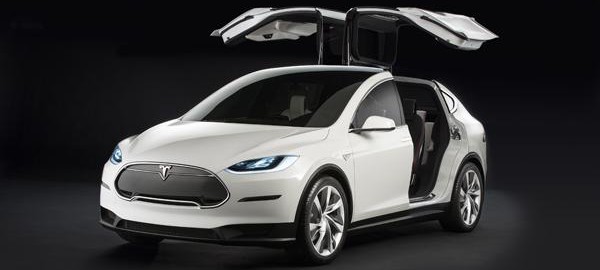
Originally scheduled for 2013, Tesla recently announced that the eagerly anticipated Model X crossover will be launched in the third quarter of 2015. Despite being larger than the Model S, the all-wheel electric drive will give the Model X a similar level of performance (that’s 0 to 60 mph in around 5.9 seconds!). With 10% additional weight, the expected driving range will be slightly less; around 170 miles for the 60 kWh battery pack or 230 miles for 85 kWh battery. One the striking features of the next Tesla will be its rear ‘Falcon’ doors which open upwards instead of swinging outward. Final pricing has yet to be announced. Although it’s been a while coming, with the new Model X, Tesla is unlikely to disappoint.

The twin-up!’s 55kW powertrain consists of a 0.8 litre TDI diesel engine working in conjunction with a 35kW electric motor. The energy storage system includes a lithium-ion battery (energy capacity: 8.6 kWh), a conventional 12V battery for on-board electrics, and a 33 litre capacity fuel tank. On the official test cycle, the twin-up! delivers a combined fuel economy of over 250 MPG with a CO2 emissions of just 27 g/km. In zero-emission operation the PHEV can cover a range of 31 miles and is anything but a slouch: the twin-up! accelerates up to 62 mph in 15.7 seconds and has an all-electric top speed of 80 mph. Pricing to be announced.

The Mercedes-Tesla relationship is evident (and welcome) in the B-Class ED with the drive-train and battery pack coming from the California-based company. Capable of 125 miles per full charge, the B-Class ED provides electric motoring in a quality package with more reserved styling than some other brands such as the BMWi range. While the motors can deliver up to 179 bhp (Sport mode), two other driving modes are available: ‘Economy’, where power is limited to 131 bhp; and ‘Economy Plus’ with just 87 bhp and a maximum speed of 70 mph. Expected to be priced from around £27,000.
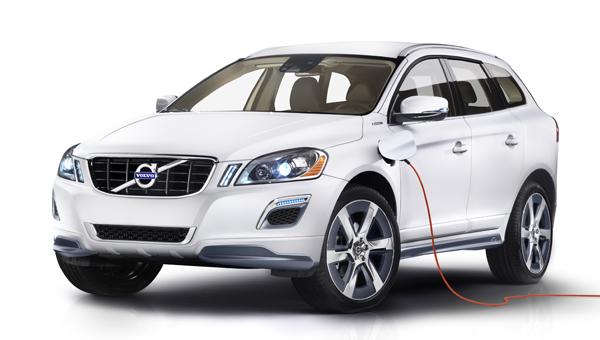
No doubt encouraged by the huge success of the Mitsubishi Outlander PHEV, Volvo will bring its own plug-in SUV to market in 2015, in addition to the usual range of petrol and diesel engines. While all will offer four-wheel drive, for the first time there will also be a front-wheel drive option. The XC90 PHEV will also feature a collection of entertainment and safety technology including a 9.3 inch screen compatible with Apple’s new CarPlay interface and Volvo’s new collision avoidance system. The XC90 range is priced from £45,750.

Now in its eighth incarnation, the new Passat range includes the GTE, the first Passat with a plug-in hybrid drive. Powered by a turbocharged direct injection petrol engine (TSI) and an 85kW electric motor, the GTE is capable (on the official test) of over 141 MPG (petrol) and 13.0 kWh/100km (electric) with CO2 emission of under 45 g/km. On a full tank and fully recharged 9.9 kWh lithium-ion battery, the new PHEV has a total driving range of over 620 miles. In ‘E-Mode’, the Passat GTE can also cover a distance of up to 31 miles with zero emissions. AC charging options include standard (or ‘slow’) charging at 2.3 kW from a domestic socket in 4.25 hours or an optional a home 3.6 kW charger which provides a full charge in 2.5 hours. Anticipated pricing from around £20,000.

The BMW X5 e-drive concept was first unveiled at the 2013 Frankfurt International Motor Show and is seen as the logical next step for the successful X5 series. Combining a four-cylinder combustion engine with BMW TwinPower Turbo technology and lithium-ion battery, the plug-in hybrid can driver approximately 19 miles solely on electric power. There is a choice of three driving modes, depending on requirements and situation – the intelligent hybrid drive option for a balance between sportiness and efficiency; pure electric and therefore emission-free driving; or Safe Battery mode to maintain the current battery charge. According to BMW, the X5 e-drive is capable of 74.3 mpg and on average emits 90g of CO2 per kilometre. Estimated to be priced at £55,000 – £60,000, the X5 e-drive is on course to directly compete with the Volvo XC90 PHEV.

Renault’s battery-electric Zoe, the second best-selling EV after the Nissan LEAF, will be revitalised by a smaller and more efficient electric motor in 2015. By reducing the motors size, Renault expects a 10% increase in the Renault Zoe’s official 130 mile range. Renault also claims the improvements will reduce charging time by 20-30 minutes when using low-level power supply such as a 3kW 3-pin slow charging unit. The upgrades to the Zoe will be added to all new models from Spring 2015 Renault say.

Following on from the successful Outlander PHEV launch in 2014, Mitsubishi plans to release the Outlander PHEV-S. Power for the Outlander PHEV-S is expected to come from the same four-cylinder 2.0-litre petrol and twin electric motor system that drives the original car. This will see up to 204bhp sent to all four wheels, resulting in a 0-62mph time of 11 seconds and a 106mph top speed, whilst offering 148mpg and emissions as low as 44g/km CO2. The main difference will be in appearance, offering a refined interior and exterior design that will magnify the Outlander PHEV’s unique driving experience. Pricing to be announced.

The Audi Q7 e-tron quattro, which will be launched soon after its conventionally powered counterparts in the spring, is the first plug in hybrid from Audi with a diesel engine. It is also the world’s first diesel PHEV with quattro all-wheel drive in the premium SUV segment. It returns the equivalent of up to 166.1mpg, which corresponds to less than 50 grams of CO2 per kilometre and can travel just under 35 miles on battery-electric power alone. Pricing to be announced.

The Quartz plug-in hybrid concept mixes elements of a crossover vehicle and a saloon, to bring a new take on the SUV segment. It uses a plug-in hybrid drive train comprising of a 1.6-litre petrol engine supplemented by two 85kW electric motors, driving each axle. When the vehicle is in ZEV mode, it utilises the electric motor only and can cover up to 31 miles on a single battery charge. Peugeot have estimated the vehicle will not reach production until 2016; it will be interesting to see if the striking design mellows between now and then.
Source: Zap-Map
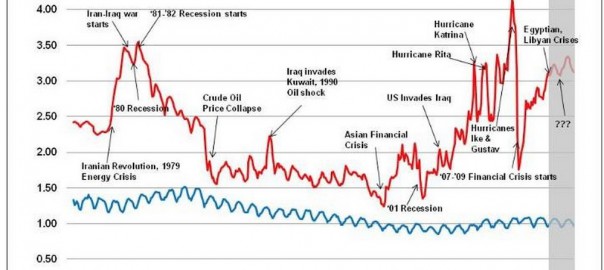
Cheap Oil and Electric Cars
You are probably aware of the massive drop in the price of crude oil. It started before Christmas and it continues to fall.
This can only mean one thing, electric car sales will plummet, people will start buying bigger cars with bigger engines because petrol and diesel will be dirt cheap. Forever.
We all know that, once the price of oil goes down, it stays down, forever.
Oh wait, I’ve just remembered, no it doesn’t. It goes up again just as sharply, then down again, then up.

It’s a highly volatile market which keeps financial journalists busy so that’s good for them.
So why did the price of oil go down?
Oh yes, fracking. Of course, if only the namby-pamby-greenie-weeny-nimbies would allow this government and their mates to frack the hell out of Berkshire we’d have almost free oil and gas forever.
Except of course we wouldn’t, and now it seems even more unlikely.
Here’s an idea.
The tar sands in Alberta, the gas and oil in shale rock thousands of meters beneath the surface, geologists and oil companies have known about that stuff for decades, it’s only recently been financially viable to extract it because the oil price has been so high.
So extract it they did, they had a bonanza! Woop-de-doodie.
Then some chaps in Saudi Arabia noticed a bit of drop in demand for sweet crude (that’s a proper term by the way) and they said, ‘either we turn off the taps and make do with several billion dollars a day less than we’re used to, or we flood the market and put all the tar sands dudes and frackers out of business overnight.’
They did the latter.
It is now economically ridiculous to spend the amounts of money and energy to extract tar sands, fracked oil and all the associated problems that go with this absurd, last gasp effort to keep burning fossils. The fossil companies are moaning, they want more tax breaks or they’ll go out of business. Naturally they have the full support of the public….. not.
And interestingly this massive temporary reduction in the oil price has had no effect on electric car sales, they just keep going up.
It’s still tiny, it’s still a fraction of the total but the increases are in the 100’s of % per year.
Because as anyone with two brain cells is aware, people don’t buy electric cars just because petrol is expensive or cheap. There are hundreds of reasons, the main one being that the technology is more interesting, impressive, reliable and it is possible to make your own fuel.
That’s disruptive, that’s upsetting to the entrenched and well defended monopolies that govern us…. via the governments they pay for.
So I would suggest that electric car sales will not be affected by the drop in the price of oil.
As I always say, electric cars won’t save the world, but they might be pointing in a direction we should all be looking at.
Source: Llew Blog

Jeremy Leggett, former industry adviser, warns over plunging commodity prices and soaring costs of risky energy projects
The oil price crash coupled with growing concerns about global warming will encourage at least one of the major oil companies to turn its back on fossil fuels in the near future, predicts an award-winning scientist and former industry adviser.

Dr Jeremy Leggett, who has had consultations on climate change with senior oil company executives over 25 years, says it will not be a rerun of the BP story when the company launched its “beyond petroleum” strategy and then did a U-turn. He said:
“One of the oil companies will break ranks and this time it is going to stick. The industry is facing plunging commodity prices and soaring costs at risky projects in the Arctic, deepwater Brazil and elsewhere.
“Oil companies are also realising it is no long morally defensible to ignore the consequences of climate change.”
Leggett, now a solar energy entrepreneur and climate campaigner, points to Total of France as the kind of group that could abandon carbon fuels in the same way that E.ON, the German utility, announced plans before Christmas to spin off coal and gas interests and concentrate its future growth on renewables.
Pressure on the energy industry to pull out of fossil fuels has grown in recent months with a campaign for pension funds to disinvest from coal, oil and gas.
A new report published this week by researchers at University College London deepened the message that vast amounts of oil in the Middle East, coal in the US and gas in Russia cannot be exploited if the global temperature rise is to be held at the 2C level safety limit agreed by countries.
Leggett, who once conducted research into shale funded by BP and Shell, chairs Carbon Tracker Initiative, a thinktank which aims to raise awareness among key decision-makers about the risks that fossil fuel investments pose to wider financial stability. He believes the current 50% slump in the price of Brent crude will cause the US shale boom to go bust with potentially alarming consequences for the financial system.
“Many of the shale drillers have been feasting on junk bond finance, which was so easy when oil prices were above $100 (£66) but with prices at $50 confidence is going to collapse,”
he said.
“Should the shale narrative evaporate then it is going to be very embarrassing for all sorts of political promoters of the industry, including George Osborne.”
Leggett said that despite the price collapse due to oversupply, he remained convinced the “peak oil” theory that supplies will eventually be unable to meet demand remains intact.
This is not because there are not the oil or gas reserves in the ground to meet future growth, but because they are too costly and environmentally dangerous to produce, he argues:
“I would say to both the utility industry and the oil and gas industry: its game over, guys. You have got to identify the point at which it’s all going to be thoroughly changed and you have got to map back from it.
“You have to think strategically. The point to map back from is zero carbon in the energy system, not the electricity system, by 2050, because more than 100 governments want that in the [next UN climate change] treaty being prepared for signing in Paris.”
But he also believes the energy industry is privately aware of the problems as it watches its own costs of fossil fuel extraction going up while the costs of solar and other new technologies are coming down.
Leggett, who plans to stands down as chairman of the highly successful Solarcentury renewable business he founded to focus on climate change campaigning, holds what he calls “friendly critic” sessions with the fossil fuel sector these days. The tone of the meetings has changed significantly over the past two years, he said.
“Before it was know your enemy. Now it’s: ‘Crikey. A lot of this may be coming true on our watch. What shall we do about it?’ There are top-to-bottom strategic reviews going on in E.ON but in other companies as well, utility and oil and gas. So it will be really interesting to see which is the first of the oil and gas companies to break from the pack, although I fear BP and Shell are going backwards not forwards on carbon.”
Source: The Guardian
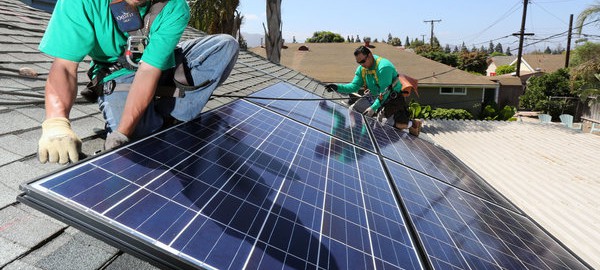
The big idea right now for solar and batteries is this: put solar panels on your roof, a battery in the backyard (or basement), and become utterly independent from the power grid, using free electricity from the sun. Batteries have long been looked to as a way to store energy solar energy during the day to be used at night, but they have long been too expensive to be used widely. But many companies are looking at 2015 as a very important year for the solar and battery partnership and I’ve heard the word “tipping point” being used repeatedly about this intersection recently.
Why all the excitement and why now? First off, traditional lithium-ion batteries — the kind being widely used in cell phones and laptops — are becoming cheaper than ever before. Electric car company Tesla and Japanese battery giant Panasonic have been working closely on lowering costs of their lithium-ion batteries significantly, and with Tesla’s “gigafactory” the companies expect to be able to reduce the lithium-ion battery cost by another third.
Navigant Research estimates that Tesla pays about $200 per kWh for its Panasonic battery cells today, and that price could drop as low as $130 per kWh by 2020 when Tesla’s massive factory — which is expected to more than double the world’s lithium-ion battery production — is fully up and running in Nevada. Several years ago, lithium-ion batteries cost closer to $1,000 per kWh. Tesla plans to sell some of the batteries from its factory into the power grid market, and SolarCity (the installer company chaired by Tesla CEO Elon Musk) already uses Tesla batteries for a solar panel energy storage system.
Lithium ion batteries are becoming such a clear low cost platform for energy storage that other startups beyond Tesla are adopting this idea, too. At CES last week, a startup called Gogoro launched an electric scooter and battery swapping infrastructure based around modular lithium ion batteries designed also in conjunction with Panasonic. Owners of the Gogoro scooter will some day be able to swap out their two depleted batteries at a nearby battery swap station, and they will likely pay a subscription for access to the batteries.
But it’s not just the economics of lithium ion batteries that are driving the pairing of solar and batteries. Other startups have been developing newer, low-cost battery chemistries that are optimized for the power grid, like Aquion Energy and Ambri. Aquion Energy last week announced that one of its largest battery installations to date (2 MWh) is going into a solar system on the Kona coast of Hawaii.
The surge in solar panel installations is one of the main drivers behind this grid battery trend. There’s a lot bigger market these days for solar: More than a third of all new electricity installed in the U.S. in the first three quarters of 2014 came from solar panels, both utility-scale solar and solar panels on residential rooftops. That’s second only to new natural gas plants.
Solar companies, like SunPower, SolarCity, Sunrun and others, are doing deals with battery makers, looking to offer new services. Startup Stem, which uses distributed battery packs to work like virtual power plants, is working with Kyocera Solar.
Then there’s the grid battery market that’s being opened up by the state of California’s aggressive mandates for energy storage. California utilities are being asked to buy 1,325 megawatts of energy storage services by 2020, and utility Southern California Edison has already said it will buy 250 MW of energy storage systems. Part of SCE’s plans will be made up by a huge 100 MW battery plant from AES Energy Storage and a 85 MW contract from Stem.
So clearly, utilities aren’t worried about energy storage in general, because they will some day be major users of this technology. But in the short term, some are worried about so-called grid defections. If your solar panels and battery offer you all the electricity options you need, why do you need the utility?
However, according to a recent report from Moody’s, batteries and clean power are just still too expensive to be too threatening right now. Moody’s said that even with battery prices at $200 per kWh, and solar panels at $3.50 per watt, these technologies are “an order of magnitude too expensive to substitute for grid power.” Battery prices would have to be closer to $10 per kWh to $30 per kWh range to be cost competitive widely for the power grid, said Moody’s.
Those costs might be difficult for (most) residential customers to justify, but it could be a different story for commercial building owners. GTM Research says the market for solar panels paired with batteries will surpass $1 billion in annual revenue by 2018 (up from just $42 million last year), with collectively 318 MW of solar and storage capacity installed in the U.S. by that time. One in ten new commercial solar customers will opt for an energy storage addition by 2018, predicts GTM Research.
Source: Gigaom
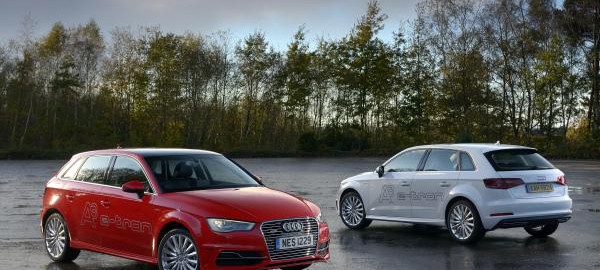
THE 2014 World Car of the Year is adding zero emissions motoring to its repertoire with the arrival of the new A3 Sportback e-tron, the first plug-in hybrid to join the Audi range.
Priced from £29,950 (including government grant incentive), the spacious five-door compact hatchback combines a conventional 1.4-litre TFSI petrol engine with an electric motor to deliver impressive performance, exceptional efficiency and, equally crucially, complete freedom from range limitation. The first e-trons will arrive with customers early this year.
At a glance, nothing about the A3 e-tron is new at all. But delve beneath that ubiquitous surface and you will find a very clever petrol-electric hybrid drivetrain that combines the cheap energy of plug-in tech and the ability to recharge on the move. The modified 1.4-litre TFSI unit, in this application featuring a peak power output of 150PS, is linked by a clutch to a 75kw electric motor, which is integrated into a specially developed six-speed S tronic transmission sending power to the front wheels. Combined, the two power units generate 204PS of system power, good for a 0-62mph sprint of 7.6 seconds and a top speed of 137mph. So, it’s no slouch.
Equally importantly, according to the ECE standard for plug-in hybrid cars, the A3 Sportback-based e-tron is capable of covering up to 176.6mpg with CO2 emissions of only 37g/km. With the combination of electric motor and combustion engine, an overall operating range of up to 584 miles is possible.
The Audi A3 e-tron can run exclusively on electric power for up to 31 miles at speeds of up to 81mph, or can be powered by petrol alone. Alternatively, the hybrid mode brings both units into play, and the driver can choose to run these simultaneously – a function known as ‘boosting’ – by initiating kickdown by the S tronic transmission. In this mode the full 350Nm torque output is deployed for the strongest possible acceleration, but when the driver stops accelerating both motors temporarily deactivate, eliminating motor braking torque and allowing the car to glide to conserve fuel and recuperate energy.
Up to medium loads the motor can also function as an alternator, making a significant contribution to retardation and recovering energy which is fed into the traction battery. In this mode the wheel brakes only become active if the driver applies moderate force to the pedal.
The driver has several ways of actively managing the vehicle’s response. Four key settings are available – the EV mode gives priority to electric drive, the hybrid auto mode is useful for long journeys as it engages the electric motor wherever possible, the hybrid hold mode preserves the electrical energy stored in the battery for later use and the hybrid charge mode uses the combustion engine as a generator to charge the battery.
Inside the four passenger doors interior space is good for five, and luggage capacity is the same as a Quattro four-wheel driven A3, which is to say 100 litres down on the basic A3 Sportback and technically only 29 litres more than a Volkswagen Up. It’s broad rather than deep, though, and turns out to be plenty practical enough.
Standard trimmings include LED headlights and daytime running lights, special ‘turbine design’ 17-inch alloy wheels, rear parking sensors, light and rain sensors, MMI navigation plus with hard drive-based mapping and Audi connect online services bringing in-car internet access.
The A3 Sportback e-tron is supplied with two charging leads as standard. One is specifically designed for use at public charging points and the other for domestic use.
The charging lead supplies the car with alternating current from the grid via the charging connection, which is located in the single frame grille behind the fold-out four rings. As well as a status LED, the unit includes two pushbuttons allowing the user to choose between timer-controlled charging and immediate charging.
Using a domestic socket it takes four hours to fully charge the battery. When a wallbox is connected or a public charge point is used this reduces to two hours and fifteen minutes.
The e-tron excels in electric-only mode in city environments, where its is quiet and smooth, but loses something of the dynamics of the regular A3 because of the battery weight beneath the floor. Crucially, the standard everyday hybrid mode does brilliantly well at using the electric motor as much as possible, saving the 1.4-litre turbocharged petrol back-up for more pressing needs and topping up battery charge.
Source: The Northern Echo
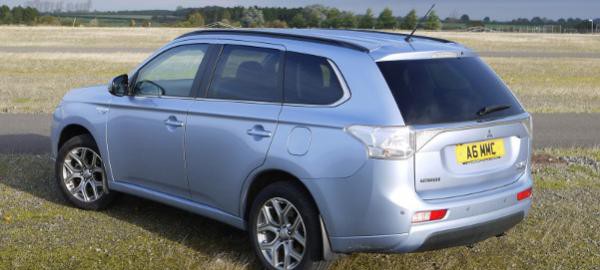
I have previously reviewed a diesel-powered Outlander and came away impressed by its family-friendly credentials coupled with go-anywhere capabilities. It was also reasonably frugal for this type of vehicle, returning 40+ mpg over a week of mixed driving – not bad for a seven-seat, off-roader with an automatic gearbox.
On test this week has been the latest version of the Outlander, this time in hybrid-electric form. This technologically advanced vehicle lays claim to being the most fuel efficient SUV on the market and by a country mile.
Two electric motors drive the front and rear axles independently, with the batteries allowing forward progress at speeds of up to 75mph. Beyond that speed, the 2.0-litre petrol engine will cut in to boost the performance and will also burst into life if the battery pack charge falls to below 30%.
On the move these changes to propulsion are seamless and there are some clever touches allowing you to manually select the method of power.
For example, you might choose to travel on petrol power for the faster part of a journey, saving the battery for urban travel (increasingly useful as more and more towns introduce emissions charges for polluting vehicles).
It is also possible to select a ‘charging mode’ on the move, whereby the petrol engine charges the battery, useful if it has not been possible to plug the car into a charging station.
If this all sounds a little complicated, in practice it is simplicity itself.
At home the car can be plugged into a domestic 13 amp socket for a cheap overnight charge and out and about we are at last seeing an increasing number of charging station springing up across the country.
Mitsubishi suggest that up to 500 miles might be possible on a tank of fuel. I was unable to reach these dizzy heights, but with several long motorway journeys to complete it and no recharging opportunities, it was always going to be a struggle.
Removed from the strains of long distance travel, it was a great joy to complete all my local driving on electric power alone and can imagine petrol free weeks were an Outlander PHEV to permanently grace my driveway.
An added joy when travelling under electric propulsion is the silence. I found I switched the radio off so that I could enjoy a level of hush previously only enjoyed by the owners of super luxury vehicles with large and thirsty petrol engines.
As a driver’s car the Outlander PHEV does not set out to thrill. Initial acceleration is somewhat sluggish, the heavy weight of the large vehicle, electric motors and battery pack taking its toll. Once rolling, things improve remarkably and brisk progress can be made.
Ride comfort is fair and the handling safe and secure. In practice, I found myself adopting a relaxed driving style, which also helped to improve the electric range.
The PHEV unfortunately loses the seven seat option, the space being necessary for the battery pack. However, there is still ample space for five large adults to travel in comfort and there is a plethora of equipment to enjoy, including climate controlled air conditioning, leather seating, touch-screen satellite navigation and alloy wheels.
My test car came in top GX4hs trim, bringing with it a lane departure warning system and adaptive cruise control. The latter was a huge boon on the congested motorway network, allowing a top speed to be set and a safe gap to be maintained at all times with no driver input. It reduces stress immensely and once you learn to trust the system you will wonder how you ever managed without it!
The Outlander range starts at just under £24,000, though with diesel power.
The PHEV range starts at £33,304 and for many it will justify the premium. The low CO2 emissions of 44g/km will favour the company car driver, but for many urban-based SUV owners the PHEV may well make sense, providing they have the facility to charge the car at home.
Other than luxury car manufacturer Tesla, no manufacturer has yet made an all-electric car with a practical everyday range.
For the time being therefore, hybrid power seems to make most sense and Mitsubishi seem to have comprehensively covered all bases with the PHEV.
I liked it a lot!
Source: Yorkshire Times
…
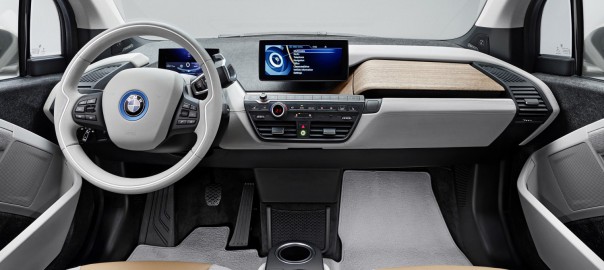
Finally in the spring, I saw my first i3, and it is absolutely a head turner; you have never seen a car like it; because there has never been a car like it. The first models I saw on the street were in an orange/pumpkin-like color combination, which, as my mother used to say, would not be my choice. I saw a pretty good looking one in white with black trim. The i3 in my driveway is, I love these lofty official color names, Laurel Grey Metallic with the BMWi frozen blue accent. I generally don’t like dark colors on a car; but I like this; and I love the hint of blue in the front grille and on the lower side door panels.
The BMWi series, the i3 I am driving and the space-age i8, are electric cars built from the ground up. 100% new. They didn’t just take a 3 series and put a new engine in; instead BMW designed an entirely new manufacturing process for what may be my favorite part of the entire car; what they call the “life module,” and I would simply call the interior or the cabin.
On the outside, I would say the BMW i3 has the footprint of a small car; around the same size as the Prius or the Leaf. But on the inside, the full cabin space has the similar total interior volume of a BMW 3 series. There is ample room and comfort from the single most important position; the driver’s seat.
Let me get all-superficial for a moment. The interior cabin looks great. I have the, more official names now, Giga Cassia Natural Leather & Carum Spice Grey Wool Cloth. It’s light, modern, and beautiful. The remaining trim in the cabin is all made from recycled woods and carbon fiber. I wish I had a study or man cave in my own home that looked as nice as the i3 does from the inside.
The easily adjustable heated seat has a great driving position; and there is, I don’t know a better way to describe it, a vastness to the front windshield. BMW says the car is equipped with super-ergonomic controls; I don’t know what that means, but what it means to me, is everything is easy to find and where it is supposed to be. The center console screen is right-sized, not at all tiny, and not too big; so the Sirius/XM/FM radio is easy to see and operate, as are all the maps and various ways the car communicates with the driver.
Prior to my i3 experience, I spent a few weeks behind the wheel of the BMW 6 series M, with every single bell and whistle imaginable. I don’t find that I am missing anything at all behind the wheel of the i3.
A few last interior notes. The car features what has long been colloquially described as suicide doors. Where the front doors open in traditional fashion and the smaller rear doors open out from the center. I find this actually easier in getting the kids in and out of the backseat. Speaking of the back seat, it is perfectly serviceable. My most frequent passengers are my kids and their friends. You can easily have yourself plus 3 passengers in the car. If you are taking the entire soccer team, this isn’t the right car for you. But I have never been stymied by lack of interior space. The rear hatch opens big and wide and has a perfectly fine amount of trunk space; and the back seat folds down flat if you are the type that takes your boogie board with you everywhere.
Now, to what matters most. How does the i3 drive? Perhaps I can engage you in a little demonstrative exercise. Please, indulge me. Snap your fingers. How long does it take from the moment you snap your fingers to the moment you hear the sound? That’s how fast the i3 is. Officially timed at 0–30 MPH in 3.5 seconds, my car is faster than that. You press on the accelerator and off you go. Boom. Real quick. Freeway acceleration shows absolutely no strain, and the i3 can keep up with and/or pass anything. It is a good thing that I drive to work at 5 a.m. in the morning. The steering is tight and responsive. The i3 is all electric AND all BMW.
Some EV drivers are very interested in wringing out every last watt of energy and translating that to mileage. If you are into those sorts of range games; the i3 has three driving modes. I am a “comfort” person all the way, there is also ECO PRO, and if Ed Begley Jr. were driving the car, ECO PRO+. The car features a brake energy regeneration system; oh, and at 124 MPGe, the EPA lists the i3 as the most efficient electric car sold in the U.S.
Many people have asked me for the years I have been driving electric, “what if you run out of juice and there are no charging stations around?” This fear has now been given an official psychological term; it is called “range anxiety,” and since the father of modern psychology Sigmund Freud was born in Austria, leave it to his German neighbors at BMW to cure this ill. My i3 has, as an option, something called a “range extender.” Basically, it is a small gasoline powered engine; and a super small gas tank; that in the event you absolutely run out of electric power, will provide power to the batteries of the i3 to keep you going. This device is pure Prozac to those who worry about these kinds of things. I never do worry; and in my 2500 mile test drive, I have purchased all told; one gallon of gas. O N E. Not going to the gas station is the single greatest reliever of most the anxieties I deal with.
A little bit more about range. The EPA says the i3 can travel 81 miles on a single charge, and a total of 150 miles if the range extender is used as well. In my own experience, and I like to go fast, I think those estimates are probably a little high if you drive like I do. On any given day I probably drive about 30 miles a day. Brentwood into Hollywood; an errand somewhere, some trip with the kids; and back home. I have more than enough pure electric power to last all day. I have taken the i3 on longer drives; from Brentwood to Hollywood, to Costa Mesa, to Diamond Bar and back home, all in one day, and I was fine. If you have a massively long daily drive, the i3 may not be for your needs.
Now the bottom-line about the bottom-line. Our pals at the EPA say “going electric” can save more than $9,000 in fuel costs if you drive an electric car for 5 years. We all know that gas is fairly inexpensive right now; but do you sincerely believe it will always stay that way?
The i3 represents a far cleaner, far more efficient, far better way to drive; both now and into the future. Before I accept my own award from Greenpeace, you should also know that the 2013 World Green Car of the Year was the Tesla Model S; the 2014 World Green Car of the Year is the BMW i3.
There are dozen of other features, including the self-parking feature of the i3, I didn’t dwell on because, to be honest, I haven’t used them yet.
What I want the most is the get from “A” to “B” with speed, style, safety and comfort. I was already sold on electric cars before I experienced the i3. Maybe I love the i3 so much because it just reinforces my own opinion that I was right to begin with. All that, and some amazing and impressive engineering breakthroughs that you really have to drive yourself to experience.
Source: Medium