All posts by Trevor Larkum

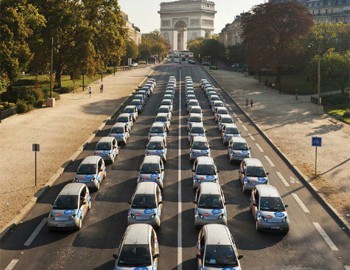
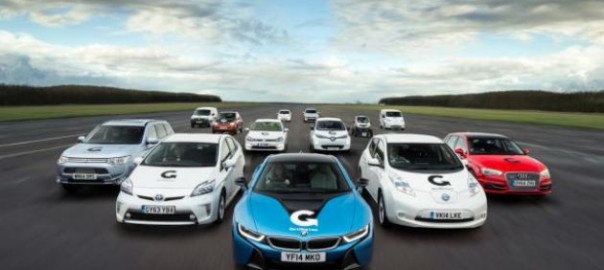
Go Ultra Low members boast 15 ULEVs across a range of segments (Image: OLEV)

Can Electric Vehicles Take The Private Transportation Crown?

Of late, there has been a lot of buzz related to electric vehicles. Volatility in oil, and thus fuel prices has the world in search of an alternative that can reduce the consumption of gasoline, motor oil and other fossil fuels. An electric vehicle (EV) is one such alternative that is muscling in on the market. So what can EVs offer to compete with conventional vehicles?

An electric vehicle is powered by one or more electric motors instead of a conventional internal combustion engine. Based on the source and method of electricity production, EVs are divided into: a. EVs requiring a continuous electric supply source such as trolley buses. b. EVs running on an electric battery or a flywheel, these are also referred to as Zero Emission vehicles (ZEV’s) and c. Hybrid EVs (HEVs) that uses a combination conventional engine and an electric motor) and Plug in EVs ( PHEVs).

If sales figures are an indicator, we see that the demand for EVs has risen at an incredible rate in the last few years. With around 320,000 new registrations in 2014, the total global count of EVs stood at around 740,000 vehicles with China, US and Japan having the highest EV growth rates of 120%, 69% and 45% respectively. Encouraged by growth rate of EVs, several automobile companies are investing in this technology.

Nissan is one such company that has invested heavily in developing and improving EV technology. The company has invested close to £1.4 billion (approximately $2 billion) in its facilities at Sunderland to manufacture EVs such as the highly successful all electric Nissan Leaf. The Chevrolet Volt, the Toyota Prius and Tesla’s vehicles are some other popular EVs available in the market today.

Read more: Oil Price

Oil and biofuels vehicles, check your mirror; the car behind you might be electric

Time was when humanity seemed to take endless leaps forward in terms of technology. There was a sense that everyone was pushing forward at the same time and in the same direction. In today’s world, when investing in the next big tech, the great diaspora of ideas can be a challenge that divides investment funds, and has the ability to muddle that sense of direction, that notion of collective tech-progress.

Which brings us to cars. Combustion engines surely can’t go on for ever, that much is clear, but in that maelstrom of ideas, could the electric car now be attaining a critical mass? And could the two great energy and transport rivals — oil and biofuels — be developing a blind spot around their rise?

For years now the rising clamour between the biofuel sector — buoyed by the immediate aftermath of crude’s jump to $147/b, then sent reeling by the shale explosion — and the conventional oil sector has enlivened energy markets for commentators and campaigners alike.

It’s been a complicated development, with analysts and experts predicting the dominance of the internal combustion engine to be challenged by increased engine efficiency, hybrids, hydrogen cars, growth of LPG-fuelled vehicles and electric cars.

It’s a far cry from the good old days. Back then, history could be relied upon to sweep away any legacy of the also-ran; leaving a good, clean narrative that shows inventor after inventor lining up to bolt on improvements to the generation’s clear defining concept. Take the development of the steam engine; the boiling kettle on the Watts’ family stove drove England and then the world into Industrialisation.

You see it in the combustion engine. Rudolf Diesel tried compression as a means of ignition. In the airspace too; in some quarters, the genius of the Wright brothers was not that they were first to fly, but simply that they were the first to remember to pack the camera. The Wright Flyer in itself being just one of a number of competing, but broadly similar, concepts that were proving that even the hitherto unyielding constant of gravity could be no barrier to humanity’s progress.

The development of alternative modes of powered transportation, to wean us off our dependence on oil, have been suffering from an identity crisis issue. Once, biofuels — perhaps driven most prominently by ethanol — were the standout favourite in that race, attracting legislative backing to make a good concept economically palatable.

Biofuels hits a critical mass

The indication was that this was the way forward — the sector attracted investment, a critical mass was attained and the road ahead seemed clear. For the conventional energy sector, the establishment of the E10 requirement in the US and other energy mandates from the rest of the world, including Europe’s Renewable Energy Directive, must have caused the odd convulsion. If the thin end of the wedge was feared, calls for E15 and — gasp — E85 must have confirmed the worst.

If lobbying expenditure is anything to go by, then the burgeoning battle for the hearts and minds (and votes) of US senators and members of congress quickly saw investment of a different sort mounting up.

According to opensecrets.org, the oil and gas sector spent $141,370,272 on lobbying the US government in 2014, versus agribusiness’s spend of $126,498,021. While those numbers are declining year on year, they still represent an approximate doubling of the spend at the turn of the century – both clocking in around the $70 million a year mark.

Rise of a serious electric contender

Today, the intentions of the EPA and the position of the RFS are shrouded in some confusion and oil barons are doubtless feeling more confident about their own position.

In Europe too, there’s clear signs that mandate-appetite is also not carrying the same sort of thrill as it once had. But while these efforts have been going on, the electric car has enjoyed a breakthrough. And maybe, in the manner of two bald men fighting over a comb, the energy sector — both conventional and less conventional — has witnessed the rise of a serious contender.

The breakthrough has come as the endurance and range of electric cars— and by that I embrace the hybrid option that has blazed the trail — has shot up. Just about every major car manufacturer now has, or plans to introduce, an electric version nestling in its range.

Names like Leaf and Bolt litter the role-call, although increasingly staple production models are simply being offered in petrol, diesel, and electric options. Even Aston Martin, the granddaddy of petrol consumption, has mooted an electric version from James Bond’s favoured carmaker. Imagine, 007 showing his green credentials.*

But that’s only one dimension in the development — across the UK and Europe, electricity filling points continue to sprout with all the vigour of a stout corn crop. The debate about energy content, bang for buck, second generation and food versus fuel runs the risk of being been left dawdling in the rear-view mirror.

The US has set itself out to have a million electric cars on the road by this year — a goal set out by President Obama in his 2011 State of the Union address — and the vision at the time smacked of Kennedy’s ‘man on the moon by the end of this decade’ speech.

The UK — an interesting case study since it has emerged as the biggest buyer of electric cars — saw a substantial rise through 2014, leading the Society of Motor Manufacturers and Traders to dub it ‘the year of the alternatively-fueled vehicle’.

Where once that legend would have masked a plethora of alternate alternatively-fuelled vehicles, there’s been little doubt that the growth in 2014 came in electric vehicles.

The number of ‘plug-in’ vehicles leaped — while it’s still a small percentage of the near 2.5 million new cars to hit the UK’s roads in 2014, some 14,000 of them were plug-in cars.

That’s a four-fold increase, according to the SMMT. Combining both the hybrids and plug ins, the total new AFV cars reached over 50,000 — some 2% of total new cars.

As ever, the blunt statistics mask some other factors — the UK government makes available a subsidy of up to £5,000 for anyone considering buying an electric car, and the latter part of 2014, wherein oil prices collapsed, coincided with a dramatic reversal in buying patterns.

Data from the European Automobile Manufacturers Association, ACEA, shows a steady upward trend quarter-on-quarter through 2014. Though Q4 2014 versus Q4 2013 saw a sharp 7.7% contraction in sales of electric vehicles across the European region.

Key to the change was the Dutch — sales of electric vehicles across the Netherlands slumped to 12,920, down nearly 50% from the near 22,500 new units shifted in 2013.

That more than overpowered the 2907% increase seen in Latvia, where sales soared from 13 to 391.

The UK came top of the league table, supplanting the Netherlands as Europe’s most enthusiastic sparkie, with Germany close behind and the Netherlands and France — a country whose faith in diesel has been shaken recently by pollution and health fears — respectively third and fourth.

While it’s easy to read too much into the mushrooming demand for electric cars, there is still a long road ahead. The experience of the Netherlands — by far Europe’s biggest buyers in 2013, their ardour cooling through 2014 as government incentives eased — and the apparent impact of lower retail fuel costs on electric car buying patterns are just two of the competing factors that may hold sway over the passenger car complexion.

Where the competition seems to be easing though, is around the central idea of an alternative to oil-powered transportation.

The electric car is here — it’s amongst us and almost indistinguishable from its oil-powered ancestors. Maybe the rise of a common rival may encourage the oil and biofuel sectors to lay aside their differences and work together? More likely though, evolution tells us that as habitats shrink, competition becomes ever fiercer.

* Aficionados will know that Bond drove a Ford hybrid SUV in Quantum of Solace.

Source: The Barrel
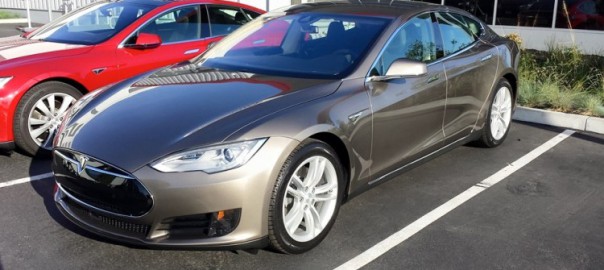
Warm Silver Tesla Model S 70D

Automobile Magazine Test Drives Tesla Model S 70D

Automobile Magazine released one of the first reviews of the Tesla Model S 70D.

Overall, the review basically states that the 70D is just a better entry-level Model S that’s slightly less capable than 85D.

The new Tesla 70D that jumps in place of 60 has 10 more kWh of battery capacity and more range (increase from 208 to 240 miles EPA). Because there are two motors instead of one and more total power, acceleration from 0-60 mph now takes 5.2 seconds (60 kWh Model S does it in 5.9). Top speed for 70D is 140 mph.

Warm Silver Tesla Model S 70D

There are new standard features and finally the price is higher by roughly five grand ($76,200).

The most significant change influencing the driving experience compared to the previous Model S 60 is all-wheel drive:

“Like every Tesla Model S, the 70D’s acceleration is instantaneous and unending. With no shift points or drops in torque, planting your right foot forces your passengers into their leather seats as the numbers on the digital speedometer soar. All-wheel drive now comes standard on the base Tesla Model S, as the 70D replaces last year’s rear-wheel-drive Model S 60 at the bottom of the food chain. The extra traction helps our car hustle away from a stop on rain-slicked pavement with no drama.”

We probably could assume that Tesla replaced 60 with 70D because the automaker believes that the combination of better performance/range and new standard features at slightly higher price will improve sales of the entry-level version.

“As much as we enjoy driving the Model S, we also like that it makes life easy for its driver and passengers. The Model S boasts super-intuitive controls on the touchscreen (only the hazard lights, transmission, windshield wipers, and power windows have physical switches), build quality rivaling a Lexus, and a comfortable ride that soaks up the worst potholes we can find. Fitting five people into the Model S reminds us how easily the Tesla could work as a family sedan, especially given the generous sizing of the front and rear trunks.”

“The Tesla Model S blew us away when we first drove it three years ago, and the magic continues today. From minor software updates to the addition of all-wheel drive, Tesla has continued to tweak and refine its pioneering electric sedan into something any car shopper would lust after. Its blend of efficiency, a super-futuristic driving experience, and a luxurious cabin helps the car appeal to a far greater swath of car shoppers than just tech-savvy Silicon Valley residents. With all those virtues and a competitive starting price, the 2015 Tesla Model S 70D makes a serious case for switching from a gas-powered luxury sedan.”

Automobile Magazine’s associate web editor Joey Capparella said:

“More than any other Tesla before it, the 70D strikes me as a legitimate competitor to cars like a BMW 5 Series or a Mercedes-Benz E-Class. Before, it seemed like a pie-in-the-sky early-adopter’s toy, but now I can see many more buyers considering a Model S.”

Senior editor David Zenlea said:

“This cabin is airy, spacious, and thoughtfully packaged. The center console is scooped out in the back to provide more room for the middle-seat passenger, and there is no transmission tunnel to eat up his or her legroom. Small details, but it’s part of what makes the Model S special.”

Source: Inside EVs

Fox News Reviews BMW i8 – Video

In this relatively short video, Gary Gastelu from Fox News takes a gander at the 2015 BMW i8.

Gastelu loves the looks/style, performance, handling, & efficiency of the i8. Who doesn’t?

You will hear Gary Gastelu, the reviewer of the i8, state:

“I don’t know how I am ever going to review a conventional car ever again…”

Looks like we are near the end of the era where performance cars get approximately 2 miles per gallon!

Source: Inside EVs

Bristol hits milestone 100 EV charge point installations

[15 April] Bristol’s 100th electric car charging point was activated today as part of a the Source West scheme.

Bristol City Council has added 64 charging bays to the existing 26 within the city region network and completed upgrades to 10 in a bid to improve the speed of charging.

Mayor George Ferguson said:

“Electric vehicles make up an important part of Bristol’s low carbon future and with their popularity growing we need the high-quality infrastructure to match. We’ve added four rapid charging points to the network and each of these tops up an EV’s battery to 80% in only 20 minutes, offering a quick and convenient service.

“As we celebrate our year as European Green Capital, we need to do a lot more to make positive impact on the city’s air quality. I’d like to see more low emission vehicles like EVs on our roads and making sure we have the right infrastructure is a step in the right direction. We’re also investigating further incentives to encourage businesses to use electric vehicles, especially for deliveries within the city.”

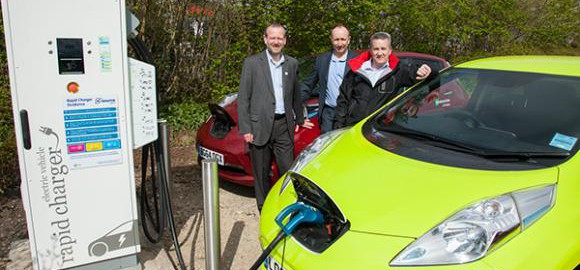
Four rapid chargers are available for EV drivers to use at Brislington Park and Ride, Portway Park and Ride, Temple Gate Car Park and Southmead Hospital. There are also a number of slow and fast charging points located across the City, many of which are free to use with a Source West membership.

An initial two electric Nissan Leaf pool cars have recently been introduced into the Council’s fleet. Additional funding from the Department of the Environment, Farming and Rural Affairs (DEFRA) will fund an EV to perform the Council’s water and air quality monitoring work. The vehicles will be used to help raise awareness of EVs and their role in sustainable transport.

Cllr Mark Bradshaw, Assistant Mayor for Place at Bristol City Council said:

“Poor air quality caused by traffic congestion is one of the biggest environmental challenges our city faces and it’s going to take time for the various actions we’re taking now to make a noticeable difference. We’re committed to working with businesses to increase the use of EVs, particularly through the existing Bristol and Bath Freight Consolidation Centre in Avonmouth. We’re also investigating the potential for on street charging points across the city and we’ve introduced a special permit for EV drivers so it is free for them to park in residents’ parking zones if they display their permit.”

Bristol City Council has led a West of England bid for OLEV’s City Scheme through to the final round. This funding will offer two to four cities/regions a share of £35 million in capital funding.

The successful bidders will be awarded the funding to act as exemplars in regards to Ultra Low Emission Vehicle uptake.

The West of England bid aims to include grants to SMEs for EVs, purchase of EVs to be shared used as council fleet, an exemplar multi-modal rapid charging hub capable of charging EV bikes and cars, implementation of additional charging infrastructure as well as the revamp of Source West.

The intention is also to encourage EV Car Clubs so people can hire cleaner and greener vehicles.

Source: Zap-Map

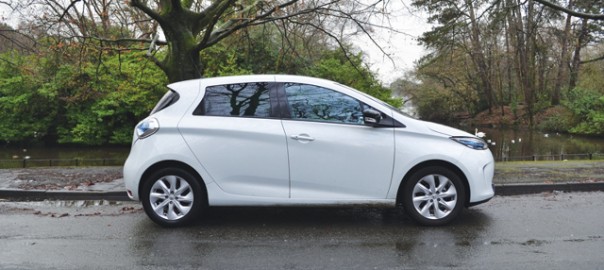
New Renault ZOE from £145 per month fuel included

Update: latest offers here: Renault ZOE 2018 prices


We had the latest PCP prices for the Renault ZOE (effectively an electric Clio) confirmed today and they are looking very good. Renault recently rejigged its prices significantly, essentially reducing the monthly cost of the car while at the same time increasing the cost of the battery rental.

The end result is a substantial reduction in cost overall, particularly for low mileage drivers. Also, the PCP term was previously either 36 or 48 months, but now the term can be 24 months, and this is now the term with the lowest prices. This makes it seem like a particularly attractive and low risk deal.

Our prices are now as follows for a Renault ZOE Dynamique Intens on 2 year PCP:

  • 750 miles per quarter: £75 deposit plus £145 per month, Fuel included*
  • 7500 miles per year: £75 deposit plus £180 per month, Fuel included*
  • 9000 miles per year: £90 deposit plus £190 per month, Fuel included*
  • 10000 miles per year: £100 deposit plus £199 per month, Fuel included*

For clarity the monthly figure includes the battery rental. Renault will also pay for the installation of a home fast charge point (7kW/30A).

Road tax is, of course, free, and no MOT is required during the term of the contract.

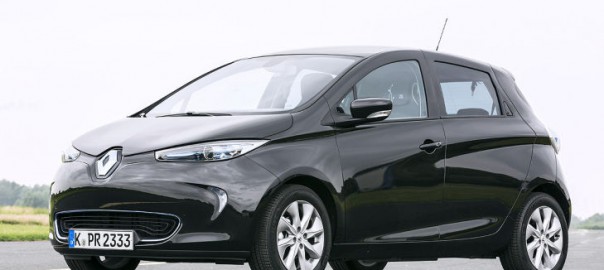
be1393e978dcb6da_Renault_Zoe_AutoBild

A home 13Amp charge cable isn’t included, though it isn’t required if the charge point is used – it can, however, be taken as an option for £22 per month. Metallic paint (black, grey, blue) is also available and, again, adds about £22 per month on a standard white finish.

For comparison, consider the current deal for the Clio Dynamique S Nav TCE 90 for which the deposit is a massive £3571 and the monthly payment is £169. At 60mpg, if you could get it fuel included it would cost an additional £55 per month in fuel for 7000 miles per year. Therefore in total over 24 months it would cost £373 per month compared to the ZOE’s £183.

You could therefore run two ZOE’s for the price of a Clio, and still have some change left over. And being electric the ZOE is much nicer to drive, and can be run from a renewable energy supply.

It’s worth noting that you get a lot of car for your money. The ZOE Intens is a very high specification including satnav with traffic control, bluetooth, MP3, auto-lights, auto-wipers, electric mirrors and windows, reversing camera, cruise control, speed limiter, traction control, keyless entry, alloy wheels, air conditioning, etc. And being electric you can monitor the battery charge and remaining range, and control the heating or air conditioning, from your smartphone.

*Fuel Included

The following are included on a fuel included deal:

  1. Fuel (electricity) for the given mileage on Economy 7
  2. Registration and access cards for the biggest charging networks: Ecotricity and Chargemaster/Polar
  3. Registration for London congestion charge exemption
  4. Out of hours telephone and email support for the first 6 months
  5. Office hours telephone and email support for the duration of the contract

It’s the ultimate in predictable, fixed-cost motoring. Stocks are low, though, plus the £5000 government grant that makes it possible will run out in a few months time so it can’t last.

Who’d have believed you could drive away a new high-tech high-end car with low fuel costs, no road tax and no MOT required, for a deposit of £75?!

If you want to know more email Trevor (sales@fuelincluded.com) or call on 07920-790600.

Long Termers: Renault ZOE

After six months and almost five thousand miles, our ZOE has gone back to Renault. But, in that time, it’s answered the question I’ve been asked so many times since it was delivered: what’s it really like living with an electric vehicle?

It’s much easier than you’d expect. We usually carry hundreds of miles of unnecessary fuel in a conventional car, but the ZOE shows a typical range of between 80 and 100 miles is quite generous. It’s enough to comfortably get from my house in Cardiff to Bristol and back, and the electricity costs less than half the price of the Severn Bridge toll. At each end, I can plug in while I do other things.

Of course, long trips take planning. The range drops to around 75 miles on the motorway, not helped by my impatience at the Eco mode’s 60mph speed limiter. At a steady 70mph, with the blowers on but air conditioning off, it comfortably gets between Ecotricity’s Electric Highway network on an 80% charge, reached in 20 minutes. Range anxiety is usually down to bad planning.

It’s hard not to love the technology, too. R-Link is fiddly at first but easy to get used to, setting cabin temperatures from your bed is a useful feature, and the Chameleon Charger means it takes the fastest charging speeds from whatever you can plug it into. Domestic sockets are the painfully slow exception, though, and the three-pin cable is really only a backup.

The more you live with it, the more it becomes a normal car. It’s stylish, comfortable, has a generous boot, folding seats and ISOFIX points in the back, plus the refinement is blissful. For mostly urban driving and occasional motorway trips, do you really need a plug-in hybrid?

Source: EV Fleet World

New Residential Energy Storage System for Solar and Smart Home Connectivity

JuiceBox Energy, Inc announces availability of a new 8.6kWh lithium-ion energy storage system for solar energy storage and smart home connectivity. With this product release, JuiceBox enters the rapidly growing residential energy storage market with a safe and reliable, web-connected product that can be installed on new and existing solar energy installations.

San Jose, CA (PRWEB) April 13, 2015Product Beauty (web) 4
Today, JuiceBox Energy, Inc. announces availability of their new 8.6kWh lithium-ion energy storage system for solar energy storage and smart home connectivity. With this product release, JuiceBox enters the rapidly growing residential energy storage market with a safe and reliable, web-connected product that can be installed on new and existing solar energy installations.

Distributed energy generation is at a crossroad in many locations as renewable energy net metering policies evolve, requiring customers to sell their excess solar energy to the grid at wholesale rates during the day and buy back energy in the evening at peak retail rates. The JuiceBox Energy system is designed to extend the solar day by supporting self-consumption when rates are highest, saving customers money on a daily basis. It provides value to both the customer and the utility by reducing peak power consumption and fluctuations on the grid. And when the grid goes down, the JuiceBox customer can operate indefinitely in an off-grid mode with the solar and battery system providing power to the home’s critical loads.

“The JuiceBox system is an innovative new home energy storage and energy management system,”

said Mark Byington, President, Cobalt Power Systems in Mountain View, CA.

“Cobalt Power has multiple JuiceBox installations in progress, and we are excited to be at the forefront of delivering intelligent grid-tied energy storage to our solar customers.”

The JuiceBox Energy system is maintenance-free with a minimum 10-year life. The battery, system controller and web-interface are housed in a custom designed indoor/outdoor NEMA 3R enclosure. The system is highly integrated with a bi-directional inverter/charger to enable quick and simple installation while ensuring redundant safety controls and an extended operating life.

The product is designed for rapid wall-mounted installation and communicates to web-based applications via a robust cellular connection for cloud-based monitor, control and remote firmware update. The high-reliability connection enables JuiceBox to help customers keep up with evolving smart grid standards as well as tariff rate structures managed by utilities. And as an increasing number of JuiceBox systems come on line, customers can visually see their system connected within the JuiceBox Energy Network and also elect to participate in future aggregated demand response markets.

JuiceBox is providing regular sales and installation training, and systems are available for order to certified installers upon completion of the training.

“Our Silicon Valley engineering team comprised of automotive electric vehicle and power semiconductor industry veterans is on a mission to deliver the highest quality, long lasting energy storage systems available.” said Neil Maguire, CEO at JuiceBox Energy. “The JuiceBox 8.6 kWh system is a safe, reliable clean technology that puts the customer in charge of their renewable energy. We look forward to supporting solar installers and their customers nationwide with our new residential energy storage system.”

Economic Collapse Will Limit Climate Change, Predicts Climate Scientist

If you think your doctor is hard to understand, try talking to a climate scientist.

In late 2014, the World Bank published a remarkable document that should have shaken the international business world. Titled “Turn Down the Heat: Confronting the New Climate Normal”, it drew on 1,300 publications to explore the impacts of a world four degrees centigrade warmer – the world our grandchildren seem likely to inherit before the end of this century.

Authored by climate scientists of the Potsdam Institute for Climate Impact Research, the report’s three hundred plus pages are densely written and often hard for non-experts to understand. However, some passages about the impact of a 4°C temperature rise are crystal clear. Here a section on North Africa:

“There is a considerable likelihood of warming reaching 4°C above pre-industrial levels within this century… Crop yields are expected to decline by 30 percent with 1.5-2°C warming and up to 60 percent with 3-4°C warming… Large fractions of currently marginal rain-fed cropland are expected to be abandoned or transformed into grazing land; current grazing land, meanwhile, may become unsuitable for any agricultural activity…”

One sentence really caught my attention: “In a 4°C world, mean summer temperatures are expected to be up to 8°C warmer in parts of Algeria, Saudi Arabia and Iraq…” If summer mean temperatures are set to rise by more eight degrees in this already scorching region, I wondered, what about maximum temperatures? According to the study:

“In a 4°C world, 80 percent of summer months are projected to be hotter than 5-sigma (unprecedented heat extremes) by 2100, and about 65 percent are projected to be hotter than 5-sigma during the 2071-2099 period.” [emphasis in the original]

As I’ve got no idea what that actually means, I jumped at the chance to talk with climate scientist Christopher Reyer, one of the co-authors of the study, on the edge of a public event organized by the World Bank in Morocco last week.

So, I asked, what kind of maximum summer temperatures do people in Morocco’s fabled desert city of Marrakech face in a +4°C world? “That’s very hard to answer,” he told me, “but the distribution curve will shift towards the extreme ends.”

Well, yes, but considering that the average summer maximum there is already 38 degrees, and the local record maximum to date is a sizzling 47 degrees Centigrade [116 degrees Fahrenheit], what kind of heat are we looking at? Reyer told me that he’d looked over that question with his team back in Germany – I’d emailed it to him beforehand – and basically couldn’t answer it without some complicated calculations taking into account the exact shape of the city’s current temperature curve.

Exasperated, I dug further. What does ‘5-sigma’ mean? “It’s quite clear that temperatures will be warmer,” Reyer said. By way of comparison, he explained, the 2003 heat wave in Europe [in which an estimated 70,000 people died during a 2.3°C hotter-than-usual summer], was only a 3-sigma event.

So, would it be possible to survive a 5-sigma event outdoors in Marrakech? “That depends how you define ‘survive’,” answered the climate wonk, adding that it would probably be survivable if you kept to the shade and didn’t move. However, any kind of human activity would be impossible in that kind of temperature.

To wrap up the interview, I asked Christopher Reyer how much hotter he thought the planet would be by the year 2100. “I’m not sure,” he replied, “I’m not an expert on the policy side.” I persisted, asking him not for an official projection, just for his best personal guess, a single number. He visibly relaxed.

“I guess it should be between three and four degrees hotter. We used to think that we were headed for +8°C, but that will never happen. We are not even on track for +6°C because economies will be collapsing long before we get there. We know that after +2°C, dangerous things start happening, and we start passing crucial tipping points, like the West Antarctica ice sheet collapse, which has reportedly already begun.”

What will a two degrees warmer world, which we seem likely to inhabit by 2050, look like?

“Two degrees is not a picnic either. Imagine events like the 2003 European heat wave, the 2010 Russian heat wave which had repercussions on the global wheat market, and Hurricane Katrina, all of them happening simultaneously everywhere in the world.”

Oh, so that’s what the climate scientist was trying to say all along: We face an avalanche of global disasters during our lifetime, and unless we slam the brakes on carbon pollution fast, the global economy will collapse to boot.

Source: Huffington Post

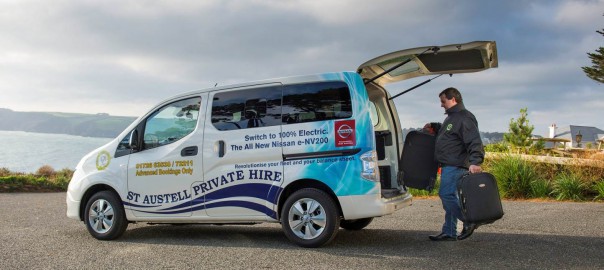
C&C Taxis’s Nissan e-NV200 Combi

Nissan e-NV200 Taxi Like Getting A License To Print Money

Nissan e-NV200 Taxi Saves Fleets So Much Cash That It’s Like Getting A License To Print Money

British taxi company C&C Taxi from St. Austell was already featured by Nissan as one of the LEAF and e-NV200 pioneers.

Now, it turns out that by switching to EVs, C&C acquired a license to print money (no, not really), saving over €79,000 in 18 months on fleet costs.

According to the press release, the annual savings per car on fuel alone in the UK stands at €11,374 (£8,500) or over $12,000.

To make savings like that you need to drive a lot, and to drive a lot you need to charge a lot, and to charge a lot you need to do it fast so C&C installed two DC quick chargers – one at its office and one in an industrial estate. The result is 77,000 miles (123,000 km) in just 12 months for one of the cars, which translates to some 6,400 miles (10,250 km) a month!

Neither C&C Taxi nor Nissan provided the total payback period for the cars (including fast chargers) compared to conventional cars, which maybe would convince more taxi companies to switch to EVs.

Nissan’s Director of Electric Vehicles, Jean Pierre Diernaz explains the significance of C&C’s experience, commenting:

“C&C Taxis proves once again that Nissan electric vehicles work extremely well as taxis with huge cost savings for the business and big benefits to CO₂ emissions and air quality. These cars work hard, averaging 40 taxi fares and 240 km (150 miles) per day with zero reliability issues. It just works!”

C&C Taxi Fleet Manager Mark Richards commented:

“We have had such a positive experience with our Nissan LEAF fleet, even the drivers, who were anxious to start with are now very happy to drive a 100 percent electric car. They tell us a 10 hour shift is less tiring with an EV and the e-NV200 we have now means we can extend that experience to the drivers who were previously in diesel minibuses.”

“People often say that electric cars are just for cities, but we are in one of the most beautiful and rural counties of England with no cities or even motorways and they are working amazingly well for us. We are a family owned business and this is not a vanity project, this is something that is that is saving us money and getting us extra business.”

Source: Inside EVs