All posts by Trevor Larkum

Milton Keynes 'Mushrooms' Charging Hub (Image: T. Larkum)

Milton Keynes Mushrooms: A New Generation of Charging Stations

Driving from Northampton to Surrey to visit my family over Christmas I was due to go past the new Milton Keynes Charging Hub so took the opportunity to call in.

The Hub was developed by Milton Keynes Council with a government grant, with the charging infrastructure provided by BP Chargemaster. I had heard on social media that the hub was recently completed. However there’s been nothing in the mainstream press about it – I’m guessing there’ll be an official launch soon.

Milton Keynes 'Mushrooms' Charging Hub (Image: T. Larkum)
Milton Keynes ‘Mushrooms’ Charging Hub (Image: T. Larkum)

It is quite difficult to find. It is tucked away at the far corner of the Coachway bus station (near Junction 14 of the M1) and there’s no signage in place yet. There were fresh road markings in place though.

The location is pretty good, not just because of proximity to the motorway. Being co-located with the bus station means that while you wait to charge there’s easy access on foot to its cafe and toilets (though you have to pay 30p for the latter).

The hub consists of a triangular island with 8 rapid chargers around its edge (why not 9?) all covered over with three large concrete ‘mushroom’ canopies for rain protection. I was there mid-week and it was pretty quiet, however two other EVs did call in even during the short time I was there topping up my i3.

Charging is through BP Chargemaster’s Polar network so requires either the Polar Instant app or Polar Plus subscription as described previously.

BP Chargemaster Rapid Charger at Milton Keynes Charging Hub (Image: T. Larkum)

The Hub is a great idea and seems to be implemented well. It also gives an exciting view into the future of organised EV charging, being potentially a bit like using an airport lounge. It represents another nail in the coffin of fossil fuel motoring – who would want to relax and eat at a petrol station?!

If there’s a criticism it’s just the usual one of uneven rapid charger allocation, and one can hardly blame MK council for taking every opportunity to support EVs. But for sure MK alone has more rapid chargers than anywhere else in the UK, including the entire country of Wales.
Slow Charging near Peterborough Passport Office (Image: T. Larkum)

A Long Journey Easier with an Electric Car than a Conventional One

It doesn’t happen often, but we recently took a long trip in my ZOE that was easier than if we had taken a petrol or diesel car. We needed to travel to Peterborough Passport Office to renew my daughter’s passport at short notice.

Plan A was very straightforward – drive to Peterborough and slow charger there for the return journey. The beauty of this was that, with a bit of advance research, I found out that there was an electric car charging point and parking space on the same road as the Passport Office and very close to it.

Ecotricity Rapid Chargers at Haddon Services (Image: T. Larkum)

As ever, I had a Plan B, a contingency in case of problems. That was to charge at Haddon Services on the A1(M) just outside Peterborough. Therefore on the way to Peterborough we called in at Haddon. However, the AC rapid charge point wasn’t working so we just headed straight on to Peterborough.

In fact, we needn’t have worried. We found the parking space and charger by the Passport Office very easily and it was operating fine. It worked first time – we then headed into the Office to do the necessary paperwork. We then headed around Peterborough, visiting the various shops and restaurants to kill the requisite four hours until the passport was ready.

Slow Charging near Peterborough Passport Office (Image: T. Larkum)

Afterwards we unplugged and headed home. As the EV parking area was very close to the Passport Office and was neither occupied nor blocked (and, if memory serves me right we didn’t have to pay for parking), it turned out to be a long trip that was easier with an EV than if we had had a conventional car.

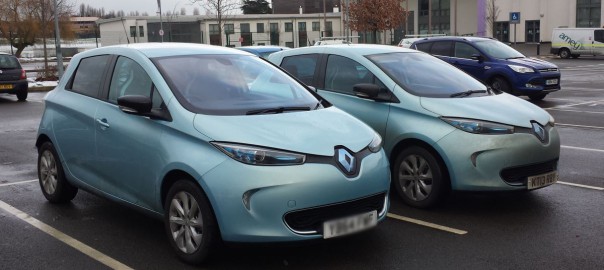
ZOE Twins (Image: T. Larkum)

EV Spotting

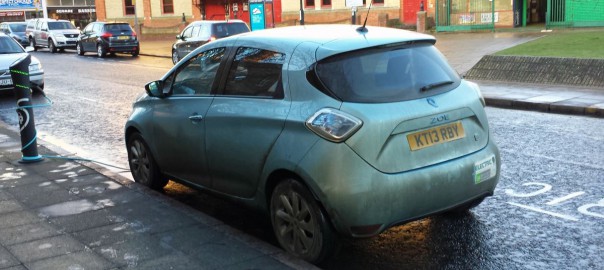
ZOE Twins (Image: T. Larkum)

It turns out my Renault ZOE is no longer the only one in my local area, around Northampton. An almost identical but newer Dynamique Intens has turned up, and I’ve seen it in Northampton and nearby Wellingborough. It’s even the same Energy Blue colour. I’m embarrassed to say I can always tell which one is mine, it’s the dirtiest one!

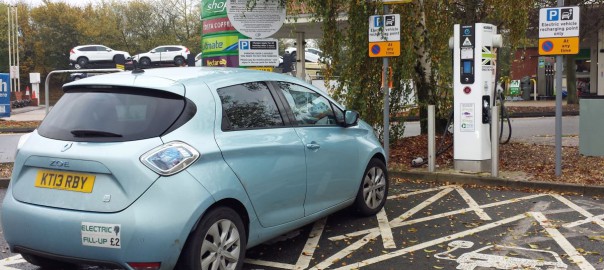
Catching a quick charge at the local Renault dealer (Image: T. Larkum)

While catching a charge recently at the Renault dealership in Bletchley I spotted a ZOE with the rather neat registration number of “EV13 ZOE” (where, of course, EV is ‘Electric Vehicle’).

ZOE with custom number plate (Image: T. Larkum)

Meanwhile I saw the first BMW i3 in my home town of Northampton recently. It was just sitting outside the local shopping centre/health centre looking entirely at home. For sure it will be the first of many.

The first BMW i3 spotted in Northampton (Image: T. Larkum)
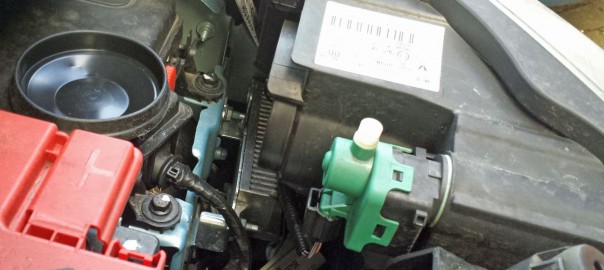
The left-hand headlight assembly with the rubber cover removed (Image: T. Larkum)

Changing the Headlamp Bulbs in a Renault ZOE

ZOE Headlight Bulb and Owner's Manual (Image: T. Larkum)
Figure 1: ZOE Headlight Bulb and Owner’s Manual (Image: T. Larkum)

The headlights in a Renault ZOE are not particularly powerful at the best of times, but recently it became clear that my car was giving out so little light that it must have a blown headlamp. Having often changed the bulbs in other cars I decided to take this job on myself, despite finding that changing the bulb in my wife’s Ford Focus was something of a trial.

The left-hand headlight assembly with the rubber cover removed (Image: T. Larkum)
Figure 2: The left-hand headlight assembly with the rubber cover removed (Image: T. Larkum)

I dived into the Owner’s Manual (see Figure 1) to confirm the type required – “Bulb Type: H7, use anti U.V. 55W bulbs so as not to damage the plastic on the headlight” – and picked one up from the local Halfords.

Renault ZOE headlamp bulb assembly (Image: T. Larkum)
Figure 3: Renault ZOE headlamp bulb assembly (Image: T. Larkum)

The process of changing the bulb (the left-hand one) was surprisingly easy:

1. Pull off the rubber cover. See Figure 2 – the bulb is located in the housing just below the big white sticker.

2. Reach into the housing and grasp the headlamp assembly – it’s pretty fiddly, particularly if you have large hands – see Figure 3.

3. Twist the headlamp assembly anti-clockwise about 20 degrees. This is the trickiest bit as it’s both hard to hold and see. I jiggled it and eventually it turned enough to come out.

4. Pull out the bulb from its holder, and replace. Again this is a bit tricky as the bulb can be seated very firmly, just pull and jiggle to get it out. See Figure 4.

5. Repeat sequence in reverse, but try not to touch the glass of the new bulb.

Headlamp assembly removed ready for new bulb (Image: T. Larkum)
Figure 4: Headlamp assembly removed ready for new bulb (Image: T. Larkum)

That’s it – job done, and it was much easier and quicker than many other cars (including the Ford Focus!).

Test Drive Sunday

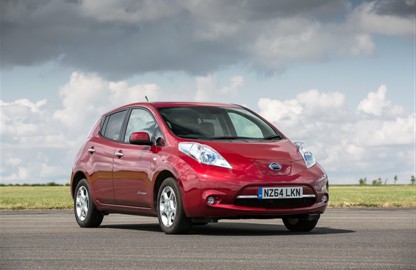
A showroom tour of a Nissan Leaf (Image: T. Larkum)

We had very strong interest in electric cars from our first public event so that we arranged to have a dedicated test drive day. On a Sunday in December we invited four families/couples to the St. Alban’s Nissan dealership (Glyn Hopkin) en masse to have test drives; all attended.

The format was simple – it began with a tour around a Leaf in the showroom to have its various features explained. This was followed by a test drive around the local area, about half of which was on side roads and half on dual carriageways.

Looking in the business end of a Nissan Leaf (Image: T. Larkum)

The event went extremely well and we are very grateful to the staff at Glyn Hopkin Nissan, particularly Ben, for their time, patience and courtesy on the day.

Mercedes B Class Electric

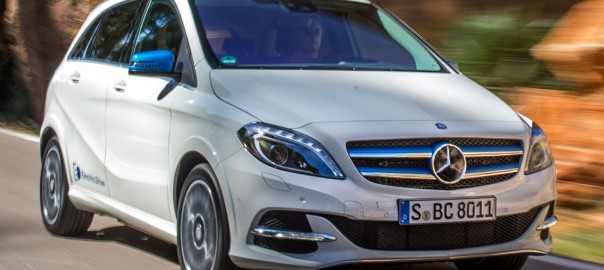
Mercedes B Class Electric Not Available to Test Drive

We are currently in the process of trying to arrange test drives of the new Mercedes B Class Electric for our customers. According to various news reports and press releases (like this one) the B Class Electric is available to order now in the UK.

However, we have been in touch with two different Mercedes dealers in the south of England and they both tell the same story. They are not expecting to have cars to test drive until about Easter, and deliveries would be some time after that.

That’s a pretty disappointing state of affairs. We’ve certainly yet to hear of any B Class Electrics being delivered in the UK, so that’s consistent with what we’ve been told.

We’ll keep following up on this, and report here if we get any new information.

Nissan Leaf in one of the OU electric vehicle scheme parking spaces (Image: T. Larkum)

Open University Electric Vehicle Research Study

EV Study venue, the OU Berrill Building (Image: T. Larkum)

In November I was invited to attend an Open University Electric Vehicle Research Study. I came across it online, plus friends who know I am an EV driver had also told me about it.

The study is being conducted by researchers from the Open University’s Ubiquitous Computing and Sustainability Lab, part of the OU’s Centre for Research in Computing. Their aim is to design interactive in-home technologies to help people better understand and manage energy issues of electric vehicles. In particular this study will investigate how an electric vehicle can fit among household energy practices and activities.

The first stage of this study is an interview, and I was happy to visit the OU campus at Walton Hall in Milton Keynes. There in the Berrill Building we talked about my experiences with an electric car, and having solar panels on my home, and my general energy usage/behaviour.

Nissan Leaf in one of the OU electric vehicle scheme parking spaces (Image: T. Larkum)
Nissan Leaf in one of the OU electric vehicle parking spaces (Image: T. Larkum)

While there I noticed that there were electric vehicle charge points in the car park outside, and one was occupied by a Nissan Leaf. However, they are part of an EV Membership Scheme and are not directly associated with this study.

I wish the Lab good luck with this project, and will report on its results when they are published.

ZOE rapid charging at Chieveley Services (Image: T. Larkum)

300 Miles in a Day

ZOE rapid charging at Chieveley Services (Image: T. Larkum)

In October I managed, for the first time ever, to drive 300 miles one day in my Renault ZOE. I like to think that puts me in the ‘elite club’ of long distance electric car drivers!

Of course, I’m not the first ZOE owner to join – at least two other members of the MyRenaultZOE forum (Timbo and Surya) beat me to it. Nonetheless, I consider it an important personal achievement, more significant than my previous record of 360 miles in a weekend.

It’s not just that it was a good distance but that it was actually done on a business trip. With an electric car I travelled half the length of the country, arrived on time for a series of business meetings beginning at 1030, and drove back home afterward. All without drama – though undoubtedly with a debt of gratitude to the excellent rapid-charging infrastructure we have in England.

Itinerary on Google Maps (Image: T. Larkum)

I left home in Northampton at about 6.30am (marked ‘A’ on the map) and the first stop was at Stony Stratford (‘B’) near Milton Keynes to pick up a colleague. We headed south down the M40 then A34 towards our destinations in Southampton and Portsmouth.

I had originally planned to charge at Peartree, near Oxford, on the A34 but it was out of action so we went to Plan B and carried on to Chieveley Services (‘C’). Filling up took no longer than a typical coffee and loo stop and we were on our way again.

I had hoped to charge again before Southampton but time was tight so we went straight to our first meeting (‘D’), and then on to another meeting in Portsmouth (‘E’). Rather than risk a drama heading back up low on charge, I decided to top up at IKEA (‘F’) in Southampton.

Pluggin in at IKEA Southampton (Image: T. Larkum)
Plugging in at IKEA Southampton (Image: T. Larkum)

This turned out to be the only pain of the day – by this time it was evening rush hour and we wasted a lot of time stuck in traffic on the way there. Having charged, however, it was then just a simple case of retracing our steps back up north. We did another coffee and loo stop at Chieveley, then we drove to Stony Stratford, and then I drove the last leg back to Northampton.

Sharing Chieveley with a Nissan Leaf (Image: T. Larkum)

I got back home having driven about 280 miles. Following some local errands and other driving I finally put the car back in its garage, and on charge, having driven nearly 303 miles since leaving earlier that day.

303 Miles in a Day (Image: T. Larkum)

It was great to have driven so far in one day on electricity, and producing no emissions, for a fraction of the cost of a fossil fuel car. The initial charge was on Economy 7, and all the public charges were free courtesy of the Ecotricity network. Even better, all the electricity used was renewable, again courtesy of Ecotricity.

Best of all, I was able to claim a mileage allowance for the business trip from my employer. I was paid at a standard rate of 40p per mile, so actually received £112! A good day all around.

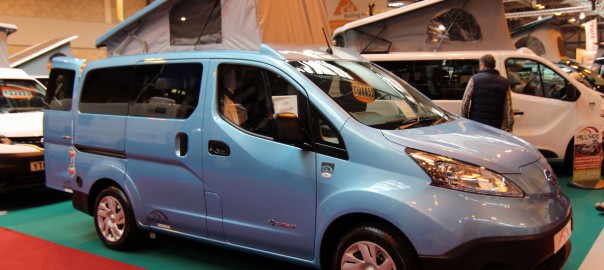
Hillside Leisure's Dalbury electric campervan (Image: T. Larkum)

A World First… Hillside’s Dalbury e-NV200 Campervan

Hillside Leisure's Dalbury electric campervan (Image: T. Larkum)
Hillside Leisure’s Dalbury electric campervan (Image: T. Larkum)

In October our family visited the Motorhome and Caravan Show at the National Exhibition Centre (NEC), Birmingham. Although we have a general interest in motorhoming, and have taken a number of holidays by motorhome, I had a particular aim to see the new all-electric Dalbury campervan being launched by Hillside Leisure.

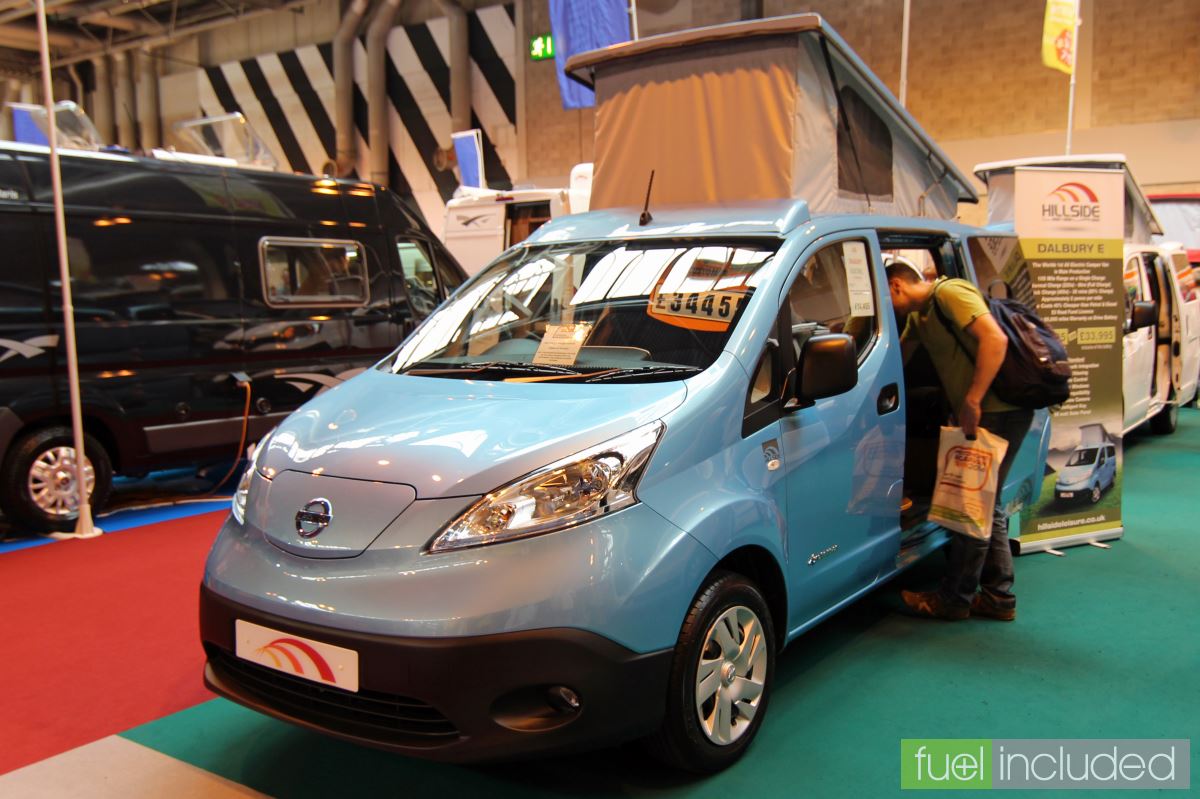
Dalbury campervan - note pop-up roof (Image: T. Larkum)
Dalbury campervan – note pop-up roof (Image: T. Larkum)

It is claimed to be the World’s First Electric Campervan, and is based on the Nissan e-NV200 electric van which is itself derived from the Nissan Leaf electric car. From a little bit of Googling it does seem like it really is the world’s first production campervan, in other words if you exclude private conversions of conventional campervans.

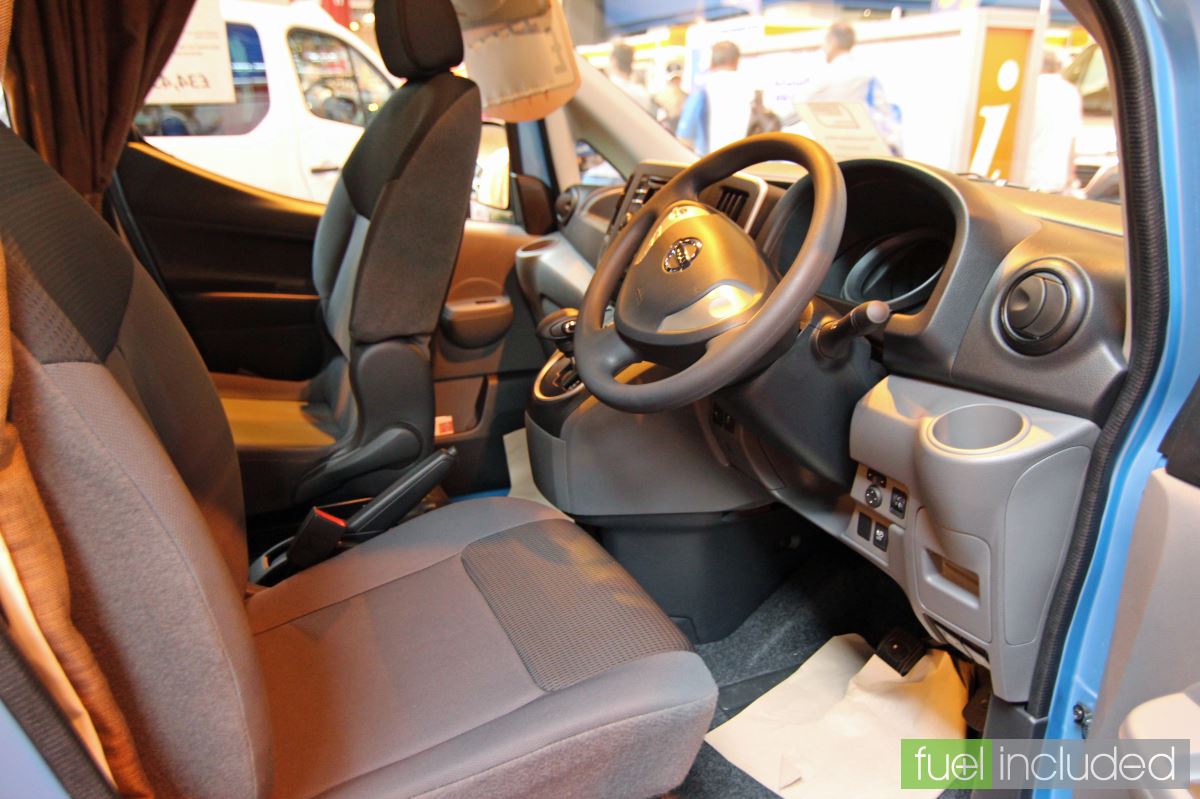
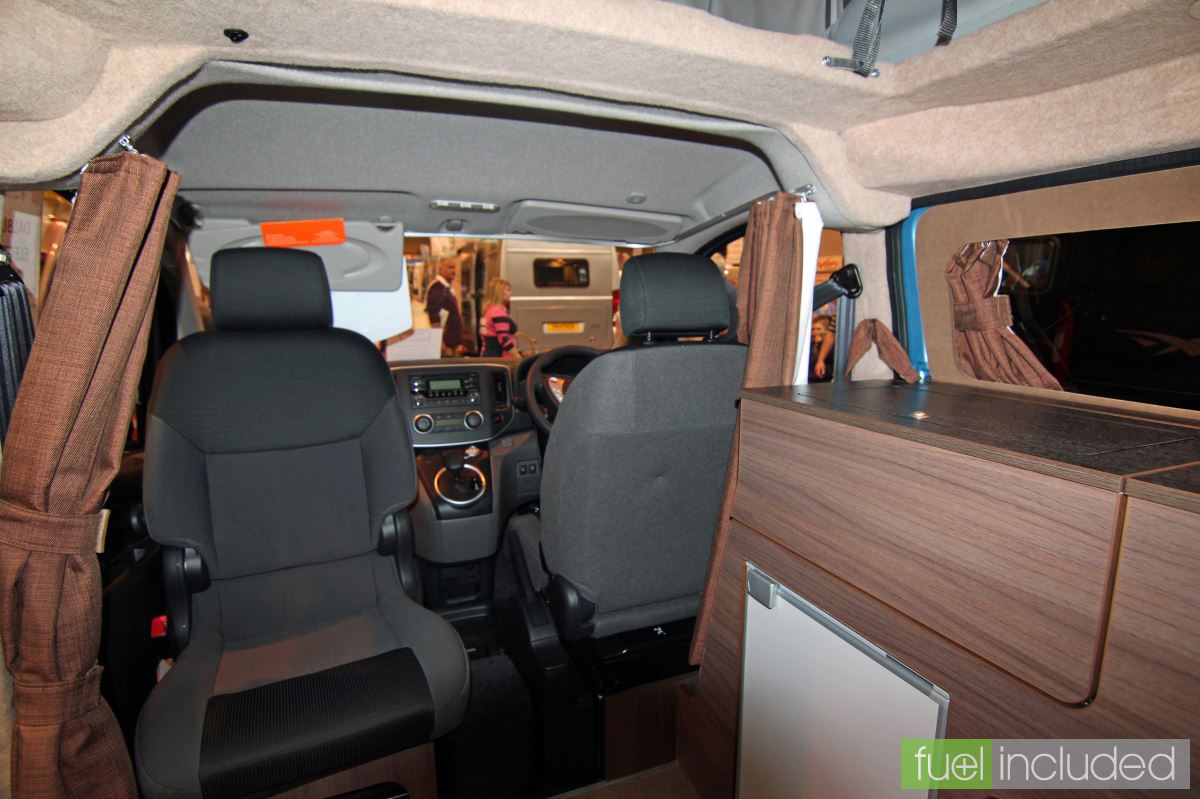
Driver's compartment with passenger's seat reversed (Image: T. Larkum)
Driver’s compartment with passenger’s seat reversed (Image: T. Larkum)

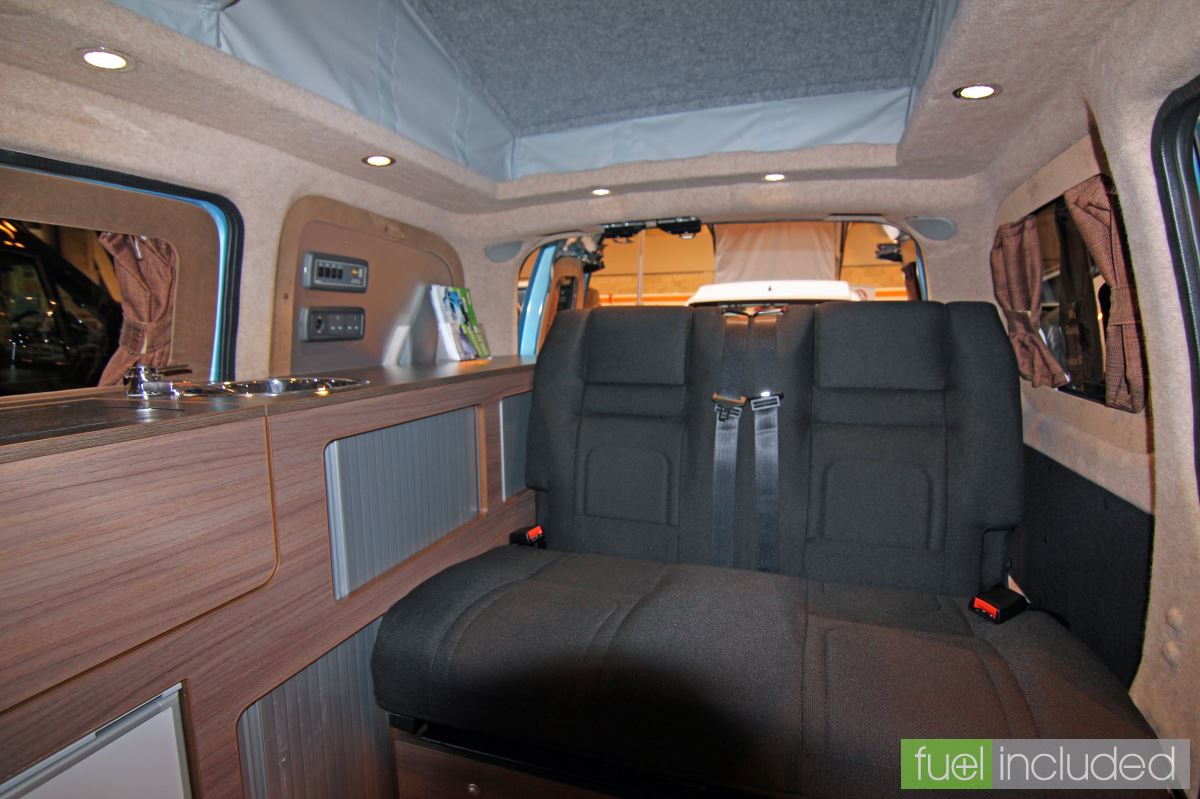
I was pretty impressed with it as a package. There are the usual driver and passenger seats up front, except that the passenger seat is able to rotate around to face the rear. The large sliding door on the left side provides good access to the central ‘lounge’ area; here there is a large bench seat with two seatbelts that folds down to convert into a bed when required.

Lounge with view looking forward (Image: T. Larkum)

Along the inside wall opposite the door are the camping facilities inside a fitted wooden unit. Top left is a cutlery/storage drawer which slides to the left to reveal a twin gas ring stove; underneath this is the fridge. Top right is the sink with hot and cold taps; below it is storage. Further right/back are the electrical sockets and controls with more storage below. Opening the rear doors provides access to the gas bottles and water tank.

Lounge with view looking to the rear (Image: T. Larkum)

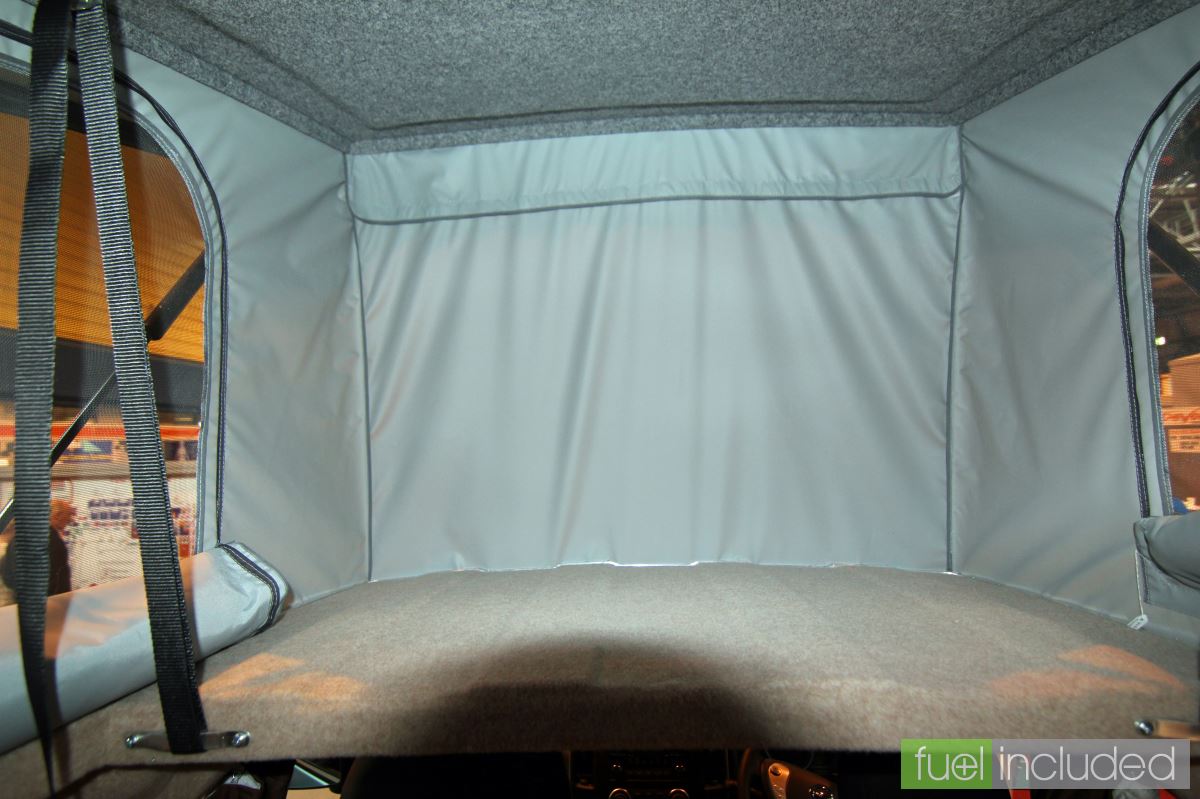
Above the lounge is a pop-up roof that provides enough room to in the vehicle to stand up. In addition, bed boards can be fitted so that two people (realistically, children) can sleep there, so providing the vehicle with 4 sleeping berths in total.

View through the rear doors (Image: T. Larkum)

Overall, we were very impressed with the Dalbury. It would be ideal for a couple to use for motorhoming though, at a push, it could take a family of four (at least if the children are young). It certainly represents an attractive idea: take a touring holiday, driving from one campsite to another each day, charging up overnight, and never paying for fuel!

A look inside the pop-up roof (Image: T. Larkum)

Even better, I think it would be a good daily driver that also holds the promise of weekending away whenever you want, particularly for a couple. It’s small enough to be a primary vehicle, with parking being straightforward so it can be used for shopping and other errands. Unlike other campervans the fuel cost is so low that you wouldn’t hesitate to use it for commuting. Come the weekend you put in your bedding and fill the fridge and you can weekend away at virtually no more cost than staying at home.

We liked it a lot, and are looking at opportunities for hiring it to try it out ‘in the wild’. Roll on the good weather!

Fast charging at one of the dozen rapid chargers at Stanmore (Image: T. Larkum)

People’s Climate March – Part 3

[Part 1]

[Part 2]

Once the Climate March was over I expected the return journey to be straightforward, but it wasn’t to be. I knew that there was extensive engineering work underway on the London Underground but it did not impact directly on the route I intended to use back from Westminster to Kentish Town.

However, early in the journey it became clear there was another problem. Announcements over the tannoy system indicated that a significant part of the northern section of the tube was experiencing a temporary closure. The reason given was that there was a person on the line, and the implication seemed to be that there had been a suicide attempt.

Nissan Leaf on charge in Highgate (Image: T. Larkum)

Anyway, after a number of changes of route and failed redirections I got back to Camden Town and decided to walk from there, even though it was further than I would have liked. At least, I felt, my progress was under my control.

On the way I spotted another electric car, this time a Nissan Leaf. It was plugged in and charging in the compound of a civil engineering firm off Highgate Road – an encouraging sign, I thought, a commercial company using an EV.

I got back to my car, unplugged and drove off without incident. I was actually still doing quite well for time so decided to take a detour. In planning the trip down I had considered parking at Stanmore Underground Station as I had read that it was equipped with a dozen fast chargers – an unprecedented concentration that doesn’t exist anywhere else in the UK, so far as I know.

Fast charging at one of the dozen rapid chargers at Stanmore (Image: T. Larkum)

Finding the chargers was tricky as they were in a car park beside the station with a virtually concealed entrance. However, plugging in and charging was easy – there were half a dozen bright green charge points, each with two connectors, and no other cars charging.

I didn’t really need the charge, of course, since I was fully charged when I left Highgate – I just wanted to assure myself I could make use of them next time I came down to London. In fact, on this day I had made the right choice as – due to engineering works – there was only a replacement bus service from Stanmore.

The rest of the trip home went fine. I went at a steady pace and was able to go all the way to Northampton without needing to stop. I had enjoyed the day – my first time as an ‘activist’ – and committed myself to get more involved in climate change activities in the future.