Monthly Archives: August 2021

Hyundai Kona Electric (Image: Hyundai)

Hyundai Kona Electric review: Still the electric crossover to beat?

The Hyundai Kona Electric quickly became one of our favourite electric cars following its launch in 2018.

Sitting alongside the Kia e-Niro, Hyundai offered the Kona in various guises – with hybrid and combustions versions – a strategy that continues in this most recent version.

What the Kona offers is crossover charms with pure electric power – including a range that’s respectable and prices that are approachable.

Design
The design of the Kona Electric has been simplified slightly over the previous outing. Fundamentally, this is a facelift of the compact crossover, so it’s instantly recognisable as the Kona.

There’s a new front bumper, enclosing the area that previously had a covered grille. The grille remains on the hybrid and combustion version, but the Electric model now gets a better front design, looking a little more refined, a little more loved.

From the sides the looks are broadly the same, but there are some bodywork changes resulting in a slightly simpler look. Plastic wheel arches and other detailing has been removed from the Kona Electric, while also providing a point of distinction from the combustion engine models.

The result is a slightly cleaner look, while the regular gas-guzzling Kona looks a little more rugged with those plastic wheel arch protectors. If nothing else, it’s easy to spot the electric on the road now, thanks to the slight shift in styling.

There are some minor exterior differences between the trim levels offered – SE Connect, Premium, Ultimate – but that mostly amounts to how premium the lower section of the front bumper looks. As is often the way with Hyundai, there aren’t a whole world of options, instead different spec is dictated by those different trim levels.

That makes selecting your model easier: we suspect the most popular will be the Premium, which offers a choice of battery sizes, but still comes in at a price that qualifies for the UK’s Plug-in Car Grant, saving you £2500 off the larger 64kWh version. What you’re getting is a well equipped car for under £30K, with decent range too.

Minor interior updates
The interior of the Kona Electric hasn’t seen huge changes over the existing model – the largest noticeable difference being the move to a fully digital driver display.

The Kona is comfortable and roomy enough in the front, but the rear seats are a little more cramped. Put a tall driver in the front and you’ll be left with minimal legroom in the rear, so it’s really only then suitable for smaller children, but there is plenty of headroom, which saves it from feeling too cramped.

Hyundai Kona Electric (Image: Hyundai)

The highest level trim gets the option for leather facings and lighter colours, while the lower trims have a black interior, which, if nothing else, won’t show up so much muck if you’re transporting a young family around – which many Konas will be.

On the Ultimate trim we tested, there are leather touch-points, but fairly wide use of harder plastics of various textures. As we said, this isn’t out of place given the price of the car – and for those who want something superior the Ioniq 5 is worth a look as an alternative. Although it’s easy to point to higher-priced cars with interiors that are obviously higher quality, it’s really hard to complain about the Kona at this price point.

Ultimate trim does bring some luxury, with seat heating and cooling for those front seats, however, with that cooling being rather more unique.

The boot is a little compact, offering 332 litres of space, although the rear seats will fold to increase the capacity if needed. For many, as a daily run-around, that’s plenty of space for the weekly shop, but broadly aligns with the Citroën ë-C4 and others around this price point. There’s a small storage tray under the floor of the boot, but not much space for anything else.

All in, it’s an interior that fits its purpose. So long as you can accept that the Kona is a pretty compact crossover, because it’s in the back seats that you’ll feel that the most.

Interior technology
One of the interior changes that we mentioned is the digital driver display. This replaces a display that had a single central dial and gives a lift to the driving experience, although it does seem to be sunken quite deep within the cowl. No matter, it’s clear enough with a left-hand speedo and right-hand power meter.

We like that Hyundai presents plenty of data on this display, like the average mileage you’re achieving from that battery, which will help you get a better picture of how you’re driving.

The centre section allows you to leaf through information, such as more data, so there’s a small degree of customisation too. Importantly, it’s all clear enough to understand, which can’t be said about all car displays. As you switch through drive modes it will change colour too, with red for Sport, of course, to make it a little more ‘racy’ looking.

The central display is flat, there’s no curving of the cabin towards the driver, with a run of buttons beneath it to take you to where you want to go – including a customisable button. Two dials mean it’s easy to work with, while also supporting touch, although the volume knob seems a stretch, better placed for the passenger than the driver. Fortunately, there are comprehensive controls on the steering wheel too.

Again there’s easy access to information on how efficiently you’re driving and where the nearest public charger is. Some of the graphics look a little dated, but with support for Android Auto and Apple CarPlay, there’s plenty of flexibility – even if those smartphone-based systems don’t fill the entire screen.

There’s a little crossover into the driver’s display – you can see the audio you’re playing, for example – but otherwise the buttons remain pointing to Hyundai’s systems. That means that if you’re driving with Google Maps through Android Auto, for example, and you press the Maps button, it will revert to the Hyundai system, leaving you to dig through the system to find your way back to Android Auto.

Despite some of Hyundai’s graphics looking a little dated, there’s actually a lot of information that’s useful. You can drill into what’s using your charge, find your average consumption, plus more. You can also easily find navigation options to take you to an electric car charger, but like so many systems, it doesn’t have all the chargers and lists some that you can’t actually use, like in private car parks.

Read more: Pocket-lint

It’s Time to Go Green!

If you would like to know more about Solar Panels and the PowerBanx range of home battery systems, and get a free instant quote, please complete our online form:

Dacia Spring 2021 (Image: Dacia.co.uk)

EVs to account for more than one-in-six cars acquired in 2021

Electric vehicles (EVs) are expected to account for more than one-in-six new cars acquired in 2021, according to the latest figures from the Society of Motor Manufacturers and Traders (SMMT).

In July, battery electric vehicles (BEVs) accounted for 9.0% of registrations, continuing growth in June, while plug-in hybrids (PHEVs) reached 8.0%.

Plug-in vehicle uptake accelerated to 17.1% of market with 21,039 units registered in July.

Overall, July’s new car registrations fell by 29.5% to 123,269 units – the SMMT said the decline was ‘artificially heightened’ by comparison with the same month last year, when registrations increased as showrooms enjoyed a full month’s operation following the first 2020 lockdown.

However, the July performance was down 22.3% on the average recorded over the past decade, as the ongoing semiconductor shortage and the ‘pingdemic’ impacted on both supply and demand – making it the weakest July for new car registrations since 1998, prior to the introduction of the two-plate system, said the SMMT.

Mike Hawes, SMMT chief executive, said: “The automotive sector continues to battle against shortages of semiconductors and staff, which is throttling our ability to translate a strengthening economic outlook into a full recovery.

Dacia Spring 2021 (Image: Dacia.co.uk)

“The next few weeks will see changes to self-isolation policies which will hopefully help those companies across the industry dealing with staff absences, but the semiconductor shortage is likely to remain an issue until at least the rest of the year.”

The latest SMMT outlook has been revised downward and forecasts registrations to reach around 1.82 million units in 2021 – some 11.7% up on 2020, but down from the 1.86 million forecast in April, and down around 21.8% on the average new car market recorded over the past decade.

However, the SMMT estimates that BEVs will account for 9.5% of registrations by year end, while PHEVs are forecast to comprise 6.5% of the market, collectively totalling around 290,000 units by the end of the year.

“The bright spot, however, remains the increasing demand for electrified vehicles as consumers respond in ever greater numbers to these new technologies, driven by increased product choice, fiscal and financial incentives and an enjoyable driving experience,” Hawes added.

Read more: SMART TRANSPORT

It’s Time to Go Green!

If you would like to know more about Solar Panels and the PowerBanx range of home battery systems, and get a free instant quote, please complete our online form:

Volkswagen ID 4 (Image: Volkswagen.co.uk)

Electric cars in traffic jams – will your battery cope?

We tested how air-con, lights and heated seats affect an electric car’s battery

Your electric car’s battery is already at 60%. It’s getting late and there’s still another hour of driving to do yet – but then, disaster. A standstill traffic jam. You’re not going anywhere soon and naturally your eyes drift to how much battery power you have left. Will your electric car make it?

Electric cars are still relatively new and there is a lot of misinformation out there about battery range, including dystopian style warnings of dormant electric cars strewn across our roads because the air-con (or lights, or similar) drained the battery in a traffic jam.

But is this for real or can electric cars cope in dormant traffic? We put it to the test and simulated a traffic jam in an electric SUV, the VW ID.4.

Electric cars and traffic jams – here’s what we did
Coming to a halt in a traffic jam in an electric car can be nerve wracking, and you’ll likely question whether you can still listen to the radio or keep the air-con going.

Volkswagen ID 4 (Image: Volkswagen.co.uk)

We simulated a traffic jam in a VW ID.4 electric SUV and had:

Music streaming through Android Auto
Both front heated seats turned up to max
Air-con going
Dipped headlights on (not on automatic, but manually on)
Tablet plugged into a USB socket playing a film.

And here’s what happened:
As you can see in our video, above, in just over an hour and 15 minutes:

We lost just 2% of battery from a 77kWh battery
That’s the equivalent of only 8 miles of range.
We then took the car for a short drive to make sure the car hadn’t given us an overly optimistic remaining range based on the car’s lack of movement. In this case, it hadn’t.

Read more: which?

It’s Time to Go Green!

If you would like to know more about Solar Panels and the PowerBanx range of home battery systems, and get a free instant quote, please complete our online form:

SWARCO eVolt is supplying 45 charging units, including 11 of its Rapid Chargers capable of charging two vehicles simultaneously in 30 minutes, across 28 sites in East Lothian (Image: eVolt)

Electric car charging points to get new design making them ‘as iconic as red phone boxes’, ministers promise

A design consultancy and the Royal College of Art have been commissioned to work on a new look for Britain’s charging points

Electric car charging points will be redesigned this year to make them “iconic and recognisable” like red phone boxes or London’s black taxis, the Government has announced.

Transport Secretary Grant Shapps has commissioned the design firm which made the Evian bottle, and the Royal College of Art, to come up with a new design which will be unveiled at the COP26 climate conference in the autumn and eventually used for up to two million charging points.

Most car charging points are likely to be installed by private firms or local councils, meaning the central Government cannot directly control their design. But the Department for Transport believes that by setting the new design as the default and providing a blueprint for free online, it will encourage its adoption more widely.

SWARCO eVolt is supplying 45 charging units, including 11 of its Rapid Chargers capable of charging two vehicles simultaneously in 30 minutes, across 28 sites in East Lothian (Image: eVolt)

A large number of people who own electric cars are believed to charge them at home, but a public network is seen as essential to ensure that drivers can abandon petrol-powered vehicles entirely, including for long journeys. There are now 25,000 public charging points across the UK, meaning that no road is more than 25 mile from one.

However, the country remains a long way off from the targets which experts say will be needed to enable the wide-scale adoption of electric cars. The Government’s own climate advisers estimated that at least 150,000 charging points would be necessary, centre-right think-tank Policy Exchange put the figure at 400,000 and the Society of Motor Manufacturers and Traders suggested as many as 2.3 million charging points were required.

Read more: inews

It’s Time to Go Green!

If you would like to know more about Solar Panels and the PowerBanx range of home battery systems, and get a free instant quote, please complete our online form:

Electric vehicle sales outpace diesel again

More electric vehicles were registered than diesel cars for the second month in a row in July, according to car industry figures.

It is the third time battery electric vehicles have overtaken diesel in the past two years.

However, new car registrations fell by almost a third, the Society of Motor Manufacturers and Traders (SMMT) said.

The industry was hit by the “pingdemic” of people self-isolating and a continuing chip shortage.

In July, battery electric vehicle registrations again overtook diesel cars, but registrations of petrol vehicles far outstripped both.

Cars can be registered when they are sold, but dealers can also register cars before they go on sale on the forecourt.

People are starting to buy electric vehicles more as the UK tries to move towards a lower carbon future.

The UK plans to ban the sale of new petrol and diesel cars by 2030, and hybrids by 2035.

That should mean that most cars on the road in 2050 are either electric, use hydrogen fuel cells, or some other non-fossil fuel technology.

In July there was “bumper growth” in the sale of plug-in cars, the SMMT said, with battery electric vehicles taking 9% of sales. Plug-in hybrids reached 8% of sales, and hybrid electric vehicles were at almost 12%.

This is compared with a 7.1% market share for diesel, which saw 8,783 registrations.

In June, battery electric vehicles also outsold diesel, and this also happened in April 2020.

July is normally a relatively quiet month in the car trade. Buyers at this time of year are often waiting until the September number plate change before investing in new wheels.

But even so, the latest figures illustrate clearly the major changes going on in the industry.

More electric cars were registered than diesels, and by a significant margin, for the second month in a row.

That’s a consequence both of the continued catastrophic fall in demand for diesel and increased sales of electric cars.

Over the year to date, diesel still has a small edge, but on current trends that won’t last.

Read more: BBC

It’s Time to Go Green!

If you would like to know more about Solar Panels and the PowerBanx range of home battery systems, and get a free instant quote, please complete our online form:

IONITY rapid charge points at Leeds Skelton Lake Services (Image: IONITY)

UK passes 25,000 EV chargers milestone

New data from Zap-Map has found that there are now 25,122 electric vehicle (EV) chargepoints across the UK.

This is across 15,875 locations, with 508 chargers added within the last month.

Between the end of 2016 and 2020 there was an increase of 220% in the number of public chargers, Zap-Map found.

The biggest market share of UK chargepoints by one network alone is ubitricity with 14.7%, followed by Pod Point (12.5%), BP Pulse (11%) and ChargePlace Scotland (7.6%).

IONITY rapid charge points at Leeds Skelton Lake Services (Image: IONITY)

However, this changes when looking specifically at rapid chargers, with Tesla Supercharge being the singe network with the largest share (15.9%). BP Pulse is a close second with 15.5%, followed by InstaVolt (12.7%) and ChargePlace Scotland (9.4%).

There are 4,675 rapid chargers in the UK, according to Zap-Map’s figures, with this split across 3,020 locations.

Meanwhile, London has the most chargers overall with 30.3%. The South East is next at 13.1%, followed by Scotland (10.5%) and the South West (7.2%).

Earlier today, Zap-Map announced it has partnered carbon data science firm Advanced Infrastructure for the development of a low carbon route tracker. This is to provide carbon intensity for individual chargepoints based on real-time grid data.

Read more: CURRENT

It’s Time to Go Green!

If you would like to know more about Solar Panels and the PowerBanx range of home battery systems, and get a free instant quote, please complete our online form:

Renault ZOE Van (Image: Renault)

Renault ZOE Will Be Phased-Out And Replaced By Renault 5

The current generation ZOE is expected to continue only until around 2024.

According to Luca de Meo, Renault CEO, the ZOE will not live to see a next-generation as the company is switching to a new all-electric platform.

So far, the Renault ZOE was the best-selling all-electric model from Renault and one of the best-selling models in Europe.

However, the ZOE platform is getting old. The car was introduced around 2012, and since then upgraded several times (including a major refresh in 2019) in terms of new, higher capacity batteries, more powerful electric motors and most recently a DC fast charging option.

Our data indicates that the company has so far sold more than 300,000 ZOE (almost entirely in Europe).

Renault ZOE Van (Image: Renault)

Despite that, the ZOE will be replaced by a new electric car – the upcoming all-new Renault R5 around 2023/2024. It’s interesting, especially since in January we read that the ZOE will not be replaced.

Renault’s plan is to switch to the Renault-Nissan-Mitsubishi Alliance’s new CMF-EV platform to become more competitive. New solutions are expected to lower the costs quite significantly (maybe even by a third compared to ZOE, according to some reports).

The first CMF-EV-based Renault to be the all-electric Megane. The new wave of Renault’s BEVs will include also Renault 4, Renault 5 and performance-oriented Alpine models.

Read more: INSIDEEVs

It’s Time to Go Green!

If you would like to know more about Solar Panels and the PowerBanx range of home battery systems, and get a free instant quote, please complete our online form:

Hyundai Ioniq 5 (Image: hyundai.co.uk)

Majority of electric vehicle owners to make the switch permanent, says WhatCar?

Nine-out-of-10 electric vehicle owners do not see themselves ever switching back to diesel or petrol cars.

According to the latest research by What Car?, when asked why, 65% of owners gave the reason that electric cars are better for the environment, while 62% said the tech and cars will only improve in the future, so they see no reason to switch over.

Lower running costs were highlighted by 56% of owners, while 50% said they believe electric vehicles are better to drive. The 2030 ban on the sale of new petrol and diesel cars was also cited as a reason for not switching back by 36% of respondents.

Hyundai Ioniq 5 (Image: hyundai.co.uk)

For the 10% who said they are considering going back to petrol or diesel cars in the future, having a vehicle with better range was given as the main reason by 51% of respondents.

The need to own a cheaper car in the future had 20% of responses, while 15% said they believed petrol and diesel technology will improve in the future, making them more sustainable.

The study also asked electric and plug-in hybrid owners why they chose their vehicle in the first place, with 65% stating they wanted to own a car that was better for the environment.

Read more: MOTORTRADER.com

It’s Time to Go Green!

If you would like to know more about Solar Panels and the PowerBanx range of home battery systems, and get a free instant quote, please complete our online form:
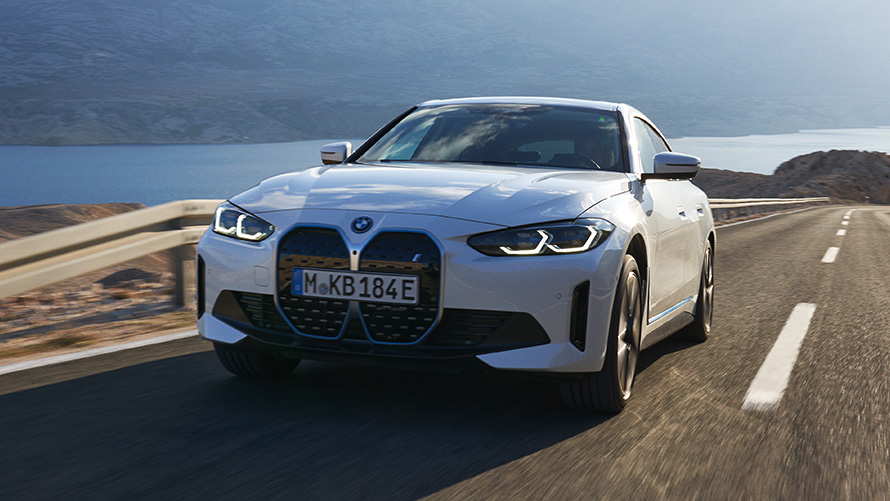
BMW i4 (Image: BMW.co.uk)

The lost history of the electric car – and what it tells us about the future of transport

To every age dogged with pollution, accidents and congestion, the transport solution for the next generation seems obvious – but the same problems keep coming back

In the 1890s, the biggest cities of the western world faced a mounting problem. Horse-drawn vehicles had been in use for thousands of years, and it was hard to imagine life without them. But as the number of such vehicles increased during the 19th century, the drawbacks of using horses in densely populated cities were becoming ever more apparent.

In particular, the accumulation of horse manure on the streets, and the associated stench, were impossible to miss. By the 1890s, about 300,000 horses were working on the streets of London, and more than 150,000 in New York City. Each of these horses produced an average of 10kg of manure a day, plus about a litre of urine. Collecting and removing thousands of tonnes of waste from stables and streets proved increasingly difficult.

The problem had been building up for decades. A newspaper editor in New York City said in 1857 that “with the exception of a very few thoroughfares, all the streets are one mass of reeking, disgusting filth, which in some places is piled to such a height as to render them almost impassable to vehicles”. As well as filling the air with a terrible stench, the abundance of horse manure turned streets into muddy cesspools whenever it rained. An eyewitness account from London in the 1890s describes the “mud” (the accepted euphemism among prudish Victorians) that often flooded the Strand, one of the city’s main thoroughfares, as having the consistency of thick pea soup. Passing vehicles “would fling sheets of such soup – where not intercepted by trousers or skirts – completely across the pavement”, spattering and staining nearby houses and shop fronts. Manure collected from the streets was piled up at dumps dotted around major towns and cities. Huge piles of manure also built up next to stables and provided an attractive environment for flies.

All of this was bad for public health. The board of health’s statisticians in New York City found higher levels of infectious disease “in dwellings and schools within 50 feet of stables than in remoter locations”, the New York Times reported in 1894. According to one turn-of-the-century calculation, 20,000 New Yorkers died annually from “maladies that fly in the dust”, clear evidence of the dangers posed to health by reliance on horses. To make matters worse, horses were frequently overworked, and when they dropped dead, their bodies were often left rotting on the streets for several days before being dismembered and removed, posing a further health risk. By the 1880s, 15,000 dead horses were being removed from the streets of New York City each year.

Paradoxically, the advent of the steam locomotive and the construction of intercity railway links, starting in the 1830s, had helped make the problem worse. Faster and more efficient transport between cities increased the demand for rapid transport of people and goods within them, which required a greater number of horse-drawn vehicles. “Our dependence on the horse has grown almost pari passu [step for step] with our dependence on steam,” noted one observer in 1872. The result was more horses, more manure – and steadily worsening congestion. One observer in 1870 wrote that Broadway in Manhattan was “almost impassable” at some times of the day. And when the traffic did move, it was deafening, as metal horseshoes and iron-rimmed wheels clattered over uneven surfaces. Straw was sometimes strewn on roads outside hospitals, and some private houses, to reduce the din.

BMW i4 (Image: BMW.co.uk)

Pollution, congestion and noise were merely the most obvious manifestations of a deeper dependency. An outbreak of equine influenza in North America in October 1872 incapacitated all horses and mules for several weeks, providing a stark reminder of society’s reliance on animal power. The New York Times noted “the disappearance of trucks, drays, express-wagons and general vehicles” from the streets. “The present epidemic has brought us face to face with the startling fact that the sudden loss of horse labor would totally disorganize our industry and commerce,” noted the Nation. Horses and stables, the newspaper observed, “are wheels in our great social machine, the stoppage of which means injury to all classes and conditions of persons, injury to commerce, to agriculture, to trade, to social life”.

Yet societies on both sides of the Atlantic continued to become steadily more dependent on horses. Between 1870 and 1900, the number of horses in American cities grew fourfold, while the human population merely doubled. By the turn of the century there was one horse for every 10 people in Britain, and one for every four in the US. Providing hay and oats for horses required vast areas of farmland, reducing the space available to grow food for people. Feeding the US’s 20 million horses required one-third of its total crop area, while Britain’s 3.5 million horses had long been reliant on imported fodder.

Horses had become both indispensable and unsustainable. To advocates of a newly emerging technology, the solution seemed obvious: get rid of horses and replace them with self-propelling motor vehicles, known at the time as horseless carriages. Today, we call them cars.

In recent years this transition has been cited as evidence of the power of innovation, and an example of how simple technological fixes to seemingly intractable problems will show up just when they are needed – so there is no need to worry about climate change, for instance. Yet it should instead be seen as a cautionary tale in the other direction: that what looks like a quick fix today may well end up having far-reaching and unintended consequences tomorrow. The switch from horses to cars was not the neat and timely technological solution that it might seem, because cars changed the world in all kinds of unanticipated ways – from the geography of cities to the geopolitics of oil – and created many problems of their own.

Read more: The Guardian

It’s Time to Go Green!

If you would like to know more about Solar Panels and the PowerBanx range of home battery systems, and get a free instant quote, please complete our online form:

Ford Mustang Mach-E (Image: Ford.co.uk)

Electric car ranges: Which beaches can top EVs reach from Birmingham on one charge?

ELECTRIC car owners can travel to some of the UK’s most stunning beaches for staycation trips on a single charge.

Analysis from LeaseCar has shown drivers can travel to locations such as Newquay Beach, Eastbourne and Brighton Pier with a range of electric vehicles. The warning comes as staycations are expected to soar in 2021 while electric car ranges continue to rise with many vehicles now capable of over 250 miles.

A spokesperson said: ”With travel still limited in and out of the UK Brits are likely to be going on plenty of road trips this summer.

“So we’ve done some research and located the best coastal locations that these popular electric cars would make it to on a single charge.

“There is always a worry that you might not make it to your destination off of one charge, so we’ve taken the hassle out of finding the best summer spots to take your vehicle.”

Ford Mustang Mach-E
LeaseCar says the most impressive electric car they tested was the Ford Mustang Mach-E which is capable of 260 miles on one charge.

They said this would take you from the centre of Birmingham all the way down to Newquay Beach.

However, experts at Waze have warned tourist areas such as Cornwall, Devon and the Lake District would be some of the worst affected roads.

Kia e-Niro
Drivers can travel from Birmingham to Eastbourne in the affordable Kia e-Niro.

The car is fitted with a 64kWh battery which provides a substantial increase compared to the old 32kWh battery.

This new tool provides an extra 100 miles meaning the car is now capable of 230 miles.

Mercedes EQC
LeaseCar says drivers can travel to the South Coast on just one charge using the new Mercedes EQC.

The experts said the model provides a “comfortable journey” as well as 230 miles of range.

Read more: EXPRESS

It’s Time to Go Green!

If you would like to know more about Solar Panels and the PowerBanx range of home battery systems, and get a free instant quote, please complete our online form: