Monthly Archives: February 2021

Vauxhall-Mokka-eSUV (Image: media.vauxhall.co.uk)

Vauxhall Mokka-e SUV review

“The new electric Vauxhall Mokka-e looks great and is designed to feel like a petrol car”

If you were put off the previous Vauxhall Mokka X by its dowdy design and fossil fuel-burning engines, the Vauxhall Mokka-e couldn’t be much more different. Vauxhall now sits alongside a host of marques including Peugeot and Citroen under the Stellantis group umbrella, so it’s time for a fresh look.

The Mokka-e is wider and lower than the old car, instantly giving it a more athletic stance. It also boasts a new family face, called ‘Vauxhall Vizor’ that will soon appear on every new model from the brand. Based on the Opel GT X Experimental concept from 2018, it has a smooth grille designed to house a myriad sensors elegantly and make the car appear wider. Both conventionally fueled and electric versions get a blank grille, so a couple of ‘e’ badges are the only giveaway that this is the EV.

While the standard Vauxhall Mokka has to fend off rivals from nearly every manufacturer, the Mokka-e has far fewer competitors, for now. The Mokka-e is mechanically identical to the Peugeot e-2008 and DS 3 Crossback E-Tense, and undercuts cars like the Hyundai Kona Electric and Kia e-Niro on price. Our favourite small SUVs, the Renault Captur and Ford Puma, don’t offer EV versions. The Mokka-e’s size and style might also lead you to cross-shop it with small electric superminis like the MINI Electric and Renault ZOE.

The Mokka-e manages a 201-mile range, and the battery can be topped up to 80% in just half an hour if you plug it in to a 100kW public charger. We’d imagine most customers would use a 7kW home wallbox more often, which takes around seven and a half hours to fully recharge the Vauxhall’s battery – meaning cheap overnight charges should be easy.

The range is about average for the class – the Mazda MX-30 and Kia Soul EV offer 124 and 280 miles respectively – and its acceleration figures don’t stand out either. Hitting 0-62mph in 8.7 seconds is relatively brisk, just not as impressive as some electric rivals. This, however, is a deliberate tactic on Vauxhall’s part as engineers have set up the throttle response to feel less urgent and more like that of a petrol or diesel car. It means that the Mokka-e might be appealing if you don’t enjoy being pinned back in your seat every time you pull away from the traffic lights.

The interior is all-new, and is what you can expect from the next generation of Vauxhall models. A configurable digital instrument cluster is standard on all but the base model, and it’s joined by a touchscreen that can measure up to 10 inches. Smartphone connectivity is present and correct, while material quality is good in most places – there are soft-touch plastics in areas you’re likely to touch. The car is quite small inside, though, offering more interior and boot space than a supermini but less than many small SUV rivals.
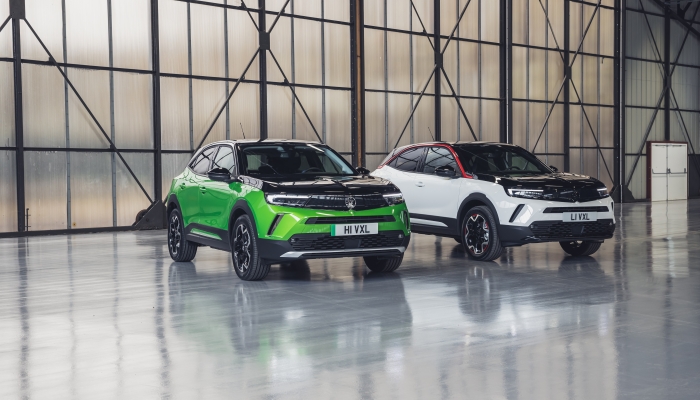
Vauxhall-Mokka-eSUV (Image: media.vauxhall.co.uk)

The Vauxhall Mokka-e doesn’t have a single standout reason why you’d buy one over a Peugeot e-2008, Kia e-Niro or MG ZS EV. But it doesn’t have anything glaringly wrong with it, either. Sitting it right in the middle of the pack with few faults and an attractive design is probably a recipe for strong sales.

Thanks to its shared CMP (Common Modular Platform) with the Vauxhall Corsa-e and Peugeot e-208, the Mokka-e gets the same 50kWh battery. This gives it a range of up to 201 miles in ideal conditions, making it competitive with models like the Peugeot e-2008. However, the Mokka-e doesn’t quite boast the range of the 64kWh Kia e-Niro, which is capable of around 280 miles from a single charge.

An onboard 11kW charger and mode 3 cable allows the Mokka-e to be fully charged in just over 7.5 hours using a home wallbox, or, if you can find a public 100kW rapid charger it can be topped-up from 15 to 80% in around 30 minutes. While 100kW chargers are still fairly rare in the UK, the charging infrastructure is growing rapidly thanks to government funding and investment from private firms like Instavolt, Shell Recharge and BP Pulse.

The charging flap is to the rear of the passenger side c-pillar, rather like a conventional petrol fuel filler cap. It has a series of LED lights that light up to help illuminate the charging port and indicate progress. Flashing green shows charging is in progress, while a solid green light shows the battery is fully charged. A blue light shows charging has been scheduled for later, while red indicates a fault.

The Mokka-e is the best in the range for company-car drivers, as it’ll cost very little in Benefit-in-Kind tax. Meanwhile, the three-year/60,000-mile warranty is similar to rival models, although the battery pack is covered for eight years or 100,000 miles. Vauxhall offers a three-year servicing package – but that may only cover two services as the Mokka-e needs an initial inspection after 8,000 miles or a year, and then needs servicing every 16,000 miles or two years thereafter. Another Mokka-e perk seems to be complimentary roadside assistance for eight years, which could add up to quite a saving.

Read more: carbuyer

It’s Time to Go Green!

If you would like to know more about Solar Panels and the PowerBanx range of home battery systems, and get a free instant quote, please complete our online form:

IONITY rapid charge points at Leeds Skelton Lake Services (Image: IONITY)

Make oil firms install electric car chargers in petrol stations, says thinktank

Proposals to accelerate electric car rollout also call for grants towards buying secondhand electric vehicles

Oil companies should be required to install rapid chargers for electric cars in all their petrol stations above a certain size by 2023 in order to speed up the rollout of vehicles with zero tailpipe emissions, according to thinktank Bright Blue.

Bright Blue’s report also calls for a reversal in cuts to government grants for battery electric vehicles (BEVs), a new grant to help low income households buy secondhand BEVs, and for the lower lifetime costs of BEVs compared with those of petrol and diesel cars to be made clear at the point of sale.

The transport sector is the UK’s largest emitter of carbon dioxide, responsible for almost 28% of emissions in 2018, but unlike other sectors has made minimal reductions in recent years. Cars cause over half of the emissions. The government has announced an end to sales of petrol and diesel cars in 2030 to help tackle the climate crisis.

Ministers have committed to BEV grants until 2023 but Bright Blue said they should be front-loaded, rising to £5,000 from today’s £3,000. To encourage purchases, the grants would then taper down to zero in 2023, when the prices of BEVs are expected to match those of conventional cars due to falling battery costs.

The grant for used BEVs should be £2,000, the thinktank said, and such schemes already exist in the Netherlands and France. People say upfront cost is the main barrier to buying BEVs, according to polling. A cut in the subsidy level was blamed in 2019 for a fall in sales.

IONITY rapid charge points at Leeds Skelton Lake Services (Image: IONITY)

“In 2020, 6.6% of new UK vehicle sales were BEVs. Those figures are going to need to increase dramatically within nine years, if we’re going to meet the petrol and diesel phase-out by 2030,” said Patrick Hall at Bright Blue.

Hall said rapid chargers away from motorways were currently rare. Requiring oil companies to install at least three at each petrol station would help tackle the fear drivers have of not being able to recharge their cars on longer journeys, he said, adding that the government could pay for the necessary grid connections through the existing £950m Rapid Charging Fund.

Shell, which has 1,000 petrol stations in the UK, has almost 100 rapid chargers on its forecourts and aims to have 200 by the end of 2021. “Whether at home, at work or on-the-go, we want to provide our customers with accessible and affordable EV charging options,” said István Kapitány, at Shell Global Mobility.

The Bright Blue report also recommends introducing an obligation on all local authorities to install on-street BEV chargers within three months when requested by residents. “You would end up getting chargepoints in places where they are needed and going to be utilised – it’s a targeted chargepoint rollout,” said Hall.

On Tuesday, the government announced a £20m extension to its on-street residential chargepoint scheme, which could fund 4,000 more chargepoints. The same day, another thinktank, Policy Exchange, said installations needed to increase from 7,000 to 35,000 points a year to meet the 2030 deadline for the end of sales of fossil fuel-powered cars.

Other policies proposed by Bright Blue include making the interoperability of different charging networks a condition for central and local government funding, as already is the case in Germany and California. Hall said this would allow drivers to roam easily between different networks in the same way as mobile phone users.

Another policy proposal is to immediately mandate that all new vehicles bought by central and local government must be BEVs. There are approximately 75,000 vehicles in the public fleet.

Read more: The Guardian

It’s Time to Go Green!

If you would like to know more about Solar Panels and the PowerBanx range of home battery systems, and get a free instant quote, please complete our online form:

Ubitricity Electric Avenue project lamppost charging (Image: Siemens)

Government to extend On-Street Residential Chargepoint Scheme with £20m extra funding

Funding for the On-Street Residential Chargepoint Scheme (ORCS) will continue into 2021/22, as local authorities are urged to take advantage of a new £20 million funding boost.

ORCS was launched in 2017, and already 140 local authority projects have received funding from the scheme, helping to install nearly 4,000 electric vehicle (EV) chargepoints around the country.

The funding boost announced today (2 February 2021) by transport secretary Grant Shapps could double this number of chargepoints.

Shapps said drivers “from Cumbria to Cornwall” could benefit from the EV rollout currently underway.

“With a world-leading charging network, we’re making it easier for more people to switch to electric vehicles, creating healthier neighbourhoods and cleaning up our air as we build back
greener.”

Ubitricity Electric Avenue project lamppost charging (Image: Siemens)

ORCS has been increased a number of times since its inception, with a further £2.5 million announced for the scheme in August 2019.

With government targets for the electrification of transport becoming increasingly ambitious – in particular with the move to ban the sale of petrol and diesel cars by 2030 as part of the Ten Point Plan – the need for accessible on-street charging is growing to accommodate the increasing demand as well as to tackle challenges like range anxiety.

Nick Harvey, senior programme manager at Energy Saving Trust, said the £20 million ORCS funding in 2021/22 is “great news”.

“This funding will allow local authorities to install convenient and cost-effective electric vehicle charging infrastructure for those who rely on on-street parking. This helps to support the fair transition to the increased adoption of low carbon transport.

“We’re therefore encouraging local authorities to access this funding as part of their plans to decarbonise transport and improve local air quality.”

Read more: CURRENT

It’s Time to Go Green!

If you would like to know more about Solar Panels and the PowerBanx range of home battery systems, and get a free instant quote, please complete our online form:

Dacia Spring 2021 (Image: Dacia.co.uk)

‘EV-incentivising BiK tax structure’ brings huge surge in electric vehicle orders

Fleet Alliance has reported a huge surge in electric vehicle orders, driven by both the 0% Benefit-in-Kind rate and the 2030 fossil-fuelled vehicles ban.

The fleet management specialist, which manages a fleet of over 37,000 vehicles, saw a 214% increase in EV orders in 2020 – and has recorded a rise of over 5,000% since the start of 2018.

The increase mirrors national new car registrations figures for 2020 from the SMMT, which show battery and plug-in hybrid electric cars (PHEVs) together accounted for more than one in 10 registrations – up from around one in 30 in 2019. This was despite a 30% downturn in total new car sales.

Such a rise in demand can be seen in the make-up of the Fleet Alliance fleet. Among the orders for alternatively fuelled vehicles in 2020, some 48.2% were for pure EVs, up from 28.5% in 2019. A further 48.9% were for petrol PHEVs, although this figure was down from 68.9% the previous year as pure EVs gained in popularity at the expense of hybrids.

Pure EVs now account for 15.2% of the Fleet Alliance managed fleet – compared to only 3.8% in 201, and 0.3% in 2018.

Dacia Spring 2021 (Image: Dacia.co.uk)

In contrast, diesel cars have plummeted to account for just 26.2% of the Fleet Alliance fleet, compared with 45.4% last year and 58.5% two years ago.

Orders of petrol cars have plateaued and account for 35.9% of the Fleet Alliance fleet, compared with 35.3% last year, and 34.1% in 2018.

Managing director Martin Brown said the figures show how the current 0% BiK rate for pure EVs has had a big impact on buying habits.

“EVs have seen a year-on-year increase of more than 200% and now account for over 15% of our fleet. “The increase in EV orders last year was at the expense of a fall in orders for PHEVs, which suggests that hybrid sales are starting to plateau while those of pure EVs are clearly accelerating.

“The new EV-incentivising BiK tax structure has undoubtedly played a large part in the switch to EVs,” he added.

Looking at individual models, the most popular is the Tesla Model 3, which now accounts for more than 40% of new EV orders at Fleet Alliance. It’s followed by the Kia e-Niro, which accounts for 9.1%, then the Mercedes-Benz EQ (8.0%), Nissan Leaf (5.4%) and Porsche Taycan (4.7%).

Among hybrids and plug-in hybrids, the Mitsubishi Outlander has slipped from its perennial top spot to fifth place, presumably because the manufacturer has announced it will no longer support the brand in the UK. The most popular model is now the BMW 330e plug-in hybrid with 11.5% of orders, followed by the Mercedes-Benz A-Class (10.4%), then the Toyota Corolla hybrid (6.6%), Volvo XC40 Recharge PHEV (5.7%) and the Mitsubishi Outlander at 5.1%.

Read more: fleetworld

It’s Time to Go Green!

If you would like to know more about Solar Panels and the PowerBanx range of home battery systems, and get a free instant quote, please complete our online form:

Renault ZOE Van (Image: Renault)

RENAULT ZOE NAMED ‘BEST SMALL ELECTRIC CAR FOR VALUE’ IN THE WHAT CAR? CAR OF THE YEAR AWARDS 2021

Renault ZOE named ‘Best Buy’ for value in the small electric car category at the What Car? Car of the Year Awards 2021

All-electric supermini praised for its blend of affordable pricing, 245-mile range and practicality
Recognised as being an attractive buy whether purchased outright or via PCP
Eighth consecutive year that the Renault ZOE has been recognised in the annual What Car? Car of the Year Awards
ZOE retail customers receive £500 towards 7kW wallbox installation for convenient charging at home
ZOE range starts from £26,995 OTR after Plug-in Car Grant
The Renault ZOE has underlined its appeal as the perfect entry to pure-electric vehicle ownership after being hailed as the ‘Best Small Electric Car for Value’ in the What Car? Car of the Year Awards 2021.

The well-known magazine and online new car buying platform awarded the all-electric New ZOE ‘Best Buy’ for value in the rapidly growing small EV sector after being won over by its unrivalled combination of affordability and everyday usability.

On What Car?’s decision to name the zero-emissions-in-use ZOE its very first small electric car champion for value, Steve Huntingford, Editor, said: “The Renault ZOE is one of the cheapest electric cars you can buy – outright or on PCP finance. However, it demonstrates its value in other ways, too, including the fantastic range and practicality it offers. Unlike some rivals, it really could be your only car.”

Renault ZOE Van (Image: Renault)

The ZOE is certainly no stranger to success in the annual What Car? Car of the Year Awards, having previously won the ‘Best Small Electric Car’ category for seven consecutive years. The awards recognise the best new vehicles on sale in the UK across 20 categories, with What Car? also introducing its ‘Best Buy’ accolades this year which pinpoint cars with standout individual qualities such as value, comfort and practicality.

Vincent Tourette, Managing Director, Groupe Renault UK, said: “We are delighted to accept this accolade and that What Car? has chosen to award the ZOE, especially in light of how fast the small electric car sector is advancing. Core to our extensive electric vehicle development is providing affordable, sustainable motoring to all and this award is another illustration of how we work to overcome the hurdles of cost and practicality that often stand in the way of drivers who are wishing to switch from a traditional petrol or diesel car to an electric vehicle.”

In particular, What Car? haloed the value of the ZOE Iconic with the R110 motor and a 52kWh battery with the option of 50kW rapid charging that can be charged to 80 per cent in just one hour and ten minutes. The well-equipped version offers a highly usable driving range of up to 245 miles (WLTP).

The ZOE Iconic combines its usability with an extremely comprehensive specification. On top of features that are standard across the ZOE range, which include a 10-inch TFT Driver Information Display complemented by seven-inch EASY LINK infotainment display with Bluetooth, Apple CarPlay and Android Auto, USB connectivity, air conditioning, handsfree keycard, full LED headlamps with LED daytime running lights, automatic lights and wipers, the Iconic adds such equipment as 16-inch alloy wheels, rear parking sensors, all-round electric windows, satellite navigation and automatic climate control. The Renault ZOE Iconic starts from £28,495 on-the-road after the Plug-in Car Grant (PiCG).

Read more: Renault Press

It’s Time to Go Green!

If you would like to know more about Solar Panels and the PowerBanx range of home battery systems, and get a free instant quote, please complete our online form:

More drivers than ever plan to ‘go electric’ when they next change their cars

Nearly eight-in-10 drivers (78%) think that pure electric cars are still too expensive when compared to conventional vehicles of a similar size, although a steadily increasing proportion are planning to choose one when they next change their car, research from the latest RAC Report on Motoring shows.

Nine per cent of the 3,000 respondents to the study said they intended to ‘go electric’ next time around, up from 6% in 2019 and 3% a year earlier, clearly highlighting drivers’ growing willingness to opt for a zero-emissions model. But with the current retail price of new pure battery electric vehicles significantly higher than their petrol or diesel-powered equivalents, they remain out of many drivers’ price ranges, prompting most to say they would like more financial help from the Government.

More than half of drivers (53%) said they would like to see VAT on zero-emission vehicles either cut or abolished entirely, with a slightly smaller proportion (48%) favouring a scrappage scheme to make switching from a conventionally powered one to a battery-electric model affordable.

Three-in-10 motorists (30%) favour an increase to the current Plug-in Car Grant (PiCG) of £1,000, taking it up to £4,000, which is arguably the most straightforward policy change the Government could implement if it chose to.
Making vehicles more affordable for drivers is not the only thing that could entice drivers into a pure electric model next time around. Motorists also want to know they can charge these vehicles up easily when they are away from home, something that will be vital for the estimated third for whom home-charging is not an option.

More than four-in-10 drivers (43%) say they want the Government to set a binding national target for access to public chargepoints, such as ensuring 95% of the population live no further than five miles from the nearest chargepoint. Three-in-10 (28%) meanwhile believe the price of charging at public chargers should be capped.

The RAC Report on Motoring research also found the extent to which drivers believe the average range of battery-electric vehicles needs to increase before they will choose one over a petrol or diesel model – or rather how drivers’ expectations about the sort of distance they need to be able to go on a single charge might need to change, given that more than half (58%) of car trips are under five miles in length and the average car trip is just 8.4 miles long.*** For the second year running, drivers said they would want a car to have a range of some 375 miles – roughly the distance from Cambridge to Edinburgh – yet RAC analysis shows the average stated basic range of the top 10 pure electric cars sold in the UK stands at 235 miles. Only one model offers a range of 375 miles and upwards on a single charge.

Read more: About Manchester

It’s Time to Go Green!

If you would like to know more about Solar Panels and the PowerBanx range of home battery systems, and get a free instant quote, please complete our online form:

Ubitricity Electric Avenue project lamppost charging (Image: Siemens)

Warwickshire to get more than 100 new residential charging points

The West Midlands will get a significant boost to its residential charging infrastructure. This follows Warwickshire County Council’s award of a £584,000 contract to bp pulse.

A total of 118 new 7.4kW on-street chargers will be installed across North Warwickshire, Nuneaton and Bedworth, Stratford-on-Avon, and Warwick. As part of the bp pulse network, these chargers will be available on a pay-as-you-go basis or there’s a membership available for reduced charging costs and user support.

These new chargers will be installed by bp pulse. This is thanks to a successful bid to the On-street Residential Chargepoint Scheme (ORCS) for £412,500, run by the Office for Zero Emission Vehicles. It will fund up to 75% of the cost, with match funding provided by bp pulse to cover the remaining cost. This is a great opportunity for Warwickshire to improve its charging infrastructure.

Ubitricity Electric Avenue project lamppost charging (Image: Siemens)

ORCS provides on-street charging for those that don’t have a drive or other off-street are to install a home charger. With on-street charging available in residential areas, this makes EV ownership possible for a wider range of people.

Matteo de Renzi, CEO of bp pulse, said: “We are proud to work with Warwickshire County Council to help enable more drivers to make the switch to electric, importantly including those without access to off-street parking at home. This partnership is a great example of private and public sector collaboration, and of our commitment to help local authorities develop charging infrastructure that meets the needs of their communities, contributing to reducing local emissions and improving air quality.”

As well as in on-street locations, some chargers will also be installed at council-owned residential car parks.

Cllr Heather Timms, portfolio holder for heritage, culture and the environment at Warwickshire County Council, said: “We are committed to reducing our carbon footprint in Warwickshire with a view to the county being carbon neutral by 2030. The shift towards electric vehicles is integral to that so we are pleased to support the initiative and build up the EV charging point infrastructure throughout Warwickshire.”

The 118 chargers should be fully installed by March 2021.

Read more: ZAP MAP

It’s Time to Go Green!

If you would like to know more about Solar Panels and the PowerBanx range of home battery systems, and get a free instant quote, please complete our online form:

2020 Renault Zoe (Image: Renault)

Open The Gates! 23% Plugin Vehicle Share In Europe!

While the overall automotive market was still in the red in December (-4% YoY), Europe’s passenger plugin vehicle market had an historic month, having registered a record 281,000 vehicles (+264% YoY!)

While the overall automotive market was still in the red in December (-4% YoY), Europe’s passenger plugin vehicle market had an historic month, having registered a record 281,000 vehicles (+264% YoY!) — adding an amazing 115,000 units to the previous record, which was set in the previous month.

This impressive result shot December’s plugin share to 23% share (14% BEV), helping the 2020 numbers to rise 142% over those of the previous year, to well over 1 million units, and pulling the market into the … Disruption Zone. The 2020 PEV share ended at 11% share (6.2% for BEVs alone), a significant departure from the 3.6% of 2019 (2.2% BEVs), so we can say with some certainty that part of the fall on the overall market has more to do with the disruption provoked by plugins than Covid-related issues. And so, let the games begin. …

Expect 2021 to continue the disruptive trend. I expect 15%-plus 20% market share by the end of the year.

2020 Renault Zoe (Image: Renault)

In December, BEVs ran fast (168,912 units, +223% YoY), but PHEVs were even faster (+347%, 112,260 units). So, in the final 2020 numbers, while plugin hybrids ended below full electrics (46% vs 54% share), they recovered a massive 10% share compared to the previous year.

Last month’s best seller, the Volkswagen ID.3, had a Tesla-like peak in December and has beaten the Tesla Model 3 in a high-tide month, the first time any model achieved such a feat.

Last month’s podium welcomed the fresh Renault Captur PHEV, with Renault for the first time placing two models in the top 5. It was also the first time that the French brand won the monthly Best Selling PHEV title. Something it will repeat in 2021?

#1 Volkswagen ID.3 — The much anticipated German EV was finally delivered in large volumes, by delivering a massive 28,108 units, which might make it look like the VW hatchback has finally grown into its big shoes, but one wonders how many of these registrations’ were actual deliveries and how many were just “self-registrations” in order to avoid the EU’s CO2 emission fines. Moving on, the first MEB-platform based EV had the most success in Germany (7,144 units), the Netherlands (6,083), and the UK (3,200), with Norway (2,303), France (2,550), and Sweden (2,564) also posting four-digit scores. Expect VW’s new baby to become a familiar face in the medal positions, racing with the Tesla Model 3 and Renault Zoe for the monthly best seller title. Unless, of course, the new VW ID.4 starts to cast its shadow over its lower-riding sibling.

#2 Tesla Model 3 — The 2019 Best Selling EV in Europe delivered a record 24,664 units, which in normal times would grant it the Best Seller honour. But in the current disruption period, anything can happen. … The sports sedan’s main markets in December were the UK (5,700 deliveries), Norway (4,232), and Germany (3,293 units), with Switzerland (1,560) and Denmark (1,460) also scoring four-digit results. Expect the Model 3 to continue in the race for #1 throughout 2021. Unless, of course, the new Tesla Model Y starts to cast its shadow over its lower-riding sibling. (Haven’t I written this already?)

#3 Renault Zoe — Despite ending only in 3rd, December was another great month for the French EV, with the 16,322 deliveries of the Renault model representing a record score. The automaker profited from a mature manufacturing capability that allows it to respond almost immediately to demand peaks, thus avoiding the pesky waiting lists that are so common with many other OEMs. Last month, the Zoe’s main markets were France (5,978 units) and Germany (5,349), with Italy (1,153 units) a distant 3rd. Expect the Zoe to continue competing for the leadership title during 2021, unless, of course, the new Renault Captur PHEV starts to cast its shadow over its lower-riding sibling. (I am sure I’ve already written something like this before. …)

Read more: Clean Technica

It’s Time to Go Green!

If you would like to know more about Solar Panels and the PowerBanx range of home battery systems, and get a free instant quote, please complete our online form:

Tesla showroom in Milton Keynes (Image: T. Larkum)

Tesla refreshes Model S with 520-mile range, goofy steering wheel

Tesla unveiled the first major refresh of its flagship Model S electric performance sedan on Wednesday, and it was not an over-the-air update. The interior gets a major overhaul with an airplane-inspired steering wheel and the powertrain adds a third motor in some versions. Top-performance versions will be capable of a 520-mile range and a 0-60 mph time in less than 2.0 seconds, Tesla announced on a quarterly call with shareholders and the media.

Launched for 2012, the Tesla Model S electric sedan supercharged the electric vehicle revolution with an 85-kwh battery pack that provided an EPA-confirmed 265 miles of range. At the time, the Nissan Leaf, which was its main competitor with nationwide availability, had a 73-mile range.

The Model S presaged the reality that blistering performance and high-tech luxury could be packaged in a vehicle with no tailpipe emissions. Tesla juiced performance and range capability along the way, and the 2020 Model S can accelerate to 60 mph in just 2.4 seconds.

Now, as traditional automakers play catch-up to Tesla with dozens of electric vehicles coming to market within the next year, Tesla has reset the bar once again.

Tesla showroom in Milton Keynes (Image: T. Larkum)

The latest Model S range improves from a peak of 387 miles of range in the 2020 Model S Performance model to more than 520 miles in the Plaid+ version, but that estimate hasn’t been confirmed by the EPA. Tesla claims the range-topping Plaid and Plaid+ will have three motors, two on the rear axle and one on the front, generating more than 1,100 hp. That could rocket the Model S to 60 mph in less than 1.99 seconds and a quarter-mile in less than nine seconds, making it the quickest production sedan on the market.

Its estimated range of 520 miles would make the Model S the longest-range electric vehicle, narrowly edging out the 517-mile range on the forthcoming Lucid Air.

The Model S Plaid+ undercuts the Lucid Air’s top version at just below $140,000, and it won’t be available until late 2021. There are two less expensive options for the new model year expected in the first quarter of this year. The American-made electric vehicle maker has been characteristically reluctant to share key details such as the battery pack size and even the model year. The tamer 1,020-hp Plaid model, which itself follows the cheeky naming of hyperspeed modes from the Mel Brook’s spoof masterpiece, “Spaceballs,” has the same “Tri Motor” all-wheel drive setup with a 390-mile range, a 0-60 mph time in 1.99 seconds, and the same 200 mph top speed as the Plaid+. It costs just under $120,000.

The entry-level Model S Long Range is quicker than most other performance sedans out there, for a similar price. For under $80,000, it has a dual-motor setup with one motor on either axle for all-wheel drive that hits 60 mph in 3.1 seconds, and has an estimated 412-mile range and a top speed of 155 mph.

The Model X three-row SUV adopts the same changes as the Long Range and Plaid versions of the Model S.

The most jolting difference in the new Model S might come from inside the cabin, not the propulsion sources that bookend it. Tesla reoriented its large 17-inch touchscreen that serves as a hub for all vehicle functions, from navigation and climate settings to adjusting the side mirrors, from a portrait orientation to a landscape orientation same as in the Model 3 compact sedan.

Read more: The Car Connection

It’s Time to Go Green!

If you would like to know more about Solar Panels and the PowerBanx range of home battery systems, and get a free instant quote, please complete our online form:

SWARCO eVolt is supplying 45 charging units, including 11 of its Rapid Chargers capable of charging two vehicles simultaneously in 30 minutes, across 28 sites in East Lothian (Image: eVolt)

OLEV is changing its name to OZEV

The governmental team supporting the transition to EVs has changed its name to align with the UK govt’s plans to ban the sale of new petrol and diesel vehicles from 2030.

In November 2020, the UK government announced that:

The sale of new petrol and diesel vehicles will be banned from 2030 (with the exception of hybrids that can drive a “significant distance with zero emissions”).
All new vehicles sold from 2035 must be fully zero emission.
In line with these ambitions, the governmental team responsible for this part of the policy agenda has announced that it will rename itself.
Formerly known as the “Office for Low Emission Vehicles” (or “OLEV”), it will from now on be known as the “Office for Zero Emission Vehicles” (or “OZEV”).

SWARCO eVolt is supplying 45 charging units, including 11 of its Rapid Chargers capable of charging two vehicles simultaneously in 30 minutes, across 28 sites in East Lothian (Image: eVolt)

They released the following statement:

“To align with the government’s net-zero ambitions, last month the Office for Low Emission Vehicles (OLEV) which is the government unit responsible for overseeing the transition to zero-emission cars and vans, was renamed to The Office for Zero Emission Vehicles (OZEV).”

We expect that while the industry adjusts to the change, the names “OLEV” and “OZEV” will be used interchangeably for a time.

Read more: pod POINT

It’s Time to Go Green!

If you would like to know more about Solar Panels and the PowerBanx range of home battery systems, and get a free instant quote, please complete our online form: