Monthly Archives: January 2021

VW e-Golf (Image: Volkswagen.co.uk)

Best used electric cars 2021

Want to get in on the electric car revolution, but have a lower budget? Here are our best used electric cars 2021

Millions of car buyers are now considering if an electric car could work for them. These models are all the rage – they produce no emissions at the roadside, are ultra-quiet and performance can be incredibly impressive. There are more and more electric cars available these days but new models are expensive – so why not consider one of our best used electric cars instead?

A used electric car could be an even better buy than a used petrol or diesel car, as EVs are proving to be very reliable so far, with fewer moving parts and less to go wrong. They also tend to do fewer miles in the same amount of time, so there are some used electric cars out there that are like new even at a few years old.

An electric car needs to work for you. If you can charge up at home and don’t tend to do lots of motorway trips, they’re perfect. Charging at home can mean ultra-low running costs that no petrol or diesel car can dream of getting close to, and of course there are plenty of environmental benefits as well.

If you’ve never tried an electric car, take a test drive in one of our examples below. Every car we’ve picked is a great example of the electric car breed, with punchy performance that could change your mind about this new kind of transport.

Read on to find out our picks of the best used electric cars for 2021…

Best used electric cars to buy:
Volkswagen e-Golf
Tesla Model S
Renault Zoe
Kia e-Niro
BMW i3
Nissan Leaf
MG ZS EV
Volkswagen e-up!

1. Best used electric car: Volkswagen e-Golf
Electric cars have come a long way in a short space of time, but that doesn’t mean you shouldn’t be looking at used examples, because cars like the Volkswagen e-Golf will be perfect if your annual mileage is low and you want to seriously slash your motoring outgoings.

The 24.2kWh battery gives an official range of 118 miles on a full charge, which takes around 22 minutes on a 50kW DC rapid charger. This increases to six hours and 45 minutes using a home wallbox, which means a full top-up overnight shouldn’t be a problem. If you rarely travel more than 50 miles a day – and not many of us do – then an early e-Golf could be for you.

Of course, the same great qualities as every other Golf are present here, so the cabin is well built and the materials feel upmarket. The infotainment is good, the car is refined and comfortable, and there’s plenty of room. The only slight sacrifice comes in boot space, but its 341-litre capacity is still very usable.

Compared to EV competitors of a similar age, such as a Nissan Leaf or a Renault Zoe, as good as those cars are, the e-Golf offers more usable range and higher quality.

VW e-Golf (Image: Volkswagen.co.uk)

2. Tesla Model S
You’ll pay around £30,000 for a used Tesla Model S, which might sound like a lot – but a used Model S is a fantastic choice. This is the car that made electric motoring premium, and forced rival manufacturers to build their own upmarket EVs. It’s a desirable machine with amazing tech, great usable range and superb performance for the price. There are a few different versions to pick from, but you’ll see mostly 85 models at this budget, which has a range of over 260 miles. That’s plenty for most users, and the Tesla Supercharger network around the country means long trips are no bother.

The Tesla is good to drive, and while build quality could be an issue – even new models suffered from this, let alone cars with over 100,000 miles on the clock – the Tesla powertrain should prove to be reliable.

Read more: Autoexpress

It’s Time to Go Green!

If you would like to know more about Solar Panels and the PowerBanx range of home battery systems, and get a free instant quote, please complete our online form:

Laggards, electric vehicles and energy storage: The outlook for the climate transition in 2021

Investors must not take eyes off the ball

Pressure on oil and gas companies
Oil and gas companies are under even more pressure to define their future and what role they want to play in the energy transition.
After initially slow progress with the global climate agenda, 2021 feels as if it could be an important turning point. While the effects of the distinctive weather patterns brought by La Niña will fade after the early months 2021, meteorologists believe that could pave the way for another year of record-breaking temperatures.
On the corporate agenda, a key focus will be how oil and gas companies define the role they plan to play in the energy transition. More companies chose to put their cards on the table in 2020, with companies such as BP declaring plans to target net zero carbon in oil and gas production on an absolute basis by 2050, and to cut the carbon intensity of products sold.
But the vast majority – those controlling around 90% of oil and gas output, according to the International Energy Agency – have made no such commitment. Are they going to buy into the vision for net zero or not?
There will be more scrutiny of saying and doing. In a lagging sector, those choices could have implications, in terms of the cost of finance for companies and the risk of future asset stranding.

Electric vehicles gain traction
Demand for electric vehicles (EVs) continues to grow, with total cost of ownership reaching parity with internal combustion in more markets.
Despite the short-term impact of Covid-19, which caused sales of EVs to drop sharply in the early part of 2020, overall appetite continues to grow.
Prior to the pandemic, sales of battery EVs and hybrids had been rising, but they still make up just a small part of all new vehicle sales – at less than 3%.
One of the key factors inhibiting consumers is cost: the total cost of ownership of an EV has tended to be higher than a car with a conventional internal combustion engine.
In 2021, we expect more markets to reach that important crossover point, where an EV holds the cost advantage.
More generous subsidies are part of the story. In France, for example, support for EV buyers was increased to €7,000 as part of the national Covid-19 recovery plan announced in June.
There are also plans to make the tax treatment of conventional cars with high fuel consumption and high emissions much tougher. In Germany, for instance, the Climate Protection Surcharge is expected to be lifted substantially for high emitters.
Meanwhile, practical challenges are gradually being addressed. The UK has committed to speed up the transition to EVs by prohibiting sales of new conventional vehicles to 2030, and several governments have committing to spinning out new charging infrastructure as part of their stimulus programmes.
Ultimately, this will make the experience of sourcing and owning an EV easier.

Energy storage
Developments in energy storage mean the prospect of grid stability from renewables is becoming a reality.
The lack of viable, large-scale energy storage has long been a critical issue inhibiting the scaling up of renewables. Recent developments in storage technology suggest part of the problem could be overcome by bridging the inevitable peaks and troughs that arise during day-night cycles.
By coupling renewables with large-scale energy storage, excess energy can be absorbed in peak periods, retained for a period, and then fed back into the grid.

Read more: Investment Week

It’s Time to Go Green!

If you would like to know more about Solar Panels and the PowerBanx range of home battery systems, and get a free instant quote, please complete our online form:
Copyright: arisanjaya / 123RF Stock Photo

Electric vehicle sales double year-on-year thanks to fleets

Twice as many electric vehicles (EVs) were registered in 2020 compared to the previous year, with new company car tax rates driving uptake.

Analysis of the latest sales data from the Society of Motor Manufacturers and Traders (SMMT) by the RAC, shows more than 200,000 pure EVs have now been registered since 2010.
In December alone, 21,914 battery electric vehicles (BEVs) were registered – the highest ever recorded in a single month, beating September’s figure of 21,903.
Overall, there were 108,205 BEVs sold in 2020, significantly more than the 66,879 plug-in hybrid electric vehicles (PHEVs) registered during the year.

In terms of non-plug-in mild hybrids, the SMMT data shows that 110,087 cars were registered.
Rod Dennis from the RAC says that there’s still a long way to go, with only a “tiny fraction” of the total 31.2 million cars on the UK’s roads fully zero-emission, but the direction is becoming clear.
“The sight of more electric vehicles on our roads, many sporting number plates with the new ‘trademark’ green flash, might begin to make drivers who are considering changing their car look into whether ‘going electric’ makes sense for them,” he said.

Copyright: arisanjaya / 123RF Stock Photo
9822883 – cars pattern

“Issues around charging infrastructure aside, it’s the cold hard economics of buying or leasing a car that might yet hold them back with pure electric cars continuing to command a premium list price over their petrol and diesel equivalents.”
Incentives for fleets and company car drivers, however, have helped drive the record-breaking year for EV registrations, thanks to new benefit-in-kind (BIK) tax rates, introduced last spring.
Most of these registrations for BEVs and PHEVs (68%) were from fleets.

Gerry Keaney, chief executive of the British Vehicle Rental and Leasing Association (BVRLA), says that 2020 has been a “tipping point” for EV uptake and demonstrates what can be achieved when Government works closely with fleets to develop a set of powerful grants and tax incentives and invest in a robust public charging network.
“The latest BVRLA data shows that the fleet sector continues to lead the charge towards zero emission motoring, with battery electric vehicles responsible for 21% of company car registrations in the three months to October 2020,” he said.

The growth in EV registrations is impressive, with 6.6% of all new vehicles registered in 2020 being zero-emission, up from just 1.6% in 2019 and 0.7% in 2018.
It means that getting on for a fifth of all cars registered last year (17.5%) were zero-emissions capable – up from just 7.4% in 2019.
Dennis said: “While petrol car registrations will likely recover somewhat in 2021, the question is how many drivers are prepared to switch to an EV at the expense of conventionally fuelled vehicles.
“As the impact of the pandemic continues to be felt the inclination of drivers and businesses to continue acquiring new cars will be critical, as will the effectiveness of dealers in being able to conduct new car sales entirely online during lockdowns. But there is surely little doubt that 2021 will shape up to be a very exciting year for the UK’s electric car market.”

Read more: FleetNews

It’s Time to Go Green!

If you would like to know more about Solar Panels and the PowerBanx range of home battery systems, and get a free instant quote, please complete our online form:

Here are the 24 most exciting electric cars coming in 2021

With the UK ban on new petrol cars less than a decade away, the next 12 months are set to be the busiest ever for an industry accelerating towards an electric future. Here’s our pick of 2021 EVs from A to V

The motor industry is to face more change this decade than in its last century, as bans on the sale of new petrol and diesel cars arrive by 2025 in Norway, followed in 2030 by the UK, Denmark, Germany, India and Sweden.
For the UK ban specifically, the government has said all new vehicles sold from 2030 onwards must be hybrid or fully electric. The sale of new hybrids is to be outlawed from 2035.
Nine years isn’t very long for the car industry, an historically slow-moving beast that plans new models years in advance and retains engine designs for decades. Arguably kick-started by Tesla eight years ago, the shift to electricity has picked up pace in the last couple of years, and for 2021 that trend will continue.
Dozens of new electric cars are expected from almost all mainstream manufacturers, and for almost every budget. Here is a look ahead at the new electric cars we will be excited to see in 2021.

Audi e-tron GT
The rival the Porsche Taycan, the e-tron GT will be an electric sports saloon, Audi’s second battery-powered car (after the e-tron SUV) and, crucially, the brand’s unofficial flagship vehicle. A total of 582bhp will be sent to all four wheels, resulting in a supercar-baiting 0-62 mph time of 3.5 seconds.
The Audi’s 90kWh battery pack will achieve a range of 248.5 miles using the WLTP standard, and with its big battery pack slung low into the floor, the e-tron GT’s handling should be up there with its Porsche Taycan cousin. Also shared with the Porsche will be a rapid 350kW charging system for industry-leading battery top-up times (if you can find the right charger).

Audi Q4 e-tron
Also coming from Audi in 2021 will be Audi’s Q4 e-tron, a medium-sized electric SUV using the same MEB platform as other members of the Volkswagen Group and fitting in just below the existing Q5.
Dual motors will send a maximum output of 225kWh to the car’s Quattro all-wheel-drive system, meaning a claimed 0-62mph time of 6.3 seconds. Audi says the car’s 82kWh battery pack, occupying the floor of the car, will be good for a range of over 280 miles using the WLTP standard.
Shown off as a concept at the 2019 Geneva motor show, the Q4 e-tron will be revealed in production form in 2021, and it’ll be followed in 2022 by a coupe version likely called the Q4 Sportback e-tron.

BMW iX3
As you may well have deduced, the iX3 is an electric version of the current BMW X3, a mid-size SUV that is the company’s best-selling vehicle. To sit alongside petrol, diesel and plug-in hybrid versions of the X3, the iX3 uses the same body, chassis and interior as the rest of the range.
Below the floor sits an 80kWh battery providing a WLTP-certified range of 285 miles. This sends power to a single, 282bhp motor driving the rear wheels, meaning there is no AWD option; this is strictly an on-road SUV.
Mercifully better looking than the BMW iX (below), the iX3 is available to pre-order in Premiere guise for £58,850, with the first UK deliveries arriving in the summer.

BMW iX
The production version of BMW’s iNext concept raised eyebrows when it was revealed in November, and not necessarily for the right reasons. Challenging looks of its “monolithic presence” aside, the car is a family SUV with all-wheel-drive from a pair of electric motors, over 500 horsepower and a 0-62mph time of under five seconds.
The smart interior features a pair of large digital displays, elegantly illuminated touch controls and an hexagonal steering wheel. We suspect some of the concept-car details might be dialled down ahead of the car going on sale in late 2021, but as a signal of electric intent for BMW, it’s certainly a bold one.

BMW i4
Also expected from BMW in 2021 is the i4, which was shown off in concept form in early 2020. Essentially an electric version of the 4-series, the i4 is expected to be a big seller for BMW as its electrification mission shifts from the fringes with the i3 and i8, to the mainstream.
BMW has quoted a range of up to 372 miles for the i4, which is the only stat we have for now. We expect the car to have a futuristic interior similar to that of the iX.

Citroen e-C4
Expected in early 2021, the first electric incarnation of the Citroen C4 will share the same modular CMP electric platform, developed by the PSA Group (Peugeot, Citroen, Vauxhall) and also used by the Vauxhall Corsa-e. The Citroen will be fitted with a 50kWh battery pack sending 134bhp to the front wheels and offering a range of up to 217 miles.

Cupra El-Born
Sharing the same platform as the Volkswagen ID.3, the Cupra El-Born gets to call itself the first electric hot hatch. Spun out of SEAT, Cupra is now its own electric brand with a focus on performance. The Cupra El-Born has an 82kWh battery pack (of which 77kWh is usable), a claimed range of 310 miles, and a fast-changing system capable of adding 161 miles in 30 minutes.
There’s no 0-62mph time just yet, but instead Cupra has announced a 0-31mph time of 2.9 seconds and a sporty driving character to match the interior’s deep bucket seats. A lesser model with a 62kWh battery will also be offered, promising a range of 261 miles.

It’s Time to Go Green!

If you would like to know more about Solar Panels and the PowerBanx range of home battery systems, and get a free instant quote, please complete our online form:

Big Oil Is Getting Scared Of Electric Vehicles – And So It Should Be

History is full of Black Swan moments, where everyone expected life to carry on as it had done for decades and then it didn’t. Nassim Nicholas Taleb popularized the term with his book of that title, published in 2007, just in time to make it look like he foresaw the 2008/9 stock market crash, which he claims he hadn’t. The 9/11 attacks were a Black Swan event, and the Coronavirus pandemic has been a Black Swan event (for some, at least). But there’s another darkly hued large aquatic avian just spreading its wings right now: electric vehicles.

Many incumbent car manufacturers have not been taking the EV revolution seriously, and only now are they starting to realize their mistake. It could be too late for some of them. If you have been working in the digital technology business for the last couple of decades, this won’t be such a surprise. Disruption has been the nature of anything involved with technological change for millennia, but it has accelerated considerably in the digital age.

The Internet now feels like it has always been around, but 20 years ago nobody really knew the effects it would have. Yet so many areas have been revolutionized by online connectivity. Magazine and newspaper publishers have seen their circulations plummet, and only those brands that have been able to make the transition to online models have persisted, such as the one you’re reading now. Retail, taxi firms, holiday letting, travel agency, and so many other areas have also had to reconfigure themselves in a matter of decades due to the unexpected arrival and impact of the Internet. Not all these effects have been good. The toxicity of social media has had a seriously negative influence on our society and culture, which we haven’t yet worked out how to remedy. But the consequences of online connectivity are here to stay.

EVs are going to have the same disruptive consequences. Over a million EVs were sold in Europe in 2020, are projected to hit 585,375 in 2021 in the US, and sales are strong in China too. Companies and individuals with a lot invested in the traditional fossil fuel industries are now starting to react in typical fashion, by attempting to discredit what they perceive as a threat. There was the infamous #AstonGate incident in the UK, where a very dubious report backed by Aston Martin among others twisted facts to argue that EVs are actually more polluting than fossil fuel vehicles (only when first produced, and over their lifespans not at all).

An American journalist for TorqueNews, who seems to mostly write positive stories about Toyota and Mazda vehicles, used a couple of examples of people buying RAV4 Prime cars to replace Teslas to imply that hybrids are universally better. In contrast, less anecdotal research in the UK by Zap-Map recently showed that only 1% of EV owners actively wanted to go back to fossil fuel, and 91% said they never would.

Another hit-piece by an American Spectator journalist rehashes the tedious trope that recharging EVs takes too long. This article is based on a common misunderstanding that is found frequently on social media. The argument goes that because an EV can’t do 4,000 miles in a day with just one two-minute refueling stop halfway like their diesel-powered SUVs then they’re entirely useless. The misconception is that EVs replace their internal combustion equivalents in an entirely like-for-like way. But there are differences in EV ownership lifestyle.

Although EVs drive like fossil-fuel cars and perform the same functions, the refueling routine is not the same. Most people don’t drive hundreds of miles in one go more than a couple of times a year. So home charging will be more than enough, and will mean they almost never have to go to a dedicated refueling stop at all. Not everyone will have access to home charging, but EV chargers are much cheaper than petrol pumps, so it is entirely feasible to kit a large proportion of a parking lot out with them so your trip to the shopping mall or leisure center will be enough to keep your car topped up while you do something else. The American Spectator article ironically argues that you wouldn’t wait 15 minutes for your hamburger, but if you ate that meal onsite your visit would take longer than that – more than enough to top up an EV using 150kW DC charging or better. Any long trip requires breaks, and most EVs will charge up more than enough in the time it takes to grab a snack.

Perhaps most insidious of all is the “self-charging hybrid” ad campaign that seems to imply hybrids can replenish their batteries using magic. This is very clearly an attempt to stall pure EV purchasing and comes from companies that are way behind on developing their own pure battery-electric strategy due to not taking the threat from Tesla seriously when it first became evident. But at best this campaign will just mildly forestall the inevitable.

Read more: Forbes

It’s Time to Go Green!

If you would like to know more about Solar Panels and the PowerBanx range of home battery systems, and get a free instant quote, please complete our online form:
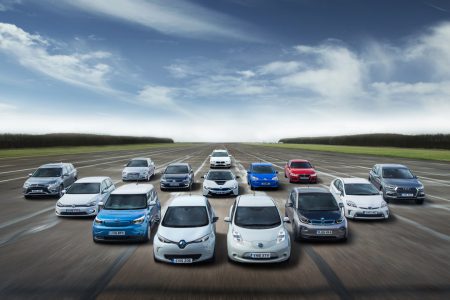
Volkswagen ID.3 electric car (Image: Volkswagen.com)

91% Of EV Drivers In The UK Would Never Go Back To An ICE Vehicle

Zap-Map in the UK focuses on electric mobility. People can visit its website or use its app to find EV chargers near them but Zap-Map does more. It lets drivers see in advance how much it will cost to recharge their cars using a particular public charger and calculates the cost of charging at home based on local electricity rates and time of use.

In November, it asked 2,000 EV drivers — the group included owners of battery electric and plug-in hybrid cars — in the UK whether they would consider going back to driving a car powered solely by a gasoline or diesel engine. 91% said no way, about 9% said they weren’t sure, and less than 1% reported they couldn’t wait to once again ride around exclusively in a cloud of exhaust gases. 73% of those who took the survey said the electric car they were driving was their first EV. 52% had purchased their EV with the last year. 91% of EV drivers reported they were satisfied

Owners of several electric cars — Volkswagen ID.3, KIA Niro PHEV, BMW 3 Series PHEV — reported they were 100% satisfied with their vehicles. The Tesla Model 3 got a 96% satisfaction rating as did the battery electric KIA Niro. The Hyundai Kona electric scored a 94% satisfaction rating while the Renault Zoe came in at 92% satisfied and the Nissan LEAF at 90% satisfied. Year to date, 9.7% of all new car sales in the UK are electric or a PHEV. In 2019, the number was 3.2%. Back in 2015 it was a barely discernible 1.1%.

Volkswagen ID.3 electric car (Image: Volkswagen.com)

Commenting on the latest survey, Zap-Map co-founder Melanie Shufflebotham, said “Our latest poll shows the strong and enduring impact of switching to a clean car. The evidence in favor of electric vehicles grows more compelling with each one of our surveys, even in a year as disruptive as 2020.”

She added, “The challenge for the automotive industry is to take advantage of the opportunities that EVs present, not only in terms of the rapidly expanding range, but also ensuring that sales staff are knowledgeable enough to present the benefits to their customers. At Zap-Map we monitor the growth of the charging network and it’s clear that many of the historical challenges of owning and running an EV have fallen away. The dramatic growth in EV sales in 2020 is one of the good news stories to come out of this difficult year for the car industry.”

RAC spokesperson Rod Dennis had this to say. “While the challenge is often convincing owners of petrol and diesel vehicles to switch to an electric vehicle in the first place, this data shows that once people have done so they seldom look back — which is also positive news for manufacturers that are investing heavily in electric vehicles and cleaner technology. While would-be electric car drivers might worry about range anxiety, they should also be aware that the number public charge points is increasing rapidly and infrastructure continues to improve. They should also remember that the vast majority of their journeys are unlikely to be over several hundred miles, meaning that for day-to-day travel, operating an electric vehicle is a clean and cost-effective option.

“These figures show the momentum that is behind getting drivers into electric vehicles, something that is likely to build as we move closer to the end of the sale of new petrol and diesel cars by 2030. We are doing our bit in giving drivers confidence they can make the switch, with 80 of our patrol vans now fitted with mobile emergency charging units, and half our fleet fitted with All-Wheels-Up recovery systems, removing the need for drivers to wait for a flatbed if they need a tow.”

Read more: CleanTechnica

It’s Time to Go Green!

If you would like to know more about Solar Panels and the PowerBanx range of home battery systems, and get a free instant quote, please complete our online form:

Renault ZOE Van (Image: Renault)

2020 has proven that electric vehicles are the future of transportation

Automakers have already begun to abolish ICE.

This year has made clear that the internal combustion engine’s (ICE) days are numbered. 2020 saw explosive growth in the automotive industry’s EV segment, with nearly every major manufacturer and brand group announcing, unveiling or debuting new and upcoming electric vehicles. Tesla managed to retain its position at the head of the market this year but its lead over rivals is shrinking as automotive stalwarts like GM, Fiat Chrysler, Hyundai Motor Group and the Volkswagen Group all jump into the EV fray. 2020 saw more than just new EV models, though: The battery technologies that power them and the transportation infrastructure that leverages them enjoyed some impressive advancements of their own.

Though it did not meet as many historic milestones as SpaceX did in 2020, Tesla still managed to get itself onto the S&P 500 market index, set quarterly vehicle delivery records (and is on pace to meet its year end goal of 500,000 deliveries), as well as make founder Elon Musk an obscene amount of money.

Among the company’s notable accomplishments, Tesla extended the range of this year’s Model Y to more than 400 miles per charge — that’s a 20-percent improvement over the 2019 model — as well as increasing its acceleration and lowering its price. Tesla also began delivering its new Model Y in March (including the company’s millionth vehicle) and rolled out a three-row, seven-seat option in early December. Unfortunately, the company’s long awaited electric Semi won’t see the light of day in 2020; Musk announced in April that its release has been delayed until 2021. However, Semi production is already beginning to ramp up in advance of that goal.

Renault ZOE Van (Image: Renault)

“It’s time to go all out and bring the Tesla Semi to volume production. It’s been in limited production so far, which has allowed us to improve many aspects of the design,” Musk wrote in a leaked email seen by CNBC.

Tesla made additional headlines in September during its Battery Day event when the company announced plans to develop a new generation of less expensive, more capable batteries within the next two years or so, which could lead to Teslas costing as little as $25,000. Even more exciting, Musk took the opportunity to unveil a new 1,100 HP “plaid” Model S as well. It goes on sale in 2021.

2020 has also seen a number of pricing shenanigans for some of Tesla’s more popular features. For example, In May, Musk announced via Twitter that the company’s forthcoming “full self-driving” package would become available in July for a whopping $7,000 — a grand more than the company had initially quoted. And, true to Musk’s word, that price increased again in October to a cool $10,000 once the feature entered beta. Musk claims that once completed the FSD package could be worth as much as $100,000 — despite its capabilities being panned by Consumer Reports and earning mediocre scores from Europe’s New Car Assessment Program (NCAP). Tesla also kneecapped its used car warranty and eliminated its long-standing seven-day return policy for new vehicles without any real explanations as to why. That’s due in part to the fact that Tesla also axed its entire PR department this year, opting instead to just have Musk tweet through it.

Tesla also helped found the Zero Emission Transportation Association, or ZETA, a 26-member lobbying group tasked with promoting and advocating the further adoption of EV technologies and services to lawmakers. We’ve already seen some significant movement towards EV tech at the state level with California moving to ban the sale of new ICE vehicles by 2035.

“This is the most impactful step our state can take to fight climate change,” California Governor Gavin Newsom said at a news conference in September. “For too many decades, we have allowed cars to pollute the air that our children and families breathe. You deserve to have a car that doesn’t give your kids asthma. Our cars shouldn’t make wildfires worse and create more days filled with smoky air. Cars shouldn’t melt glaciers or raise sea levels threatening our cherished beaches and coastlines.”

Read more: engadget

It’s Time to Go Green!

If you would like to know more about Solar Panels and the PowerBanx range of home battery systems, and get a free instant quote, please complete our online form:

Dacia Spring 2021 (Image: Dacia.co.uk)

Race is on as carmakers shut, switch or sell combustion engine factories

Manufacturers’ share prices will be dependent on their ability to avoid losses on ‘stranded assets’, says analyst

Carmakers will increasingly find themselves in a race to shut, switch or sell factories producing vehicles with internal combustion engines to avoid being left with “stranded assets”, as regulators set a course for a decade of electrification to reduce carbon dioxide emissions.

Traditional manufacturers are currently playing a “zero sum game” because growth in electric car sales eats into the value of internal combustion engine factories, which “are effectively stranded assets”, a leading analyst has warned.

Philippe Houchois, an analyst at Jefferies, an investment bank, said carmakers’ share prices will be in large part dependent on their ability to avoid losses on fossil fuel assets. “If you want to be a better valued carmaker you need to find a way to shrink your assets faster than a gradual transition to electric vehicles would suggest,” he said.

The industry has already made significant steps away from fossil fuels. The year 2020 will be seen as key for electric cars because of new EU regulations that mandated a limit on average carbon dioxide emissions of 95g/km across all cars sold. The UK has committed to carrying on its emissions regime at an equivalent or stronger level after the Brexit transition period ends on 1 January 2021.

Dacia Spring 2021 (Image: Dacia.co.uk)

The regulations have prompted a rapid increase in electric car sales as carmakers scrambled to avoid fines worth hundreds of millions of euros – although Volkswagen has already conceded that it will miss its 2020 target, incurring a fine estimated at around €270m (£248m).

BMW announced on Sunday it would build 250,000 more electric cars than it had previously planned between now and 2023. Oliver Zipse, the company’s chief executive, said he wanted roughly 20% of cars it sells to be electric by 2023, up from 8% this year.

More than 560,000 battery electric cars were sold in the year to November in western Europe, according to figures from Matthias Schmidt, a Berlin-based automotive analyst. Battery electric vehicles accounted for 8.7% of total car sales in November, up from just 2.7% the year before. Despite missing its emissions target, Volkswagen’s ID.3 became Europe’s most popular BEV, with 10,500 sold in October – although that still represented about a third of the sales of the internal combustion bestseller, the Volkswagen Golf.

The EU regulations will become slightly tougher during 2021 but carmakers already have their eye on two key milestones in the next decade. Carmakers will have to cut carbon emissions by 15% between 2021 and 2025, and by 37.5% from 2030, a requirement that will lead to the rapid decline of mass-market internal combustion engines.

However, tougher rules are expected as the EU aims to produce net zero carbon dioxide emissions by 2050. In the autumn EU officials floated halving car emissions within a decade.

Transport & Environment, a Brussels-based campaign group, has called for a final date of 2035 for the sale of all fossil-fuelled cars in the EU, a move that would match the UK’s ban. T&E’s forecasts suggest that the current targets allow carmakers to slow their rollout of electric cars, which the group argues would represent a missed opportunity for Europe to retain its lead over rivals including China.

Julia Poliscanova, T&E’s senior director for vehicles, said: “The current electric momentum risks fizzling out as soon as 2022 unless stricter CO2 rules are put in place.”

David Bailey, a professor of business economics at the University of Birmingham, said the likelihood of even tighter regulations raised the risks of stranded assets particularly for German carmakers, who were paying the price for taking the “wrong path” of investing heavily in diesels. The diesel industry was then rocked by costly emissions-cheating scandals, albeit related to harmful nitrogen oxides rather than carbon dioxide.

“You’re going to see the massive investment by the German makers in EVs, but they’ve got a huge sunk asset in diesels,” he said. “They’re trying to eke out some sort of profit from their existing lineup while investing in new technologies.”

Read more: The Guardian

It’s Time to Go Green!

If you would like to know more about Solar Panels and the PowerBanx range of home battery systems, and get a free instant quote, please complete our online form:

Milton Keynes 'Mushrooms' Charging Hub (Image: T. Larkum)

Shell to replace UK service station forecourt with EV charging hub

A fully operational Shell service station in Fulham, West London could soon be entirely replaced by electric vehicle chargers, making it the first to do so in the UK.

It’s another signal that the shift to electric vehicles is well underway, and follows hot on the heels of the UK announcement last week to bring forward a ban on new petrol and diesel car sales to 2035.

Similar changes are already underway in Norway and the US, where fuel pumps have been ripped out in favour of EV chargers in preparation for a transition to electric vehicles.

The EV-only hub, for which a planning application will be submitted by the end of February, will consist of 10 150kW DC fast chargers situated under solar panel canopies complete with flower beds.

Milton Keynes 'Mushrooms' Charging Hub (Image: T. Larkum)
Milton Keynes ‘Mushrooms’ Charging Hub (Image: T. Larkum)

“We’re looking at the next evolution and the needs of our customers in the broader sense,”Shell UK general retail manager Bernie Williamson was quoted as saying by Forecourt Trader.

“We’re doing nature-based solutions, giving motorists the opportunity to do something about their carbon footprint as we continue to invest and ramp up long-term solutions of electric vehicle charge posts for those people when they’re ready to move to EV transportation.

“We’re ideally placed for that – we have a fantastic network where over 75% of the population are within 15 minutes of a Shell service station.”

The announcement comes as Shell installed its 50th EV charger in the UK and the first 150kW charger at a service station.

The welcoming, eco-friendly environment will be complimented with a convenience with grass roof where drivers can spend some time relaxing while their electric vehicles “top up”.

By the end of 2020, Shell plans to have installed a total of 70 charging sites with a view to as many as 200 by the end of 2021.

“We’re trying to look at customer demand, and trying to be slightly ahead of that demand. There’s big demand in the cities, and then it will be the joining up of the cities,” said Williamson.

“In London our busiest site is in Holloway where we have two chargers, handling about 200 customer visits a month. We’ve started with 50kW posts, but are gradually moving to 150kW.

“Our charge posts are supplied by 100% renewable electricity – so by definition if you’re an EV driver and you’re charging up at Shell, you’re driving carbon neutral,” said Williamson.

Read more: The Driven

It’s Time to Go Green!

If you would like to know more about Solar Panels and the PowerBanx range of home battery systems, and get a free instant quote, please complete our online form:

BMW i3 and i3S 120Ah (Image: BMW Group)

The electric cars to get excited about in 2021

2020 has proved to be a big year for electric vehicles. With increasing demand, the production of EVs has increased significantly and newer and more innovative models have come onto the market.

It means that 2021 looks set to be an even bigger year for battery-powered cars. Needless to say, there are some exciting new electric vehicles on the horizon, but we’ve picked out some of the key ones you should be getting excited about.

Ford Mustang Mach-e
Ford’s new Mustang Mach-e is by far one of the most exciting EVs due to arrive next year. As the firm’s first standalone electric vehicle, the Mustang Mach-e is how the Blue Oval will properly announce its entry into the battery-powered world.
With more than 330bhp on tap and a 0-60mph time of just over five seconds, the Mustang Mach-e looks set to have the performance boxes ticks, too.

Skoda Enyaq
Electric models are cropping up thick and fast across the entire Volkswagen Group and Skoda looks set to become the next to debut its own electric vehicle with the new Enyaq. With a range of up to 316 miles, the Enyaq is expected to cost from £33,340 – excluding the Government’s plug-in car grant.
It’ll be available with two battery size options, too, as well as rapid charging capabilities.

Mazda MX-30
Mazda’s striking MX-30 looks set to shake up the EV segment, bringing striking looks and a classy cabin alongside that all-important electric powertrain. Though its range is on the shorter side of things at 124 miles, as a rival to the likes of the Honda e and Mini Electric the MX-30’s practicality shines through.
Plus, it features clever suicide-style doors which are likely to get a conversation going.

BMW i3 and i3S 120Ah (Image: BMW Group)

BMW iX3
Though BMW’s i3 has been a key contender in the EV segment for many years now, the German firm has yet to elongate its range of electric vehicles – until now, that is. The iX3 enters into the flourishing electric SUV area of the market, bringing a high ride height and imposing looks, which are part and parcel in the segment.
It’s got a decent 285-mile range, too, and will deliver a 0-60mph time of 6.5 seconds.

Cupra el Born
Cupra has really come on song since announcing itself as a standalone brand from Seat, introducing smart and performance-orientated models. In 2021, Cupra will be switching its focus to electric vehicles with this – the el Born.
Based on the same platform as the Skoda Enyaq, it too will bring a range of over 300 miles as well as fast charging capabilities.

Read more: EveningExpress

It’s Time to Go Green!

If you would like to know more about Solar Panels and the PowerBanx range of home battery systems, and get a free instant quote, please complete our online form: