Monthly Archives: January 2021

Volvo XC40 P8 (Image: media.volvocars.com)

The Five Factors Driving The Mass Adoption Of Electric Vehicles

Global electric vehicle sales grew by 43% during 2020, and in some markets such as Norway or the Netherlands sales outnumber petrol and diesel cars.
In Europe overall, electric sales during 2020 exceeded half a million units, while in the United States, the new Biden administration is considering incentives to put millions of electric vehicles on the road. Finally, after much lost time, everything indicates that we have reached the tipping point, that 2021 will mark the beginning of mass adoption, and that the internal combustion engine will have seen its day.

There are five factors behind the consolidation of the electric vehicle as a market trend:

Technology: the critical threshold that many considered necessary for the adoption of the electric vehicle as a mainstream automotive technology, consisting of improved and cheaper batteries below $100 per kilowatt hour, has recently been recently surpassed. In addition, battery technology continues to improve continuously, meaning we could soon be able to travel hundred miles on a five-minute charge, and having practically no problems with degradation over time.

Volvo XC40 P8 (Image: media.volvocars.com)

Emissions regulations: the imposition of emissions limits for vehicle manufacturers in the European Union — calculated on the total number of vehicles sold — has led the traditional car companies to begin switching to electric vehicles as the only way to avoid heavy fines. More and more companies are now considering their engine plants as assets that need to be disposed of urgently, disinvesting at an accelerated pace if emissions targets are to be met. In addition, several countries have brought forward the ban on the sale of petrol and diesel vehicles: in the United Kingdom, news that the target date for the phase-out has been brought forward to 2030 has increased interest in electric vehicles by 500%.

The environment: the growing evidence that the myths fed by the oil companies were false: electric vehicles are cleaner regardless of the origin of the electricity they consume.

Cost: although the price of electric vehicles is still somewhat higher than that of traditional vehicles, we’re getting ever-closer to parity, and there is growing evidence that in terms of total costs, running an electric vehicle is far cheaper, partly due to the price differential between electricity and diesel or gasoline, along with low maintenance. This change, in fact, threatens the traditional distribution structure of the automotive industry: one in six Cadillac dealers decided to close rather than follow the brand’s recommendations and start selling electric cars. Simply put, when you take maintenance out of the equation, there’s not much in it for dealers.

A fast-changing market: Volkswagen, copying Tesla, has launched its ID range; GM is pressing ahead with a complete transition; Toyota, after many years on the sidelines of electrification, has finally announced an all-electric vehicle. And then there are companies such as the UK’s MG, the alliance between the Chinese technology company Baidu and the automotive giant Geely, the announcement that Hyundai will manufacture electric vehicles designed by Apple, and the major investment round obtained by Rivian. Companies such as Volkswagen, the Renault-Nissan-Mitsubishi consortium or the alliance between Hyundai and Kia match or surpass the all-powerful Tesla in the European market. Technologically, Tesla is still several years ahead of its competitors, but undoubtedly, the arrival of cheaper electric vehicles from other brands, which brings a more complete range of models and prices, has acted as a real catalyst for market development.

At this stage in the game, as deadlines on their sale and restrictions on their movement loom, along with higher fuel prices and taxes, buying a petrol or diesel vehicle makes no sense and so more and more brands are reducing the presence of these vehicles in their range. Simply put, an obsolete technology is now being abandoned, a process that points to a healthier, brighter future for all.

Read more: Forbes

It’s Time to Go Green!

If you would like to know more about Solar Panels and the PowerBanx range of home battery systems, and get a free instant quote, please complete our online form:

Nissan e-NV200 Winter Camper Concept (Image: Nissan)

Nissan e-NV200 Winter Camper concept unveiled

Nissan goes off-piste with an electric camper based on its e-NV200 Combi MPV

This is the Nissan e-NV200 Winter Camper concept, a modified version of the brand’s electric-van-based MPV. With a host of modifications to help it deal with snowy conditions and adventurous camping expeditions, Nissan says the concept “combines the thrill of electric driving with the spirit of the wild”.

Nissan has fitted the e-NV200 with its Camper Technology Luxury Kit, which comprises an on-board 220V power pack, roof-mounted solar panels and an integrated kitchen with fridge, folding beds and insulated glass.

These camping essentials have been combined with external modifications intended to help the e-NV200 fare better over rough terrain, including off-road tyres, a raised ride height and a set of spotlights up front. Other accessories include rear mudguards, rubber mats and door-entry guards, all of which are available as ‘Nissan Original Accessories’ for the standard production version.

Nissan e-NV200 Winter Camper Concept (Image: Nissan)

The Winter Camper concept is otherwise unchanged from the standard e-NV200 and so uses the same powertrain, with a 40kWh battery offering 124 miles of range. There are no plans to put the Winter Camper into production, but it does act as a showcase for the potential of Nissan’s electric MPV – and some of the accessories available when you place your order.

“For Nissan, electric mobility is all about offering an exciting experience behind the wheel – while above all remaining conscious of our impact on the environment,” said Dmitry Busurkin of Nissan Europe. “Imbued with the essence of adventure and thrilling electrified power, the Nissan e-NV200 Winter Camper concept van is an expression of the future of zero-emissions mobility.”

This isn’t the first time Nissan has experimented with custom versions of its electric model. In 2020, it revealed the Nissan RE-LEAF disaster-response vehicle and for Clean Air Day in 2019 it commissioned an e-NV200-based ice-cream van.

Read more: driving electric

It’s Time to Go Green!

If you would like to know more about Solar Panels and the PowerBanx range of home battery systems, and get a free instant quote, please complete our online form:

Ubitricity Electric Avenue project lamppost charging (Image: Siemens)

Plug-in car sales grew by 140% in 2020

Sales of pure electric and plug-in hybrid cars soared last year, with more than 175,000 vehicles registered representing a growth of 140%.

The figures confirm that, for the first time, one in 10 cars registered in the UK last year were electric, with one EV registered every three minutes.

Across 2020, 108,205 fully electric vehicles were registered, up 185% year-on-year. Meanwhile, plug-in hybrid registrations rose by 91%, amassing 66,877 units.

This means the total number of electric and plug-in hybrid cars registered in the UK is fast approaching the half-a-million mark (409,330).

Ubitricity Electric Avenue project lamppost charging (Image: Siemens)

New company car tax rates helped drive the increased adoption.

Poppy Welch, head of Go Ultra Low, said: “The increase in uptake of EVs never ceases to impress me. While there were less than a handful of EVs to choose from in 2011, there are now more than 100 models available and for the first time ever, manufacturers are scheduled to bring more brand-new EVs to market than either petrol or diesel models. 2020 really was just the start of the electric revolution, and we’re looking forward to helping even more consumers and businesses begin their EV journey.”

The Tesla Model 3 topped the overall best-sellers list for two months of the year (April and December), while the BMW 3 Series established itself as the most popular plug-in hybrid.

Transport Minister Rachel Maclean added: “In what has been a difficult year for the wider car market, it’s encouraging to see that EV sales have dramatically increased over the year. This government is going further and faster than ever before to decarbonise transport and this is welcome news as we accelerate towards a cleaner, greener transport future.”

Read more: Fleet News

It’s Time to Go Green!

If you would like to know more about Solar Panels and the PowerBanx range of home battery systems, and get a free instant quote, please complete our online form:
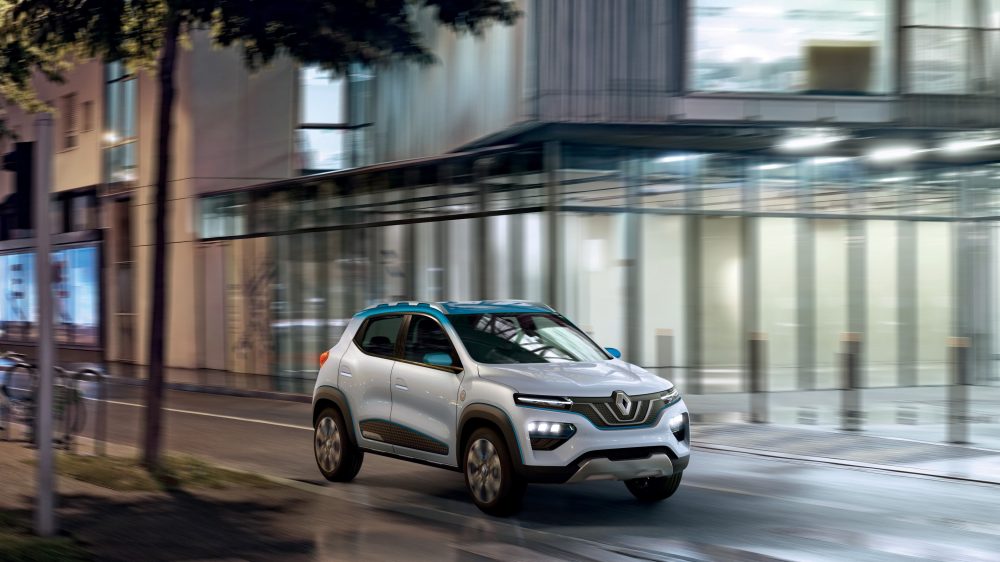
K-ZE All-electric Crossover (Image: Renault)

Inside the industry: Why rule of origin is a Brexit time bomb

EV batteries sourced from abroad could be subject to a 10% tariff, spelling trouble for cars assembled in UK

Feet up, mug of tea in hand and… breathe. Time to tick Brexit off your worries list? Don’t you believe it, because among the devilish details (most of which present more difficulties than impossibilities, thereby still eating time and expense) lurks a ticking time bomb that threatens to destabilise the UK car industry unless urgent action is taken.

It relates to a requirement for the UK or EU content of cars to ramp up between now and 2027, with a particular emphasis on the entire battery in any EV being sourced from either of the regions by that date. Failure to meet these ‘rules of origin’ will result in 10% tariffs being added that would threaten the value of assembling cars in the UK.

If you judge on EVs’ UK market share of 6.6% last year, you might well see it as an issue gladly kicked down the road, but the trajectory of uptake is heading only one way to 2030 and beyond.

Some 200,000 today work in vehicle manufacturing and its supply chain, many in jobs, most notably engine-related, that are on a path to no longer existing.

K-ZE All-electric Crossover (Image: Renault)

The choice is between encouraging battery makers to invest here (gigafactories cost billions, take around two years to build and need very complex supply chains) or giving away the skills and employment opportunities and importing from the EU, as Mini does on a relatively small scale for the Electric (proving that the objections over complexity and cost are surmountable, at least).

At present, the latter looks more likely than the former. Today we have one battery facility – in Sunderland, built by Nissan to support Leaf EV production, now sold but still supplying the factory – and a second at the late planning stage, being set up by Britishvolt, a start-up that’s set to launch in 2024 to supply a currently unknown customer base.

Sunderland makes about 2GW of batteries per year, and Britishvolt will take that figure to 15GW, or enough to make around 250,000 EVs. In normal times, the UK makes around 1.3 million cars annually, so the need to scale up again if we want homegrown production beyond 2030 is clear.

Yet for now, there’s no visible queue of willing investors or government encouragement to make the UK look more enticing to investors. Meanwhile, EU nations are fast-tracking their plans and getting a headstart on developing the infrastructure that will be at the heart of the industry in the future.

Our place in the car-making hierarchy right now drives huge amounts of employment, revenue and investment. But without long-term planning, a large slice of its competitiveness is going to come back into the spotlight in just a few years.

Read more: AUTOCAR

It’s Time to Go Green!

If you would like to know more about Solar Panels and the PowerBanx range of home battery systems, and get a free instant quote, please complete our online form:

White Tesla Model S (Image: T. Larkum)

Tesla’s Dominance Could Be Under Threat Sooner Than You Think

Tesla currently has a very clear technological lead over its competitors. One teardown in 2020 estimated it to be six years ahead of Toyota and VW. There seems no stopping the share price of the company either. In fact, Tesla doesn’t just have a higher market cap than Toyota, it’s nearly four times as much now and recently passed Facebook to become the fifth most valuable US company. But although Tesla is awash with investor cash and producing cars that have significantly more range and performance than other vendors, there are signs already that its market lead is eroding, and competitors are starting to catch up.

One of the first indications is just how well Volkswagen is already doing with its new ID.3 compact car in Europe. It was the best-selling EV in Europe in October. The Tesla Model 3 is still way ahead as the best-selling EV globally and has now sold more units than the Nissan Leaf, despite the latter just reaching its tenth anniversary where the Model 3 isn’t even four yet. But in Europe in November 2020 the Renault Zoe came top, with the ID.3 second and the Hyundai Kona Electric third. The Tesla Model 3 was fourth, and the Model S and X weren’t even in the top 20, whereas the technically inferior Audi e-tron was. This is causing some concern with European investors.

Part of the problem is that Tesla is still targeting a relatively premium end of the EV market, with its cheapest vehicles in the USA still around the $40k mark, and more expensive in Europe. To hit much higher volumes, it sorely needs a smaller, cheaper car for greater mass market appeal. The Model Y is in the crossover / SUV format, which is more popular than “mid-sized sedans” like the Model 3. But it’s no cheaper and still won’t compete in the same segment as the Renault Zoe, VW ID.3 or Hyundai Kona.

Tesla is rumored to be gearing up to build a new car in China already, which some have mooted could be the much-anticipated $25,000 Model 2. But where a $25,000 car sounds like decent value in the West, there are already plenty of cars on sale in China for less than this, and not just tiny urban-only vehicles like the infamous Wuling Hong Guang Mini EV. The BYD e2 is close to $20,000 before any subsidies, yet still offers a very respectable 190 miles of NEDC range.

White Tesla Model S (Image: T. Larkum)

Last week, I highlighted some of the Chinese cars that we are likely to be seeing come out of China into the US and European markets in 2021 – a couple of which have arrived already like the Polestar 2 and MG5 EV. These will not only be competitively priced but extremely well specified as well. There’s a good reason for Chinese EVs to be looked upon as the biggest competitor in the market, too. The huge range of increasingly capable EV models is there to fulfil a local need. A big explosion in the size of the Chinese EV market is expected in 2021, which will become larger than the rest of the world put together by unit volume, if not value.

Whatever the value of Tesla as a company, it could have had its day in the sun already as biggest EV gorilla in the room. Green and high technology hedge fund Snow Bull Capital has made some very telling predictions about the future of EV sales. In 2020, Tesla just fell short of selling its target of half a million cars, which is incredible considering the youth of the company. Snow Bull expects its sales to peak at just under 7 million cars by 2031. But then it will decline, and more tellingly, the estimate is that Tesla’s market share of EVs has already peaked in 2020 at around 23% and will reduce to 8% by 2040, as other vendors pick up volume.

I already argued a month ago that 2020 was the year EVs came of age, and lots of big players are taking notice. Apple appears to have resuscitated its plans for an autonomous EV, Sony has teased some more details and videos of its Vision-S concept, and NIO recently launched its ET7, which could really take the battle to Tesla thanks to a 150kWh solid-state battery that allegedly will provide over 1,000km (620 miles) of NEDC range. Then there’s the Lucid Air, due to arrive this year, which could be a Tesla Model S killer, particularly as its CTO was formerly the chief engineer at Tesla behind the Model S.

One of the many areas where Tesla currently has a very clear lead over the competition is battery technology and the efficiency it can extract from its power packs. As an example, the Tesla Model 3 Standard Range Plus manages 267 miles out of a 54kWh battery, whereas the VW ID.3 requires 58kWh to go 263 miles – and the ID.3 is over 100kg lighter, too. At Tesla’s Battery Day last year, the company announced a host of technological developments, but in particular a new cell type called 4680, which will see limited initial delivery in the Tesla Model S Plaid this year.

Although batteries are becoming inexorably cheaper, the 4680 will accelerate that greatly once it enters mass production. The battery cost of $100 per kWh has long been considered the magical point where EVs start being cheaper than internal combustion engines. Tesla’s current Panasonic 2170 cell technology isn’t expected to hit that point until 2022/23, and being new tech, the 4680 will take a bit longer. By 2024 it will significantly undercut the 2170 per kWh.

Read more: Forbes

It’s Time to Go Green!

If you would like to know more about Solar Panels and the PowerBanx range of home battery systems, and get a free instant quote, please complete our online form:
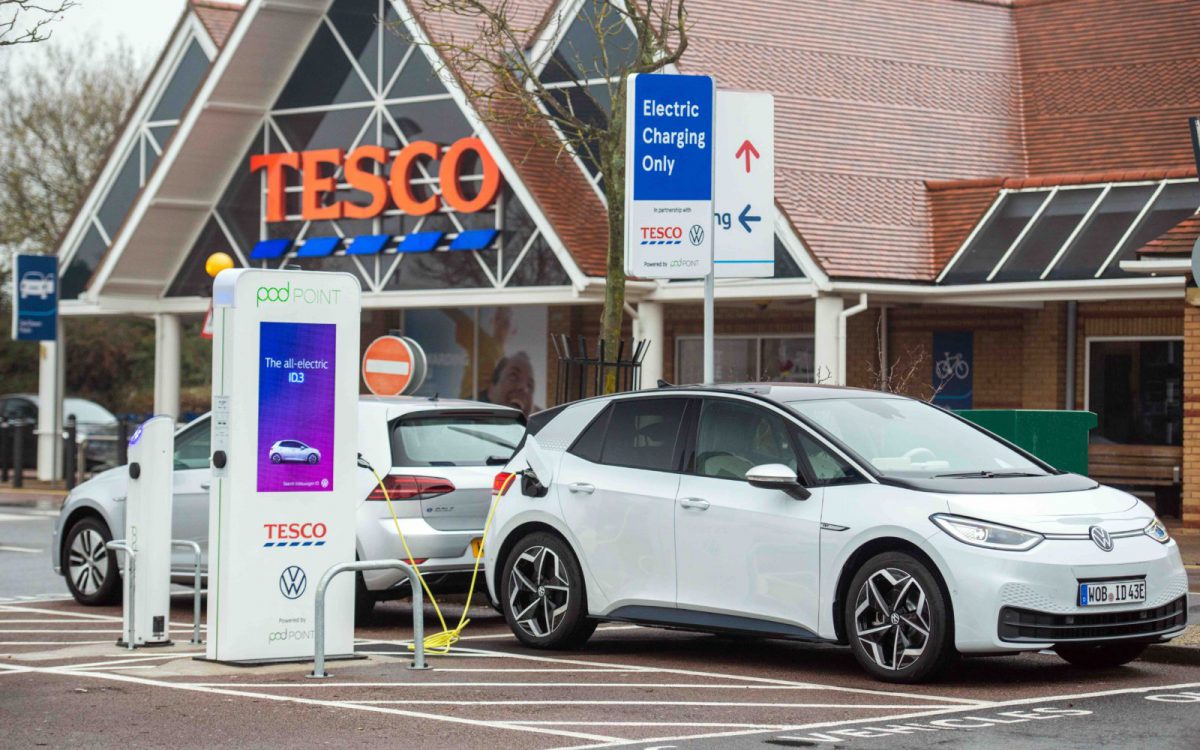
POD Point Rollout at Tesco Stores (Image: Tesco/POD Point)

Analysis: Demand for plug-ins rose, while fossil fuels dipped

That’s the precis of the sales story for new cars in 2020 but the devil is in the detail

New car registrations fell by around 29.4% in the UK last year, with the 1,631,064 cars sold the lowest total since 1992, as the industry was hit hard by the effects of Covid-19 lockdowns. But new sales of both electric cars and plug-in hybrids both rose sharply, with plug-in cars now accounting for more than 10% of UK sales.

Data from the Society of Motor Manufacturers and Traders (SMMT) reveals 680,076 fewer new cars were sold in the UK last year than 2019, the largest year-on-year fall since 1943.

The bulk of the sales decline in 2020 was attributed to the first lockdown, from March to June last year, when many dealerships were shut. Although sales fell during the second lockdown, in November, dealerships were able to continue offering ‘click and collect’ online sales – which will also be allowed during the current lockdown introduced in England by the UK government.

Before the pandemic began, the SMMT estimated around 2.2 million cars would be sold in the UK last year. The final figure represents a loss to the industry of around £20.4 billion and a £1.9bn loss to the UK government in VAT receipts.

“There’s no surprise it was a very, very difficult year,” said SMMT chief executive Mike Hawes. “These are unprecedented levels and it’s challenging the industry continuously.”

While the overall figures are grim, there are some positive signs for the industry. Sales of battery-electric vehicles (BEVs) and plug-in hybrids (PHEVs) both increased substantially. Those rises will be viewed against a backdrop of the UK’s intention to ban sales of all non-zero-emission cars, with the exception of certain hybrids, by 2030.

POD Point Rollout at Tesco Stores (Image: Tesco/POD Point)

How Covid-19 impacted the UK industry in 2020

Hawes said the UK car market outperformed Spain but fared worse than Germany, France and Italy, adding: “It’s notable that those countries had some form of incentive [for buyers, to boost new cars sales], sometimes confined just to PHEVs and battery-electric vehicles.”

The sales decline was particularly sharp in the fleet and business sectors. While sales of private cars fell 26.6%, fleet sales dropped 31.1% and business sales slumped 43.3%.

Aside from specialist sports cars (up 7.0%), every sector of the market declined in terms of total sales last year, but some performed better than others. Sales of superminis showed the smallest fall in total sales and their overall market share grew from 29.7% to 31.2%.

EV and PHEV sales increase dramatically

The rise in the number of BEVs and PHEVs on sale in the UK helped to significantly increase sales of both last year. A total of 108,205 EVs were sold, representing a 185.9% year-on-year increase and rising from 1.6% of the overall UK car market to 6.6%. Meanwhile, PHEV sales rose 91.2% to 66,877, increasing from 1.5% of the market to 4.1%.

This means that 10.7% of all new cars sold in the UK in 2020 had some level of zero-emission running capability and could be plugged in. With standard hybrids included, 17.5% of cars registered in the UK last year were electrified. Sales of mild-hybrid petrol and diesel cars both increased.

Although that’s encouraging, Hawes noted that these figures will need to continue rising, given the UK government’s target of banning most internal-combustion-engined cars by 2030. He added that meeting this date requires “a strong industrial strategy from government that really ensures the UK remains competitive, attracts investment and remains a strong market [for EVs].” He also said “massive investment” is needed, both to develop battery manufacturing capability and the infrastructure required for mass EV uptake.

“We need an investment in infrastructure of something in the tune of £16bn, with a lot of that going into public on-street charging because not everyone has a driveway or designated parking spot with access to their own charging infrastructure,” said Hawes.

Although they remain the two most popular fuel types, the market share of both petrol and diesel cars declined in 2020. Sales of diesels fell 55.0%, from 581,774 in 2019 to 261,772, while mild-hybrid diesel sales rose from 33,931 to 60,953. Combined, diesel-engined cars now account for 19.7% of the UK market. That compares with 25.2% in 2019 and represents their lowest market share since 2001, when they accounted for 17.8%.

Read more: AUTOCAR

It’s Time to Go Green!

If you would like to know more about Solar Panels and the PowerBanx range of home battery systems, and get a free instant quote, please complete our online form:

West Sussex Council Fleet Goes Electric With Renault ZOE (Image: Renault)

The Zoe Led Renault’s Electric Climb Up The Sales Charts In 2020

Renault claims it is now the EV leader in Europe. The French carmaker announced as much as it wrapped up sales figures for 2020.

The carmaker’s worldwide sales figures are down due to the pandemic, but its EV sales have been buoyed by the little Renault Zoe, which moved in big numbers across the region. Really, Renault’s EV figures have not been buoyed by the Zoe so much as surged on. Renault sold 115,888 electric vehicles in Europe. This is an increase of 101.4 percent over 2019. Of those EVs sold, 100,657 were Zoes.

Clearly, it’s because of the Zoe that Renault is claiming the EV crown in Europe, and we would tell the French multinational to mind its victory lap, with competitors like the Volkswagen ID.3 and the MG ZS EV at the Zoe’s heels. But there’s no denying that the Zoe is enjoying unprecedented success.

West Sussex Council Fleet Goes Electric With Renault ZOE (Image: Renault)

And even though the Zoe is Renault’s EV heavy-hitter at the moment, making up roughly 86 percent of Renault’s entire EV sales, the carmaker expects its other BEV and PHEV models — such as the Clio, Captur and Megane Estate — to round out the sales stats. And Renault is looking forward to its upcoming E-TECH hybrids like the Arkana and Megane sedan.

Try saying that last model name fast five times — it’s actually not that hard, but it is fun. The Dacia Spring Electric and the Renault Twingo Electric will join the Zoe this year, too, and this gives us a clear look at the Groupe Renault’s EV lineup into the new year. Those three models cover the crossover, mini, and supermini segments, so Renault is placing itself in a good position to take on the likes of Volkswagen and Honda.

And to zoom out and look at the broader European market, overall sales of EVs — again, both PHEVs and BEVs — reached 1.33 million units last year, according to Schmidt Automotive Research. That figure amounts to 12 percent of all new cars sold across Europe in 2020. Even though that is a relatively small slice, it’s still a significant number.

Though, it’s important to note that the delta in ICE vs. EV sales could have skewed slightly in favor of electrics due to the pandemic affecting sales overall. Meaning, EVs got a bigger percentage this year as overall sales were down; fewer cars were sold, but more of those that were sold were EVs.

But the big EV push is just beginning, and as of right now, in Europe Renault is pushing hardest.

Read more: JALOPINK

It’s Time to Go Green!

If you would like to know more about Solar Panels and the PowerBanx range of home battery systems, and get a free instant quote, please complete our online form:

Nissan Leaf (Image: Qurren/Wikipedia)

Inside the industry: Will electric early movers reap dividends?

Firms like Nissan, Renault and BMW have plugged serious money into electrification but a coherent vision is key

It’s hard to look ahead when you are fighting fires, but for years now, across the automotive industry, yesterday’s crisis has been merging into tomorrow’s crisis, every perfect storm somehow becoming yet more perfect. The pattern is set to continue.

Take a step back and it’s interesting to note which manufacturers have had the foresight, resources and brain capacity to invest in communicating their strategy out to the theoretical furthest point, whatever it may be: electrification, certainly; autonomy and connectivity, too; but also as far out as modelling worlds in which we don’t own cars but hire them, or potentially don’t even allow cars into city centres – or anywhere at all.

Nissan Leaf (Image: Qurren/Wikipedia)

You might argue that all this change is unimportant until it becomes a money-making reality. A live case study to ponder is whether Nissan, Renault or BMW will enjoy any long-term benefit from moving early on electrification. The investment in the Leaf, Zoe and i3 – plus spin-off vehicles – runs to billions, but it’s hard to pinpoint any advantages, either in brand perception or profits. Maybe in time.

Perhaps the key to success here is offering a singularly distilled vision. In some cases, that’s simple: Tesla is the world’s most desired electric car brand because all it does is make desirable electric vehicles. Most rivals are beholden to profits from ‘legacy’ combustion-engined cars, their heritage suddenly a millstone. Mixed messages abound.

But even then, a coherent vision can reap dividends, and Volvo is the most prominent example of the quantum leap that can be made with such forward thinking. Back in 2014, when the XC90, the first of its new-generation cars, was launched, Volvo was marooned somewhere between premium and mainstream brands, a fringe player with a set of unfocused objectives selling around 400,000 cars a year.

A succession of new, quality cars has been central to its renaissance but so, too, has its ability to colour in its own road map. Its claims in 2017 to make its entire range electrified by 2020 – neatly overlooking that this included mild-hybrid systems – landed it perception-shifting headlines. Likewise, its oft-stated vision to ensure that nobody is killed in or by one of its cars. Today, it is selling around 800,000 cars a year.

People don’t just buy cars for what they can do for them today, but rather what they will say about them into the future. It’s remarkable how few car makers are willing to tell that story – but just as clear that the smartest car makers are doing just that.

Read more: AUTOCAR

It’s Time to Go Green!

If you would like to know more about Solar Panels and the PowerBanx range of home battery systems, and get a free instant quote, please complete our online form:

BMW iX3

Electric car sales soar amid turbulent year

Battery and plug-in hybrid electric cars together accounted for more than one in 10 registrations last year – up from around one in 30 in 2019, amid a turbulent year for the new car market.

Overall, the new car market fell by almost a third (29.4%) in 2020, with annual registrations dropping to 1,631,064 units – their lowest level since 1992, according to the latest figures from the Society of Motor Manufacturers and Traders (SMMT).

Against a backdrop of Covid restrictions, an acceleration of the end of sale date for petrol and diesel cars to 2030 and Brexit uncertainty, the industry suffered a total turnover loss of some £20.4 billion, the SMMT said.

Private vehicle demand fell by 26.6% overall, amounting to a £1.9 billion loss of VAT to the Exchequer.

The year saw also saw 31.1% fewer vehicles joining large company car fleets.

It was, however, a bumper year for battery and plug-in hybrid electric cars.

Demand for battery electric vehicles (BEVs) grew by 185.9% to 108,205 units, while registrations of plug-in hybrids (PHEVs) rose 91.2% to 66,877.

BMW iX3
BMW iX3

Analysis from the RAC shows that twice as many BEVs were sold last year compared to the year before, and a total of more than 200,000 have been registered since 2010.

December alone saw more zero-emission vehicles registered than ever in a single month (21,914, a fraction higher than September’s figure of 21,903).

Though starting from a lower base, the growth in electric car sales is impressive, the RAC said, with 6.6% of all new vehicles registered in 2020 being zero-emission, up from just 1.6% in 2019 and 0.7% in 2018.

This means that getting on for a fifth of all cars registered last year (17.5%) were zero-emissions capable – up from just 7.4% in 2019.

RAC data insight spokesman Rod Dennis said: “The end to an unexpected and, from the motor industry’s perspective, unwanted 2020, saw record sales of battery-electric vehicles, providing evidence that, from small beginnings, momentum is now gathering pace.

“There’s a long way to go, with only a tiny fraction of the total 31.2 million cars on the UK’s roads fully zero-emission, but the direction is becoming clear.

“The sight of more electric vehicles on our roads, many sporting number plates with the new ‘trademark’ green flash, might begin to make drivers who are considering changing their car look into whether ‘going electric’ makes sense for them.

“Issues around charging infrastructure aside, it’s the cold hard economics of buying or leasing a car that might yet hold them back with pure electric cars continuing to command a premium list price over their petrol and diesel equivalents.

“While petrol car registrations will likely recover somewhat in 2021, the question is how many drivers are prepared to switch to an EV at the expense of conventionally fuelled vehicles?

“As the impact of the pandemic continues to be felt the inclination of drivers and businesses to continue acquiring new cars will be critical, as will the effectiveness of dealers in being able to conduct new car sales entirely online during lockdowns.

“But there is surely little doubt that 2021 will shape up to be a very exciting year for the UK’s electric car market.”

More than 100 plug-in car models are now available to UK buyers, and manufacturers are scheduled to bring more than 35 to market this year – more than the number of either petrol or diesel new models planned for the year.

Read more: Smart Transport

It’s Time to Go Green!

If you would like to know more about Solar Panels and the PowerBanx range of home battery systems, and get a free instant quote, please complete our online form:

Renault ZOE 2020 (Image: Renault.com)

Renault doubles EV sales in Europe

Renault has presented its electric car sales statistics for 2020. According to the figures, the French automaker was able to sell 115,888 electric vehicles in Europe, around twice as many as in 2019. The company’s most successful electric model by far was, once again, the Renault Zoe.

In relative terms, Renault’s electric car sales increased by 101.4 per cent compared to 2019. In the process, the Zoe cracked the 100,000 sales mark (100,657) as the manufacturer’s most successful electric vehicle model by far in 2020, up 114 per cent year-on-year. In the electric commercial vehicle segment, the Kangoo Z.E. was the best-selling vehicle. So while the crisis year, with its increased subsidies in many places, gave a huge boost to electric car sales at Renault, the French company’s overall sales slipped – by 21.3 per cent, much more sharply than the average for the global car market (down 14.2 per cent).

Renault ZOE 2020 (Image: Renault.com)

In 2021, the Renault Twingo Electric and the Dacia Spring will expand Groupe Renault’s all-electric range. They will be joined by further hybrid and plug-in hybrid variants of existing vehicles under the E-TECH label. For example, the Group is announcing the Arkana E-TECH hybrid, the Captur E-TECH hybrid and the Megane E-TECH plug-in hybrid in the sedan variant for the first half of 2021.

In the past year, the E-TECH vehicles already positioned on the European market (Clio E-TECH hybrid, Captur E-TECH plug-in hybrid and Megane E-TECH plug-in hybrid in the station wagon variant) sold more than 30,000 units, according to Renault. That represents 25 per cent of the order volume for these vehicles, the company says.

Group CEO Luca de Meio says that Groupe Renault is aiming for a turn around: “We are now focusing on profitability rather than sales volumes, with a higher net unit margin per vehicle in each of our markets. The first results are already visible in the second half of 2020, especially in Europe where the Renault brand is making progress in the most profitable sales channels and strengthening its leadership in the electric segment.” Renault said it is starting the young year with a higher order backlog than in 2019, lower inventory levels and higher price positioning across its range.

Incidentally, in addition to its strong position in the battery electric vehicle market, Renault is also aiming to pave the way for fuel cell-powered light commercial vehicles in Europe and position itself early on this market: To this end, the French have decided to set up a joint venture with fuel cell specialist Plug Power based in France, aiming for a share of over 30 per cent of the market for fuel cell-powered light commercial vehicles in Europe.

Read more: electrive.com

It’s Time to Go Green!

If you would like to know more about Solar Panels and the PowerBanx range of home battery systems, and get a free instant quote, please complete our online form: