Monthly Archives: August 2016

EV sales boost ‘vital to closing emissions gap’

The market share of electric vehicles (EVs) must be increased to achieve the fuel economy standards set by regulators.

ev_charging_sign_shutterstock

According to the World Energy Council (WEC), EVs currently represent less than 1% of the combined market share across the world’s largest markets – EU, US and China – for new passenger cars.

Its report states the three regions have set major fuel economy targets, requiring efficiency improvements of around 30% by 2020 – two to three times higher than current levels.

The WEC believes the market share needs to be increased to 16% by the end of the decade to close the emissions gap.

The EV gap, i.e. the number of EV sales required to meet fuel economy targets, in the EU is 1.4 million – 10% of the estimated 2020 projected car sales.

In the US, it is 0.9 million (11%) while in China, it is roughly 5.3 million (22%).

The report adds power demand attributed to new EVs can likely be managed with proper planning by utilities and could be further mitigated at the local level with emerging technologies such as vehicle-to-grid.

It recommends policymakers to examine how proposed fuel requirements can be matched by working with industry through financial and operational incentives to achieve improvements in CO2 emissions.

Christoph Frei, Secretary-General of the World Energy Council, said:

“Over the past decade, we have seen the emergence of climate change and fuel price volatility as headline issues that keeps energy leaders awake at night. As a result, many countries have set ambitious fuel efficiency targets for passenger vehicles.

“The innovative role EVs can play in meeting these standards makes for a pragmatic step in closing the emissions gap by 2020. Looking beyond 2020, EVs and innovation in this area present a major growth opportunity not only for car manufacturers but for the energy sector as a whole.”

Source: Energy Live News

When will electric cars begin to outsell petrol and diesel in the UK? 2027.

  • Expert panel says there’s been a recent ‘step-change’ in public opinion towards electric vehicles
  • Prediction based on stats from the Government, Committee on Climate Change, RAC Foundation, Auto Express and other industry authorities

Electric cars are the future, we’re constantly being told. But how far into the future will they be the dominant form of propulsion for new cars sold in the UK?

According to an expert panel, the first year electric cars will outsell conventional combustion engined vehicles is 2027.

And it’s all because of a recent ‘step-change’ in the public’s opinion of electric vehicles, bringing the tipping point way ahead of the Government’s expectations of a fully electrified road network in 2040.

Go Ultra Low, a government and industry-backed campaign to educate motorists about the benefits of electric cars, said more than 1.3million electric cars will be registered in 2027.

That would see them outselling new petrol and diesel vehicles, based on a new-car registration total of 2.6million – the same as 2015.

It made the bold claim after reviewing multiple electric-car reports and forecasts concerning electric vehicle take-up, including results from Auto Express’ most recent Driver Power survey.

The weekly car magazine recently reported record high scores for EVs in its flagship car owner survey, with electric cars topping the overall best car tables and performing strongly in ease of driving and running costs categories, among others.

Read more: This is Money

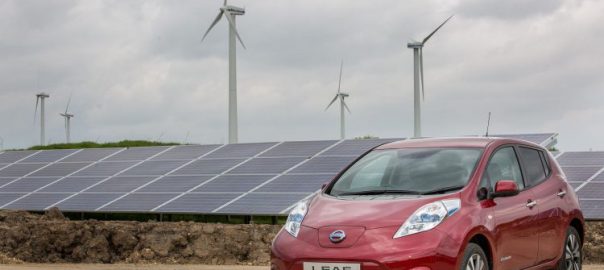
Nissan switches on solar farm to power UK car production (including LEAF)

Nissan Switches On Solar Farm To Power UK Car Production

Nissan expanded its renewable electricity generation in the company’s Sunderland Plant.

Nissan switches on solar farm to power UK car production (including LEAF)

The latest additions adds a 4.75 MW solar array, with some 19,000 solar panels – which is on top of the 6.6 MW in place from 10 wind turbines, displacing some 7% of electricity usage.

Nissan states that a total 11.35 MW of power will supply enough electricity to build over 31,000 cars a year.

Nissan Sunderland Plant is currently the largest car manufacturing facility in the UK.

Recently, the Japanese auto maker passed 50,000 LEAFs (and batteries) produced locally at the facility. In the near future, Sunderland has also been confirmed to produce also generation batteries (it does not build the current 30 kWh packs in the 2016 model).

“Nissan has switched on a new solar farm at its biggest manufacturing site in Europe, the latest landmark in the company’s journey towards Intelligent Mobility.

Made of up 19,000 photo-voltaic panels, the new 4.75MW facility is now fully operational at Nissan Sunderland Plant, as Nissan strives towards its twin goals of zero emissions and zero fatalities.

The solar farm has been installed alongside 10 wind turbines already generating clean power for Nissan in Sunderland, the European centre of production for the all-electric Nissan LEAF and its batteries.”

“Nissan began integrating renewable energy sources in Sunderland in 2005 when the company installed its first wind turbines on site. These 10 wind turbines contribute 6.6MW power, with the 4.75MW solar farm bringing the total output of renewables to 11.35MW in Sunderland. This equates to 7% of the plant’s electricity requirements, enough to build the equivalent of 31,374 vehicles.

The solar farm has been developed and installed within the loop of Nissan’s vehicle test track in Sunderland by partner company European Energy Photovoltaics, with 100% of the electricity generated to be used by Nissan.

Its installation comes as Nissan celebrates its 30th anniversary of manufacturing in the UK, having become the biggest UK car plant of all time and now supporting nearly 40,000 jobs in Britain in vehicle design, engineering, production, parts distribution, sales and marketing, dealer network and supply chain.”

Colin Lawther, Nissan’s Senior Vice President for Manufacturing, Purchasing and Supply Chain Management in Europe, said

“Renewable energy is fundamental to Nissan’s vision for Intelligent Mobility.”

“We have built over 50,000 Nissan LEAFs in Europe, and the industry-leading new 250km-range LEAF is now available. With 10 wind turbines already generating energy for our Sunderland plant, this new solar farm will further reduce the environmental impact of Nissan vehicles during their entire lifecycle.”

Source: Inside EVs

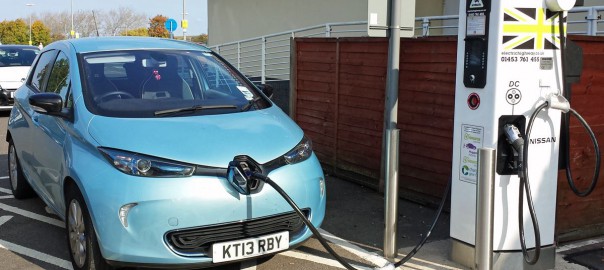
Fast Charging the ZOE at Toddington (Image: T. Larkum)

Nissan’s Alliance Partner Renault Joins CharIN CCS DC Fast Charging Group

The CharIN e.V. Steering Committee announced a list of new members of the initiative supporting CCS Combo DC fast charging standard, which is being adjusted to handle up to 150 kW in the next few years.

My Renault ZOE fast charging at Rothersthorpe Services (Image: T. Larkum)

Among the most recent members added, we see Fiat Chrysler Automobiles (FCA) – which is not a surprise, and newcomers like Faraday Future, but the most significant new entry is Renault.

“On the 15th of June 2016 the CharIN e.V. Steering Committee accepted membership of eight new companies: atieva, Circontrol, Clever, Faraday Future, FCA, Hubject, Lafon and Renault Group.

Some of them already joined the new members meeting last week with the opportunity of introduction to the other members and committees. In the first half of this year CharIN e.V. grew by 24 members. Together with the ten founding members and the new members of 2015 the association is now supported by 36 leading international companies.”

Renault has extremely close relations with Nissan through the Renault-Nissan Alliance, and also has the same CEO – Carlos Ghosn, while the two companies also share the same bold commitment to all-electric cars.

And while Nissan has pursued CHAdeMO from the start, Renault has not. The French company originally romanced with three-phase AC charging, using a Type 2 inlet. The CCS inlet today would be easy addition for the Type 2.

Read more: Inside EVs

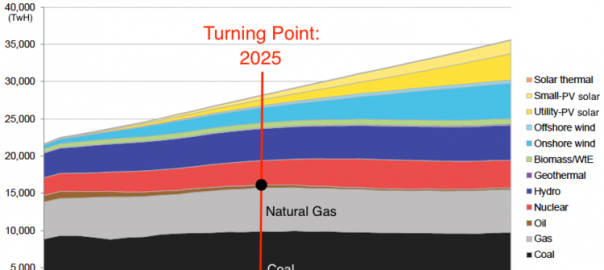
(Image: Bloomberg New Energy Finance)

The World Nears Peak Fossil Fuels for Electricity

Coal and gas will begin their terminal decline in less than a decade, according to a new BNEF analysis.

The way we get electricity is about to change dramatically, as the era of ever-expanding demand for fossil fuels comes to an end—in less than a decade. That’s according to a new forecast by Bloomberg New Energy Finance that plots out global power markets for the next 25 years.

Call it peak fossil fuels, a turnabout that’s happening not because we’re running out of coal and gas, but because we’re finding cheaper alternatives. Demand is peaking ahead of schedule because electric cars and affordable battery storage for renewable power are arriving faster than expected, as are changes in China’s energy mix.

(Image: Bloomberg New Energy Finance)

Here are eight massive shifts coming soon to power markets.

1. There Will Be No Golden Age of Gas

Since 2008, the single most important force in U.S. power markets has been the abundance of cheap natural gas brought about by fracking. Cheap gas has ravaged the U.S. coal industry and inspired talk of a “bridge fuel” that moves the world from coal to renewable energy. It doesn’t look like that’s going to happen.

The costs of wind and solar power are falling too quickly for gas ever to dominate on a global scale, according to BNEF. The analysts reduced their long-term forecasts for coal and natural gas prices by a third for this year’s report, but even rock-bottom prices won’t be enough to derail a rapid global transition toward renewable energy.

“You can’t fight the future,” said Seb Henbest, the report’s lead author. “The economics are increasingly locked in.”

The peak year for coal, gas, and oil: 2025.

Read more: Bloomberg

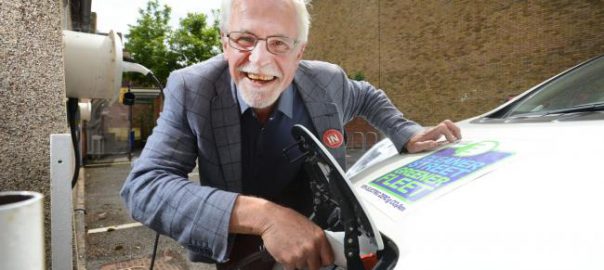
Oxford city councillor John Tanner plugging a charger into one of the council's own vehicles

Council aiming to turbo-charge electric car use in Oxford

AN ATTEMPT to jump-start Oxford’s slow uptake of electric vehicles is now in motion, with up to 30 new charging points arriving in the next 12 months.

Oxford city councillor John Tanner plugging a charger into one of the council's own vehicles
Oxford city councillor John Tanner plugging a charger into one of the council’s own vehicles

People and businesses across the city are being called on to help develop the plan and find suitable places for the trial stations, which will be bought in the summer.

In April this year Oxford City Council received an £800,000 grant to add an extra 100 charging stations to the city – where only 85 people currently drive electric cars.

John Tanner, the council’s board member for climate change, said:

“What we have at the moment is the early adopters, the enthusiasts.

“But with more plug-in points around the city, I think more people are going to take the plunge and buy electric vehicles.”

There are currently 13 on-street charging stations around Oxford, of which three, Summertown Car Park, Cowley Road and Worcester Street Car Park, have reported faults.

It is hoped the 100 new devices will begin to be rolled out in 2018, making make electric vehicle ownership possible for 16,000 extra homes.

Read more: This is Oxfordshire

Evolt charge point, Lorne Street (Image: Evolt)

Remote installation of Rapid charging units is no problem for Evolt

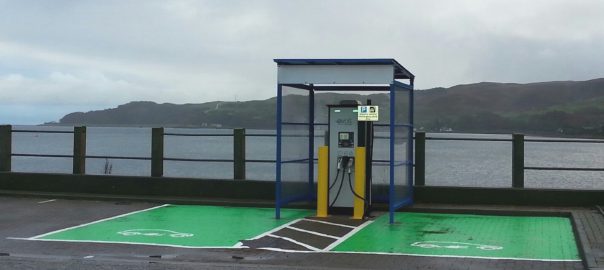
Evolt has completed the supply and installation of a new series of Rapid and Fast electric vehicle (EV) charge points on the Western Scotland mainland and the Isle of Mull, having won a competitive tender from Argyll and Bute Council.

Evolt charge point, Lorne Street (Image: Evolt)

The new network of seven Rapid and two Fast chargers is the Council’s first publicly available EV charging infrastructure, funded by Transport Scotland through a Government-led initiative that helps to promote the use of EVs in Scotland.

The installation further builds upon Evolt’s reputation in Scotland as a strong and reliable supplier; it has now provided more than 1,100 charge points for 24 local authorities as well as private businesses, including taxi companies.

Argyll and Bute Council’s Policy Lead for Roads and Amenity Services, Councillor Ellen Morton, explains:

“At tender stage we found Evolt’s submission to be of a higher quality than its competitors, and it was able to provide a more cost-effective solution.”

“Evolt gave us the confidence that it would be fully in control and understood the challenges of supplying and installing an EV charge point infrastructure to a highly remote region, which included two charge points on the Isle of Mull,” she says.

Justin Meyer, General Manager of Evolt, says its experience in installing systems at remote locations was key to its success in winning the contract:

“The Council recognised our previous work on remote islands such as Harris, South Uist and Shetland, as well as our ability to manage and service systems in a cost-efficient and timely manner.”

Seven of Evolt’s top-of-the-range Rapid chargers that can efficiently charge two EVs to 80% of their battery life within 30 minutes through a 50Kw AC and 43Kw DC outlet have been installed throughout the region, including two on Mull. These are supplemented by two 22kW Fast chargers that are ideal for quick ‘top ups’, have AC and DC capability, and take one hour to simultaneously charge two EVs.

Each unit has a built in 3G communications modem enabling Evolt’s back office management system to remotely monitor the charging process and collect and provide charging data when needed.

Source: Evolt via GravityLondon

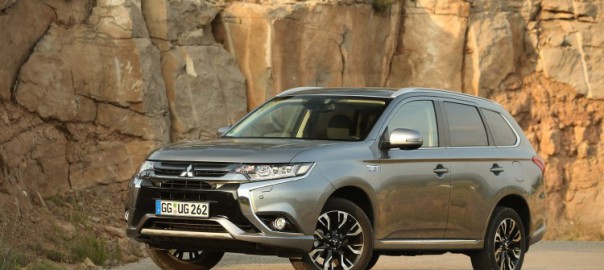
2016 Mitsubishi Outlander PHEV

The UK’s best selling plug-in cars revealed

By March this year, there were close to 60,000 electric or plug-in hybrid cars driving in the UK

Electric car sales continue to surge in the UK, with the latest figures showing close to 60,000 currently on the road. The Mitsubishi Outlander PHEV accounts for nearly a third of those, but there’s an increasingly wide range of different models on the roads.

According to DVLA figures analysed by the RAC Foundation by the end of March 2016 there were 19,945 plug-in hybrid electric Outlanders licenced in the UK, over 7,000 more than the next best selling electric or plug-in car, the Nissan Leaf.

The Leaf, however, is the UK’s best-selling battery-electric car. The 12,469 Leafs come with an electric-only drivetrain, whereas the Mitsubishi Outlander PHEV uses a 2.0-litre four-cylinder petrol engine to complement the batteries and the electric motor.

In third place was the BMW i3, with over 4,500 currently on the road. The i3 comes with a choice of two drive trains, with owners able to spec either a battery electric or a range extender with a 650cc two-cylinder petrol engine to boost the electric car’s range.

Read more: Auto Express