Monthly Archives: January 2016

Renault & Eneco collaborate on smart charging solution for electric vehicles

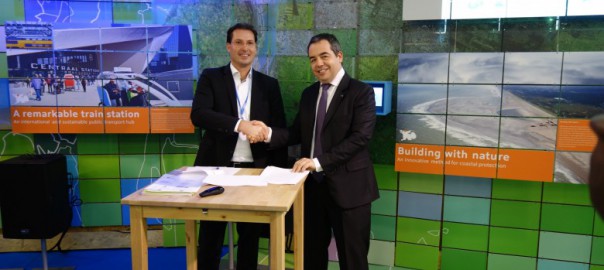
  • Agreement signed between electric vehicle leader Renault and energy supplier Eneco on December 7, 2015 at COP21 Paris conference
  • Eneco will develop smart charging app for ZOE, Renault’s 100% electric compact car
  • Renault ZOE users will be able to charge their car at lower costs using renewable energy
  • Reduced electricity costs for Renault ZOE users in the Netherlands

780x520_electric_vehicles_renault

Eneco subsidiary Jedlix will develop a version of its existing smart charging app, to adapt it to Renault ZOE. This app makes it possible to charge electric cars using renewable energy at times when the market prices are most favourable. Like at night, when the production of sustainable wind energy exceeds demand in most European countries.

Marc van der Linden, member of the Executive Board of Eneco:

“It is expected that there will be three million electric vehicles in the whole of Europe by 2020. To reduce CO2 emissions, it is essential that this vehicle fleet will use green power. It is also important to prevent power grid overloads as a result of peaks in demand if all the cars would be charged at the same time. Our app forms a direct link between the electric vehicle and the supply of sustainably generated energy. Consequently, the energy used for charging is more sustainable, energy supply and demand is balanced and the costs of driving an electric vehicle are reduced because users charge their cars at lower rates.”

Eric Feunteun, Electric Vehicle Program Director at Renault:

“Renault electric cars support the energy transition in the automotive industry as they contribute to the replacement of fossil fuels by renewable energies. With smart charging systems like the one developed by Eneco, Renault electric vehicles make a big contribution to power systems’ stability and reliability: EVs turn into an asset for the grid rather than create overload. They can store and use electricity when it is less carbon-dependent and cheapest for their owners. Our partnership with Eneco is a move towards making driving a Renault ZOE more interesting and affordable and will contribute to an electric vehicles’ scale up”.

A pilot test carried out by Eneco in the Netherlands demonstrates that users can save up to 15% on their electricity costs by using the app. To achieve this, all they have to do is indicate by what time the car must be fully charged and the system will automatically determine the lowest price within this time frame. Van der Linden: “I am very proud that we will be launching this smart service together with a leading party in the field of electric transport.” The app will first be available for ZOE users in the Netherlands and soon be available in other countries where Eneco operates.

The electric vehicle, a solution to counter global warming

The carbon footprint of electric cars is shrinking fast, with the shift already underway toward the use of renewable energies in the overall energy mix in most countries across the world today. Renewable energies feature in 56% of the new electricity power plants built in the world today. In Europe, this figure rises to 72%.

Renault is the pioneer of affordable all-electric vehicles, and the only carmaker to offer a full range. Renault sees the electric vehicle as an eminently viable countermeasure against global warming.

The Renault-Nissan Alliance is an official partner of the COP21 United Nations climate-change summit, providing a fleet of 200 Alliance electric vehicles, including 100 Renault ZOEs, to ferry delegates between Paris and Le Bourget from 30 November to 11 December 2015.

Source: 3D Car Shows
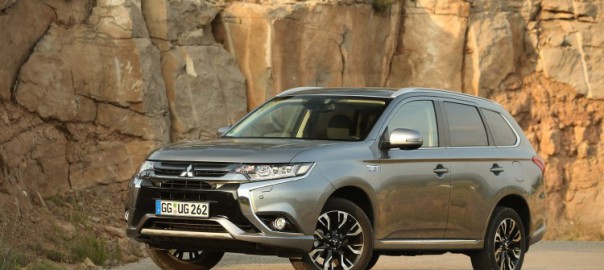
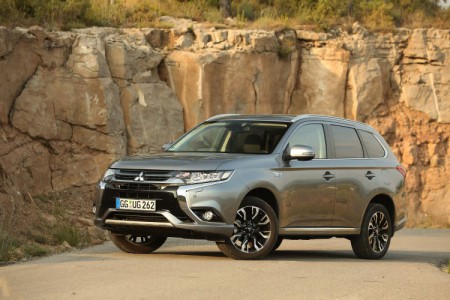
2016 Mitsubishi Outlander PHEV

Continued sales growth for green models

Sales of alternatively fuelled vehicles continue to grow according to November’s sales figures released by the Society of Motor Manufacturers an Traders (SMMT) released today (Friday 4th December).

2016 Mitsubishi Outlander PHEV
Mitsubishi Outlander PHEV

After October’s sales saw the first drop in 44 months of growth, November returned to growth with overall sales up 3.8 per cent against November 2014. Alternatively fuelled vehicles (AFVs) – which include hybrids, plug-in hybrids and electric vehicles – saw an 8.6 per cent growth versus November 2014 – more than diesel (3.6 per cent) and petrol (3.8 per cent) combined.

AFVs accounted for a three per cent market share in November’s figures, and now represent 2.7 per cent of the overall market 2015 year to date. Diesel powered cars are seeing their past dominance tested in 2015 with market share down to 48.4 per cent – down from last year’s 50 per cent. That said, diesels still had the upper hand in November, selling almost 10,000 more units than petrol models.

Overall growth year to date sees diesel at just 2.7 per cent, petrol at 8.3 per cent and AFVs at a huge 41.1 per cent – with the latter category having already sold almost 20,000 more cars than at the same point last year.

Cars eligible for the Plug-in Car Grant (PiGC) saw a 21.4 per cent increase versus November 2014, up to 2,276 models sold in the month. This accounts for 1.3 per cent of the month’s market share, with signs that the plug-in market could be kicking on again and growing at a significant rate. The year to date market share sits at 1.02 per cent for example. Certainly year to date sales are far in advance of last year, with 2015’s 25,096 vehicles more than double 2014’s sales up to November.

Mike Hawes, SMMT Chief Executive, said,

“November’s figures come as a reminder of the strength of the UK car market, as low interest rates and competitive finance deals continue to attract consumers to new car ownership. We have been expecting a levelling-off in demand for some time now – a development that is being realised following an unprecedented three-and-a-half years of non-stop growth.”

Source: Next Green Car

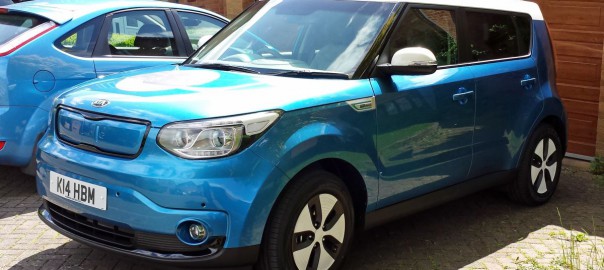
Kia Soul EV Test Drive

Kia Soul EV (Image: T. Larkum)

One of our customers had a test drive in a Nissan Leaf and was very impressed with it. However, they had a daily commute at the comfortable limit of the Leaf’s range on a single charge, about 70 miles. I could see that that could be an issue in the winter months and so arranged a test drive of the Kia Soul EV as a comparison.

Kia Soul EV (Image: T. Larkum)

The Soul EV is an interesting design – clearly it is based on the fossil fuel Soul so does not have its own identity like a Leaf or a Renault ZOE. However, it is more than just an existing design with a new engine (like, arguably, the Volkswagen Golf and e-UP); it has a redesigned and strengthened floorplan (for the battery), new wing panels (since there’s no filler cap) and a modified nose (to house the charge port). So clearly Kia has invested considerable resources in getting the design right.

Charge point and cover (Image: T. Larkum)

What is of particular interest is that Kia went straight for a market-leading big battery pack – a full 30.5 kWh (27 kWh usable) which compares very well with the Leaf’s 24 kWh (21.3 kWh usable). This means it has an official range on the NEDC test of 131 miles compared to the Leaf’s 124.

Soul EV driver's position (Image: T. Larkum)
Soul EV driver’s position (Image: T. Larkum)

While that doesn’t seem to be a huge difference on paper, the feedback from many reviews of the Soul EV is that it consistently provides a longer real-world range than the Leaf (often above 100 miles). Furthermore, its range prediction readout is much more accurate and reliable.

Soul EV driver's position (Image: T. Larkum)
Soul EV driver’s position (Image: T. Larkum)

Certainly that was my experience with it, driving it from London to Northampton and back over a couple of days. It gave a generous 90 or so miles predicted range, and then it seemed very nearly like it reduced the predicted range by about 1 mile for every mile driven. This is a very reassuring characteristic, arguably even better than the ZOE’s range prediction which is pretty good, and significantly better than the Leaf’s notorious ‘guessometer’.

A look under the Soul EV's bonnet (Image: T. Larkum)
A look under the Soul EV’s bonnet (Image: T. Larkum)

The car itself is easy to drive – stable and comfortable, though perhaps not a very exciting or engaging drive. It has plenty of space inside and comfortable seats. It includes a large boot, though its space is compromised by a storage compartment underneath designed to hold the home charge cable and Type 1 charge cable.

Soul EV rear passenger compartment (Image: T. Larkum)

Overall I was impressed with the Kia Soul EV and would recommend any potential EV owner to test drive one, particularly where longer than average range is important.

Soul EV boot with lower compartment closed (Image: T. Larkum)
Soul EV boot with lower compartment open (Image: T. Larkum)