Daily Archives: September 3, 2015

Auto Express review of 7-seater e-NV200

The Nissan e-NV200 electric MPV makes more sense with seven seats but is that enough to make you buy it?

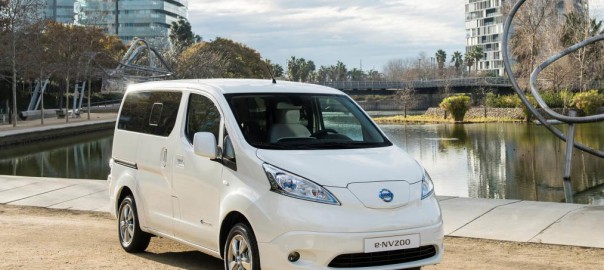
Nissan isn’t only a market leader in electric cars but electric vans as well. Its e-NV200 small van has been leading the electric LCV market since December 2014, becoming a top choice for companies looking to make zero emission deliveries. Available as a panel van and a five-seat combi, there’s now a more practical people carrying version sporting seven seats.

It’s taxi companies, private hire firms, fleets and hotels Nissan is targeting with its e-NV200 7-seater as it’s these groups of people who have been haranguing Nissan to build one. Up until now they’ve had to rely on more conventional seven-seaters like the Ford Galaxy or put up with carrying just five in e-NV200 five-seater models if they wanted to be ‘green’.

for companies who undertake short trips, have reliable access to charging points and are committed to embracing electric motoring, the e-NV200 is in a class of its own.

Read more: Auto Express
Electric Cars Not Boring

Go Ultra Low, backed by several carmakers, released a humorous video on electric cars, which sometimes are described as a bit “boring”.

The main goal of the campaign is of course to raise awareness of ultra-low emission vehicles, and to encourage British motorists to consider one when choosing their next car.

https://youtu.be/WcuFcfQz4aE

“Electric cars – they’re a bit boring, aren’t they?

Why would anyone want one of those plug-in things? Meet the dad who’s about to learn that whoever you are, there’s an electric car for you. *Watch* the video to find out what makes these seven ultra low emission vehicles so desirable, practical and fun to drive.

Find out more at www.goultralow.com.”

Source: Inside EVs

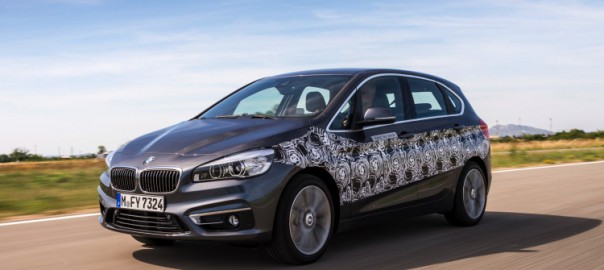
First Drive of BMW 225e Active Tourer PHEV

The newest niche to be conquered by BMW is filled by the 2 Series Active and Gran Tourers.

These front-wheel drive hatchbacks mark a couple of firsts for BMW, namely the front-wheel drive and transverse engine mounting. These two cars aren’t going over very well with enthusiasts, but are doing great in sales in Europe. Well, BMW has decided that the new 2 Series Active Tourer is doing well enough that it wants to give it a new model. An eDrive plug-in hybrid model.

The 2 Series Active Tourer eDrive will feature BMW’s 1.5 liter three-cylinder TwinPower engine, transversely mounted powering the front wheels through a six-speed automatic, and an 88hp / 136 Nm/100 lb-ft of torque electric motor, powering the rear wheels through a two-speed transmission. This essentially makes the 2 Series Active Tourer eDrive a backwards i8, as the i8 uses a similar setup, but with the engine at the rear and motor at the front. Compared to a 225i xDrive model, this adds some 150 kg or 330 pounds. The gasoline engine produces 100 kW/136 hp and 220 Nm/162 pound-feet of torque/electric.

Like the i8, the 2 Series AT eDrive will deliver its power instantaneously, thanks to the torque fill effect of the electric motors adding power while the turbocharger gathers boost. This will shuttle the 2 Series AT eDrive from 0-62 mph in 6.5 seconds. Not bad for a front-wheel drive hybrid.

Read more: BMW Blog

Stop Building New Carbon Infrastructure

A Hard Deadline: We Must Stop Building New Carbon Infrastructure by 2018

In only three years there will be enough fossil fuel-burning stuff—cars, homes, factories, power plants, etc.—built to blow through our carbon budget for a 2 degrees Celsius temperature rise. Never mind staying below a safer, saner 1.5°C of global warming. The relentless laws of physics have given us a hard, non-negotiable deadline, making G7 statements about a fossil fuel-phase out by 2100 or a weak deal at the UN climate talks in Paris irrelevant.

“By 2018, no new cars, homes, schools, factories, or electrical power plants should be built anywhere in the world, ever again unless they’re either replacements for old ones or are carbon neutral? Are you sure I worked that out right?”

I asked Steve Davis of the University of California, co-author of a new climate study.

“We didn’t go that far in our study. But yes, your numbers are broadly correct. That’s what this study means,”

Davis told me over the phone last fall.

Read more: This Changes Everything

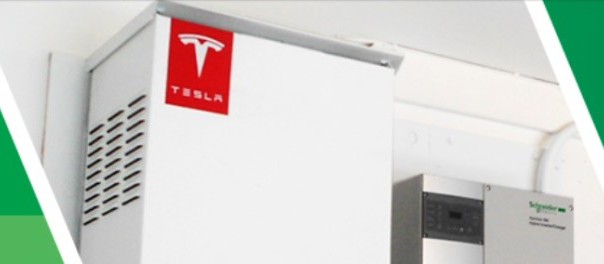
Tesla/Solar City Energy Storage Solution System Is In The “Pilot Program” Stage Today

Residential Energy Storage on the rise

Energy storage is heralded as the critical technology that will make widespread adoption of renewable energy possible. Storage bottles sunlight, addressing a key drawback to solar energy — that it can’t provide electricity when the sun isn’t shining. Energy storage also cures additional utility ailments from grid resiliency to power smoothing.

Due to a rise in incentives and a drop in storage costs, the market for this storage is heating up in the U.S. The market is expected to grow 250 percent just this year.

California is leading the energy storage market thanks to Assembly Bill 2514, which requires state utilities to procure 1.3 GW of storage by 2020. Now California’s three largest investor-owned utilities, Southern California Edison (SCE), Pacific Gas and Electric (PG&E) and San Diego Gas & Electric, are installing cost-effective storage solutions. SCE, for example, invested in a wind farm in the Mojave Desert equipped with giant lithium-ion batteries. The East Coast is following California’s example. New York recently budgeted $25 million to promote storage development.

While the utility-scale market gets most of the attention, a quietly growing storage market segment with a lot of potential is residential solar. After all, residential solar is a fast growing solar market segment — increasing 49 percent in 2014. Unsurprisingly it offers immense opportunity for storage.

Read more: Renewable Energy World

The Interceptor Drama is Electrifying

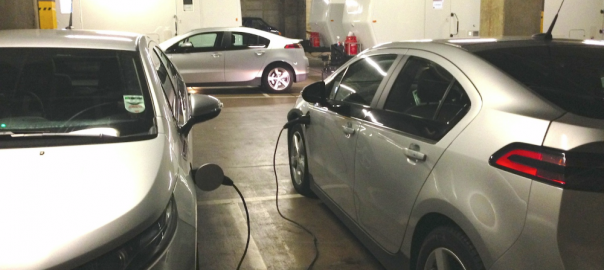
BBC One’s new primetime drama The Interceptor is the first large-scale production to pioneer the use of electric cars.

As well as the production gaining a three star rating by industry sustainability certification scheme albert+, the use of electric cars saved on carbon dioxide emissions, fuel costs and congestion charges.

On-screen, viewers follow an undercover team on the hunt for Britain’s most ruthless criminals, but off-screen the production has become the first large-scale TV drama to use only electric cars behind the scenes.

By using electric vehicles as unit and production cars during the making of the show, eight tonnes of carbon dioxide emissions were saved – enough to drive 50,000 miles or twice around the globe – as well as saving the BBC over £10,000 in fuel and congestion charges.

Nick Leslie, BBC Sustainable Production Project Manager, says:

“The cast and production thought it was important to use electric cars to help lower the overall CO2 emissions for the show. Initially there were some reservations about the electric cars from the unit drivers, as there is pressure for making sure unit cars run smoothly and on time.

“However, once they started driving the cars, all the unit drivers said that they were happy with the performance of the vehicles. In fact a competition developed between the drivers to see who could make the energy in their batteries last longest.

“Some of the drivers said that using these cars had opened their minds to fuel efficiency when driving, as the vehicles had a dashboard display showing how their driving impacted upon the battery charge. One of the drivers even said they were planning on buying an electric car when it was time to change their personal vehicle.”

Source: Green Car Guide

How Formula E can overtake F1 and help save the world

Find out why this electric racing series has a shot at becoming huge — and how its technology could change the cars we drive for the better.

It might seem a bit of a stretch to say that a motor race can help save the world, but with Formula E, that’s not such an outlandish statement.

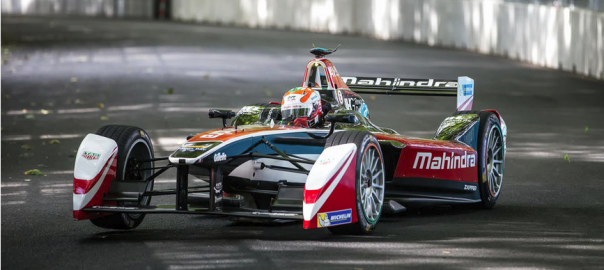
This new race series, held on the streets of cities around the world, uses cars that look almost identical to the vehicles seen in the globally popular Formula 1 series, but are powered entirely by electricity rather than petrol.

Aside from becoming a popular and profitable race series, Formula E has two main goals. The first is to act as a testing ground for new electric motor technologies which can filter down into mass-produced production cars. The second and arguably more important goal is to inspire the general public into seeing electric cars not simply as a novelty driven by an eccentric few, but as an exciting option for everyday people.

Standing behind a small concrete barrier, only a foot away from the cars as they hurtled past on the third corner, I can confidently confirm that this event is every bit as exhilarating as classic motor races like the Le Mans 24 hours.

Read more: CNet