Daily Archives: January 4, 2015

Carbuyer Reviews Tesla Model S – Video

Carbuyer gets its hands on the Tesla Model S… Prepare to hear the word “brilliant” a lot throughout the video.

Like is typically the case when someone reviews the Tesla Model S, they instantly feel like a kid in a candy store.

Mat, the Carbuyer reporter, mentions that the charging network is not all there (UK), so you may find yourself in a pickle, but we’ll point out that the charging network (especially Tesla’s Supercharger network) is rapidly growing and you can surely charge at home, so this is a non issue.

Aside from that little mistake by Carbuyer, we enjoyed this review of the Model S!

Source: Inside EVs

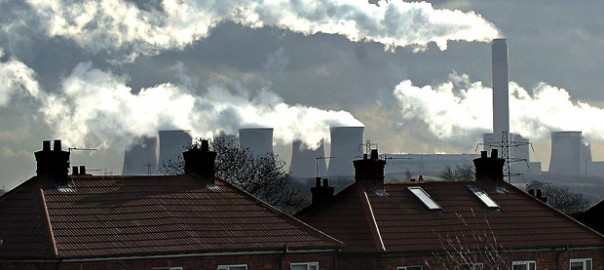
Pollution at Drax Coal Power Station near Selby (Image: J. Giles/PA)

How Solar Power Could Slay the Fossil Fuel Empire by 2030

In just 15 years, the world as we know it will have transformed forever. The ​age of oil, gas, coal and nuclear will be over. A new age of clean power and smarter cars will fundamentally, totally, and permanently disrupt the existing fossil fuel-dependent industrial infrastructure in a way that even the most starry-eyed proponents of ‘green energy’ could never have imagined.

These are not the airy-fairy hopes of a tree-hugging hippy living off the land in an eco-commune. It’s the startling verdict of ​Tony Seba, a lecturer in business entrepreneurship, disruption and clean energy at Stanford University and a serial Silicon Valley entrepreneur.

Seba began his career at Cisco Systems in 1993, where he predicted the internet-fueled mobile revolution at a time when most telecoms experts were warning of the impossibility of building an Internet the size of the US, let alone the world. Now he is predicting the “inevitable” disruption of the fossil fuel infrastructure.

Seba’s thesis, set out in more detail in his new book Clean Disruption of Energy and Transportation, is that by 2030 “the industrial age of energy and transportation will be over,” swept away by “exponentially improving technologies such as solar, electric vehicles, and self-driving cars.”

Tremors of change

Seba’s forecasts are being taken seriously by some of the world’s most powerful finance, energy, and technology institutions.

Last November, Seba was a keynote speaker at JP Morgan’s Annual Global Technology, Media, and Telecom Conference in Asia, held in Hong Kong, where he delivered a stunning presentation on what he calls the “clean disruption.”

Seba’s JP Morgan talk focused on the inevitable disruption in the internal combustion engine. By his forecast, between 2017 and 2018, a mass migration from gasoline or diesel cars will begin, rapidly picking up steam and culminating in a market entirely dominated by electric vehicles (EV) by 2030.

Not only will our cars be electric, Seba predicts, but rapid developments in self-driving technologies will mean that future EVs will also be autonomous. The game-change is happening because of revolutionary cost-reductions in information technology, and because EVs are 90 percent cheaper to fuel and maintain than gasoline cars.

The main obstacle to the mass-market availability of EVs is the battery cost, which is around $500 per kilowatt hour (kWh). But this is pitched to fall dramatically in the next decade. By 2017, it could reach $350 kWh—which is the battery price-point where an electric car becomes cost-competitive with its gasoline equivalent.

Seba estimates that by 2020, battery costs will fall to $200 kWh, and by 2024-25 to $100 kWh. At this point, the efficiency of a gasoline car would be irrelevant, as EVs would simply be far cheaper. By 2030, he predicts,

“gasoline cars will be the 21st century equivalent of horse carriages.”

It took only 13 years for societies to transition from complete reliance on horse-drawn carriages to roads teeming with primitive automobiles, Seba told his audience.

Lest one imagine Seba is dreaming, in its new quarterly report, the leading global investment firm Baron Funds concurs: “We believe that BMW will likely phase out internal combustion engines within 10 years.” (Investors at rival bank Morgan Stanley are making a similar bet, and are financing Tesla.)

Two days after his JP Morgan lecture, Seba was addressing the 2014 Global Leaders’ Forum in south Korea, sponsored by Korean government ministries for science and technology, where he elaborated on the prospects of an energy revolution. Within just 15 years, he said, solar and wind power will provide 100 percent of energy in competitive markets, with no need for government subsidies.

Over the last year Seba has even been invited to share his vision with oil and gas executives in the US and Europe.

“Essentially, I’m telling them you’re out of business in less than 15 years,”

Seba said.

Revolutionary economics of renewables

For Seba, there is a simple reason that the economics of solar and wind are superior to the extractive industries. Extraction economics is about decreasing returns. As reserves deplete and production shifts to more expensive unconventional sources, costs of extraction rise. Oil prices may have dropped dramatically due to the OPEC supply glut, but costs of production remain high. Since 2000, the oil industry’s investments have risen threefold by 180 percent, translating into a global oil supply increase of just 14 percent.

In contrast, the clean disruption is about increasing returns and decreasing costs. Seba, who dismisses biomass, biofuels and hydro-electric as uneconomical, points out that with every doubling of solar infrastructure, the production costs of solar photovoltaic (PV) panels fall by 22 percent.

Seba said:

“The higher the demand for solar PV, the lower the cost of solar for everyone, everywhere,”

“All this enables more growth in the solar marketplace, which, because of the solar learning curve, further pushes down costs.”

Read more: Motherboard.vice.com
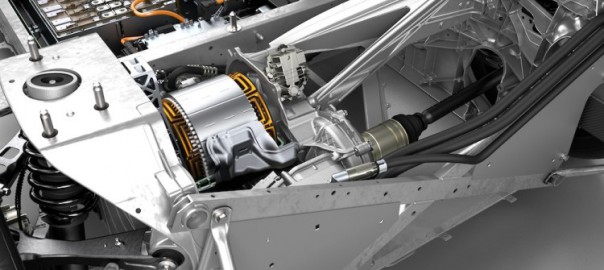
BMW i3 Motor (Image: BMW)

BMW i3 Electric Motor Among Ward’s “10 Best Engines Of 2015″

The 127-kW (170 HP) electric motor that propels the rear-wheel-drive BMW i3 has received a coveted “Best Engines” award from Ward’s Auto.

Here’s the eligibility criteria for selection by Ward’s Auto:

To be eligible for the Ward’s 10 Best Engines competition, an engine or propulsion system must be all-new or significantly re-engineered and available in the U.S. market with a base price not exceeding $60,000. This year’s pool of 37 nominees includes last year’s 10 winners and 27 new entries. Eight WardsAuto editors drove the vehicles in October and November in their routine daily commutes around metro Detroit. Editors scored each engine based on power, torque, technology, observed fuel economy, relative competitiveness and noise, vibration and harshness characteristics.

The i3′s electric motor was the only electric winner this year, though the 100-kW fuel cell in the Hyundai Tucson FCV did receive an award too.

Source: Inside EVs

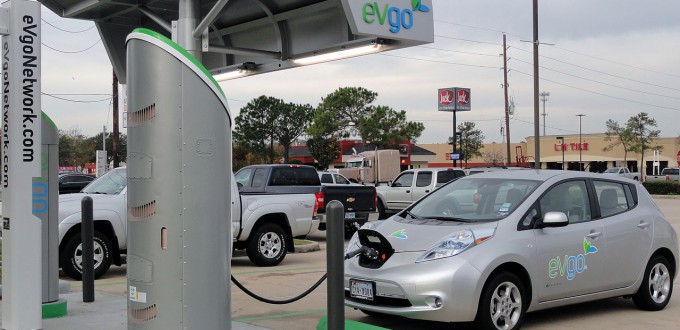
"Nissan Leaf got thirsty" (Image:Mariordo/Wikimedia)

More than half of Nissan Leaf owners insist they will never buy conventional cars again

More than half of Nissan Leaf owners insist they will never u-turn and buy conventional cars again

Auto giant’s customer research finds feared barriers to electric vehicle adoption have not materialised

Nissan will today publish the results of customer research suggesting a majority of customers for its Leaf have become electric vehicle converts and have no intention of buying conventional fuelled cars in the future.

The auto giant undertook the research using a relatively small sample of 76 current Leaf owners from among the 6,500 customers to purchase the vehicle in the UK.

More than half of respondents said they would not go back to conventional cars, while 95 per cent said they were happy with the Leaf and would recommend it to a friend.

Source: Business Green

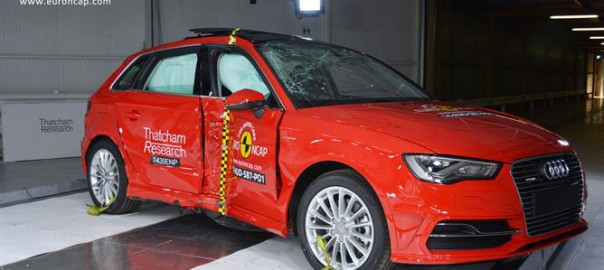
Audi A3 e-tron crash testing (Image: Euro NCAP)

Electric Audi gains top honours in Euro NCAP safety tests

Euro NCAP has awarded the Audi A3 Sportback e-tron five stars in the latest round of crash tests.

The Kia Soul and electric Soul EV both scored four stars, while Jeep’s new Renegade compact SUV scored five stars.

Euro NCAP’s testers gave the Audi A3 Sportback e-tron an adult safety rating of 82%, noting good body protection for both driver and passenger during front impact tests. The electric Audi scored a 66% rating for pedestrian protection, and a 78% rating for child safety.

Kia’s Soul EV scored an adult safety rating of 84%, plus 82% for child safety. Testers noted that the Soul EV scored particularly well during side impact tests, with good body protection throughout.

The standard Soul fared slightly less well, gaining an adult safety rating of 75% and a child rating of 82%.

Jeep’s baby Renegade impressed Euro NCAP’s testers, offering good protection during both front- and side impact tests. The model was given an 87% rating for adult protection, and 85% for children.

BMW also earned a Euro NCAP award for its advanced pedestrian warning and city braking systems.

Source: What Car

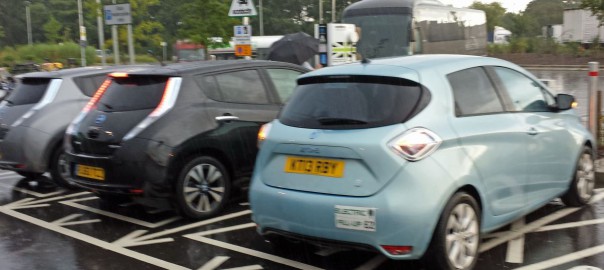
An EV Queue at Cobham (Image: T. Larkum)

Plug-In Electric Car Sales UK At 1% Of Market In November

Plug-in Car Registrations in UK – November 2014 (Image: Inside EVs)

The take off of electric cars sales continues in the UK in November.

The percentage of growth from a low base is outstanding – from 290 to 1,871.

Most of the sales are plug-in hybrids, which with 1,225 registrations, went up over nine times year-over-year.

All-electric cars are at a lower level of 646 registrations, but growth of 124% is strong.

Compared to the 172,327 total passenger car registrations in November, EVs took 1.1%.

UK now has some 18,000 EVs on the roads, from which over 12,000 were added this year alone.

Source: Inside EVs

Electric Cars Fast Charging (Image: BusinessCarManager.co.uk)

Are Hybrids Being Supplanted By Electric, Plug-In Hybrid Cars?

Late in October, an interesting thing happened in Germany: Audi quietly killed off the hybrid version of its A6 luxury sedan. The model had been around for three years, and though it was initially expected to be sold in the U.S., that never actually happened.

According to Car and Driver, Audi sold about 4,000 A6 Hybrids during that time. Or as its headline said, “Nobody bought it.” The only hybrid Audi now on sale is a very, very low-volume model of the Q5 SUV that might as well be invisible for all the attention it gets.

The German makers, now on board to various degrees with electric cars, are turning their attention en masse to plug-in hybrids rather than conventional hybrids.

Meanwhile, California sales data shows that for every two hybrids sold in the state, one battery-electric or plug-in hybrid car is now delivered as well. And this is in a state where the Toyota Prius is the single highest-selling passenger car line.

Which leads to a question that is quietly being discussed among green-car advocates and most likely among automakers at large:

Have hybrid sales reached some kind of natural peak?

Certainly cars that plug in have assumed the mantle of the latest and coolest auto technology among early adopters; after 15 years, hybrids may now feel slightly old-hat.

Several years ago, before the introduction of plug-in electric cars, many industry analysts expected hybrids to increase their percentage of total sales to the point where perhaps one out of every five new cars by 2020 would be a hybrid. Thus far, that’s nowhere near happening. Instead, hybrid sales in the U.S. have stayed between 3 and 4 percent of the total for several years.

With gas prices heading toward their lowest levels in several years, the forecasts for near-term hybrid sales have darkened. But plug-in sales are increasing steadily, albeit not to the heady levels envisioned by the most optimistic forecasters five years ago.

Battery costs historically fall about 7 percent a year, so within five years, the batteries in high-volume electric cars will cost only half of what they did on launch in late 2010. Meanwhile, conventional gasoline cars are getting better-than-expected improvements in fuel efficiency via technologies like direct injection, turbocharging, and seven- to 10-speed automatic transmission.

Those technologies may mean that expensive hybridization looks less appealing as a way to meet corporate average fuel economy targets that rise steadily from now through 2025.

With battery-electric cars offering simplicity, silent operation, smooth running, and abundant torque from rest–and gasoline cars steadily improving in fuel economy–it seems likely that automakers may be more concerned about the future prospects for hybrids than they were a few years ago.

On the other hand, the 2016 Toyota Prius will be unveiled sometime within the next year–which could provide a substantial boost to the category.

Green cars: often hard to predict–and assuredly never dull.

Source: Green Car Reports

Car exhaust (Image: BBC)

London will follow Paris and ban diesel cars, campaigners warn

Pollution is so high in the capital, and diesel fumes so damaging, experts believe Boris Johnson will follow Paris’ lead and ban the cars from London’s roads within the decade

London will follow Paris and introduce an outright ban on diesel cars which are causing “serious health damage” in the capital, campaigners warn. The Mayor of Paris has announced radical plans to ban diesel cars from the French capital by 2020 due to concerns about how much pollution the cars cause.

Boris Johnson, the Mayor of London, is also grappling with the issue of how to tackle pollution from the fuels fumes which contain tiny particles and nitrogen oxides and have been increasingly proven to be seriously damaging to health. France, which has the highest number of diesel cars on the road, will now ban the cars out right with Anne Hidalgo, the Parisian Mayor pledging “an end to diesel in Paris in 2020”.

She also said the city would have more semi-pedestrianised areas with special zones introduced at weekends.

Boris Johnson currently plans to raise the congestion charge for diesel cars by £10 in a move to cut air pollution. The change would mean diesel drivers could have to pay a total of £20 to get into Central London. Under the plans petrol cars registered before 2006 would also have to pay extra under the plans which the Mayor wants in place by 2020.

However campaigners say this will not be enough and London will still be following the Parisian example with an outright ban. Stephen Joseph, of the Campaign for Better Transport, said:

“I think the motor industry is wholly unprepared for the way in which the science is turning against diesels. The sciences is hardening up and it is showing different and serious health damage which is a really serious problem.

“All this emerging science I was going to have wide ranging ramifications, both in terms of the kind of cars we drive and where they are driven.

“London is very polluted and busy. Where Paris goes London won’t be far behind – London is already talking about an ultra low emission zone, banning all sorts of diesel vehicles, this is not unlikely that they will banned altogether in the same way Paris has done.”

In Britain, about 29,000 premature deaths a year are thought to be caused by air pollution and people living in London, Birmingham and Leeds will be exposed to dangerous air pollution from engine fumes until the 2030s unless stricter rules are imposed, according to the Department for Environment, Food and Rural Affairs.

Earlier this year Mr Johnson’ Mayor’s senior advisor for environment and energy Matthew Pencharz, said:

“When it comes to tackling London’s air pollution. and protecting the health and well-being of all Londoners, diesel cars are an issue which must be addressed.

“Over recent years the Euro diesel engine standards have not delivered the emission savings expected, yet governments have been incentivising us to buy them. This has left us with a generation of dirty diesels.”

Cllr Caroline Russell, Green Party Local Transport spokesperson, said:

“This is the third EAC report in five years and scandalously there has been no government action since the last report in 2011.

“Quite clearly our health is being severely damaged by exposure to polluted air caused by traffic emissions particularly from diesel vehicles.”

“The hand wringing has to stop. We need brave political action to tackle our over-dependence on motorised private transport. That means investing seriously in public transport, scrapping the proposed new roads and ensuring that everyone has access to safe convenient networks of walking and cycling routes.”

Source: Telegraph