Category Archives: Opinion

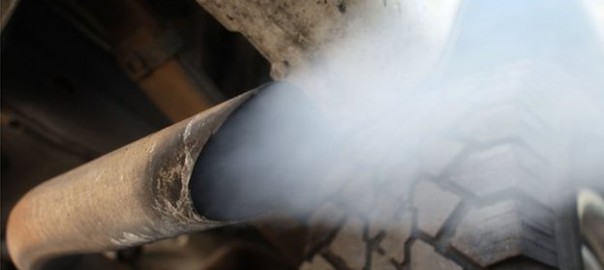
Car exhaust (Image: BBC)

When Will We Start To See ‘Tailpipes’ On Cars As Morally Wrong?

For those of us who don’t already…

The economists call them “externalities.”

Car exhaust (Image: BBC)

They’re the costs of people’s actions on other people or communities–but the people taking those actions don’t have to pay for those costs, even though they harm others.

And the emissions from combusting fossil fuels are clearly a prime example.

While complaints about air quality in the Los Angeles Basin date back literally centuries, research more than 50 years ago established that vehicle emissions were the primary cause of photochemical smog.

That led the state of California to begin efforts to regulate tailpipe emissions–well before the U.S. Environmental Protection Agency even existed–which led in turn to the first catalytic converters in U.S. vehicles in 1975.

Catalysts spread throughout most of the automaking world over the next 20 years, hugely reducing emissions of carbon monoxide (CO), hydrocarbons (HC), and nitrogen oxides (NOx), all of them toxic in various ways.

The gradual recognition and scientific acceptance of climate change due to rapid and unparalleled human emissions of carbon dioxide (CO2) since the dawn of the Industrial Revolution around 1750 adds an entirely new problem.

Read more: Green Car Reports

The Defining Myth of Our Culture

Many people view the word myth as almost synonymous with ‘story’ or ‘fairy-tale’. This sells myth appallingly short, for it is much more that that, a trope that can give meaning and context to a whole culture.

steamworkshop_webupload_previewfile_333389464

Myths can define a culture, giving a people a shared world-view, a common set of assumptions from which to experience the world. We may sneer and say the myths were wrong, for instance the view that the Earth is at the centre of the universe, requiring byzantine wheels within wheels to explain the movement of the planets in the sky. And yet even such a world-view is good enough to farm successfully, it was good enough for Ptolemy to be able to predict planetary motion reasonably well.

Religion is often a defining myth, indeed Christianity has probably been the defining myth of the West for much of its written history.

We believe, of course, that we are more sophisticated. We don’t need a myth. But we have one

Our myth is continual growth

Like Ptolemy’s geocentricity, it needs to be true enough to explain many observations. From where I’m standing it explains most things. I grew up in a world of coal fires, frost on the inside of windows in winter and pipes that froze up in the cold and vacuum tubes in the radio.

We now have central heating, iPods and a bewildering choice of all sorts of things. That’s growth for you, and pretty much continual growth at that. I’m not complaining, but I don’t think I’ll see another 30 years of it at the same rate.

So the myth of continual growth is a good myth for our times. Our economic system appears to be predicated on it, and until now it has worked pretty well. However, most natural systems have limits, beyond which they won’t go. Draw too much water from a well, and you don’t have any any more.

Read more: Simple Living in Suffolk

‘Step back a pace and you see that all these crises arise from the same cause.’ (Image: S. Thibault)

The gathering financial storm

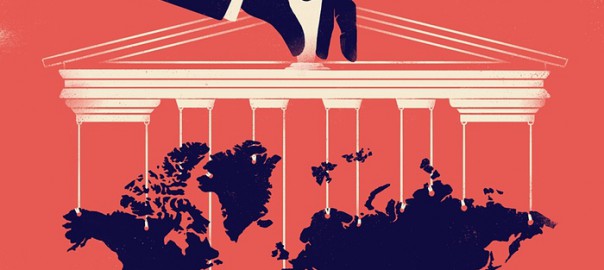
Governments are liberating global corporations from the rule of law and leaving them to rip the world apart

‘Step back a pace and you see that all these crises arise from the same cause.’ (Image: S. Thibault)

What have governments learned from the financial crisis? I could write a column spelling it out. Or I could do the same job with one word: nothing.

Actually, that’s too generous. The lessons learned are counter-lessons, anti-knowledge, new policies that could scarcely be better designed to ensure the crisis recurs, this time with added momentum and fewer remedies. And the financial crisis is just one of the multiple crises – in tax collection, public spending, public health and, above all, ecology – that the same counter-lessons accelerate.

Step back a pace and you see that all these crises arise from the same cause. Players with huge power and global reach are released from democratic restraint. This happens because of a fundamental corruption at the core of politics. In almost every nation the interests of economic elites tend to weigh more heavily with governments than do those of the electorate. Banks, corporations and landowners wield an unaccountable power, which works with a nod and a wink within the political class. Global governance is beginning to look like a never-ending Bilderberg meeting.

Read more: The Guardian

Oil and gas firms will be fossils by 2025

Technological development will transform the global marketplace over the next decade, with the oil and gas sector set to be the most negatively affected, according to Neptune Investment Management’s chief investment officer and economist James Dowey.

AAEAAQ_Oil_RollerCoaster_LinkedIn

Speaking at a press event, Dowey argued that the pace of technological change is likely to speed up over the next decade, with the development and adoption of new technology likely to drive returns in financial markets far more than traditional macro-economic factors.

‘Over the next 10 years macro-economic issues such as the growth of China are going to be far less important. Rather, technological innovation and change is going to drive markets, and many established businesses will have their current models ripped apart,’ says Dowey.

TECHNOLOGICAL CHANGE

Pointing to the pace of technological change since the 1970s, Neptune’s newly appointed CIO says that markets continue to underestimate the transformative power of technology despite the exponential growth of firms such as Google over the past five to 10 years.

In particular, he argues that the oil and gas industry could be entirely wiped out by 2025, with consumers and industry far more likely to be generating their own solar energy in a decade.

‘The potential disruption to the energy sector is the most profound. I am not at all clear that we will still be digging oil out of the ground in 10 years’ time. Household energy consumption will be radically different, with most generating their own solar energy at home,’ says Dowey.

Read more: Money Observer

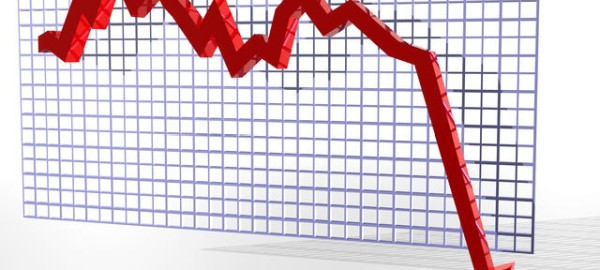
Global Trade Is Collapsing As The Worldwide Economic Recession Deepens

When the global economy is doing well, the amount of stuff that is imported and exported around the world goes up, and when the global economy is in recession, the amount of stuff that is imported and exported around the world goes down.

300x228_Dominoes_Falling_Public-Domain
It is just basic economics. Governments around the world have become very adept at manipulating other measures of economic activity such as GDP, but the trade numbers are more difficult to fudge. Today, China accounts for more global trade than anyone else on the entire planet, and we have just learned that Chinese exports and Chinese imports are both collapsing right now. But this is just part of a larger trend. As I discussed the other day, British banking giant HSBC has reported that total global trade is down 8.4 percent so far in 2015, and global GDP expressed in U.S. dollars is down 3.4 percent. The only other times global trade has plummeted this much has been during other global recessions, and it appears that this new downturn is only just beginning.

Read more: TEC Blog

Will everyone be driving electric cars in 10 years?

People working in automotive development labs today see cars which will hit the road in a couple of years time and know their internal combustion counterparts cannot compete: they see the tipping point today.

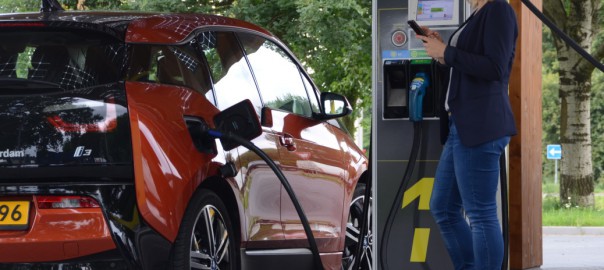
For most of us, it is still a future event. Today’s electric vehicles need to become more affordable. They need longer range and an infrastructure to support them. Fastned’s CEO, Michiel Langezaal, says everything will move quickly after these issues are addressed. Everybody may be driving EVs in 10-15 Years.

164338-DSC_Fastned_Charging_Fastned

Phase One: The Netherlands

Fastned is currently in what Langezaal calls phase one, building up a network of charging stations in the Netherlands.

“Every light is green. There is no red light, or even yellow signal. Revenues are growing; usage of the network is growing. The signs that we see at the Tesla superchargers – waiting lines – are indications of what we will see in the coming year at Fastned as well. We have to work hard on procuring permits, building the infrastructure and finance it,” said Langezaal.

Read more: The Eco Report

A Low-Carbon World – Are We Finally Getting It?

As we move closer towards the Paris climate talks, something interesting is happening.

imageR_climate_change_unk

Ever more stakeholders seem to be ready to be part of the solution. Negotiations that were earlier bogged down in zero-sum confrontations suddenly have a new fluidity and a ring of can-do optimism about them. Why? … Actually, the new question seems to be: “Why not?” Creating a low-carbon world is seen less as a burden and more as an opportunity.

In developed economies, we are ready to revamp existing industrial and resource infrastructures. In developing economies, we are realising the incredible opportunity of directly building a low-carbon infrastructure. What is clear now is that we have achieved technological as well economic convergence: building a low-carbon world is both technologically feasible and economically attractive. In addition, now we finally seem to reach cognitive convergence: recognising that changing now is a smart choice.

We have all the technologies we need to combat climate change: resource efficiency, renewable energies, and carbon sequestration. There are, of course, challenges. For example, maintaining grid stability when using large amounts of fluctuating renewable energy sources is tricky. However, these challenges are procedural, not fundamental. They can be addressed and solved as we move along. It is worth remembering, that such a piecemeal approach is the very essence of what we know as progress. We expand the Internet, we conquer space, we improve agriculture, and we speed up communication and movement. Transitioning to a low-carbon future is just one more area of progress that is already happening.

Read more: Clean Technica

No-one killed the electric car

Despite low gas prices, world automakers from Toyota to VW are moving ahead on nonpolluting vehicles.
It may be a strange time to talk about fuel efficiency when gas prices worldwide have been plunging – in the United States to little more than $2 a gallon.

But worldwide automakers are still stretching for that brass ring of fuel efficiency, pushed in part by government regulations and perhaps pulled by their own sense of corporate responsibility.

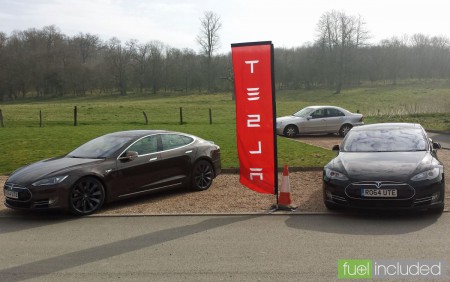
Toyota, for example, loves the idea of nonpolluting cars powered by hydrogen fuel cells. Tesla Motors is showing that its all-electric vehicles can generate the “gotta have it” appeal of the latest iPhone, even if they are not yet affordable by the masses.

Volkswagen is reeling from people discovering that it had made false claims for its “clean” diesel engines, which at least temporarily puts a big question mark on whether diesel technology will be a viable way to squeeze extra miles out of a gallon of fossil fuel.

This week Toyota, perhaps with an eye toward polishing its own green credentials while VW stumbles around in a cloud of diesel soot, announced that by 2050 it would cut the average emission from Toyota vehicles by 90 percent (compared with 2010 levels) while trimming sales of its conventional gasoline-powered vehicles to close to zero.

Toyota’s first fuel-cell car, the Mirai, went on sale last year in Japan and should be available in parts of the US and Europe this year.

VW now says it plans to add expensive (but real) new emission controls to its diesel models. And it also said it would bring out an all-electric version of its Phaeton sedan, along with more VW models that would offer plug-in electric-gasoline hybrid engines.

But the biggest players in the electric car game may turn out to be a group of Chinese companies. China represents a huge and growing domestic automobile market as its people become more affluent. Combine that with a serious problem: the air quality in China. The Chinese government is prepared to go to great lengths to put more nonpolluting cars on the road.

Indications are that Chinese companies will be making close copies of Teslas at a fraction of the cost, taking advantage of the country’s loose copyright laws and Tesla’s own willingness to share its technology openly. “Real environmental benefits will only happen if the big car companies make risky decisions to make electric vehicles,” Elon Musk, chief executive of Tesla, has said. “I hope they do. We’ll try to be as helpful as we can.”

At the same time China is placing a luxury tax on Teslas imported into that country. As a result Mr. Musk has been critical of the Chinese companies, which he says aren’t interested in advancing knowledge in the field.

One top contender in China, according to an article in WIRED online, is the Le* Car, a new venture by LeTV, China’s version of Netflix headed by billionaire Jia Yueting. Le* Car may debut at the Beijing auto show next spring.

“Five years ago, I didn’t think Tesla would become a viable business. Today, though, they make a really good car,” says Joe DeMatio, deputy editor of Road & Track magazine. “There’s no reason to believe that a Chinese company can’t do the same thing.”

In 2006 a controversial documentary film asked “Who Killed the Electric Car?” The answer in 2015, apparently, is not the world’s automakers. Even as gasoline prices plummet (for now), automakers are gearing up for a post-fossil-fuel era.

Source: CS Monitor
Tipping Points and Civilizational Survival

In mid-August, TomDispatch’s Michael Klare wrote presciently of the oncoming global oil glut, the way it was driving the price of petroleum into the “energy subbasement,” and how such a financial “rout,” if extended over the next couple of years, might lead toward a new (and better) world of energy. As it happens, the first good news of the sort Klare was imagining has since come in. In a country where the price of gas at the pump now averages $2.29 a gallon (and in some places has dropped under $1.90), Big Oil has begun cutting back on its devastating plans to extract every imaginable drop of fossil fuel from the planet and burn it. Oil companies have also been laying off employees by the tens of thousands and deep-sixing, at least for now, plans to search for and exploit tar sands and other “tough oil” deposits worldwide.

2342872_Oil_Well_shutterstock

In that context, as September ended, after a disappointing six weeks of drilling, Royal Dutch Shell cancelled “for the foreseeable future” its search for oil and natural gas in the tempestuous but melting waters of the Alaskan Arctic. This was no small thing and a great victory for an environmental movement that had long fought to put obstacles in the way of Shell’s exploration plans. Green-lighted by the Obama administration to drill in the Chukchi Sea this summer, Shell has over the last nine years sunk more than $7 billion into its Arctic drilling project, so the decision to close up shop was no small thing and offers a tiny ray of hope for what activism can do when reality offers a modest helping hand.

As Klare makes clear today, when it comes to the burning of fossil fuels, reality — if only we bother to notice it — is threatening to offer something more like the back of its hand to us on this embattled planet of ours. He offers a look at a future in which humanity, like various increasingly endangered ecosystems including the Arctic, may be approaching a “tipping point.”

Read more: Tom Dispatch

90% of EV users in survey regularly use public EV charging facilities

The Volkswagen scandal: say goodbye to the internal combustion engine!

By now, I guess that everyone in the world has heard of how Volkswagen cheated consumers by falsifying the results of the emission tests from their diesel engines. It is a true witch hunt unleashed against Volkswagen. Maybe there are good reasons for it, but I think it is also something that should be taken with caution. A lot of it.

Volkswagen e-Golf (Image: J. Ramsey/Autoblog)

I have been a consultant for the automotive industry for some 20 years and I think that I know the way they operate. And I can tell you that they are not equipped for “cheating”, intended as willingly ignoring or breaking the law. They just don’t do that, they understand very well that the result could be something like what’s happening to Volkswagen nowadays; something that could lead to their end as a car manufacturer. On the contrary, carmakers tend to be extremely legalistic and apply to the letter the current laws and regulations.

This said, it is also clear that car makers are there to make a profit and their managers are supposed to “get results”. So, if the laws and the regulations are not clear, or do not explicitly say that something is forbidden; then, if that something is supposed to provide some advantage to the company, it may be done.

Read more: Cassandra Legacy