Category Archives: News, Reviews and Comment

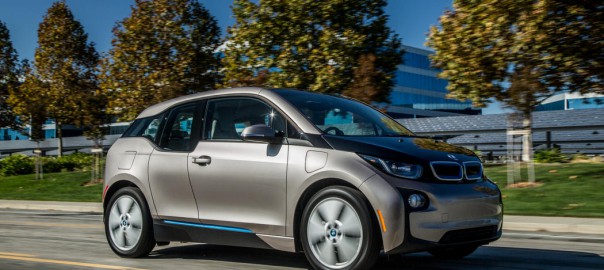
BMW i3, selected as Yahoo Autos 2015 Green Car of the Year (Image: Kerian/Yahoo)

The 2015 Yahoo Autos Green Vehicle of the Year: BMW i3

The most radical vehicle to emerge from any automaker in the past year — and likely the past decade — the BMW i3 looks and drives like nothing else on the road. You may call it a hatchback hit with an ugly stick or an an expensive way to travel 80 miles on a charge, but you’ll still miss the point of why we named it our 2015 Green Vehicle of the Year.

We’ve written before about the lengths BMW went to build a lightweight electric vehicle that would have unimpeachable green credentials. The carbon-fiber frame, narrow tires and drive system so wired to recover energy in coasting you really need only one pedal in everyday driving combine into a vehicle that’s more efficient at traveling a mile than any other available, including the Tesla Model S.

Driving the i3 — ours came with the 650-cc, two-cylinder range-extender engine that adds an addtional 80 miles of reach — is to revel in parsimony and goodness, and like the houses that hand out toothbrushes on Halloween, a bit of a buzzkill. The torque does arrive instantly, and the low center of gravity adds some fun in the chassis, but the tiny contact patch and suspension keeps such joy bottled up. The interior of open-pore eucalyptus and recycled plastic-fiber cloth looks inviting and jarring at first — as open and sporty as a fair-trade coffeehouse.

“No matter how funky and modern BMW makes its lights and window graphics,” said contributing editor Steve Siler, “it’s hard to get excited about a box with ultra-skinny wheels.”

Yet the panel of editors came to see the strategy behind the i3. The world has lived with automobiles for over 100 years, more than long enough for them to evolve into signifiers of our personalities. We expect form to follow function in even our wildest cars, from the spoilers and hood scoops on the Dodge Challenger Hellcat to the engine vents on the Alfa Romeo 4C’s rear decklid. But few automakers has ever been so enthralled by electric cars, so ready to embrace a low-carbon future, that they were willing to engineer a car that acts as a rolling billboard for saving energy. The BMW i3 was the first of this century, but it won’t be the last.

Source: Yahoo

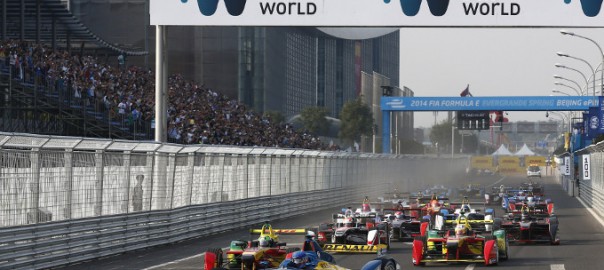
Formula E Racing in Beijing (Image: FIA Formula E)

FIA: What is Formula-e and why should we care?

With only three days until Round-2 of the inaugural FIA Formula-E Championship is upon us, I thought it was time to take a deeper look into this interesting racing series.

The debut of Formula-e racing was held in the streets of Beijing on 13th September 2014. You can read my review of that here. There was great racing from quality drivers with interesting incidents. That’s what you would expect from any racing series so what makes Forumla-e different?

Firstly, the obvious part is the “e” – this is the first fully electric single-seater racing series. The car is the Spark-Renault SRT_01E which uses a Dallara chassis, a McLaren engineered electric motor, a Rechargeable Energy Storage System (RESS) part of which has been engineered by Williams and it rides on Michelin tyres. This being a racing series that champions sustainability and cost saving, the tyre is essentially a road tyre, capable of running in both wet and dry conditions. One set of tyres should last a whole race weekend.

The “electric” part presents a number of issues for ensuring entertaining racing. The sound is an immediate problem, especially in the aftermath of the controversy over Formula 1 went through when the engines were downgraded for eight to six cylinders. The new sound of F1 is more tame than it ever has been and this has led to criticism from pundits and the race going public. So much so that some different artificial sound enhancing tricks have been tried to no avail. This however has meant that the problem of very little sound coming from an electrical power unit being much less of an issue. In practice, the Formula-e car sounds just as aggressive as the current Formula 1 engine, just a little less loud.

Another big problem with an electric car is refuelling. Currently there is very little in the way of technology that allows a car to be recharged in the time it takes for a pit stop to happen. How do Formula-e get around this? Simple, have two cars. Instead of pulling in to change tyres or recharge the battery, the driver simple hops out of one car and into another. Now this works at the moment but it isn’t exactly the most economical way of running proceedings. It means that each team, of which there are ten, has to have four cars as a minimum, two for each driver. Not ideal, however this can only be positive for the future of electric cars. With Formula-e investing time and money improving the image of the sport and electric cars in general, they will surely have to look at a way of improving this set up. Maybe a 3.5-second way of changing the batteries or a 10-second way of charging. All potential exciting developments for the future of road cars.

So, there are some issues but all of them so far, have been easy to account for. Here comes one part of Formula-e that I just can’t get past, “Fan Boost”. Three drivers out of the twenty in the field, are given a 5-second “Fan Boost”. This is measured purely on popularity via social media. This will force drivers to work harder in the media, gain more “Followers” and ask them to vote for them. I am not sure that measuring how popular you are to the public, should have any bearing on anything in your life, let alone the outcome of an otherwise very equal race. This boost, though it seems relatively ineffective, with a 5-second boost equivalent to 40 BHP for the drivers to use twice in the race (once in each car) feels like a poor gimmick taken from 1980’s Saturday morning kids television that Formula-e would do well to be rid of.

Another problem for me is the length of time between races. I understand that the logistics of getting a city ready to host a race are extremely complicated. Unfortunately, Formula-e whet the appetite for this series with an incident packed race-one in mid-September but race-two will not take place until the end of November, easily enough time for the public to forget it. Thankfully the rest of the races will be closer together but still 3 weeks to a month apart, the schedule is below.

Problems aside, the first race was gripping and I am genuinely excited about the close fought racing that is likely to await us in this year’s Formula E championship. I am also eager to see how this innovative series can improve both itself and race cars of the future. It also forces the likes of Formula 1 to ensure they are genuinely at the forefront of fuel-efficient racing and encourages new efficiencies through both series’, into our road cars.

The next race will be broadcast live on ITV4 at 6am on Saturday 22nd November.

Race Schedule

Round 1 – 13 Sept 2014 – Beijing, China

Round 2 – 22 Nov 2014 – Putrajaya, Malaysia

Round 3 – 13 Dec 2014 – Punta del Este, Uruguay

Round 4 – 10 Jan 2015 – Buenos Aires, Argentina

Round 5 – 14 Feb 2015 – TBA*

Round 6 – 14 Mar 2015 – Miami, USA

Round 7 – 4 Apr 2015 – Long Beach, USA

Round 8 – 9 May 2015 – Monte Carlo, Monaco

Round 9 – 30 May 2015 – Berlin, Germany

Round 10 – 27 Jun 2015 – London, United Kingdom

* Rio de Janeiro was originally scheduled to host a race in November but the calendar has since changed and though the date has been selected for Round 5, no venue has been announced.
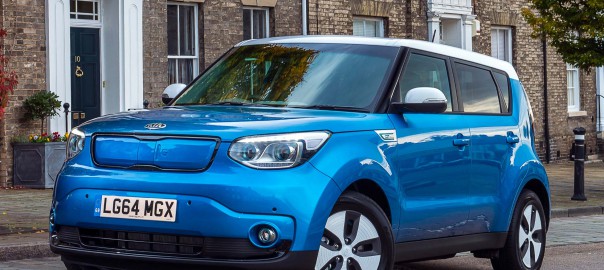
Kia Soul EV (Image: Kia)

Kia Soul EV review

Driving the Kia Soul EV round central London made petrol and diesel power seem so yesterday. You actually feel sympathy for people driving around in Bentleys. Kia says it has been working on electric vehicles for 30 years, but only now thinks the time is right to make one available to the public. Kia, which now sells nearly three million cars a year, is starting in a typically small way with intended annual sales expected to be around a couple of hundred.

If you need a compact electric SUV crossover hatchback, the Kia Soul is it. As with all Kias, the Soul EV has a seven year warranty which should give confidence about the life of the battery pack.

Performance

With acceleration to 60 mph taking 10.8 seconds the Kia Soul EV has adequate performance for a town car especially with town planners’ mania for traffic lights. Performance is smooth and serene and in mode B the regenerative braking is strong. Drive and Brake modes can also be operated in Eco mode to help maximise the car’s range. Maximum speed is claimed to be 90 mph but there was no opportunity to verify this.

The permanent magnet synchronous AC electric motor produces 109 bhp from 2,730 rpm to 8,000 rpm, while maximum torque of 211 lbs ft arrives instantly and continues until 2,730 rpm. Claimed class-leading energy density of 200 Wh/kg gives the car a projected range approaching 132 miles.

Handling

The rack and pinion power steering is quick and light and the car’s shape (and reversing camera) makes it easy to manoeuvre into parking spaces. A button push makes the steering even lighter for parking. The 275 kg battery pack has actually improved the handling of the Soul. Not only has it lowered its centre of gravity but the weight distribution of the Soul EV has been altered slightly too.

It is several percentage points less front heavy though you don’t really notice a difference on a slow speed town drive. The suspension settings felt stiffer which helped cornering precision. Braking, with large discs front and rear, was predictable and progressive.

Read more: Next Green Car

Tar Sands in Alberta (Image: Wikimedia/Howl Arts Collective)

IEA Says Oil Supplies May Not Keep Up With Demand

Despite what appears to be a saturated oil market in 2014, oil producers around the world will struggle to meet rising demand over the next few decades.

In its latest annual World Energy Outlook, the International Energy Agency (IEA) warned that the current period of oil abundance may be fleeting, and in fact, without heroic levels of production increases, oil markets will grow dangerously tight in the coming years.

Global oil demand is expected to increase by 37 percent by 2040, with a dominant proportion of that coming from developing countries – i.e. China and India. In fact, the IEA says that for every barrel of oil the industrialized world expects to eliminate from demand through efficiency or other ways of reducing demand, developing countries will burn through two additional barrels.

The IEA predicts that the world will need to extract an additional 14 million barrels of oil per day (bpd) by 2040, which comes on top of today’s production levels of about 90 million bpd. While there is a lot of triumphalism in the United States about shale oil production and how places like the Bakken and the Eagle Ford have ushered in an era of abundance, the IEA says that tight oil production in the U.S. – along with Canadian oil sands – will only last until the mid-2020’s.

After that point, when the shale revolution peters out, oil markets revert to their old ways – that is, looking to the Middle East once again to meet global demand. And that should raise some alarm. Saudi Arabia will remain one of the largest and most important oil producers in the world, but it probably won’t be able to ramp up production much beyond its current levels. There is some slack production in Iran, due to western sanctions, but even when it returns to the fold it likely will only make a small contribution to oil production growth in the long-term.

Instead, much of the world’s hopes are pinned disproportionately on Iraq. A year ago, after the IEA released its 2013 WEO, I wrote about how the IEA was placing a surprising amount of faith in the ability of Iraq to scale up its oil production. For several years, the IEA predicted that Iraq would be able to triple its output from 3 million bpd to around 8.3 million bpd by 2035. Under that assumption, oil prices would rise only a modest amount over that timeframe.

That would have been a monumental task even before the country began unraveling in June 2014. Since then, Iraq has been plunged back into a state of war. The prospect that it can be put back together, and the requisite levels of capital investment can be put into its oil sector in order to add 5-6 million bpd over the next 20-30 years, appears fanciful to say the least.

An estimated $900 billion will need to be deployed each year beginning in the 2030s to bring enough oil online to meet global demand. But the IEA also cautions that replicating the tight oil boom in the United States will be very difficult. Different geological conditions could pose some problems, but the long lead times and opposition to drilling will also slow development in much of the world.

Unlike last year, this time around the IEA appears to be more concerned. The IEA Chief Economist Fatih Birol, said in a press release:

“A well-supplied oil market in the short-term should not disguise the challenges that lie ahead, as the world is set to rely more heavily on a relatively small number of producing countries.”

And in its WEO Fact sheet, the IEA declares:

“the task of bringing production above 100 mb/d rests on a fairly limited number of shoulders.”

Source: Oil Price

Double GreenFleet win for all-electric e-NV200

Double GreenFleet win for all-electric Nissan e-NV200 van

NISSAN, the global market leader in electric vehicles, is celebrating a memorable double win after picking up two of the top honours at the prestigious GreenFleet Awards 2014 in Warwickshire.

The first success came as the trailblazing e-NV200 100 per cent electric van – a vehicle capable of helping fleet van operators slash both carbon emissions and whole-life costs – was named Industry Innovation of the Year.

The evening soon got even better as the brand also received the Outstanding Achievement award, in partnership with British Gas and Hitachi Capital Commercial Vehicle Solutions, for its hugely successful tri-party pilot of the e-NV200 on the British Gas fleet.

Presenting the award for Industry Innovation, the GreenFleet judges noted the ‘rarely-seen levels of anticipation’ that had surrounded the launch of the e-NV200 and said the model would lead a revolution in UK fleets.

Colin Boyton, Sales and Marketing Manager at GreenFleet Events, said:

“The e-NV200 is a fantastic vehicle and I truly believe it will shape the eCV market from here on.”

The potential to inspire industry-wide change was also the deciding factor in the judges’ decision in the Outstanding Achievement award.

The three-way partnership project saw British Gas pilot 28 Nissan e-NV200 vans throughout the winter to determine the future viability of 100% electric vehicle technology as part of its 13,000 home service vans fleet. The project was a huge success and led to British Gas placing an order for 100 vehicles.

Colin said:

“This project stands out from the crowd and is exactly what the fleet sector needed, in terms of proving EV viability. We hope that in awarding the project this accolade others will sit up and take notice, and if they achieve a fraction of what has been achieved here, it will be all the more worthwhile.”

Collecting Nissan’s honours from awards host Quentin Willson, Nissan Motor GB Corporate Sales Director Barry Beeston said:

“We are absolutely delighted to see the e-NV200 being honoured in this way.

“The e-NV200 is a model with the potential to transform fleets, with running costs of just two pence per mile contributing to significantly reduced whole-life costs, not to mention the environmental benefits.”

Source: Nissan Insider

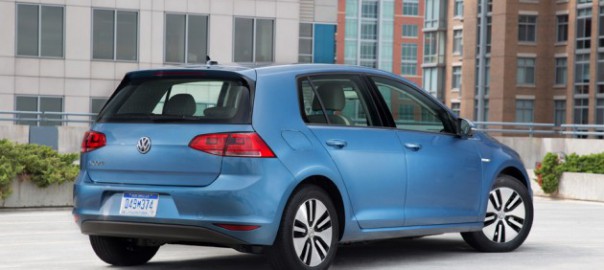
Volkswagen e-Golf

2015 Volkswagen e-Golf: Volkswagen Enters the Electric Car Game

About 10 years ago alternative fuel vehicles became become a hot topic as gas prices peaked and consumers started focusing on miles-per-gallon as a primary factor when shopping for a new car. Automakers quickly rallied around their preferred routes to improve fuel efficiency. Some took the hybrid/electric path, some talked up fuel cells, other brands (primarily European car companies) continued to tout diesel as the answer to our fuel efficiency quandaries. But things have changed in recent years, with most automakers realizing they can’t stick to a single alt fuel strategy. The wide range of consumer demands and government regulations related to fuel efficiency requires a comprehensive alternative fuel plan, one that incorporates multiple solutions.

Volkswagen is a shining example of a modern car company embracing this multi-pronged approach. VW has long been the leader in the diesel segment. Year-to-date, over 23% of all Volkswagen sales in the U.S. have featured clean diesel technology, a much higher percentage than overall industry sales for diesel, which make up barely 3% of the total U.S. market. But in the last two years the German automaker has displayed a flurry of activity around plug-in hybrids and electric vehicles, including the revolutionary XL1 and the new all-electric 2015 Volkswagen e-Golf. We recently had an opportunity to visit Volkswagen’s factories in Wolfsburg and Braunschweig to take a closer look at the new e-Golf and hear Volkswagen’s plans for electrification. Just a few years ago we couldn’t have imagined such an experience with VW, yet the company’s rapid progress in the field of electric cars is impressive.

Because VW has multiple variants of the Golf (diesel, all-electric or plug-in hybrid), and because the Golf now utilizes VW’s new modular platform, the automaker can shift assembly line configuration in short order. It has the ability to produce up to 1,100 alt fuel Golfs per day, though as of now only about 70 e-Golfs are being assembled daily. They went on sale in select U.S. states in early November. If demand warrants it Volkswagen can easily shift that number (up or down) to match consumer interest. This flexibility makes sense in a world where gas prices can pivot on a geopolitical headline or natural disaster. But it also begs the question – is Volkswagen building these electric variants because it sees a need to meet broadening consumer demand? Or is it simply positioning itself to address future regulatory requirements? The answer may not matter, as enhanced production flexibility is the wave of the future. Automakers that don’t master it will be at a major competitive disadvantage.

Volkswagen Automotive Group’s ‘modular toolkit’ production system, utilizing four major platforms to address the entire group’s vehicle needs, continues to roll out across brands and models. The all-new 2015 Golf is one of two early vehicles built off the new MQB platform and already on sale in the U.S. (the 2015 Audi A3 is the other one). Because of this system Golf production, including body styles and drivetrain configurations, can be shifted almost instantaneously. However, production capacity and flexibility is only half the battle. One of the main hurdles Volkswagen’s new e-Golf will face is an electric car market saturated with vehicles offered at the same price and touting the same battery range.

Source: Forbes

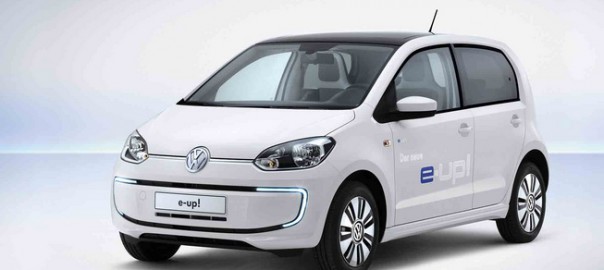
Volkswagen e-UP (Image: VW)

2014 Next Green Car Awards fetes VW e-Up!, Tesla Model S

The California-made Tesla Model S was one of about a dozen models given props by the Next Green Car Awards. And the prizes ran the gamut between conventional, diesel, plug-in and battery-electric powertrains because who doesn’t like variety?

Leading off in the Next Green Car awards was the Volkswagen e-Up!, which took home the City Car award:

“With the e-up!, Volkswagen has produced a high quality, practical and affordable electric city car which is perfect for zero-emission urban driving where space is a premium.”

Americans may associate “Family Estate” cars with huge, fake-wood-paneled station wagons of the ’70s and ’80s (and with Clark Griswold), but NGC gave the Family Estate award to the far-more-fun Audi A3 Sportback e-tron plug-in hybrid.

“As the first plug-in hybrid estate car, the A3 Sportback e-tron perfectly combines conventional fuel practicality for long distance driving with zero-emission motoring for urban trips.”

The Mitsubishi Outlander Plug-in Hybrid, Nissan e-NV200 Combi and Mercedes-Benz B-Class Electric were also all given props.

“The Outlander PHEV sets the SUV bar high offering plug-in capability for the price of a diesel. With a 5% BIK rate, you can see why the Outlander is the UK’s most popular plug-in hybrid.”

“With the e-NV200, Nissan has broken new ground offering an affordable and practical zero-emission alternative to the ubiquitous diesel van.”

“Powered by Tesla know-how, the Mercedes electric B-Class brings electric mobility to the compact MPV class for the first time. High on quality, long on range, and zero on emissions.”

Finally, the Tesla took home the top-of-the-line “Executive” prize.

“Simply the most beautiful and technologically advanced electric car on the market, the Model S combines a gadget-packed interior with an exhilarating electric driving experience.”

Read more: Autoblog, Next Green Car

The Fast Lane Reviews 2015 Kia Soul EV

A US-centric review by The Fast Lane.

The 2015 KIA Soul EV is the all electric version of the new KIA Soul. With a range of 94 miles and a 105 MPGe this new electric car is KIA first crack at an EV. Like many other manufacturers KIA plans to sell the 2015 KIA Soul EV only in California which of course begs the question: Are electric cars the wave of the future? You find out by checking out Roman’s first drive review of the new 2015 KIA Soul EV.

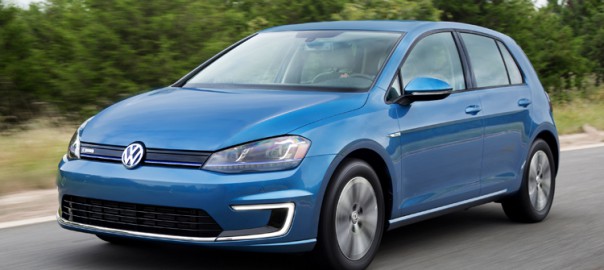
Volkswagen e-Golf (Image: VW)

The Brilliance of VW’s New Electric Golf

The E-Golf doesn’t make much of a statement. In fact, part of its charm is that the “e” features are decidedly low key. Perhaps what’s true of wearable devices such as fitness trackers and smart glasses is also true of electric cars: They will fully arrive only when they stop announcing themselves to the world and just resemble “normal” products. From this perspective, the electric Golf might be downright futuristic.

The car looks like a regular Golf and has all the German engineering Volkswagen likes to brag about: tidy fit and finish, tight gaps between body panels, and more room than one would expect. It even drives like a regular Golf, particularly between zero and 30 miles per hour, when it’s peppy. Ticking up to 65 mph on Manhattan’s West Side Highway took a bit of prodding, but the car showed no problem zipping out in front of an pushy taxi cab at a light change.

Bells and whistles are scarce. The control panel doesn’t fill up with animated leaves and butterflies when the driver pilots with particular efficiency. The center-stack screen isn’t usurped by a flow chart of the car’s vitals.

The Volkswagen’s take on e-monitoring is Teutonic in its simplicity. A single gauge—the analog kind—with a needle tilts into a green area when the brakes are recharging the battery and ticks the other way when one steps on the accelerator. A tad to the right, the Golf displays a digital number showing how many more miles the car will go before it goes to sleep, just like an overworked iPhone (AAPL). And then there’s the speedometer: The Golf almost seems embarrassed that it doesn’t burn dead dinosaurs.

Read more: Business Week