Category Archives: Buying/Leasing

A tyre company has been shortlisted for the £1m Earthshot prize

Enso Tyres’ ultra-durable compound for EVs – which helps reduce tyre emissions – recognised in climate solutions competition

The automotive industry rarely makes environmental headlines for positive reasons. But here comes a rare ray of sunshine: a tyre company has been listed for the 2023 Earthshot Prize.

Enso, a start-up company specialising in tyres for electric cars, has been recognised in the ‘Clean Our Air’ category for its work in trying to reduce particulate emissions from tyres. Enso’s approach is simple – increase tyre durability to decrease emissions (presumably at the expense of grip, although the tyres are A-rated for wet grip, so maybe something truly innovative is afoot).
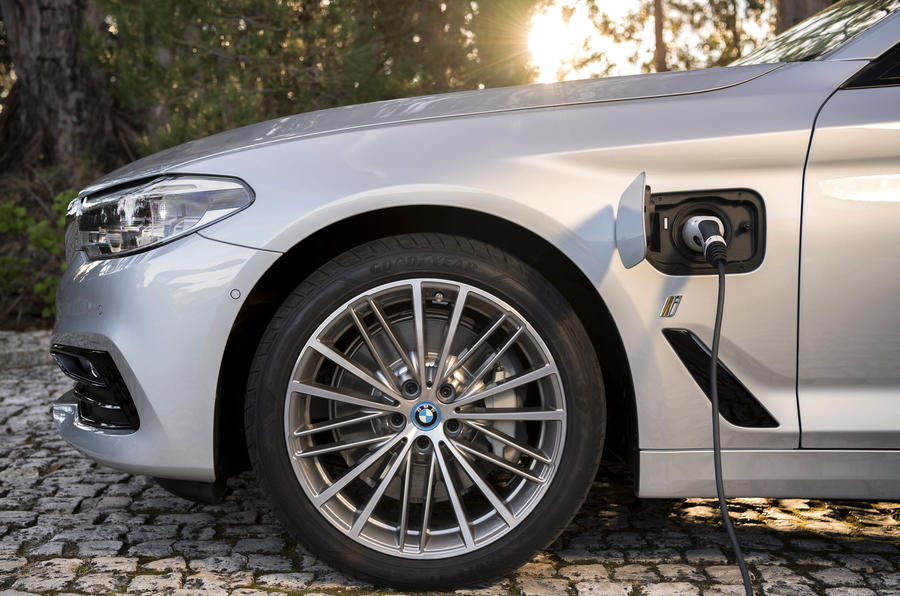
Already in use in some electric taxis and delivery vehicles, trials by Transport for London suggest vehicles using Enso tyres have 35 per cent less particulate matter emissions and travel 10 per cent further.

TopGear.com has already seen them in action, helping a Renault Zoe to set a hypermiling world record back in 2021. Drive an LEVC taxi? You can buy a set of Enso tyres for £299. The rest of us will have to wait longer: Enso is hoping to be in a position to manufacture a million tyres a year by 2026.

Figures from Imperial College London suggest tyres “emit six million tonnes of pollution each year and more airborne particulate matter than all tailpipes combined”.

Read more: TopGear

It’s Time to Go Green!

If you would like to know more about Solar Panels and the PowerBanx range of home battery systems, and get a free instant quote, please complete our online form:

UK electric car sales risk falling further behind after Sunak U-turn, analysts say

Country already trails well behind Europe and PM’s backtracking on climate policies could widen the gap

The UK has fallen well behind the rest of Europe in the growth of electric vehicle sales and risks falling further back after Rishi Sunak’s “screeching U-turn” on its climate policies, according to industry analysts.

UK sales of electric vehicles grew by 31% in the 12 months to July, one of the slowest rates of growth in Europe, according to data analysed by Cornwall Insight and the law firm Shoosmiths.

The research revealed the UK’s electric vehicle (EV) growth rate fell well behind the near 61% increase in sales across the 27 EU nations. The report blamed a lack of public charging infrastructure in the UK, and warned that the government’s decision to delay a ban on the sale of new combustion engine vehicles could shake investor confidence.

The prime minister announced plans to push back the ban on new fossil fuel vehicles from 2030 until 2035 as part of a significant watering down of the government’s key climate policies designed to help Britain become net zero by 2050.

The unexpected U-turn has led to confusion among carmakers and electric vehicle infrastructure investors by raising uncertainty over how soon British drivers will make the switch to electric options. This could further delay expansion of charging networks, according to the report.

Read more: TheGuardian

It’s Time to Go Green!

If you would like to know more about Solar Panels and the PowerBanx range of home battery systems, and get a free instant quote, please complete our online form:
Most efficient electric cars

We crunch the numbers on the electric cars on sale today to see which come closest to hitting their advertised figures

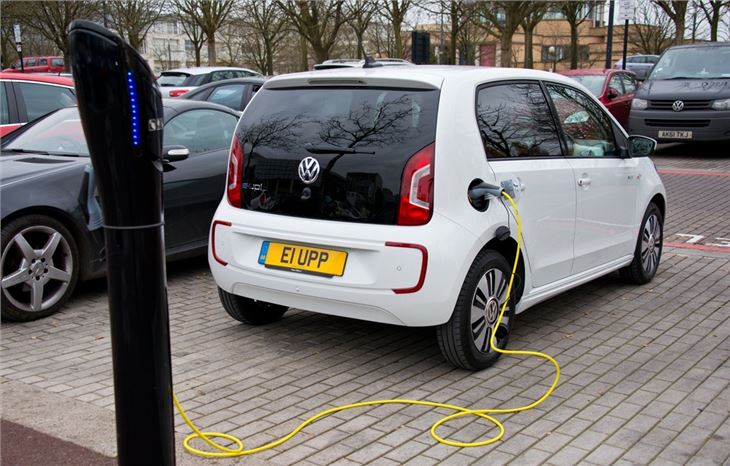
Plenty of electric cars have impressive claimed range figures but managing to achieve them is another story. With the increasing number of EVs to choose from, buyers are hunting for the most energy-efficient electric cars to really make the most of their batteries between charges.

Electric car efficiency is measured by calculating its miles per kilowatt hour used, shortened to mpkWh. For example, a Volkswagen ID 3 with a 77kWh battery would require an efficiency of 4.5mpkWh to achieve its officially rated 347 miles of range.

Tesla Model 3 Unveil (Image: Tesla)

A vehicle’s efficiency is affected in several different ways, with aspects such as weight proving to be a key factor in positively or negatively impacting range.

The Audi Q8 E-tron, for example, is powered by a 106kWh battery, but weighs a staggering 2585kg, meaning it can deliver only around 2.9mpkWh.

Larger, SUV-style electric cars are also usually impacted more by drag, which reduces their range compared with sleeker, more aerodynamic sports cars and hatchbacks.

The range and efficiency of electric cars are also heavily influenced by the weather conditions and outside temperatures. Warmer temperatures mean a battery’s chemical reactions can occur faster and offer higher range, whereas colder weather requires more energy, reducing range.

Read more: Autocar

It’s Time to Go Green!

If you would like to know more about Solar Panels and the PowerBanx range of home battery systems, and get a free instant quote, please complete our online form:

Why delaying the ban on petrol and diesel cars won’t slow UK’s shift to electric vehicles

The UK has delayed its ban on the sale of new cars which burn petrol or diesel in internal combustion engines (ICE) from 2030 to 2035.

In some ways, this is no surprise: the original plan was to ban them from 2040, a deadline brought forward by the previous prime minister, Boris Johnson, in 2020. The new delay, confirmed this week by Rishi Sunak, had been rumoured in August.

But the decision still sends a confusing message from Sunak’s government, particularly for carmakers who on average take six-to-seven years to develop new vehicles, and need time to invest in new factories and train workers, as well as make the cars themselves.

For these manufacturers, certainty is key to their business. If they gear up to produce an all-electric fleet and suddenly buyers still want ICE vehicles and they haven’t produced enough, they will have stockpiles of unwanted cars which may have to be sold at a loss.

However, the good news is the switch to electric vehicles (EVs) is already well under way in the UK. Research suggests it may now be unstoppable – regardless of what the government does.

How new technologies replace old ones

Any new technology follows a cycle of adoption that is difficult for government intervention to interrupt. The exception is for fast-acting bans, which attempt to immediately remove products deemed dangerous or harmful from a market.

Read more: TheConversation

It’s Time to Go Green!

If you would like to know more about Solar Panels and the PowerBanx range of home battery systems, and get a free instant quote, please complete our online form:

Van drivers reckon they could save nearly £3,000 a year – by switching to electric vehicles

Over half plan to go green within the next two years – and six in ten feel it will give them a good opportunity to do business with a more socially conscious clientele

Britain’s “white van men” are going green – with millions eyeing up an electric vehicle or a plug-in hybrid, according to research.

The average van driver reckons they could save more than £2,720 a year in fuel by moving away from petrol and diesel – and 55% predict they will be behind the wheel of an electric vehicle within the next two years.

Cllr Dermot Bambridge and Facilities Manager Stephen Wright

Six in ten also believe that driving an EV could even open up new opportunities to do more business with a socially conscious clientele.

A spokesman for GRIDSERVE, which commissioned the poll of 500 van drivers to highlight its Sun-to-Wheel EV charging solutions, said: “It’s great to learn today’s van drivers are also following the trend, and switching to electric.

“Vans are vital to the everyday running of the UK, delivering parcels and getting tradespeople to their next job – so it is essential this group sees the benefit of going green, and is adopting the technology.

“These drivers are a key part of the electric road revolution, and will make a huge impact as more and more switch to cleaner vehicles. Our calculations estimate that switching the UK’s fleet of vans to electric could save 15 million tonnes of CO2 every year.”

Read more: Mirror

It’s Time to Go Green!

If you would like to know more about Solar Panels and the PowerBanx range of home battery systems, and get a free instant quote, please complete our online form:
UK EV market entering ‘new phase’, says SMMT

The Society of Motor Manufacturers and Traders (SMMT) has said that the UK electric vehicle (EV) market has now left the ‘early adopter’ phase.

The trade association stated that the UK EV market is now “entering a new phase” as it is anticipating the clean mobility solution to reach an almost 18% market share by the end of 2023.

EVs in the UK have been growing in popularity due to a number of incentives and legislation, particularly the 2030 ban on the sale of fossil fuel powered internal combustion engines (ICEs).

The result, according to SMMT, has seen more than 800,000 EVs registered – a staggering 21-fold increase since 2018 when it had a market share of 0.7%.

The electrification of fleets is said to be “leading” the transition, SMMT said, but the end of private consumer incentives is currently undermining mass market demand.

Highlighting this issue, the trade body’s research shows that two thirds of drivers want to go electric but are being held back by lack of incentives and infrastructure. However, when drivers do adopt an EV, nine in 10 state they would “never go back” to a conventionally fuelled vehicle.

One of the biggest issues in the adoption of EVs cited by SMMT is affordability and uncertainty regarding the availability of a nationwide charging network.

Read more: Current+

It’s Time to Go Green!

If you would like to know more about Solar Panels and the PowerBanx range of home battery systems, and get a free instant quote, please complete our online form:

As prices fall, two thirds of global car sales could be EVs by 2030, study says

LONDON, Sept 14 (Reuters) – Spurred by falling battery prices, electric vehicles could hit price parity with fossil-fuel models in Europe in 2024 and the U.S. market in 2026, and account for two thirds of global car sales by 2030, according to new research.

A report by the Rocky Mountain Institute (RMI) on Thursday predicts battery costs should halve this decade, from $151 per kilowatt hour (kWh) in 2022 to between $60 and $90 per kWh, making EVs “for the first time as cheap to buy as petrol cars in every market by 2030 as well as cheaper to run.”

Batteries are expensive and account for around 40% of an EV’s price tag, a cost that has so far made them unaffordable for many consumers.

But those prices are steadily coming down as carmakers invest in new battery chemistries, materials and software to make more efficient EVs, RMI senior principal Kingsmill Bond told Reuters.

According to RMI’s analysis, the rapid growth of electric models in Europe and China “implies that EV sales will increase at least six-fold by 2030, to enjoy a market share of 62% to 86% of sales.”

EV sales in the European Union jumped almost 61% in July versus the same month in 2022, accounting for 13.6% of all car sales.

The European Union aims to ban the sale of new fossil-fuel models from 2035.

Read more: Reuters

It’s Time to Go Green!

If you would like to know more about Solar Panels and the PowerBanx range of home battery systems, and get a free instant quote, please complete our online form:

Peugeot 3008 hybrid SUV (Image: peugeot.co.uk)

Peugeot E-3008 is an all-electric SUV crossover with over 430 miles of range

The new flagship EV from Peugeot is the first to use the STLA M platform and is set to banish range anxiety forever

The Peugeot E-3008 combines the best of two worlds. This third-generation SUV crossover model is an established ICE model turned electric. However, as it uses a brand new platform the internals have been completely redesigned for electric use, rather than being a simple engine swap.

Peugeot 3008 hybrid SUV (Image: peugeot.co.uk)

Electric versions of existing models give brand-loyal customers some reassurance when making their first move to an electric vehicle. While the use of a dedicated electric platform, like this one from Stellantis, means that the car is optimised for electric power.

The result is something that not only looks great but also offers the best range in its class – and one of the best in EVs generally. The larger 98kWh battery E-3008 promises a range of up to 700km (or 434 miles). That’s certainly enough to not worry about finding electric chargers. Even the smaller 73kWh battery will deliver 525km (326 miles).

There are a few design changes for the third generation of the 3008 that raise the profile of this car. Designed in France and built in its factory in Sochaux, Peugeot talk of this flagship model of having an allure, and you can certainly see that in the changes.

Read more: T3

It’s Time to Go Green!

If you would like to know more about Solar Panels and the PowerBanx range of home battery systems, and get a free instant quote, please complete our online form:

Will Electric Vehicles Become More Affordable? Exploring the Future of EV Prices

Electric vehicles (EVs) are gaining popularity as car manufacturers strive to make them more affordable and accessible. The emergence of mid-range EVs such as the Chevrolet Bolt EV, Nissan Leaf, Hyundai Kona Electric, and Tesla Model 3 has lowered the prices on entry-level models. This trend raises the question of whether EVs will become more affordable in the future.

Experts speculate that increasing competition, government incentives, and the drop in raw material prices, particularly lithium and cobalt, may make EVs more affordable sooner than anticipated. Bloomberg’s New Energy Finance Reports suggests that by 2025, electric cars may cost less than traditional gas-powered vehicles. The advancements in battery technology, including the growth of solid-state batteries, have improved energy storage and reduced production costs, making EV batteries more efficient and affordable to manufacture.

Infrastructure also plays a significant role in reducing EV costs. A well-developed and easily accessible charging network alleviates range anxiety and boosts confidence in EV ownership. Vehicle-to-grid (V2G) technology allows EV owners to return unused electricity to the power grid, providing additional cost savings.

The used EV market also contributes to affordability. As early adopters trade up for newer models, a thriving second-hand EV market emerges. Savvy shoppers can take advantage of this market to purchase electric vehicles at a fraction of the cost of a brand-new one.

Governments worldwide are introducing attractive incentives and policy changes to encourage EV adoption.

Read more: EnergyPortal

It’s Time to Go Green!

If you would like to know more about Solar Panels and the PowerBanx range of home battery systems, and get a free instant quote, please complete our online form:

NEW ELECTRIC PEUGEOT 3008 CROSSOVER GETS 435-MILE RANGE AND DRAMATIC STYLING

There will be hybrid power available, too

Peugeot is replacing its highly successful 3008 crossover with an all-new model with electrification to the fore. The new all-electric E-3008 model is the latest chapter in the French brand’s shift to a fully electric future, something it plans to achieve by 2030.

Helping differentiate the new 3008 from its predecessors is a fastback design featuring a sloping roofline with an integrated spoiler. This is said to funnel airflow over the rear window in a bid to reduce drag and enhance the car’s aerodynamic efficiency.

The three-claw design that has become a signature of Peugeot is seen more vividly in the new car, with LED daytime running lights forming an extension of the headlight units into the front bumper. In the E-3008 EV, the Peugeot emblem is surrounded by a mesh effect that includes body-coloured sections to blend in with the bodywork.

Three different electric powertrains

Two batteries will be available in the E-3008, starting with a 73kWh unit that will feature in the single- and dual-motor versions providing 326 miles of driving range on the WLTP test cycle. The single-motor version has up to 207bhp, reaches 62mph in 5.4 seconds from rest and a top speed of 105mph.

Peugeot will offer an all-wheel-drive version with two motors using the same battery and managing to achieve the same driving range. Peak power climbs to 315bhp, while 0-62mph in only 3.9 seconds.

Read more: Driving

It’s Time to Go Green!

If you would like to know more about Solar Panels and the PowerBanx range of home battery systems, and get a free instant quote, please complete our online form: