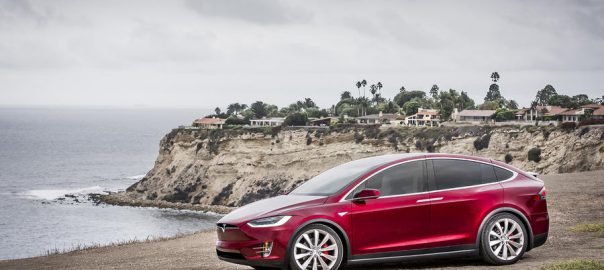
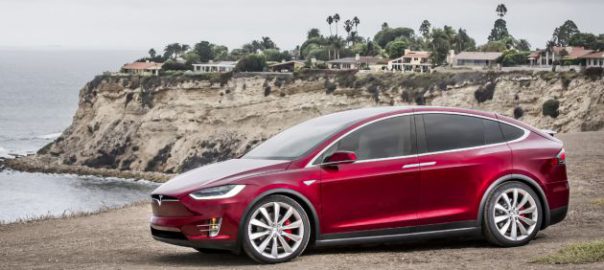
The Tesla Model X brings full electrification to the SUV class. We see if it’s as impressive as the Model S saloon
Tesla Model X
What is it?
Tesla has already shaken up the luxury car market with the electric Model S, thanks to a combination of rapid performance, low running costs and respectable range. But as impressive as all that is, the saloon car seems to be a dying breed, due to the ever-increasing popularity of the SUV.
The answer? Well, making an SUV seems like a sensible solution, something Tesla has done with the Model X. It was first seen as a concept back in 2013, but there have been a number of delays, due to issues relating to the unusual ‘falcon wing’ rear doors and rear seat mounts, among other things.
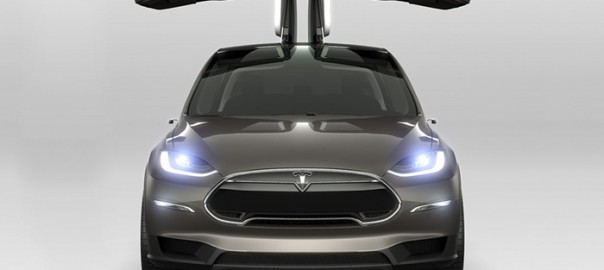
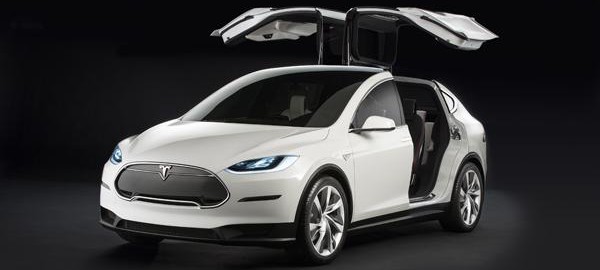
This car may have been originally pencilled in for a 2014 release, but it still promises to offer cutting-edge technology. This includes ‘autopilot’, those automatic falcon wing doors and a range that can top 300 miles if you avoid the temptation that is the Performance model.
If temptation is too much, the P90D with the Ludicrous Speed upgrade can manage the 0-60mph sprint in a staggering 3.2sec. That’s McLaren F1 territory from a 2.5-tonne, seven-seat SUV.
Underneath the distinctive styling is the same skateboard-style chassis that underpins the Model S. The battery pack lies flat on the floor beneath the seats, giving an incredibly low centre of gravity, even with taller SUV bodywork.
All Model Xs are four-wheel drive, courtesy of a pair of electric motors, one powering the rear wheels and one for the front pair. In the P90D, these motors are rated at 503bhp and 259bhp respectively. Sadly, the electrical system can only provide a total combined output of 464bhp, although this is increased to 532bhp with the Ludicrous upgrade.
What’s it like?
Getting inside the Model X can be quite a theatrical event. The front doors may be conventional but are electrically powered, with the driver’s door opening automatically when you unlock the car with the key fob. Step inside and a press of the brake pedal will see the doors close behind you.
It’s the rear doors that are the more interesting, though. Although they look like they’d be impossible to open in a confined space, the doors are double-hinged (one on the roof and another above the window line) so they can open with as little as 11 inches of clearance outwards. There are also ultrasonic sensors that lie beneath the bodywork so you can’t open one into an immovable object.
Rory Reid’s piece on Tesla’s revolutionary electric car in episode four shows the BBC2 programme is at least trying to head in a new direction
“This car might just be on the cusp of changing everything.”
Matt LeBlanc’s Top Gear intro last night didn’t just herald a brave new world in electric cars. It also suggested that the new show had finally turned a corner.
Chris Evans has been accused of simply trying to copy what Jeremy Clarkson did first and best. But last night at least hinted that the show is trying to put some distance between it and old Top Gear, thanks to some smart handling from occasional presenter Rory Reid.
Reid was in New York City to drive new electric car the Tesla Model X.
Now, both electric in general and Tesla in particular have been dirty words round Dunsfold Aerodrome for years, ever since Clarkson eviscerated the company’s Roadster sports car in a film in 2008.
Back then Clarkson, shock horror, actually enjoyed his time in the electric car – until he realised how much it cost and how quickly it would run out of charge. “What we have here is an astonishing technical achievement: the first electric car that you might actually want to buy,” he said. “It’s just a shame that in the real world, it doesn’t seem to work.”
Tesla were so angry with the film that they attempted to sue Top Gear, but their appeal case was eventually dismissed by the court of appeal in 2013.
Fast forward to Clarkson-free Top Gear 2016 and Tesla were back with their new car, the Model X, which it is claimed will do 250 miles and charge in as little as 30 minutes.
Rory Reid was completely won over by the new motor and its ‘Ludicrous Mode’, which apparently turns it from family SUV into a drag racer that’s more than a match for even the biggest gas guzzlers.
“Everything changes right now,” Rory said pointedly. “The Model X pushes the reset button.”
Pricing for UK specifications of Tesla’s Model X have been revealed, with the entry level 75D starting at £71,900. This will buy you a five seat all-electric SUV with four wheel drive, a quoted range of 259 miles, and a 0-60mph time of 6.0 seconds.
Pricing and specification details for the UK Model X have been revealed
Moving up a rung sees the 90D with a range of 303 miles, 4.8 second 0-60mph time and a cost of £82,400, while the top of the range P90D drops the fastest sprint time to 3.2 seconds and provides 290 miles of range at £99,800.
Five seats are offered as standard, while six and seven seat configurations are available at a cost of £2,550 and £3,400 respectively. Ludicrous mode for the fastest model costs £8,700, Autopilot £2,200, and smart air suspension the same – though this last point is standard kit on all but the entry level Model X 70D.
Standard equipment includes the much talked about Falcon Wing doors, all-wheel drive, parking sensors, DAB+ radio, keyless entry and start, a huge panoramic windscreen, electric tailgate, and maps and navigation with over-the-air updates. The cost also includes free use of Tesla’s Supercharger network for life.
No fixed date has yet been set for when the Model X will arrive in the UK, but orders placed now will arrive in ‘Late 2016’, while those who got in early can expect theirs around autumn.
While travelling around the floor at the Los Angeles Auto Showon press days this week we made note that Tesla was not present at the event with the Model X or S.
But perhaps somewhat unsurprising, Bloomberg is again seemingly acting as the de facto main stream press release source for Tesla, and just so happened to be provided with a Model X “sneak peak” by the company on the first day the show is open to the public.
We don’t care much for all the overt gushing, as the spot almost comes over as a paid placement – “Place your order now, because it’s going to go fast”, but it is still a great look inside the Tesla Model X; which should start heading into mass deliveries for Signature Series reservation holders in the next couple weeks.
Elon Musk’s third electric car will be delivered to customers in the US after three years of delay, with over 20,000 pre-orders
Tesla’s much delayed electric sports utility vehicle is due to finally reach customers, starting in September, Elon Musk has announced.
The Tesla Model X is the electric car company’s third car, designed to appeal to the SUV-crossover market (Image: Tesla Motors)
The Model X was originally unveiled in 2012 alongside the first deliveries of the Model S sedan and was expected to go into production in 2013. Musk announced two subsequent delays as the company struggled to meet demand for the Model S and the motoring company’s expansion plans.
The Model X has a higher ride height, all-wheel drive and can seat up to seven, making it the largest vehicle available from Tesla Motors. More than 20,000 people have already paid a $5,000 deposit to reserve one of the new models. Pricing is expected to be similar to the Model S, which starts at £50,000 in the UK.
Musk confirmed that the company’s Model X car configurator would be available online in the next three weeks and that customers will start recieving new cars by 30 September.
The Roadster, Tesla’s first car, the Model S, and now the Model X, are being used to pave the way for Tesla’s Model 3, which is Musk’s vision of a mass market electric car.
Last year marked a big breakthrough for electric cars; the majority of major manufacturers invested heavily in developing electric drive-trains and subsequently added an array of appealing battery-electric (BEV) and plug-in hybrid (PHEV) models to their rosters.
By the end of 2014 there were over 17,000 plug-in cars and vans on UK roads with that number expected to more than double by the end of this year.
As noted by Dr Ben Lane, Managing Editor of Next Green Car: “2015 will see a continuing roll out of battery electric and plug-in hybrid models as UK motorists become more accustomed to electric drive-trains. This year will be the year when EVs start to considered as ‘normal’.”
The future is only looking bright for electric mobility and there a number of exciting EV prospects expected to feature prominently this year. Below is Zap-Map’s list of top 10 electric vehicles coming soon in 2015:
1. Tesla Model X – BEV
Tesla Model X (Image: Tesla)
Originally scheduled for 2013, Tesla recently announced that the eagerly anticipated Model X crossover will be launched in the third quarter of 2015. Despite being larger than the Model S, the all-wheel electric drive will give the Model X a similar level of performance (that’s 0 to 60 mph in around 5.9 seconds!). With 10% additional weight, the expected driving range will be slightly less; around 170 miles for the 60 kWh battery pack or 230 miles for 85 kWh battery. One the striking features of the next Tesla will be its rear ‘Falcon’ doors which open upwards instead of swinging outward. Final pricing has yet to be announced. Although it’s been a while coming, with the new Model X, Tesla is unlikely to disappoint.
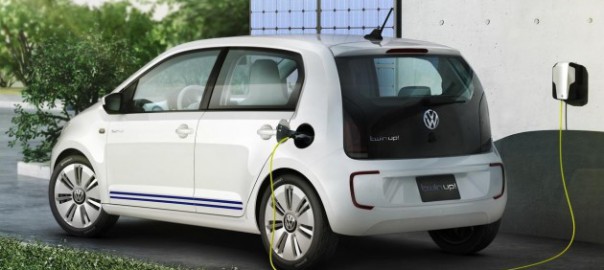
2. Volkswagen twin-up! – PHEV
Volkswagen twin-up! PHEV (Image: VW)
The twin-up!’s 55kW powertrain consists of a 0.8 litre TDI diesel engine working in conjunction with a 35kW electric motor. The energy storage system includes a lithium-ion battery (energy capacity: 8.6 kWh), a conventional 12V battery for on-board electrics, and a 33 litre capacity fuel tank. On the official test cycle, the twin-up! delivers a combined fuel economy of over 250 MPG with a CO2 emissions of just 27 g/km. In zero-emission operation the PHEV can cover a range of 31 miles and is anything but a slouch: the twin-up! accelerates up to 62 mph in 15.7 seconds and has an all-electric top speed of 80 mph. Pricing to be announced.
3. Mercedes-Benz B-Class Electric Drive – BEV
Mercedes B Class Electric (Image: Mercedes-Benz)
The Mercedes-Tesla relationship is evident (and welcome) in the B-Class ED with the drive-train and battery pack coming from the California-based company. Capable of 125 miles per full charge, the B-Class ED provides electric motoring in a quality package with more reserved styling than some other brands such as the BMWi range. While the motors can deliver up to 179 bhp (Sport mode), two other driving modes are available: ‘Economy’, where power is limited to 131 bhp; and ‘Economy Plus’ with just 87 bhp and a maximum speed of 70 mph. Expected to be priced from around £27,000.
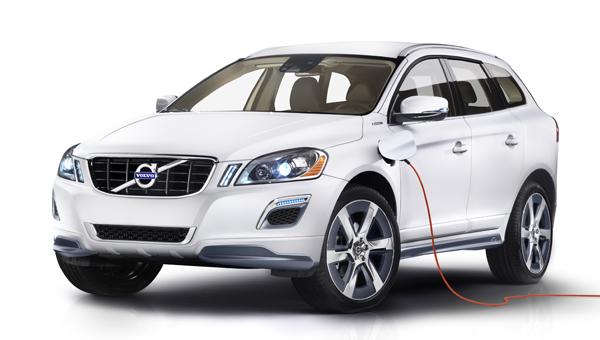
4. Volvo XC90 plug-in hybrid – PHEV
Volvo XC90 PHEV (Image: Volvo)
No doubt encouraged by the huge success of the Mitsubishi Outlander PHEV, Volvo will bring its own plug-in SUV to market in 2015, in addition to the usual range of petrol and diesel engines. While all will offer four-wheel drive, for the first time there will also be a front-wheel drive option. The XC90 PHEV will also feature a collection of entertainment and safety technology including a 9.3 inch screen compatible with Apple’s new CarPlay interface and Volvo’s new collision avoidance system. The XC90 range is priced from £45,750.
5. Volkswagen Passat GTE plug-in hybrid – PHEV
Volkswagen Passat GTE PHEV (Image: VW)
Now in its eighth incarnation, the new Passat range includes the GTE, the first Passat with a plug-in hybrid drive. Powered by a turbocharged direct injection petrol engine (TSI) and an 85kW electric motor, the GTE is capable (on the official test) of over 141 MPG (petrol) and 13.0 kWh/100km (electric) with CO2 emission of under 45 g/km. On a full tank and fully recharged 9.9 kWh lithium-ion battery, the new PHEV has a total driving range of over 620 miles. In ‘E-Mode’, the Passat GTE can also cover a distance of up to 31 miles with zero emissions. AC charging options include standard (or ‘slow’) charging at 2.3 kW from a domestic socket in 4.25 hours or an optional a home 3.6 kW charger which provides a full charge in 2.5 hours. Anticipated pricing from around £20,000.
6. BMW X5 e-drive – PHEV
BMW X5 e-Drive PHEV (Image: BMW)
The BMW X5 e-drive concept was first unveiled at the 2013 Frankfurt International Motor Show and is seen as the logical next step for the successful X5 series. Combining a four-cylinder combustion engine with BMW TwinPower Turbo technology and lithium-ion battery, the plug-in hybrid can driver approximately 19 miles solely on electric power. There is a choice of three driving modes, depending on requirements and situation – the intelligent hybrid drive option for a balance between sportiness and efficiency; pure electric and therefore emission-free driving; or Safe Battery mode to maintain the current battery charge. According to BMW, the X5 e-drive is capable of 74.3 mpg and on average emits 90g of CO2 per kilometre. Estimated to be priced at £55,000 – £60,000, the X5 e-drive is on course to directly compete with the Volvo XC90 PHEV.
7. Renault Zoe 2015 (new battery) – BEV
Renault ZOE EV
Renault’s battery-electric Zoe, the second best-selling EV after the Nissan LEAF, will be revitalised by a smaller and more efficient electric motor in 2015. By reducing the motors size, Renault expects a 10% increase in the Renault Zoe’s official 130 mile range. Renault also claims the improvements will reduce charging time by 20-30 minutes when using low-level power supply such as a 3kW 3-pin slow charging unit. The upgrades to the Zoe will be added to all new models from Spring 2015 Renault say.
8. Mitsubishi Outlander PHEV S – PHEV
Mitsubishi Outlander PHEV-S (Image: Mitsubishi)
Following on from the successful Outlander PHEV launch in 2014, Mitsubishi plans to release the Outlander PHEV-S. Power for the Outlander PHEV-S is expected to come from the same four-cylinder 2.0-litre petrol and twin electric motor system that drives the original car. This will see up to 204bhp sent to all four wheels, resulting in a 0-62mph time of 11 seconds and a 106mph top speed, whilst offering 148mpg and emissions as low as 44g/km CO2. The main difference will be in appearance, offering a refined interior and exterior design that will magnify the Outlander PHEV’s unique driving experience. Pricing to be announced.
9. Audi Q7 Quattro plug-in hybrid – PHEV
Audi Q7 e-tron Quattro (Image: Audi)
The Audi Q7 e-tron quattro, which will be launched soon after its conventionally powered counterparts in the spring, is the first plug in hybrid from Audi with a diesel engine. It is also the world’s first diesel PHEV with quattro all-wheel drive in the premium SUV segment. It returns the equivalent of up to 166.1mpg, which corresponds to less than 50 grams of CO2 per kilometre and can travel just under 35 miles on battery-electric power alone. Pricing to be announced.
10. Peugeot Quartz – PHEV
Peugeot Quartz PHEV (Image: Peugeot)
The Quartz plug-in hybrid concept mixes elements of a crossover vehicle and a saloon, to bring a new take on the SUV segment. It uses a plug-in hybrid drive train comprising of a 1.6-litre petrol engine supplemented by two 85kW electric motors, driving each axle. When the vehicle is in ZEV mode, it utilises the electric motor only and can cover up to 31 miles on a single battery charge. Peugeot have estimated the vehicle will not reach production until 2016; it will be interesting to see if the striking design mellows between now and then.
The year 2015 will see the strengthening of the market for electric vehicles (EVs); both pure electric and plug-in hybrids. With over 17,000 EVs already on UK roads, Next Green Car forecasts almost 40,000 will be in use by the end of the year.
New low emission petrol and diesel models will also be launched in 2015 with a shift to petrol cars reflecting the increasing concern about air quality. While diesel vehicles can offer lower CO2 emissions, petrol units provide lower NOx and particulates which are associated with poor respiratory health in urban areas. Look out for fuel-frugal petrol two- and three-cylinder turbo engines which can now offer the driving performance of larger engines.
As noted by Dr Ben Lane, Managing Editor of Next Green Car: “2015 will see a continuing roll out of battery electric and plug-in hybrid models as UK motorists become more accustomed to electric drive-trains. This year will be the year when EVs start to considered as ‘normal’.
“If an electric car isn’t right for your driving requirements, an ever increasing choice of sub-100 gCO2/km petrol and diesel models will become available with zero car tax and high MPG. You will need to choose a conventional model wisely, however, as the official MPG figures of some brands are increasingly at odds with the real-world fuel economy data.”
To mark a year which will bring high quality, high-tech, low emission models to UK showrooms, the following ‘Top 10’ list highlights some of the most important models due for launch and delivery in 2015.
The twin-up!’s 55kW powertrain consists of a 0.8 litre TDI diesel engine working in conjunction with a 35kW electric motor. The energy storage system includes a lithium-ion battery (energy capacity: 8.6 kWh), a conventional 12V battery for on-board electrics, and a 33 litre capacity fuel tank.
On the official test cycle, the twin-up! delivers a combined fuel economy of over 250 MPG with a CO2 emissions of just 27 g/km. In zero-emission operation the PHEV can cover a range of 31 miles and is anything but a slouch: the twin-up! accelerates up to 62 mph in 15.7 seconds and has an all-electric top speed of 80 mph. Pricing to be announced.
4: Kia Soul EV – Electric – CO2: 0 g/km – NGC: 32 (14)**
Kia Soul EV
The new Soul EV is the result of almost 30 years of research and development into the feasibility of electric vehicles at Kia and it shows. A 27 kWh lithium-ion battery gives the Soul EV an official range of 132 miles beating everything but the Model S. As you’d expect for an electric car, the Soul EV is quiet and perfect for nipping around town. Unlike most other EVs, however, it also scores highly on the use of low impact materials including bio-degradable plastic, bio-foam and bio-fabric which are all used in the interior. Zero tail-pipe emissions mean zero London Congestion Charge and zero car tax (Vehicle Excise Duty). Priced from £24,995 the Soul EV isn’t cheap but it does come with Kia’s class-leading 7-year warranty.
**If powered using renewable (e.g. wind, solar) electricity
6: Mercedes-Benz B-Class Electric Drive – CO2: 0 g/km
Mercedes-Benz B-Class Electric Drive (Image: NGC)
The Mercedes-Tesla relationship is evident (and welcome) in the B-Class ED with the drive-train and battery pack coming from the California-based company. Capable of 125 miles per full charge, the B-Class ED provides electric motoring in a quality package with more reserved styling than some other brands such as the BMWi range. While the motors can deliver up to 179 bhp (Sport mode), two other driving modes are available: ‘Economy’, where power is limited to 131 bhp; and ‘Economy Plus’ with just 87 bhp and a maximum speed of 70 mph. Expected to be priced from around £27,000.
7: VW Passat GTE – Plug-in Hybrid – CO2:
Volkswagen Passat GTE PHEV
Now in its eighth incarnation, the new Passat range includes the GTE, the first Passat with a plug-in hybrid drive. Powered by a turbocharged direct injection petrol engine (TSI) and an 85kW electric motor, the GTE is capable (on the official test) of over 141 MPG (petrol) and 13.0 kWh/100km (electric) with CO2 emission of under 45 g/km. On a full tank and fully recharged 9.9 kWh lithium-ion battery, the new PHEV has a total driving range of over 620 miles. In ‘E-Mode’, the Passat GTE can also cover a distance of up to 31 miles with zero emissions. AC charging options include standard (or ‘slow’) charging at 2.3 kW from a domestic socket in 4.25 hours or an optional a home 3.6 kW charger which provides a full charge in 2.5 hours. Anticipated pricing from around £20,000.
8: VOLVO XC90 – Plug-in Hybrid – CO2: TBC* g/km
Volvo XC90 Plug-in Hybrid
No doubt encouraged by the huge success of the Mitsubishi Outlander PHEV, Volvo will bring its own plug-in SUV to market in 2015, in addition to the usual range of petrol and diesel engines. While all will offer four-wheel drive, for the first time there will also be a front-wheel drive option. The XC90 PHEV will also feature a collection of entertainment and safety technology including a 9.3 inch screen compatible with Apple’s new CarPlay interface and Volvo’s new collision avoidance system. The XC90 range is priced from £45,750.
Originally scheduled for 2013, Tesla recently announced that the eagerly anticipated Model X crossover will be launched in the third quarter of 2015. Despite being larger than the Model S, the all-wheel electric drive will give the Model X a similar level of performance (that’s 0 to 60 mph in around 5.9 seconds!). With 10% additional weight, the expected driving range will be slightly less; around 170 miles for the 60 kWh battery pack or 230 miles for 85 kWh battery. One the striking features of the next Tesla will be its rear ‘Falcon’ doors which open upwards instead of swinging outward. Final pricing has yet to be announced. Although its been a while in coming, with the new Model X, Tesla is unlikely to disappoint.