Category Archives: Sales

The new model intends to offer a more affordable Tesla for customers

Electric cars could rule the road in just over 10 years

Sales of the vehicles are surging so fast the market looks set to meet government forecasts for the end of new diesel and petrol cars by 2040

The new model intends to offer a more affordable Tesla for customers
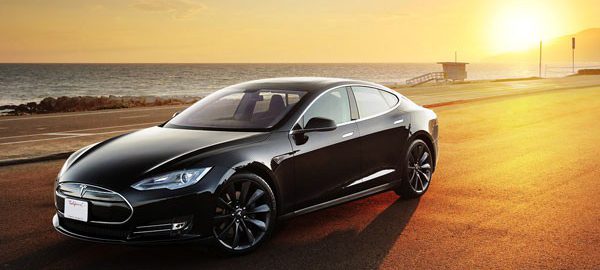
Tesla Model S

Electric cars could out sell diesel and petrol models by 2027, according to industry experts.

Surging sales of electric vehicles suggest the market is on course to meet government forecasts for all new cars and vans to be electric by 2040.

And current trends put electric vehicles on the road to accounting for more than half of all new registrations – around 1.3m a year – by 2027.

The figures are revealed in a new automotive industry forecast by Go Ultra Low, the government and industry-backed campaign.

The electric car revolution began in 2011 with the launch of the plug-in car grant with just over 1,000 annual registrations.

Since then, record-breaking volumes of electric vehicles have been registered every year – 2015 saw more than 28,000 electric cars registered.

This year started with the best period for EV uptake since records began, with UK buyers registering the equivalent of one electric car every 13 minutes.

With vehicle manufacturers introducing more and more electric and plug-in hybrid models, the new car market is accelerating towards a point in the future where plug-in power overtakes petrol and diesel models.

Steve Fowler, Auto Express editor-in-chief, said:

“The positivity and appreciation of electric vehicles by their owners is suggestive of a step-change in public perception of these vehicles.

“We are moving towards a tipping point for electrically powered cars, so it’s entirely possible that by 2027 these vehicles will dominate the market as the top choice for new car buyers.”

Source: Mirror
EV sales boost ‘vital to closing emissions gap’

The market share of electric vehicles (EVs) must be increased to achieve the fuel economy standards set by regulators.

ev_charging_sign_shutterstock

According to the World Energy Council (WEC), EVs currently represent less than 1% of the combined market share across the world’s largest markets – EU, US and China – for new passenger cars.

Its report states the three regions have set major fuel economy targets, requiring efficiency improvements of around 30% by 2020 – two to three times higher than current levels.

The WEC believes the market share needs to be increased to 16% by the end of the decade to close the emissions gap.

The EV gap, i.e. the number of EV sales required to meet fuel economy targets, in the EU is 1.4 million – 10% of the estimated 2020 projected car sales.

In the US, it is 0.9 million (11%) while in China, it is roughly 5.3 million (22%).

The report adds power demand attributed to new EVs can likely be managed with proper planning by utilities and could be further mitigated at the local level with emerging technologies such as vehicle-to-grid.

It recommends policymakers to examine how proposed fuel requirements can be matched by working with industry through financial and operational incentives to achieve improvements in CO2 emissions.

Christoph Frei, Secretary-General of the World Energy Council, said:

“Over the past decade, we have seen the emergence of climate change and fuel price volatility as headline issues that keeps energy leaders awake at night. As a result, many countries have set ambitious fuel efficiency targets for passenger vehicles.

“The innovative role EVs can play in meeting these standards makes for a pragmatic step in closing the emissions gap by 2020. Looking beyond 2020, EVs and innovation in this area present a major growth opportunity not only for car manufacturers but for the energy sector as a whole.”

Source: Energy Live News

When will electric cars begin to outsell petrol and diesel in the UK? 2027.

  • Expert panel says there’s been a recent ‘step-change’ in public opinion towards electric vehicles
  • Prediction based on stats from the Government, Committee on Climate Change, RAC Foundation, Auto Express and other industry authorities

Electric cars are the future, we’re constantly being told. But how far into the future will they be the dominant form of propulsion for new cars sold in the UK?

According to an expert panel, the first year electric cars will outsell conventional combustion engined vehicles is 2027.

And it’s all because of a recent ‘step-change’ in the public’s opinion of electric vehicles, bringing the tipping point way ahead of the Government’s expectations of a fully electrified road network in 2040.

Go Ultra Low, a government and industry-backed campaign to educate motorists about the benefits of electric cars, said more than 1.3million electric cars will be registered in 2027.

That would see them outselling new petrol and diesel vehicles, based on a new-car registration total of 2.6million – the same as 2015.

It made the bold claim after reviewing multiple electric-car reports and forecasts concerning electric vehicle take-up, including results from Auto Express’ most recent Driver Power survey.

The weekly car magazine recently reported record high scores for EVs in its flagship car owner survey, with electric cars topping the overall best car tables and performing strongly in ease of driving and running costs categories, among others.

Read more: This is Money

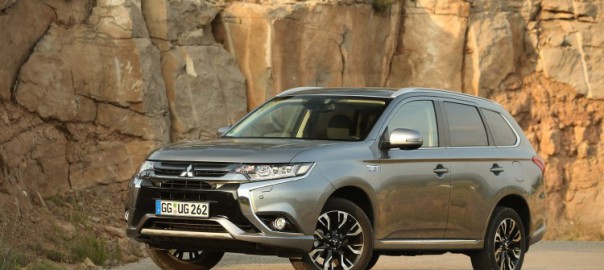
2016 Mitsubishi Outlander PHEV

The UK’s best selling plug-in cars revealed

By March this year, there were close to 60,000 electric or plug-in hybrid cars driving in the UK

Electric car sales continue to surge in the UK, with the latest figures showing close to 60,000 currently on the road. The Mitsubishi Outlander PHEV accounts for nearly a third of those, but there’s an increasingly wide range of different models on the roads.

According to DVLA figures analysed by the RAC Foundation by the end of March 2016 there were 19,945 plug-in hybrid electric Outlanders licenced in the UK, over 7,000 more than the next best selling electric or plug-in car, the Nissan Leaf.

The Leaf, however, is the UK’s best-selling battery-electric car. The 12,469 Leafs come with an electric-only drivetrain, whereas the Mitsubishi Outlander PHEV uses a 2.0-litre four-cylinder petrol engine to complement the batteries and the electric motor.

In third place was the BMW i3, with over 4,500 currently on the road. The i3 comes with a choice of two drive trains, with owners able to spec either a battery electric or a range extender with a 650cc two-cylinder petrol engine to boost the electric car’s range.

Read more: Auto Express

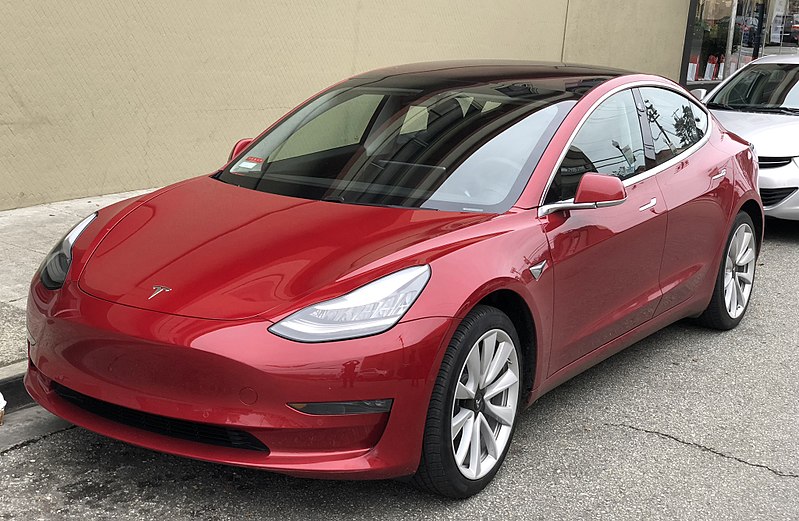
Tesla Model3 (Image: Wikimedia/Carlquinn)

U.S. Gasoline Demand Is Likely to Slide

Electric vehicles could slice fuel’s consumption up to 20% in two decades, new report says

Tesla Model3 (Image: Wikimedia/Carlquinn)

Electric cars are poised to reduce U.S. gasoline demand by 5% over the next two decades—and could cut it by as much as 20%—according to a new report being released Monday by energy consulting firm Wood Mackenzie.

The U.S., which currently uses more than nine million barrels of gasoline a day, could see that demand drop by as much as two million barrels a day if electric cars gain more than 35% market share by 2035, according to the report.

That aggressive case assumes Tesla Motors Inc. and other auto makers begin to deliver lower-cost electric vehicles that can travel longer distances in relatively short order, said the report’s author, Prajit Ghosh. A more likely scenario is a 5% drop in U.S. gasoline demand as electric cars build to more than 10% of the U.S. vehicle fleet by 2035, he said.

Even the low end of the forecast by Wood Mackenzie, which provides in-depth analysis for a wide range of clients including large oil companies, utilities and banks, is a more bullish outlook for electric-car adoption than many oil-and-gas companies have espoused.

Spencer Dale, the chief economist of energy company BP PLC, said last week in Houston that while he expects electric cars to start gaining traction, the internal-combustion engine still has significant advantages over electric alternatives and widespread adoption won’t happen in the next two decades.

“It will still take some time,” Mr. Dale said. “Electric vehicles will happen. It is a sort of when, not if, story.”

Read more: Wall Street Journal

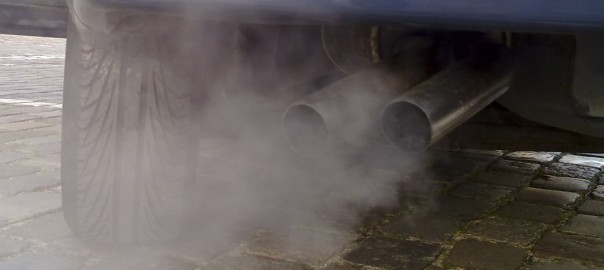
Car exhaust pollution (Image: Wikipedia)

Germany Needs Emissions-Free Car Fleet by 2030

All new cars registered in Germany need to be emissions free by 2030 at the latest to help meet pollution reduction goals, a senior government official said.

Car exhaust pollution (Image: Wikipedia)

Germany’s pledge to cut carbon dioxide output by 80 percent to 95 percent by 2050 will be in jeopardy unless the country radically reduces transportation pollution, said Deputy Economy Minister Rainer Baake. Since cars typically have a 20-year lifespan, registrations of new diesel and gasoline cars needs to be cut over the next 15 years, he said.

“Fact is there’s been no reduction at all in CO2 emissions by transport since 1990,” said Baake at a Tagesspiegel newspaper climate forum in Berlin. “We don’t have any answers to cut truck emissions right now but we do have answers for cars.”

Germany is lagging behind cuts to greenhouse gas that transportation emits, which according to the Environment Ministry account for a fifth of the country’s carbon dioxide pollution. The sector needs to cut some 10 million metric tons of carbon dioxide over the next 5 years from a tally of about 165 million tons last year. While the country has committed to reducing emissions 40 percent by 2020 compared with 1990 levels, its adoption of electric cars has been sluggish.

Chancellor Angela Merkel’s government pledged subsidies this year to speed e-car sales, a move that was accelerated by Volkswagen AG’s emission-manipulation scandal. Buyers of all-electric and hybrid vehicles can claim cash incentives, moves already in operation in countries including China, Norway and France. The program may spark sales of about 500,000 electric cars by 2020, according to the Environment Ministry.

Read more: Bloomberg

Electric cars can be a very effective way to save you money on motoring (Image: Go Ultra Low)

5 ways to save money with an electric car

Electric cars can be a very effective way to save you money on motoring. Read on for our top five ways to save by switching to driving electric…

Electric cars can be a very effective way to save you money on motoring (Image: Go Ultra Low)

Fuel

It can cost less than 2p per mile to drive an electric car. Compared to the cost of running an average internal combustion engine vehicle (around 12p per mile), this can add up to big savings for electric car owners. In fact, you could save over £750 a year in fuel bills alone by making the switch!

Road tax

Electric vehicles are exempt from road tax (or Vehicle Excise Duty) due to their low levels of CO2 emissions. That’s one more bill that you won’t have to worry about as an electric car owner.

Garage bills

Switching to an electric car could save you hundreds of pounds on your service and maintenance bills. The cost of an annual service can be pretty steep for all car owners, but the price of annual servicing and maintenance for a new pure electric vehicle is just £94. The equivalent cost for a petrol or diesel car is £400, so that works out to a saving of over £300 a year for electric motorists!

Government grant

The UK Government can lend you a helping hand with the upfront cost of buying an electric car. They provide a Plug-In Car Grant of up to £4,500 off the price of an electric car, and up to £8,000 off the price of a van. This grant will be applied during your purchase at the dealer, so you don’t even need to worry about applying yourself.

Local perks

As an electric car owner you may be eligible for specific benefits in your area through regional initiatives, such as discounted or free parking, or being exempt from the congestion charge in London. The number of these local incentives is increasing as electric vehicles grow in popularity and through the help of the Go Ultra Low Cities initiative, so check with your local council to see what’s available in your area.

Source: Go Ultra Low

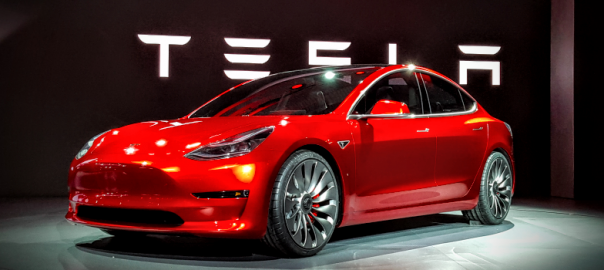
Tesla Model 3 at launch (Image: K. Field/CC)

Perfect storm of factors speeding electric vehicle development

Even if you work the auto industry, you probably didn’t expect the current rush to develop, build, sell, and drive electric vehicles.

UK motorists now have more than 30 electric models to choose from

But there’s no denying it. A series of technology developments, market disruptions, and wake-up calls are hastening an inevitable shift from fossil fuel engines to electric power in cars and trucks, according to a post on TechCrunch.

Battery technology is the greatest enabler of the shift to fully electric-powered vehicles. Lower electricity cost means less expensive cars. With range anxiety now a “thing” and a common deterrent to full-electric car purchases, larger capacity batteries are needed for adequate driving range. The cost of lithium-ion battery power has dropped by about 80 percent in the last eight years. One kilowatt of power that cost roughly $1,000 in 2008 is now closer to $200. Continued battery technology advances plus the impending construction of huge new battery factories could bring prices down to $100 per kilowatt in the next few years.

Autonomous vehicle technology is developing hand in hand with the switch to electrification. Auto manufacturers are working fast to develop autonomous capabilities just to stay up with their competitors. Combining hybrid and all-electric power with autopilot and auto-assist features gives manufacturers showcase platforms.

Read more: Digital Trends

Charging at a rapid charger (Image: Go Ultra Low)

Norway considers ban on petrol and diesel cars by 2025

The four main political parties in Norway are debating a ban on fuel-powered cars; we look at how other countries are tackling harmful car emissions

Charging at a rapid charger (Image: Go Ultra Low)

Norway is considering a ban on petrol and diesel cars by 2025 with the four primary political parties debating the action, according to Norwegian newspaper Dagens Næringsliv.

The new law has not officially been passed, but it has been put forward in a white paper, which calls for new private cars, buses and light commercial vehicles to be zero-emission after 2025.

Electric car sales account for around 24% of Norway’s new car market, making it one of the leading countries for electric car sales, but it’s also one of the world’s largest oil exporters.

The Dutch Labour party PvdA is also pressing for a ban on petrol and diesel cars in the Netherlands from 2025.

European leaders have been talking about such a ban for many years – insiders have suggested Paris will be the first city to implement a zero-emissions-vehicle-only zone within its boundaries – but if they were to be introduced, the Norwegian and Dutch policies would be the first complete ban on combustion-engined vehicles.

Read more: Autocar

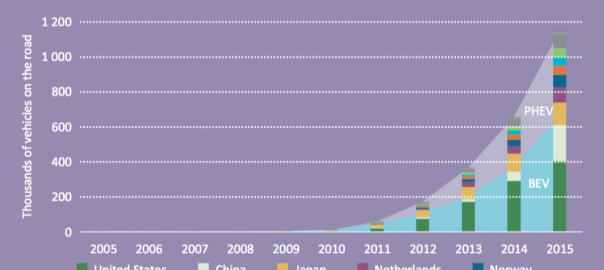
Global Electric Car Stock: PHEV stands for plug-in hybrid vehicles, and BEV stands for battery electric vehicles (Image:: IEA)

IEA: There are now more than one million electric cars on the world’s roads

In 2015, the number of electric cars on the road globally passed the one million threshold for the first time.

Global Electric Car Stock: PHEV stands for plug-in hybrid vehicles, and BEV stands for battery electric vehicles (Image:: IEA)

The rapid growth of the industry means that it is now the only technology sector on track to meet the International Energy Agency’s (IEA) 2C scenario.

This is the conclusion of the IEA’s Energy Technology Perspectives 2016 report, which it released on Wednesday. This is the latest edition of their annual progress review of the technologies that will determine the rate of global emissions, including renewables, nuclear, CCS and coal.

Last year’s report, covered by Carbon Brief, painted a bleak picture. It deemed that none of the 19 technologies it tracks had made the necessary progress to limit global temperature rise to below 2C. It said that five technologies were off track, while the remaining 14 were failing to improve fast enough.

One year on, its assessment is equally bleak. The number of technologies off track has risen to six, while 11 are failing to improve fast enough. Only electric vehicles have made to jump towards actually being on track to meet the 2C goal modelled by the IEA.

Read more: Carbon Brief