Will global oil demand peak by 2030? Is peak oil demand the new peak oil supply?
Many trends now point in the direction of this remarkable possibility:
In December the nations of the world agreed unanimously in Paris to leave most of the world fossil fuels in the ground.
Oil demand has been declining in developed countries for over a decade.
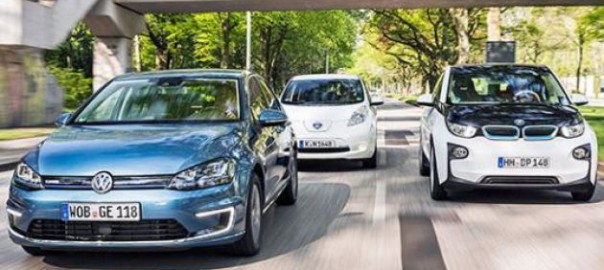
Electric vehicle sales are exploding around the world, especially China.
Battery prices are continuing their unexpectedly rapid price drop.
Tesla and Chevy now say their new 200-mile-range EV could cost Americans $30,000 — a game-changing price.
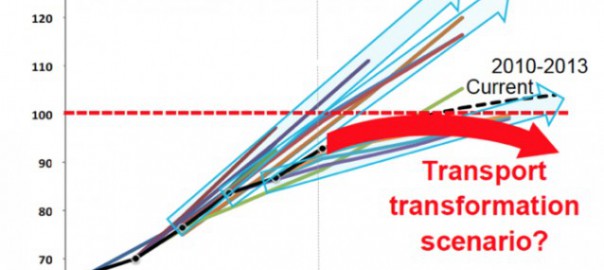
In November, a Bloomberg Business story, “The Oil Industry Has Been Put on Notice,” warned “the transformation of oil markets may be coming sooner than we think.” This recent Bloomberg New Energy Finance chart includes oil forecasts the International Energy Agency (IEA) has made since 1994:
A new group could spend $10 million a year on the campaign.
UK motorists now have more than 30 electric models to choose from
The oil and gas industry may have thought it had killed the electric car, but sales — boosted by generous government subsidies — rose dramatically between 2010 and 2014, and energy giants are worried the thing may have come back to life.
Time to kill it again.
A new [US] group that’s being cobbled together with fossil fuel backing hopes to spend about $10 million dollars per year to boost petroleum-based transportation fuels and attack government subsidies for electric vehicles, according to refining industry sources familiar with the plan. A Koch Industries board member and a veteran Washington energy lobbyist are working quietly to fund and launch the new advocacy outfit.
Koch Industries, the nation’s second-largest privately held corporation, is an energy and industrial conglomerate with $115 billion in annual revenues that is controlled by the multibillionaire brothers — and prolific conservative donors — Charles and David Koch. James Mahoney, a confidante of the brothers and member of their company’s board, has teamed up with lobbyist Charlie Drevna, who until last year helmed the American Fuel and Petrochemical Manufacturers, for preliminary talks with several energy giants about funding the new pro-petroleum fuels group.
BMW’s current fleet of vehicles has a number of green models available – but the company wants to push efficient cars further to the forefront of its model line-up and has developed a range of systems to help support it.
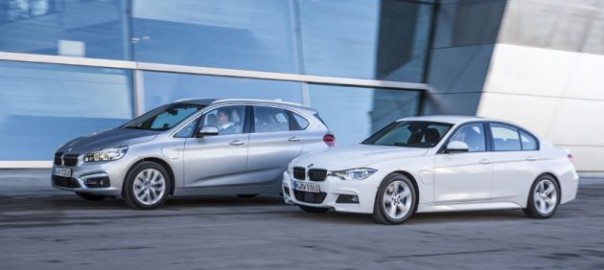
BMW plug-in cars (Image: BMW)
With the recent launches of the BMW 330e and 225xe plug-in hybrid (PHEV) models, the German giant now has a number of plug-in options spread across a variety of different market sectors. The X5 40e SUV has already been launched this year and the 740e PHEV is due too, giving BMW four PHEV models in its line-up in 2016 alone.
Add to that the i3 EV, i3 REX and i8 PHEV and BMW has a number of options available for those looking at plug-in models – compact citycars, a family MPV, a compact executive saloon, large SUV, luxury saloon and supercar.
BMW has also confirmed that it is continuing to work on hydrogen fuel cell (HFV) technology, to create a combination of set-ups – pure electric for short, regular journeys, and HFV for longer runs.
The new BMWs X5 xDrive 40e, 330e, 225xe, and 740e models are the first products to benefit from the research and development carried out by BMW’s iCars division. The i3 and i8 remain at the cutting edge of BMW’s efficiency programmes, but the lessons learnt from those models is already being filtered down to the next generation of ‘standard’ models.
BMW has announced that these PHEV variants will be grouped together under the banner of iPerformance – set to be launched at the Geneva Motor Show alongside the plug-in 7-Series. This brand is intended to indicate to customers the plug-in electric systems under the skin, and increased use of carbon fibre in some cases, despite the cars looking relatively normal, and not as futuristic as the i3 and i8.
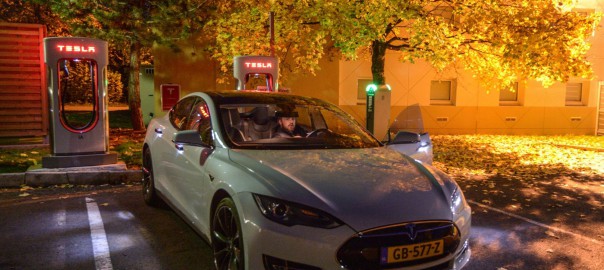
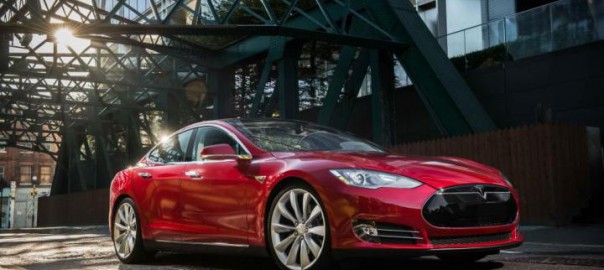
Tesla’s all-electric flagship Model S gives you range confidence.
The 20th Century failed to deliver several high profile science fiction promises: jetpacks exist but are impractical, flying cars never worked, and working androids are still yet to arrive outside of a Japanese technology conference. The 21st Century is doing a little better. It’s now possible for anyone to travel thousands of miles in a semi-autonomous all-electric vehicle, as long as they have a little extra money to spend.
Taking a Tesla Model S on a 1,200 mile round-trip to the middle of rural France is not only possible, thanks to the company’s network of supercharger stations, it’s one of the best road trips we’ve ever driven. For the last few years Tesla has been building a network of 120kW supercharging stations which can get you to half charge in 20 minutes. That means you can get almost anywhere in Europe, for free, if you have a compatible car and don’t mind stopping every few hours (which you’ll probably do anyway).
Electric vehicle sales may be driven mostly by policy and preference right now, but they’ll soon be powered by dominant economics—including a profitable symbiosis between electrical drive and autonomous control, according to a former researcher for General Motors.
“What is going to happen here, I believe, is it’s just going to become easier to build an electric car,”
said Lawrence Burns, until recently the director of the Program for Sustainable Mobility at Columbia University and a professor of engineering practice at the University of Michigan. He served as General Motors’ corporate vice president of research & development and planning from 1998 to 2009. He now advises firms, including Google and Allstate, on mobility transformation.
Tesla Model S Drivetrain
“Beyond 2025, battery and fuel-cell vehicles could simply become the best way to design and engineer a light-duty vehicle,” Burns said tonight at the University of Chicago Booth School of Business. “Set aside all the motivations with climate change, oil dependence—it’s just a better way to do a car. It’s simple.”
The market for electric cars and plug-in hybrids in the UK is small but growing and a major reason for this growth is the government’s plug-in car grant.
From March 1st 2016, significant changes will be made to the way the plug-in grant is implemented so we’ve complied this guide to what the changes mean.
The Plug-in car grant offers individual full-electric and plug-in hybrid car buyers a fat chunk of taxpayer’s cash to subsidise their purchase. It means lower upfront prices for electric cars and hybrids that you can charge from the mains.
The Plug-in Car Grant was previously set at a generous £5,000 for all eligible vehicles, but changes to the scheme on March 1st 2016 could end up costing some buyers thousands.
How is the plug-in car grant changing?
The electric car subsidy is changing in three significant ways from March 1st 2016
1. From that date onwards, eligible cars will be banded into the following three categories:
Category 1. Vehicles with a ‘zero-emission’ range of 70 miles, and CO2 emissions lower than 50g/km.
Category 2. Vehicles with a ‘zero-emissions’ range between 10 and 69 miles, and CO2 emissions lower than 50g/km.
Category 3. Vehicles with a ‘zero-emissions’ range of at least 20 miles, and CO2 emissions between 50-75g/km.
2. The maximum available grant is being cut from £5,000 to £4,500 for category 1 vehicles, but slashed from £5,000 to just £2,500 for category 2 and 3 vehicles.
3. A £60,000 ‘on the road’ price cap is also being introduced, so cars which are more expensive will not be eligible for the grant at all.
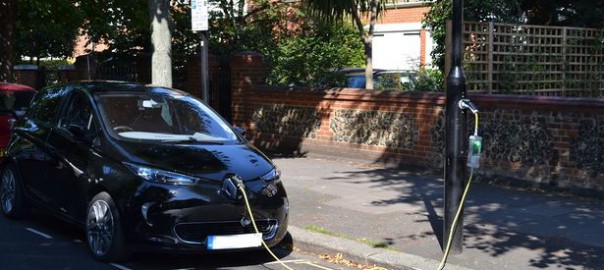
The new sockets are designed to make it easier for motorists without driveways to go electric
Hundreds of electric car charging points like this one are set to be installed at lampposts across Hounslow
Hundreds of electric car charging points are to be installed at lampposts across Hounslow.
The borough has been chosen to host a trial scheme, which it is hoped will encourage more motorists to switch to electric vehicles.
Drivers will be able to charge their vehicles on the street using the new sockets, making electric cars more practical for those without driveways.
It is one of a raft of new green initiatives across the capital to receive a share of the latest £5m cash injection from the Mayor of London’s £20m Air Quality Fund.
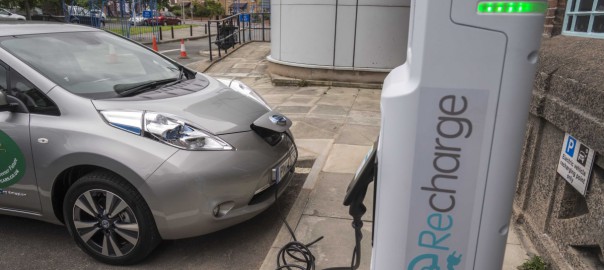
Liverpool City Region’s (LCR) drive towards creating an eco-friendly environment is being helped by APT Controls, which has completed the installation of 28 of its Evolt Electric Vehicle (EV) charge points.
Evolt Charge Point in Liverpool (Image: Evolt)
Merseytravel, the executive body that provides professional, strategic and operational transport advice to the LCR’s Combined Authority, and the body responsible for coordinating bids and projects, chose Evolt after a full tender process.
Amy Coulson, Programme Development Officer at Merseytravel outlines LCR’s e-mobility strategy:
“It sets out our commitment to promoting the use of EVs across the region, and this includes installing a charging network for an even greater public take up of environmentally friendly transport. Evolt are helping us deliver this.”
Fourteen Evolt charge points have been installed and are available for public use at sites across Merseyside including rail stations, hospitals and the Seacombe Ferry Terminal; a further 14 have been strategically placed at sites of importance for the local authority, such as council buildings and NHS depots.
Of the 28 chargers, a mix of 7kW dual wallmount and 7kW standard dual posts were installed, forming the first phase of Recharge, the LCR’s scheme to encourage the public and the local authorities to simultaneously decrease their carbon footprints.
“The LCR, which includes seven local authorities, is committed to leading by example and has recently been awarded funding by the Office for Low Emission Vehicles to introduce 23 Ultra Low Emission Vehicles into its fleets over the coming year,” Amy continues.
Justin Meyer, General Manager of Evolt, anticipates that Evolt will remain integral to the Recharge scheme as it progresses through the phases:
“We have developed a significant relationship with the LCR, helped by our experience of dealing with local councils across the country, and are now the EV charge point supplier of choice in the City Region.”
Just a week after the first Tesla Powerwall for residential use in Australia has reportedly been installed in a Sydney suburb, it’s now the UK’s turn to get its first Tesla home battery pack.
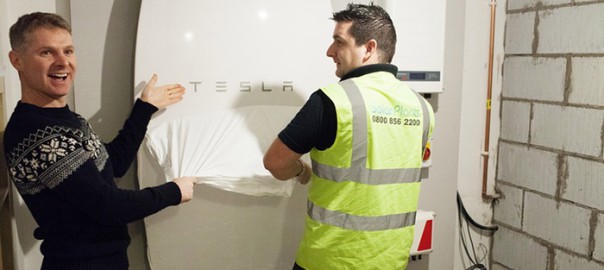
A SolarPlant engineer installs the UK’s first Powerwall home battery in Cardiff at Mark Keer and Lyndsey Bennett’s home (Image: G. Phillips/Guardian)
Homeowner Mark Kerr has become the first British Tesla Powerwall owner after a SolarPlant engineer installed the system at his home in Wales. Kerr and his family have a solar installation at their home and will use the excess energy produced during the day to charge the battery pack. Kerr talked to The Guardian about his new energy storage system:
“This is the future, definitely. For me this is the logical next step. We have the solar panels but we need a way to make best use of the power they produce. Me and my family are all out in the day, and we are not making use of the enormous amount of clean energy that our solar panels produce. The battery will allow us to store the energy we don’t use in the day to use when we need it in the evenings.”
Kerr, an electrician by trade, added about the design of the Powerwall:
“It’s a gorgeous-looking piece of technology, its design is very sleek and minimalistic and something you can hang on the wall like a piece of art, definitely nothing like some of the other clunky looking batteries.”
South Wales solar installer Solar Plants installed Kerr’s new home battery pack. The company shared some marketing statistics about the Powerwall. Since it has been made available, the company emailed 3,000 solar customers about the battery. Out of the 1,500 who opened the email, 600 said they wanted one.
These potential buyers will have to wait a bit since Solar Plants says Kerr’s installation will work as a pilot project to get a better idea of how the system works.
Hello, EV fans and interested parties! Trish, here. I know I’ve been pretty non-existent on this blog, but I’m finally chiming in to provide my thoughts on my new Soul EV. Further down, you’ll find Ty’s input as well, and a more technical analysis than I care to delve into.
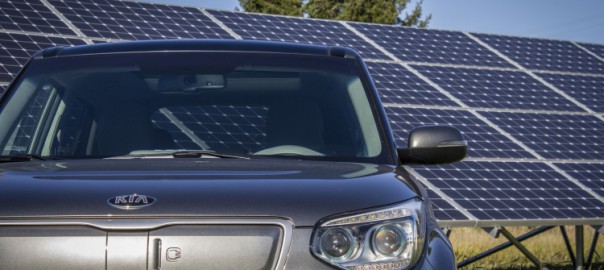
Kia Soul EV
I’m going to start this post off with a disclaimer: I’ve never been a fan of Kia. Moreover, I’ve always thought the Kia Soul was ugly as all get out and assumed that they were cheap and poorly made, and that I would never in a million years want one. So when Kia announced their new Soul EV, I was actually surprised to find myself liking what it had to offer; first, on a visual level, and then on a specs level.
And then I learned that they would only be offered in compliance states. In other words, not Washington. Sad trombone.
But then the 2016 Soul EV arrived, along with the announcement that it would be arriving at Washington Kia dealers this summer. And then they announced that the EV+ trim would be available with a “Sun & Fun Package,” which, most importantly, included a panoramic sunroof. And I was done for. Hook, line, and sinker: Kia reeled me in. On September 19th, we signed the lease papers at Smith Kia in Bellingham, and I drove my new titanium gray Soul EV+ with Sun & Fun Package home. Unfortunately, it was raining cats and dogs, so the sunroof needed to stay closed on her voyage home.
I’ve had many people in the EV community, most of whom have a Nissan LEAF, ask what I think about the car. After several months of driving it, I think I’m ready to share some of my feelings about it.