The unveiling of the Tesla Model 3 recently garnered enormous interest around the world.
When will they make them?
How will they make that many?
Where will the batteries come from and why do I have a crush on the French Minister of Energy?
The unveiling of the Tesla Model 3 recently garnered enormous interest around the world.
When will they make them?
How will they make that many?
Where will the batteries come from and why do I have a crush on the French Minister of Energy?
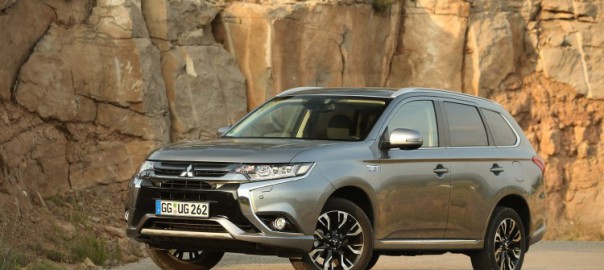
By March this year, there were close to 60,000 electric or plug-in hybrid cars driving in the UK
Electric car sales continue to surge in the UK, with the latest figures showing close to 60,000 currently on the road. The Mitsubishi Outlander PHEV accounts for nearly a third of those, but there’s an increasingly wide range of different models on the roads.
According to DVLA figures analysed by the RAC Foundation by the end of March 2016 there were 19,945 plug-in hybrid electric Outlanders licenced in the UK, over 7,000 more than the next best selling electric or plug-in car, the Nissan Leaf.
The Leaf, however, is the UK’s best-selling battery-electric car. The 12,469 Leafs come with an electric-only drivetrain, whereas the Mitsubishi Outlander PHEV uses a 2.0-litre four-cylinder petrol engine to complement the batteries and the electric motor.
In third place was the BMW i3, with over 4,500 currently on the road. The i3 comes with a choice of two drive trains, with owners able to spec either a battery electric or a range extender with a 650cc two-cylinder petrol engine to boost the electric car’s range.
Read more: Auto Express
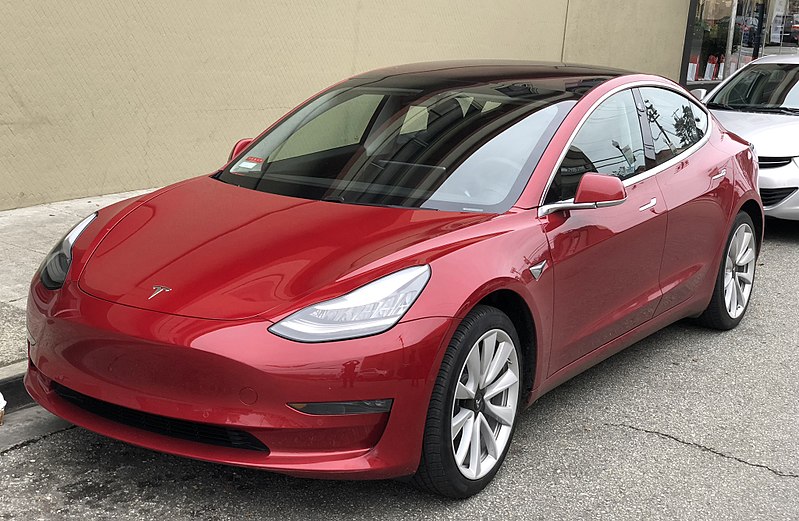
Electric vehicles could slice fuel’s consumption up to 20% in two decades, new report says
Electric cars are poised to reduce U.S. gasoline demand by 5% over the next two decades—and could cut it by as much as 20%—according to a new report being released Monday by energy consulting firm Wood Mackenzie.
The U.S., which currently uses more than nine million barrels of gasoline a day, could see that demand drop by as much as two million barrels a day if electric cars gain more than 35% market share by 2035, according to the report.
That aggressive case assumes Tesla Motors Inc. and other auto makers begin to deliver lower-cost electric vehicles that can travel longer distances in relatively short order, said the report’s author, Prajit Ghosh. A more likely scenario is a 5% drop in U.S. gasoline demand as electric cars build to more than 10% of the U.S. vehicle fleet by 2035, he said.
Even the low end of the forecast by Wood Mackenzie, which provides in-depth analysis for a wide range of clients including large oil companies, utilities and banks, is a more bullish outlook for electric-car adoption than many oil-and-gas companies have espoused.
Spencer Dale, the chief economist of energy company BP PLC, said last week in Houston that while he expects electric cars to start gaining traction, the internal-combustion engine still has significant advantages over electric alternatives and widespread adoption won’t happen in the next two decades.
“It will still take some time,” Mr. Dale said. “Electric vehicles will happen. It is a sort of when, not if, story.”
Read more: Wall Street Journal
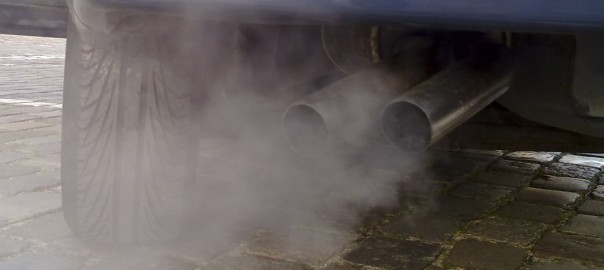
All new cars registered in Germany need to be emissions free by 2030 at the latest to help meet pollution reduction goals, a senior government official said.

Germany’s pledge to cut carbon dioxide output by 80 percent to 95 percent by 2050 will be in jeopardy unless the country radically reduces transportation pollution, said Deputy Economy Minister Rainer Baake. Since cars typically have a 20-year lifespan, registrations of new diesel and gasoline cars needs to be cut over the next 15 years, he said.
“Fact is there’s been no reduction at all in CO2 emissions by transport since 1990,” said Baake at a Tagesspiegel newspaper climate forum in Berlin. “We don’t have any answers to cut truck emissions right now but we do have answers for cars.”
Germany is lagging behind cuts to greenhouse gas that transportation emits, which according to the Environment Ministry account for a fifth of the country’s carbon dioxide pollution. The sector needs to cut some 10 million metric tons of carbon dioxide over the next 5 years from a tally of about 165 million tons last year. While the country has committed to reducing emissions 40 percent by 2020 compared with 1990 levels, its adoption of electric cars has been sluggish.
Chancellor Angela Merkel’s government pledged subsidies this year to speed e-car sales, a move that was accelerated by Volkswagen AG’s emission-manipulation scandal. Buyers of all-electric and hybrid vehicles can claim cash incentives, moves already in operation in countries including China, Norway and France. The program may spark sales of about 500,000 electric cars by 2020, according to the Environment Ministry.
Read more: Bloomberg
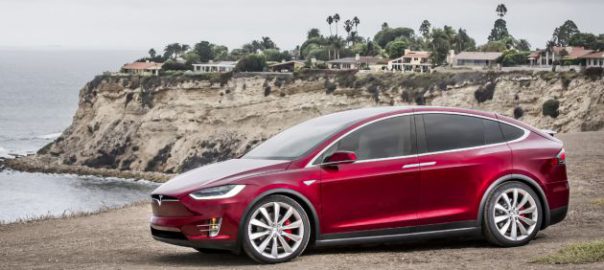
Pricing for UK specifications of Tesla’s Model X have been revealed, with the entry level 75D starting at £71,900. This will buy you a five seat all-electric SUV with four wheel drive, a quoted range of 259 miles, and a 0-60mph time of 6.0 seconds.

Moving up a rung sees the 90D with a range of 303 miles, 4.8 second 0-60mph time and a cost of £82,400, while the top of the range P90D drops the fastest sprint time to 3.2 seconds and provides 290 miles of range at £99,800.
Five seats are offered as standard, while six and seven seat configurations are available at a cost of £2,550 and £3,400 respectively. Ludicrous mode for the fastest model costs £8,700, Autopilot £2,200, and smart air suspension the same – though this last point is standard kit on all but the entry level Model X 70D.
Standard equipment includes the much talked about Falcon Wing doors, all-wheel drive, parking sensors, DAB+ radio, keyless entry and start, a huge panoramic windscreen, electric tailgate, and maps and navigation with over-the-air updates. The cost also includes free use of Tesla’s Supercharger network for life.
No fixed date has yet been set for when the Model X will arrive in the UK, but orders placed now will arrive in ‘Late 2016’, while those who got in early can expect theirs around autumn.
Source: Next Green Car
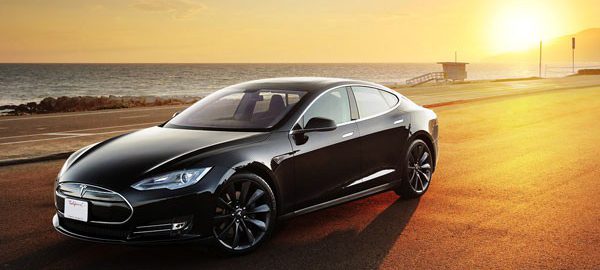
Tesla has launched a new entry level model for its Model S range in the shape of a 60kWh version. Coming in under the previously entry level 75kWh variant, the Model S 60 is available in either single motor configuration, or in dual motor 60D spec.

The Model S 75 is now offered as an upgrade to the Model S 60 which increases driving range by around 19 per cent according to Tesla.
The changes come as part of the company’s continuous evolution of its range, whether that is in the form of regular software updates or changes in battery capacity offered. The Model S 60 is in response to customers saying they want a Tesla but can’t really afford the price of the Model S 70 – though those that can will be able to specify the 75 kWh battery for a cost of £7,850 on top of the Model S 60 price.
Quoted at offering a range of around 248 miles, the Model S 60 will still complete the 0-60mph sprint in 5.5 seconds and go on to a top speed of 130mph, while the 60D is faster still thanks to its all-wheel drive capability and increased power.
In terms of the battery specification, Tesla are fitting Model S 60 and 60D models with a 75kWh battery that then has its capacity restricted. This is in part to simplify battery production, while the main reason is that customers can retro-upgrade their model at any time in the future with a software update, should they wish to unlock the battery’s potential.
There are also small changes to the interior trim and equipment levels, while Tesla’s Autopilot system will be available as an option, and use of the Supercharger charging network is free for all customers.
The new Model S 60 and 60D are available to order now with prices starting at £53,400 for the single motor, or £57,800 for ths 60D. Both prices exclude the UK Government’s Plug-in Car Grant, which takes £4,500 off the cost.
Source: Next Green Car

Electric cars can be a very effective way to save you money on motoring. Read on for our top five ways to save by switching to driving electric…

Fuel
It can cost less than 2p per mile to drive an electric car. Compared to the cost of running an average internal combustion engine vehicle (around 12p per mile), this can add up to big savings for electric car owners. In fact, you could save over £750 a year in fuel bills alone by making the switch!
Road tax
Electric vehicles are exempt from road tax (or Vehicle Excise Duty) due to their low levels of CO2 emissions. That’s one more bill that you won’t have to worry about as an electric car owner.
Garage bills
Switching to an electric car could save you hundreds of pounds on your service and maintenance bills. The cost of an annual service can be pretty steep for all car owners, but the price of annual servicing and maintenance for a new pure electric vehicle is just £94. The equivalent cost for a petrol or diesel car is £400, so that works out to a saving of over £300 a year for electric motorists!
Government grant
The UK Government can lend you a helping hand with the upfront cost of buying an electric car. They provide a Plug-In Car Grant of up to £4,500 off the price of an electric car, and up to £8,000 off the price of a van. This grant will be applied during your purchase at the dealer, so you don’t even need to worry about applying yourself.
Local perks
As an electric car owner you may be eligible for specific benefits in your area through regional initiatives, such as discounted or free parking, or being exempt from the congestion charge in London. The number of these local incentives is increasing as electric vehicles grow in popularity and through the help of the Go Ultra Low Cities initiative, so check with your local council to see what’s available in your area.
Source: Go Ultra Low
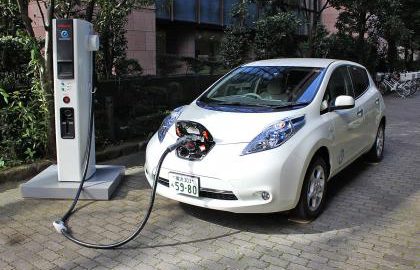
Plans to introduce subsidy this July for businesses installing charging points at work premises

The Government is planning to boost electric vehicle uptake by introducing a grant for business charging points this summer.
Auto Express understands a workplace charging grant will be set up with a formal announcement likely in July. There’s no confirmation on how much the grant will be for but it’ll support companies wanting to set up charging points at offices and car parks.
David Martell, CEO of charging point specialist Chargemaster, revealed: “We have been informed that there is likely to be a workplace charging grant established this summer by the government. “It hasn’t been decided exactly how much the grant will be, but certainly there will be support by the government putting in charging points in work premises.”
And while a spokesman for the Department for Transport and the Office for Low Emission Vehicles did not confirm plans for the grant, he said:
“Watch this space. Fitting charge points in workplace car parks is a huge opportunity. We know there is an appetite out there from businesses.”
Read more: Auto Express

How much will electric vehicles slow carbon emissions?

Each passing month breaks modern temperature records, citizens perish in 51°C heat in India, unseasonal fires rage in the Canadian tar sands, methane escapes from arctic permafrost, Earth approaches the +1.5°C Paris Accord “goal,” and hoping to stop at +2°C appears increasingly naive.
As we observe these trends, we feel an urgent desire for solutions to global warming unleashed by human CO2 emissions. Automobile companies have finally adopted the electric vehicle (EV), led by Tesla Motors and founder Elon Musk, cult hero for technology-inspired optimism.
As serious ecologists, we may reasonably ask: Will EVs slow carbon emissions, and by how much? A genuine answer requires rigorous investigation, calculation and analysis. The general public may be forgiven for avoiding any such analysis, but as ecologists, we are obliged to know what we’re talking about. Good scientists observe the principle to “beware congenial conclusions.”
As we investigate this analysis, we will find that genuine solutions exist, although they may not be the easy solutions we hope for.
Source: Greenpeace
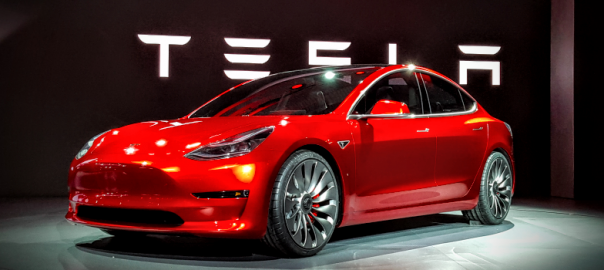
Even if you work the auto industry, you probably didn’t expect the current rush to develop, build, sell, and drive electric vehicles.

But there’s no denying it. A series of technology developments, market disruptions, and wake-up calls are hastening an inevitable shift from fossil fuel engines to electric power in cars and trucks, according to a post on TechCrunch.
Battery technology is the greatest enabler of the shift to fully electric-powered vehicles. Lower electricity cost means less expensive cars. With range anxiety now a “thing” and a common deterrent to full-electric car purchases, larger capacity batteries are needed for adequate driving range. The cost of lithium-ion battery power has dropped by about 80 percent in the last eight years. One kilowatt of power that cost roughly $1,000 in 2008 is now closer to $200. Continued battery technology advances plus the impending construction of huge new battery factories could bring prices down to $100 per kilowatt in the next few years.
Autonomous vehicle technology is developing hand in hand with the switch to electrification. Auto manufacturers are working fast to develop autonomous capabilities just to stay up with their competitors. Combining hybrid and all-electric power with autopilot and auto-assist features gives manufacturers showcase platforms.
Read more: Digital Trends