Category Archives: Nissan

News and reviews of Nissan electric cars (including plug-in hybrids).

Electric Cars Are The Only Solution For The Future

The Geneva Motor Show is ground zero for all things automotive for Europe, and a major launching pad for new offerings – plug-in or otherwise. So it was no surprise to see Nissan-Renault CEO (and Avtovaz Chairman) Carlos Ghosn making an appearance, and doing a little ‘show and tell’ with his company’s most recent hotness.

The IDS Concept (a 60 kWh, 200+ mile all-electric car that we feel is a thinly disguised look at the next generation Nissan LEAF), is one such European debut that Mr. Ghosn attended this week.

And while on hand, Ghosn made some comments about the future of the plug-in technology – what it means to Nissan, the automotive segment, and the fact that VW’s recent emission scandal has accelerated the urgency to convert to a plug.

Basically, the CEO says that ‘Dieselgate’ demonstrated you can’t trust anyone, and that we need zero emissions to get serious about saving the planet as ‘zero means zero’:

“Without any doubt, because it has attracted the attention on the fact that even though the regulators are trying to do their best to say what is acceptable, and what is not acceptable, in term of emissions, there will always be conditions that the regulators cannot regulate. So if you really worry about emissions, the only solution is the electric car because here you have zero emission, you have nothing to measure.

On top of this, as you know, COP 21 has lead to the conclusion that we cannot afford to have more than 2 degrees of heating of the planet 20 or 30 years down the road, and this means more zero emission cars”

Source: Bloomberg via Inside EVs

Kia Soul EV

KIA Soul EV Versus Nissan LEAF: An Owner’s Comparison

Hello, EV fans and interested parties! Trish, here. I know I’ve been pretty non-existent on this blog, but I’m finally chiming in to provide my thoughts on my new Soul EV. Further down, you’ll find Ty’s input as well, and a more technical analysis than I care to delve into.

Kia Soul EV
Kia Soul EV

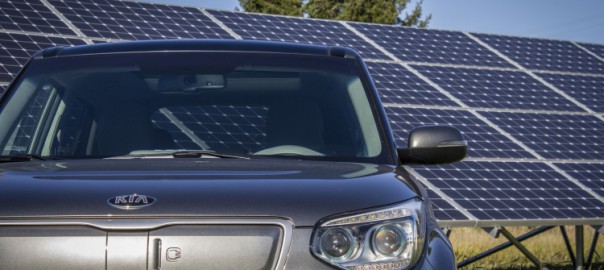
I’m going to start this post off with a disclaimer: I’ve never been a fan of Kia. Moreover, I’ve always thought the Kia Soul was ugly as all get out and assumed that they were cheap and poorly made, and that I would never in a million years want one. So when Kia announced their new Soul EV, I was actually surprised to find myself liking what it had to offer; first, on a visual level, and then on a specs level.

And then I learned that they would only be offered in compliance states. In other words, not Washington. Sad trombone.

But then the 2016 Soul EV arrived, along with the announcement that it would be arriving at Washington Kia dealers this summer. And then they announced that the EV+ trim would be available with a “Sun & Fun Package,” which, most importantly, included a panoramic sunroof. And I was done for. Hook, line, and sinker: Kia reeled me in. On September 19th, we signed the lease papers at Smith Kia in Bellingham, and I drove my new titanium gray Soul EV+ with Sun & Fun Package home. Unfortunately, it was raining cats and dogs, so the sunroof needed to stay closed on her voyage home.

I’ve had many people in the EV community, most of whom have a Nissan LEAF, ask what I think about the car. After several months of driving it, I think I’m ready to share some of my feelings about it.

Read more: Inside EVs

2016 Nissan Leaf 30kWh

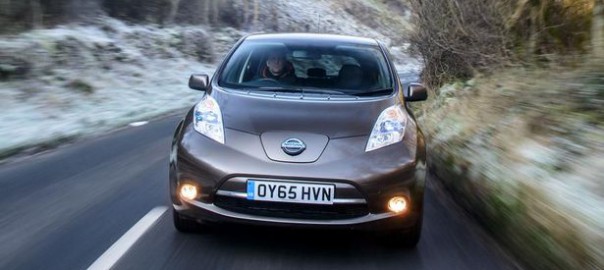
Car review: 2016 Nissan Leaf 30kWh

A longer range for one of the first electric cars on the market could be what it takes for buyers to conquer their EV anxiety

2016 Nissan Leaf 30kWh

As more and more electric vehicles come on to the market, Nissan has upped the Leaf’s game in terms of the thing that matters most – range.

This new 30kWh model runs a denser battery pack than the existing 24kWh version, giving it a claimed range of 155 miles. That’s a 25% improvement, and it gives the newcomer a place at the top of the Leaf range.

Available only in Acenta and Tekna trim, it costs from £30,935 – though that’s before the government’s EV grant contribution is taken off.

Our test vehicle was a Tekna, so it featured 17” alloys, heated seats, a premium stereo and more on top of the Acenta’s climate, rear-view camera, sat-nav and EV-specific telematic system.

Despite all the kit, though, the interior suffers from being trimmed out in plastics that are hard to the touch and all too often not very nice. That’s a shame, because it’s otherwise comfortable and, on the move, impressively refined.

Drivetrain noise is negligible, of course, but that just creates the risk of wind rustle and tyre roar taking its place. These are never offensive, however, even at high speed – and neither is ride quality, which was particularly good on every kind of road we could find.

As always with electric cars, initial pull is very strong indeed. But mid-range is a little lethargic, so it’s never much fun when you need to accelerate past a slower vehicle. Cars like the Leaf are most popular with people who do a lot of urban driving, however, and in this environment it’s in its element.

A longer range means this Leaf wants to tempt you out of the city, but it’ll take time before Motorway Man starts seeing such cars as a viable alternative to his mile-muncher.

Still, what we’re witnessing here is another step along that route. Dealing with range anxiety is a big issue for EV makers, and that’s what Nissan is doing with this new model.

They’ve addressed another kind of worry by upping the warranty on the Leaf’s batteries for eight years or 100,000 miles, too. All of which will help knock down the walls in people’s minds.

Source: Wharf

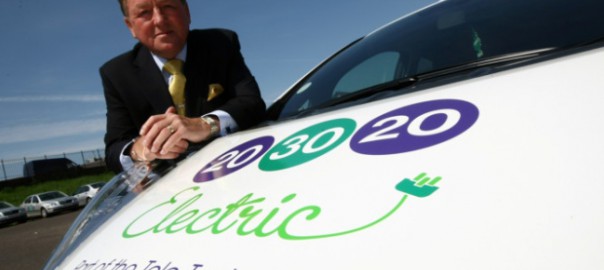
Dave Young of 203020 Taxis (Image: DC Thomson/D. Nicolson)

Dundee’s electric taxi fleet reaches a million miles

Dundee’s all-electric taxi fleet – the largest in Scotland – has clocked up more than a million miles within a year.

Dave Young of 203020 Taxis (Image: DC Thomson/D. Nicolson)

203020 Electric – part of the Tele Taxis Group – launched in Dundee last April with a fleet of 30 electric Nissan LEAFs.

The initiative, which was supported by Dundee City Council, the Energy Saving Trust and Transport Scotland, has hit the landmark mileage months ahead of schedule.

Each of the company’s LEAFs has clocked up in excess of 30,000 miles and the firm now plans to add 40 specially adapted wheelchair accessible cars by the end of 2016, making it the largest in Europe.

Company owner David Young believes Dundee could become the first city in the world where all taxis and private hire vehicles are fully electric. He said:

“We never expected to hit a million miles so soon but it’s terrific that we have.

“It just goes to show how well the people of Dundee have taken to the idea of electric taxis.

“And each driver is saving between £120 and £130 a week on fuel so they’re delighted.”

Source: The Courier

How do you charge an electric car?

Have your charging questions answered in THE FOOLPROOF GUIDE TO ELECTRIC DRIVING.

This time we explore the truth about charging – like how to do it, how long it takes and how far you can go on one charge.

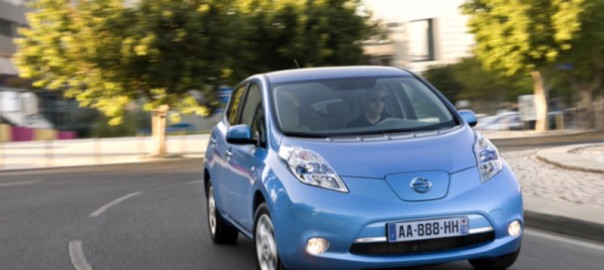
Charging a Nissan LEAF is simple. Plug it in at home, or on the go..

Rapid chargers are installed at most motorway services, which provide 80% of a full charge in approximately 30 minutes.

https://www.youtube.com/watch?v=-Op5bDU6Y4U

The Leaf 30kWh has an official range of 155 miles - with 124 miles of real world range

Nissan Leaf 30kWh UK launch

Next Green Car was invited along to the UK launch of the Nissan Leaf 30kWh at Silverstone yesterday (Tuesday 26th January), giving us another chance at an early test for the new longer-range model.

The Leaf 30kWh has an official range of 155 miles - with 124 miles of real world range
The Leaf 30kWh has an official range of 155 miles – with 124 miles of real world range

With around 12,000 UK sales, the current Leaf is the best selling electric vehicle (EV) on the market and has played an important part in increasing the growth of plug-in vehicles in the country. Since its UK launch in 2011, the Leaf has been been joined by the likes of the Renault Zoe, BMW i3, and VW’s e-Golf and e-up! in terms of pure-electric models, and a number of plug-in hybrid vehicles also to increase ultra-low emission vehicle (ULEV) sales dramatically in the last five years.

As a market leader then, Nissan is keen to maintain its position as a familiar EV manufacturer to the general public, and this new version of the Leaf shows its commitment to improving the offering available to consumers.

The previous generation of Leaf – the 24kWh battery model – had a quoted range of 124 miles, and a real world ability to cover around 99 miles on a single charge. The 30kWh model extends that official range to 155 miles which, although it is highly unlikely that drivers will ever achieve this figure, the real world range only drops to 124 miles – or the official range of the previous model.

When we attended the European launch towards the end of last year, we had an extended and challenging test route set up which took us up into the Alpes Maritime, with some long climbing making the range plummet before a downward section that saw us recuperate a large amount of energy. This tested the Leaf’s range to extremes and it coped very well, averaging some impressive figures. However, it was worth seeing how well the new Leaf would do on a cold and wet January morning in Britain, with muddy surfaces, pot-holes and a wide range of different roads available to deal with.

In terms of testing the biggest change to the Leaf – the increased range – the Nissan again performed well. The route was less obviously demanding, there are no mountains to climb in Northamptonshire after all, but conditions and roads represented a far more typical journey.

The car we were allocated came with a full charge and an indicated 99 miles worth of range. This low figure was explained by both a cold night and, of greater impact, the fact that the car had been used for press images the previous day, with the Leaf having weighted its indicated range to some spirited driving.

Deciding to treat the Leaf without any deference normally due to an EV, we set off on the route and drove exactly as if we were in a petrol or diesel model. The only difference was the use of the Leaf’s Eco button once acceleration was completed and we were largely up to speed. This meant sitting at around 70 mph on dual carriageways and motorways for about a third of the 55 mile route.

Read more: Next Green Car

Nissan LEAF Sales Rose 29% In UK In 2015

Nissan LEAF sales in the UK continued their fast rise last year — with 5,236 registrations of the popular electric vehicle being reported in 2015.

image18-e1453683418820_Nissan_Leaf_unk

That means that Nissan LEAF sales in the UK rose roughly 29% in 2015 — as compared to 2014’s sales of the all-electric (EV) car.

According to company reps from Nissan, that means that the LEAF outsold other all-electric vehicles in the UK in 2015 by a more than 2-to-1 margin. The Nissan LEAF has now been the top-selling all-electric vehicle in the UK for the last 4 years — a winning streak that looks likely to continue for at least one or two more years.

“This record year for Nissan highlights once again the importance of our investment in the UK and commitment to electric vehicles,” stated James Wright, Nissan Motor GB Managing Director. “We’re proud to be leading the industry when it comes to 100% electric vehicles and with our new longer range LEAF and e-NV200 there are options available to everyone.”

Also worth noting here is that Nissan’s partnership with the renewable energy electricity supplier/utility company Ecotricity has been going well, and that EV charging stations are now spread across over 95% of the UK’s highway (motorway) system.

Read more: Clean Technica

Nissan Leaf 30kWh Tekna (2016) review

The electric Nissan Leaf now has a greater range thanks to a boosted 30kWh battery pack. But is a bigger charge enough to tempt you away from cheaper, conventional petrol and diesel hatchbacks that don’t suffer from range anxiety in the first place?

0_nissan_leaf01_CM

Read our first drive review to find out whether – five years after becoming the first credibly mainstream EV – it can still make a viable argument for the silent but saintly genre.

What’s new on the 2016 Nissan Leaf?

The Leaf has evolved slowly since launch in 2010, gaining a tidier interior here, cleverer electronics there, and now a bigger charge capacity to stretch the (theoretical) range by as much as a quarter. Nissan claims the 30kWh battery pack means you can now drive up to 155 miles on a single charge.

The battery is the same size as the old one, but weighs around 21kg more, thanks to a different cell architecture inside and uprated power management systems on top. Buyers can still choose the cheaper 24kWh Leaf if they prefer.

There’s a refreshed 7in touchscreen multimedia system, too, and Nissan has overhauled its smartphone app, rebranding it NissanConnect EV and adding new features such as guidance to the nearest unused charging stations. You can still remotely warm your Leaf up from the breakfast table – handy for those cold winter mornings. Relying on electricity for heat means it defrosts in a jiffy.

How does the new Leaf EV drive?

The Leaf hasn’t changed much since we first drove it earlier this decade; the car is still a paragon of saintly silence – wafting quietly around city streets, the soft, floaty ride smothering away the worst road acne rolling under those eco-tilted Dunlop Enasave 215/50 R17 tyres. There are few more relaxing cars to drive.

Read more: Car Magazine

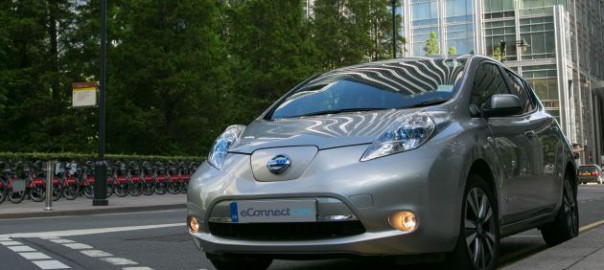
From 2020 all new private hire vehicles in London must be 'zero emission capable' (Image: eConnect Cars)

Don’t tell anyone the 2016 Leaf is out!

Back in September, I got on Nissan’s mailing list to be the “first to know” when the 2016 LEAF was released. I also asked a local Nissan dealer to contact me when it was available. Neither one contacted me.

From 2020 all new private hire vehicles in London must be 'zero emission capable' (Image: eConnect Cars)

One would think that the biggest update to the LEAF in 5 years would warrant a media fanfare. Yet, so far, Nissan has kept the 2016 LEAF release pretty much a secret.

When the new LEAF with 107 miles of range was announced, I was super excited. I’ve wanted an EV for 12 years, and the 2016 LEAF finally had the range for most of our trips at a price I could afford. Over on mynissanleaf.com, an owner in my area said Fontana Nissan had been great with his LEAF purchase back in 2011, so I emailed Fontana asking when the 2016 might be available. Their response? A form letter asking me to come down for a test drive.

I tried again, being as clear as possible that I was only interested in the date the 2016 would be released to market. This time I got a voicemail asking me to come down for a test drive. I had progressed to voicemail! Hurray.

Read more: Clean Technica

New plug-in grant will treble number of greener cars on Britain’s roads

More than 100,000 motorists to benefit from £400 million fund focused on greenest vehicles.

The government has today (17 December 2015) announced a long-term extension to the plug-in car grant, backed by a £400 million package to treble the number of ultra low emission vehicles on Britain’s roads.

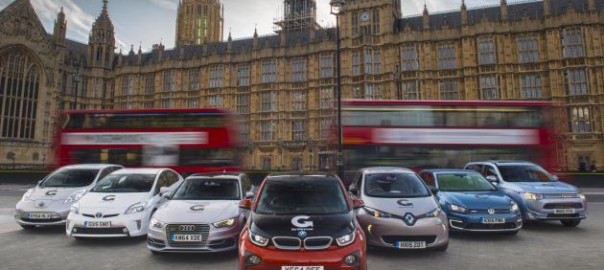
goultralow2015_EVs_parliament_GUL

The grant will continue well beyond the latest guarantee of February 2016 until at least the end of March 2018 and will mean more than 100,000 people will benefit over the coming years — double the number who have already claimed the grant since 2011.

It means from next March, buyers of the greenest cars can save up to £4,500 off the overall purchase price.

Transport Minister Andrew Jones said:

“The UK is a world leader in the uptake of low emission vehicles and the plug-in car grant has been key to that success. Extending the grant in a sustainable way ensures more than 100,000 people will benefit from financial support when purchasing these cheap-to-run and green cars. We are determined to keep Britain at the forefront of the technology, increasing our support for plug-in vehicles to £600 million over the next 5 years to cut emissions, create jobs and support our cutting-edge industries.”

Jim Wright, Nissan GB Managing Director, said:

“Today’s decision by government has reaffirmed their commitment to the uptake of ultra-low emission vehicles. With government support and Nissan’s investment of over £420 million into electric vehicles in the UK, our British made Nissan LEAF has increased in popularity with many UK customers already enjoying the benefits of zero emission and low cost driving. This announcement, together with ongoing infrastructure developments, should see the growth and wider deployment of this technology continue.”

The grant was created in 2011 to encourage sales of ultra-low emission vehicles (ULEVs) and has been instrumental in the UK becoming the biggest ULEV market in the EU, and the fourth largest in the world. Some 50,000 people have already benefited from the grant.

From 1 March 2016, 2 grant rates will be available to ensure the funding is sustainable and focus financial support on the greenest vehicles. ‘Category 1’ vehicles with a zero emission range of over 70 miles will benefit from a grant of £4500. ‘Category 2 and 3’ vehicles with a shorter zero emission range — such as plug-in hybrid vehicles with a petrol or diesel engine — will receive £2500.

The new grant levels reflect strong growth in the sector with sales of ULEVs doubling over the past year. Motorists also have a wider choice of 29 ULEVs on the market — 5 times as many as when the plug-in car grant was launched. The UK is also at the forefront of the roll-out of hydrogen fuel cell vehicles, which are also eligible for the £4500 grant thanks to their zero tailpipe emissions.

The government has also today announced it will continue to provide a grant to help ULEV owners have a dedicated charge point installed at their home. From 1 March 2016, the electric vehicle homecharge scheme (EVHS) will offer £500 per installation, which on average will cover around half of the cost of getting a charge point.

The plug-in car grant is just one element of a comprehensive £600 million package of measures from the Office for Low Emission Vehicles over the course of this parliament which also includes funding for chargepoints, grants encouraging low emission buses and taxis and R&D funding for innovative technology such as lighter vehicles and longer-lasting car batteries.

To encourage zero emission vehicles and maximise the number of everyday motorists who can benefit from government support, a price cap will also be introduced from 1 March 2016. Category 2 and 3 models with a list price of over £60,000 will not be eligible for the grant, but all category 1 vehicles with a zero emission range of over 70 miles will be eligible for the full £4,500 grant.

The government has committed to make nearly all cars and vans in the UK zero emission by 2050, and announced in the Spending Review to increase funding to £600 million between 2015 and 2020 to support the development, manufacture and uptake of ULEVs.

This commitment was reinforced when the UK was one of 14 international members of the Zero Emission Vehicle Alliance to sign a pledge promoting the uptake of electric cars at the recent Paris climate conference.

Source: Gov.uk