Next generation Mercedes S-Class plug-in hybrid flagship to get clever new charging system, while diesel PHEV will join it
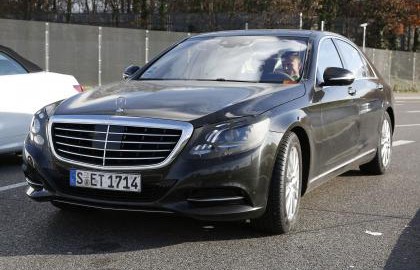
The facelifted Mercedes-Benz S-Class plug-in hybrid will feature high tech wireless charging, according to Jochen Strenkert, Mercedes’ man responsible for hybrid powertrains.
Speaking to Auto Express before the Geneva Motor Show, Strenkert revealed that Mercedes is working in collaboration with arch rival BMW to develop the new tech, sharing the high cost of the new system.
We’ll see the new S-Class plug-in hybrid in summer 2017, while the car will feature Mercedes’ latest third generation hybrid powertrain, boasting a bigger battery pack.
“We already have a working prototype,” Strenkert revealed, adding that “battery capacity is predicted to double every five years, so the next S-Class plug-in will also have an increased range.”
Following the recent changes in the UK’s Plug-In Car Grant, Renault announced that they will continue to offer a free, fully-installed fast charger to ZOE customers.
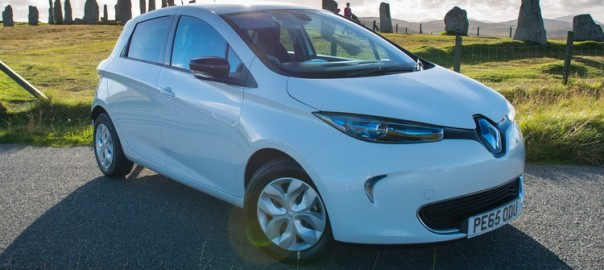
Renault ZOE (Image: Car Scoops)
The fast charger is a 7Kw Homecharge wallbox unit and represents a customer saving of £500, representing a unique offer in UK’s electric car market.
Renault’s compact EV is offered in a five-door configuration only and is one of the most affordable ways to get yourself into the world of silent, electric motoring.
With the 7kW charger, the ZOE can be charged from flat to full in three to four hours while owners can use the My ZE Inter@ctive timer app to schedule the time that their car is charged and benefit from lower off-peak electricity prices.
“By continuing to provide a home-charging unit installed at the customer’s address, we’re able to ensure that these points are even stronger for the ZOE than the competition, with customers able to fully charge in just 3-4 hours at home as standard,”
said Ben Fletcher, Electric Vehicle Product Manager, Renault UK.
The model’s official NEDC range is up to 149 miles but Renault says that in real-world driving the ZOE is closer to 106 miles during the summer and 71 miles during the winter.
Renault has signed a letter of intent with the Dutch Utrecht City Council, ElaadNL and LomboXnet on Smart Solar Charging for electric vehicles.
The signature took place during the state visit to Paris of King Willem-Alexander and Queen Máxima of the Netherlands, under the schedule of Franco-Dutch Economic Year 2015-2016.
THE SMART SOLAR CHARGING NETWORK PROJECT
Renault, Europe’s leading electric vehicles manufacturer, and its Dutch economic partners Utrecht City Council, ElaadNL and LomboXnet signed a letter of intent in Paris on 11 March 2016 to develop a Franco-Dutch framework of smart solar charging solutions for electric vehicles.
The signature ceremony was attended by Renault’s Laurens van den Acker, SVP Corporate Design and Guillaume Berthier, EV sales Director; in presence of the king and queen of the Netherlands, the Dutch minister of trade, Lilianne Ploumen and the French Foreign Affairs Ministry’s secretary of state for European affairs, Harlem Désir.
SMART-CHARGE SYSTEMS FOR ELECTRIC TRANSPORT
According to the letter of intent, the city of Utrecht could be the testing ground for the solar smart-charge project. Renault, Europe’s leader in electric vehicles, would supply a fleet of 150 Renault ZOE models through 2017 to the city. ElaadNL would handle management of infrastructures and the smart-charge standard, and LomboXnet would take charge of installing the network of unique public charging terminals powered by a 44 kW grid connection. Grid operator Stedin would be involved to balance supply and demand of the grid.
Phase one of the project would involve setting up 1,000 smart solar-charge stations, powered by 10,000 photovoltaic panels in the Utrecht region. Infrastructure installation would run side by side with development of a car-share service of electric cars, powered by renewable energy, for Utrecht residents. The Renault ZOE R.Access connectivity and 22 kW charging make it ideal for car-share and smart charging applications.
Phase two of the project would proceed with the partners developing a vehicle-to-grid ecosystem, with the network of solar chargers capable of both charging the electric cars and of feeding energy stored in the batteries of parked cars onto the grid to meet demand peaks. This could be the starting point for a new system storing renewably sourced energy.
STEPPING UP THE ENERGY TRANSITION
Through its pioneering work on EVs and their batteries, Renault contributes to the energy transition in the automotive industry by reducing the use of fossil fuels. Renault, through smart charging experiments, increases the proportion of renewable energy EVs use. One of the goals of the Smart Solar Charging Project developed by Renault, ElaadNL, LomboXnet and the Utrecht City Council is to make a substantial contribution to reducing the carbon footprint not only of the auto industry but of all sectors consuming electricity.
ElaadNL researches and tests the possibilities for smart charging on behalf of the dutch grid operators. With innovative techniques ElaadNL can charge electric cars in a smart way, exactly at the right moment. With Smart Charging, the abundance of electricity from the sun and wind is used to charge our cars. Live off the wind and drive on the sun!
In June 2015, LomboXnet introduced in Utrecht a world-wide scoop: a charging station making Smart Solar Charging accessible worldwide. This charging station can charge and discharge (vehicle-to-grid, V2G), establishing the foundation for a new local energy system based on local energy sources and local storage. The unique charging station is developed in a consortium of GE, Stedin, Vidyn, Last Mile Solutions, Utrecht Municipality and led by LomboXnet.
By implementing the vehicle-to-grid project on a regional scale, the region of Utrecht creates – together with partners like Renault – a large living lab for innovative smart grid solutions. This show case implements not only green power, but ensures also clean air zero emissions in the city and region of Utrecht. Thus, Utrecht makes way with Healthy Urban living. Not only to continuously improve its leading position as the most competitive region of the EU (according to Eurostat) but also to inspire other metropolitan regions as well.
Renault ZOE customers continue to receive a free fast-charging wallbox
Wallbox adds to Renault ZOE’s ease of ownership
Offer is unique in the UK electric vehicle market place
Represents a customer saving of nearly £500
Renault ZOE attracts maximum £4,500 support in new PiCG categories
A Renault ZOE on charge (Image: Fraunhofer ISE)Following the announcement of the changes to the Government Plug-in Car Grant (PiCG) and Electric Vehicle Homecharge Scheme, Renault is to continue its unique customer offer of supplying a free fully-installed fast-charging wallbox to new ZOE customers1.
Available to retail customers, the 7kW charging wallbox is supplied and installed by Renault’s partner, Chargemaster, at the customer’s domestic address as part of the price of the Renault ZOE. Chargemaster is the UK’s most successful supplier and operator of charging equipment, having shipped more than 45,000 charging points in the last five years across the UK and nine European countries from its dedicated UK-based manufacturing facilities. This offer is unique in the UK electric vehicle market place and tops-up the Government grant towards a domestic charger, saving the customer nearly £500.
As of 1st March 2016, the Office Low Emission Vehicles has revised the PiCG support for the three pre-existing categories2 and now gives the greatest financial incentive to vehicles that emit 0g/km CO2 and have a zero emission range of 70 miles or over. ZOE is in category 1 as it exceeds these criteria and therefore attracts the maximum £4,500 support level. Vehicles in categories 2 and 3 now receive £2,500 – under the previous PiCG rules all categories received the same £5,000 amount.
The Chargemaster 7kW Homecharge unit allows ZOE owners to charge their vehicle from flat to full in 3-4 hours at their home. Using the My ZE Inter@ctive timer app customers are able to schedule the time that ZOE is charged and benefit from significantly lower off-peak electricity prices.
Ben Fletcher, Electric Vehicle Product Manager, Groupe Renault UK, commented:
“The Electric Vehicle market is growing at an unprecedented rate, and a big part of that is customers discovering just how cost-effective and easy to live with these cars are. By continuing to provide a home-charging unit installed at the customer’s address, we’re able to ensure that these points are even stronger for the ZOE than the competition, with customers able to fully charge in just 3-4 hours at home as standard.”
ZOE is fitted with a patented Chameleon™ charger that, unlike other EVs, always allows ZOE to make the best use of whatever charging supply is available in order to speed up charging times. ZOE Dynamique Nav Rapid Charge can charge at up to 43kW, meaning that 0 to 80 per cent full can be achieved in as little as 30 minutes, depending on version. ZOE customers benefit from six months’ free membership to the POLAR Plus network, the UK’s largest public network offering access to over 4,000 charging points that span from 3kW-22kW. The ZOE is also able to make full use of nearly 600 rapid AC chargers installed at key nationwide locations, such as motorway service stations.
The ZOE is an all-electric, five-door supermini available in three trim levels that comes with a high level of standard specification, including items such as climate control and sat-nav. ZOE also has a five-star Euro NCAP safety rating and was recently awarded the title of What Car? ‘Best Electric Car for less than £20,000’ for the third consecutive year, and ‘Best Electric Vehicle’ in the Auto Express Driver Power 2015 survey.
The model’s official NEDC range is up to 149 miles – Renault estimates that in real-world driving conditions that this equates to around 106 miles in summer and 71 miles in winter.
ZOE is available to purchase in two ways. Firstly, under a battery hire scheme, where ZOE pricing starts at £13,945 after the Government Plug-in Car Grant with battery leasing from £45 per month. Benefits include a lifetime performance guarantee for the battery and 24/7 roadside assistance – even if you run out of charge.
You can also buy your ZOE outright. ZOE i ‘full purchase’ models start from £18,945 after the Government Plug-in Car Grant, giving the buyer full ownership of the car and battery and no monthly battery lease payment.
Selected ZOE models are also currently available with a number of Renault Selections PCP, hire purchase and cash purchase offers.
Renault offers a range of electric vehicles to suit private and commercial requirements. In addition to the ZOE hatchback, the Renault EV range comprises of the innovative, two-seater Twizy city car, Twizy Cargo that offers a load area of 180 litres and a useful 75 kg payload, and the Kangoo Z.E and Kangoo Maxi Z.E vans that combine the same generous load capacity and options as the equivalent diesel versions with ultra-low running costs.
In 2015, Renault was the European market leader for electric cars, with ZOE, and with electric vans, with Kangoo Van Z.E., and sold a total of 23,086 units EVs (including Twizy).
In the UK, 2015 ZOE sales more than doubled (up by 102 per cent) to 2,053 vehicles, significantly outpacing the UK electric vehicle market, which was up 48 per cent on 2014. ZOE is the second best-selling electric car in the UK representing one in five EVs sold.
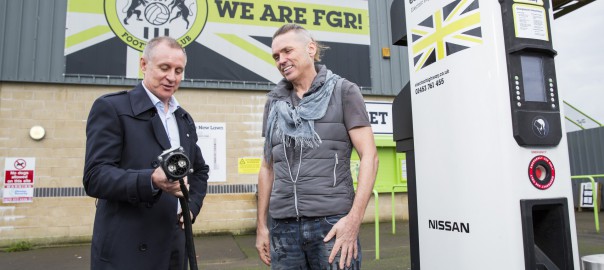
“Five years ago, it was said that one of the main reasons people weren’t buying electric cars was because of a lack places to charge them – and the main reason more places to charge weren’t being built was because not enough people were buying electric cars – classic chicken and egg stuff,” says Dale Vince, former new age traveller and outspoken founder of the world’s first green energy company, Ecotricity. “We decided to break that impasse.”
Vince received an OBE from the Queen for services to the environment in 2004. In 2011, Ecotricity created the Electric Highway, the first national network of fast chargers in Britain. Free, compatible with all electric vehicles on the market, and powered by the wind and the sun, it is now the most comprehensive charging network in Europe.
Vince says:
“We built Britain’s first electric supercar, the Nemesis, in 2010 – we wanted to show the true potential of electric cars and demonstrate how we can get around without fossil fuels. We had to shake the old image of the electric car first. The next step was to tackle the infrastructure problem, which led us to conceive of the Electric Highway.”
With Ecotricity pumps covering the entire motorway network in Britain, as well as strategic A-roads, ports and airports, electric cars are now reality in Britain – as owners travel the length and breadth of the country, literally from John O’Groats to Lands’ End.
Vince started by installing essentially three-pin plugs on the British motorway network. These would take eight hours to charge a car. Fast forward five years and there are now multiple charging networks across Britain, but the Electric Highway still leads the way, with nearly 300 Electricity pumps across the British motorway network that can charge in as little as 20 minutes.
Every charge uses Ecotricity’s 100% green energy, from the wind and sun – enabling electric cars to reach their true potential, zero emission free driving. And it’s been completely free to use since 2011, to encourage more people to make the switch.
“Our work fits in perfectly with the target the whole world agreed to in Paris last year,” adds Vince, “to limit global temperature rise to 2 degrees or less. To achieve this, we simply must stop burning fossil fuels by 2050, and that requires nothing short of a revolution in the three biggest areas of impact – energy, transport and food. The revolution is already underway on British roads.”
Transport is currently one of the biggest contributors towards our personal carbon footprints, so the Electric Highway network offers a solution to one of the world’s greatest problems.
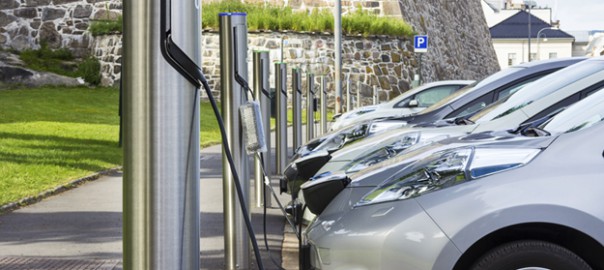
Seventy service stations on England’s motorway network now have electric vehicle charge points.
Electric car drivers can ‘fill up’ at most motorway service stations (Image: RAC)
This equates to 72% of the 97 total.
Of the 165 individual charge points, 92% are rapid, allowing batteries to be almost fully replenished in around 30 minutes.
RAC Foundation analysis of data from the publicly available, government established, National Charge Point Registry shows that an electric vehicle driver will now be no more than 20 miles from a service station charge point on 98% (1,831 miles out of 1,859 miles) of the motorway system in England.
When the analysis is broadened out to the whole of the Strategic Road Network managed by Highways England – not just motorways but also major A roads – then 82% (3,845 miles out of 4,668 miles) of the system is within 20 miles of a charge point.
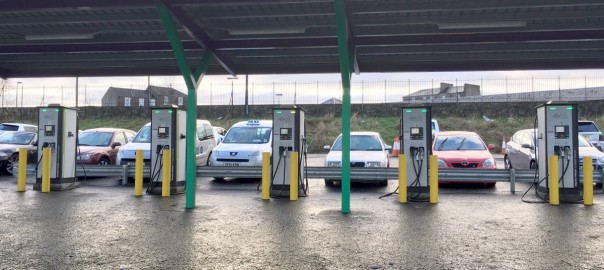
The Evolt Electric Vehicle (EV) charge point infrastructure supplied and installed by APT Controls at the Dundee taxi company 203020 has become an ‘ideal model’ for cab firms looking to go electric, according to its CEO David Young.
Dundee Cabs charge points
203020 is increasing its fleet to 100 fully electric vehicles, making it the largest EV taxi fleet in the UK.
Dundee is currently vying with seven other cities for £20 million of funding to become the UK’s electric taxi capital – and Evolt is playing a significant part in helping to achieve this.
APT Controls was selected after a full tender process as the key supplier to 203020’s fleet of 30 EVs, and has subsequently installed five top-of-the-range 50kW Tri-Rapid chargers, which efficiently charge vehicles in half an hour, and a further ten 7kW chargers that are ideal for quick ‘top ups’.
David says Evolt came highly recommended:
“Two companies informed me of its reliability, and when it came to choosing a product, Evolt really stood out.
“The equipment is very well installed, maintained to high levels and we have never had a problem with their use – which is testament to the manufacturer’s quality since each Rapid Charger is in consistent use with approximately 17 and 21 charges every day.”
Now the charging infrastructure is in place, David says that another 100 EVs are currently on order:
“Since the EV programme started one year ago, over 30 taxi firms from all over the UK have visited to see our set up,” he says. “It’s an ideal model of environmental success, and Evolt has really helped in driving it forward with its reliable charge points.”
David says 203020 will have 100 EVs on the road within six months:
“This time next year every vehicle we own will be 100 percent electric, and with that expansions come an increased use of the charge points. Two of our Rapid chargers are already the busiest in the UK, and our original 30 EVs will very soon reach 1,000,000 miles, saving hundreds of tons of carbon emissions.”
Justin Meyer, General Manager for Evolt, anticipates an increased role in the future:
“The take-up of EVs, and therefore the increased need for charge points, is accelerating and we forecast significant growth in the supply of our EV charging solutions to taxi companies as well as to local councils for their fleets and initiatives.”
Evolt’s Rapid Charging range of 50kW DC and 43kW AC output systems is made up of two carefully designed products; the Compact Charger and the Advanced Charger. Both are proven systems allowing EV charging at AC and DC outlets on the unit (when enabled). Each unit also has a built in 3G communications modem enabling remote monitoring of the charging process and charging data collection (where needed). And its 7kW dual-socket range is robustly designed and features an intelligent tamper-proof opening mechanism to increase security.
One year into its new ownership, the Source London charging network isn’t only improving its offering to electric vehicle owners, it’s about to become the basis of a large-scale car sharing scheme.
“London should be even more electric vehicle orientated than Paris – it should be the leading city in Europe,” says Cédric Bolloré. “We want to give the citizens of London an easy way to use non-polluting form of transport. Autolib appeals to public transport customers who occasionally need to use their own car – one Autolib car takes nine cars off the street according to our studies.”
The challenge:
Bolloré Group took control of the former Plugged-in Places scheme, Source London, in September 2014. Notoriously unreliable, this included 835 charging points spread across the Capital’s boroughs, with a 60% availability rate.
In its first year, the Group’s subsidiary, BluePoint London, has invested £10m in a back-office system enabling boroughs to see how often the network is used, and replaced units as necessary. At the end of August, it reached 85% accessibility and grew network slightly to 845 charging points, targeting of 98% of 1,000 units by the end of 2015.
The new sockets are designed to make it easier for motorists without driveways to go electric
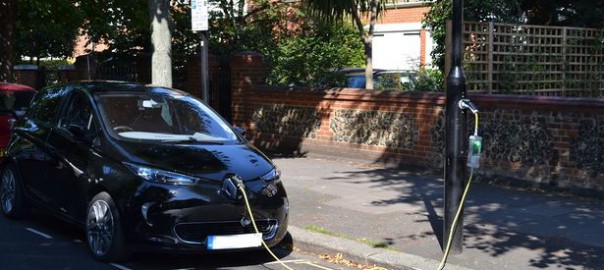
Hundreds of electric car charging points like this one are set to be installed at lampposts across Hounslow
Hundreds of electric car charging points are to be installed at lampposts across Hounslow.
The borough has been chosen to host a trial scheme, which it is hoped will encourage more motorists to switch to electric vehicles.
Drivers will be able to charge their vehicles on the street using the new sockets, making electric cars more practical for those without driveways.
It is one of a raft of new green initiatives across the capital to receive a share of the latest £5m cash injection from the Mayor of London’s £20m Air Quality Fund.



![An electric vehicle [Renault ZOE] is charged with photovoltaic power from the roof of the house using a charging station (Image: Fraunhofer ISE)](https://fuelincluded.com/wp-content/uploads/2015/12/151104130050_Renault_ZOE-charging_Fraunhofer-604x270.jpg)
![An electric vehicle [Renault ZOE] is charged with photovoltaic power from the roof of the house using a charging station (Image: Fraunhofer ISE)](http://fuelincluded.com/wp-content/uploads/2015/12/151104130050_Renault_ZOE-charging_Fraunhofer.jpg)