Category Archives: Solar Power

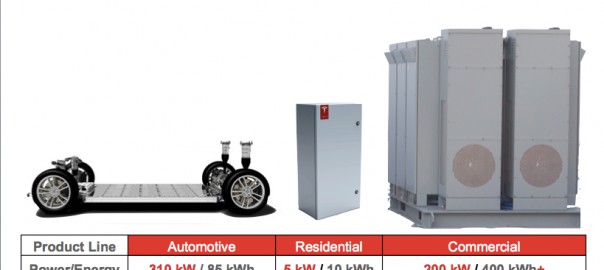
Tesla’s stationary energy storage (Image: Tesla)

IHS Predicts 9% Of Solar PV Installations Will Have Battery Energy Storage Systems By 2018

Good news for Tesla Motors and others in the battery energy storage market:

“IHS…announced that 9 percent of solar photovoltaic (PV) systems in North America will include attached storage in 2018. Led by commercial systems, IHS expects 700 megawatts (MW) of PV systems with energy storage will be installed by 2018, compared to just 30 MW in 2014.”

“The commercial PV energy storage market in the United States has gained huge momentum in recent months,” said Sam Wilkinson, research manager for solar and energy storage for IHS Technology.”

Tesla’s entry into this segment is mostly focused on residential, but rising usage in all segments will be a plus for the electric automaker and others who supply energy storage systems.

Tesla’s stationary energy storage (Image: Tesla)

Source: Inside EVs

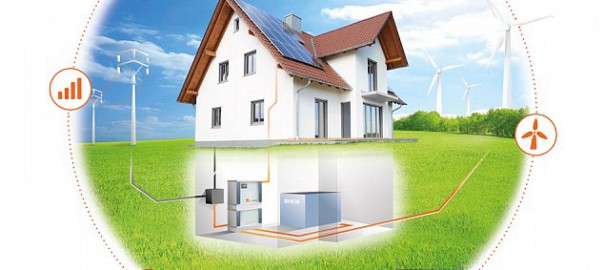
Sonnenspeicher features an intelligent management system that automatically controls the charging and discharging current (Image: ASD)

Never pay an electricity bill again: Smart battery lets you use solar energy at NIGHT

  • Sonnenspeicher was designed by Wolfram Walter and German firm ASD
  • Its lithium iron phosphate battery stores energy from solar panels
  • Cheapest model is €8,450 (£6,170), but it will save money on electricity bills
  • It also comes with ‘intelligent management system’ that controls current 

In the past year solar power in the UK has more than doubled while in the US it has grown by 30 per cent.

But many current systems fail to solve the problem of how energy is managed and used overnight when the sun sets.

Traditionally, energy gathered during the day is sent back to the grid, but this can prove costly if you need to buy it back – unless you have a smart battery that stores the excess energy in your home.

With this in mind, German firm Automatic Storage Device (ASD) and designer Wolfram Walter have created the Sonnenspeicher.

It uses a lithium iron phosphate battery to store the energy harvested during the day by solar panels fitted to a roof.

Sonnenspeicher features an intelligent management system that automatically controls the charging and discharging current (Image: ASD)

This energy is used throughout the day, and any excess is stored for when the sun goes down.

Rather than selling this excess electricity to the grid, and potentially having to buy it back at a later date or time, homeowners can use this stored supply to power their home until the sun rises again.

Sonnenspeicher features an intelligent management system that automatically controls the charging and discharging current, to make it easier to manage how much energy is being used.

Read more: Daily Mail

(Image: D. Bacon/Shutterstock/Economist)

Cheap oil vs wind and solar: fight for future of energy

In a major new report, global investment bank Citigroup has defined the current battle between cheap oil, and renewables like wind and solar, to be so fundamental it will define the future of energy.

But it says that while the slump in oil and associated gas prices may provide some road-humps for wind and solar, renewables will win out because of basic economics, as well as energy security and environment issues. And, Citigroup says, because renewables are the cheapest way to substitute coal-fired power.

Oil is the single largest source of primary energy globally, and the seismic shifts in the oil market can send shockwaves through the world’s energy markets.

Citigroup says that two common statements have dominated recent dialogue: 1) that cheap oil will deal a serious blow to renewables, and 2) because oil and renewables rarely compete in the power sector, the impact will be minor.

It says neither is strictly true. Citigroup believes the fall in the oil price is terminal – it says the days of triple figure oil prices are over – meaning the end to some high-risk, high-polluting oil ventures in marginal regions such as the Arctic, tar sands and deepwater.

On the other hand, the long-term outlook for renewables remains bright. “Fundamental factors – increasing economic competitiveness, energy security, and environmental goals – all remain potent forces driving ever more rapid adoption of renewable energy globally.”

Wind and solar costs have fallen dramatically, and these cost declines should continue. On an unsubsidised basis, wind farms are getting built at costs below $40/MWh in some regions. Recent solar auctions in the Middle East have produced prices below $60/MWh.

“The straightforward answer to whether cheap oil threatens renewables is no – at first glance, oil poses few direct threats to renewables.”

Oil competes directly against renewables in only about 5 per cent of the market – those places where oil is used in generation – particularly the Middle East (Saudi Arabia uses oil for 55 per cent of its electricity needs, and the Middle east as a whole 36 per cent), and in the Caribbean (Jamaica 91 per cent).

But, as we noted in this report about low solar costs, and the assessment by the National Bank of Abu Dhabi, oil can no longer compete with solar and wind in electricity economics.

“Even with greatly reduced oil prices in the $50-60/bbl range, more mature renewables like wind and solar have little trouble competing with new oil-fired generation in the Middle East,” Citigroup writes.

Read more: RenewEconomy.au

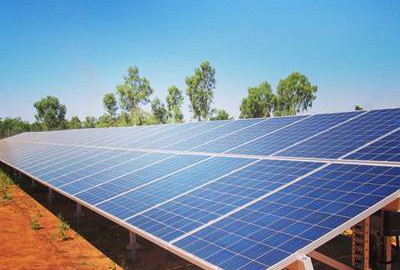
Solar Power (Image: ARENA)

Obama Pushes to Train Veterans for Solar Power

President Barack Obama on Friday unveiled an expansion of U.S. government efforts to train military veterans for jobs in the solar power industry during a visit to Utah.

The administration announced a new goal of training 75,000 people to enter the solar work force by 2020. That is an increase from a goal announced last year of training 50,000 workers by the same deadline.

Many of those workers would be veterans, administration officials said.

The Department of Defense plans to have “Solar Ready Vets” programs at 10 bases across the country to train military members who are returning to civilian life for solar jobs.

“It’s going to train transitioning military personnel for careers in this growing industry,”

Obama said of the program during remarks at Hill Air Force Base in Utah, standing near a set of solar panel installations.

Source: World Energy News

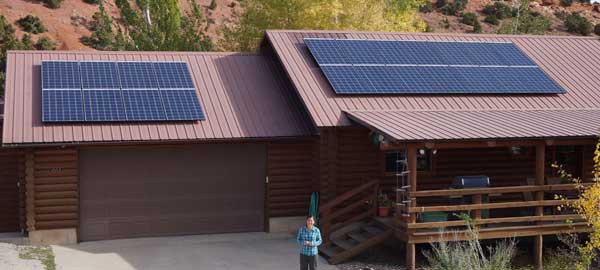
The Copelands’ home solar project (Photo: Creative Energies)

UK Cuts Red Tape for Commercial Rooftop Solar

LONDON — A change in the rules for permitted development rights in the UK has increased the development threshold for rooftop solar panels on commercial property by a factor of 20. Under the new rules, installations up to 1 MW no longer require full planning permission for development.

Previously, this threshold had previously been set a 50 kW and meant that — provided certain requirements are met — there will be no need to apply for planning permission for either solar thermal or solar photovoltaic installations up to this size. The decision to amend the planning rules was announced by Secretary of State for Communities and Local Government, Eric Pickles. It will clear the way from projects at the scale of a large warehouse or distribution centre.

In a related development, the UK’s Department of Energy and Climate Change (DECC) has also now confirmed that from 2019 it will be permissible for building-mounted solar panels to be moved to a different location without losing feed-in tariff (FIT) support. Under the former FIT scheme, an accredited installation would have been required to stay in the same position for 20 years — despite the fact that 65 percent of the UK’s commercial property assets are leasehold and commercial lease lengths are on average less than a decade long.

Responding, the Renewable Energy Association’s Chief Executive, Dr Nina Skorupska, said:

“Solar installed on commercial buildings has the potential to generate significant amounts of clean electricity, yet it is a considerably underdeveloped area, and the rigidity of the planning system has long been a major barrier to its progress.

“Increasing the threshold before a full planning application is required for a solar installation is a simple but effective step which will lift the shackles from the sector, and will help developers avoid uncertainty in terms of degression of feed-in tariff rates.”

The UK’s Solar Trade Association also welcomed the move, with STA Business Analyst David Pickup commenting:

“Getting planning permission is an extra hoop to jump through, and we are delighted that this is one more barrier to getting solar on roofs that has been removed.

“Extending the threshold from 50 kW to 1 MW is a boost for commercial solar. So many warehouses, factories and offices could save money on their energy bills by having solar PV on their roofs.”

But Pickup also warned:

“However, there isn’t enough room for this market to grow before the feed-in tariffs drops to zero, killing the market completely.”

Nonetheless, Giles Hanglin, responsible for the national coordination of solar rooftop delivery for Savills Energy, said:

“The government is certainly making the right moves to remove the former barriers in place which have hitherto dissuaded solar PV investment. In easing both the planning and building transference involved in the process, these amendments are set to make a huge difference in driving greater commercial use of this renewable energy.”

Source: Renewable Energy World

The Copelands’ home solar project (Photo: Creative Energies)

Going Solar: The 21st Century Family Home Project

300 pounds: That’s how much coal was not burned in a distant power plant in December as a result of the solar panels we installed on our house in Wyoming this fall.

Being December, it was our lowest monthly generation period, with low sun angles and periodic snow covering our panels.

An astonishing 1000 pounds of coal is burned to provide electricity for a typical US household per month.

Research shows that people most often take action on the environment based on a direct experience (Kollmuss and Agyeman 2002). In the case of climate change, ocean water isn’t lapping at our front door, nor did a hurricane recently flood our house.

Nor will we ever face these threats on the wind-swept plains of Wyoming.

But the health of the environment and our love of wildlife and open spaces is something that we care deeply about and also what drew us to settle here many years ago.

Home Solar Amidst an Energy Boom

Living in one of the epicenters fueling America’s energy boom has been a wake-up call. For the past 15 years, we’ve watched the slow unraveling of the sagebrush ecosystem: natural gas and oil extraction causing declines in species like sage-grouse and mule deer that depend on these systems (Naugle et al. 2011, Sawyer et al. 2013).

Even seemingly protected Yellowstone National Park, which sits nearly in our backyard, is warming at unprecedented rates. Recent temperatures have become as high as those experienced from 11,000 to 6,000 years ago (Shuman 2011) at a time when the concentration of carbon dioxide in Earth’s atmosphere has reached 400 parts per million (ppm), levels not seen since the Pleistocene (Pagani et al. 2010).

Wanting to join others as a part of the solution in reducing dependence on fossil fuels led us to consider installing solar panels on our home.

The Copelands’ home solar project (Photo: Creative Energies)

We studied the economics of the newest panels available and calculated that with the 30 percent federal tax incentive it would take 5 years to pay off the loan and 13 years to break even (Wyoming doesn’t have additional state tax incentives, but many states do). After that, all electricity we generated would be “free”.

Initially, I was pretty hesitant. Did it really make sense to take out a loan for solar panels or to take any “extra” money that we have for family vacations or college and put it into investing in solar?

The winning argument was to think of it like a bond fund, only we are the investors, and the project is solar on our house. When completed, our investment will result in nearly free electricity and the satisfaction of knowing that our electricity came from clean sources. Plus there’s the incalculable value of what it teaches our children. Even if we only break even financially, isn’t that still worth it?

Read more: Nature Blog

(Image: D. Bacon/Shutterstock/Economist)

Seven Reasons Cheap Oil Can’t Stop Renewables Now

Oil prices have fallen by more than half since July. Just five years ago, such a plunge in fossil fuels would have put the renewable-energy industry on bankruptcy watch. Today: Meh.

Here are seven reasons why humanity’s transition to cleaner energy won’t be sidetracked by cheap oil.

1. The Sun Doesn’t Compete With Oil

Oil is for cars; renewables are for electricity. The two don’t really compete. Oil is just too expensive to power the grid, even with prices well below $50 a barrel.

Instead, solar competes with coal, natural gas, hydro, and nuclear power. Solar, the newest to the mix, makes up less than 1 percent of the electricity market today but will be the world’s biggest single source by 2050, according to the International Energy Agency. Demand is so strong that the biggest limit to installations this year may be the availability of panels.

“You couldn’t kill solar now if you wanted to,” says Jenny Chase, the lead solar analyst with Bloomberg New Energy Finance in London.

2. Electricity Prices Are Still Going Up

The real threat to renewables isn’t cheap oil; it’s cheap electricity. In the U.S., abundant natural gas has made power production exceedingly inexpensive. So why are electricity bills still going up?

Fuel isn’t the only component of the electricity bill. Consumers also pay to get the electricity from power plant to home. In recent years, those costs have soared. Annual investments in the grid increased fourfold since 1980, to $27 billion in 2010, according to a report by Deutsche Bank analyst Vishal Shah. That’s driving bills higher and making rooftop solar attractive.

3. Solar Prices Are Still Going Down

You may have seen this chart before. It’s the most important chart. It shows the reason solar will soon dominate: It’s a technology, not a fuel. As time passes, the efficiency of solar power increases and prices fall. Michael Park, an analyst at Sanford C. Bernstein, has a term for the staggering price relationship between solar and fossil fuels: the Terrordome.

The chart above shows the price of energy from different sources since the late 1940s. The extreme outlier is solar, which only recently entered the marketplace, at a very high price. Prices are falling so fast that solar will soon undercut even the cheapest fossil fuels, coal and natural gas. In the few places oil and solar compete directly, oil doesn’t stand a chance.

Case in point: Oil-rich Dubai just tripled its solar target for the year 2030, to 15 percent of the country’s total power capacity. Dubai’s government-owned utility this week awarded a $330 million contract for a solar plant that will sell some of the cheapest electricity in the world.

Read more: Bloomberg

Solar panels fitted on 125,000 UK homes during 2014

Large amount of small-scale systems installed triggers 3.5 per cent fall in feed-in tariff subsidies for first time since 2012

Solar panels were fitted on the roofs of more than 125,000 homes last year, according to government figures.

The numbers also show that 700MW of solar was installed on buildings and in ground-mounted solar farms under the Feed-in Tariff subsidy scheme over the course of 2014 – the equivalent of powering 212,000 homes.

Alongside the statistics, the government also confirmed sufficient solar systems were deployed in the last quarter of 2014 to trigger 3.5 per cent cuts in tariffs from April for installations smaller than 10kW and between 50kW and 5MW. About 124MW of smaller systems were added over the three months and 53MW of systems between 50kW and 5MW.

The Solar Trade Association (STA) said this was the first time since 2012 that the tariff will fall because of the number of systems deployed rather than because of the automatic drop that kicks in every nine months.

The industry body added that solar PV installations between 10kW and 50kW, often fitted on schools, village halls or business units, grew by more than 50 per cent between October and December 2014 compared with the previous three-month period. However, the 38MW added over that time fell short of the 50MW that would have triggered.

David Pickup, business analyst at the STA, said that while the industry is experiencing “healthy growth”, the tariff banding needs to be reconfigured to allow for more growth in larger rooftop and smaller or community solar farm projects.

“We are particularly pleased to see good levels of growth in the large rooftop market with 33MW of solar – 164 installations – installed in the last three months of 2014, more than double that in the previous quarter,” he added. “But this isn’t enough – we need to see more solar going up on roofs and more gradual reductions in the tariff to get to the industry’s goal of subsidy-free solar.”

Source: SciTech News

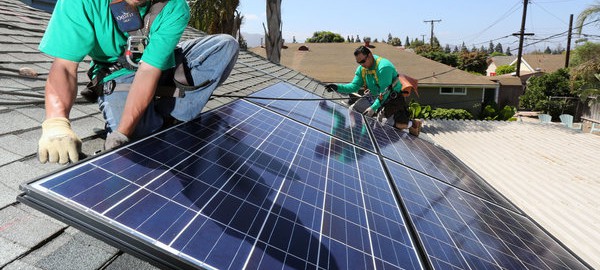
Workers for SolarCity installing solar panels (Image: JE Flores/NYTimes)

REA champions solar and storage with the launch of UK Solar and UK Energy Storage

The Renewable Energy Association announces the official launch of UK Solar and its first storage representation body UK Energy Storage

UK Solar will support and represent over 130 of its existing solar members and broadening its member base to become the trusted voice of solar power in the UK.

With nearly fifteen years of experience in supporting the growth of the solar sector, the REA has built a strong reputation within the government, with regulators and with industry stakeholders.

REA Chief Executive Dr Nina Skorupska said:

“The REA is excited to announce the launch of UK Solar. Solar power is one of the first major renewable energy technologies set to compete with traditional energy sources without subsidy. The integration of solar as a major player in the UK energy mix will transform the power market. Businesses, households and the public sector will see their energy bills reduced. It is the mission of UK Solar to support and drive the transition to this solar future”

The REA will be working with its existing solar members to develop a clear path to grid parity with wholesale and retail electricity prices across all sectors of the solar power market.

Further exciting news is that the REA is to represent renewable storage technologies with UK Energy Storage. UK Energy Storage is the trade body for all storage technologies across the UK.

Energy storage technologies offer huge potential for the UK’s energy supply mix. The ability to store renewable power which can then be used to meet demand when it is needed can deliver tremendous benefits for system stability and security of supply as well as decarbonising UK energy supplies.

Using the REA’s experience of successfully bringing new technologies to market, UK Energy Storage will ensure that storage technologies have a smooth path to commercialisation in the UK through delivering and developing effective policy.

REA Senior Advisor Ray Noble said:

“The potential for energy storage to transform the UK energy mix is immense. Through representing all types and scale storage technologies the REA will drive the commercialisation of viable storage solutions in the UK. The integration of storage technologies will bring down costs and increase the capacity of renewable energy available on demand, which could revolutionise the energy mix.”

The launch of UK Solar and UK Energy Storage will see exciting new developments in the REA, as it strengths and builds relationships with solar and storage members.

Source: Renewable Energy Association

Will 2015 Be a Breakthrough Year for Storage in the UK?

Despite an unpromising legislative landscape, storage is gaining momentum in the U.K.

The United Kingdom has no clear government policy on energy storage and offers no major incentives to companies and no subsidies at all to households to install energy storage. To date, only paltry sums have been invested in energy storage projects there.

And yet, many are feeling optimistic about where the storage industry is headed.

Several major manufacturers have either launched domestic solar-storage products in the U.K. in the last six months, or are planning to do so sometime this year. In the last week, the U.K. Renewable Energy Association has launched a new trade body dedicated to commercializing energy storage. The U.K. Electricity Storage Network is expecting a Minister from the Department of Energy and Climate Change (DECC) to participate in its annual meeting.

And to crown it all, the U.K. currently has the biggest battery in Europe.

So is storage really taking off? To date, according to the U.S. Department of Energy’s Global Energy Storage Database, the Brits currently have a grand total of 32 projects, providing 3,300 megawatts of storage, of which the vast majority comes from pumped hydro. Around 62 megawatts are (or soon will be) provided by batteries and 5 megawatts by mainly uninterruptible power supply flywheel systems. There are also experimental compressed air, cryogenic thermal and flow battery projects ongoing.

That 3,300-megawatt total compares quite favorably with 7,600 megawatts in Germany and 6,560 megawatts in California, a state with similar energy requirements to the U.K. But there’s a push for much more.

“Storing energy will become increasingly important in the move toward a low-carbon economy, and has the potential to save the energy system over £4 billion [$6 billion] by 2050,” said DECC Minister Greg Barker last year.

The DECC has also stated that the energy storage market is forecast to reach $17 billion in 2020, and to be nearly $30 billion in 2030.

Some argue that energy storage can help save consumers money by possibly reducing new grid buildout.

Anthony Price, director of the Electricity Storage Network, explains: “[The UK electricity and natural gas regulator] Ofgem has calculated that it will cost £50 billion [$76 billion] to rewire Britain. This will be to provide flexibility in the grid and allow the integration of more renewables, add resilience to the grid, and to improve energy efficiency across the grid. If you look at energy storage, it can help meet all three of those requirements. So we can spend £50 billion on rewiring the country, or we can have more energy storage.”

Price’s organization is lobbying for a minimum 2,000 megawatts of new network-connected electricity storage by the year 2020. A fairly modest figure, this represents less than 10 percent of the predicted increase in renewable generation capacity over the same time period. The question still remains whether the U.K. government will take investment in energy storage seriously. Price notes that while the current administration is happy to “pick winners” by promoting solar and wind, it refuses to do so in the case of storage.

On the other hand, it has provided a modest £50 million ($76 billion) in backing for research projects around the country. The most prominent of these is the Smarter Network Storage project, better known as the biggest battery in Europe. A 6-megawatt/10-megawatt-hour system, the battery is designed to explore alternative revenue streams for storage, while deferring traditional network reinforcement.

Numerous early-stage projects have emerged. Highview Power won funding for a demonstration of its liquid air storage technology. REDT is developing a vanadium redox flow battery for storing wind and wave power in Scotland. And Isentropic is building a demonstration project for its cryogenic energy storage technology.

Domestic solar-plus-storage is also taking off in the U.K. Last September, SMA launched its Sunny Boy Smart Energy PV inverter and battery system. Sharp followed suit at the end of last year by offering a solar-and-storage device that uses Samsung batteries. Bosch is hoping for certification of a solar-storage inverter next month, and various other solar players, such as ReneSola of China, seem to be clamoring to enter the U.K. market.

These companies could be looking to cash in on growth in U.K. solar installations. While much of the European solar market has suffered from a slowdown last year, Britain helped keep the overall picture a little rosier, with an estimated 3.2 gigawatts of PV installed in 2014.

One solution for boosting domestic supply of residential storage systems is to leverage vehicle battery manufacturers, said Frank Gordon of the newly launched energy storage section of the U.K.’s Renewable Energy Association.

“The U.K. is home to one of the only electric-vehicle battery plants in the world, the Nissan plant in Tyneside. These car batteries could offer good potential for small-scale energy storage applications,”

said Gordon.

In the meantime, storage supporters like Gordon are looking for clearer support signals from the government.

“As solar storage is still a developing technology, the need to establish a policy and technical framework for it to operate within is paramount,”

he said.

Source: Greentech Media