Category Archives: Energy and Climate Change

News and articles on climate change, vehicle pollution, and renewable energy.

We’re now halfway to UN global warming limit

It’s the outcome the world wants to avoid, but we are already halfway there. All but one of the main trackers of global surface temperature are now passing more than 1 °C of warming relative to the second half of the 19th century, according to an exclusive analysis done for New Scientist.

2015 is shaping up to be a scorcher (Image: M. Salem/Reuters)

We could also be seeing the end of the much-discussed slowdown in surface warming since 1998, meaning this is just the start of a period of rapid warming.

“There’s a good chance the hiatus is over,”

says Kevin Trenberth of the National Center for Atmospheric Research in Boulder, Colorado.

Last year was the hottest since records began, but only just. With an El Niño now under way – meaning warm surface waters in the Pacific are releasing heat into the atmosphere – and predicted to intensify, it looks as if the global average surface temperature could jump by around 0.1 °C in just one year.

“2015 is shaping up to smash the old record,” says Trenberth.

Read more: New Scientist

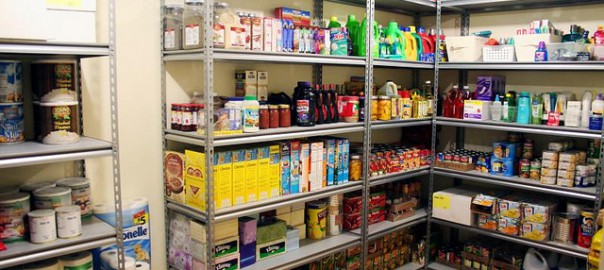
Food Storage And Prepping Are So Important (Image: SurvivalistPrepper.net)

Doomsday Prepping for a Sustainable Future

An article from back in 2012 with an interesting take on Transition versus Prepping

Is the “end” near? If the pop-culture version of the Mayan calendar’s “apocalyptic” predictions turns out to be correct and the world ends on 12/21/12, then you will probably not be reading this blog. The fiscal “cliff” sounds dire, but luckily it is only an annoying metaphor. This latest round of end-of-the-world hysteria is part of an ongoing theme in American culture that includes the 20th century fears of Cold War nuclear Armageddon, the “Y2K” mania leading up to December 31, 1999, Dick Cheney’s obsession in the early 2000s of terrorists with suitcase nukes, and the constant stream of movies and television shows portraying the sudden dramatic end of civilization.

Americans consciously or subconsciously understand that the world as we know it could alter in an instant, and such TV shows provide cathartic relief to that tension. Notable among cable television’s recent boom in “end times” programming is National Geographic Channel’s “Doomsday Preppers.” The show profiles individuals and families as they build bunkers and compounds, can dry goods, and purchase paramilitary vehicles that can serve as mobile homes in which to survive amidst the teeming post-apocalyptic masses. Each “prepper” has their threat of choice, ranging from earthquakes, tidal waves, droughts, and food shortages, to super-volcanoes, nuclear holocaust, viruses, terrorists, and more. The show takes all apocalyptic scenarios seriously and provides an expert to evaluate the prepper’s actions and suggest improvements and additional preparations they can make in the basic categories of water, food, shelter, and security.

Food Storage And Prepping Are So Important (Image: SurvivalistPrepper.net)

To audiences concerned with sustainability and climate change, the show sends mixed messages. On the one hand, most preppers demonstrate an admirable understanding of where their food and water come from, the motivation to design resilient systems, and display actions consistent with basic emergency preparedness. On the other hand, the show tends to highlight the “lifeboat strategy” of saving one’s self, family, and perhaps a few friends, while allowing the rest of society to crash and burn, with an emphasis on guns instead of, say, community gardens.

Read more: Huffington Post

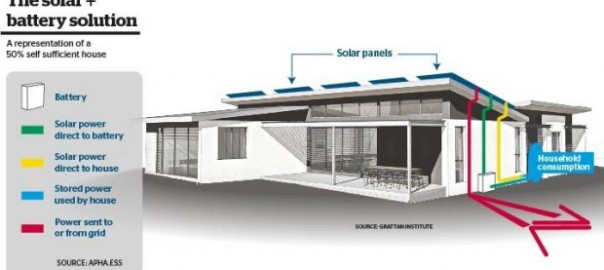
Lithium-ion batteries have been on offer to Australian homes and businesses for the last year or so

Australia going over to battery-powered homes

Where Australia leads – with its large amounts of sunshine – the UK should eventually follow

When Jane Whiltsher used to open her power bill it grated.

“I always felt that I was being ripped off,” she says.

“It’s just the way they operate. It keeps going up and up.”

Two months after having a rooftop solar and battery system installed, it’s a different story.

Lithium-ion batteries have been on offer to Australian homes and businesses for the last year or so

Whiltsher’s bill has more than halved. She enjoys the novelty of watching her “new toy” transforming the flow of energy around her house, leaving her largely independent of the wires outside.

At approaching $40,000, it hasn’t been a cheap investment. But that’s not the point.

“As far as I am concerned if it takes me off the grid then it’s paid for itself already,” she says.

Whiltsher’s enthusiasm to invest hard-earned cash for a home power system that may take as long as 12 years to pay for itself is being echoed around the country as Australians race to install batteries.

Read more: SMH

Be prepared … follow this guide and you could be the last one standing when it all goes really, really wrong (Image: S. Parsons/PA)

How to make sense of ‘alarming’ sea level forecasts

You may have read recent reports about huge changes in sea level, inspired by new research from James Hansen, NASA’s former Chief Climate Scientist, at Columbia University. Sea level rise represents one of the most worrying aspects of global warming, potentially displacing millions of people along coasts, low river valleys, deltas and islands.

Be prepared … follow this guide and you could be the last one standing when it all goes really, really wrong (Image: S. Parsons/PA)

The Intergovernmental Panel on Climate Change, the UN’s scientific climate body, forecasts rises of approximately 40 to 60 cm by 2100. But other studies have found much greater rises are likely.

Hansen and 16 co-authors found that with warming of 2C sea levels could rise by several metres. Hansen’s study was published in the open-access journal Atmospheric Chemistry and Physics Discussion, and has not as yet been peer-reviewed. It received much media coverage for its “alarmist” findings.

So how should we make sense of these dire forecasts?

Read more: The Conversation

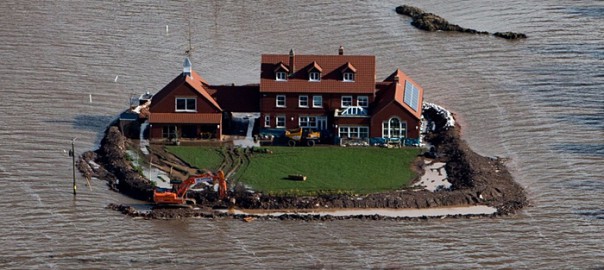
Severe Flooding, Against a Background of Wind Turbines: November 2012, Tyringham, Bucks. (Image: T. Larkum)

Stop burning fossil fuels now: there is no CO2 ‘technofix’

Researchers have demonstrated that even if a geoengineering solution to CO2 emissions could be found, it wouldn’t be enough to save the oceans

Severe Flooding, Against a Background of Wind Turbines: November 2012, Tyringham, Bucks. (Image: T. Larkum)
“The chemical echo of this century’s CO2 pollutiuon will reverberate for thousands of years,” said the report’s co-author, Hans Joachim Schellnhuber (Image: T. Larkum)

German researchers have demonstrated once again that the best way to limit climate change is to stop burning fossil fuels now.

In a “thought experiment” they tried another option: the future dramatic removal of huge volumes of carbon dioxide from the atmosphere. This would, they concluded, return the atmosphere to the greenhouse gas concentrations that existed for most of human history – but it wouldn’t save the oceans.

That is, the oceans would stay warmer, and more acidic, for thousands of years, and the consequences for marine life could be catastrophic.

The research, published in Nature Climate Change today delivers yet another demonstration that there is so far no feasible “technofix” that would allow humans to go on mining and drilling for coal, oil and gas (known as the “business as usual” scenario), and then geoengineer a solution when climate change becomes calamitous.

Read more: The Guardian

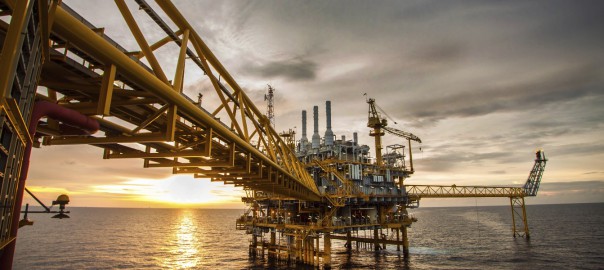
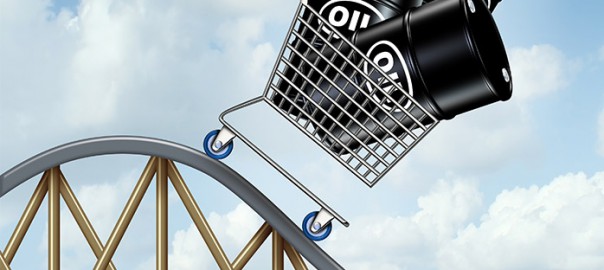
Oil’s place in the global energy mix is transforming, including in mobility, which uses three-fifths of world oil (Image: Thinkstock/curraheeshutter)

Oil Industry Frets About Another Lost Decade

Oil is an inherently cyclical business. The point is remarkably simple but it is amazing how often it gets forgotten by forecasters and investors.

In the century and a half since the modern oil industry was founded with the drilling of Edwin Drake’s well in 1859, real prices have doubled in the space of three years on no fewer than six separate occasions, and halved on four.

Oil’s place in the global energy mix is transforming, including in mobility, which uses three-fifths of world oil (Image: Thinkstock/curraheeshutter)

If prices remain around $50 for the rest of the year, 2015 will be the fifth time real prices have fallen more than 50 percent in the space of less than three years.

Sharp price changes over short periods have therefore been the norm and the long period of relative stability between 1931 and 1969 was the exception.

It follows that any attempt to predict where prices will go in the medium term (two to five years) or long term (beyond five years) based on current prices or recent changes is bound to fail.

The cyclical, unpredictable nature of prices has not stopped an army of prognosticators from trying to guess where they will go, but most forecasts have an endearing backward-looking quality.

When prices are high and have been rising, most forecasts predict they will rise even further on increasing scarcity. When they are low and have been falling, most forecasts predict a further slide on continued oversupply.

In 2008, and again in 2011/12, as prices were peaking at more than $140 and $120 per barrel respectively, most forecasters were predicting prices would remain high more or less forever.

Not one major forecaster saw prices sinking back to less than $60 per barrel but on both occasions it happened in less than three years.

Now prices have fallen, it seems no major forecaster is predicting they will rise sharply again within the foreseeable future.

But the current bearishness about the medium-term outlook is no more likely to be accurate than the former bullishness was between 2008 and 2011.

Read more: Maritime Global News

It’s time to call Peak Oil

I’ve been thinking a lot about Peak Oil recently, and am increasingly convinced that we are seeing its effects already starting to play out in world news, in low oil prices, flat economies, etc.

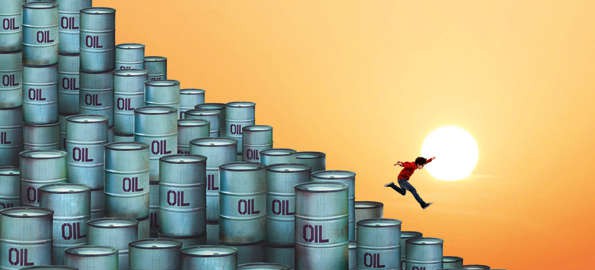
AAEAAQ_Oil_RollerCoaster_LinkedIn

It is widely accepted that Peak Oil occurred for conventional oil in 2005/6 and that led via very high oil prices to the global financial crisis of 2007/8. However, the high oil prices had an important side-effect, and that was to allow oil that was hard to extract to become potentially profitable and so we had the dash for shale and tar sands oil that has been booming since. This growth in unconventional oil increased the total annual oil extraction figures such that ‘Peak Total Oil’ looked to be moved into the future.

The Saudis, however, put a spoke in the wheel in October last year when they decided they were better off with low oil prices – since they can extract oil very cheaply – and so get back their reducing market share. This led to the current price tumble and oil glut.

While the notoriously optimistic U.S. Energy Information Administration (EIA) has been talking up the US shale oil industry for years, recently it has been moderating its view and suggesting that there may be a peak in unconventional oils as soon as 2020. I believe even this to be over-optimistic.

It is in this context that I see the currently unfolding Chinese stock market crash as being the key turning point, and in particular the week beginning 24 August 2015 – Black Monday – when the Chinese stock market lost 16% of its value. Given that China is currently the world’s economic engine this faltering is a major warning sign, and will likely lead to a softening of demand over the next few years (and perhaps indefinitely).

Putting these things together – a reduction in supply from unconventional oil and a reduction in demand from a faltering global economy – means I’m going to call it:

I think the conditions required for Peak Oil occurred together in August 2015.

This doesn’t mean that Peak Oil has itself just occurred since production drops will lag the economic situation – not least because shale oil production is heavily hedged and credit is currently cheap. Rather, that the peak is imminent – it cannot be avoided unless there is a major increase in either supply or demand in the short term, and neither seems likely.

Longer term, if the Saudis hold their nerve, the US shale industry is likely to implode* from insufficient revenue to service its debts – I think this will occur before the end of 2016, and very likely before the end of 2017 – and shale oil production will drop like a stone. Then Peak Unconventional Oil will have occurred, and therefore Peak Oil itself.

In summary:

In the future, we will be able to look back and see that Peak Oil occurred in 2016/17 and followed naturally and inevitably from the collision of supply and demand reductions in the summer of 2015.


*I think if this plays out we will have another Global Financial Crisis within three years from now, but that’s a topic for another day.

(Image: D. Bacon/Shutterstock/Economist)

Oil and Gas Industry to Lose Credit Supply

The screws are being tightened on the debt-laden US shale industry

More U.S. oil and gas companies could come under financial distress in the coming months as crucial hedging protection begins to expire.

Many companies had locked in high prices for their oil sales last year, allowing them a degree of protection as oil prices collapsed precipitously over the second half of 2014. Few, if any, hedged all of their production though, so revenues declined along with the oil price. Still, with some protection, the vast majority of companies (aside from a tragic handful) have not missed debt payments and have stayed out of bankruptcy.

That could become an increasingly tricky feat to pull off. As time passes, more and more hedges are expiring, leaving oil companies fully exposed to the painfully low oil price environment.

“A lot of these smaller guys who had bad balance sheets have pretty good hedge books through full-year 2015,” Andrew Byrne, an analyst with IHS, told the Houston Chronicle. “You can’t say that about 2016.”

In fact, about one-fifth of North American production is hedged at a median price of $87.51 per barrel. Smaller companies rely much more heavily upon hedging as they are more vulnerable to price swings and are not diversified with downstream assets. Across the industry, IHS estimates that smaller companies had about half of their production hedged at a median oil price of $89.86 per barrel in 2015.

But as those positions expire, any new hedges will be linked to current oil prices, which are now trading around $45 per barrel (although prices are fluctuating with great intensity and ferocity these days).

More worrying for the oil and gas companies that are struggling to keep their lights on is the forthcoming credit redeterminations, which typically take place in April and September. Banks recalculate credit lines for drillers, using oil prices as a key determinant of an individual company’s viability. With oil prices bouncing around near six-year lows, more companies will find themselves on the wrong side of that equation.

Banks were more lenient in April when oil prices were a bit higher and many analysts expected prices to rise. This time around the pain is mounting and there will be a lot less leeway. Somewhere around 10 to 15 percent credit offered to drillers could be cut back on average, a move that could slash $15 billion in credit capacity, according to CreditSights Inc.

With other financial avenues cut off, indebted drillers could be left with no way out.

“Nobody is in good shape with oil at $39,” CreditSights Inc. analyst Brian Gibbons told Bloomberg in an interview. “Most energy companies are shut out of the debt markets. There are few companies that can get a deal done right now.”

Read more: Oil Price

Be prepared … follow this guide and you could be the last one standing when it all goes really, really wrong (Image: S. Parsons/PA)

Is it time to join the climate change preppers?

(A tonque-in-cheek article from February 2014)

The floods and storms that have wreaked havoc across Britain this winter could be just the beginning, and now a growing number of people are making preparations for the end of the modern world. Here’s what you’ll need to do to stand a chance.

We are getting close to what might be called The Noah Scenario. Last month was the wettest January in Britain since records began in 1767. So far this month has been no different, and the Met Office expects the wind and rain to continue until March. Climate change may be a gradual process, but people who live on the Somerset Levels or the banks of the Thames are getting a very sudden education in the value of arks.

Be prepared … follow this guide and you could be the last one standing when it all goes really, really wrong (Image: S. Parsons/PA)

It’s unlikely that these floods will be the last such catastrophe, or the worst. Climate scientists expect bigger and more frequent extreme weather events throughout the coming century – not just wind and rain, but droughts as well. Nor is weather the only danger: pandemic flu, nuclear weapons, antibiotic resistance, environmental catastrophe and chronic food shortages could also offer dire threats to civilisation as we know it. You might not want to panic just yet, but you might decide that it is time to join the “preppers” – people who are secretly preparing to abandon modern life when the apocalypse, in whatever form, does arrive.

When do I abandon my home?

When you have no choice. When soldiers are on your street, your neighbours have begun to steal from you and plague-sufferers are camped in your drive – or perhaps slightly before all that. Preppers have a catch-all term for this moment: the SHTF scenario, in reference to the day when the Shit finally does Hit The Fan.

“It would be the last resort for me,” says Steve, a 57-year-old prepper from Essex, who runs ukpreppersguide.co.uk. “Some people seem to think it’s the first thing to do. The moment something happens, they grab their rucksack and off they go and live in the wild – but if you’ve ever tried that, it really isn’t easy. Where I am at the moment, I probably have enough provisions to survive for about nine months. That doesn’t include going out and getting your own food.”

When the moment comes, however, you may not have much warning, so it is important to keep what preppers call a “bug-out bag” ready at all times. Ideally, you’d leave at night, when you won’t be followed.

“The idea behind leaving your home is to get away from danger,” Steve explains, “which means getting away from everybody and going under the radar, off-grid, so you can’t be found – then just survive for however long is needed before you can come back to civilisation.”

Read more: The Guardian

See also: What Should I Stockpile For The Apocalypse?, Bug Out Bag List and Survival Fishing: How to Catch Fish When SHTF

Severe Flooding, Against a Background of Wind Turbines: November 2012, Tyringham, Bucks. (Image: T. Larkum)

Climate Change Nightmares – The Point of No Return

The worst predicted impacts of climate change are starting to happen — and much faster than climate scientists expected

Historians may look to 2015 as the year when shit really started hitting the fan. Some snapshots: In just the past few months, record-setting heat waves in Pakistan and India each killed more than 1,000 people. In Washington state’s Olympic National Park, the rainforest caught fire for the first time in living memory. London reached 98 degrees Fahrenheit during the hottest July day ever recorded in the U.K.; The Guardian briefly had to pause its live blog of the heat wave because its computer servers overheated. In California, suffering from its worst drought in a millennium, a 50-acre brush fire swelled seventyfold in a matter of hours, jumping across the I-15 freeway during rush-hour traffic. Then, a few days later, the region was pounded by intense, virtually unheard-of summer rains. Puerto Rico is under its strictest water rationing in history as a monster El Niño forms in the tropical Pacific Ocean, shifting weather patterns worldwide.

Severe Flooding, Against a Background of Wind Turbines: November 2012, Tyringham, Bucks. (Image: T. Larkum)
Severe Flooding, Against a Background of Wind Turbines (Image: T. Larkum)

On July 20th, James Hansen, the former NASA climatologist who brought climate change to the public’s attention in the summer of 1988, issued a bombshell: He and a team of climate scientists had identified a newly important feedback mechanism off the coast of Antarctica that suggests mean sea levels could rise 10 times faster than previously predicted: 10 feet by 2065. The authors included this chilling warning: If emissions aren’t cut,

“We conclude that multi-meter sea-level rise would become practically unavoidable. Social disruption and economic consequences of such large sea-level rise could be devastating. It is not difficult to imagine that conflicts arising from forced migrations and economic collapse might make the planet ungovernable, threatening the fabric of civilization.”

Read more: Rolling Stone