Category Archives: Energy and Climate Change

News and articles on climate change, vehicle pollution, and renewable energy.

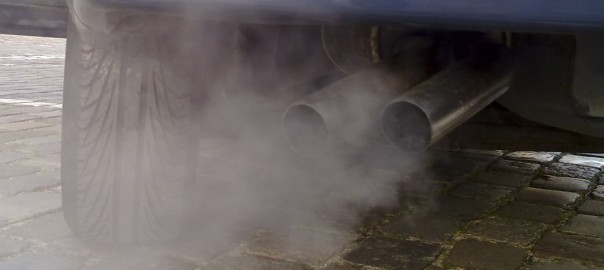
Car exhaust pollution (Image: Wikipedia)

Germany Needs Emissions-Free Car Fleet by 2030

All new cars registered in Germany need to be emissions free by 2030 at the latest to help meet pollution reduction goals, a senior government official said.

Car exhaust pollution (Image: Wikipedia)

Germany’s pledge to cut carbon dioxide output by 80 percent to 95 percent by 2050 will be in jeopardy unless the country radically reduces transportation pollution, said Deputy Economy Minister Rainer Baake. Since cars typically have a 20-year lifespan, registrations of new diesel and gasoline cars needs to be cut over the next 15 years, he said.

“Fact is there’s been no reduction at all in CO2 emissions by transport since 1990,” said Baake at a Tagesspiegel newspaper climate forum in Berlin. “We don’t have any answers to cut truck emissions right now but we do have answers for cars.”

Germany is lagging behind cuts to greenhouse gas that transportation emits, which according to the Environment Ministry account for a fifth of the country’s carbon dioxide pollution. The sector needs to cut some 10 million metric tons of carbon dioxide over the next 5 years from a tally of about 165 million tons last year. While the country has committed to reducing emissions 40 percent by 2020 compared with 1990 levels, its adoption of electric cars has been sluggish.

Chancellor Angela Merkel’s government pledged subsidies this year to speed e-car sales, a move that was accelerated by Volkswagen AG’s emission-manipulation scandal. Buyers of all-electric and hybrid vehicles can claim cash incentives, moves already in operation in countries including China, Norway and France. The program may spark sales of about 500,000 electric cars by 2020, according to the Environment Ministry.

Read more: Bloomberg

Why The World Now Seems To Hate Diesels

With soaring pollution levels, the mayor of Paris wants diesel cars out of the French capital by 2020, and other cities could well follow

Pollution in Paris
Pollution in Paris

Not so long ago, it seemed as though everyone thought diesel cars were the saviours of the motoring world. They tend to be much more efficient than the equivalent petrol, with much better fuel economy and CO2 figures. With this in mind, governments across the world have incentivised the running of oil-burning cars, particularly France, where the fuel is significantly cheaper than unleaded, and 80 per cent of cars run on the ‘devil’s fuel’.

However, it turns out the French government has properly shot itself in the foot over this, as they – and others – are now realising there’s a little more to being eco friendly than just focusing on reducing CO2 emissions. The issue with diesels is they puff out all sorts of nasty things from their tail pipes, including nitrogen oxides (NO2) and particulate matter, and the modern crop of oil-burning vehicles simply haven’t cleaned up their act enough.

They’re still letting out far more NO2 – which can cause respiratory issues plus heart and lung disease – than petrol cars, and the filters designed to catch the particulate matter can cause running issues, leading to many owners removing them altogether. As a consequence of the former, numerous European cities experienced levels of NO2 far beyond the limit set by the European Union.

Mayor of Paris (a city no stranger to drastic emissions-cutting measures) Anne Hidalgo has extreme plans to clean up the French capital’s air quality, saying recently

“I want diesel cars out of Paris by 2020.”

For a country with so many diesels on the road, that’s a rather big deal.

It’s not just Paris, either. London Mayor Boris Johnson plans to raise the congestion charge for diesel vehicles from £10 to £20. Drivers of petrol cars built before 2006 will also bit hit by the higher charges. Some campaigners think that as in Paris, an eventual outright ban for diesels is on the cards in the British capital.

The tide seems to be turning against diesel cars, so unless manufactures can find ways to drastically curb the contents of their exhaust pipes, the future for motors powered by the stuff from the black pump looks decidedly dicey.

Source: Car Throttle

The Bramble Cay melomys has become extinct, Australian scientists say (Image: Queensland government)

Revealed: first mammal species wiped out by human-induced climate change

Exclusive: scientists find no trace of the Bramble Cay melomys, a small rodent that was the only mammal endemic to Great Barrier Reef

Human-caused climate change appears to have driven the Great Barrier Reef’s only endemic mammal species into the history books, with the Bramble Cay melomys, a small rodent that lives on a tiny island in the eastern Torres Strait, being completely wiped-out from its only known location.

It is also the first recorded extinction of a mammal anywhere in the world thought to be primarily due to human-caused climate change.

An expert says this extinction is likely just the tip of the iceberg, with climate change exerting increasing pressures on species everywhere.

Read more: The Guardian

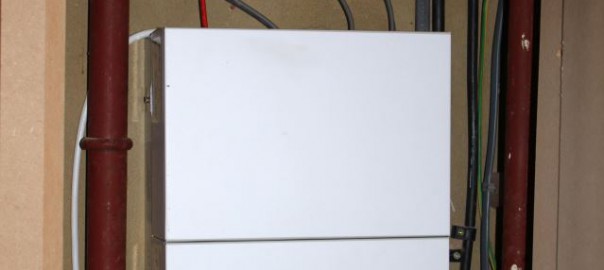
Maslow Energy Storage System (Image: MoixaTechnology.com)

Moixa’s Brief-case Sized Smart Batteries in Big-6 Utility Pilots

Moixa Technology, the UK leader in residential energy storage, today announced with ScottishPower, a ground-breaking pilot of Moixa’s smart battery Maslow product in customer homes, helping them to save money and use more of the energy they generate

Maslow Energy Storage System (Image: MoixaTechnology.com)

London, 8 June 2016: Moixa Technology, the UK leader in residential energy storage, today announced with ScottishPower, a ground-breaking pilot of Moixa’s smart battery Maslow product in customer homes, helping them to save money and use more of the energy they generate. It also demonstrates how storage technology could address the challenges facing the UK’s overstretched grid.

In pilots with major energy industry partners such as ScottishPower, British Gas, SSE PD, Good Energy, the government (DECC) and direct customer sales, Moixa has deployed 1MWh of its British-manufactured Maslow smart battery system, deployed across 500 sites, combined with solar panels. These smart batteries can be aggregated to provide a range of services and income, using the patented GridShare battery software platform.

Smart batteries mean a revolution for utilities. They are home storage units that enable customers to save money through accessing smart tariffs, store excess solar energy for use during peak hours or share batteries with the grid for a range of network saving benefits.

Moixa has deployed 47 Maslow energy storage systems for ScottishPower in partnership with BillSaveUK. Its GridShare software dashboard enables ScottishPower householders to view energy, battery and solar use in real time on a smartphone or iPad and identify improvement opportunities. This can lead in some cases to over 20% reduction in energy costs.

Neil Clitheroe, CEO Retail and Generation at ScottishPower, said:

“Electricity is the only commodity that we can’t store at scale. We need to develop more large-scale storage projects, like pumped-storage hydro schemes, but also smaller in-home storage ideas, like Moixa’s smart battery concept. As one of the UK’s leading renewable energy companies, we plan to take a leadership role in the development of electricity storage. Our work with Moixa and BillSaveUK will allow us to understand how customers interact with electricity storage at home, and how systems like this can be tailored to offer real benefits for customers.”

Read more: Alt Energy Mag

Start-up Orison is an at-home battery system that comes in form of a plug-in unit that looks like a lamp (Image: Orison)

These 9 battery companies will help you save tons of money on your energy bill

Your monthly energy bills can get quite expensive, especially during the summer. You need lots of energy to stay cool and power your electronics, but buying your energy from an outside company isn’t always the most efficient or cost-effective.

Start-up Orison is an at-home battery system that comes in form of a plug-in unit that looks like a lamp (Image: Orison)

That’s where at-home batteries come in.

Combined with advancements in solar technology, these large batteries have the potential to provide a whole new way to store and control the energy used in your home.

It’s for that reason that an increasing number of companies are working on at-home batteries to change the modern home into a sustainable vision for the future.

Here’s 9 at-home battery makers on the market today.

We would be remiss to make a list of at-home battery makers and not include Tesla toward the top. The $3,000 Powerwall can store solar energy and provide backup power for your home.

Read more: Business Insider

The sun sets on drilling (Image: Pexels)

World’s Fourth-Biggest Oil Company Vows to Go Big on Green Power

To help fight climate change, France’s Total commits to leaving some fossil fuels in the ground.

The sun sets on drilling (Image: Pexels)

One of the world’s biggest oil companies is factoring global goals for combating climate change into its multi-decade business plan.

French oil giant Total acknowledged in a report released Tuesday that “a part of the world’s fossil fuel resources cannot be developed” if nations are to fulfill the Paris climate accord agreement to hold global temperature increases to 3.6 degrees Fahrenheit.

The company stood by a 2015 decision to reduce investments in oil production from Canadian tar sands, adding that it confirmed at that time “that we do not conduct oil exploration or production operations in the Arctic ice pack.” Total first announced its position on Arctic drilling in 2012, according to Reuters.

Total’s leaders are “trying to link their strategies and investments to climate decisions,” said Alexander Shestakov, the director of the World Wildlife Fund’s global Arctic program.

“That’s a positive sign coming from one of the world’s oil majors.”

Read more: Take Part

(Image: Y. Yin/Greeenpeace)

The Tesla dream: Sustainable Transport

How much will electric vehicles slow carbon emissions?

(Image: Y. Yin/Greeenpeace)

Each passing month breaks modern temperature records, citizens perish in 51°C heat in India, unseasonal fires rage in the Canadian tar sands, methane escapes from arctic permafrost, Earth approaches the +1.5°C Paris Accord “goal,” and hoping to stop at +2°C appears increasingly naive.

As we observe these trends, we feel an urgent desire for solutions to global warming unleashed by human CO2 emissions. Automobile companies have finally adopted the electric vehicle (EV), led by Tesla Motors and founder Elon Musk, cult hero for technology-inspired optimism.

As serious ecologists, we may reasonably ask: Will EVs slow carbon emissions, and by how much? A genuine answer requires rigorous investigation, calculation and analysis. The general public may be forgiven for avoiding any such analysis, but as ecologists, we are obliged to know what we’re talking about. Good scientists observe the principle to “beware congenial conclusions.”

As we investigate this analysis, we will find that genuine solutions exist, although they may not be the easy solutions we hope for.

Source: Greenpeace

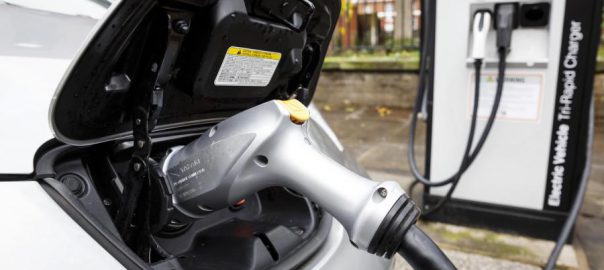
Charging at a rapid charger (Image: Go Ultra Low)

Norway considers ban on petrol and diesel cars by 2025

The four main political parties in Norway are debating a ban on fuel-powered cars; we look at how other countries are tackling harmful car emissions

Charging at a rapid charger (Image: Go Ultra Low)

Norway is considering a ban on petrol and diesel cars by 2025 with the four primary political parties debating the action, according to Norwegian newspaper Dagens Næringsliv.

The new law has not officially been passed, but it has been put forward in a white paper, which calls for new private cars, buses and light commercial vehicles to be zero-emission after 2025.

Electric car sales account for around 24% of Norway’s new car market, making it one of the leading countries for electric car sales, but it’s also one of the world’s largest oil exporters.

The Dutch Labour party PvdA is also pressing for a ban on petrol and diesel cars in the Netherlands from 2025.

European leaders have been talking about such a ban for many years – insiders have suggested Paris will be the first city to implement a zero-emissions-vehicle-only zone within its boundaries – but if they were to be introduced, the Norwegian and Dutch policies would be the first complete ban on combustion-engined vehicles.

Read more: Autocar

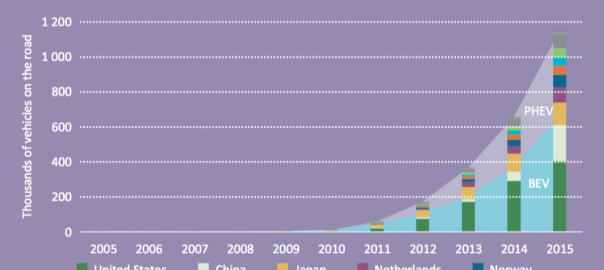
Global Electric Car Stock: PHEV stands for plug-in hybrid vehicles, and BEV stands for battery electric vehicles (Image:: IEA)

IEA: There are now more than one million electric cars on the world’s roads

In 2015, the number of electric cars on the road globally passed the one million threshold for the first time.

Global Electric Car Stock: PHEV stands for plug-in hybrid vehicles, and BEV stands for battery electric vehicles (Image:: IEA)

The rapid growth of the industry means that it is now the only technology sector on track to meet the International Energy Agency’s (IEA) 2C scenario.

This is the conclusion of the IEA’s Energy Technology Perspectives 2016 report, which it released on Wednesday. This is the latest edition of their annual progress review of the technologies that will determine the rate of global emissions, including renewables, nuclear, CCS and coal.

Last year’s report, covered by Carbon Brief, painted a bleak picture. It deemed that none of the 19 technologies it tracks had made the necessary progress to limit global temperature rise to below 2C. It said that five technologies were off track, while the remaining 14 were failing to improve fast enough.

One year on, its assessment is equally bleak. The number of technologies off track has risen to six, while 11 are failing to improve fast enough. Only electric vehicles have made to jump towards actually being on track to meet the 2C goal modelled by the IEA.

Read more: Carbon Brief

The installation comes as Nissan celebrates 30 years of manufacturing in the UK

Nissan switches on solar farm to power UK car production

Nissan has switched on a new solar farm at its plant in Sunderland, its biggest manufacturing site in Europe, and the latest landmark in the company’s journey towards Intelligent Mobility.

The installation comes as Nissan celebrates 30 years of manufacturing in the UK

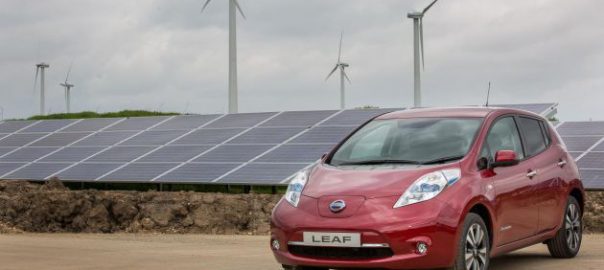
Made of up 19,000 photo-voltaic panels, the new 4.75 MW facility is now fully operational at the Sunderland Plant, as Nissan strives towards its twin goals of zero emissions and zero fatalities.

The solar farm has been installed alongside 10 wind turbines already generating clean power for the manufacturing facility in the North East, the European centre of production for the all-electric Nissan LEAF and its batteries.

Colin Lawther, Nissan’s Senior Vice President for Manufacturing, Purchasing and Supply Chain Management in Europe, said:

“Renewable energy is fundamental to Nissan’s vision for Intelligent Mobility.

“We have built over 50,000 Nissan LEAFs in Europe, and the industry-leading new 250 km-range LEAF is now available. With 10 wind turbines already generating energy for our Sunderland plant, this new solar farm will further reduce the environmental impact of Nissan vehicles during their entire lifecycle.”

Nissan began integrating renewable energy sources in Sunderland in 2005 when the company installed its first wind turbines on site. These 10 wind turbines contribute 6.6 MW power, with the 4.75 MW solar farm bringing the total output of renewables to 11.35 MW in Sunderland. This equates to 7% of the plant’s electricity requirements, enough to build the equivalent of 31,374 vehicles.

The solar farm has been developed and installed within the loop of Nissan’s vehicle test track in Sunderland by partner company European Energy Photovoltaics, with 100% of the electricity generated to be used by Nissan.

Its installation comes as Nissan celebrates its 30th anniversary of manufacturing in the UK, having become the biggest UK car plant of all time and now supporting nearly 40,000 jobs in Britain in vehicle design, engineering, production, parts distribution, sales and marketing, dealer network and supply chain.

Pursuing a goal of zero emission vehicles and zero fatalities on the road, Nissan’s Intelligent Mobility vision is designed to guide Nissan’s product and technology pipeline, anchoring critical company decisions around how cars are powered, how cars are driven, and how cars integrate into society.

Other Nissan initiatives recently announced concerning electric vehicles and next generation battery technology include: a future generation of electric vehicle batteries for the UK battery plant; a major vehicle-to-grid trial in the UK that will see Nissan EVs supplying the UK’s National Grid; and a revolutionary new residential energy storage system called xStorage.

Source: Next Green Car