Category Archives: Energy and Climate Change

News and articles on climate change, vehicle pollution, and renewable energy.

The mayor of London announced his proposals at Great Ormond Street Hospital where he visited children who are being treated for respiratory problems exacerbated by poor air quality (Image: S. Rousseau/PA)

Diesel car drivers hit with new ‘toxic’ fee

Drivers of diesel cars face the world’s toughest air pollution penalties under plans for London that could be extended to other cities.

The mayor of London announced his proposals at Great Ormond Street Hospital where he visited children who are being treated for respiratory problems exacerbated by poor air quality (Image: S. Rousseau/PA)

A £10 daily “toxicity charge” will be imposed next year on petrol and diesel cars and vans made before 2005 entering central London. This will be added to the £11.50 congestion charge, Sadiq Khan, the mayor of London, said.

By the end of the decade the fee will be extended to pre-2015 diesel cars and the charging zone will become ten times bigger, affecting 210,000 drivers a day, according to projections by the mayor’s office.

Mr Khan said that he was planning the

“toughest emission standards of any major city in the world”

to help reduce the 9,500 premature deaths a year that are linked to air pollution in the capital.

The government pledged last year to penalise older taxis, buses and lorries in new “clean-air zones” in Birmingham, Leeds, Southampton, Nottingham and Derby. At the time ministers said that cars would be exempt from restrictions, but the environment group Client-Earth is bringing a High Court challenge calling for the government to take tougher action.

Under Mr Khan’s plans the ultra-low emission zone will be expanded from central London to the North and South Circular roads. The charge will be in place at all times. Thousands more roadside cameras will be installed to catch and fine drivers who fail to pay.

The scheme will penalise thousands of drivers who bought a diesel car believing that it produced fewer emissions. Mr Khan said that older diesel cars produced up to 20 times as much air pollution per mile as petrol cars. The mayor urged the government to work with him to launch a national scrappage scheme under which a driver trading in a highly polluting vehicle could receive a discount on a cleaner car.

Read more: The Times

Tesla showroom in Milton Keynes (Image: T. Larkum)

Tesla and SolarCity? Yes, it makes sense.

The combined company will be perfectly suited to markets that barely exist yet

Tesla showroom in Milton Keynes (Image: T. Larkum)

Elon Musk announced last week that he wants Tesla, his electric-car company, to acquire SolarCity, the rooftop-solar company he helped found and now serves as chairman. The result would be a single “end to end” energy behemoth.

“As a combined automotive and power storage and power generation company,” Musk said, “the potential is there for Tesla to be a $1 trillion company.”

Reaction was, by and large, skeptical. (Tesla stock dropped 10 percent the following day.) Over at Stratechery, Ben Thompson says Tesla already faces “very long odds of achieving its plans.” Adding SolarCity’s negative $2.6 billion cash flow to Tesla’s already negative $1.5 billion is no help to Tesla, though it might save SolarCity. Thompson thinks Musk wants it because he’s “highly exposed to SolarCity’s plummeting stock.” Otherwise it makes no sense, he says, because Tesla and Solar City have “zero business synergies.”

Analysts at research firm UBS, in a pair of briefs, echo that critique, arguing that there’s little these businesses offer one another that they couldn’t get from some kind of cross-marketing agreement.

I’m not qualified to comment on the near-term business merits of the deal. It may well prove to be a disaster. But I think Thompson and other critics are underestimating the synergies. They are limited now, but they will grow over time. (Over at Greentech Media, Julia Pyper also has good piece on this.)

How fast will the synergies grow? That depends on factors largely outside either company’s control.

That’s the big risk of this deal: Even assuming the merged company could get past its short-term challenges, its long-term fate rests on policy and regulatory decisions it can’t predict or determine. It’s a merger based on hope.

Synergy depends on future markets

The kinds of markets in which electric cars, home batteries, and solar panels could fully, uh, synergize do not currently exist in most places. They are precluded by the way the US structures its electric utility sector, as a patchwork of monopolies and quasi-monopolies.

Read more: Vox

Hurricane Sandy flooded huge parts of Lower Manhattan and downtown Brooklyn (Image: J. Countess/Redux)

Can New York Be Saved in the Era of Global Warming?

The future of America’s greatest city is at risk

Hurricane Sandy flooded huge parts of Lower Manhattan and downtown Brooklyn (Image: J. Countess/Redux)

It’s a bright spring day in New York, with sunlight dancing on the East River and robins singing Broadway tunes. I’m walking along the sea wall on the Lower East Side of Manhattan with Daniel Zarrilli, 41, the head of New York’s Office of Resilience and Recovery – basically Mayor Bill de Blasio’s point man for preparing the city for the coming decades of storms and sea-level rise. Zarrilli is dressed in his usual City Hall attire: white shirt and tie, polished black shoes. He has short-cropped gray hair, dark eyes and an edgy I’ve-got-a-job-to-do manner.

Zarrilli may be the only person in the world who holds in his head the full catastrophe of what rising seas and increasingly violent storms mean to the greatest city in America. Not surprisingly, instead of musing about the beautiful weather, he points to the East River, where the water is innocently bouncing off the sea wall about six feet below us.

“During Sandy,” he says, darkly, “the storm surge was about nine feet above high tide. You and I would be standing in about four feet of water right now.”

As Zarrilli knows better than anyone, Hurricane Sandy, which hit New York in October 2012, flooding more than 88,000 buildings in the city and killing 44 people, was a transformative event. It did not just reveal how vulnerable New York is to a powerful storm, but it also gave a preview of what the city faces over the next century, when sea levels are projected to rise five, six, seven feet or more, causing Sandy-like flooding (or much worse) to occur with increasing frequency.

“The problem for New York is, climate science is getting better and better, and storm intensity and sea-level-rise projections are getting more and more alarming,”

says Chris Ward, the former executive director of the Port Authority of New York and New Jersey, the agency in charge of airports, tunnels and other transportation infrastructure.

“It fundamentally calls into question New York’s existence. The water is coming, and the long-term implications are gigantic.”

Read more: Rolling Stone

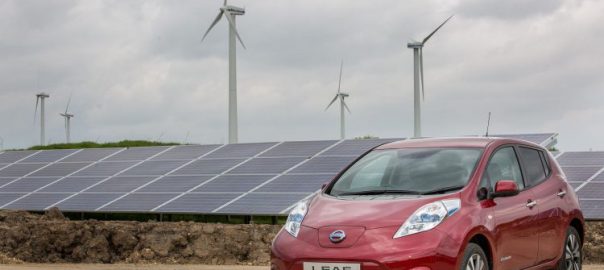
Nissan switches on solar farm to power UK car production (including LEAF)

Nissan Switches On Solar Farm To Power UK Car Production

Nissan expanded its renewable electricity generation in the company’s Sunderland Plant.

Nissan switches on solar farm to power UK car production (including LEAF)

The latest additions adds a 4.75 MW solar array, with some 19,000 solar panels – which is on top of the 6.6 MW in place from 10 wind turbines, displacing some 7% of electricity usage.

Nissan states that a total 11.35 MW of power will supply enough electricity to build over 31,000 cars a year.

Nissan Sunderland Plant is currently the largest car manufacturing facility in the UK.

Recently, the Japanese auto maker passed 50,000 LEAFs (and batteries) produced locally at the facility. In the near future, Sunderland has also been confirmed to produce also generation batteries (it does not build the current 30 kWh packs in the 2016 model).

“Nissan has switched on a new solar farm at its biggest manufacturing site in Europe, the latest landmark in the company’s journey towards Intelligent Mobility.

Made of up 19,000 photo-voltaic panels, the new 4.75MW facility is now fully operational at Nissan Sunderland Plant, as Nissan strives towards its twin goals of zero emissions and zero fatalities.

The solar farm has been installed alongside 10 wind turbines already generating clean power for Nissan in Sunderland, the European centre of production for the all-electric Nissan LEAF and its batteries.”

“Nissan began integrating renewable energy sources in Sunderland in 2005 when the company installed its first wind turbines on site. These 10 wind turbines contribute 6.6MW power, with the 4.75MW solar farm bringing the total output of renewables to 11.35MW in Sunderland. This equates to 7% of the plant’s electricity requirements, enough to build the equivalent of 31,374 vehicles.

The solar farm has been developed and installed within the loop of Nissan’s vehicle test track in Sunderland by partner company European Energy Photovoltaics, with 100% of the electricity generated to be used by Nissan.

Its installation comes as Nissan celebrates its 30th anniversary of manufacturing in the UK, having become the biggest UK car plant of all time and now supporting nearly 40,000 jobs in Britain in vehicle design, engineering, production, parts distribution, sales and marketing, dealer network and supply chain.”

Colin Lawther, Nissan’s Senior Vice President for Manufacturing, Purchasing and Supply Chain Management in Europe, said

“Renewable energy is fundamental to Nissan’s vision for Intelligent Mobility.”

“We have built over 50,000 Nissan LEAFs in Europe, and the industry-leading new 250km-range LEAF is now available. With 10 wind turbines already generating energy for our Sunderland plant, this new solar farm will further reduce the environmental impact of Nissan vehicles during their entire lifecycle.”

Source: Inside EVs

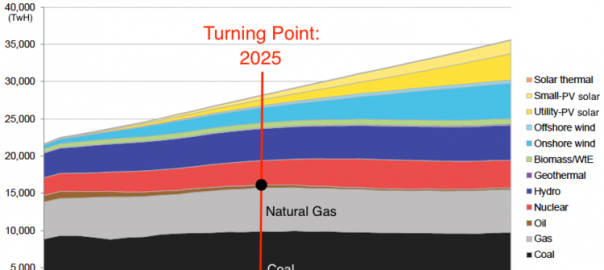
(Image: Bloomberg New Energy Finance)

The World Nears Peak Fossil Fuels for Electricity

Coal and gas will begin their terminal decline in less than a decade, according to a new BNEF analysis.

The way we get electricity is about to change dramatically, as the era of ever-expanding demand for fossil fuels comes to an end—in less than a decade. That’s according to a new forecast by Bloomberg New Energy Finance that plots out global power markets for the next 25 years.

Call it peak fossil fuels, a turnabout that’s happening not because we’re running out of coal and gas, but because we’re finding cheaper alternatives. Demand is peaking ahead of schedule because electric cars and affordable battery storage for renewable power are arriving faster than expected, as are changes in China’s energy mix.

(Image: Bloomberg New Energy Finance)

Here are eight massive shifts coming soon to power markets.

1. There Will Be No Golden Age of Gas

Since 2008, the single most important force in U.S. power markets has been the abundance of cheap natural gas brought about by fracking. Cheap gas has ravaged the U.S. coal industry and inspired talk of a “bridge fuel” that moves the world from coal to renewable energy. It doesn’t look like that’s going to happen.

The costs of wind and solar power are falling too quickly for gas ever to dominate on a global scale, according to BNEF. The analysts reduced their long-term forecasts for coal and natural gas prices by a third for this year’s report, but even rock-bottom prices won’t be enough to derail a rapid global transition toward renewable energy.

“You can’t fight the future,” said Seb Henbest, the report’s lead author. “The economics are increasingly locked in.”

The peak year for coal, gas, and oil: 2025.

Read more: Bloomberg

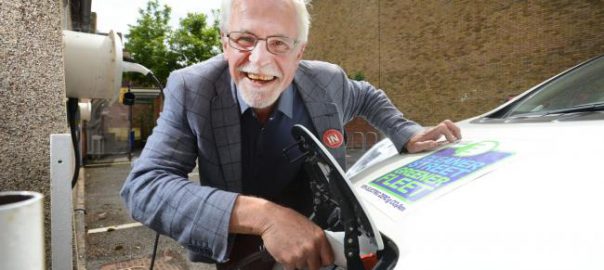
Oxford city councillor John Tanner plugging a charger into one of the council's own vehicles

Council aiming to turbo-charge electric car use in Oxford

AN ATTEMPT to jump-start Oxford’s slow uptake of electric vehicles is now in motion, with up to 30 new charging points arriving in the next 12 months.

Oxford city councillor John Tanner plugging a charger into one of the council's own vehicles
Oxford city councillor John Tanner plugging a charger into one of the council’s own vehicles

People and businesses across the city are being called on to help develop the plan and find suitable places for the trial stations, which will be bought in the summer.

In April this year Oxford City Council received an £800,000 grant to add an extra 100 charging stations to the city – where only 85 people currently drive electric cars.

John Tanner, the council’s board member for climate change, said:

“What we have at the moment is the early adopters, the enthusiasts.

“But with more plug-in points around the city, I think more people are going to take the plunge and buy electric vehicles.”

There are currently 13 on-street charging stations around Oxford, of which three, Summertown Car Park, Cowley Road and Worcester Street Car Park, have reported faults.

It is hoped the 100 new devices will begin to be rolled out in 2018, making make electric vehicle ownership possible for 16,000 extra homes.

Read more: This is Oxfordshire

The Pain You Feel is Capitalism Dying

1-pPDKvJZiZH5uEz3QTkSSUg_hang_head_unk

It can be very confusing to know that you won’t find a decent job, pay off student loans or put in a down payment on a house in the next few years — even though you may have graduated from a top-tier university or secured glowing references from all those unpaid internships that got you to where you are today.

Even if you are lucky enough to have all of this going for you, you’ll still be one among hundreds of applicants for every job you apply for. And you’ll still watch as the world becomes more unequal, with fewer paid opportunities to do what you feel called to do in your work or for your life path.

What’s more, you won’t find much help from your friends because most (if not all) of them are going through the same thing. This is a painful and difficult time that is impacting all of us at once.

There will be people who tell you it’s your fault. That you aren’t trying hard enough. But those people are culprits in perpetuating a great lie of this period in history. The standard assumptions for how to be successful in life a few decades ago simply do not apply anymore. The guilt and shame you feel is the mental disease of late-stage capitalism. Embrace this truth and set yourself free.

To see how broken things have become you’ll have to think systemically. Take note of the systems built up to create this situation and understand how it came to be — so you’ll see why it cannot possibly continue on its current path.

First, a diagnosis of the problem:

A Global Architecture of Wealth Extraction has been systematically built up to rig the economic game against you. This is why a tiny number of people (current count is 62) have more wealth amongst them than half the human population.

Read more: Medium

Why Billions in Proven Shale Oil Reserves Suddenly Became Unproven

  • U.S. companies erased more than 20 percent of inventories
  • Regulator examined estimates as wells lingered on books

Ultra Petroleum Corp. was a shale success story. A former penny stock that made the big leagues, it was worth almost $15 billion at its 2012 peak.

Oilwell_CROPPEDPD_20160509105710476_MT

Then came the bust. Almost half of Ultra’s reserves were erased from its books this year. The company filed for bankruptcy on April 29 owing $3.9 billion.

Ultra’s rise and fall isn’t unique. Proven reserves — gas and oil resources that are among the best measures of a company’s ability to reward its shareholders and repay its debts — are disappearing across the shale patch. This year, 59 U.S. oil and gas companies deleted the equivalent of 9.2 billion barrels, more than 20 percent of their inventories, according to data compiled by Bloomberg. It’s by far the largest amount since 2009, when the Securities and Exchange Commission tweaked a rule to make it easier for producers to claim wells that wouldn’t be drilled for years.

Wider Effort

The SEC routinely questions companies about their reserves. Now, agency investigators are also on the hunt for inflated reserves estimates, according to a person familiar with the matter.

“Reserves make up a large share of the value of these companies, so it really matters,” said David Woodcock, a partner at Jones Day in Dallas who served as the SEC regional director in Fort Worth, Texas, from 2011 to 2015.

“They’re looking even more closely at how companies are booking reserves, how they’re evaluating the quality of those reserves and what their intentions really are. They’re not accepting pat answers.”

Drillers face pressure to keep reserves growing. For many, the size of their credit line is tied to the measure. Investors want to see that a company can replace the oil and gas that’s been pumped from the ground and sold.

Read more: Bloomberg