Category Archives: Oil

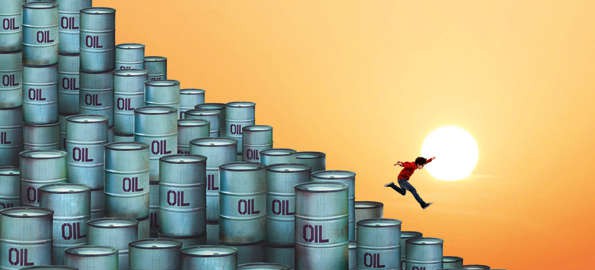
Oil and gas firms will be fossils by 2025

Technological development will transform the global marketplace over the next decade, with the oil and gas sector set to be the most negatively affected, according to Neptune Investment Management’s chief investment officer and economist James Dowey.

AAEAAQ_Oil_RollerCoaster_LinkedIn

Speaking at a press event, Dowey argued that the pace of technological change is likely to speed up over the next decade, with the development and adoption of new technology likely to drive returns in financial markets far more than traditional macro-economic factors.

‘Over the next 10 years macro-economic issues such as the growth of China are going to be far less important. Rather, technological innovation and change is going to drive markets, and many established businesses will have their current models ripped apart,’ says Dowey.

TECHNOLOGICAL CHANGE

Pointing to the pace of technological change since the 1970s, Neptune’s newly appointed CIO says that markets continue to underestimate the transformative power of technology despite the exponential growth of firms such as Google over the past five to 10 years.

In particular, he argues that the oil and gas industry could be entirely wiped out by 2025, with consumers and industry far more likely to be generating their own solar energy in a decade.

‘The potential disruption to the energy sector is the most profound. I am not at all clear that we will still be digging oil out of the ground in 10 years’ time. Household energy consumption will be radically different, with most generating their own solar energy at home,’ says Dowey.

Read more: Money Observer

Obama Rejects Construction of Keystone XL Oil Pipeline for Climate Change

WASHINGTON — President Obama announced on Friday that he had rejected the request from a Canadian company to build the Keystone XL oil pipeline, ending a seven-year review that had become a symbol of the debate over his climate policies.

untitled_oil_pipeline_unk

Mr. Obama’s denial of the proposed 1,179-mile pipeline, which would have carried 800,000 barrels a day of carbon-heavy petroleum from the Canadian oil sands to the Gulf Coast, comes as he seeks to build an ambitious legacy on climate change.

“America is now a global leader when it comes to taking serious action to fight climate change,” Mr. Obama said in remarks from the White House. “And, frankly, approving this project would have undercut that global leadership.”

Read more: NY Times

(Image: D. Bacon/Shutterstock/Economist)

Full Extent of Oil Industry Suffering Revealed Soon

Get ready for some bad news and red ink.

(Image: D. Bacon/Shutterstock/Economist)
Oil Mountain (Image: D. Bacon/Shutterstock/Economist)

With the bulk of quarterly earnings reports in the energy industry yet to be announced, there are already $6.5 billion worth of asset write-downs, according to Bloomberg. And that could be just the tip of the iceberg. A Barclays’ assessment last week predicted $20 billion in impairment charges from just six companies.

Write-downs occur when the expected future cash flow from an asset falls sufficiently that a company has to report that the asset has lost some of its value. With oil prices half of what they were from mid-2014, oil and gas fields around the world are no longer worth what they used to be. Some oil fields that were previously expected to produce in the future may no longer even make sense to develop given current oil prices. As a result, investors should expect billions of dollars in further write-downs in the coming weeks.

Persistently low oil prices are putting a lot of pressure on the dividend policies of oil and gas producers. The Wall Street Journal reported that four oil majors – BP, Royal Dutch Shell, ExxonMobil, and Chevron – have a combined cash flow deficit of $20 billion for the first half of 2015. In other words, these big players are not earning enough revenues to cover expenditures, share buybacks, and dividends. With such a large cash flow deficit, something has to give. All four are focusing on slashing spending in order to preserve their promises to shareholders, with dividends especially seen as untouchable.

Read more: Oil Price

Exxon’s climate lie: ‘No corporation has ever done anything this big or bad’

The truth of Exxon’s complicity in global warming must to be told – how they knew about climate change decades ago but chose to help kill our planet

I’m well aware that with Paris looming it’s time to be hopeful, and I’m willing to try. Even amid the record heat and flooding of the present, there are good signs for the future in the rising climate movement and the falling cost of solar.

But before we get to past and present there’s some past to be reckoned with, and before we get to hope there’s some deep, blood-red anger.

In the last three weeks, two separate teams of journalists — the Pulitzer-prize winning reporters at the website Inside Climate News and another crew composed of Los Angeles Times veterans and up-and-comers at the Columbia Journalism School — have begun publishing the results of a pair of independent investigations into ExxonMobil.

Though they draw on completely different archives, leaked documents, and interviews with ex-employees, they reach the same damning conclusion: Exxon knew all that there was to know about climate change decades ago, and instead of alerting the rest of us denied the science and obstructed the politics of global warming.

Read more: The Guardian

Tipping Points and Civilizational Survival

In mid-August, TomDispatch’s Michael Klare wrote presciently of the oncoming global oil glut, the way it was driving the price of petroleum into the “energy subbasement,” and how such a financial “rout,” if extended over the next couple of years, might lead toward a new (and better) world of energy. As it happens, the first good news of the sort Klare was imagining has since come in. In a country where the price of gas at the pump now averages $2.29 a gallon (and in some places has dropped under $1.90), Big Oil has begun cutting back on its devastating plans to extract every imaginable drop of fossil fuel from the planet and burn it. Oil companies have also been laying off employees by the tens of thousands and deep-sixing, at least for now, plans to search for and exploit tar sands and other “tough oil” deposits worldwide.

2342872_Oil_Well_shutterstock

In that context, as September ended, after a disappointing six weeks of drilling, Royal Dutch Shell cancelled “for the foreseeable future” its search for oil and natural gas in the tempestuous but melting waters of the Alaskan Arctic. This was no small thing and a great victory for an environmental movement that had long fought to put obstacles in the way of Shell’s exploration plans. Green-lighted by the Obama administration to drill in the Chukchi Sea this summer, Shell has over the last nine years sunk more than $7 billion into its Arctic drilling project, so the decision to close up shop was no small thing and offers a tiny ray of hope for what activism can do when reality offers a modest helping hand.

As Klare makes clear today, when it comes to the burning of fossil fuels, reality — if only we bother to notice it — is threatening to offer something more like the back of its hand to us on this embattled planet of ours. He offers a look at a future in which humanity, like various increasingly endangered ecosystems including the Arctic, may be approaching a “tipping point.”

Read more: Tom Dispatch

Oil’s place in the global energy mix is transforming, including in mobility, which uses three-fifths of world oil (Image: Thinkstock/curraheeshutter)

The end of the Oil Age is in sight

Shell’s departure from the Arctic is a very significant event in the global energy picture, writes Energy Post editor-in-chief Karel Beckman. It is another sign that the End of the Oil Age is in sight.

Oil’s place in the global energy mix is transforming, including in mobility, which uses three-fifths of world oil (Image: Thinkstock/curraheeshutter)

After Volkswagen, a second major European company had to face acute embarrassment this week. Shell did not commit fraud, but they sure made a billion-dollar blooper in the Arctic. Yes, taking risks is part of what business is about, and sometimes wells turn up dry, but there is a lot more to the story than that.

Clearly the disappointing results of a single exploratory well (“Burger J”) in a single basin can’t have been sufficient reason for Shell to suddenly give up on its Arctic venture altogether. “For the foreseeable future”, as the company put it, i.e. indefinitely. In fact, the company did give two additional reasons: “the high costs associated with the project, and the challenging and unpredictable federal regulatory environment in offshore Alaska”.

But neither of these can have come as a surprise. Critics have been warning for a long time that the costs of Alaskan drilling are prohibitive, and the “regulatory environment” in this part of the world will inevitably be unpredictable.

Read more: Energy Post

Diesel pumps could run dry, says RAC Foundation

Britain’s diesel pumps could “run dry” because of a growing dependence on foreign fuel, according to the RAC Foundation.

85565100_85565099_diesel_unk

The motoring research group said diesel demand had been rising for decades, but UK refineries were struggling to cope.

There were 11 million diesel cars on the road last year, compared with just 1.6 million in 1994.

The RACF said that, at this rate, diesel would be four times more popular than petrol by 2030.

Yet we consume twice as much diesel as we produce, and that growing reliance on countries including Russia and India to supply the fuel could leave motorists “at the mercy of the global market” in future, the foundation said.

“Even if we are not in conflict with those countries that control the taps, they might simply decide they need more of what they produce for their own markets,” RACF director Steve Gooding told the BBC.

“If supply is interrupted, then at best we’ll see sharp rises in forecourt prices and, at worst, there is the unlikely but real possibility of pumps running dry.”

Read more: BBC

Severe Flooding, Against a Background of Wind Turbines: November 2012, Tyringham, Bucks. (Image: T. Larkum)

The shale bubble is worse than the housing bubble

We are now far advanced into the third central bank generated bubble of the last two decades, but our monetary politburo has taken no notice whatsoever of its self-evident leading wave. Namely, the massive malinvestments and debt mania in the shale patch. Call them monetary bourbons. It is no exaggeration to say that inhabitants of the Eccles Building deserve every single word of Talleyrand’s famous epithet: “They learned nothing and forgot nothing.” To wit, during the last cycle they claimed to be fostering the Great Moderation and permanent full employment prosperity. It didn’t work. When the housing and credit bubble blew-up, it washed out all the phony gains from the Greenspan/Bernanke printing spree. By the time the liquidation was finished in early 2010, there were 2 million fewer payroll jobs than there had been at the turn of the century.

Severe Flooding, Against a Background of Wind Turbines: November 2012, Tyringham, Bucks. (Image: T. Larkum)
Severe Flooding, Against a Background of Wind Turbines (Image: T. Larkum)

Never mind. The Fed simply doubled-down. Instead of expanding its balance sheet by 50%, as happened during the eight years between 2000 and 2008, it went into monetary warp drive, ballooning its made-from-thin-air liabilities by 5X in only six years. Yet even after Friday’s ballyhooed jobs report there were three million fewer full-time breadwinner jobs in November 2014 than there were in the early 2000s.

Source: Lew Rockwell

Fracking changes the economics of oil production

The ‘fracking revolution’ has transformed the economics of oil production globally, with the US becoming a bigger producer than Saudi Arabia and – after decades of dependency on oil imports – even being able to export some of its surplus production.

US shale oil is unusual, too, in being privately owned: most of the world’s oil reserves (over 70 percent) are in state hands. Like the North Sea 30 years ago, in a world dominated by state-owned companies and publicly owned reserves, US shale could look like a new frontier for private operators on the search for fat profits.

New technology, high oil prices, and plentiful cheap credit have encouraged the boom. Some $200bn has been borrowed to invest in fracking in the last few years, accounting for 15 percent of the entire $1.3tr US junk bond market. Investors were, in effect, betting on continuing high oil prices making their investments profitable for years to come.

Price Slump

Last year’s slump in prices trashed that calculation. From a mid-year high of $115 per barrel, by the end of 2014 the price per barrel had fallen by more than 40 percent. More than half of US shale rigs have been laid up since October.

The driver, last year, was the behaviour of OPEC – the Organization of Petroleum Exporting Countries. OPEC is a cartel agreement among major oil producers that seeks to manage the international market for oil. With oil prices already plunging over the summer, OPEC could be expected to ease off on production. Restricting supplies should, thanks to the magic of the market, produce a decent increase in the sale price of oil. Instead, with Saudi Arabia taking the lead, OPEC decided to continue production levels. No agreement on restricting output could be reached. Prices slumped.

The economics of oil production are simple – crude, even. The upfront investment needed to sink a new well is significant. After that point, however, the variable costs – including pay – are a minimal part of the expenditure. That’s the case even when, as in Norway, oil workers’ average annual wages are $179,000.

These high initial costs, relative to lower running costs, mean that once a well is drilled the owner has a huge incentive to keep on drilling – even at very low prices. If they can cover their immediate costs, which are low relative to the initial outlay, they can make a profit in the short run.

But that creates a ratchet effect: once a well is drilled, only a spectacular fall in the price of oil will stop oil from being pumped. The more oil is pumped, however, the lower the price is likely to fall. Each producer, in this scenario, is trapped into producing more and more, driving down the price further and further. This effect has meant the slowdown in US shale output has been far slower than might have been expected, given the dramatic decline in price.

Read more: Desmog

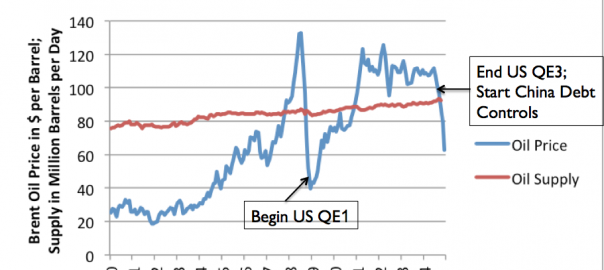
World Oil Supply (production including biofuels, natural gas liquids) and Brent monthly average spot prices, based on EIA data (Image: G. Tverberg/Our Finite World)

Deflationary Collapse Ahead?

Both the stock market and oil prices have been plunging. Is this “just another cycle,” or is it something much worse? I think it is something much worse.

Back in January, I wrote a post called Oil and the Economy: Where are We Headed in 2015-16? In it, I said that persistent very low prices could be a sign that we are reaching limits of a finite world. In fact, the scenario that is playing out matches up with what I expected to happen in my January post. In that post, I said

Needless to say, stagnating wages together with rapidly rising costs of oil production leads to a mismatch between:

  • The amount consumers can afford for oil

  • The cost of oil, if oil price matches the cost of production

This mismatch between rising costs of oil production and stagnating wages is what has been happening. The unaffordability problem can be hidden by a rising amount of debt for a while (since adding cheap debt helps make unaffordable big items seem affordable), but this scheme cannot go on forever.

World Oil Supply (production including biofuels, natural gas liquids) and Brent monthly average spot prices, based on EIA data (Image: G. Tverberg/Our Finite World)

Eventually, even at near zero interest rates, the amount of debt becomes too high, relative to income. Governments become afraid of adding more debt. Young people find student loans so burdensome that they put off buying homes and cars. The economic “pump” that used to result from rising wages and rising debt slows, slowing the growth of the world economy. With slow economic growth comes low demand for commodities that are used to make homes, cars, factories, and other goods. This slow economic growth is what brings the persistent trend toward low commodity prices experienced in recent years.

Read more: Resilience