All posts by Trevor Larkum

No global warming pause according to US scientists

The long talked-about global warming pause or ‘hiatus’ may now be consigned to history

US researchers say new evidence casts doubt on the idea that global warming has “slowed” in recent years.

A US government laboratory says the much talked about “pause” is an illusion caused by inaccurate data.

Updated observations show temperatures did not plateau, say National Oceanographic and Atmospheric Administration (Noaa) scientists.

The warming rate over the past 15 years is “virtually identical” to the last century, they report in Science.

Dr Thomas Karl, of Noaa, who led the new analysis, said:

“We would hope that it would inform the general public that the temperature today really is continuing to warm.”

Read more: BBC

Car exhaust (Image: BBC)

1300 deaths from London’s air

The London Evening Standard continues its campaign on London’s poor air quality

More than 1,300 Londoners have already died prematurely due to toxic air so far this year, campaigners warned today.

The shocking death toll includes over 60 estimated fatalities linked to “killer” pollution in Barnet, Croydon and Bromley, and more than 50 in Ealing, Enfield and Havering.

In Wandsworth, Lambeth, Brent, Bexley, Greenwich, Lewisham, Hillingdon, Redbridge and Waltham Forest it was at least 40.

Shadow environment minister Barry Gardiner said:

“So far this year 1,337 people have already died as result of air pollution yet the mayor’s proposals will not bring this down to safe levels until 2030.

“We need a new national framework of low and ultra-low emissions zones within which London must roll out the electrification of buses and the highest vehicle standards for all new fleet vehicles within four years. We need decisive action now to protect our children not vague promises for 15 years down the line.”

Read more: Standard

The 2C climate goal may die in Paris

More bad news about likely results in the Paris climage conference

The U.N.’s Paris climate conference, designed to reach a plan for curbing global warming, may instead become the graveyard for its defining goal: to stop temperatures rising more than 2 degrees Celsius above pre-industrial levels.

Achieving the 2C (3.6 Fahrenheit) target has been the driving force for climate negotiators and scientists, who say it is the limit beyond which the world will suffer ever worsening floods, droughts, storms and rising seas.

But six months before world leaders convene in Paris, prospects are fading for a deal that would keep average temperatures below the ceiling. Greenhouse gas emissions have reached record highs in recent years.

Two Adelie penguins stand atop a block of melting ice on a rocky shoreline at Cape Denison, Commonwealth Bay, in East Antarctica January 1, 2010.   REUTERS/Pauline Askin
Two Adelie penguins stand atop a block of melting ice on a rocky shoreline at Cape Denison, Commonwealth Bay, in East Antarctica January 1, 2010 (Image: Reuters/P. Askin)

And proposed cuts in carbon emissions from 2020 and promises to deepen them in subsequent reviews – offered by governments wary of the economic cost of shifting from fossil fuels – are unlikely to be enough for the 2C goal.

“Paris will be a funeral without a corpse”

said David Victor, a professor of international relations at the University of California, San Diego, who predicts the 2C goal will slip away despite insistence by many governments that it is still alive.

Read more: Reuters


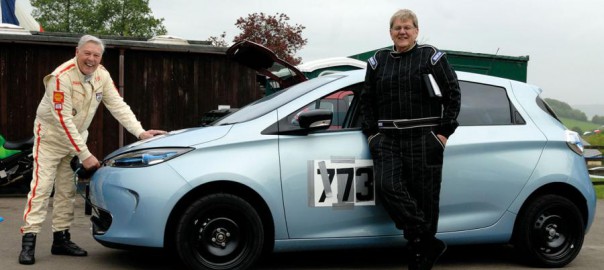
Racing a Renault ZOE

Steve Cropley has fun racing a Renault ZOE, from AutoCar

SUNDAY AM – Can driving be brilliant and terrible at once? It certainly can, and here’s an example. Headed off to Prescott to run an electric Renault Zoe in the annual hillclimb for French marques, La Vie en Bleu.

Plan was to compete on my own for a bit of fun, but some club type decided I should drive with Barrie ‘Whizzo’ Williams, one of the country’s most versatile and experienced racing drivers. If ever there were a recipe for humiliation, this was it.

Renault found a set of super-sticky Yokos, and the car felt instantly quick off the line, especially for something with a 12.3sec 0-60mph time.

Most importantly, it gripped, steered and turned really well, even during a late-morning downpour.

Whizzo was fast, of course, finding time to make ‘hush’ signs to the marshals as he noiselessly sped by. He soon turned 60.29sec, easily beating his previous electric record (in a Zoe). I soldiered on, eventually managing 61.88sec – slow but not entirely beyond the pale.

SUNDAY PM – Prescott is less blokeish than most race tracks, but it was still surprising just how interested people were in our Zoe, especially women.

They liked the styling and the interior but, funnily enough, they also liked the way it zipped uphill, which they felt matched its cheeky persona.

Found myself slipping into sales patter: “People pay £100k for cars with very little noise and vibration – and here’s one with none of either, small enough to park, for £15k.” Might even have sold a couple of the little things.


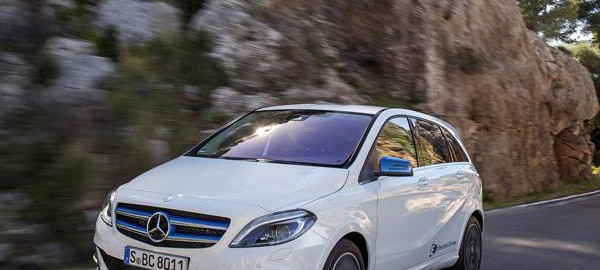
Mercedes B Class Electric (Image: MB)

Mercedes offers home energy storage

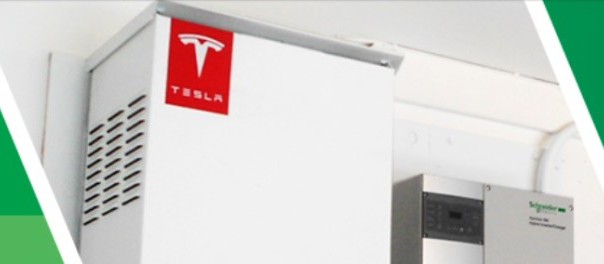
Tesla may be the automaker with the highest profile on energy storage, but they’re not the only ones. Now Mercedes goes public with its plans.

As the newest carmaker on the block, it’s perhaps not surprising that Tesla Motors likes to do things differently. That includes reaching beyond the automotive sector with its recently-announced plans to sell standalone battery packs for home and commercial energy storage. Yet that seems to be an idea the world’s oldest car manufacturer is pursuing as well.

Mercedes-Benz now plans to enter the energy-storage business as well. A division of parent company Daimler has been testing battery packs that can power houses, and plans to launch commercially in September, according to Australia’s Motoring.

Like Tesla, Daimler has tested quietly energy-storage systems for some time.

Read more: Green Car Reports

Powervault Energy Storage System (Image: Powervault.co.uk)

Upcoming storage boom in UK market

It looks like affordable home energy storage could finally be coming available in the UK

Maturing and more affordable storage technology promises to “revolutionise” the UK solar PV market, according to a panel at today’s Solar Finance and Investment Conference.

Ray Noble, consultant to the Renewable Energy Association, said that while some storage technologies were 10 to 20 years away from being realised, technological advancements in lithium ion batteries – driven largely by the automobile sector – had meant that storage batteries for residential installations could be affordable within two or three years.

The timeline fits well with projections conducted by industry analysts, with IHS having previously forecast grid-connected energy storage installations to surpass 6GW in 2017, almost treble the 2GW+ estimate for 2015.

Read more: Solar Power Portal

Tesla/Solar City Energy Storage Solution System Is In The “Pilot Program” Stage Today

Home battery storage taking off in Australia

This article argues that Australia has all the ingredients to be the world’s leading market on battery storage: Lots of solar, high prices, and a consumer base that is independent, cost conscious and distrustful of incumbents. It’s from Renew Economy.

There is no doubt that Australia is going to be at the leading edge of battery storage, that is because of the huge number of solar panels already on household rooftops, the high electricity costs (particularly network charges), and the excellent solar resources.

But there is more than that behind the reason so many global battery storage developers are targeting Australia as their first big market, and a test case to the world. It is also about the unique approach Australians have to their energy supplies, a healthy cynicism about the incumbent utilities, and a yearning for energy independence.

Australia, according to Greg Bourne, the chairman of the Australian Renewable Energy Agency, is about to enter the “iPhone” moment in battery storage.

“It would appear that energy storage has arrived!” Bourne told the Australian Energy Storage conference in Sydney. “Of course it’s been around for quite a time in some form or other but just like 2007 was the iPhone moment; 2015 might be seen as the Tesla moment!”

Read more here.

Turbines tower over corn fields in Iowa (Image: D. Graham)

Technical advances making wind power viable everywhere

An interesting and detailed discussion of the technology behind wind power and how it’s changing

Wind power is often described as relying on “mature technology” and, in many contexts, that’s correct. Today, well-sited wind farms in the US and EU generate electricity at a lower cost than coal.

But numerous difficulties remain with the way we build wind turbines, and these difficulties raise the price of the turbines, which in turn determines where they can profitably go. High turbine costs mean that, unless the wind at a site is quite strong, there are typically better ways to spend money.

Fortunately, while wind is mature technology, it hasn’t reached an evolutionary dead end. Plenty of incremental changes can make wind even more affordable—and in many cases, the necessary technology is already being tested.

Read more: Ars Technica

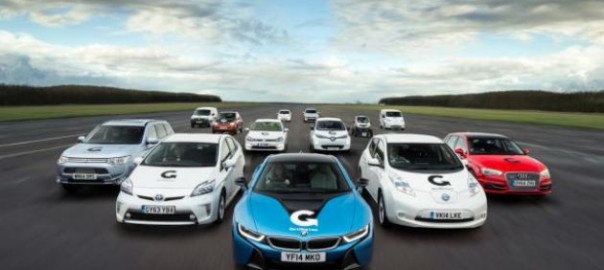
Go Ultra Low members boast 15 ULEVs across a range of segments (Image: OLEV)

Renault Zoe & Mitsubishi Outlander Plug-In Lead The Pack

[From 31 May] Electric vehicle (EV) sales figures for the European market during the month of April 2015 are now in, and things are looking good. The continent had its third best month ever with regard to total EV sales — seeing a 40% growth rate as compared against April 2014.

Altogether, roughly 11,500 electric vehicles — this includes plug-in hybrid electric vehicles (PHEVs) of course — were registered during the month of April in the European market. This means that EVs now make up roughly 1% of the total new vehicle market. Not bad. EVs and PHEVs certainly have come quite some way over the last few years. It’s hard to say for sure, but they certainly do seem to be on the verge of a breakout from niche status — though perhaps those sorts of changes are more a generational thing, and still a few years off?

EV Europe Sales April 2015With regard to April 2015 sales, the Renault Zoe and the Mitsubishi Outlander Plug-In were nearly tied at the top of the units sold list — with 1,728 units sold and 1,700 units sold, respectively. Following quite a ways behind those two was the Volkswagen e-Golf — with 1,022 units sold. In fourth, the Nissan LEAF was still going strong — with 978 units sold. Tesla did pretty well as well, with sales of 856 units during April.

Read more: Clean Technica