All posts by Trevor Larkum

Keeping up with the Joneses with an electric car

Finally electric cars become aspirational!

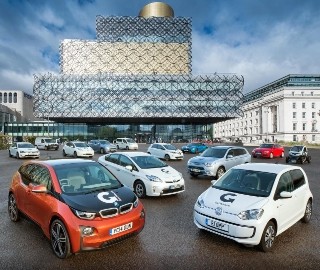
New research released today by Go Ultra Low has found that the majority of car buyers aspire to own high-tech, ultra-low emission electric vehicles to score social points over their neighbours and peers.

According to Go Ultra Low, it is clear that many UK drivers aspire to the cost benefits, style and convenience of electric motoring. The survey found that 67% of the population identified alternatively-fuelled vehicles as a purchase consideration.

Three quarters of motorists said that running costs were the biggest consideration when choosing their next car, making the argument for switching to ultra low emission vehicles even more compelling.

Hetal Shah, Head of Go Ultra Low, said:

“Our research shows that, after purchase price, the top things motorists look for in a new car are affordable running costs, comfort, space and style. The huge variety of electric vehicles now on the market is changing motorists’ concept of desirability.

The majority of consumers surveyed aspiring to the new breed of quiet, refined, technology-packed plug-in vehicles. We’re confident that this year alone we’ll see thousands more motorists up and down Britain plugging-in to this growing trend.”

Wind farm in Europe (Image: EV World)

Renewable Energy reaches the end of the beginning?

A positive view of renewables from an oil publication

In April, 2010, BP took the front page, and held it for months, as it struggled to plug the blowout on the bottom of the Gulf of Mexico that would cough up 3 or 4 million barrels.

The Deepwater Horizon disaster was a bitter reminder of the coming difficulties and risk involved in getting what is left of the world’s oil reserves up and out of places that are a lot harder to get at – deep sea, where pressures are extreme; the arctic, where conditions are even more challenging; tar sands, the poster child for too much carbon; and in thousands of small, disparate patches, where ‘tight oil’ comes from driving water, sand and a few chemicals into fissures miles underground. In the U.S., these wells average around 100 barrels a day (see chart below). Herding cats does not seem a likely way to make the U.S. the swing producer to knock Saudi Arabia off its perch.

Things got harder for explorers as 2014 came to an end, and the price of Brent, the international benchmark, was well on its way to a total 61 percent fall in under 12 months. The question is not so much whether the price of oil will be high enough to get the next trillion barrels out of the ground (roughly the current world rate of consumption for another 30 years); it is whether or not the climate can “afford” to have that happen. Peak oil, whether from insufficient supply or demand, makes for an interesting cocktail party discussion. It has even become a political litmus test. However, it is largely irrelevant. Sheik Yamani’s dictum, that the Stone Age did not end because we ran out of stones, should not be dismissed.

Read more: Oil Price

Driving the Kia Soul electric car for a week

A fair review of the Kia Soul EV from a ‘petrol sniffer‘…

Day one: The Soul EV arrives at my office full, but not completely chock full, of electricity. It’s a pure electric car with no range extender back up and I’ve got a big journey tomorrow so I plug it in. The charging socket is in the middle on the front, rather than where the fuel hole would be on the side. In fact, the normal filler flap has completely disappeared which means they’ve altered the rear wing pressing for this one model, which in turn means they’ve spent some money on it. Putting the electro-umbilical point in the middle makes sense, especially if you’re neurotic about cable stretch.

Later I’m driving home without the stereo on, enjoying the smooth silence of electricalicityness when my brother rings me and his call connects through the Bluetooth. It’s only then I notice the light-up rings around the door speakers pulsing every time he speaks. I’ve seen this on a diesel powered Soul. They do it in time to whatever you’re listening to on the stereo. In a normal Soul, it’s a bit idiotic. In this electric one, it’s idiotic and a waste of precious electricity. Fortunately, you can turn it off.

Day two: The Soul EV has a claimed range of 132 miles. But even after a full charge last night the most it would show was 92. It’s a bit parky. Maybe that’s why. The problem is, today I’ve got to drive to somewhere that’s about 60 miles away. This might sound fine, but experience tells me that the range-o-meter on an electric car can be cheerily optimistic right up until the point you attempt to keep up with normal traffic or go onto a motorway. Then it plummets to the point where you it becomes clear you’re not going to make it and you will run out somewhere in the countryside and be unable to get help and have to live out your days in a forest. So this could go horribly wrong. Except, it doesn’t. The Soul turns out to have the most accurate range predictor I’ve ever seen. As long as you don’t ineptly mash the throttle like Maldonado on a pit entry, it seems to tell the truth. A mile goes by, it clicks off another mile. Sometimes it doesn’t even do that. I make it to where I’m going without range stress and buttockular clenching then plug it in, knowing I’ll get home again just fine. Which is an pleasant surprise.

Goodbye: The Soul EV is going away again. It feels like a very thoroughly developed electric car, usual long distance and charging limitations notwithstanding. It’s not as strenuously normal as the VW e-Golf and not as self-consciously wacky as the Nissan Leaf. It also seems much better at predicting its own range than either. If you’ve got 25 grand to blow on a school run-ish sort of car that lives in town it could be quite handy. I liked it.

Acceleration of electric car sales

Good news about the sales of electric cars (from 11 June)

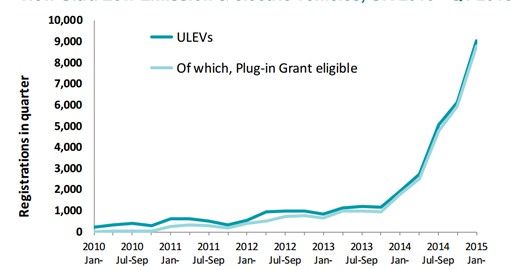
A record 9,000 new ultra low emission vehicles (ULEVs) were registered in the UK in the first quarter of 2015.

The figures, published by the Department of Transport, represent a 366% year-on-year surge.

sales_june_2015_ulev

The department said the increase was driven by more vehicles being eligible for grants, which subsidise up to 35% of the cost of a plug-in car and 20% of the cost of a plug-in van.

The models accounting for the most registrations in the latest quarter were the Mitsubishi Outlander with 4,596 and the Nissan Leaf with 1,705

Transport Minister Andrew Jones said:

“I am delighted to see such a huge rise in the number of people buying ultra low emission vehicles.

“The Go Ultra Low campaign is making low emission vehicles an increasingly popular choice and the government is investing £500 million over the next five years in making them more accessible to families and businesses across the country.

“It’s a great example of Britain leading the way in developing sustainable transport options that are affordable for everyone.”

Around 14,500 ULEV’s were sold in the UK in all of 2014, itself a fourfold increase on 2013.

There are now more than 20 plug-in models available to buy compared with just six in 2011, with each of the 10 best-selling brands in the UK now having a ULEV in its range.

Read more: Edie.net

UK plug-in car sales led by Mitsubishi Outlander

The Outlander PHEV continues its sales success in the market, according to the Daily Record.

Mitsubishi have never been the most fashionable car firm – until now.

Sales are up 133 per cent thanks to their Outlander plug-in SUV becoming an overnight success.

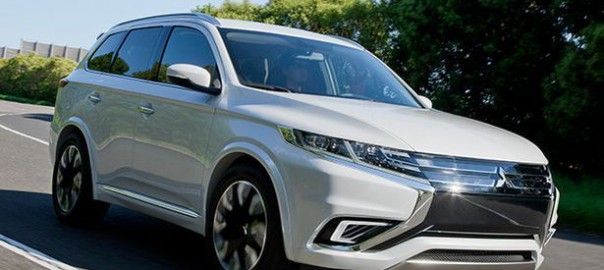
The Outlander became the UK’s favourite plug-in vehicle in March this year, when it overtook the Nissan Leaf’s all time sales. In May 2015 it outsold its nearest competitor by nearly three to one, indicating a strong market preference for the versatility and practicality of hybrid plug-ins over pure battery electric vehicles.

The Outlander PHEV has a range of 32.5 miles in electric mode alone – more than enough to accommodate the average daily commute. The vehicle’s official fuel consumption figure is 148 miles per gallon and it has emissions of just 44g of CO2 per kilometre.

Mitsu’s SUV success has also had an impact on UK electric sales.

Interestingly, 11,842 ultra-low-emission vehicles were registered last month, a four-fold increase on the same period last year.

The Society of Motor Manufacturers and Traders says the rise is down to better consumer awareness of the benefits of Ultra-Low Emissions Vehicles, as well as a wider choice. Just six ULEVs were available to choose from in 2011, compared to around 20 today.

SMMT chief executive Mike Hawes said:

“The remarkable growth in demand for plug-in vehicles is expected to continue as the range of ultra-low-emission vehicles on sale increases.”

Car exhaust (Image: BBC)

Diesel cars may get pollution penalty from 2016

This sounds like good news for London’s pollution problem, and for electric car sales

DRIVERS OF diesel cars could be hit with a “pollution penalty” every time they enter London from as early as next year in an attempt to clean up the capital’s air quality.

The charge would be the first of its kind in Britain and comes after new evidence revealed that diesel cars are far more polluting than official figures suggest. A Sunday Times investigation last month found that even diesel cars certified under EU rules as the cleanest yet built are emitting exhaust fumes at up to 9.9 times the official limit.

Diesel cars have traditionally been more fuel-efficient than petrol counterparts but produce higher levels of particulates and nitrogen oxides, which are thought to contribute to respiratory illness and have been blamed for more than 50,000 early deaths in Britain each year.

As previously reported in Driving, London is currently in breach of EU air-pollution rules and the government must submit new air-quality plans to the European Commission by the end of the year or face mounting fines for failing to hit its targets.

Members of the London assembly passed a motion last week calling on the capital’s mayor, Boris Johnson, to investigate new ways of bringing down the city’s pollution levels.

The Liberal Democrat assembly member Stephen Knight said:

“To help tackle the problem, every tool in the public policy toolbox needs to be used, and one option that could be investigated is adapting the congestion charge to add a modest levy on all diesel vehicles entering central London from 2016.”

Source: Driving

Fossil fuels still going in 2100

Some rather controversial views on fossil fuel usage – not just as a fuel – and particularly on carbon capture; it makes depressing reading

The most powerful leaders in the West used the G7 summit in Germany to make a big statement on the environment. Their stated goal is to cut carbon emissions by 40% to 70% by 2050 and then end all fossil-fuel use by 2100. They announced a US$100bn (£65bn) fund by 2020 comprising public and private money to help smooth the transition. My response to David Cameron, Angela Merkel and the rest is pretty simple: good luck with that.

When people talk about decarbonisation, they tend to make the mistake of thinking about energy only in terms of electricity. If you ask how to wean us from fossil fuels, they will say build more solar power, more wind farms and so forth. There are several problems with this. We are already struggling with capacity on the grid and have a huge task to add as much renewable energy as it can cope with. To cover the extra requirements to make heat and domestic transport electric, we would need five times more. I don’t know anyone who thinks this is remotely realistic.

Because most forms of renewable energy only work when the power source is available, be it wind, sun or whatever, we will need large amounts of storage capability to allow them to replace electricity powered by fossil fuels. And while it’s easy to see how you can store kilowatts and megawatts of green power in the batteries of the future, getting up to gigawatts is another matter. The huge engineering requirement makes it almost impossible to get the costs to a point where this is viable.

Electricity is also the least of the big drains on energy. The big challenges are transport fuels, especially for long-distance haulage and trans-ocean shipping. We really don’t have any smart ideas for replacing diesel for these yet, and it’s difficult to see where they will come from. The Royal Academy of Engineering did a study in 2013 looking at the options for low-carbon fuelling of shipping. The best it could come up with was LNG (liquefied natural gas).

You can conceive of running large numbers of domestic cars on green electricity by charging them on the grid. But the idea that anybody is going to be able to produce a battery big enough to store the electricity to power a passenger aircraft or a major container ship is laughable.

Read more: The Conversation

Electric cars take over the market

A view on electric vehicles taking over – possibly a pessimistic one?

What would the world look like if electric cars took the lead in market share by 2030? “Couldn’t happen,” you say?

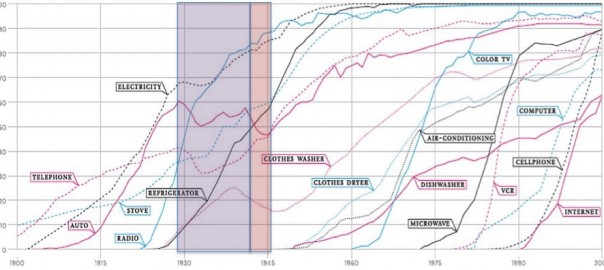
Consider the ramping up of some of the most basic items that have conquered the American market over the past century. Refrigerators went from a luxury item to 60 percent household penetration during the Depression and World War II. Technologies we used to live without including PCs, the Internet, and cell phones have become an integral part of daily life.

Once a breakthrough gets its footing, the rise to mainstream requirement is meteoric and, for reasons unknown (Copernicus has yet to weigh in), the rocket burn lasts about 15 years as the chart above indicates. Trace the rise of both electricity and automobiles. Radios had the sharpest rise of all, which may be why the 1920s were known as the Radio Days. Since the war, color TVs, microwaves, VCRs, PCs, the Internet and cellphones have all caught on as fast as radio. The air-conditioning vector appears to have been bent by the oil embargo in 1973. Auto production sputtered and coughed during the Depression, and throughout the war years, as factories churned out tanks and airplanes. It is not a coincidence that when the stock market peaked in 1929, auto production did too; neither would exceed the 1929 level until 1953.

We are about to find out if electric vehicles can make their mark and become mainstream. The launch sequence and liftoff phase (now barely underway) will soon reveal the extent of their fuel supply, i.e. How much interest will consumers have in EVs when a 200-mile-per-charge car costs less than $25,000? When a 60 kilowatt-hour (kWh) battery costs $9,000, there will be plenty of room in the budget to build a lightweight car around it. (UBS says that at $150 per kWh, the key variable in the calculation above, the EV market will take off.

Read more: Oil Price

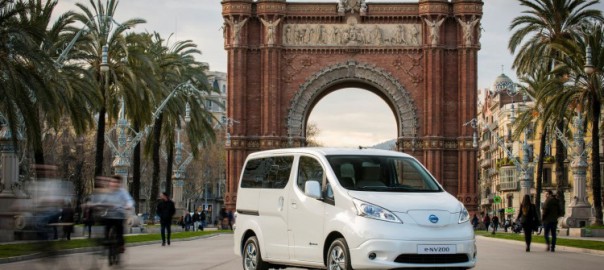
Nissan 7 seat e-NV200 (Image: Nissan)

The seven-seat electric Nissan e-NV200 arrives

Autocar talks about the family- and business-friendly en-NV200, Nissan’s van version of the Leaf

Nissan has unveiled a seven-seat version of the battery-powered e-NV200 MPV. It goes on sale in July, priced from £19,895 to £22,255 – including the £5000 government grant – if leasing the battery.

It’s powered by the same electric powertrain used by the Nissan Leaf and has an electric range of 106 miles on a full charge.

Range-topping Evalia trim is now offered with the e-NV200 and includes a reversing camera, cruise control, automatic lights and wipers, steering wheel-mounted controls and privacy glass.

In seven seat form this trim costs £27,260 if buying the battery outright, or £22,255 if leasing the battery.

With the extra two seats in the third row the e-NV200 has an 870-litre boot capacity, increasing to 2940 litres with all seats folded away.

Jean Pierre Diernaz, head of EV for Nissan Europe, told Autocar that the MPV is primarily aimed at business customers.

“There are between 150 and 200 Ultra Low Emissions Zones now, and this is something that is going to dramatically explode in the coming years,” Diernaz said.

“This will be a massive problem for companies that need to deliver into the city,” he added. “It’s a game-changer for some big companies.”

Diernaz believes the e-NV200 will change how businesses operate in big cities.

“Because it’s an electric car, you can drive indoors,” he said. “Suddenly you can enter the warehouse, load the car and go outside.

“Today you stop at the entrance of the warehouse then you need an additional system to take the goods and then load them back to the car.”

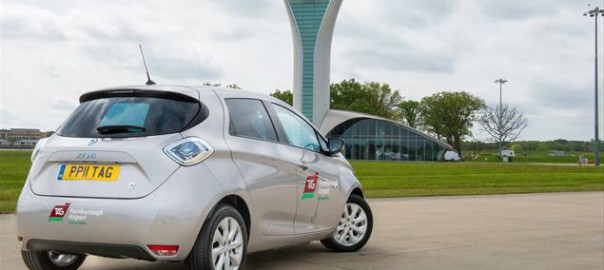
All-Electric ZOE takes off at TAG Farnborough Airport

  • TAG Farnborough Airport takes delivery of three 100% electric Renault ZOEs
  • Cars will be used as airside staff shuttles
  • ZOE will help the airport meet its sustainability and carbon footprint targets

Europe’s leading business aviation airport has taken delivery of a fleet of three 100 percent electric Renaults ZOEs as part of its ongoing strategy to reduce its carbon footprint.

TAG Farnborough Airport – the only dedicated business aviation airport in the UK receives thousands of business jets every year – is using the vehicles to shuttle staff between buildings, including the main control tower.

The vehicles make a contribution to the airport’s continued efforts to reduce its carbon footprint and meet the goals set out in its sustainability charter, which covers everything from waste management and energy usage to vehicle emissions.

The ZOE – rated the best electric vehicle to own in the Auto Express Driver Power 2015 survey and back-to-back winner of What Car? Magazine’s ‘Best Electric Car Under £20,000’ award –offers true zero emissions transport with no tailpipe emissions, in addition to ultra low running costs.

CHR3350_nlm_ZOE_Renault

Miles Thomas, Environment Manager at TAG Farnborough Airport, said

“We monitor our carbon footprint very closely across all our services and departments, and being able to reduce the environmental impact of the staff vehicle movements across the airport was a driving factor for us.

“We looked at all the electric vehicles on the market but only the ZOE ticked all our boxes. The car offers the low running costs and zero emissions and it’s also small, functional, simple and enjoyable to drive and has an impressive range.”

He added: “The reaction of our staff to the three ZOEs has been fantastic and very positive. People are enjoying driving them and we’ll definitely be looking to add more EVs to our fleet as a result.”

Ben Fletcher, Renault UK Electric Vehicle Product Manager, said:

“Every day more and more fleet operators are discovering the benefits of Renault electric vehicles.

“The ZOE is a practical, spacious and well-equipped family car but its innovative electric technology means it can offer incredible savings in running costs and whole life costs as well as making a real impact on a business’ carbon footprint.

“Drivers love them too, as evidenced by the ZOE’s performance in the Auto Express Driver Power Survey 2015, and that makes the model a win-win for fleet operators and families,” added Fletcher.

A spacious five-door family hatchback, the ZOE can cover up to 130 miles on a single charge according to official New European Driving Cycle (NEDC) figures.

A new longer-range version of ZOE, with a new Renault-developed motor, was announced at this year’s Geneva Motor Show which will bring a best-in-class official range of 149 miles when it joins the ZOE line-up this summer.

The ZOE can be charged in as little as 30 minutes using a fast charger, available in hundreds of locations across the UK, but retail customers can also have a 7kW wall-mounted charger – capable of fully charging the ZOE in three to four hours – fitted free of charge at their home. Renault is the only manufacturer to offer this service.

Available in three distinct trim levels, all ZOEs feature generous levels of standard specification and innovative technologies, including smartphone-controllable climate control and satellite navigation, and all the creature comforts the modern driver demands.

Prices start from just £13,443 RRP (including Government Plug-In Car Grant) when opting for the flexibility of battery leasing and £18,443 RRP (including PiCG) for those purchasing outright.

Renault is one of the global leaders in electric vehicle technology and is the only manufacturer with three 100% electric vehicles in its range – the Twizy urban vehicle, ZOE hatchback and Kangoo Z.E Van.

Sales in the UK of Renault’s electric models were up 90 per cent in 2014 to 1,286 vehicles and continued this strong growth in the first three months of 2015 with sales up 148 per cent to 401 vehicles.

Source: Renault Press Office